

Young Women's 'Qi-Blood' Anxiety Fuels a Billion-Dollar Wellness Boom: Key Players File IPO Amid Market Transformation
A consumer frenzy centered on “replenishing qi and blood” is giving rise to a new market.
Young women’s demand for replenishing qi and blood has never been more surging than it is today. Baidu Index data reveals that women aged 20 to 29 have become the primary target demographic for qi- and blood-nourishing products. On Xiaohongshu, related topics have amassed tens of billions of views and sparked tens of millions of discussions. These consumers have further transformed this demand into a market hotspot through their substantial spending power.
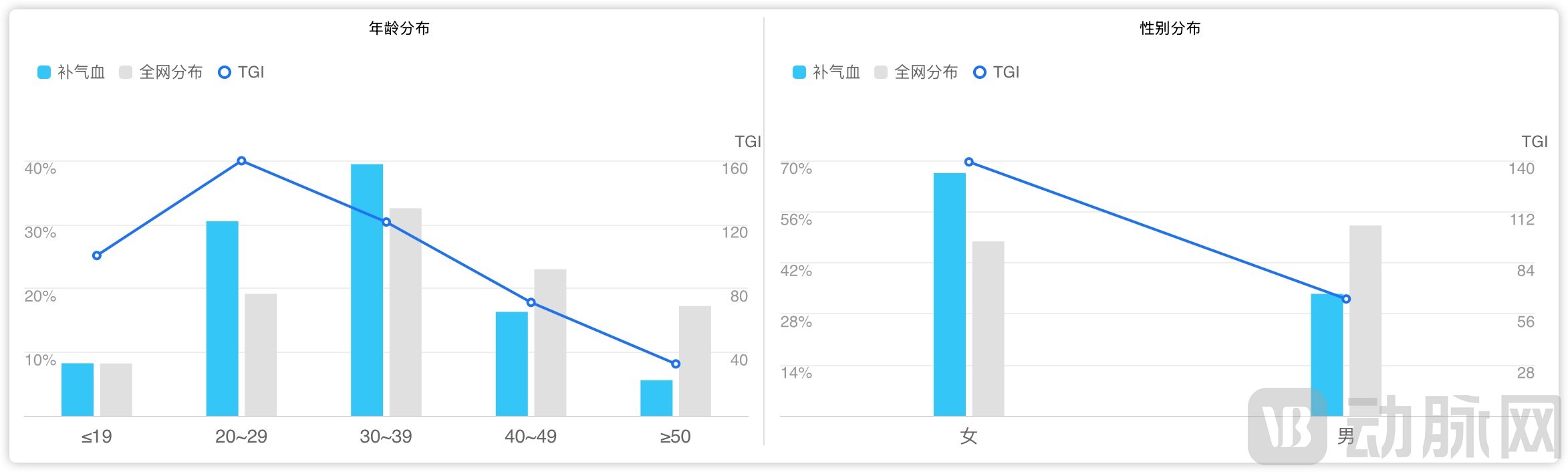
Baidu Index for "Tonifying Qi and Blood," image source: Baidu
In this process, young women’s demand for replenishing qi and blood has long transcended mere functional supplementation, evolving into a lifestyle ritual: they seek the convenience and efficiency of ready-to-eat products while also valuing the cultural appeal of traditional Chinese herbal cuisine; they are willing to pay for AI-driven technologies yet remain enthusiastic about visiting offline wellness spaces. This stratification of demand has spurred a diversified product matrix, creating ample opportunities for various innovative ventures to thrive.
Young women’s demand for replenishing qi and blood is evolving from the consumption of single products to comprehensive ecosystem services. As “replenishing qi and blood” transitions from a wellness practice to a lifestyle, and expands from individual consumption to a societal health initiative, this consumer-driven transformation led by young women has spurred rapid growth in related markets.
Stagnant product forms have failed to keep pace with the demands of the new generation.
As dark brown herbal decoctions are replaced by neon-colored “all-nighter revival elixirs,” and as donkey-hide gelatin blocks transform into amber-colored cheese foam atop milk tea in the hands of young women, traditional Chinese patent medicines for replenishing qi and blood, long relegated to the depths of medicine cabinets, are being ignored by the younger generation. They may be effective, but they have long been struck from the list of daily essentials.
Young women’s obsession with replenishing qi and blood has never waned; the battlefield has simply shifted from pharmacies to Xiaohongshu (Little Red Book) and Douyin (TikTok). While turning up their noses at the bitterness of Liuwei Dihuang Wan, they pour Jing Jiu into cocktail shakers, mixing it with pomegranate juice and rosemary to create “office cocktails.” The hashtag #HerbalLiquorMixology# has garnered over 200 million views.
They refuse to swallow Wuji Baifeng Wan, yet are willing to pay for Dong-E-E-Jiao’s “instant Ejiao powder,” simply because it dissolves in a latte, transforming into a special “qi and blood” blend unavailable at Starbucks counters. Heritage brands have suddenly realized that young women do not merely seek to “replenish qi and blood”; rather, they desire a lifestyle that balances functionality with ritual—a lifestyle worthy of being shared on social media.
This demand fission is forcing industrial upgrading.
As Angelica sinensis and wolfberry are packaged into pastel-colored freeze-dried capsule boxes, and as vending machines begin to integrate with health-focused herbal teas, the traditional pharmaceutical industry’s “dark brown pills” appear increasingly out of place in the eyes of new-generation consumers. Even more alarming for the industry is the fierce competition from cross-sector entrants.
Tongrentang’s “Late-Night Elixir” and “Miracle Tonic” have broken through to the young female demographic by incorporating qi- and blood-nourishing ingredients such as ginseng and goji berries. WonderLab has launched collagen peptide beverages, transforming qi and blood supplementation into a refined afternoon-tea-like experience, while promoting them under the catchy label of “Bare-Face Bliss Drink.” Furthermore, time-honored pharmaceutical companies, including Pien Tze Huang, Baiyunshan, and Ma Yinglong, have begun venturing into the cosmetics sector.
Some investors believe that these traditional Chinese medicine (TCM) brands suffer from overly simplistic product portfolios. Although their flagship products are strong, leveraging brand equity to expand into other sectors—particularly the beauty industry, which aligns well with the tonality of their legacy offerings—represents a strategic opportunity. While these new products no longer emphasize “therapeutic efficacy,” they precisely address the pain points of young female consumers through aesthetic appeal, contextual relevance, and emotional value.
According to data released by Zhongkang Technology, the domestic market for qi- and blood-tonifying products is also undergoing a period of transformation.
Data shows that between 2022 and 2024, sales in the qi-and-blood replenishing and beauty-enhancing market on platforms such as Taobao, Tmall, JD.com, and Douyin exhibited a gradual downward trend. In 2024, sales revenue amounted to approximately RMB 25.85 billion, representing a year-on-year decline of about 4%. However, from an ingredient perspective, related products featuring Ejiao (donkey-hide gelatin), Astragalus membranaceus, and Polygonatum sibiricum achieved substantial growth, with the highest year-on-year increase nearing 50%.
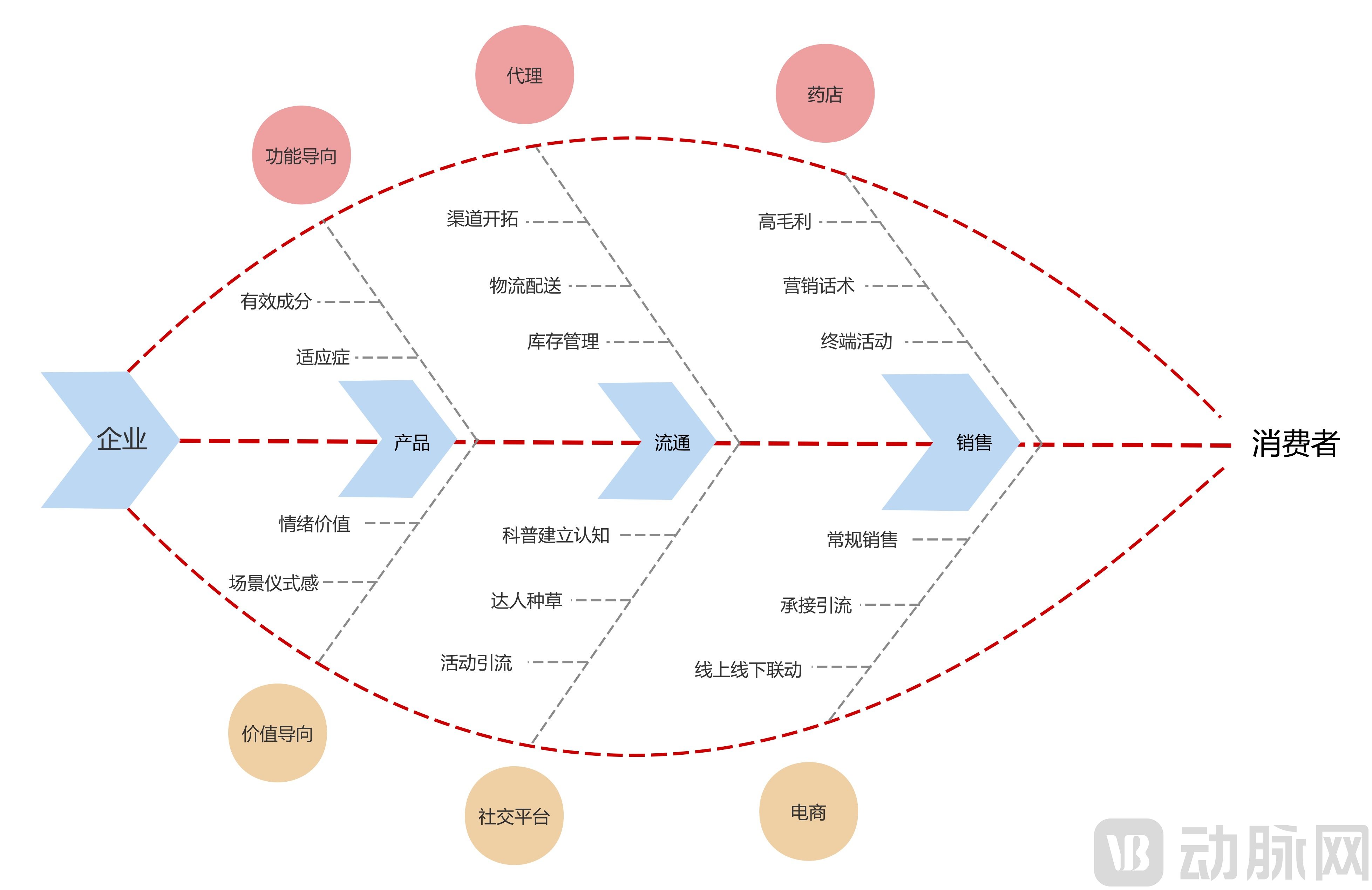
Enterprises need to bridge capability gaps to meet the needs of target populations
Behind product iteration lies not merely a functional upgrade, but a triumph of lifestyle aesthetics for young women. The new generation no longer compromises their lives for the sake of “treating illness”; instead, they proactively integrate health into their coffee cups, makeup bags, and even in-game skins. As Jing Jiu (a Chinese herbal liquor) mixed with sparkling water appears on bar menus, and donkey-hide gelatin cakes transform into office snacks, the revolution in replenishing qi and blood characteristic of the new consumer era has only just begun. In facing new users, new channels, and new strategies, enterprises must address their weaknesses beyond traditional capabilities.
When traditional brands learn to reconstruct product narratives using the language of the new generation, even legacy products can regain their competitive edge.
Despite being a time-honored brand in the qi-tonifying and blood-nourishing segment, Yunnan Baiyao’s Qixuekang Oral Liquid faces two major challenges when engaging younger consumers: a cognitive gap and communication dilemmas. In simple terms, although young women also pursue the beauty of “abundant qi and blood,” Qixuekang, trapped in the stereotype of being “exclusive to middle-aged and elderly people,” struggles to capture their attention. Meanwhile, traditional promotional channels find it difficult to reach this demographic. The brand’s primary challenge is to reconstruct its product value using language that resonates with young people, thereby enabling discovery and acceptance among this group.
Qixuekang chooses to align itself with the “state code” that is widely discussed among young women.
Centered on the demand for replenishing qi and blood among users on the Xiaohongshu platform, we identify symptom combinations with readily perceptible indicators, such as poor complexion, low energy levels, and weak constitution. We then match these with high-quality influencers across multiple dimensions to produce lifestyle content strongly associated with the product in specific scenarios, thereby reinforcing brand impression.
For instance, by collaborating with influencers in niche segments such as wellness, workplace lifestyle, beauty, sophisticated motherhood, and outdoor activities, the relatively abstract concept of “replenishing qi and blood” is concretized through everyday scenarios like “facial dullness from staying up late,” “fatigue from childcare,” and “workplace burnout.” This approach aligns with users’ pursuit of “natural beauty” rooted in holistic vitality from within. By leveraging brand collaborations, scenario-based storytelling, and word-of-mouth marketing, the traditional image of Chinese patent medicines is transformed into a unique status symbol for young women.
At the start of 2025, the brand launched the campaign “A Different New Year Calls for Qi Xue Kang,” precisely reaching its target audience by addressing pain points in scenarios such as stress-free overtime for workplace newcomers, enhanced festive atmosphere in lifestyle sharing, confident outings for sophisticated mothers, altitude-defying outdoor hiking, and vibrant energy in fashionable skincare. By translating the product’s blood- and qi-nourishing benefits into relatable, everyday expressions like “Great Qi and Blood Make You Photogenic,” “The Secret to Looking Polished When Stepping Out,” and “The Trick to Rejuvenating a ‘Work-Worn’ Face,” the brand achieved subtle yet effective consumer engagement.
Furthermore, to implement the marketing strategy that “a super brand is a super symbol,” Qixuekang has launched a series of initiatives.
For instance, the campaign theme “#VitalityFresh: One Step Ahead, Life Full of Passion#” was established, associating “vitality” with abundant Qi and blood, and “fresh” with fresh Panax notoginseng. Leveraging the Douyin City Life Festival, online-offline integration helped reach broader potential consumer groups, transforming continuous topic-driven “traffic” into brand “visibility.”
Online, by launching a custom Douyin sticker called “Passion Moment,” the campaign encouraged users to participate in challenges using the special-effect sticker, thereby stimulating user-generated content. Whether traveling with passion or engaging in city walks, these differentiated forms of expression among younger demographics successfully drove secondary dissemination of the topic.
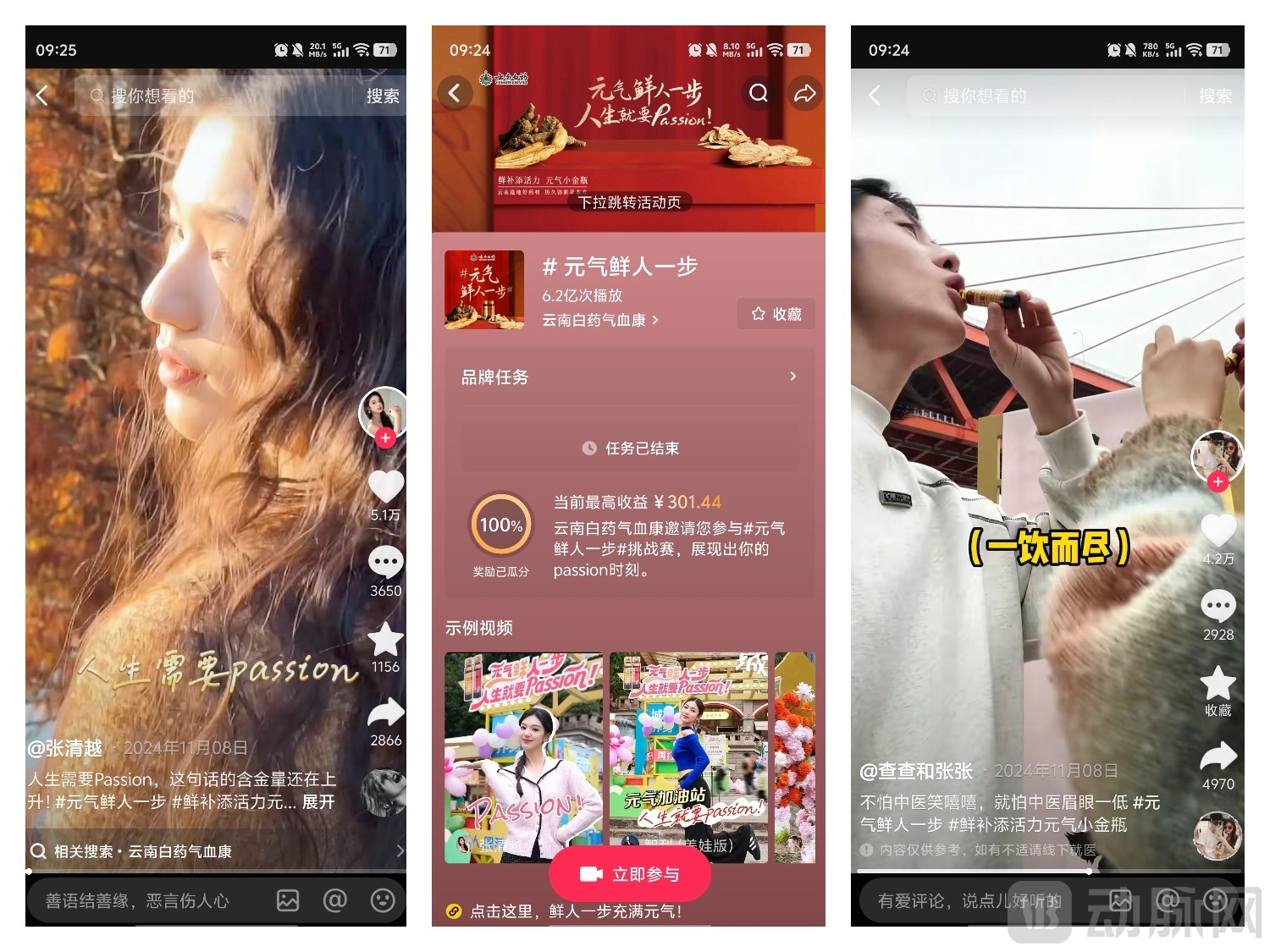
Qi Xue Kang: Online-Offline Integration. Image source: Douyin screenshot
Offline, by collaborating with Douyin to create the “Vitality Trend Market,” we designed multiple interactive segments such as “Vitality Awakening” and “Vitality Fresh Lock.” These initiatives leveraged vitality-themed interactions to drive ingredient-focused marketing, enhance young consumers’ understanding of the Qixue Kang formula, and establish product awareness centered on traditional Chinese medicinal herbs for nourishing qi and blood and revitalizing vitality. Additionally, a series of game-based activities were introduced to help users overcome common stressors such as fatigue and anxiety, thereby boosting emotional value among younger demographics. Furthermore, collaborations with local pharmacies for live-streaming sessions were implemented to complete the sales conversion loop.
This strategic combination demonstrates that Yunnan Baiyao’s Qixuekang, in its pursuit of product rejuvenation, has not remained entrenched in the traditional narrative of health preservation and nourishment. Instead, it has actively cultivated engaging approaches to healthy living. Capitalizing on the emotional resonance with younger demographics, the brand has established a fresh image characterized by positivity and vitality, thereby enhancing its appeal and recognition among the new generation of consumers.
"Letting loose with the younger generation is a current strategy for many brands."
As young women sip donkey-hide gelatin lattes in the office, brew instant donkey-hide gelatin powder at the gym, and race to snap up Li Shizhen blind boxes in live-streaming rooms, Dong-E-E-Jiao has transformed from a maternal health remedy into a trendy wellness brand.
According to data from Menet, Dong-E-E-Jiao products achieved retail pharmacy terminal sales of over RMB 2.7 billion in China in 2024, firmly establishing them as a blockbuster flagship product. Nevertheless, the company has resolutely pursued a “dual-wheel drive” strategy encompassing both pharmaceuticals and health consumer goods.
To resonate with target consumer groups, brands need to gain precise insights into the needs of young women. Dong-E-E-Jiao has introduced corresponding product solutions by focusing on core lifestyle scenarios of young people, such as staying up late, fitness, workplace, and socializing. These products include Ejiao coffee creamers, nutritional meals for athletes, small-packaged Ejiao paste, and Guochao-style Ejiao gift boxes, aiming to meet the diverse needs of young consumers in these life scenarios.
On the other hand, to reduce the “medicinal” perception of its Ejiao products, Dong-E-E-Jiao has launched the sub-brand Taohuaji, positioned as a “health-focused beauty snack.” It targets consumers’ dual demands for “qi-tonifying wellness” and “appearance management,” integrating into daily life scenarios by making the product more snack-like and convenient.
Furthermore, the brand is actively seeking opportunities to break through into broader markets. This includes launching a cross-industry collaboration with Pacific Coffee under the “So Much Gelatin in Your Coffee” series to promote the concept that “coffee + donkey-hide gelatin = wellness,” as well as leveraging product placement in the hit drama *Joy of Life 2* to highlight the historical tribute item known for replenishing both qi and blood. Notably, by seamlessly integrating the product into plotlines involving royal gift-giving, the brand allowed viewers to discover this Easter egg, propelling the hashtag #TheTributeGiftFromTheCrownPrinceToFanXianIsDong-E-E-Jiao# to trending status.
By precisely deconstructing scenario-based demands to innovate product forms, brands have achieved strategic mindshare. Thanks to the efforts of Ejiao companies, represented by Dong-E-E-Jiao, the Baidu Index for Ejiao has undergone significant changes compared to the past: the age demographic of the primary audience has notably decreased, with the Target Group Index (TGI) showing a marked skew toward the 20–29 age group.
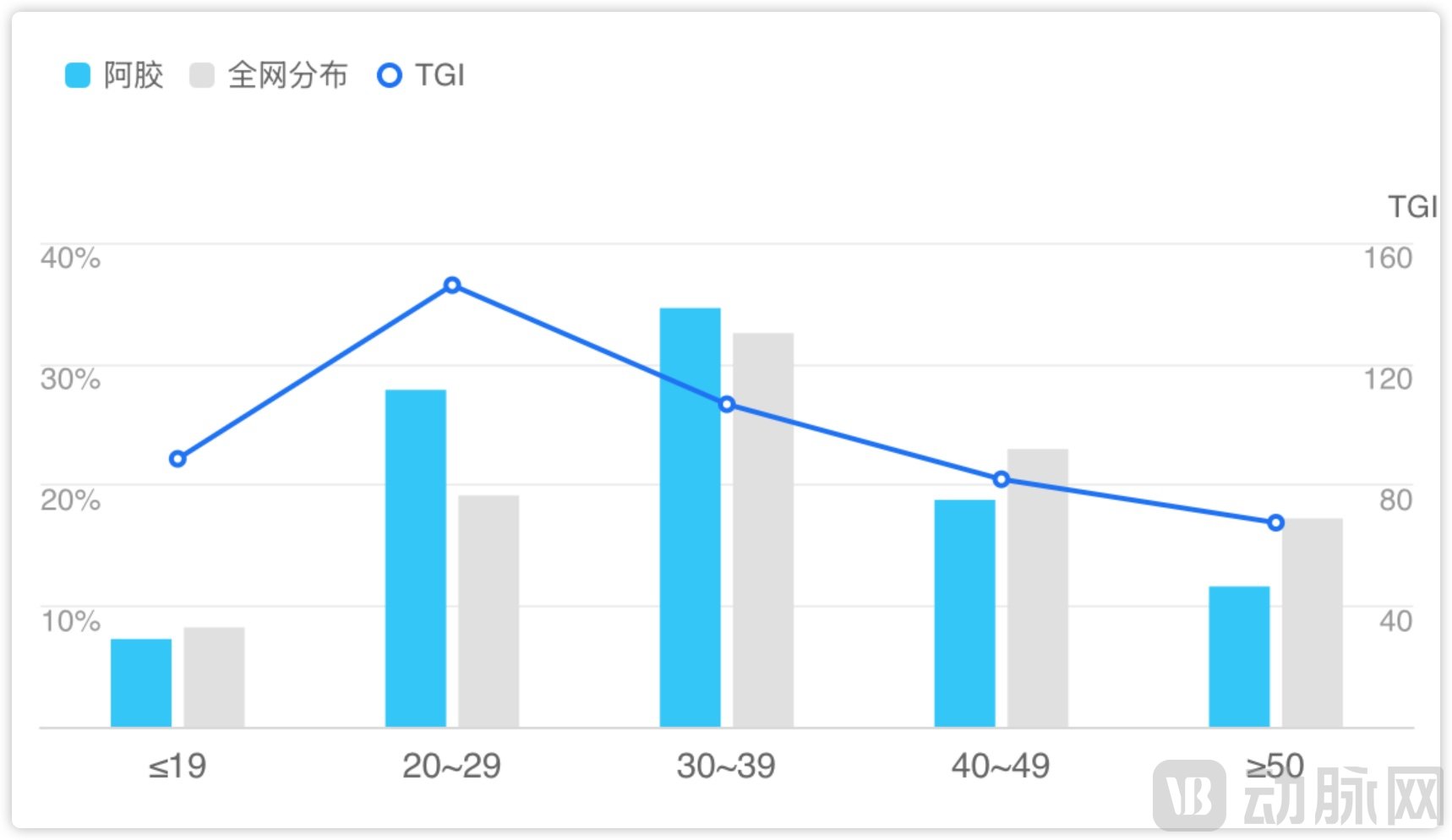
Baidu Index for Ejiao, image source: Baidu
Meanwhile, to strengthen the consumer appeal of Ejiao as a traditional product, the brand has launched numerous initiatives tailored to younger demographics. For instance, it set up a “Virtual TCM Clinic” during the Bilibili New Year’s Eve Gala, where viewers could obtain personalized constitution diagnosis reports through danmaku (bullet-screen) interactions; collaborated with Pop Mart to release blind-box figurines featuring an anime-style Li Shizhen IP, bringing traditional Chinese medicine figures into young people’s lives through trendy collectibles; leveraged Douyin to present tonic culture through a blend of “intangible cultural heritage techniques and modern comedic skits,” thereby rejuvenating the image of traditional Chinese medicine; and introduced various cyberpunk-styled wellness gift boxes aligned with different solar terms, encouraging users to share their unboxing experiences online to reinterpret traditional culture in a contemporary context.
Dong-E E-Jiao’s strategy of designing and tailoring products to fit everyday life scenarios represents a bold attempt at innovating traditional products for the new era, demonstrating that traditional Chinese medicine culture can indeed align with the aesthetic preferences of contemporary young consumers and integrate seamlessly into their daily lives.
As donkey-hide gelatin powder is poured into coffee, ancient craftsmanship meets AR live streaming, and Li Shizhen transforms into a trendy collectible figure, traditional brands are no longer lifeless boxes in the medicine cabinet but cool, fashionable items taking center stage in home display cabinets.
The Path Pioneered by Traditional Brands Is Now Attracting Numerous Participants.
As the needs of young women gain attention, more companies are entering the market, leading to an increasingly diverse range of products designed to replenish qi and blood. Consequently, capturing the attention of younger consumers has become a critical factor in determining whether a product can successfully break out in the marketplace. Meanwhile, Alibaba Health’s “2024 Health Consumption Trends Among Specific Demographics” report indicates that regulatory certifications—such as the “Blue Hat” symbol for health supplements or the National Medical Products Administration (NMPA) approval number—have become key criteria for young people when selecting health-related consumer products.
Therefore, approaching from this angle has become a breakthrough point for some companies to enter the market.
For instance, targeting young women’s need for qi and blood supplementation, Minayo launched China’s first iron-rich gummy in the domestic market in 2021. Unlike some health supplements that skirt regulatory boundaries, Minayo chose to validate its efficacy through clinical trials (registration number: ChiCTR2200061345) and successfully obtained the “Blue Hat” certification.
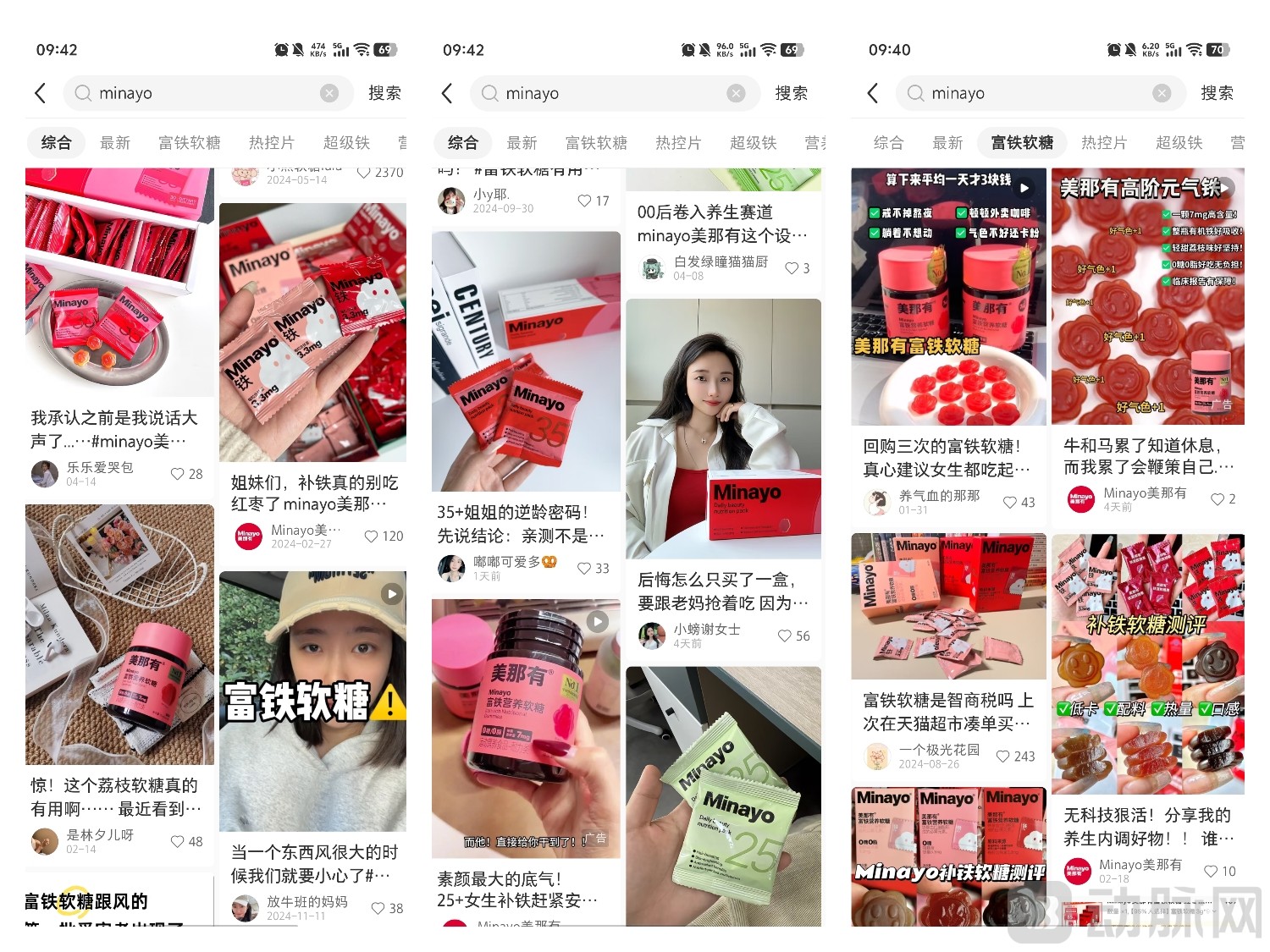
“Certified for Practice” Becomes a Key Marketing Hook; Image Source: Screenshot from Xiaohongshu
Notably, Minayo’s strategy leverages its founding team’s background at NetEase Kaola. Their extensive experience in cross-border e-commerce has provided deep insights into the R&D and marketing of comparable overseas products. By transforming traditional liquid formulations into portable, edible gummies, Minayo addresses the common pain point of partially unused supplement bottles. Furthermore, it redefines women’s needs for replenishing qi and blood by offering iron-rich gummies that are portable, palatable, and blend Chinese and Western elements.
As younger consumers already possess a preliminary understanding of iron and ingredients that replenish qi and blood, extensive consumer education is unnecessary; brands can drive purchases simply by addressing key pain points. Meanwhile, the brand actively engages with consumers on Xiaohongshu (Little Red Book), where its target audience congregates, to promote its offerings, while also introducing overseas products via cross-border e-commerce for market validation. Furthermore, Minayo has established a Joint Nutrition Research and Innovation Center with Imeik, a leading enterprise in the medical aesthetics industry, and collaborates with multiple research institutions both domestically and internationally. By continuously strengthening its R&D capabilities, Minayo has launched several new products designed to replenish qi and enhance beauty for women.
Duoputai Pharmaceutical, previously focused on cardiovascular and cerebrovascular drugs, has entered the market by establishing the Chalangzhong brand through the acquisition of multiple approval documents for sachet tea products. The brand’s flagship product is Bazhen Sachet Tea, an over-the-counter (OTC) medication targeting consumers seeking to replenish qi and blood. On one hand, it continuously educates the public on the differences between OTC sachet teas and food-grade sachet teas. Meanwhile, on content platforms such as Xiaohongshu, it employs influencer-style marketing to highlight the proven efficacy of its pharmaceutical-grade tea preparations, thereby strengthening brand recognition in the qi-and-blood-replenishing segment rooted in the concept of “medicine and food sharing the same origin.” Additionally, the brand has increased its investment in long-tail keywords such as “Bazhen Sachet Tea OTC” on e-commerce platforms to precisely capture traffic from external channels. Within just one year of its establishment, the brand achieved sales exceeding RMB 100 million, demonstrating the substantial market potential of OTC sachet teas.
Kangmei BGI has also launched a fermented botanical beverage featuring red ginseng, astragalus, and goji berries. In addition to containing common ingredients from the traditional “medicine-food homology” framework—such as ginseng, goji berries, and astragalus—the product’s key selling point is its endorsement by BGI Genomics’ technology. It combines ancient formulations with patented probiotic biomimetic fermentation technology, preserving the essence of traditional herbal plants while enhancing nutrient absorption and taste through the fermentation process. The product employs precision marketing targeted at professional women, addressing pain points such as fatigue, weakness, and deficiencies in qi and blood resulting from high workplace stress.
In addition, Renhe Pharmaceutical offers Ejiao (donkey-hide gelatin) and bird’s nest compressed candies, as well as products containing Semen Ziziphi Spinosae, Poria, and Lily Bulb. Tongrentang has engaged in cross-industry collaboration with Yili, while other pharmaceutical companies such as Guofeng Pharmaceutical and Gubentang have also participated.
Data from Menet indicates that sales of traditional Chinese medicine (TCM) products for replenishing qi and blood in physical pharmacies amount to approximately RMB 10 billion, yet there is a much broader market beyond pharmacies. Food and beverage companies can develop "medicine-food homology" products aimed at replenishing qi and blood, while pharmaceutical companies can leverage their inherent advantages to cross over into new niche segments and seek a second growth curve. In the current macroeconomic environment, the general health industry has demonstrated its counter-cyclical resilience. Numerous potential opportunities lie within the public’s segmented health demands, awaiting exploration by enterprises.