

Six Major Product Iteration Trends in Laparoscopic Surgical Robots: Insights from a Global Review of 23 Companies
As the pinnacle of technology in the field of surgical medical devices, laparoscopic surgical robots occupy the largest market segment among surgical robots and have consistently attracted significant attention.
Over the nearly two decades since the da Vinci Surgical System entered China, the clinical value and market potential of laparoscopic surgical robots have been fully validated, spurring domestic companies to accelerate their entry into the field. 2021 marked the inaugural year for regulatory approvals of laparoscopic surgical robots in China, with Weigao’s Miaoshou Robot being the first to obtain certification, followed by MicroPort MedBot, Sizherui, Jingfeng Medical, and Shurui®Products from companies such as robotic firms have also been approved successively.
In 2023, China’s laparoscopic surgical robot market entered its first year of commercialization, with domestic companies accelerating their commercialization efforts and expanding their business footprint overseas. In the past two months, the laparoscopic surgical robots developed by Ruilong Surgery, Agile Medical, and Weijing Medical have successively received approval from the National Medical Products Administration (NMPA), adding three new players to the domestic camp.
Here, VCBeat examined 30 products from 23 companies worldwide and interviewed industry leaders such as Bornsight, Shurui® Robotics, Edge Medical, and Tuodao Medical to gain insights into the innovative features, iteration trends, and development potential of domestically produced laparoscopic surgical robots.
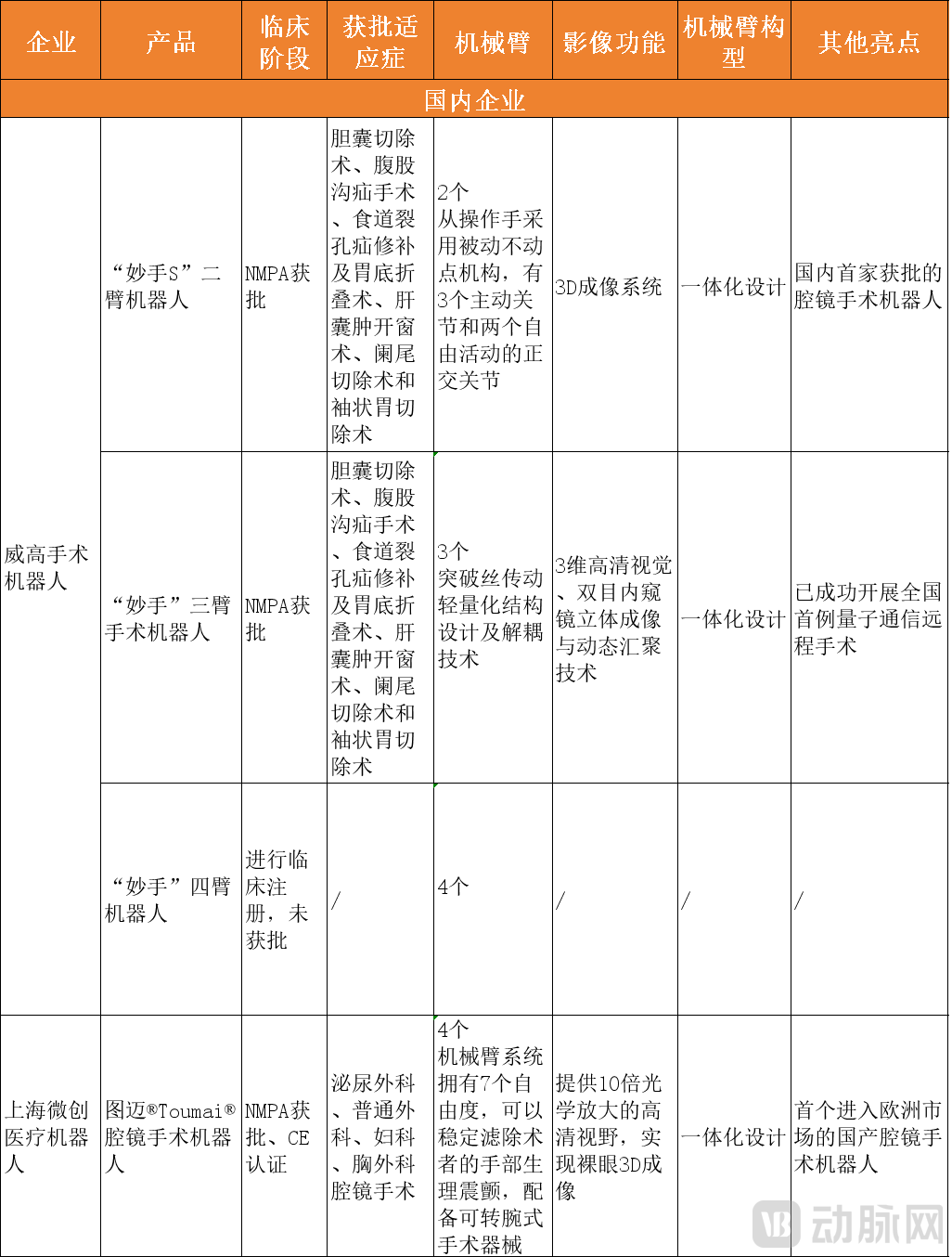
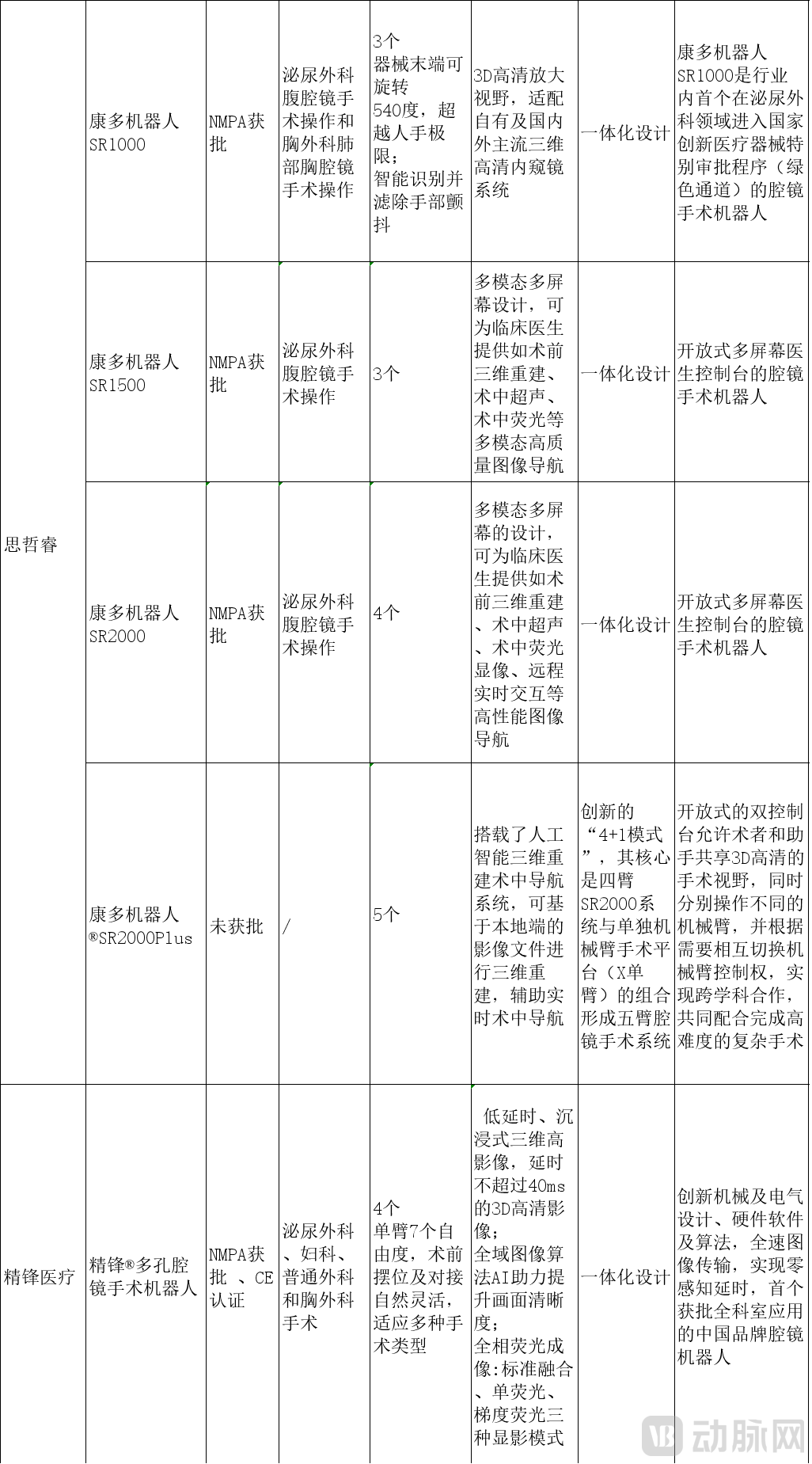
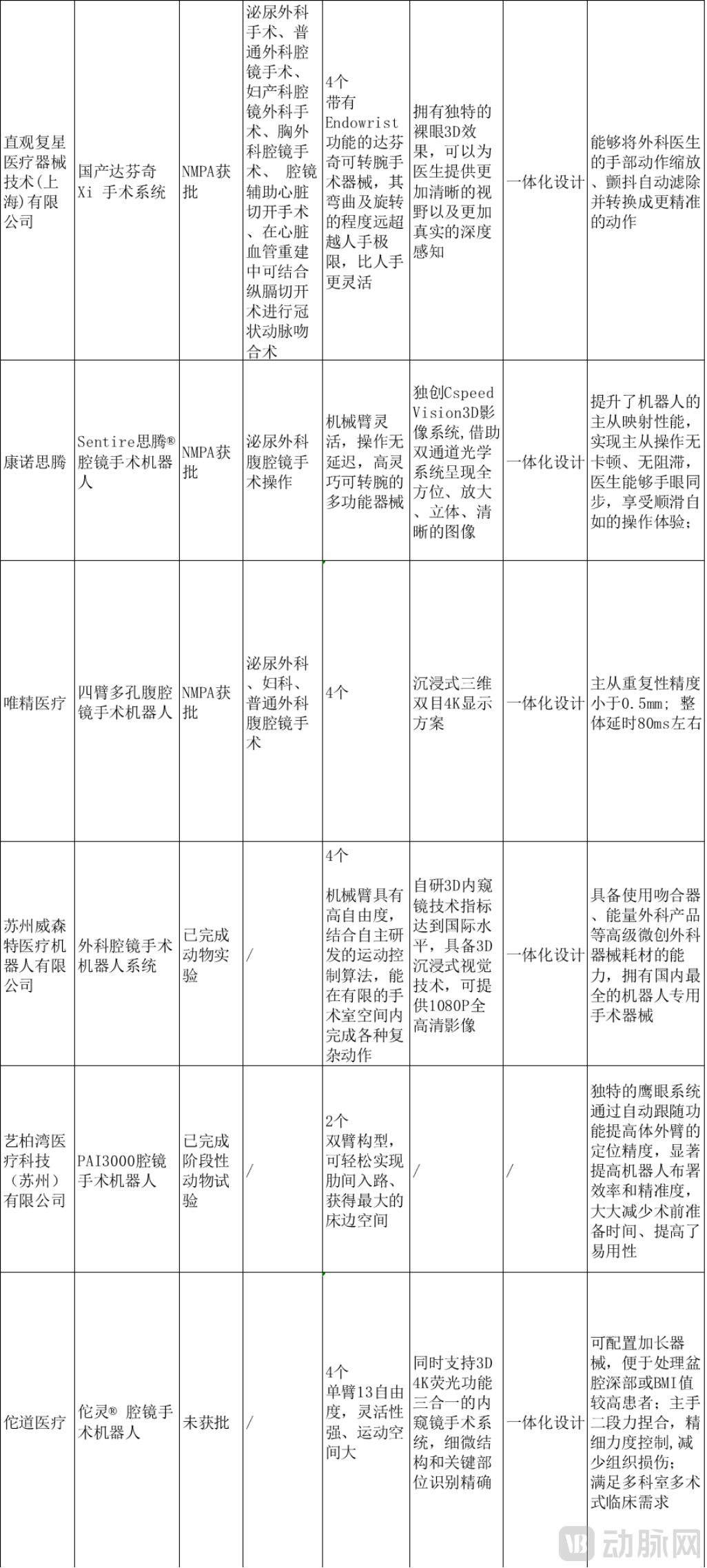

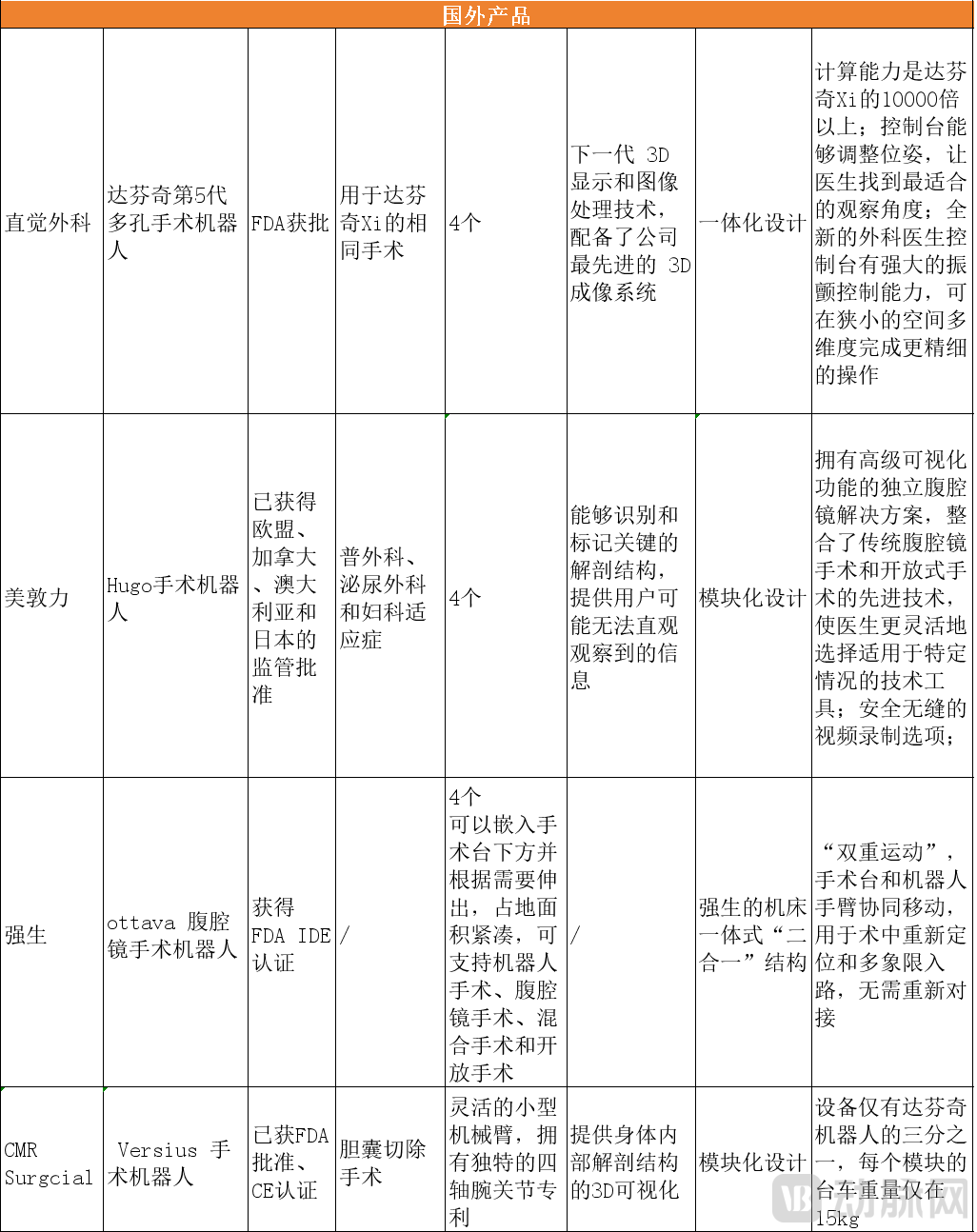
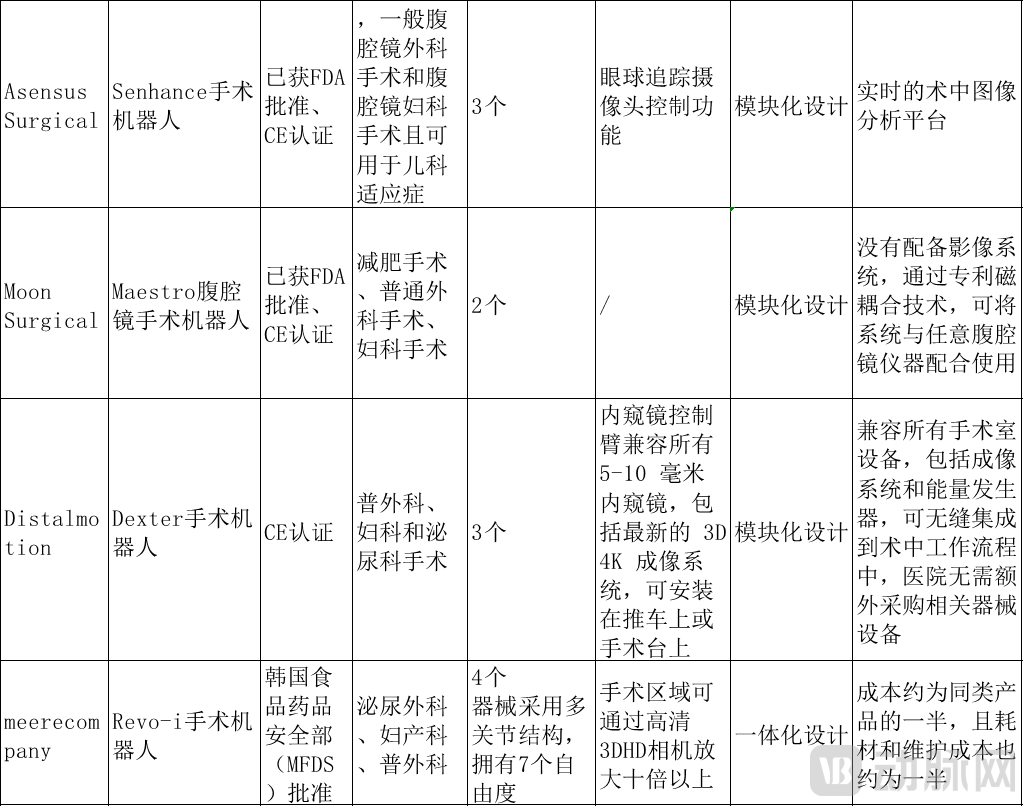
Inventory of Multi-Port Laparoscopic Surgical Robots | Graphic by VCBeat
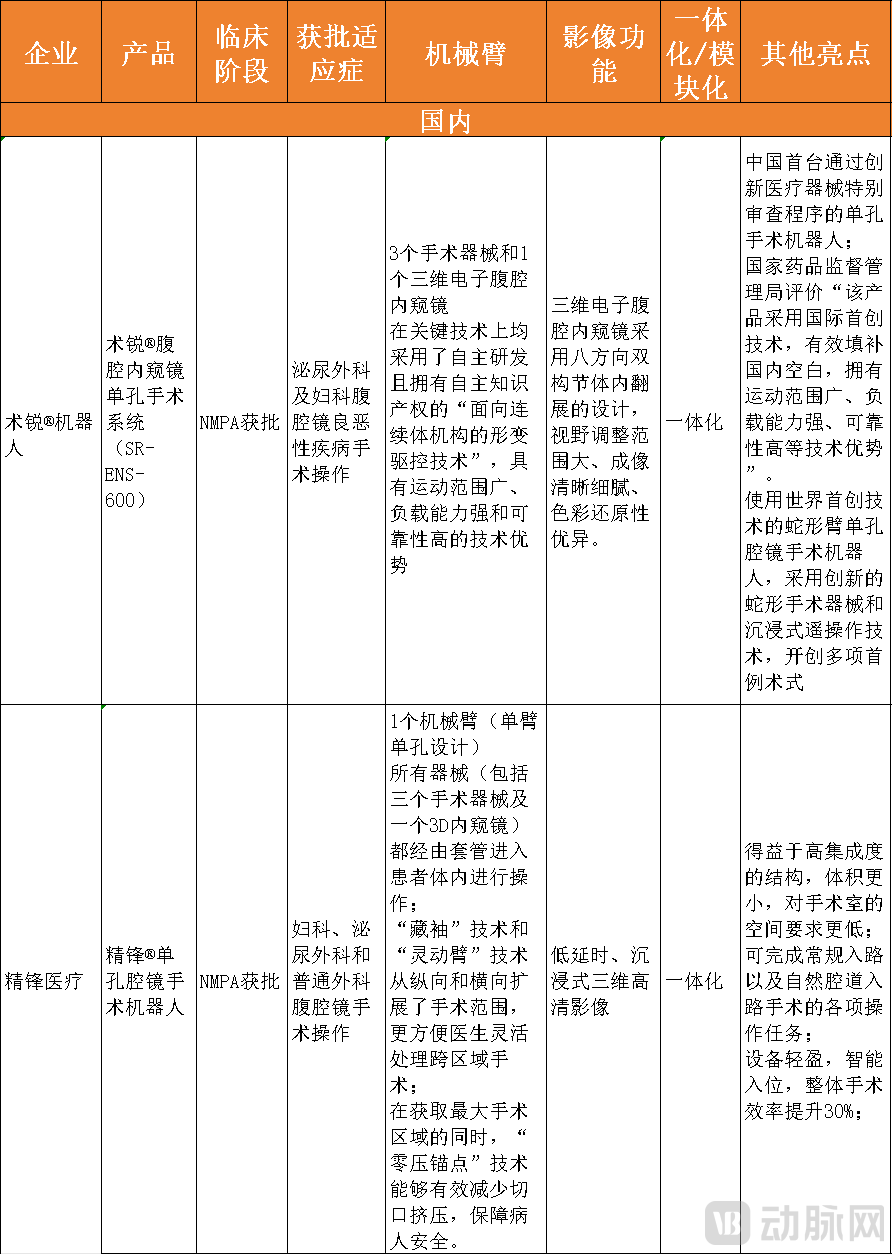
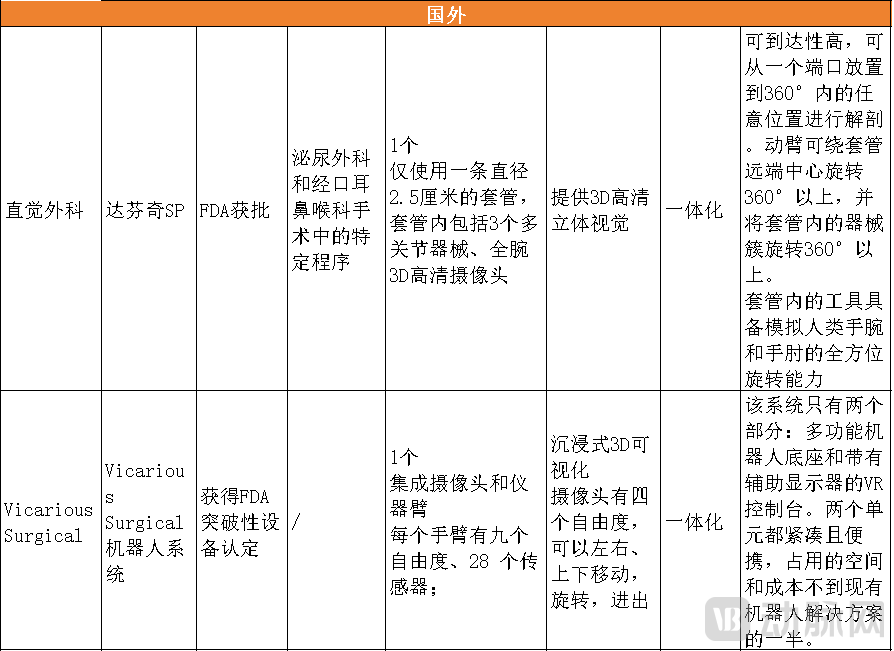
Inventory of Single-Port Laparoscopic Surgical Robot Products | Graphic by VCBeat
Note: “/” indicates that no relevant information was found in publicly available sources.
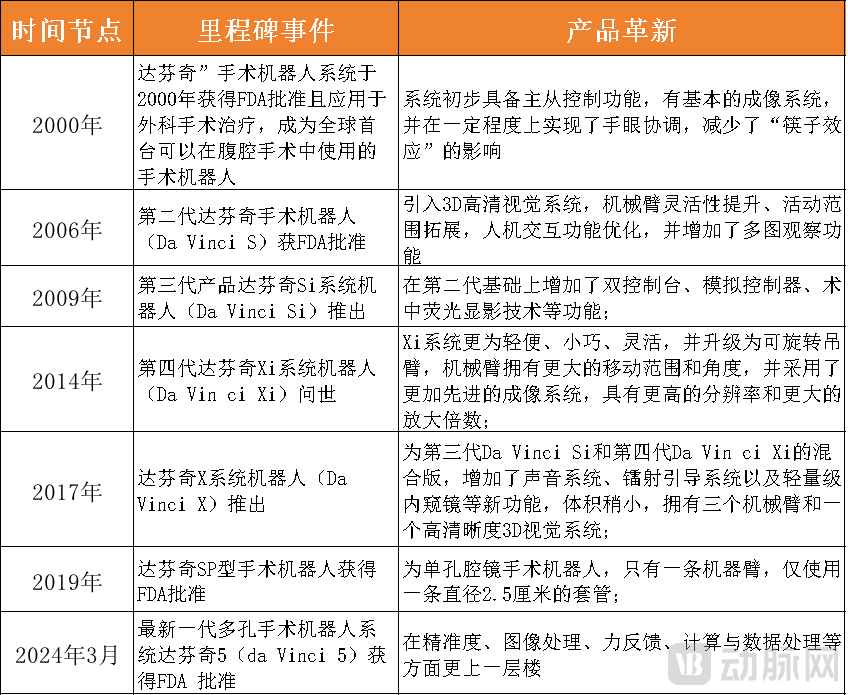
A Key Milestone in the Product Iteration of the Da Vinci Surgical Robot
According to the "Historical Size and Forecast of the Global Laparoscopic Surgical Robot Market," the global market size for laparoscopic surgical robots is expected to grow continuously, reaching $14.4 billion in 2025 with a compound annual growth rate (CAGR) of 21.7% from 2021 to 2025, and further expanding to $28.6 billion by 2030, reflecting a CAGR of 14.6% from 2025 to 2030.
In recent years, domestically produced laparoscopic surgical robots in China have been gradually transforming from followers into strong competitors and partial leaders, undergoing a historic leap from imitation to innovation-led development. From the perspective of product technology, key trends in product iteration include optimization of robotic arm configurations, innovation in specialized instruments, breakthroughs in force feedback technology, upgrades in image-guided navigation, parallel development of modular and integrated systems, and expansion of single-port techniques. This indicates that the technology-driven transformation led by domestic forces is accelerating the entry of China’s intelligent minimally invasive surgery sector into a new era.
1“Four-Arm” Systems Remain the Optimal Solution: The Number of Robotic Arms Should Be Guided by Core Clinical Needs
Currently,In the global market, laparoscopic surgical robots are predominantly four-arm systems, typically configured with three instrument arms and one endoscope-holding arm.. Its rise to mainstream adoption stems from its four-arm system’s perfect replication of the “golden triangle” collaboration model—comprising the surgeon’s two hands plus an assistant—making it the optimal solution for balancing operational flexibility, stability, and spatial adaptability.
In endoscopic surgery, maintaining clear visualization of the target tissue area is crucial. Therefore, one robotic arm is typically required for tissue retraction, while the other two arms simulate the surgeon’s left and right hands to perform surgical maneuvers within the exposed field. Intuitive Surgical previously launched a three-arm robotic system that lacked a dedicated arm for tissue retraction, requiring manual assistance. Given the high cost of healthcare labor in Europe and the United States, this limitation resulted in significant resource inefficiency. Consequently, the latest-generation da Vinci 5 system retains the four-arm configuration.
In addition, two-arm, three-arm, and five-arm designs have also emerged in the market. For specific surgical procedures or departmental applications, the compact designs of two-arm and three-arm systems may offer more cost-effective solutions; whereas the five-arm configuration is primarily designed to facilitate surgical collaboration, providing greater potential for future multidisciplinary joint surgeries.
Regarding the number of robotic arms in laparoscopic surgical robots, the prevailing consensus within the industry is that their design must ultimately align with the fundamental needs of clinical practice.
The number of robotic arms in a laparoscopic surgical robot is closely related to the type of surgery. Drawing an analogy between the robot and the surgical team, a procedure requires at least one lead surgeon and their two hands; therefore, a minimum of two robotic arms is necessary to meet the most basic operational requirements. As the complexity of the surgery increases, the number of participating medical personnel often rises, corresponding to a greater number of required robotic arms.
The number of instrument arms must meet the requirements of surgical procedures; Borns states that scientific and rational configuration and coordination should also be implemented for port layout to achieve optimal surgical outcomes.
“Given the limited operating space and field of view in surgical procedures, a greater number of robotic arms does not necessarily translate into enhanced clinical benefits. We believe that four-arm robotic systems will remain the most versatile mainstream choice in the future. We are more focused on leveraging intelligent algorithms to optimize the collaborative efficiency of robotic arms, thereby better aligning with surgeons’ operational habits,” stated Edge Medical.
“In the future, the development of laparoscopic surgical robots in terms of the number of robotic arms will shift from ‘quantity competition’ to ‘optimization of functional performance.’’.” Tuodao Medical pointed out that its core lies in enhancing the functionality of single-arm or multi-arm systems through technological innovation. For example, by improving the flexibility, precision, and versatility of robotic arms, it reduces reliance on multi-arm configurations, thereby lowering surgical complexity and costs. In terms of functional optimization, Tuodao Medical’s Tuoling®The endoscopic surgical robot features a 13-degree-of-freedom control arm, providing surgeons with highly flexible operational experience. Additionally, its proprietary two-stage force pinching technology for the master controller effectively ensures “just-right” grasping force, thereby reducing iatrogenic injury to soft tissues.
2Differentiation through specialized departmental instruments; proficiency in the use of advanced minimally invasive surgical instruments and consumables has become a key competitive advantage.
Currently, having a comprehensive solution for instrument-compatible consumables is of great significance for improving surgical safety and efficiency, as well as adapting to different surgical needs.
So,What Constitutes a “Comprehensive” Suite of Consumables? The criteria should include at least two aspects: first, the inclusion of common instruments required for various types of surgeries; and second, the inclusion of specialized, department-specific instruments and advanced devices.
First, different departments and surgical procedures have varying requirements for surgical instruments. However, certain instruments are commonly used across general surgery, gynecology, urology, and thoracic surgery, such as monopolar electrocoagulators, bipolar electrocoagulators, needle holders, and graspers. The minimal set of these instruments should be included in all laparoscopic surgical robot products. For such products, manufacturing processes should be optimized and costs reduced to enhance the surgeon’s operational experience as much as possible.
Specialized instruments tailored to unique procedural requirements represent the distinctive strengths of various market entrants. Generally designed for more complex and high-difficulty surgical procedures, these instruments embody companies’ differentiated competitive advantages. For instance, Borns Medical has developed specialized flexible instruments for head and neck surgery, creating a novel non-invasive treatment approach that maximizes the advantages of robotic systems. Jingfeng Medical’s single-port robotic system is equipped with the new-generation SuperArm series of instruments, comprising more than 10 NMPA-approved dedicated surgical tools specifically designed for operation in confined spaces, demonstrating excellent performance in both conventional access and natural orifice transluminal endoscopic surgeries. Tuodao Medical’s Tuoling®Endoscopic surgical robots provide surgical instruments that meet the clinical needs of various departments, accommodating customized requirements for different surgical procedures.
In addition, the capability to utilize advanced minimally invasive surgical instruments and consumables constitutes another critical benchmark for evaluating the performance of laparoscopic surgical robots. Compared with simple tools such as scalpels, scissors, forceps, and tweezers, manipulating advanced minimally invasive surgical instruments imposes higher requirements on the robotic system in terms of mechanical arm degrees of freedom and flexibility, operational precision and stability, high-precision motion transmission, sensing and feedback technologies, intelligent control algorithms, and system integration, thereby presenting higher technical barriers. Nevertheless, the resulting technological advantages are evident; they are of significant importance for enhancing surgical precision and operational flexibility, enabling the system to better support complex surgical procedures and expand its indications.
In this direction, domestically produced laparoscopic surgical robots continue to gain momentum.
ShuRui®Robots are jointly developing a flexible ultrasonic scalpel with Ruijin Hospital, representing a global first and having achieved breakthrough progress; the Visent surgical robot, leveraging advanced technologies such as high-precision robotic arms, advanced drive systems, multi-degree-of-freedom control, and intelligent feedback systems, can perform complex actions including staple firing and blade deployment, thereby enabling master-slave operation of advanced minimally invasive surgical instruments and consumables within the robotic system; the Jingfeng multi-port robotic system offers more than 30 compatible surgical instruments, including advanced tools such as ultrasonic scalpels and bipolar forceps, covering clinical application scenarios across all surgical departments; Tuodao Medical’s 54-cm-long ultrasonic scalpel overcomes technical barriers related to energy attenuation, achieving an effective working length equal to the instrument’s total length, thereby avoiding the “short-reach” limitation and enhancing accessibility in deep surgical procedures.
3Beware of the cost-performance imbalance caused by the introduction of force feedback, and strive to preserve physicians' "operational intuition"
In recent years, haptic feedback technology has become a major focus in the surgical robotics sector, as it enables surgeons to perceive contact forces between instruments and tissues and precisely control force application during delicate maneuvers, making it a key area of competition among market participants.
Currently, Intuitive Surgical’s latest-generation da Vinci 5 robotic system has incorporated haptic feedback technology. Certain optional instruments enable the system to measure the subtle forces exerted on human tissues during surgery and provide tactile feedback to the surgeon. Preclinical studies involving surgeons with varying levels of experience demonstrated that the use of haptic feedback reduced tissue-applied forces by up to 43%, suggesting potentially less traumatic impact on tissues.
Meanwhile, domestically produced laparoscopic surgical robots are also accelerating their innovation layout: MicroPort®Toumai under the Robot brand®The four-arm laparoscopic surgical robot pioneered the haptic feedback component for laparoscopic surgical robots—“Force Feedback.” Although European and American robots already have similar features, their costs are significantly higher than those of TuMai.®Four-arm laparoscopic surgical robot; the Visient surgical robot incorporates haptic feedback technology, enabling force recognition and alert feedback for high-risk procedures and maneuvers, thereby allowing surgeons to assess the impact of forces on lesion tissues.
“Due to the lack of an intuitive haptic feedback mechanism, surgeons using traditional laparoscopic surgical robot systems struggle to perform delicate maneuvers based on tactile sensitivity during procedures. This limitation hinders further improvements in the clinical experience and safety of traditional laparoscopic surgical robots, with haptic feedback technology being the key to addressing this critical challenge,” stated Tuo Dao Medical, adding that the company has achieved significant breakthroughs in haptic feedback technology.
On February 28, 2025, the National Key R&D Program project titled “Force Sensing and Force Feedback Technology for Surgical Robots,” undertaken by Tuodao Medical, was officially launched. This technology features real-time haptic feedback, enabling surgeons to perceive the contact forces between surgical instruments and tissues in real time through a force feedback system, thereby precisely controlling operational force and avoiding tissue damage. Furthermore, the technology highly replicates authentic surgical haptic feedback, helping to shorten the learning curve. It also holds significant importance for expanding the boundaries of surgical procedures and facilitating surgical automation.
Overall, laparoscopic surgical robots with haptic feedback functionality remain scarce, largely because incorporating such features can drive up instrument costs. The da Vinci 5 system, for instance, employs visual feedback to display tissue force levels as low, medium, or high on its screen. While the hard-coded chip technology involved is not insurmountable, it does lead to increased costs. ShuRui®Professor Xu Kai, the founder of the robotics company, pointed out thatHow to Avoid the Imbalance in Cost-Effectiveness Between Limited Functional Enhancements and Significant Cost Increases, Thereby Preventing Negative Impacts on Product Market Acceptance, Is a Critical Issue. Currently, Shurui®Robots are developing innovative "proprioceptive sensing" technology and force perception algorithms, enabling force feedback functionality without the need for additional hardware.
Furthermore,Force feedback can be implemented in diverse forms, including gravity compensation, collision detection, and tissue property simulation, all of which fall within the scope of force feedback. Given that physicians with varying levels of experience and from different departments have distinct preferences, maximizing the clinical value of force feedback is particularly crucial.. This requires laparoscopic surgical robots to move beyond the singular pursuit of “haptic feedback restoration” and establish an interaction paradigm that aligns with surgeons’ “surgical intuition.”
In clinical practice, many frontline surgeons do not demand a “one-to-one replication” of tissue stiffness by surgical robots; rather, they seek to preserve fundamental mechanical characteristics such as torsional damping and grasping force feedback inherent in traditional laparoscopic instruments. This approach significantly reduces the learning curve, enabling surgeons to rapidly adapt to the operational environment of laparoscopic surgical robots.
Drawing on the evolution of automotive power steering, which achieves a natural transition in drivers’ perception of road feedback by optimizing damping and control boundaries, Borns Robotics adheres to these principles by leveraging force-feedback technology to preserve traditional minimally invasive surgical handling habits, thereby enabling experienced surgeons to rapidly master robotic surgery.
4Leveraging Intraoperative Fluorescence Imaging and AI Navigation: Multimodal Fusion and Intelligent Real-Time Processing Enhance Surgical Field Clarity and Precision
Currently, 3D high-definition endoscopic systems have become standard equipment for laparoscopic surgical robots, with imaging systems continuously optimized in terms of resolution enhancement, stereoscopic vision reconstruction, and low-latency transmission. For instance, Conatus Medical’s Sentire laparoscopic surgical robot features its proprietary Cspeed Vision3D imaging system, which leverages a dual-channel optical system to deliver comprehensive, magnified, stereoscopic, and clear images; Ruilong Surgical’s Haishan One®The independently developed high-definition 3D laparoscopic system for the endoscopic surgical robot integrates ICG fluorescence imaging and is deeply integrated with the surgeon’s console. The operating surgeon can perform functions such as photo capture, video recording, picture-in-picture display, and 180° image inversion with a single click, making operations more convenient and workflows more efficient. Tuodao Medical’s YC200 endoscopic surgical robot will introduce 4K 3D fluorescence imaging, enabling surgeons to more easily discern the layered relationships between organ membranes and blood vessels, and to more precisely identify subtle depth variations, thereby further enhancing the clarity and precision of the surgical field.
Meanwhile,With the advancement of fluorescence imaging and AI navigation technologies, endoscopic surgical robot imaging systems are undergoing a paradigm shift from “high-definition recording” to creating an “imaging-guided therapeutic closed loop.”。
In conventional laparoscopic surgery, the determination of lesion tissue boundaries during tumor resection relies heavily on the surgeon’s individual experience, which can easily lead to excessive resection of healthy tissue. In contrast, imaging technologies such as indocyanine green (ICG) fluorescence imaging and narrow-band imaging (NBI) enhance vascular and tissue contrast, enabling visualization of tumor boundaries and significantly improving the precision of surgical margins.
Meanwhile,The introduction of AI algorithms enables three-dimensional reconstruction of two-dimensional fluorescence imaging, constructs the spatial topological structure of tumor infiltration depth, and generates 3D resection path planning schemes, effectively addressing the challenge that traditional two-dimensional imaging struggles to guide precise resection of deep tissues.。
The integration of advanced imaging technologies with AI to achieve intelligent and automated end-to-end processes—from lesion identification to surgical resection—will be the most critical development direction for future surgical robots. Borns Medical introduced that future surgical robots may even be capable of performing automatic suturing.
Edge Medical’s latest-generation multi-port robotic system, the MP2000, is equipped with a fully self-developed fluorescence imaging system. It offers three selectable fluorescence modes—single-channel fluorescence, fused fluorescence, and gradient fluorescence—providing surgeons with clearer and more precise visual navigation and operational guidance. “The core of future development in imaging systems lies in achieving a value breakthrough from being a ‘visual aid’ tool for surgeons to becoming an ‘intelligent decision-making’ hub,” stated Edge Medical. The company indicated that it will further integrate AI-based image enhancement algorithms to improve intraoperative navigation capabilities.
It is foreseeable that endoscopic robotic imaging systems will evolve toward multimodal fusion, intelligent real-time processing, and cross-scale imaging.
5Parallel Development of Integration and Modularization: Clinical Scenario Adaptation Determines Technology Selection
Globally, based on the technical approaches to manipulator arm configuration, laparoscopic surgical robots can be categorized into three types: the integrated structure represented by Intuitive Surgical, the modular structure represented by Medtronic, and the machine-tool-integrated “two-in-one” structure represented by Johnson & Johnson. Currently, existing products on the market are predominantly based on the first two technical approaches, with the integrated structure holding the mainstream position.
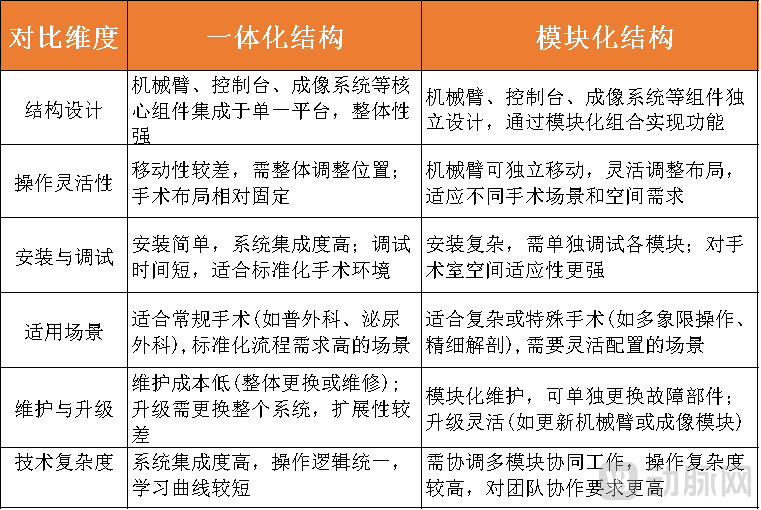
Comparison of Integrated and Modular Laparoscopic Surgical Robots | Graphic by VCBeat
In comparison, the most significant advantage of the split-type design lies in its modular cart, which can be flexibly positioned according to surgical procedures, thereby better accommodating different surgeries and operating room environments. Conversely, its limitations include relatively lower efficiency in cart arrangement and installation; furthermore, since each module requires coordinated operation, there are high demands for compatibility and stability, making debugging and maintenance more complex. In contrast, the integrated design features a high degree of system integration, ensuring smoother coordination among components, with performance and stability thoroughly validated. Its limitation, however, is that functions and configurations are relatively fixed, making it difficult to flexibly adjust to varying surgical needs and hospital conditions.
In the Chinese market for laparoscopic surgical robots, integrated designs dominate overwhelmingly, yet domestic companies have also achieved breakthroughs in modular design.
In March 2025, Ruilong Surgical’s Haishan I, which possesses fully independent intellectual property rights,®The endoscopic surgical robot has officially received NMPA approval, achieving a dual breakthrough with its “modular architecture + full-specialty adaptability.” As China’s first modular surgical robot, Haishan Yi® supports hospitals in flexibly purchasing carts and accessories on demand. Its lightweight design is compatible with older operating rooms without requiring site modifications. Meanwhile, Haishan Yi®It is the first domestically produced robot to receive approval for full indications across four major specialties—general surgery, urology, gynecology, and thoracic surgery—upon its market launch, enhancing its coverage of complex surgical procedures and clinical value in operations such as low anterior resection of the rectum and lobectomy.
Borns constructs a novel human-machine collaboration paradigm that is fully compatible with traditional laparoscopic surgery, maximizing the preservation of surgeons’ existing anatomical cognitive frameworks, operational habits, and decades of surgical experience, thereby minimizing the learning curve. Furthermore, its modular design enables surgeons to gradually achieve human-machine collaboration—from clinical functions to surgical roles—avoiding the need for a comprehensive restructuring of surgical thinking.
Overall, integrated and modular designs each have their own advantages; it is of little significance to determine which is superior without considering specific application scenarios. Given the current situation in China, where physicians at regional central hospitals generally possess basic laparoscopic experience but lack specialized training in robotic surgery, a modular design may be the more appropriate choice. Conversely, for ultra-large-scale, highly complex, or remote surgeries, an integrated laparoscopic surgical robot represents the optimal solution, as it effectively reduces reliance on manual labor and ensures more stable collaborative control.The two differ significantly in their target markets and technological approaches; this is not a simple matter of one being superior to the other, but rather a decision on technology selection driven by clinical scenarios and market demands.
6Indications for Single-Port Robotics Will Continue to Expand, with Natural Orifice Approaches Potentially Becoming the Next Breakthrough
Currently,It is widely recognized in the industry that single-port laparoscopic surgical robots represent a more advanced generation of technology compared to multi-port systems., but due to factors such as technical complexity and application scenarios, there are currently few enterprises in China engaged in the research and development of single-port robots.
Compared with multi-port robots, all instruments of single-port robots enter the body through the same channel, which requires solving the problem of motion coordination of instruments in limited space, avoiding mutual interference between instruments, and ensuring sufficient flexibility. This poses extremely high requirements for mechanical design and optimization of control algorithms.
To address the technical challenges of limited instrument space, obstructed visualization, and instrument conflicts in single-port surgery, Shurui®Leveraging its internationally pioneering snake-arm technology, the company has launched China’s first approved single-port surgical robot. Its surgical instruments enable flexible, large-angle bending and precise manipulation in all directions, offering a wider operational range and demonstrating exceptional performance in flexibility, stability, and accuracy that rivals leading international brands.
Furthermore, Edge Medical has successfully overcome multiple technical challenges associated with single-port robotic systems, developing China’s first single-arm, single-port robot. It has broken through the multi-level guided transmission technology for nine-axis coordinated motion of the shoulder, elbow, and wrist, and developed flexible “shoulder-elbow-wrist” joints. Through an integrated single-arm design of the instrument drive unit, it enables four instruments to operate simultaneously within a single port, offering flexible and well-coordinated manipulation. Additionally, Edge Medical’s proprietary “elbow joint hidden sleeve” design achieves a larger operational range compared to foreign products.
Meanwhile, compared with multi-port robots, single-port robots have relatively limited clinical indications and application scenarios, often serving as a supplement to procedures covered by multi-port robots. To address this limitation, Shurui®The robot employs “deformation drive-control technology for continuum mechanisms,” replacing traditional steel cables with superelastic nickel-titanium alloy rods. More than 20 such rods are circumferentially arranged within the surgical arm, running continuously through its length and working in coordinated push-pull motion. Compared to conventional single-wire cable actuation, this design significantly enhances the arm’s load-bearing capacity and flexibility. Leveraging this leading-edge technology, Shurui®Shurui Surgical Robot Developed with World’s First Technology®Snake-Arm Single-Port Laparoscopic Surgical Robot. The National Medical Products Administration’s official evaluation stated: “This product employs internationally pioneering, independently developed proprietary technologies, offering technical advantages such as a wide range of motion, high load-bearing capacity, and superior reliability, effectively filling a domestic gap.”
Currently, Shurui®Single-port robotic systems have achieved clinical application coverage across multiple departments, including urology, gynecology, general surgery, thoracic surgery, and pediatric surgery. They are also actively expanding into new indications such as head and neck surgery and thyroid and breast surgery, with successful clinical implementations of procedures including oropharyngeal tumor resection, mastectomy, and thyroidectomy. To date, the Shurui® robotic system has pioneered more than 40 internationally first-of-their-kind surgical procedures worldwide, including the world’s first totally single-port robot-assisted radical distal gastrectomy (Billroth I anastomosis), the world’s first totally single-port robot-assisted radical total gastrectomy for advanced gastric cancer, and the world’s first gasless V-NOTES hysterectomy.
Furthermore,Compared with multi-port robots, single-port robots demonstrate significant advantages in the interdisciplinary field that requires balancing trauma control and operational precision.. Gynecological surgery is a typical example, often involving deep pelvic procedures with significant patient demand for minimally invasive and cosmetic outcomes. Single-port robotic systems can be performed via transumbilical or transvaginal approaches, controlling the incidence of visible scarring within an ideal range and even achieving completely non-invasive, scar-free results.
Natural orifice robotic systems demonstrate significant clinical advantages. Borns’ transoral surgical procedures have successfully enabled the resection of vocal cord, epiglottic, and pyriform sinus tumors, with virtually no bleeding. Patients’ vocal cords remain undamaged, ensuring full preservation of speech function. Borns has stated that it will continue to develop additional clinical indications in the future.
In the future, single-port robotic systems will continue to iterate with a focus on flexibility, minimal invasiveness, and broad applicability. Their value will become increasingly evident across a wider range of departments and surgical procedures, particularly in terms of clinical advantages such as reduced postoperative scarring and shortened recovery times. These systems will develop in parallel with multi-port robotic platforms, forming a complementary relationship.
Currently, the domestic laparoscopic surgical robot sector is witnessing continuous innovative breakthroughs. Domestic players are leveraging the local Chinese market to develop surgical robot solutions that are better tailored to China’s specific national conditions.
From the perspectives of product design logic and market demand, labor costs in Europe and the United States are significantly higher than in China; therefore, the adoption of automated surgical equipment can effectively reduce the marginal cost of medical services. Furthermore, well-established medical insurance payment systems and commercial insurance frameworks have made end-users less sensitive to the procurement costs of medical devices. This has enabled the da Vinci Surgical System to demonstrate strong adaptability and vitality in Western markets, with 70% of its unit sales concentrated in Europe and the United States.
Bornes stated that the Chinese medical market has distinct characteristics: first, Chinese clinicians possess high surgical skills; second, commercial medical insurance has not yet been widely adopted.It is the shared mission of Chinese manufacturers to achieve universal healthcare access by leveraging technological innovation to reduce the costs of robotic hospital admission and surgery, thereby fundamentally alleviating the structural imbalance in the distribution of medical resources.
Currently, the price advantage of domestically produced laparoscopic surgical robots is gradually becoming apparent. As the prices of these domestic devices decrease, they are expected to drive rapid market expansion, particularly by increasing penetration rates in small and medium-sized hospitals. This will help gradually break down the market barriers for high-end robotic surgical equipment, laying the foundation for broader adoption.
In terms of cost control, Edge Medical has integrated its multi-port and single-port surgical robots, along with remote surgery systems, into a unified platform. As an industry pioneer, the company launched a "three-in-one" surgical solution, where a single control system is compatible with both multi-port and single-port robots. This means that hospitals purchasing Edge’s multi-port robot can easily expand to single-port capabilities and achieve seamless switching between local and remote surgeries, thereby maximizing the fulfillment of diverse clinical needs at a lower overall configuration cost.
“Of course,Affordable pricing is not the only advantage of domestically produced laparoscopic surgical robots; today, Chinese-made devices are already surpassing their counterparts in performance while maintaining a high cost-performance ratio..” Shurui®Professor Xu Kai, the founder of the robotics company, stated that taking the ShuRui® surgical robot as an example, its price is expected to be only two-thirds that of the da Vinci SP system. Furthermore, by pioneering numerous world-first surgical procedures in general and thoracic surgery, it is poised to surpass the da Vinci SP in terms of indication coverage.
Meanwhile,Remote surgery is also a major highlight of domestically produced laparoscopic surgical robots.。
The ShuRui robotic system has successively completed remote surgeries on islands and reefs in quasi-military environments, as well as the world’s first transpacific ultra-long-distance animal experiment between China and the United States. Most notably, the recent successful performance of the world’s first China-Europe remote single-port robotic thoracic surgery on a human patient marks the first time a European medical team has adopted a Chinese-origin surgical robot in a core surgical scenario. This achievement signifies a historic turning point, representing the “reverse penetration” of China’s high-end medical resources into developed European markets.
Weigao Group’s “Miaoshou” surgical robot successfully performed China’s first “quantum remote surgery” in Weihai and Qingdao, Shandong Province; Jingfeng Medical successfully conducted the world’s first intercontinental ultra-remote robotic surgery on a human patient, with bidirectional communication spanning over 20,000 kilometers, and has since carried out more than 200 exploratory remote surgeries; MicroPort’s Toumai® robotic system successfully performed the world’s first satellite-enabled remote robotic surgery in Lhasa, Tibet, marking a milestone breakthrough in remote surgical control technology based on satellite communications...
In addition,Domestic laparoscopic surgical robots possess unique advantages in the exploration of haptic feedback functionality, personalized consumable manufacturing, supply chain integration, and localized services., against the backdrop of increasing national policy support for domestically produced high-end medical equipment, it is poised to rapidly enhance the market competitiveness of domestic brands by leveraging more flexible business models, faster response to clinical needs, and solutions more focused on diseases with high prevalence in China.
In terms of indications, coverage in cardiac surgery and pediatrics has become a significant advantage of the da Vinci system over domestically produced laparoscopic surgical robots, while Chinese companies are currently accelerating their catch-up efforts. According to ShuRui®Professor Xu Kai, the founder of the robotics company, stated that the company is collaborating with multiple hospitals and has undertaken a special project under the National Key Research and Development Program to develop a single-port cardiac surgical robot.
Borns stated that the market for robotic surgical products remains relatively underserved in high-risk, highly complex procedures. Innovations from scratch will significantly drive industry advancement. The company looks forward to collaborating with ecosystem partners to unlock greater potential in medical robotics.
Special Thanks to Bornsight and Shurui®Support from Robot, Jingfeng Medical, and Tuodao Medical for this article
References:
Medical Robotics: The Next Industrial Revolution, Chapter 4 Case Studies of Typical Companies, 4.1 Intuitive Surgical – The World’s Most Successful Medical Robotics Company