IT&BT Deep Integration: Pioneering a New Paradigm for Future Drug Discovery
On April 10, the FDA announced a plan to “phase out animal testing,” stating that it will adopt New Approach Methodologies (NAMs) that are “more effective and more human-relevant,” including AI-based computational toxicity models, cell-line computational models, organoids, and organ-on-a-chip systems, to gradually reduce, refine, or potentially replace mandatory animal testing requirements.
With the rapid advancement of AI and large language model technologies, the deep integration of information technology (IT) and biotechnology (BT) is reshaping the landscape of disease diagnosis and innovative drug development at an unprecedented pace, effectively enhancing the translational efficiency of precision medicine.
In the realm of precise early disease diagnosis, large language models (LLMs) leverage deep mining of massive multi-omics data to accurately identify early-stage biomarkers, facilitating timely interventions and significantly improving cure rates. In the formulation of personalized treatment plans, LLMs comprehensively analyze multidimensional patient data—including genetic information, clinical symptoms, and medical history—to tailor optimal therapeutic strategies for each individual, thereby enhancing treatment efficacy while minimizing adverse effects.In the field of drug development, large language models have accelerated processes such as drug target discovery, drug design, and clinical trials, significantly shortening the R&D cycle and reducing costs, thereby bringing more innovative therapies to patients.
However, despite the widespread optimism surrounding the integration of large language models with ITBT, practical applications still face urgent challenges, including inconsistent data quality, insufficient model interpretability, unproven commercialization pathways, and a shortage of multidisciplinary talent. Meanwhile, healthcare professionals must also address how to balance innovation with ethics in technological applications and ensure the privacy and security of patient data.
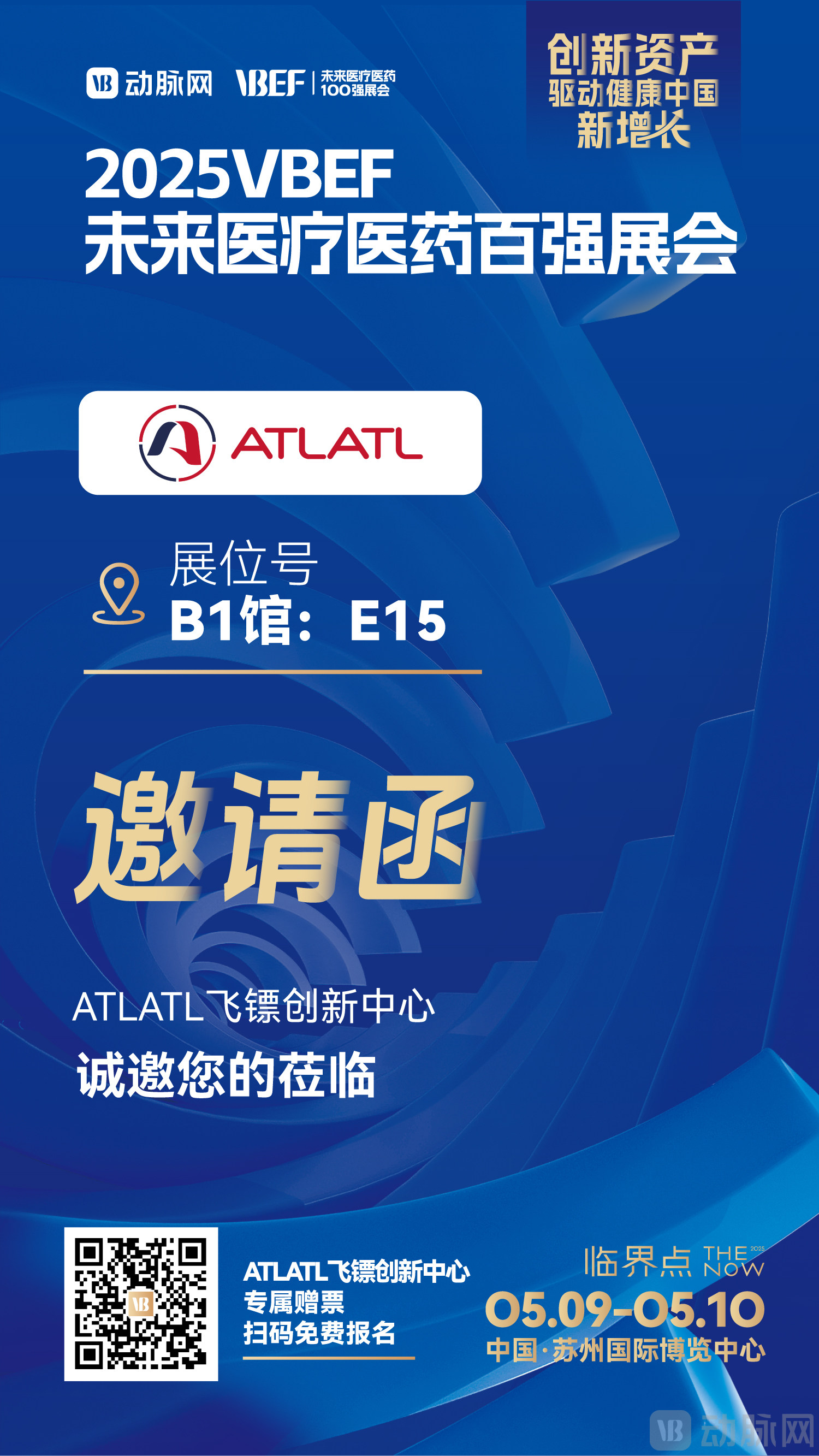
On the afternoon of May 9, the “ITBT & AI Drug R&D Forum” was hosted by the organizers of the 2025 VBEF Top 100 Future Healthcare and Pharmaceuticals Exhibition, with support from ATLATL Innovation Center.Focusing on Key Breakthroughs in ITBT in the Era of Large Language Models: An In-Depth Analysis of AI-Driven Drug Discovery and Hot Topics in Interdisciplinary Fields. By convening leading scientific and clinical experts, top-tier enterprises, and seasoned investors for dialogue, we explore cutting-edge innovative technologies and application cases, exchange practical experiences in technology translation, and provide a clearer roadmap for the development of the ITBT industry.
1New Explorations in ITBT in the Era of Large Language Models
Since its inception, ITBT has been closely intertwined with artificial intelligence and big data: as AI reshapes the IT paradigm, IT, as a tool, and BT, as the underlying logic, have entered a new height of organic integration.
Traditional drug development pipelines are characterized by long R&D cycles, high costs, and low success rates. The introduction of large language models (LLMs) has effectively addressed these challenges: in the target discovery phase, LLMs can rapidly analyze massive biological datasets to precisely identify potential targets; during drug design, they generate diverse compound structure predictions based on identified targets, thereby broadening the R&D pipeline; they predict drug efficacy and toxicity to reduce the risk of clinical failure; and they optimize clinical trial design to enhance efficiency and lower costs.
Looking at the broader precision medicine ecosystem, clinical testing applications and demands for translational research are becoming increasingly active. As the most abundant, complex, and archival-like precision medicine data gains greater recognition, a new era of high-quality biological big data is on the horizon.In fact, the emergence of clinical data is aligning with the rise of ITBT large models, increased computing power, and algorithm iteration.
From the R&D perspective, no AI-developed drugs have successfully been launched globally yet. Most companies remain in the exploratory stage, and key challenges—such as inconsistent data quality, model interpretability and accuracy, limited technical generalizability, scarcity of computational resources, and ethical and regulatory hurdles—remain to be addressed.
Meanwhile, AI-enabled ITBT has also given rise to new business models, such as leveraging proprietary AI expertise to advance R&D services, integrating internal and partnered pipelines, co-building technology platforms, and conducting data mining and analysis.As autonomous hematopoietic capabilities are further enhanced, innovative ITBT enterprises will gradually achieve a closed-loop commercialization model, striking a balance between technological innovation and market demand, as well as between open-source initiatives and commercial collaborations, thereby driving sustainable growth.
2Decoding ATLATL: Building a “Super Server” to Empower ITBT
It is evident that, due to the interdisciplinary nature and the integration of dry and wet lab experiments, ITBT innovative enterprises face varying degrees of demand for facilities, R&D support, and resources across multiple stages—including early-stage platform development, mid-stage innovation synergy, and late-stage collaborative networking. In particular, the substantial capital outlay required for establishing in-house laboratories, building laboratory teams, and procuring equipment—often amounting to tens of millions of yuan—poses a significant financial burden on ITBT startups.
In response, the “super server” ATLATL, designed to “engineer” life sciences, was born.Zhu Pengcheng, Founder and CEO of ATLATL, believes that 70% of the processes in biomedical research are common across the board, such as laboratory operations, general equipment, and foundational technical pathways. If a “super server” could provide infrastructure, operational systems, centralized core testing, and specialized R&D platforms, while also deconstructing the entire R&D process into standardized modules and offering supporting facilities and services, enterprise-side R&D efforts could then focus on more innovative and personalized aspects.
Guided by the “Super Server” concept, ATLATL has established multiple life sciences R&D and innovation platforms worldwide, with research and development centers in Beijing, Shanghai, Shenzhen, Hong Kong (China), Singapore, and other locations.
Specifically, ATLATL centers its operations around the AI Lab to provide clients with comprehensive R&D services spanning all stages, including drug activity testing, animal disease model construction, and efficacy evaluation. It supports key areas such as large molecules, small molecules, nucleic acid drugs, gene and cell therapy, and drug delivery, as well as cutting-edge fields like multi-omics analysis, gene editing, organoids, and organ-on-a-chip technologies, thereby establishing an exceptional experimental environment and refined operational management.
Unlike traditional incubators, ATLATL’s primary value lies inProviding resident enterprises with full-cycle operational management and on-site R&D services, not just space.Through in-depth collaboration with leading global enterprises and research institutions, ATLATL continuously innovates in the integration of R&D resources and capability sharing, accelerating deep integration and diversified cooperation among ITBT companies through its advanced systematic R&D model.
3Bringing Together the Upstream and Downstream of Industry, Academia, Medicine, and Investment: In-Depth Discussions on ITBT and AI Drug Discovery
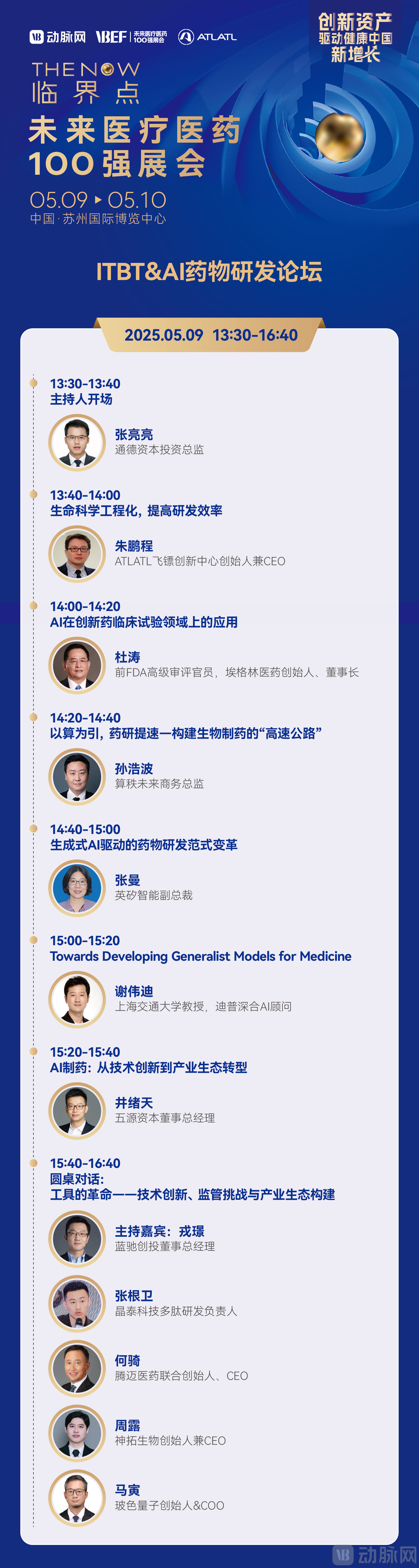
From incubator services to the iterative evolution of biotech business models, the ITBT sector is witnessing full-chain innovation spanning government, industry, academia, research, and investment. This forum will explore new narratives and solutions in ITBT and AI-driven drug discovery from three perspectives: clinical regulation, industrial empowerment, and ecosystem co-creation.
Zhu Pengcheng, Founder and CEO of ATLATLFrom the perspective of an incubator, deliver a keynote speech titled “Engineering Life Sciences to Enhance R&D Efficiency,” providing a comprehensive overview of the ITBT sector.
From the Perspectives of Scientific Research and Clinical Innovation,Former Senior FDA Review Official, Founder and Chairman of Eglin Pharma, Du TaoHow AI Empowers the "Most Expensive" Clinical Phase in Innovative Drug DevelopmentSun Haobo, Business Director at Suanzhi FutureWe will discuss how AI R&D and GPU cloud services are building the “highway” for biopharmaceuticals;Zhang Man, Vice President of Insilico MedicineIt will discuss the paradigm shift in drug discovery and development driven by generative AI;Professor at Shanghai Jiao Tong University, DeepSynth AI Advisor Xie WeidiAddressing the Challenges of Generalizability and Accuracy in Today’s Hotly Debated Large Medical Models
From the industry perspective,Jing Xutian, Managing Director at Wuyuan Capital; Zhang Liangliang, Investment Director at Tongde Capital; Rong Jing, Managing Director at BlueRun Ventureswill provide insights into the AI drug discovery industry from an investor’s perspective. In addition,Zhang Genwei, Head of Peptide R&D at XtalPi; He Qi, Co-founder and CEO of Tenmed; Zhou Lu, Founder and CEO of Shentuo Bio; and Ma Yin, Founder and COO of Bose QuantumFounders of leading enterprises will participate in the roundtable discussion titled “The Revolution of Tools: Technological Innovation, Regulatory Challenges, and Industrial Ecosystem Building,” sharing their respective innovative practices and solutions.
“For identifying innovative assets and seeking high-quality buyers, VCBeat VBEF is your premier choice.” VCBeat and ATLATL warmly welcome you to participate in the ITBT & AI Drug R&D Forum, join us in Suzhou for in-depth offline exchanges, expand your professional network in ITBT and AI-driven drug development, and jointly witness the future of China’s ITBT innovation ecosystem!