

2025 Medical Large Model Research Report: Empowering Practices of Nearly 300 Medical Large Models in In-Hospital and Out-of-Hospital Scenarios
Artificial intelligence (AI) technology has been applied in the healthcare sector for many years, and the emergence of large language model (LLM) technology has brought new possibilities to its application value and scope. The Chinese-made open-source LLM DeepSeek, which gained widespread popularity in late 2024, has significantly accelerated market education, raising the urgency for deploying LLMs in medical scenarios to a historical high. Hundreds of vertical LLMs have already been deployed across various segments of the healthcare industry, with enterprises developing proprietary specialized LLMs based on their own data assets and market advantages. Despite the abundance of products, the transition from product to commercial commodity remains constrained by policy, market dynamics, and other factors. What is the current state of penetration, application status, and tangible outcomes of medical LLMs in the healthcare sector?
This report, created and released by VBInsight in collaboration with the Chengdu High-Tech Zone Digital Intelligence Medical Innovation Alliance, explores the current penetration rate of large medical AI models in China from both market and enterprise perspectives. Based on surveys and interviews with over ten innovative companies, three investment institutions, and several clinical experts, the report aims to outline the competitive factors and advantageous development strategies for various types of large medical AI models, fostering discussion alongside industry partners committed to these efforts.
Key Points:
The development of large medical models is in its early stages. Having passed the "product development" phase, the industry now urgently needs to unlock commercial value through "performance validation." Currently, the lack of a clear verification and regulatory framework for the safety and efficacy of most large medical models remains a key bottleneck limiting their commercial adoption.
The market size of large medical AI models is projected to exceed RMB 10 billion by 2028. With current overall penetration remaining below 10%–20%, it represents a vast blue-ocean market awaiting corporate exploration.
As of May 1, 2025, 133 large medical models had been released, far exceeding the 94 released in all of 2024 and the 61 released in all of 2023. Among the 288 large medical models, 90% cover application scenarios aligned with policy guidelines.
Among the application scenarios of large medical models, the healthcare service sector is mentioned most frequently, accounting for as high as 53%. Within this sector, clinical decision support for specialized diseases, pre-consultation triage, assisted medical record generation, and AI-assisted diagnosis of medical imaging rank as the top four applications.
Large language models for text are concentrated in the medical IT services sector; image-based large models demonstrate the highest level of application maturity, with surprising advances in ultrasound and pathology; biological large models significantly accelerate drug discovery and development; and traditional Chinese medicine (TCM) large models are rapidly advancing, driven by multi-stakeholder efforts.
The penetration rate of large medical models is influenced by multiple factors. Addressing the issues of “willingness to use,” “intent to adopt,” “technical feasibility,” “usability,” and “regulatory permissibility” requires validation of pain points, market size estimation, assessment of technological and data capabilities, credible performance verification, as well as policy support and regulation.
Medical large language models offer flexible deployment options: they can be utilized as standalone products, serve as intelligent management platforms for AI applications, or act as foundational infrastructure for the research, development, and optimization of AI products.
Overall, driven by breakthroughs in generative technologies and large language models, large medical AI models provide greater support for text-based tasks, while their empowerment is even more pronounced for comprehensive, high-data-density, and multi-step workflow tasks.
Within the framework of large medical models, the collaborative paradigm between large and small models, driven by large language models, will be the mainstream market application approach in the coming years.
In the early stages of development, both the creation and application costs of large medical models were high. With the support of multiple factors such as technology, policy, and market dynamics, future iterations of large medical models will evolve toward greater accessibility and inclusivity.
Multiple Factors Drive Medical Large Language Models to Accelerate Blue Ocean Expansion
1Performance Continues to Break Through, Urgently Requiring Value Validation to Drive Commercial Deployment of Models
“Hundreds of Models” Poised for Launch, Awaiting Performance Validation to Unlock Commercial Value.The journey of large medical models from conceptual emergence to mature implementation generally involves requirements analysis and validation, model development, model performance testing or market-based validation of model performance, exploration of business models, and ultimately, large-scale commercial deployment within the industry.
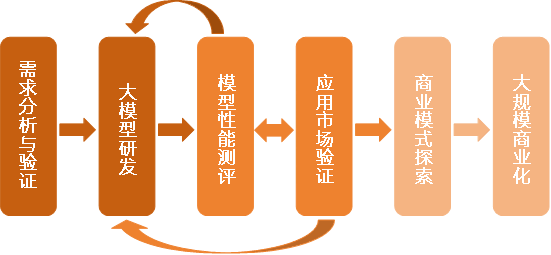
Development Stages of Large Medical Models from Concept to Implementation, Source: Public Information, Analysis by VBInsight
While the increasingly mature large model products driven by technological breakthroughs are exciting, there is still a long way to go for medical large models to achieve large-scale commercial deployment. Currently, in various niche sectors, some medical large models have established viable business models and achieved closed-loop commercial operations (we will provide a detailed analysis of typical use cases in selected application scenarios in Chapter 3). However, from an industry-wide perspective, development remains in its early stages, with most medical large models still in the phase of value validation. There is an urgent need to unlock their commercial potential through rigorous performance evaluations.
2Ample Blue Ocean Market Space for Large Medical Models Awaits Corporate Exploration
Large medical models experienced rapid growth from 2019 to 2023, with a compound annual growth rate (CAGR) of the market size exceeding 100%. The period through 2027 will remain an explosive growth phase for large medical models. According to data from YiOu Intelligence, the current market size for large medical models is approaching RMB 2 billion. During this industry boom, it is projected to grow at an average annual rate as high as 140%, surpassing RMB 10 billion by 2028. Although the rapidly expanding application boundaries continue to raise the ceiling for the market size of large medical models, achieving true large-scale implementation requires steady, incremental progress to gradually increase market penetration.
Currently, the penetration rate of large language models (LLMs) is relatively high in fields such as medical imaging, assisted diagnosis, and health management; however, the market remains in its early stages of adoption. Based on interviews and surveys conducted by VCBeat, it is estimated that the overall penetration rate of LLMs in healthcare is below 20%, with even more conservative respondents estimating it at under 10%. This indicates that this blue-ocean segment of healthcare LLMs still holds substantial market potential awaiting further penetration and exploration by enterprises.
3Multi-factor Aggregation Drives the Transition from “Products” to “Commercial Goods”
In recent years, large medical models have been actively promoted across multiple dimensions, including computing infrastructure development, algorithm refinement, advancements in chip technology, policy guidance, and market education.
Notably, the “Reference Guidelines for AI Application Scenarios in the Health Sector,” jointly issued in November 2024 by the General Office of the National Health Commission, the Comprehensive Department of the National Administration of Traditional Chinese Medicine, and the Comprehensive Department of the National Disease Control and Prevention Administration, clearly defines four major sections, thirteen categories, and a total of 84 specific application scenarios, among which 19 explicitly mention the application of large medical models.

“Reference Guidelines for AI Application Scenarios in the Health Sector”: Specific Scenario Showcase. Source: Official Website of the National Health Commission; compiled by VBInsight (✓ indicates scenarios explicitly mentioning large model applications))
Moreover, since its release in late 2024, DeepSeek has rapidly gained widespread popularity across various industries, with the healthcare sector being no exception. In the realm of large medical models, DeepSeek’s impact has transcended mere technical breakthroughs. Its sudden rise to prominence has served as a direct and powerful form of market education for practitioners at all stages of the healthcare industry, as well as for end-user patients and consumers. This has swiftly enhanced market acceptance and active adoption of large medical models, shifting the paradigm from “passive acceptance” to “proactive embrace.”
1The Industry Welcomes Nearly 300 Large Language Models, with 90% Covering Application Scenarios Outlined in Policy Guidelines
In 2025, there was an intensive release of large medical models; as of May 1, a total of 133 large medical models had been launched, far exceeding the numbers in 2023 (61 models) and 2024 (94 models).
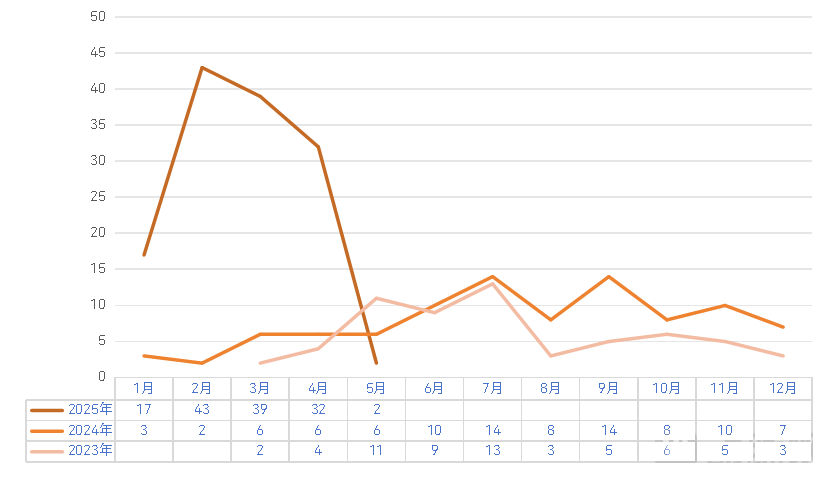
Number of Large Medical Models, 2023–2025 (as of May 1, 2025). Source: Public information; compiled by VBInsight.
As of May 1, 2025, we have cataloged a total of 288 major publicly available medical large language model (LLM) cases on the market. More than 90% of the application scenarios for these medical LLMs are covered in the "Reference Guidelines for Artificial Intelligence Application Scenarios in the Health Sector." These models span 12 categories of application scenarios, with a total mention frequency of 814 across all scenarios. Among them, medical service scenarios involve the largest number of LLMs, with a total mention frequency of 430, accounting for nearly 53%.
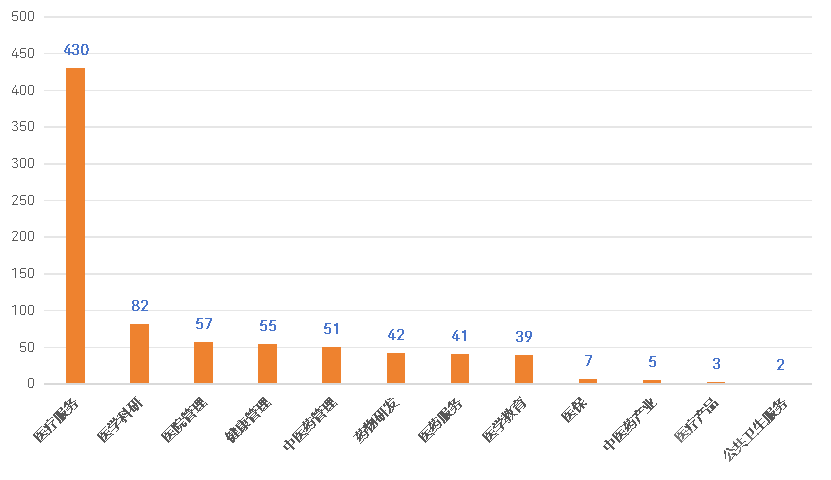
Submission Frequency of Application Scenarios for Various Large Medical Models; Source: Public Information, Compiled by VBInsight
From initial attempts in 2023, to significant industry progress in 2024, and then to the deployment of over one hundred models before mid-2025, the explosive growth trend of large medical models has become clearly evident.
2Four Types of Large Medical Models, Showcasing Seven Common Technological Development Pathways
Driven by policy support and technological iteration, China is accelerating the construction of its medical large language model (LLM) product matrix. Given the varying degrees of application penetration across different scenarios and stakeholders, this report systematically reviews and quantitatively analyzes the application scenarios of mainstream LLM products. By focusing on four core sectors—text-based LLMs, medical imaging, drug R&D, and the Traditional Chinese Medicine (TCM) industry—the report aims to provide a comprehensive overview of the technical implementation pathways and industrial development trends of medical LLMs.
Large Language Models: The Largest Share in Healthcare IT Scenarios.Driven by multiple factors, including technical adaptability, data foundations, application scenario requirements, and the feasibility of industrial implementation, large language models (LLMs) remain the primary focus in the development of medical large models. Their dominance stems from the critical need for language processing in healthcare settings, the accessibility of textual data, technological maturity, and the efficiency of commercial deployment. Among these, medical IT represents the largest segment for the implementation of large models. Based on a systematic review of 288 application scenarios for medical large models, non-medical imaging medical IT scenarios were mentioned over 300 times out of a total of 663 mentions, accounting for nearly 46% and emerging as the core direction for practical implementation.
Physicians have become a vital part of the “AI-created” cohort.As of April 30, 2025, among the top 100 hospitals in China’s “2022 China Competitiveness Ranking,” 98 have publicly announced the completion of large language model (LLM) deployment. Of these, 38 hospitals have further conducted research and development based on general-purpose models, creating 55 vertical medical models tailored to their specific needs. Collaborations with enterprise partners remain the predominant approach, with more than half of the projects developed through this model.
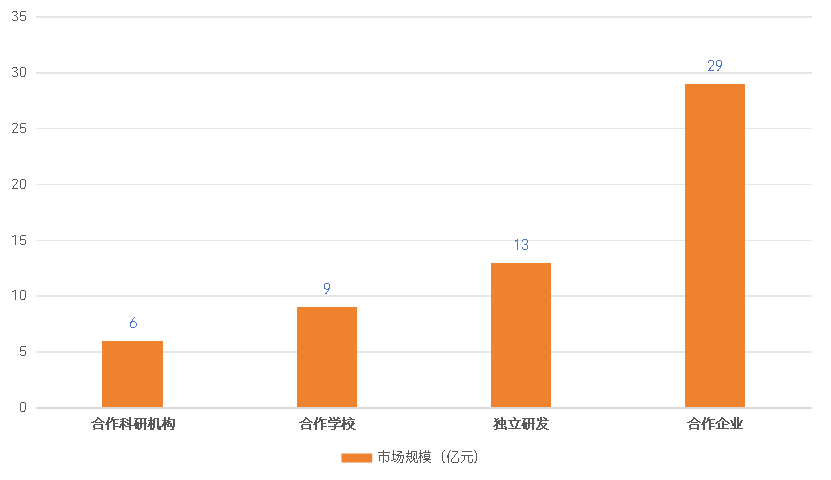
Distribution of Development Models for Vertical Medical LLMs (as of April 30, 2025). Source: Public information, compiled by VBInsight.
Imaging Large Models – The Most Mature Development, Covering the Full Lifecycle.Medical imaging is one of the most mature healthcare scenarios for the deployment of artificial intelligence (AI) technologies, having established a value-enablement system that covers the entire workflow of image acquisition, processing, and diagnosis. An analysis of the market product landscape reveals 56 large-model-related products focused on the medical imaging sector, with auxiliary diagnostic applications for anatomical regions such as the heart, bones, head and neck, and lungs being the most widespread. Notably, ultrasound and pathology have emerged as key areas of breakthrough, with companies such as MaiDe Intelligence (ultrasound), TouChe Future (pathology), and YiCe Technology (pathology) launching respective large models to support clinical auxiliary diagnosis.
Large Models for Drug R&D: An Urgent Need for Qualitative Change.Based on statistical data, the application scenarios of most large biological models are currently concentrated in the field of drug R&D. It should be noted that large biopharmaceutical models have not yet achieved disruptive breakthroughs in existing scenarios, such as empowering medical institutions and exploring drug R&D; they remain in a stage of incremental innovation characterized by technological integration and scenario adaptation. With the deepening of algorithm optimization, data accumulation, and interdisciplinary collaboration, this field is expected to yield transformative technological breakthroughs.
TCM Large Language Models: Multi-Stakeholder Efforts Drive Rapid Development.Based on the numerous large models currently available, their application in the traditional Chinese medicine (TCM) industry is continuously expanding. In 2023, approximately 13 TCM-specific large models were launched; this number decreased slightly to nine in 2024, with eight products released in 2025. Data indicate that the development of large models for the TCM industry has drawn upon diverse resources, demonstrating a trend of close collaboration among academia, research institutions, and industry.
Based on the logic of technological evolution and industry practices, the core application scenarios and technological development pathways of current large medical models can be summarized as follows:
Medical services remain the mainstream application scenario
Large model applications are less prevalent in areas such as public health services, elderly care and childcare services, and medical robotics.
Frequent Mentions of Primary Care Applications
Deep Penetration of Applications in the Field of Traditional Chinese Medicine
Large Models Are Gaining Momentum to Empower the Healthcare Industry
Revolutionizing Paradigms in Medical Education and Scientific Research
Health Management Scenarios May Become High-Potential Applications for Large Medical AI Models
3Six Major Healthcare Application Scenarios: Deconstructing the Implementation Path of Large Language Models
Among the 288 large medical language models analyzed, with a total of 814 mentions across application scenarios, 56 subfields were covered within 12 broad application categories. Clinical decision support for specific diseases, pre-consultation triage, assisted medical record generation, and AI-assisted medical imaging diagnosis were the most frequently mentioned, all falling under the broader category of medical services.
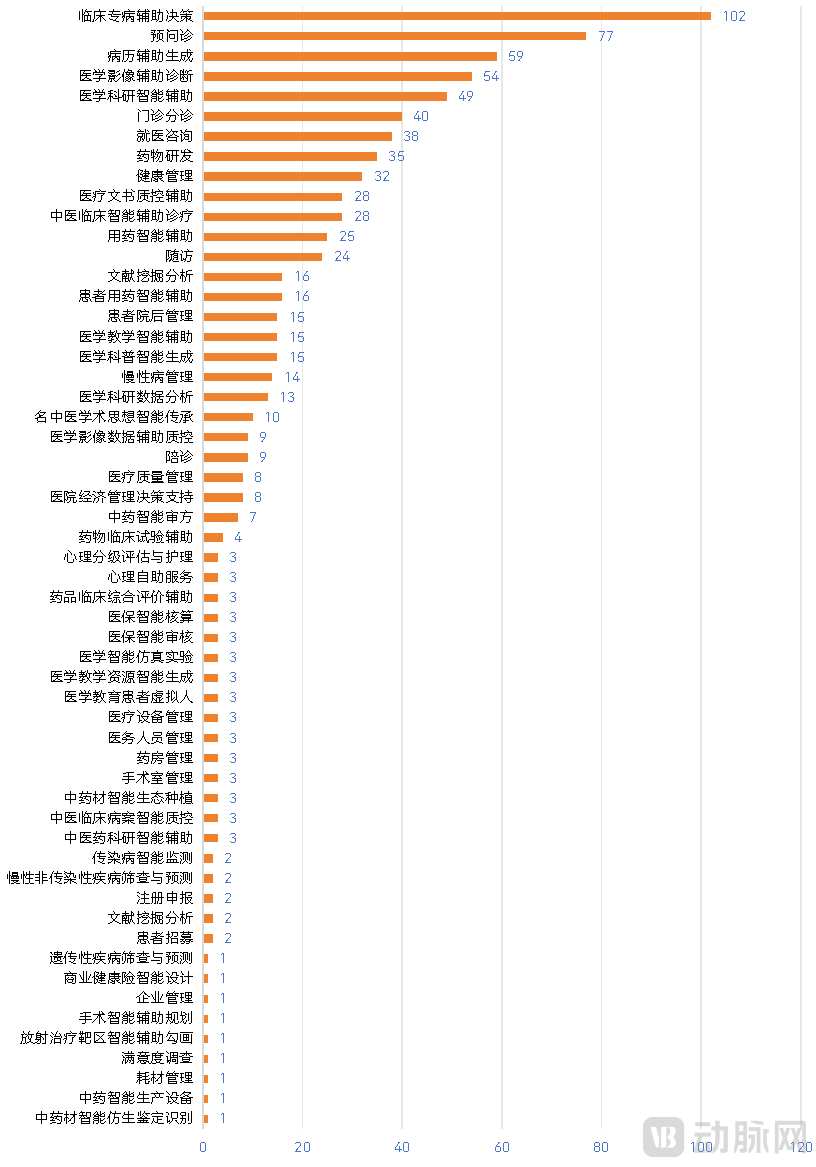
Frequency of Mentions for the 56 Sub-scenarios Involved in Large Medical Models, Source: Public Information, Compiled by VBInsight
Technical Implementation Pathways for Differentiated Value Logic.Based on the analysis of five core application scenarios, the technical implementation paths for each scenario, formed through differentiated value logic, are primarily as follows:
Large Healthcare Institutions: Expanding Outward from Core Smart Healthcare Scenarios
Small Specialized Medical Institutions: The Tracks of Consumer Healthcare and Intelligent Traditional Chinese Medicine Are Heating Up
Government: Achieving Quality Improvement and Efficiency Gains Across Multiple Grassroots Scenarios
Pharmaceutical Companies: Challenges Remain in Implementation
Patient: Significant Potential for Data Mining
1Penetration rates are influenced by multiple factors, requiring joint efforts to drive commercial implementation.
The adoption rate of large medical models in practical applications is influenced by multiple stakeholders. On the demand side, there must first be clear and genuine pain points, followed by a sufficiently large market size to attract technology companies and capital investment in this sector. After validating the demand, enterprises need to thoroughly assess the feasibility of product development, such as whether the technology is robust enough and whether the data is sufficiently accurate. Finally, large-scale commercial deployment depends on policy support from relevant authorities, providing guidance across areas including technological development, market access, product performance validation, and pricing mechanisms.
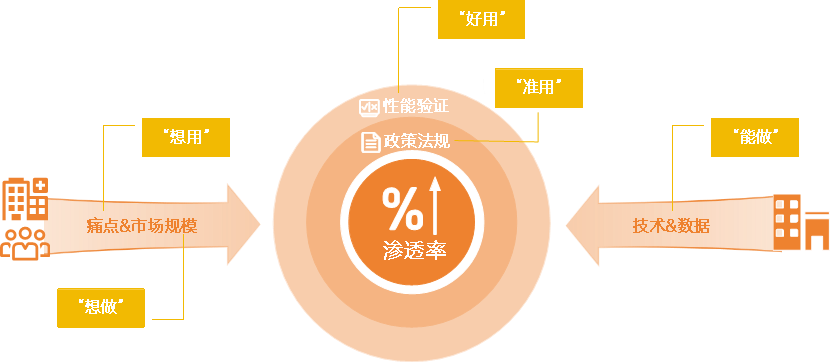
Factors Influencing the Penetration Rate of Large Medical Models, Source: Public Information, Compiled by VBInsight
Based on this penetration logic, large medical AI models currently achieve the highest penetration rate in radiological imaging-assisted diagnosis, estimated at nearly 40% according to surveys. Other application scenarios with subsequent levels of penetration include assisted interpretation and structuring of examination reports, medical record quality control, tools for assisted consultation and triage, clinical decision support, physician assistants featuring intelligent medical record documentation, research applications, drug development, and health management. We will analyze the influencing factors for each of these areas in the following subsections.
2“Serious” and “Supportive” Medical Application Scenarios Each Have Their Benchmarks
Medical large language models (LLMs) suitable for in-hospital settings (including primary care institutions) can be categorized into serious-care medical LLMs and auxiliary medical LLMs, based on their distinct clinical application scenarios. A single medical LLM is not restricted to only one type of application scenario; it can be deployed simultaneously across both categories or empower the development of related applications in each. Given that the deployment of medical LLMs exhibits both “product” and “platform” characteristics—meaning they can be directly applied as standalone products or serve as a “platform” to enable further upgrades or research and development of AI-powered products—our discussion on implementation maturity encompasses both forms of application. When evaluated under its “platform” attribute, the assessment will be based on the extent of real-world implementation of the AI applications it empowers.
Serious Medical Large Models: Imaging Leads the Way
Large language models for serious medical applications have the highest penetration rate in the field of imaging-assisted diagnosis, which may be related to the nature of their task, which requires qualitative analysis. Based on training methods and application purposes, medical large language models can be categorized into discriminative and generative models. The former learns conditional probability with a constrained generation space, akin to answering closed-ended true/false questions, thereby achieving relatively higher accuracy. The latter learns joint probability with an unconstrained generation space, similar to answering open-ended questions, resulting in weaker controllability of output.
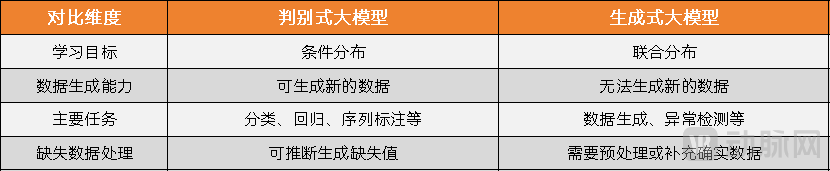
Performance Comparison Between Discriminative and Generative Large Models, Source: Public Information, Compiled by VBInsight
Discriminative large models, owing to their higher controllability of outcomes, are more capable of enhancing accuracy and aligning closely with the performance of clinicians, thereby demonstrating more tangible application value in critical healthcare scenarios. Consequently, discriminative large models for critical healthcare, represented by imaging-assisted diagnosis, are currently at a more mature stage of development and advancement. Beyond the nature of their model applications, there are two additional common reasons why imaging large models for assisted diagnosis are at the forefront of implementation. First, they hold an advantage in performance validation: such products have clear evaluation standards, including quantitative metrics like “sensitivity” and “specificity,” making their performance validation straightforward. Second, they benefit from a more robust regulatory framework: their regulatory pathway is relatively clear, allowing them to obtain explicit market access approval through National Medical Products Administration (NMPA) medical device certification, which facilitates commercial promotion. Furthermore, the promotion of mutual recognition of medical test results accelerates their practical deployment.
The difficulty of data processing significantly impacts the barrier to entry for large model development.A further breakdown of application scenarios for large imaging models reveals that the number of products decreases and market adoption is at an earlier stage in the order of radiology, ultrasound, and pathology. A key contributing factor is the varying difficulty of data processing across these subspecialties.
Radiology Imaging
Standardized Data Shortens the “Onboarding” Time for R&D.Whether for artificial intelligence products or related large medical models, radiological imaging has emerged as the most mature niche application scenario, owing to its standardized data and accessible medical logic. According to data from Zhiyaoju, as of March 2025, the National Medical Products Administration (NMPA) had approved 99 Class III certificates for AI-based radiological imaging. Leading recipients of these Class III certificates—Shukun Technology, Deepwise Healthcare, and Infervision—have all launched relevant large medical models. These initiatives facilitate comprehensive product iteration and upgrades while continuously enhancing model performance to approach clinical-grade application standards.
“From ‘Usable’ to ‘User-Friendly’: Transforming Large Radiology Imaging Models from ‘Products’ into CommercialProduct”The relative ease of data processing has allowed radiology imaging products to reach the market earlier. However, achieving commercialization and large-scale implementation requires not only clinical adoption but also ensuring that clinicians find these tools “user-friendly.” Currently, AI imaging products often receive positive feedback and active usage during trial periods due to their superior performance. Yet, their long-term clinical application involves changes to physicians’ workflows. The key to further increasing the penetration rate of AI in imaging lies in better integrating these products into clinical workflows, cultivating habitual use among clinicians, and thereby enhancing user motivation. Several companies in the industry have already made proactive strides in this area with visible results. For instance, Shukun Technology, leveraging its multimodal large model “Shukun Kun,” has achieved end-to-end integration across diagnosis, teaching, research, follow-up, and departmental management, providing radiologists with a comprehensive suite of digital and intelligent auxiliary tools. In the Industry Large Model Innovative Application Competition hosted by the Beijing Municipal Science & Technology Commission, “Shukun Kun” emerged as the top performer, with diagnoses consistent with expert judges in 99 out of 100 cases and superior to the experts in one case. Its high precision and one-stop service capabilities are driving the transition of “Shukun Kun” from a mere “product” to a viable “commercial commodity,” accelerating its market penetration and practical implementation.
Ultrasound Imaging
Ultrasound imaging data are in dynamic video format, and diagnostic recommendations must be made during the examination itself. Therefore, “real-time” capability is a critical requirement for artificial intelligence (AI) products in ultrasound, necessitating real-time quality control and real-time diagnostic analysis during the scanning process. Due to differences in data formats and requirements, ultrasound lags behind radiology in terms of data standardization and accessibility of medical logic. Consequently, greater effort is required during the data processing phase, with a heavier reliance on experienced experts for data annotation. This also helps explain why there are very few Class III medical device approvals granted by the National Medical Products Administration (NMPA) for ultrasound-assisted diagnostic software; to date, only companies such as MaiDe Intelligence and Yizhun Technology have obtained such Class III certifications.
Stepwise Validation of Large Ultrasound Imaging Model Performance. In the clinical workflow for tumor diagnosis, ultrasound examinations typically provide initial recommendations, followed by further radiological or pathological evaluations when necessary. In practice, the likelihood of requiring such additional tests is not low, partly due to variability in sonographers’ technical expertise. Many of these follow-up examinations could potentially be avoided, particularly in primary care settings where medical resources are limited. Therefore, to fulfill the AI mission in the ultrasound field—“junior physicians + AI = senior physicians”—the accuracy of ultrasound-assisted diagnostic products must continually approach that of pathological results. Currently, numerous companies in the industry are striving in this direction and have already demonstrated initial success. For instance, Maide Intelligence’s “Thyroid Nodule Ultrasound Imaging-Assisted Diagnostic Software,” which received Class III medical device certification in March this year, integrates real-world clinical diagnostic scenarios into AI model training, achieving ultra-high precision in differentiating benign from malignant nodules. Clinical trial results showed that the product attained a 96% accuracy rate in distinguishing benign from malignant thyroid nodules, demonstrating high concordance with histopathological findings.
Pathological Imaging
The “gold standard” imposes stringent requirements on large language models. As the gold standard for tumor diagnosis, pathological examination carries greater clinical gravity than ultrasound and radiological imaging, thereby raising the bar for medical large language models in this field. While there is no unified industry-wide accuracy threshold, it is an implicit consensus among AI companies in the pathology sector that sensitivity must approach 100%. Furthermore, the development conditions for large language models in pathology are relatively demanding. First, pathological images suffer from low standardization. Due to the complexity of pathological image data and vendor-specific proprietary barriers, progress in standardization has been slow, necessitating substantial investment of human and material resources in data processing and annotation. Second, China faces a severe shortage of pathologists, and the scarcity of expert resources further raises the threshold for data processing.
Pathology Large Models Build Core Competitiveness Through Multi-Dimensional Approaches.Images processed by different pathologists exhibit significant variations in staining, which demands that large models possess robust generalization capabilities to accurately identify and process these images. Pathology foundation models are typically co-developed and trained in collaboration with leading teaching hospitals. Products with insufficient generalization may demonstrate excellent performance under standardized staining conditions comparable to those in top-tier institutions, but they often suffer from high false-positive rates in secondary and lower-tier medical facilities. This limitation hinders the mission of extending high-quality medical resources to grassroots levels. Therefore, strong generalization capability is critical for pathology foundation models to fulfill the AI-driven goal of enabling “junior physicians + AI = senior-level diagnostic expertise.” Robust generalization ensures that the model maintains consistent accuracy not only in top-tier hospitals but also in secondary and lower-tier medical institutions. For instance, Thorough Future has leveraged its Thorough Brain 2.0 foundation model to empower its AI pathology product, Thorough Insights 4.0, achieving performance suitable for professional clinical applications. It supports intelligent pathological analysis for more than ten types of organs commonly affected by high-incidence tumors, including the stomach, intestine, esophagus, pancreas, lung, prostate, breast, endometrium, cervix, and lymph nodes across various organs. The system precisely localizes cancerous regions and completes disease subtyping. In clinical pathological applications at large hospitals, it achieves a sensitivity close to 100% and a specificity exceeding 94%. In small and medium-sized hospitals, it maintains a sensitivity close to 100% and a specificity exceeding 90%.
Furthermore, as pathology serves as the gold standard and can directly influence treatment plans, pathologists tend to be more cautious in their adoption of artificial intelligence (AI). If AI systems merely provide binary “yes” or “no” conclusions, pathologists may still adhere to traditional workflows by personally verifying diagnostic accuracy, thereby hindering the realization of AI’s potential to enhance clinical efficiency. Consequently, the interpretability of large pathology models may constitute another core competitive advantage. By presenting not only qualitative results but also fully disclosing the underlying reasoning logic and professional basis, these models can bolster trust and facilitate a shift among physicians from passively accepting results to actively leveraging AI for precise diagnosis and treatment. Currently, large pathology models possessing such core competencies have emerged in the industry. For instance, Yice Technology has released “Lingmou,” a multimodal large pathology model that incorporates an innovatively constructed Pathology Chain-of-Thought framework. This framework integrates layer-by-layer reasoning analysis with interpretability mechanisms, allowing it to reconstruct the clinical reasoning pathway for pathologists alongside diagnostic outputs. By lowering the threshold for trust, this approach enables more pathologists to confidently utilize Lingmou’s clinical-grade AI-assisted diagnostic services, which cover 57 tumor subtypes across nine organs.
Finally, accessibility is also one of the core competencies in the application promotion and implementation of large models. As is well known, large models require strong computational power support. If the use of large models comes with GPU purchase costs that can easily reach millions, it will undoubtedly deter some potential users. The current situation on the user end has also prompted large model companies to continuously optimize their performance per unit of computational power, making large models "large but not heavy," enhancing model accessibility, and thereby promoting commercialization. For instance, pathology medical large model companies such as Touche Future and Yice Technology have achieved lightweight private deployment through technical optimization, which not only accelerates their own commercialization processes but also collectively promotes the development of the pathology artificial intelligence industry.
Reliability, usability, and accessibility are common requirements for large language models (LLMs) in serious medical applications. In fact, accessibility is a universal requirement not only in the field of pathology but also for all LLMs deployed in serious medical scenarios; furthermore, reliability and usability are also critical demands.

Performance Requirements for Large Models in Serious Healthcare; Source: Public information, survey interviews, intelligently compiled by VBInsight
Auxiliary Medical Large Model - Demonstrating Super Flexibility
While large models for serious medical care typically cover specialized application domains, large models for auxiliary medical care encompass broader and more flexible application scenarios. To clarify their scope of application, we categorize the applications of auxiliary medical large models into three groups based on the service recipients: those centered on physicians, those centered on patients, and those centered on hospital management.
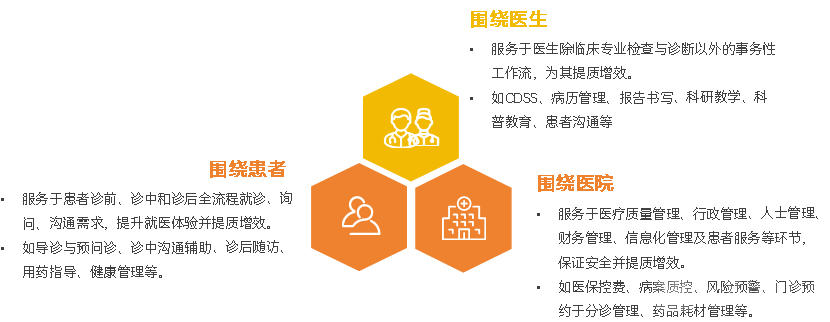
Classification of Application Scenarios for Auxiliary Medical Large Models, Source: Public Information, Compiled by VBInsight
Currently, the deployment and promotion of large AI models in auxiliary healthcare are more mature overall than those in critical care medicine, with artificial intelligence tools designed to enhance efficiency and quality for physicians being the most widely adopted.
Multi-scenario applications require large models to be more “flexible”。It is evident that, compared with large models for serious medical applications, large models for assisted healthcare cover a broader and more diverse range of scenarios. Furthermore, institutional requirements vary even within the same scenario, necessitating greater flexibility from these large models.
One manifestation of its flexibility lies in the nature of the product. Unlike large models for serious medical care, which adhere to the “model-as-product” paradigm, large models for auxiliary medical care tend to emphasize their role as a “foundation.” Specifically, they provide multimodal data—including medical knowledge, policies and regulations, and safety requirements—needed to enhance quality and efficiency across various in-hospital scenarios, while training the model to incorporate decision-making logic specific to the healthcare industry. Healthcare institutions can leverage this foundation as the basis and management platform for enterprise-wide AI products, consolidating all AI services. Alternatively, they can conduct further R&D based on the large model to develop AI products tailored to different stakeholders and application scenarios, thereby facilitating comprehensive digital and intelligent management at the hospital level. For instance, the Shenzhou Medical Large Model 2.0 is a multimodal large model capable of processing text, imaging, pathology, genomic, and time-series data. It serves as a “cockpit” for overseeing hospital-wide AI applications and provides a professional foundation for developing AI products across various use cases. Based on this large model, the company has already developed 20 specialized AI application products covering areas such as rare diseases, brain tumors, and pediatric immunodeficiencies. These AI tools cater to diverse users—including physicians, patients, and hospitals—across multiple scenarios, helping to improve efficiency and the patient care experience.
Furthermore, the industry has seen the emergence of flexible approaches that empower users to independently develop AI service tools based on large language models (LLMs). For instance, Yidu Tech provides a dual middle-platform architecture integrating “big data + LLMs,” enabling users to build their own specialized small models and intelligent agents on this platform. Currently, this solution has been deployed in more than 20 leading hospitals, with 80% of its users being physicians. These professionals leverage self-built intelligent agents to support daily workflows, including clinical diagnosis and treatment, scientific research, medical education, and patient services, resulting in exceptionally high market adoption rates.
It is evident that flexible, secondary-development-enabled auxiliary large medical models carry not only specific product value but also an additional mission and capability to facilitate the practical implementation of artificial intelligence (AI) and drive industry development. In addition to flexible specialized large medical models, open-source large medical models have emerged in the industry, contributing to the growth of the AI ecosystem. In early 2025, JD Health announced the open-sourcing of its “Jingyi Qianxun” model. This “transparent” technical architecture not only intuitively demonstrates the technological prowess of “Jingyi Qianxun” to the industry but also aims to promote the further implementation of AI services through collaborative technology development. The increasing availability of professional pre-trained large models helps startups avoid the high costs associated with building medical large models from scratch, lowers the barrier to model research and development, and even enhances model performance through higher-quality data.
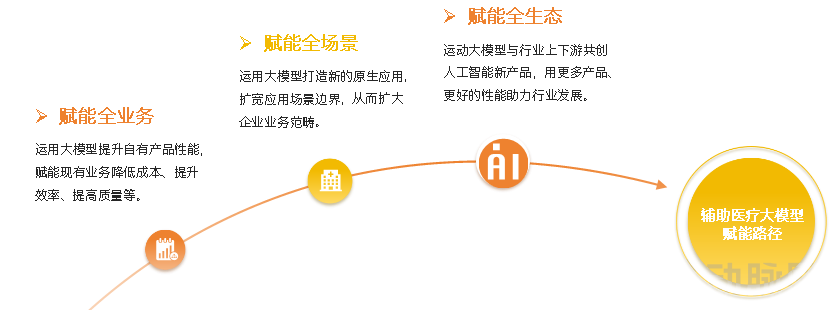
Three Major Empowerment Pathways for Large Healthcare Models, Source: Survey Interviews, Compiled by VBInsight
Medical Large Models Empowering Primary Care: Target Implementation Scenarios
Currently, primary healthcare institutions in China are delivering over half of the nation’s clinical consultations and the vast majority of basic public health services, despite accounting for only one-third of the healthcare workforce. As public health awareness rises, the population ages, and the number of individuals with chronic diseases increases, the responsibilities of primary care are becoming increasingly critical and burdensome, thereby exacerbating the shortage of physicians. Driven by policy support and urgent demand, primary care has emerged as an ideal setting for the deployment of medical artificial intelligence, including the rapidly emerging large language models in healthcare.
Currently, numerous medical large-model enterprises, such as iFlytek Healthcare, Shenzhou Medical, and Shukun Technology, have established deployments in primary care scenarios and successfully achieved closed-loop commercialization.
Standardization: Enhancing quality and efficiency for physicians, and bolstering public trust.Primary care physicians are typically general practitioners who must cover a broad spectrum of diseases and medications. As the first line of defense in disease prevention and treatment, they require less expertise in managing complex or rare cases and more “standardized” competence in accurately diagnosing common and chronic conditions—avoiding misdiagnosis and missed diagnoses—and ensuring rational medication use. Furthermore, this “standardized” competence is reflected in public health services such as patient follow-up and health record management. For patients and residents, receiving diagnostic and treatment outcomes consistent with those provided by tertiary hospitals is essential to enhancing trust in primary healthcare.
Large medical models’ capacity to learn and absorb massive, multimodal knowledge, coupled with their ability to produce standardized outputs, aligns perfectly with the demand for “standardization” in primary care settings. In recent years, large-model-enabled general practice clinical decision support applications have demonstrated remarkable effectiveness in primary care, driving a steady increase in their penetration rate. For instance, iFlytek Healthcare’s “Smart Doctor Assistant” became the world’s first AI robot to pass the comprehensive written component of China’s National Medical Licensing Examination as early as 2017, scoring 456 out of 600 points and surpassing 96.3% of human candidates. In practical deployment, the solution focuses on primary care scenarios, empowering general practitioners through the “Smart Doctor Assistant” and achieving significant improvements in the standardization and efficiency of diagnosis and treatment for common diseases. Empowered by the Spark Medical Large Model X1 released this year, the Smart Doctor Assistant has achieved substantial enhancements in core performance: the accuracy rate of rational medication review exceeds 95%, and the top-1 recommendation rationality rate for diagnosing high-incidence common conditions in primary care has surpassed 95%. While providing efficient clinical decision support to primary care physicians, the system effectively enhances residents’ trust in primary healthcare services. As of April 2025, the product has been deployed in over 73,000 primary healthcare institutions across 682 districts and counties in 31 provinces and municipalities nationwide, serving more than 220,000 primary care physicians and delivering over 970 million AI-assisted diagnostic recommendations cumulatively.
3Out-of-Hospital Medical Large Models Facilitate the Shift from “Providing Tools” to “Delivering Value”
Just as there are no strict criteria for distinguishing between large models for serious medical care and those for assisted medical care, the sector of out-of-hospital medical large models is also analyzed based on application scenarios, examining the implementation of medical large models in these contexts. In fact, many medical large models in the industry can simultaneously empower multiple scenarios both within and outside hospitals.
Out-of-hospital application scenarios are subject to relatively fewer policy regulations and constraints. Once model performance meets the requirements of these scenarios, the process of establishing partnerships becomes more direct and straightforward. Consequently, in areas where large language models can significantly enhance efficiency and reduce costs, mature implementation cases have already emerged within the industry. We will analyze the current penetration rates by taking clinical research and consumer-facing (C-end) health management as examples.
Drug R&D: Urgent Need for a Qualitative Leap Driven by Extreme Efficiency Gains
The vast market size of AI applications in drug R&D, coupled with significant room for quality improvement and efficiency gains, exerts a strong allure for AI exploration. In fact, the exploration of AI applications in drug development has been underway for quite some time. With the support of large language models, beyond enhancing existing AI capabilities, new capabilities may emerge to empower industry development.
Multi-Stage Penetration of AI Services. Drug R&D encompasses the drug discovery phase, preclinical phase, clinical phase, and post-marketing real-world studies. AI applications permeate every link in this lengthy chain.

Examples of AI Application Scenarios Across Various Stages of Drug R&D; Source: Public Information, Compiled by VBInsight
AI Also Needs to “Specialize in Its Own Field”。The diverse stages of drug research and their distinct application scenarios require different AI services, implying that large models designed to empower specific stages must possess specialized expertise, which in turn necessitates variations in the types and sources of training data.
For instance, large language models (LLMs) applied in the clinical trial phase focus primarily on site and patient selection, trial design and optimization, data document management, and risk prediction with decision support. This stage demands extremely high capabilities in real-time data processing and ethical compliance. Therefore, beyond learning and understanding relevant laws and regulations, LLM training requires data accumulated from real-world clinical trials. The models must not only acquire professional knowledge but also learn domain-specific intervention and feedback mechanisms—essentially mastering the ability to process information and act in real time. For example, when risks are identified, the AI service should provide early warnings while simultaneously executing corresponding risk mitigation actions empowered by the LLM. By learning such “actions,” AI services can transcend reactive responses typical of digital customer service agents or vast knowledge bases, evolving into managerial services with proactive execution capabilities. This transformation enables them to serve as responsible “digital employees” for sponsors, rather than functioning merely as data management tools. Take Taimei Medical Technology’s Wiz.AI platform as an example. Its foundational capabilities rest not only on extensive professional knowledge, laws and regulations, and public data but also on over a decade of operational experience from more than 5,000 clinical research projects. This experience establishes its core competitiveness in AI-driven clinical trial services. Leveraging this comprehensive strength, Wiz.AI demonstrates robust implementation capabilities in practical business scenarios, empowering SaaS platforms and services to perform intelligent managerial functions across various application scenarios, going far beyond simple intelligent Q&A.
Furthermore, in the field of drug discovery, the empowerment of large models has added another powerful tool to years of AI applications. First, the application of large models enhances the interpretability of AI results, thereby boosting trust and enabling users to understand and assess their reliability, which in turn increases the acceptance of AI services. Second, large models significantly lower the barrier to understanding and applying specialized knowledge, greatly improving the efficiency of related processes. It is evident that there is an industry-wide consensus on efficiency gains. However, the validation of R&D capabilities is still underway; no AI-developed drugs have yet reached the market stage, leading the industry to adopt an increasingly cautious stance. Currently, in the field of drug R&D, companies are more willing to pay for value-driven outcomes rather than merely for efficiency improvements or application tools.
Consumer Health Management – Building Personalized Services for Mild, Moderate, and Severe Conditions
Another highly attractive out-of-hospital application scenario for large models is consumer-oriented health management services.
Lightweight Service: Serving as the Public’s AI Health Assistant.Since the release of the "Healthy China 2030" plan in 2016, public awareness of health has continued to strengthen, with a gradual shift from “disease treatment” to “disease prevention” and from “passive treatment” to “proactive health management.” This transition has led to increased demand for health services, such as improving sub-health conditions, consulting on occasional daily discomforts, interpreting medical examination reports, learning about medications and diseases, managing personal health records, and preventing diseases. Traditional healthcare systems are clearly unable to support this surge in demand for health services. Therefore, the application of large language models can significantly address the shortage of health service capacity, and many ideal solutions have already emerged in the industry. For example, iFlytek Medical launched its first AI health assistant app for residents, iFlytek Xiaoyi. Leveraging the Spark Medical Large Language Model and a database of hundreds of millions of high-quality, authoritative medical knowledge entries, it creates a personal digital health space for users. The app covers three core health scenarios: “pre-consultation,” “during medication,” and “post-examination,” providing services such as symptom self-checks, medication inquiries, report interpretation, and personalized health record management. Currently, the iFlytek Xiaoyi app covers more than 1,600 high-frequency common diseases, over 2,000 common symptoms, more than 4,000 common medications, and over 6,000 common examination items, achieving a user satisfaction rate of 98%.
Treatment and Services: Provision of companionship-based care.Among consumer-facing health management services, chronic disease management stands out as a highly practical and attractive application scenario. As the number of patients with chronic diseases in China continues to rise, medical insurance expenditures for chronic disease treatment remain persistently high, accounting for a significant portion of overall healthcare spending. Nevertheless, the current state of chronic disease management in China remains unsatisfactory. Fundamentally, effective management of chronic conditions requires not only pharmacological interventions but also lifestyle modifications. The latter demands substantial human resources and time commitments, which the existing healthcare system—already strained by insufficient supply—is ill-equipped to provide.
Chronic disease management requires organic collaboration among multidisciplinary teams. Since lifestyle intervention is a long-term process that involves cultivating new healthy habits, the chronic disease management team must provide patients with long-term companionship and support. The corresponding high labor costs constitute a major obstacle to the practical implementation of chronic disease management. Furthermore, purely manual chronic disease management easily reaches the ceiling of service capacity. In China, there is a significant manpower shortage among doctors, nutritionists, professional fitness coaches, and health managers relative to the vast population in need. It is precisely for these reasons that the application of large medical models in chronic disease management scenarios demonstrates substantial value.
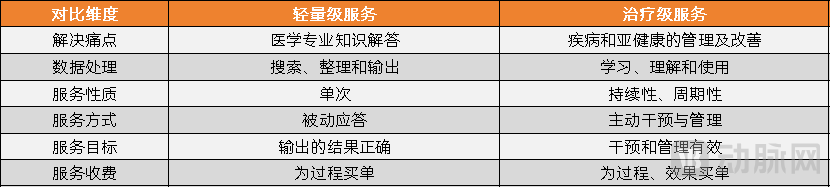
Comparison of Lightweight and Therapeutic-Grade Health Management Services; Source: Survey Interviews, Compiled by VBInsight
Empowered by large medical models, human labor can be significantly liberated. This not only raises the ceiling of individual health managers’ capacity but also helps deliver superior services. For instance, with the assistance of large models, users can enjoy a better “real-time response” experience while ensuring consistent service “warmth,” free from emotional fluctuations. Moreover, large models hold distinct advantages in implementing personalized plans, enabling management interventions ranging from lightweight to therapeutic levels based on individual user conditions.
In line with the aforementioned requirements, successful commercialization cases have already emerged in the industry. For instance, Nanjing Feite provides AI-driven lifestyle interventions for patients suffering from obesity accompanied by metabolic syndrome, diabetes, polycystic ovary syndrome (PCOS), and adolescent obesity. Its “Three-Professional Co-Management AI Large Model” integrates the expertise of over 200 specialists. Leveraging a multimodal foundation, the model empowers management teams to proactively deliver real-time professional recommendations based on user-generated health data and data from monitoring devices, thereby creating a warm, companion-style lifestyle intervention experience. After ten years of refinement and accumulation, the company has successfully helped more than 35,000 users achieve weight loss, delivering outstanding results with average reductions of 4.2 kg in 4 weeks, 7.4 kg in 8 weeks, and 11.12 kg in 12 weeks. Furthermore, empowerment by the large language model has enabled the company to fully automate lightweight management with AI and increase service capacity by four to five times in specialized therapeutic management.
In 2024, the National Health Commission, in conjunction with 16 other departments, released the implementation plan for the “Weight Management Year” campaign, elevating weight management to a new level of priority and encouraging the application of artificial intelligence (AI) in this field. This policy has injected fresh momentum into the development of medical large language model (LLM) enterprises focused on chronic disease management. In the past, the public maintained a cautious stance toward AI, exhibiting low trust in health recommendations provided by such technologies. Currently, the widespread popularity of DeepSeek has significantly advanced market education. Coupled with policy support and the demonstrated efficacy of professional-grade industry management solutions, there is considerable potential for large language models in consumer-facing (C-end) health management in the future.
The above is an excerpt from the report. The overall framework of the report is as follows:
Chapter 1: Multi-Factor Drivers Accelerate the Exploration of Blue Ocean Opportunities for Large Healthcare Models
1.1 Continuous Breakthroughs in Performance Call for Value Validation to Drive Commercial Deployment of Models
1.2 Ample Blue-Ocean Market Space for Large Medical AI Models Urgently Awaits Corporate Exploration
1.3 Multi-factor Aggregation Drives the Transition from “Products” to “Market-ready Commodities”
Chapter 2 The Surge of Large Medical Models: Empowering Every Aspect of Healthcare Services
2.1 The Industry Welcomes Nearly 300 Large Language Models, with 90% Covering Application Scenarios Outlined in Policy Guidelines
2.2 Four Categories of Large Medical Models, Demonstrating Seven Common Technological Development Pathways
2.3 Six Major Medical Application Scenarios: Deconstructing the Implementation Pathways of Large Language Models
Chapter 3: Large Medical Models Achieve Commercialization First Across Multiple Application Scenarios
3.1 Market Penetration Is Influenced by Multiple Factors, Requiring Collaborative Efforts to Drive Commercial Implementation
3.2 Benchmark Cases Exist for Both “Serious” and “Auxiliary” Medical Application Scenarios
3.3 Out-of-Hospital Medical Large Language Models Facilitate the Shift from “Providing Tools” to “Delivering Value”
Chapter 4 Future Trends
4.1 Large Models Are a Corporate Imperative; Collaboration Between Large and Small Models Is a Market Demand
4.2 Technological Breakthroughs Lower R&D Barriers, While Data Forges the Core Competitiveness of Large Models
4.3 High Cost Is Merely an Early-Stage Characteristic of Large Models; Universal Accessibility Is the Direction of Iteration
Chapter 5 Corporate Case Studies
5.1 iFlytek Healthcare – Spark Medical Large Language Model: Empowering the Entire Healthcare Industry Chain from the Grassroots Level
5.2 Shukun Technology—Building the Medical Brain of Digital-Intelligent Hospitals with Multimodal Large Models
5.3 Maide Intelligence: Large Models Empower Ultrasound AI to Match Pathological Performance, Pioneering the Era of Non-Invasive Diagnostics
5.4 Thorough Future – Building a Clinical-Grade Pathology Large Model with 100% Sensitivity
5.5 Nanda Feite – Leading Medical-Grade, Technology-Driven AI Chronic Disease Management Services
5.6 Yice Technology – “Lingmou” Provides Clinical-Grade Tools for Pathologists
Special Acknowledgments (in order of research interviews):
Dr. He Zhiyang, Dean of the iFlytek Medical Research Institute; Zhang Yujie, Director of Large Model Products at Yidu Tech; Chen Yonghong, Founder and Chairman of MaiDe Intelligence; Academician Zhu Xiaoxiang, Founder and Chief Scientist of MaiDe Intelligence; Liu Yao, Head of AI Large Models at Shukun Technology; Dr. Xu Juan, Vice President and Dean of the Artificial Intelligence Research Institute at Neusoft Medical; Li Yingwu, Founder and CEO of Dongman Medical; Luo Yuze, Co-founder and CFO of Dongman Medical; Dr. Wang Shuhao, CTO of Touche Future; Wang Guoxin, Chief Scientist at JD Health Exploration Research Institute; Lu Yiming, Head of Global Product and R&D Division at Taimei Medical Technology; Yin Hui, Founder and CEO of Nanda Feite; Zhang Zhiyun, Co-founder of Nanda Feite; and Wang Xiaomei, Founder and CEO of Yice Technology.
Scan the QR code to add our assistant and access the full report. If you have already added us, please proactively reach out for assistance.

Driven by technological advancements, supportive policies, and strong alignment between supply and demand, large medical AI models have entered a phase of rapid development. With hundreds of models emerging, there is an urgent need to validate their value and unlock commercial potential. On May 9 at 1:30 PM, VCBeat will host the “Medical AI Large Model Application Innovation Forum” in Suzhou. The event will bring together enterprises across the upstream and downstream of the medical AI model ecosystem, clinical experts, seasoned investors, and channel partners to jointly explore future development trends of large medical AI models in China, strengthen academic exchange, and foster industrial collaboration within the sector. Please scan the QR code below to register.
