

Digital Intelligence Empowers Juvenile Myopia Prevention and Control Amid Rising Early-Onset, High-Prevalence, and Severe Cases: Insights from 2025 VBEF
In recent years, the situation regarding myopia prevention and control among adolescents in China has become extremely severe, exhibiting a significant trend toward earlier onset, higher prevalence, and increased severity. Adolescent myopia is characterized by its occurrence at younger ages, rapid progression, and a high risk of complications. Traditional prevention and control measures are struggling to effectively address the current complex landscape, creating an urgent need to leverage new technological approaches to shift preventive efforts upstream and establish a comprehensive, end-to-end prevention and control system encompassing “prevention–screening–intervention.”
On May 9, 2025, the Forum on Digital and Intelligent Upgrading and Innovation in Myopia Prevention and Control was successfully held during the 9th VBEF & Top 100 Future Healthcare and Pharmaceutical Exhibition. The forum was jointly organized by the Eye Hospital of Wenzhou Medical University, China Eye Valley–Wenzhou International Innovation Center for Optometry and Ophthalmology, Yanxuan by China Eye Valley–Wenzhou China Eye Valley Trade Development Co., Ltd., and VCBeat. It received support from the Eye Health Lighting Professional Committee of the China Illuminating Engineering Society, the Wenzhou Service Station of the China Illuminating Engineering Society, Linglan Lighting, Meituan Medicine, and Twelve Millimeters.
At the opening of the forum, Qu Jia, Chairman of the China Eye Valley International Innovation Center, Director of the State Key Laboratory of Optometry and Vision Science, and Lifetime Honorary President of the Eye Hospital of Wenzhou Medical University, summarized the development journey and phased achievements of China Eye Valley.
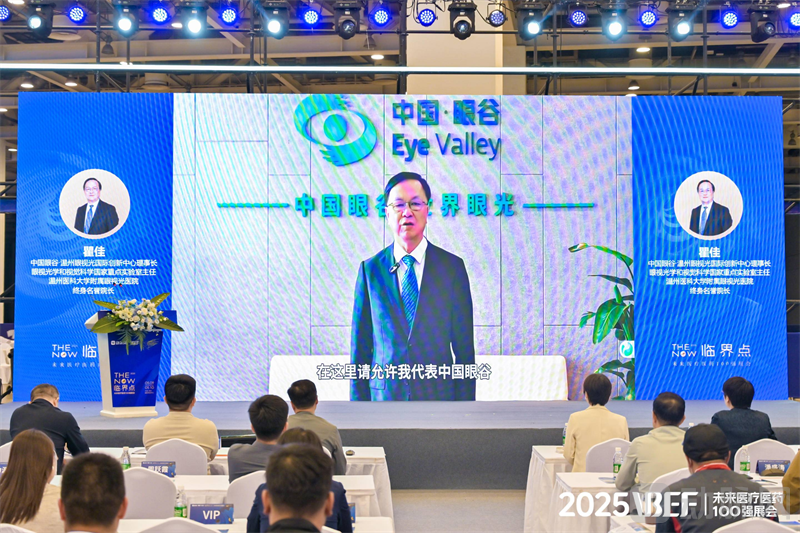
Meanwhile, President Qu Jia also stated, “As of 2022, the overall prevalence of myopia in China still exceeded 50%, with more than 300 million people suffering from dry eye disease. Eye health issues among the general population remain prominent. Myopia prevention and control continue to face a series of challenges, including the prediction of environmental risk factors for myopia, the selection of clinical management strategies, the development and distribution of appropriate technologies and targeted products for comprehensive myopia prevention and control, as well as the evaluation of prevention and intervention efforts in myopic populations.”
Against this backdrop, President Qu Jia called for a multi-pronged approach: On the industry front, leverage scientific research to develop evidence-based prescriptions for myopia management, and utilize industrial capabilities to promote the widespread adoption of myopia prevention and control products. By fostering collaboration among government, enterprises, academia, and research institutions, technological innovations can truly benefit myopia prevention and control as well as national eye health. On the societal front, increase outdoor activity time for students, strengthen family and community engagement, and intensify the promotion of scientifically grounded vision monitoring and intervention strategies, thereby jointly establishing a robust barrier against myopia among Chinese adolescents.
During the presentation session, representatives from research institutions, enterprises, and platforms showcased their respective practices and shared diverse perspectives on the future development of the industry.
Cai Jianqi, Director of the Visual Health and Safety Protection Laboratory at the China National Institute of Standardization, shared insights on current research and applications of multispectral biological effects. Light health is based on the study of photobiological mechanisms and employs intelligent applications to achieve lighting conditions conducive to human health through the organic modulation of spectral power distribution, light intensity characteristics, and temporal cycles. Research into photobiological mechanisms is an interdisciplinary field that primarily integrates optics and life sciences, while also encompassing materials science, medicine, ergonomics, and psychology.
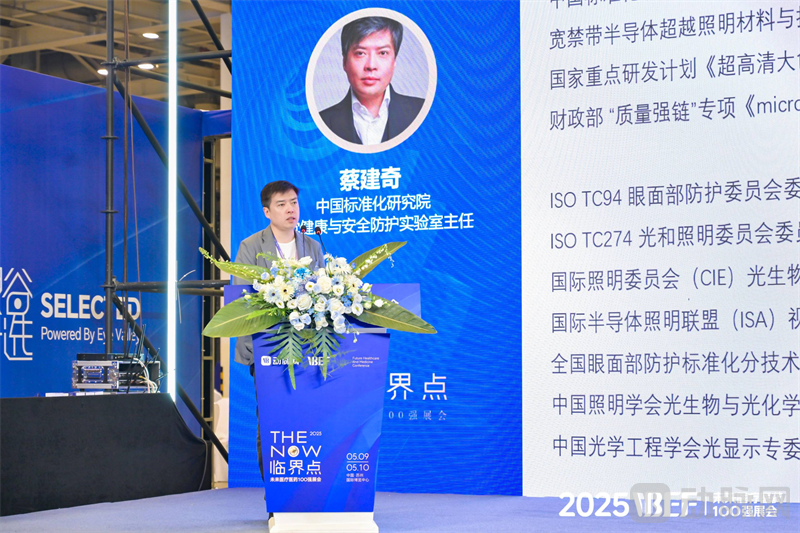
Due to the involvement of product physical properties and human biological characteristics, the technical bottleneck in photobiological mechanism research lies in the low precision of evaluating human photobiological responses, the lack of traceability in indicators, and the difficulty in establishing precise light dose-response models. Through years of in-depth research, Cai Jianqi’s team has gradually established technical testing standards and compiled a dataset comprising over 5 million cases of visual function changes in the human eye across different time periods, covering more than 20,000 individuals. By investigating the deeply coupled relationships among spectrum, light intensity, and temporal cycles, the team ultimately succeeded in developing a healthy lighting model. They also established corresponding national and industry standards, which have been applied to guide the development of classroom lighting fixtures, mobile phone products, and defense-related products.
Ding Hui, Director of Myopia and Refractive Surgery at the Hainan Eye Hospital affiliated with Zhongshan Ophthalmic Center, shared insights on the current applications of digital therapeutics in myopia prevention and control. She pointed out that digital therapeutics offer effective solutions for precise intervention in myopia management and can significantly reduce prevention and control costs.
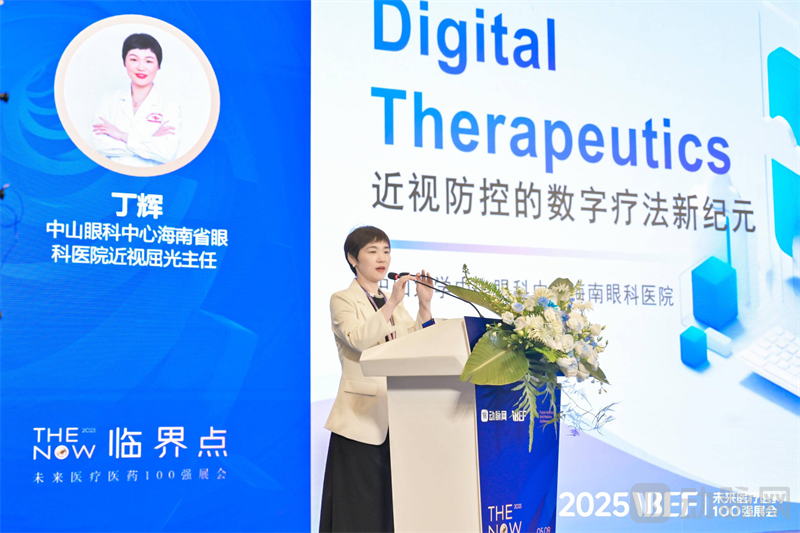
In January 2022, Hainan Province incorporated digital therapeutics into the "14th Five-Year Plan for Digital Health Development of Hainan Province" for the first time, marking the inaugural inclusion of digital therapeutics in a provincial-level plan. On October 10, 2022, the General Office of the Provincial People's Government issued the "Several Measures to Accelerate the Development of the Digital Therapeutics Industry in Hainan Province." This document represents the first policy at the provincial level in China to support the development of the digital therapeutics industry, as well as the world’s first full-lifecycle policy document centered on the digital therapeutics industry. Ophthalmology is one of the nine key specialized application areas for digital therapeutics, prompting Hainan to establish a Clinical Trial Center for Ophthalmic Digital Therapeutics. In the future, the Hainan Eye Hospital affiliated with Zhongshan Ophthalmic Center will further deploy AI-assisted eye health management systems to enhance service quality.
Ma Ting, Head of Eye Health Industry Operations at Meituan’s Medical and Health Division, stated that in 2024, Meituan merged its in-store medical aesthetics and healthcare services with its on-demand medicine delivery business to establish the Meituan Medical and Health Division. The division has listed 150,000 eye health service institutions, including ophthalmic hospitals, ophthalmology clinics and outpatient departments, optical shops, and optometry centers. Currently, Meituan Medical and Health is collaborating with industry partners to develop new myopia prevention and control services. These initiatives include joint efforts in popularizing scientific knowledge to address parents’ information access needs, establishing standardized institutional services to facilitate quicker decision-making for parents, and creating service guarantees for myopia prevention and control to provide a higher-quality experience for parents and users.
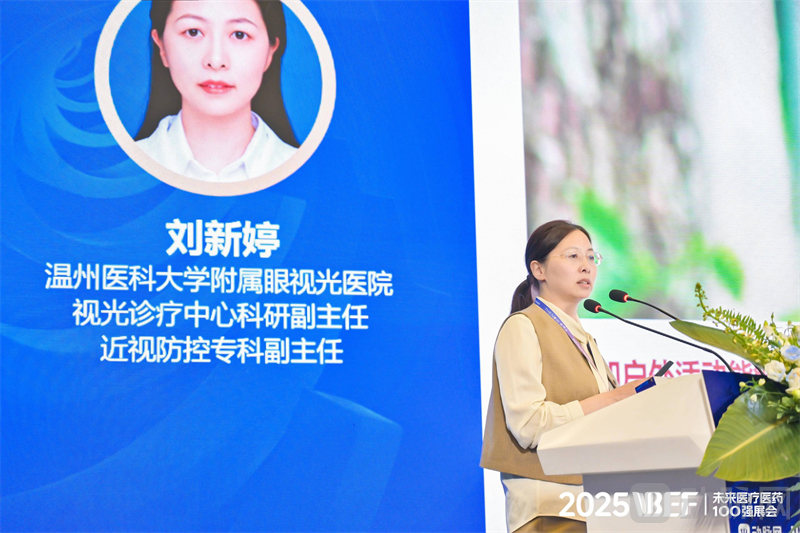
Liu Xinting, Deputy Director of the Myopia Prevention and Control Department at the Eye Hospital of Wenzhou Medical University, noted that while there is already a wide array of myopia prevention and control products on the market, clinical practice also involves lifestyle interventions to manage the progression of myopia in patients. Key measures include: first, establishing visual health records to provide personalized myopia interventions for high-risk groups; second, reducing time spent on near-work activities—taking a 10-minute break to look into the distance after every 30–40 minutes of continuous near work—and maintaining proper viewing distances by adhering to the “one foot, one fist, one inch” rule; third, increasing time spent on outdoor activities; and fourth, managing environmental factors, such as optimizing natural lighting and artificial illumination, adjusting the height of desks and chairs, and limiting screen time.
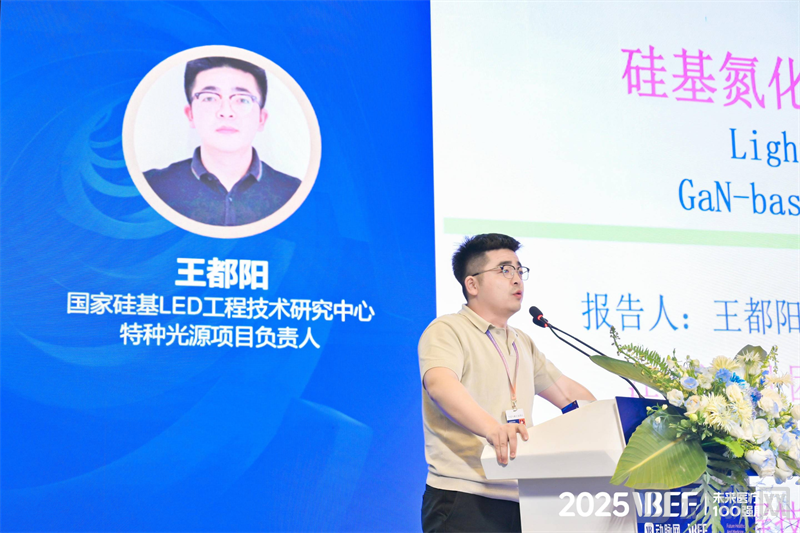
Wang Duyang, Project Leader of the Special Light Source Division at the National Silicon-Based LED Engineering Technology Research Center, also emphasized the importance of controlling environmental factors. He noted that while the human eye is sensitive to light in the yellow spectrum, the electro-optical conversion efficiency of yellow-light LEDs has long remained below 10%. However, by leveraging silicon-based gallium nitride (GaN) yellow-light LEDs, a luminous efficiency conversion rate as high as 30% was achieved in 2024. Furthermore, capitalizing on the material’s characteristics and integrating relevant technological advantages, the National Silicon-Based LED Engineering Technology Research Center has developed solutions featuring narrower spectral bandwidth, higher color purity, and enhanced luminous efficiency. These advancements enable applications across multiple fields, including myopia prevention and control, management of age-related macular degeneration, reduction of dry eye inflammation, alleviation of fatigue, and treatment of skin conditions such as acne and hair loss.
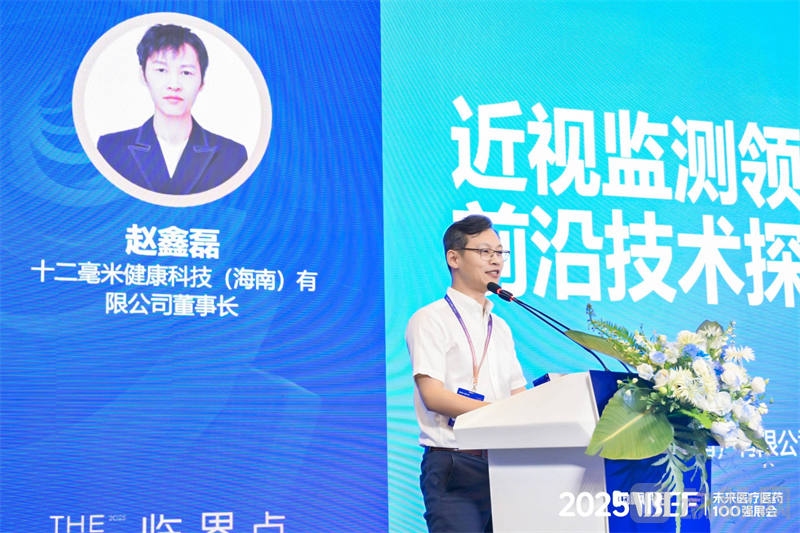
Zhao Xinlei, Chairman of Twelve Millimeters Health Technology (Hainan) Co., Ltd., delivered a thematic presentation from the perspective of monitoring. A core challenge currently facing myopia prevention and control management is the issue of “qualitative assessment without quantitative measurement.” The lack of (medical-grade) quantitative monitoring equipment results in an inability to obtain data on visual behavior and environmental factors, conduct quantitative analysis of risk factors, or formulate and implement measures based on quantitative metrics. To address these issues, Twelve Millimeters has developed a Myopia Risk Factor Monitor capable of quantitatively analyzing visual parameters. This product utilizes multiple sensors to continuously acquire and record real-world data on visual habits and environments, quantify visual parameters, and collect risk factor data. This enables tracking of intervention implementation, thereby establishing a negative feedback loop. When combined with digital therapeutics, this product can effectively modify patients’ behavioral patterns and lifestyles, achieving the desired effects of disease prevention and treatment.
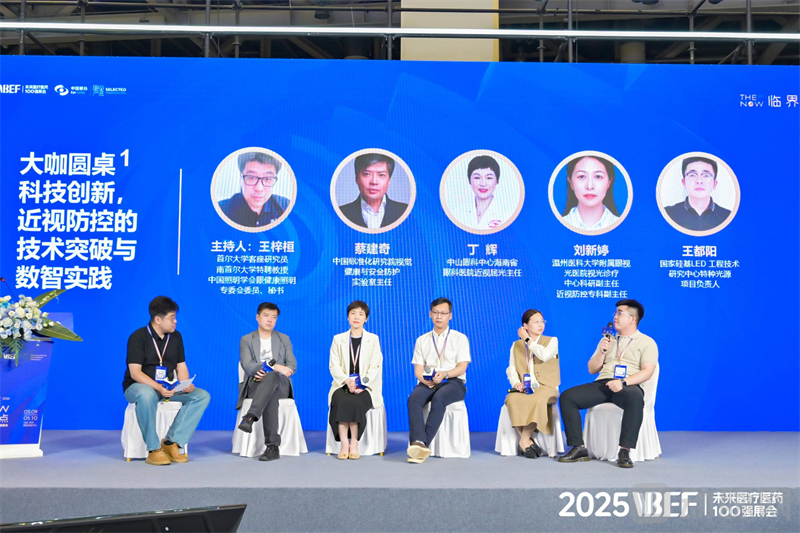
In addition to the keynote speeches, the forum featured two roundtable discussions. The first roundtable, themed “Technological Innovation: Breakthroughs and Digital-Intelligent Practices in Myopia Prevention and Control,” brought together the following experts for discussion: Cai Jianqi, Director of the Vision Health and Safety Protection Laboratory at the China National Institute of Standardization; Ding Hui, Director of Myopia and Refraction at Hainan Eye Hospital, Zhongshan Ophthalmic Center; Liu Xinting, Deputy Director of the Myopia Prevention and Control Specialty Department at the Eye Hospital of Wenzhou Medical University; Wang Duyang, Project Leader of Special Light Sources at the National Silicon-Based LED Engineering Technology Research Center; and Zhao Xinlei, Chairman of Twelve Millimeter Health Technology (Hainan) Co., Ltd. The session was moderated by Wang Zihuan, Visiting Researcher at Seoul National University, Member of the Eye Health Lighting Professional Committee of the China Illuminating Engineering Society, and Secretary of the Committee.
During the Q&A session, addressing the issue of healthy lighting, Cai Jianqi noted that while myopia involves primary factors, it is significantly influenced by environmental factors after birth. Current display and lighting technologies have, to some extent, exacerbated the incidence of myopia. The development of photobiological safety in the lighting and display sectors aims to better protect users' visual health. Wang Duyang added that it is crucial to understand the underlying mechanisms and apply specific lighting solutions in specific scenarios. Zhao Xinlei stated that it is essential to conduct further human trials based on animal studies to verify the merits and demerits of products. This also implies the need for interdisciplinary collaboration to confirm or refute these findings.
Regarding how to promote clinical progress for existing products, Ding Hui pointed out that the emergence of innovative technological products is further enriching the prevention and control system. For instance, in screening and diagnosis, advanced quantification has improved both efficiency and precision; the application of groundbreaking technologies is also enhancing the therapeutic efficacy of existing treatments and enabling more personalized treatment plans. Liu Xinting noted that extensive real-world studies on innovative products are currently being conducted in clinical settings to genuinely guide future myopia prevention and control among adolescents.
Amid the current trajectory of artificial intelligence development, the integration of AI with myopia prevention and control is emerging as a new trend. Conference participants noted that the “black box” nature of AI algorithms still warrants careful attention. Nevertheless, there is no doubt that AI is further enhancing physicians’ efficiency and empowering them to better manage patient care.
The second roundtable, themed “Clinical Practice in Myopia Prevention and Control and Medical-Enterprise Collaboration,” featured insights from Zhang Xiaofeng, Director of the Department of Ophthalmology at the Fourth Affiliated Hospital of Soochow University; Wen Yuanjing, President of Wuhan Eye & Optometry Hospital; Niu Yan, Director of the Eye & Optometry Center at Suzhou Jiulong Hospital; and Zhu Jianwu, Founder of the Juxiang Eye Care brand. The session was moderated by Ren Quan, Deputy Director of the Business Promotion Department at China Eye Valley and Deputy General Manager of Eye Valley Select.
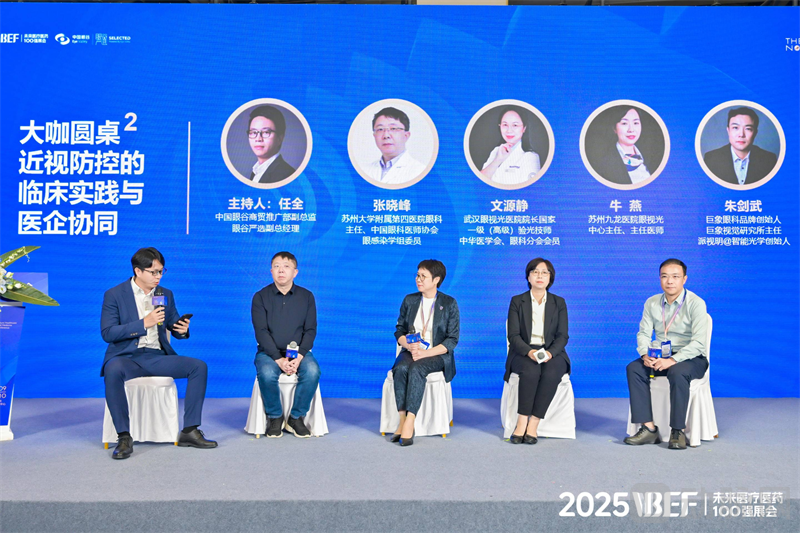
Regarding how to establish a scientific value system for myopia prevention and control, Zhang Xiaofeng pointed out that parents have not yet effectively formed their perspectives on this issue. Currently, schools serve as the primary front for myopia prevention and control; through science popularization campaigns, schools can convey correct concepts of myopia prevention to students. Pilot schools in Suzhou have already achieved favorable outcomes. Wen Yuanjing emphasized that it is particularly crucial to focus on early childhood, early intervention, and key factors. Wuhan has currently screened 500,000 student visits, covering all levels of the education system except universities, and further strengthened students’ awareness through simulations of myopia using experimental equipment at science popularization centers. Niu Yan stated that Suzhou has been conducting myopia screening for all student groups since launching the “Health 66” campaign in 2006. This year, the city extended the 10-minute break between classes to 15 minutes to promote outdoor activities among students. However, issues such as insufficient early intervention following screening remain. Zhu Jianwu pointed out that complex optically designed eyewear products currently used for myopia prevention and control may instead adversely affect adolescents’ ocular health.
Regarding how to develop innovative products, participating experts pointed out that scientific research progress guides the R&D of innovative products, while clinical feedback during the product development process will better guide product design, creating optical design products that more closely meet user needs. To better achieve the transformation of scientific research outcomes, collaboration between corporate R&D personnel and clinical practitioners is essential.
Myopia prevention and control require concerted efforts from both the industry and society. Currently, with the further improvement of myopia prevention and control systems, advances in scientific research and academia, the emergence of innovative digital-intelligent products, and growing attention to “eye health,” more innovative solutions are emerging to address the challenge of myopia. We look forward to a “clearer” world for future generations of adolescents.