

WeDoctor Awarded National 'Four Major Chronic Diseases Initiative' Title, Leveraging AI for Chronic Disease Prevention and Management
From May 9 to 10, the offline launch meeting of the Major Project on “Prevention and Control Research for Cancer, Cardiovascular and Cerebrovascular Diseases, Respiratory Diseases, and Metabolic Diseases” under the Science and Technology Innovation 2030 Agenda (hereinafter referred to as the “Major Project on Four Major Chronic Diseases”), along with the First Academic Symposium, was held in Tianjin. The event focused on promoting appropriate technologies, models, and demonstration projects for the prevention and control of major chronic diseases in China.
“Major Special Project on the Four Major Chronic Diseases” is a national key science and technology project deployed by China with a horizon toward 2030. As an integral component of this initiative, the project on “Mechanisms, Models, and Demonstration Projects for Promoting Appropriate Technologies in the Prevention and Control of Major Chronic Diseases” is led by Tianjin University of Traditional Chinese Medicine. The consortium of institutions undertaking and participating in the project brings together leading domestic universities, medical institutions, research entities, and AI healthcare companies, including Sichuan University, Beijing Anzhen Hospital affiliated to Capital Medical University, Affiliated Hospital of Zunyi Medical University, Xuzhou Medical University, China Rehabilitation Research Center, Peking University, Central South University, Tianjin Medical University, and Tianjin Weiyi Digital Hospital Co., Ltd. The project aims to systematically address key challenges in promoting appropriate technologies for the prevention and control of major chronic diseases through multi-sectoral collaboration among government, industry, academia, research, and application sectors, thereby advancing low-cost, wide-coverage, and high-efficiency population-level and patient-level accessibility to comprehensive chronic disease prevention and control technologies.
Collaboration Among Government, Industry, Academia, Research, and Application to Promote the Dissemination of Appropriate Technologies for the Prevention and Control of Major Chronic Diseases
Professor Wang Yaogang from Tianjin University of Traditional Chinese Medicine, as the project leader, provided a comprehensive overview of the project and further clarified its organizational and management requirements. The project will be advanced steadily around four specific objectives: first, to establish mechanisms, models, and implementation pathways for promoting chronic disease prevention and control technologies; second, to build a digital-intelligent platform and support system for the promotion of such technologies; third, to develop and promote integrated prevention and control strategies for cardiovascular and cerebrovascular diseases, metabolic disorders, respiratory diseases, and cancer; and fourth, to construct a new digital-intelligent paradigm featuring a full-chain approach to chronic diseases—encompassing prevention, screening, management, treatment, rehabilitation, and nursing—that is low-cost, high-efficiency, and broadly accessible.
Currently, the prevention and control of chronic diseases in China face numerous pain points and challenges, such as high costs, limited population coverage, and low efficiency. There is an urgent need to further optimize management models and strengthen the promotion and application of comprehensive technologies for chronic disease prevention and control. The project “Promotion Mechanisms, Models, and Demonstrations of Appropriate Technologies for the Prevention and Control of Major Chronic Diseases in China” is characterized by central-local collaboration, integration of medical care and public health, digital-intelligence drive, and combination of traditional Chinese and Western medicine. It parallelly establishes six sub-projects, covering research on prevention and control technologies for four major chronic diseases, promotion mechanisms, implementation pathways, digital-intelligence platforms and support systems, comprehensive management, and whole-chain prevention and control. Through theoretical, pathway, technological, application, and demonstration innovations, the expected research outcomes will encompass theoretical achievements, platform tools, technical solutions, research reports, academic papers and monographs, patents, talent development, personnel training, and application demonstrations, thereby forming mechanisms and models for the promotion of chronic disease prevention and control technologies.
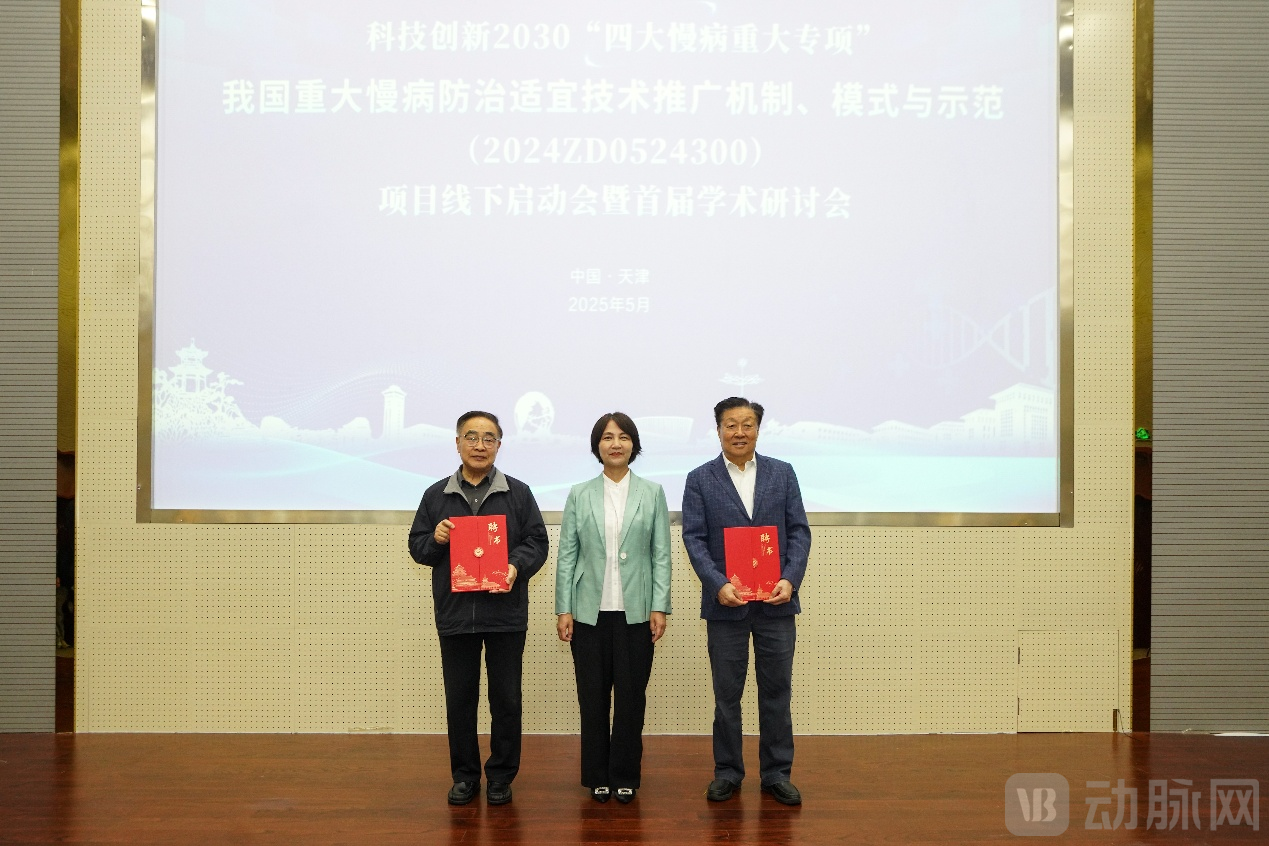
Figure | Academician Hao Xishan and Academician Zhang Boli Appointed as Chairs of the Project Expert Advisory Committee
Academician Hao Xishan, Academician of the Chinese Academy of Engineering, Director of the Tianjin Medical University Cancer Institute and Hospital, and Director of the National Clinical Research Center for Cancer; and Academician Zhang Boli, Academician of the Chinese Academy of Engineering, Master of Traditional Chinese Medicine, and recipient of the national honorary title of “People’s Hero,” were appointed as Chairmen of the Project Expert Guidance Committee. They delivered speeches, extending congratulations on the project’s approval and providing requirements, expectations, and guidance for its implementation.
Academician Hao Xishan emphasized that the project, centered on the core philosophy of encompassing the entire population, the whole society, and the full disease lifecycle, establishes a high-efficiency, low-cost, and broadly accessible system for promoting prevention and control technologies, holding significant practical importance. The project’s multi-sector collaborative model—characterized by breaking down geographical and academic barriers, enabling efficient circulation and sharing of medical data, and being driven by digital intelligence—has opened new avenues for the prevention and control of the four major chronic diseases, offering the potential to provide a Chinese solution for global disease prevention and control.
Academician Zhang Boli pointed out that this major project is of great significance for promoting the prevention and control technologies for chronic diseases based on Chinese-style integrated traditional Chinese and Western medicine, thereby effectively addressing the global challenges posed by chronic diseases. Drawing on his extensive experience in managing and implementing national major science and technology projects, he provided specific recommendations for the organization and implementation of the project. He emphasized that China’s approach to chronic disease prevention and control should integrate urban and rural areas, combine traditional Chinese and Western medicine, and incorporate prevention, treatment, and rehabilitation. The project needs to focus on the interface between urban and rural healthcare systems, placing equal emphasis on prevention and treatment to form a holistic, multi-dimensional solution.
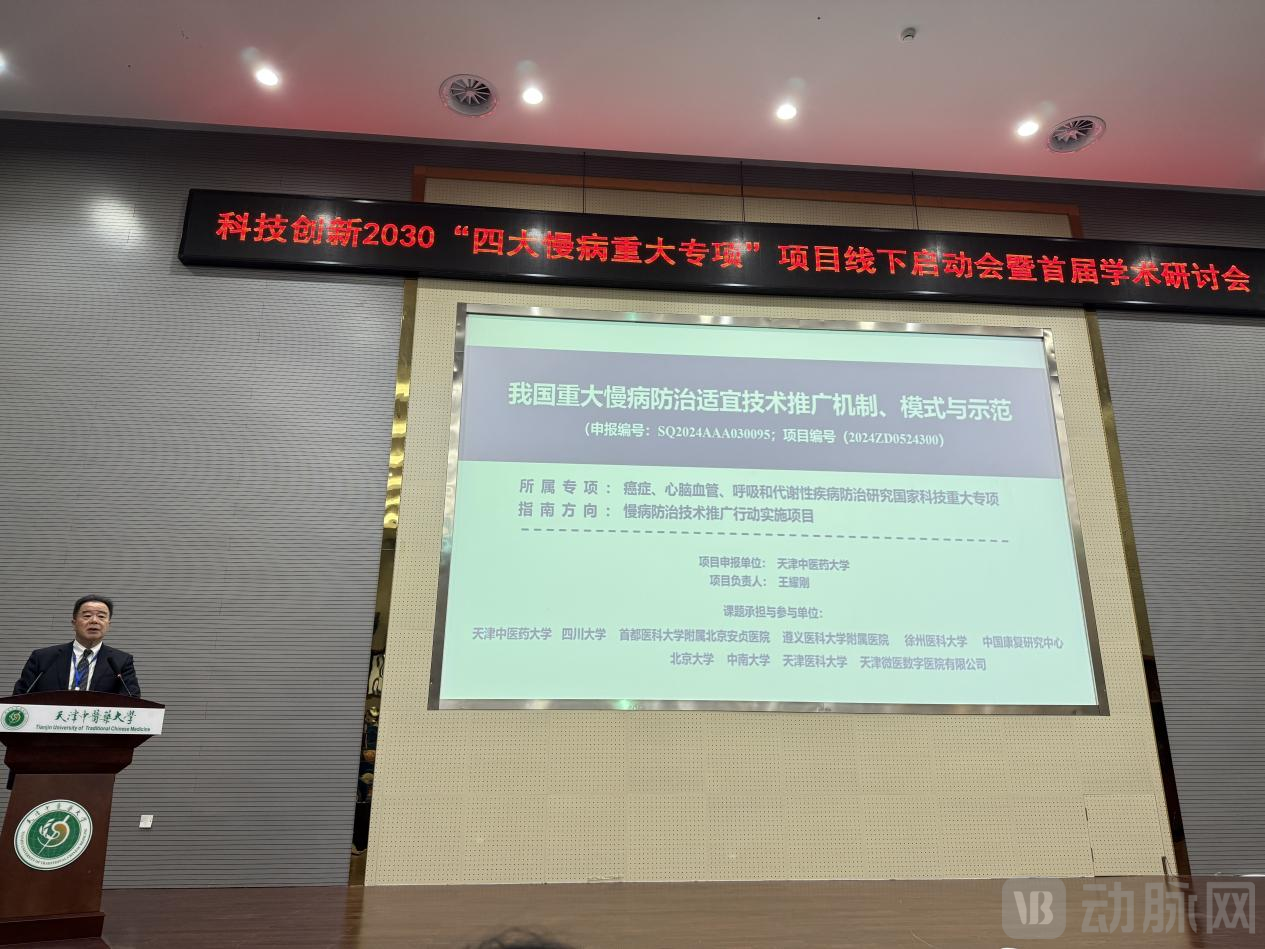
Figure | Professor Wang Yaogang Introduces the Project
Digital Intelligence Empowers Innovation: The Health Community Model Facilitates Comprehensive Prevention and Control of Chronic Diseases
In accordance with the deployment outlined in the Outline of the “Healthy China 2030” Planning and aligned with the key tasks for chronic disease prevention and control specified in the Healthy China Action (2019–2030), this project addresses the critical needs for major disease prevention and control as well as universal health coverage. The key scientific and technical issues to be resolved include: how to establish a low-cost, high-efficiency, and broadly accessible mechanism for promoting chronic disease prevention and control technologies, and how to implement an innovative digital-intelligent promotion model for the integrated prevention, treatment, and management of multiple chronic conditions.
“Digital-intelligence-driven” approaches have become a key to solving the problem. In recent years, as China has advanced the implementation of the Healthy China strategy, the integration of emerging technologies such as artificial intelligence with healthcare services has yielded a series of new-quality productive forces, creating new opportunities for technologies in chronic disease prevention and control. Professor Wang Yaogang noted that the project has already established a solid foundation during its initial phases. For instance, an integrated technological system for chronic disease prevention and control has been developed through a Digital Health Community, with digital tools applied across all stages of healthcare delivery, including prevention, screening, treatment, rehabilitation, and nursing care. Moving forward, the project will leverage modern information technologies and interdisciplinary research methods to enhance the efficiency and coverage of promoting these chronic disease prevention and control technologies. Key initiatives include building a unified big data platform, establishing data standards and sharing mechanisms, and developing large-scale models for comprehensive chronic disease prevention and control.
The Digital Health Community is an effective lever for building an integrated healthcare service system and represents the upgraded direction for the development of Medical Communities within the context of deepening healthcare reform. This model was first pioneered and explored in Tianjin. Zhang Jun, Co-Chairman of the Board and President of WeDoctor Holdings, introduced WeDoctor’s practical involvement in constructing the Tianjin Digital Health Community. Focusing on chronic disease management, the Tianjin Digital Health Community achieved the “two increases and one decrease” outcome over a three-year period: improved public health indicators, enhanced primary healthcare service capabilities, and a reduced growth rate of medical insurance expenditures. It was recognized as one of the “Top Ten New Healthcare Reform Measures” by the National Health Commission in both 2020 and 2023. According to Zhang Jun, the Tianjin model of the Digital Health Community has initially established a replicable management framework and experience set. WeDoctor’s mature digital and AI product capabilities, validated through practice, will provide strong support for the smooth implementation of project research.
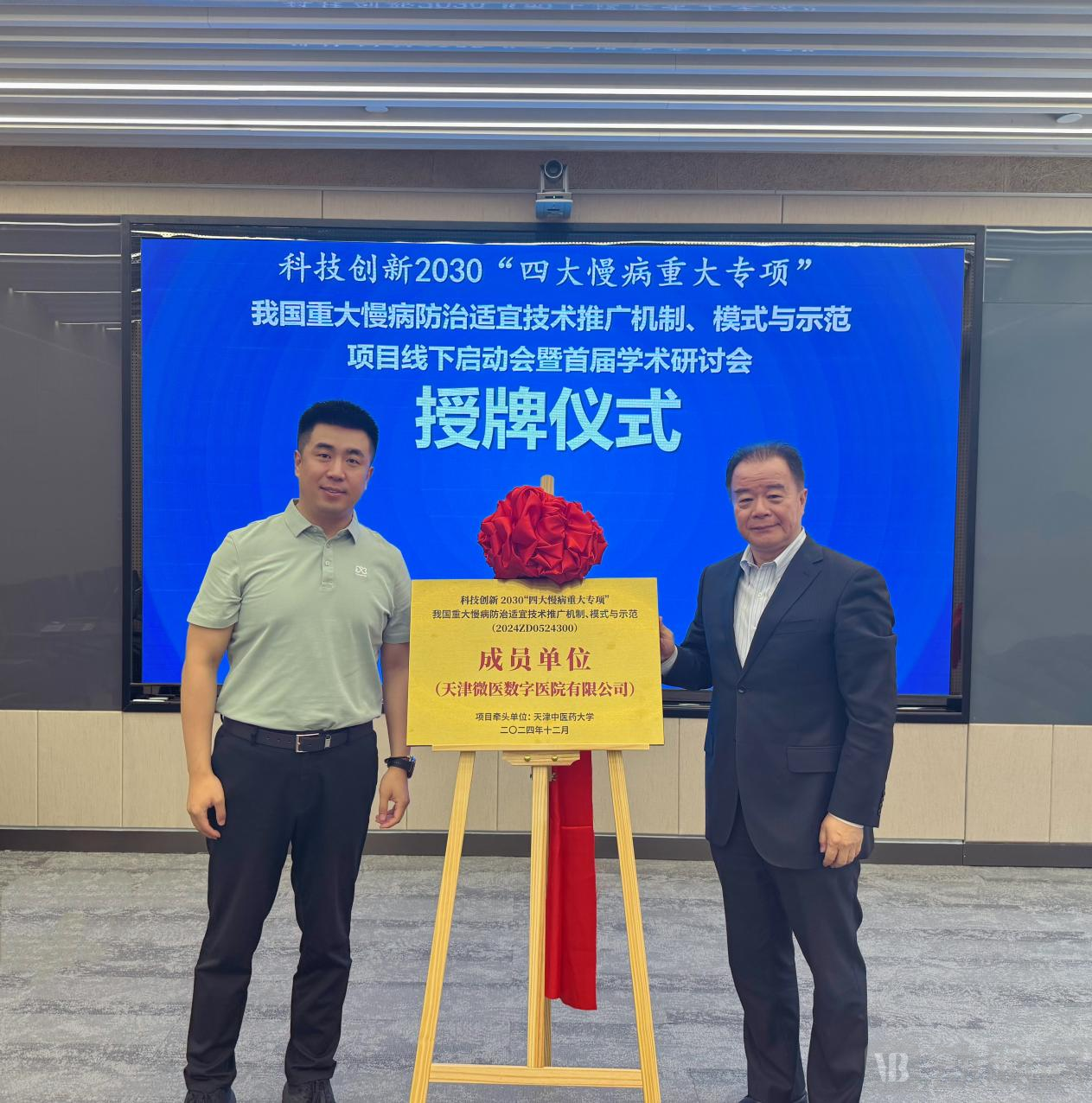
Figure | Professor Wang Yaogang, representing the project research team, presents a plaque to the participating organization WeDoctor
On the 10th, experts from the project team conducted on-site visits to the Zhongbei Town Community Health Service Center in Xiqing District, Tianjin, and WeDoctor AI General Hospital. They gained an in-depth understanding of how the WeDoctor platform and the Healthcare Consortium model leverage AI technology to empower every stage and the full lifecycle of chronic disease management. Professor Wang Yaogang, representing the project research group, presented WeDoctor with a plaque designating it as a “Member Unit.” According to the project plan, the research findings will be comprehensively implemented across 60 regional urban and rural medical consortia nationwide.
As a globally leading AI healthcare platform company, WeDoctor Holdings will be responsible for leveraging artificial intelligence and digital-intelligence technologies to develop and promote digitally driven integrated solutions for the prevention and control of chronic diseases combining Traditional Chinese Medicine (TCM) and Western medicine, within the project titled “Promotion Mechanisms, Models, and Demonstrations of Appropriate Technologies for the Prevention and Control of Major Chronic Diseases in China.” The company will build an auxiliary decision-support system for prevention and control technologies, provide platform and technical support to pilot sites for research tasks, and facilitate the widespread promotion and precise application of chronic disease prevention and control technologies through the WeDoctor platform and the Digital Health Community platform.
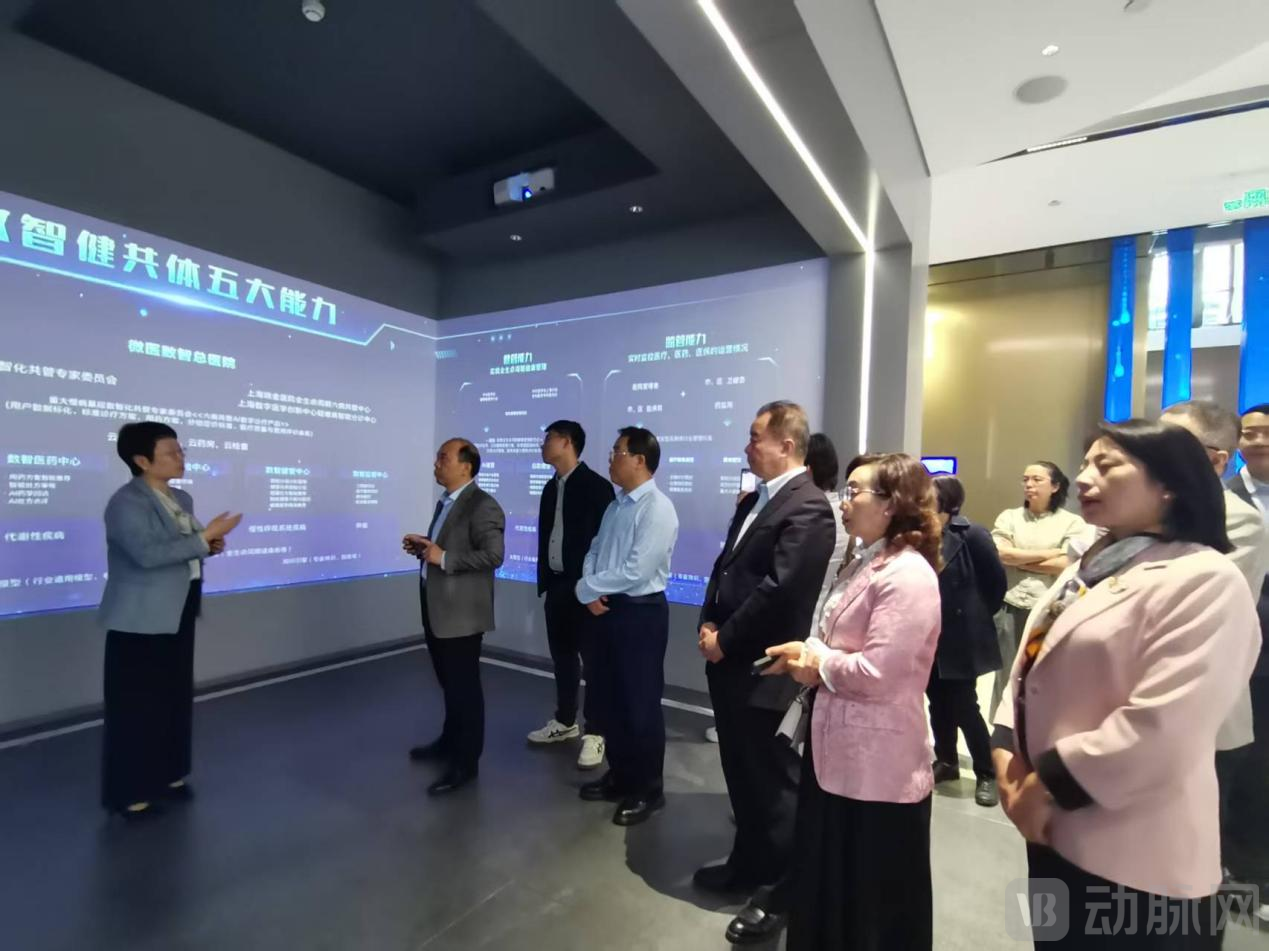
Figure | Research team experts investigate Tianjin Digital Health Community and WeDoctor AI General Hospital