

Yilian Litong Breaks Foreign Monopoly with Domestic BPH Minimally Invasive Suspension System 'Kunpeng'
The prostate, a chestnut-sized gland located at the base of the urethra in men, often undergoes gradual hyperplasia with aging, leading to benign prostatic hyperplasia (BPH). The incidence of BPH increases with age; histological hyperplasia typically appears around age 40, affects more than 50% of men by age 60, and reaches as high as 83% by age 80.[1]. Patients not only suffer from physiological distress such as urinary frequency, nocturia, and dysuria, but may also develop complications like bladder stones and renal impairment due to chronic urinary retention.
Traditional surgical procedures and laser therapy aim to treat benign prostatic hyperplasia (BPH) by ablating the hyperplastic prostate tissue. However, anesthesia requirements and the potential risk of sexual dysfunction have led some patients to opt for conservative pharmacological management instead. Nevertheless, medication offers limited control over moderate-to-severe BPH symptoms. Furthermore, elderly patients often present with comorbidities such as cardiovascular disease and diabetes, necessitating strict avoidance of drug–drug interactions, which further narrows the therapeutic options.
The innovative value of the Prostatic Urethral Lift (PUL) stems from this very principle. This technique employs a physical approach, using implanted micro-anchors under local anesthesia to retract the prostatic lobes compressing the urethra. It widens the urinary channel without disrupting glandular structure, eliminates the need for postoperative catheterization, provides immediate efficacy, and fully preserves sexual function and ejaculatory capacity. Its “reversibility” further safeguards patients’ future treatment options; should additional surgery be required in the future, the anchors can be removed to restore the native anatomical structure.
In urological operating rooms across Europe and the United States, PUL has become one of the mainstream options for minimally invasive treatment of BPH. Related products have nearly a decade of clinical experience internationally, with close to 500,000 patients having undergone this procedure.[2]However, no domestically produced BPH suspension product has been approved for market launch in China to date, meaning that the market for such products remains untapped.
Hefei MEDLINK Medical Technology Co., Ltd. (hereinafter referred to as “MEDLINK”) is dedicated to developing superior suspension procedure products. As a company focused on the research and development of high-value innovative consumables for benign prostatic hyperplasia (BPH) in the field of urology, MEDLINK is currently accelerating the development of its second-, third-, and fourth-generation suspension products.
Its first domestically produced second-generation suspension system, “Kunpeng,” achieved mass production in March 2025 and successfully completed preclinical animal studies in April. The product has now entered the design verification phase. Clinical trials are expected to officially commence in 2026. In November 2024, the company completed its seed financing round, jointly invested by Hefei Chantou Guozheng Investment and Hefei Baohe Venture Capital.
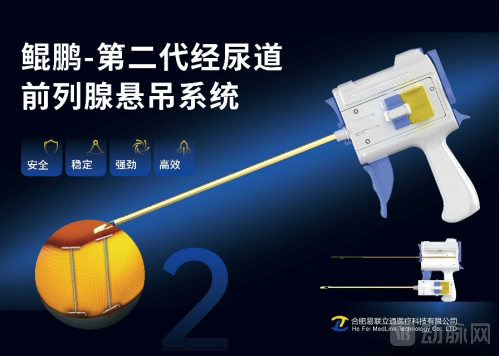
MEDLINK Second-Generation Transurethral Prostate Suspension System
Although first-generation suspension systems are widely used globally, the limitations of designs developed over two decades ago are gradually becoming apparent in clinical practice. For instance, these systems adopt a “one implant, one delivery device” pre-loaded design, meaning each delivery device (gun) is pre-loaded with a single implant (nail) and is shipped in a pre-fired state. Consequently, each delivery device is single-use only and becomes disposable after firing. This design not only results in material waste but also increases the product failure rate, as transportation vibrations and instrument aging may cause component displacement.
From a clinical perspective, first-generation products have limited efficacy in patients with large prostate volumes (greater than 80 mL) or significant median lobe hyperplasia due to limitations in mechanical design and anchoring mechanisms. Although U.S. manufacturers have optimized implant fixation methods and delivery system operability, upgrading to second-generation products, their clinical accessibility remains limited as they have not yet obtained medical device registration in China. This technological gap provides a window of opportunity for breakthroughs in local innovation.
MEDLINK has abandoned the mindset of imitation and conducted a completely new internal system design through forward engineering. Its independently developed "Kunpeng" suspension system adopts a modular design, deconstructing the traditional integrated delivery device into reloadable functional units. The handle (delivery device) can deploy eight implant cartridges and requires only a single endoscope loading, effectively improving surgical efficiency and reducing waste.
Compared to the first-generation product, which suffered from issues such as “insufficient clamping force for small glands and inability to securely hold large glands,” MEDLINK has innovatively designed a release mechanism on the implant cartridge to ensure that both small and large glands can achieve maximum tissue compression. “This approach not only prevents staple line disruption but also ensures optimal gland compression,” pointed out Cao Jie. This design not only facilitates smoother urethral opening but also provides better assurance of the durability of the suspension effect.
In terms of stability, the "Kunpeng" system incorporates four key innovations. First, the tip-based drag reduction mechanism has been redesigned to significantly lower puncture resistance, ensuring smoother and more stable needle insertion. Second, a puncture completion indicator has been added to confirm full deployment of the puncture needle, thereby preventing further erroneous operations due to incomplete puncture (the first-generation product lacked a feedback mechanism and relied on the operator’s experience for assessment). Third, a proprietary sliding trigger system enables linear, straightforward handle movement and smooth needle retraction, preventing gear slippage. Fourth, an automatically resetting linkage control mechanism ensures smoother and more precise firing, minimizes displacement, and guarantees that the handle automatically returns to the correct trigger position after firing.
In terms of convenience, the “Kunpeng” endoscope requires only three handle manipulations to complete the release of the anchoring system, making it the most user-friendly among second-generation products with a clearer release logic. Through innovative mechanical design, “Kunpeng” achieves implant fixation with just a single needle retraction, whereas other suspension products require two needle retractions. This reduces the risk of secondary injury to the gland and minimizes the probability of operational errors. On the basis of maintaining favorable therapeutic outcomes, “Kunpeng” enhances surgical efficiency and improves the operator’s experience.
In terms of safety, the "Kunpeng" system incorporates a proprietary safety mechanism that requires the operator to strictly follow the "puncture–retract–cut" sequence, thereby preventing accidental activation and operational errors.
According to Cao Jie, Professor Zou Zhihui of the First Affiliated Hospital of Anhui Medical University successfully performed the first animal pilot study using the “Kunpeng” system on April 26, 2025. The formal animal trial phase for this product will be officially launched upon completion of design verification.
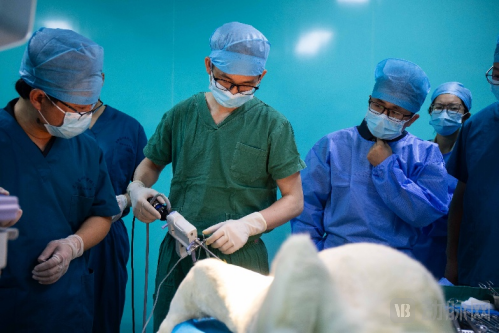
Professor Zou Zhihui Successfully Performs the First Animal Preclinical Trial Using the “Kunpeng” System
As the founder of MEDLINK, Cao Jie’s background in mechanics and his experience in the medical device industry have laid a solid foundation for his path to innovation. During more than ten years of deep involvement in the device sector, he keenly identified a technological gap in suspension products for benign prostatic hyperplasia (BPH): traditional devices were poorly suited for primary healthcare institutions, and their complex operation hindered the broader adoption of advanced techniques. These dual pain points in clinical practice and the market became the original driving force behind the creation of the “Kunpeng” system.
Cao Jie stated, “If Kunpeng is applied in clinical settings, it does not require overly complex supporting equipment. Physicians can quickly become proficient with the system, and even some township hospitals can perform such procedures, thereby benefiting a broader patient population.”[3]
It is reported that the “Kunpeng” has entered the mass production stage for prototypes and is scheduled to be launched in 2027. Adhering to the strategic layout of “developing one generation while reserving the next,” MEDLINK’s third-generation upgraded product has also entered the engineering prototyping phase, with prototype units expected to be released in the fall of 2025.
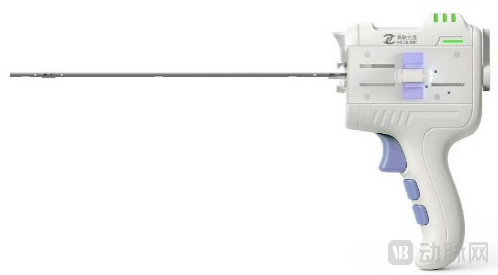
MEDLINK Third-Generation Transurethral Prostate Suspension System
Regarding the future development direction of BPH suspension products, Cao Jie has outlined a clear technological evolution path: in terms of operational dimensions, achieving precise release of the anchor system through a fully motorized handle; at the level of mechanical performance, suspension products will feature a larger load-bearing surface area to enhance the effectiveness of tissue restraint and prolong its duration; more importantly, related products may integrate ultrasound imaging navigation with AI predictive algorithms to enable intelligent, automated release.
Facing the upcoming market journey, MEDLINK has formulated a "three-step" development strategy. At the current stage, it focuses on obtaining device certification for its second-generation product, "Kunpeng," while simultaneously advancing the R&D of its third- and fourth-generation suspension systems; it collaborates with domestic and international distributors to extend its sales network and strengthen market penetration; in the long term, it aims to build an innovation platform centered on benign prostatic hyperplasia (BPH), establishing a tiered product matrix to cover patients of different age groups and varying disease conditions.
The company has officially launched its angel round of financing, raising RMB 15 million, which will be primarily used for the clinical trials and regulatory registration of the Kunpeng product. Interested investors are welcome to contact us for discussions.
References:
[1] Strengthening Standardized Management of Benign Prostatic Hyperplasia: Emphasizing Comprehensive Assessment and Integrated Prevention and Treatment | Authoritative Interpretation of the "Guidelines for Chronic Disease Management of Benign Prostatic Hyperplasia in the Elderly," China Medical Tribune Today's Circulation
[2] First Case in Northwest China! Our Hospital’s Department of Urology Successfully Performed “Transurethral Prostatic Suspension and Dilation – UroLift,” Xi’an No. 1 Hospital
[3] Leading in China! See how this medical enterprise is taking the lead in a new track, Baohe District, the premier urban district of Anhui