

Bridging the Last Mile of Tiered Healthcare: JingJie Biotech Makes Precision Diagnostics Accessible Beyond Major Hospitals
“Effective chronic disease management is not about a single point, a single indicator, or a single individual, but rather a comprehensive ecological system,” said Dr. Huang Baofu, Deputy General Manager of Jingjie Technology.
Recently, at the 2025 VBEF Future Healthcare & Pharma Top 100 Exhibition, Dr. Huang Baofu’s viewpoint not only echoed the healthcare industry’s urgent demand for precise and scenario-based testing but also accurately delineated the core product logic of Jingjie Technology: leveraging technological innovation with precise testing as the entry point to build a comprehensive chronic disease management ecosystem.
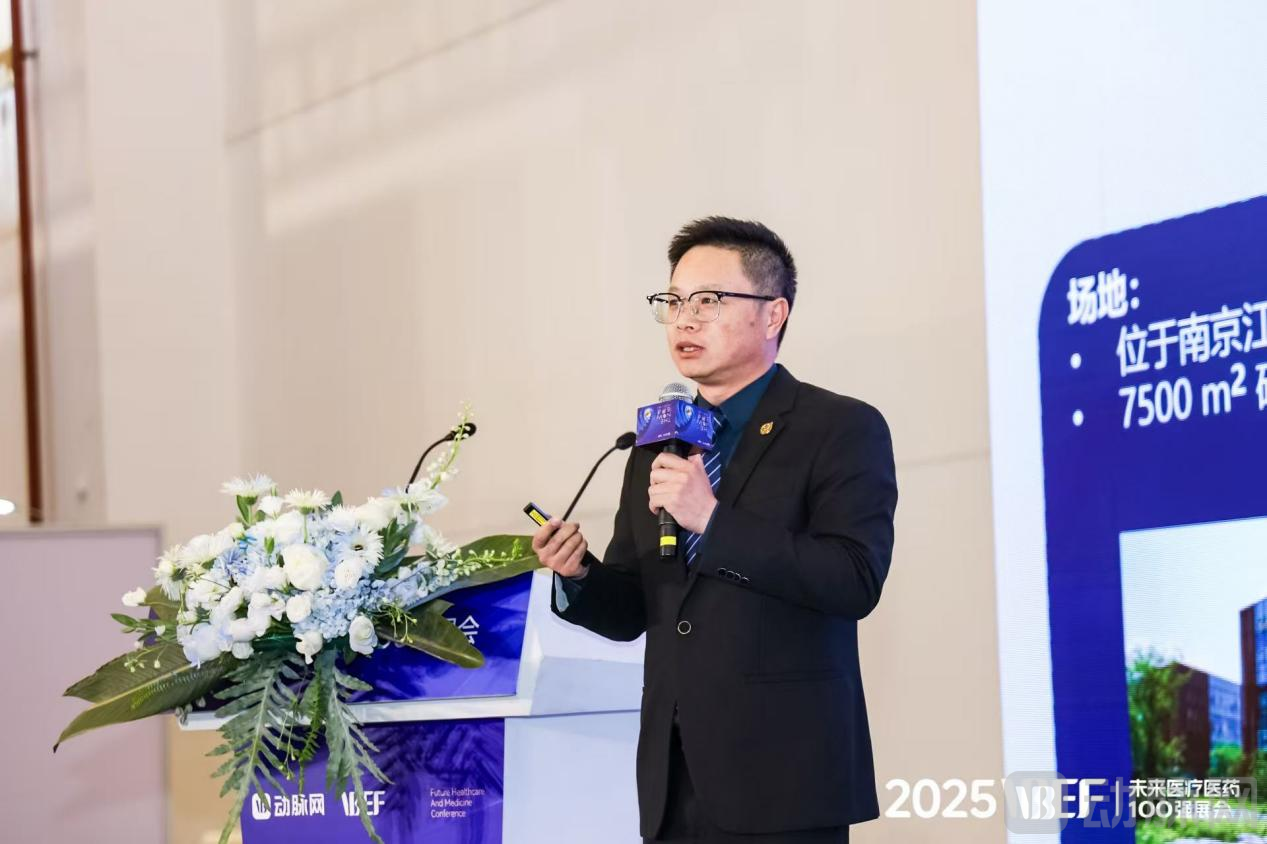 Dr. Huang Baofu, Deputy General Manager of Jingjie Technology
Jingjie Technology has developed portable, high-precision diagnostic devices that enable patients to conveniently monitor chronic diseases across various settings. Coupled with professional data management software, the system facilitates interoperability and effective analysis of patient data, delivering personalized and continuous chronic disease management solutions. This approach addresses gaps in chronic disease management within primary healthcare, driving the field toward greater precision, scenario-based application, and ecosystem integration.
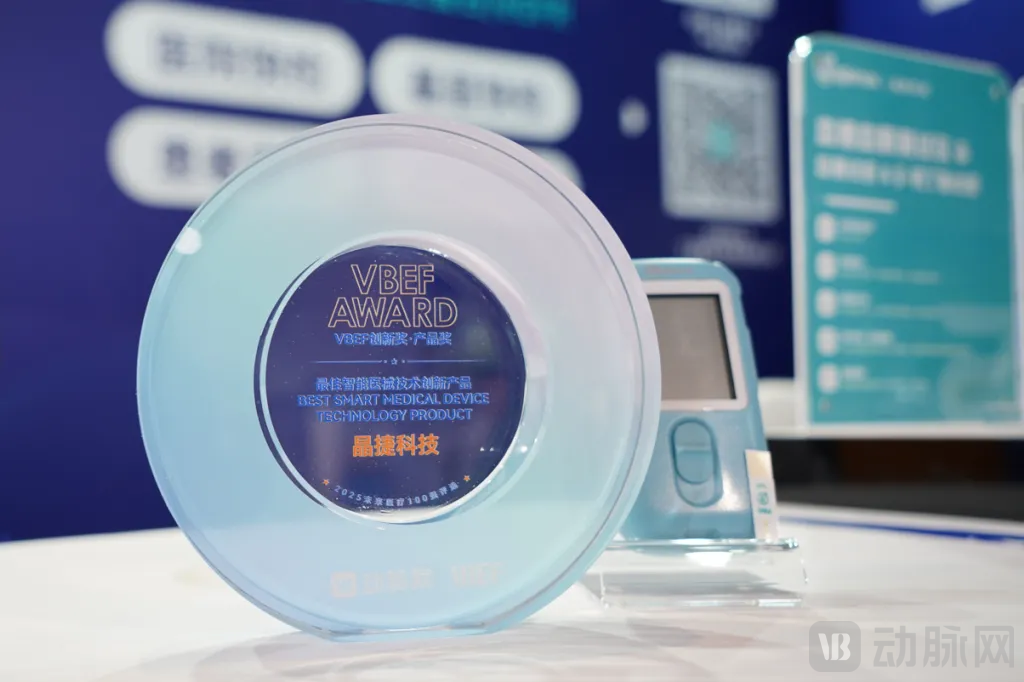
Leveraging its profound insights and innovative product capabilities in the field of medical diagnostics, Jingjie Technology secured two honors at the VBEF exhibition: the company was listed on the 2025 China Medical Health Industry Chain Service Ranking, and the Jingjie Kidney Care Creatinine Analyzer received the 2025 Award for Best Intelligent Medical Device Technological Innovation Product. This outstanding achievement not only highlights Jingjie Technology’s unique position within the industry but also serves as a strong affirmation of its continuous innovation and deep commitment to the medical diagnostics sector.
Addressing the Three Major Dilemmas in Primary Healthcare to Bridge the “Last Mile” of Precision Diagnosis
Under the promotion of the tiered diagnosis and treatment policy, primary healthcare institutions have assumed greater responsibility as "health gatekeepers," yet significant practical challenges remain. By the end of 2024, there were over one million primary healthcare institutions across China, forming a vast medical system. However, as the "first line of defense" closest to the public, the increase in the number of primary healthcare institutions has not been matched by a proportional enhancement in their capabilities.
In response, Dr. Huang Baofu, Deputy General Manager of Jingjie Technology, stated that the primary care testing sector currently faces three major pain points. The first is a shortage of physicians; primary care institutions struggle to retain high-quality doctors, resulting in diagnostic and treatment capabilities that are relatively weaker than those of tertiary hospitals. With the advancement of AI technology, this issue is expected to be alleviated.
Second, there is a shortage of suitable products. Due to the limited patient volume and low profit margins in primary healthcare settings, diagnostic products tailored for these facilities are scarce. As a result, primary care institutions are forced to use large-packaging products, which not only leads to waste but also increases the risk of non-compliant practices.
Third, there is a shortage of patients. The first two issues have led to low patient trust in primary healthcare, causing a large number of patients with common and chronic diseases to continue flocking to tertiary hospitals, thereby exacerbating the dilemma of “overcrowded major hospitals versus deserted primary care facilities.”
In China, primary healthcare institutions bear the responsibility for initial diagnosis and management of common, frequently occurring, and chronic diseases. However, the intertwined challenges of physician shortages, limited product availability, and insufficient patient volume have hindered the advancement of tiered diagnosis and treatment. This has led to rising medical costs for the public and impeded the delivery of personalized care for patients with chronic conditions, thereby contradicting the original intent of the tiered healthcare system.
China is vigorously advancing the “tiered diagnosis and treatment” and “strengthening primary care” strategies, aiming to enhance diagnostic and testing capabilities at the primary level and address gaps in clinical services. The rise of point-of-care testing (POCT) offers a practical solution to these challenges, with its testing capabilities becoming a core competitive advantage for primary healthcare institutions.
This is precisely the breakthrough strategy of Jingjie Technology. As a technology-driven enterprise centered on electrochemical sensing technology, Jingjie Technology is committed to building a comprehensive POCT product matrix that covers “point-of-care testing for critical and emergency care, home-based management of chronic diseases, and dynamic health monitoring.” By making advanced technology widely accessible, it aims to fill the gap in precise diagnostic capabilities at the primary healthcare level and reshape the ecosystem of primary medical diagnostics.

According to Dr. Huang Baofu, Jingjie Technology’s core strategic positioning is “decentralization.” Its diagnostic products are not designed for the central laboratories of tertiary hospitals; instead, they target primary care settings such as clinical departments in tertiary hospitals, secondary and primary hospitals, community health centers, and small clinics, as well as point-of-care testing (POCT) scenarios including family medicine, battlefield environments, and naval vessels. The company focuses on bringing testing closer to patients by developing compact, portable, rapid, and accurate point-of-care diagnostic solutions.
The company’s core strengths lie in its source-level innovation in electrochemical sensing technology and the deep integration of multidisciplinary technologies. Electrochemical sensing offers unique advantages, making it highly suitable for point-of-care and home-based testing. This technology enables high-sensitivity quantitative detection of a wide range of analytes, including gases, ions, metabolites, proteins, nucleic acids, and cells, without the need for sample preprocessing and with only minimal sample volumes. It supports real-time dynamic monitoring, features low cost and miniaturization, and boasts high integration levels along with significant technical barriers to entry.
Currently, Jingjie Technology has established a full-chain ecosystem for research, production, and application in the field of electrochemistry, achieving domestic self-research and development across the entire process from raw material synthesis to product application. The company is dedicated to innovation in core materials, scientific research instruments, medical POCT, and health management solutions.
Jingjie Technology’s core strengths also lie in its interdisciplinary talent pool. The company’s R&D efforts are led by globally renowned electrochemical scientists, bringing together leading experts from diverse disciplines and fields—including chemistry, materials science, electronics, software engineering, mechanical engineering, and biomedical engineering—from both China and abroad. Jingjie Technology maintains close collaborations with top-tier universities and research institutions worldwide, such as Nanjing University and the University of Geneva. With branches established in multiple countries and regions across the globe, the company has set up subsidiaries and overseas business platforms in the United States, Switzerland, and Belgium.
Single-Test, Dry-Design, Multi-Analyte Card: Demand-Driven Product Innovation
At the VBEF Top 100 Exhibition, Jingjie Shenkang’s creatinine analyzer won the 2025 Award for Best Intelligent Medical Device Technology Innovation Product due to its outstanding performance, drawing significant attention from the industry. This device can rapidly detect creatinine, blood glucose, and uric acid levels, while also calculating hemoglobin and estimated glomerular filtration rate (eGFR). It meets the point-of-care testing needs for chronic kidney disease and acute kidney injury, and provides a method for monitoring kidney health in high-risk populations such as those with diabetes, hypertension, and hyperuricemia.
Chronic kidney disease (CKD), as one of the major challenges in the field of global public health, is characterized by high prevalence, strong insidiousness, and non-specific early symptoms. It is often not detected until the disease has progressed to an advanced stage, causing significant suffering and a heavy economic burden for patients. Traditional renal function testing methods are complex and time-consuming, making it difficult to meet the needs for early screening and long-term monitoring of chronic kidney disease. The scarcity of primary healthcare resources further exacerbates the demand for rapid, accurate, and convenient devices for renal function testing.
The Jingjie Shenkang Creatinine Analyzer is a product specifically designed to meet this need, offering the following advantages: First, it is compact, portable, and easy to operate, requiring no professional training, which significantly lowers the barrier to use at the primary care level. Second, it enables rapid testing with minimal blood samples; using either capillary whole blood from a finger prick or venous whole blood, it delivers results in 30 seconds with accuracy comparable to large-scale laboratory equipment. Third, it integrates multiple indicators, simultaneously measuring three key markers—creatinine, blood glucose, and uric acid—while also calculating two important parameters: hemoglobin (Hb) and estimated glomerular filtration rate (eGFR). This provides physicians with robust evidence for monitoring disease indicators and risks, as well as for developing personalized treatment plans. Fourth, it ensures accuracy and stability by employing electrochemical principles to integrate complex detection mechanisms into a single small test strip. The device is completely free of fluidic pathways and can be stored and transported at room temperature, thereby avoiding detection errors caused by improper reagent storage or clogged fluidic lines common in traditional testing equipment, thus ensuring the accuracy and reliability of test results.
Dr. Huang Baofu stated that many chronic diseases ultimately lead to kidney disease, such as diabetic nephropathy, hyperuricemic nephropathy, hypertensive nephropathy, and hyperlipidemic nephropathy. Among these, creatinine testing is critical. Given the limited competition and high demand for related products in China, this represents an untapped blue-ocean market.
It is reported that this product has successively received recognition as an innovative Class II medical device in Jiangsu Province and been designated as a “Breakthrough Device” by the U.S. Food and Drug Administration (FDA). Currently, it is being sold to patients through e-commerce channels, attracting patient attention due to its advantageous features such as “at-home kidney health testing” and “measuring creatinine as easily as blood glucose.”
Another core product from Jingjie Technology—the Jingjie Blood Gas and Biochemistry Analyzer—is designed to meet the need for rapid testing in critically ill patients. This product features the following advantages: First, it can be stored and transported at room temperature without refrigeration. Second, it allows for convenient vertical sample loading with minimal blood volume required. Third, it uses single-patient test cartridges, ensuring no contamination or waste. Fourth, it employs microfluidic technology, requiring only the test cartridge as a consumable, with integrated calibration fluids within the cartridge. Fifth, a single cartridge provides 37 parameters, covering blood gas, electrolytes, biochemistry, and other tests, enabling comprehensive patient information to be obtained quickly and providing strong support for the diagnosis and treatment of critically ill patients.
As a critical diagnostic tool for critically ill patients, the domestic blood gas analysis market in China has continued to expand in recent years; however, the majority of the market share remains dominated by foreign brands. Jingjie Technology’s blood gas and biochemistry analyzer, as a product that breaks the import monopoly, holds significant clinical importance.
“For critically ill patients, time is life. Their requirements for testing are clear: a comprehensive panel of indicators, rapid turnaround, and single-sample format. The blood gas and biochemistry analyzer features ‘37 parameters on a single card,’ delivers results within five minutes, and adopts a single-sample design. It enables timely identification of issues in critically ill patients, better meeting clinical demands for testing efficiency and accuracy compared to traditional POCT devices, thereby helping to improve survival rates among critically ill patients,” stated Dr. Huang Baofu.
Notably, both core products feature a “dry design” and support “multiple tests on a single platform.” The “dry design” eliminates complex sample pre-processing steps, enabling primary healthcare workers to operate the devices after minimal training, making them well-suited for resource-limited primary care settings. This streamlined design simplifies operational procedures, reduces labor and cold-chain transportation costs, and ensures the accuracy and stability of test results through rigorous quality control, thereby providing reliable diagnostic support for primary care physicians.
This “patient-centric, demand-driven” technological logic not only reflects Jingjie Technology’s deep understanding of primary healthcare testing needs, but also demonstrates its sense of mission in promoting the decentralization of high-quality medical resources.
Beyond these two core products, Jingjie Technology’s portfolio also encompasses the development and promotion of a dynamic monitoring platform. By continuously tracking patients’ physiological parameters—such as blood glucose, blood pressure, heart rate, and lactate levels—the platform provides real-time, dynamic health data to patients with chronic diseases, enabling refined disease management and personalized treatment.
Technological Innovation Serves the Public, Driving Quality Improvement and Efficiency Gains in Primary Healthcare
Beyond technological innovation, Jingjie Technology also continues to benefit the public with its scientific and technological achievements through public welfare projects.
Recently, the company actively participated in a public welfare screening project for hyperkalemia in chronic kidney disease (CKD), jointly conducted by Shanghai Songjiang Hospital and 18 community health centers, providing free testing services to more than 2,000 CKD patients. Spearheaded by Dr. Zang Xiujuan, Director of the Department of Nephrology at Songjiang Hospital Affiliated to Shanghai Jiao Tong University School of Medicine, the project leverages two point-of-care testing (POCT) devices to enable patients to quickly and conveniently measure serum creatinine, blood glucose, uric acid, and hemoglobin (using a creatinine analyzer) as well as serum potassium (electrolytes).
In addition, Jingjie Technology launched its Kidney Health Awareness Month this March, reaching out to communities, senior activity centers, labor unions, and primary healthcare facilities to provide free rapid health screenings for outdoor workers, individuals with chronic diseases, and middle-aged and elderly populations. To date, the initiative has served over 1,400 people, with screening parameters including blood glucose, uric acid, creatinine, and blood pressure—key indicators related to kidney health.
As an innovator in the field of medical diagnostics, Jingjie Technology envisions becoming a guardian of human health by promoting personalized health management through precise testing and technological innovation. Through these public welfare initiatives, Jingjie Technology is committed to extending precision medicine to grassroots levels, thereby enhancing the quality and efficiency of primary healthcare.
Looking ahead, Dr. Huang Baofu believes that the IVD industry will undergo growing pains and consolidation, with the market in tertiary hospitals dominated by a few leading enterprises. The survival strategy for smaller companies lies in targeting innovative needs and scenarios in lower-tier markets, adhering to the principle that “product is king.” Amidst the wave of industry transformation, Jingjie Technology will continue to focus on three key areas: monitoring of blood gas and electrolytes in critical and emergency care, multi-parameter home self-testing using fingerstick blood, and continuous monitoring. By leveraging technological innovation, the company aims to navigate the reshuffling of the IVD industry while also expanding into overseas markets.
In the short term, Jingjie Technology will continue to optimize the performance of its existing products, strengthen collaborations with medical institutions and community organizations, and further expand the coverage of public welfare screening initiatives. Meanwhile, Jingjie Technology will increase its R&D investment to continuously launch innovative testing products and services, thereby meeting the market’s diverse demands for precision diagnostics and personalized health management.
In the long term, the company plans to further expand its product portfolio over the next 5–10 years to cover testing needs across a broader range of disease areas. Meanwhile, it will strengthen collaborations with global healthcare institutions, research organizations, and enterprises to jointly conduct clinical research and drive technological innovation. By actively participating in the development of international standards, the company aims to enhance the voice and influence of China’s medical diagnostics industry on the global stage.
From the innovative R&D of precision diagnostics products to the implementation of public welfare initiatives, and from meeting clinical needs to driving industry transformation, Jingjie Technology is steadily advancing, striving to bring precision diagnostics to every life in need through genuine product innovation.