

Sun Ying Unveils Zhongshan Tumor Center's Large Model Implementation Pathway: AI Empowers Intelligent Transformation of Oncology Care
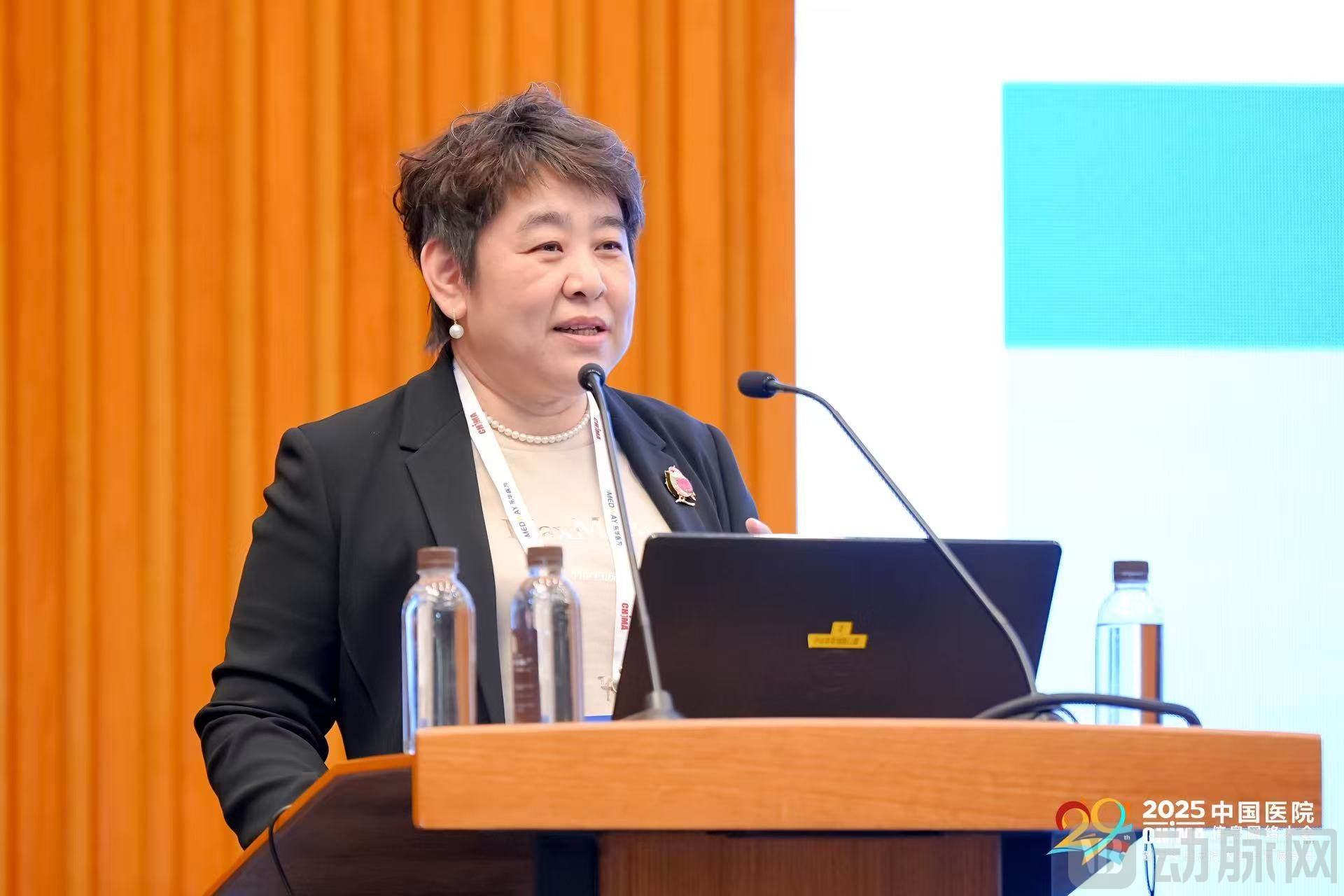
At the recently held 29th China Hospital Information Network Conference (CHIMA 2025), Professor Sun Ying, Vice President of Sun Yat-sen University Cancer Center, delivered a keynote address titled “From Hype to Calm: Practices and Reflections on Oncology Diagnosis and Treatment in the Wave of Large Language Models.” For the first time, he publicly shared the center’s pathway and phased achievements in the application of large models. Anchoring its technological approach to urgent clinical needs, fortifying its intelligent foundation with high-quality data, and reconstructing diagnostic and treatment paradigms through human-AI collaboration, Sun Yat-sen University Cancer Center, in partnership with the AI healthcare company Yidu Tech, has successfully built an intelligent system covering the entire process of oncology diagnosis and treatment, achieving multi-scenario breakthroughs from data application to assisted decision-making.
High-Quality Big Data Is the “Moat” of Large Language Models
The latest report from the National Cancer Center reveals that in 2022, China recorded approximately 4.8 million new cancer cases (accounting for about 24% of the global total), equivalent to more than 13,000 individuals diagnosed with cancer each day. There were approximately 2.6 million cancer-related deaths (representing over 26% of the global total). With both incidence and mortality rates consistently ranking first worldwide, the situation in tumor prevention and control remains severe. The Chinese government attaches great importance to cancer prevention and treatment. In light of the ambitious target set forth in the “Healthy China Action—Implementation Plan for Cancer Prevention and Control (2023–2030)” to achieve an overall five-year cancer survival rate of 46.6% by 2030, there is an urgent need to break through the limitations of traditional diagnosis and treatment models.
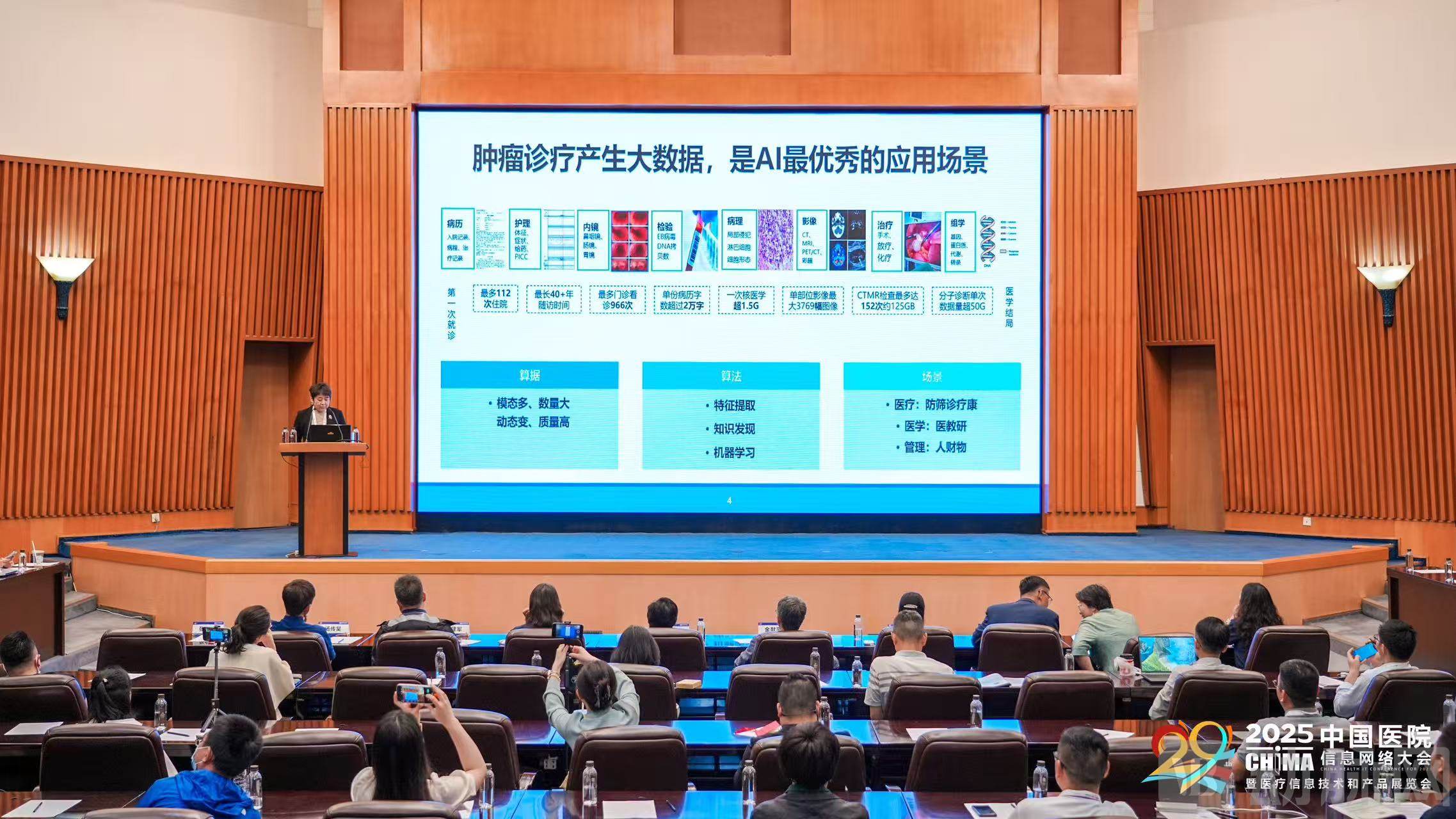
Professor Sun Ying pointed out that oncology diagnosis and treatment represent an excellent application scenario for AI. The data characteristics inherent to this field—multimodality (encompassing medical records, imaging, pathology, and omics), high dynamism (with single-patient follow-ups extending up to 40 years), and massive scale (with molecular diagnostics generating over 50 GB of data per test)—provide natural fuel for AI training. Furthermore, the complexity of the oncology care continuum, spanning prevention, screening, diagnosis, treatment, and rehabilitation, has given rise to multi-layered AI application scenarios.
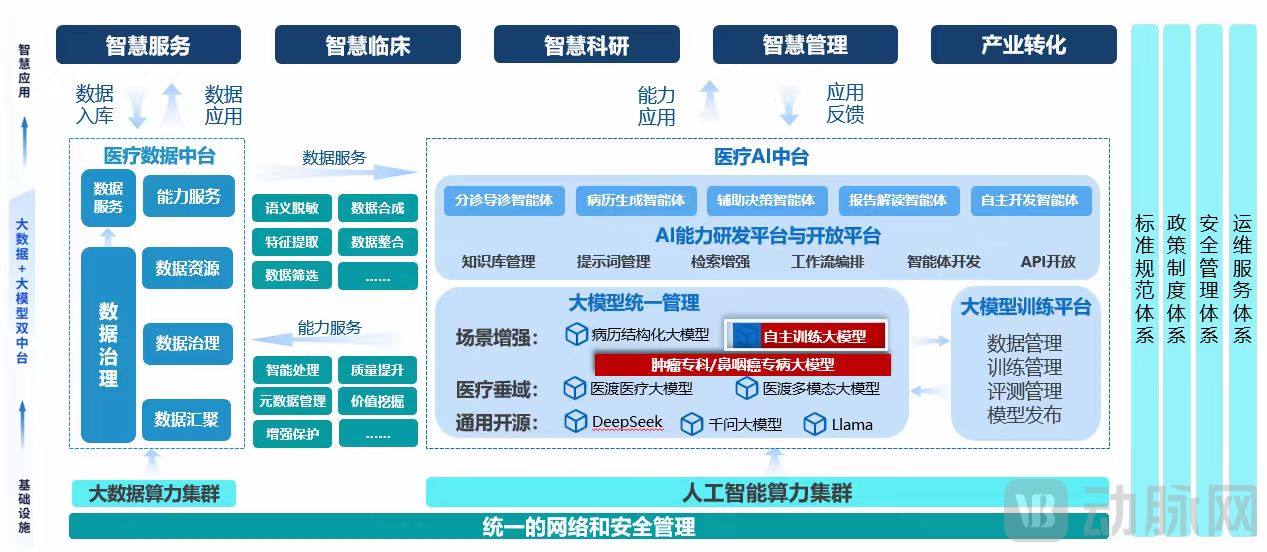
In early 2025, DeepSeek sparked a new wave of large language model (LLM) applications. Healthcare institutions, ranging from top-tier hospitals and regional medical centers to primary care facilities, have rapidly adopted this technology, creating a trend of tiered penetration and ecological evolution. Professor Sun Ying shared that the Sun Yat-sen University Cancer Center partnered with Yidu Tech during the Spring Festival holiday. By February 27, the center had swiftly completed the localized deployment of the full-capacity DeepSeek-R1 671B large model and the Yidu AI Middle Platform. It subsequently launched an oncology-specific clinical decision support assistant within physicians’ workstations, deeply integrating core scenarios such as medical record generation and auxiliary decision-making, thereby achieving comprehensive coverage from standardized diagnostic and treatment processes to personalized clinical needs.
“High-quality big data is our moat,” emphasized Professor Sun Ying. Over the past decade, leveraging the YiduCore core algorithm engine provided by its technology partner, Sun Yat-sen University Cancer Center (SYSUCC) has built China’s first tumor big data platform with T+0 real-time updates. By integrating more than 50 operational systems, the center has created a “living map” of medical data covering the entire care journey of over 2 million patients. In recent years, high-quality big data has deeply empowered the hospital’s clinical and research activities. The panoramic timeline for oncology patients has been embedded into more than 20 operational systems, recording over 45,000 daily accesses. The hospital’s 43 disease-specific databases have seen annual search volumes exceed 2 million, cumulatively supporting 3,600 scientific research projects.
During the value validation process of this large medical model, high-quality data has once again demonstrated its irreplaceable anchoring value. Taking the TNM staging scenario as an example, general-purpose models require manual provision of various types of discrete data, such as MRI, ultrasound, pathology, symptoms, and treatment history. In contrast, the clinical decision support assistant deployed by Sun Yat-sen University Cancer Center can automatically correlate patient data to generate traceable staging recommendations that comply with authoritative guidelines.
Breaking the Impasse in Clinical Intelligence: Scenario-Specific Breakthroughs and Systematic Innovation
Professor Sun Ying shared in detail the practical experience of SYSUCC and Yidu Tech collaborating to overcome the challenges of implementing large models:
Challenges of Demand Differentiation: Uniformly developed models or applications often fail to meet specialists’ demands for professional depth and struggle to accommodate the varying scenarios of physicians with different levels of seniority and job roles. To address this, Yidu Tech assisted Sun Yat-sen University Cancer Center in launching the “My Intelligent Assistant” application, which empowers physicians to autonomously select patient data and configure business process logic based on their individual clinical experience, thereby building personalized AI agents on demand and truly returning the design authority of AI to frontline clinicians. Within 60 days of its launch, the feature rapidly incubated over one hundred clinical AI agents, covering application scenarios such as multidisciplinary team (MDT) collaboration and patient education, with the number of newly added agents continuing to rise daily.
The "Hallucination" Challenge of Large Language ModelsProfessor Sun Ying emphasized that “hallucinations” are the most unacceptable flaw in medical scenarios. The occurrence of “hallucinations” in AI healthcare applications is primarily attributed to technical randomness, noise in training data, misleading human-computer interactions, and blurred cognitive boundaries. In response, the technical team at Yidu Tech has constructed a three-tier prevention and control system: optimizing the training process through multi-level data cleansing and the injection of authoritative knowledge; enhancing the rigor of reasoning by combining logical verification chains with a dynamic risk labeling system; and establishing a multidimensional evaluation framework to ensure factual accuracy and decision-making transparency, thereby systematically mitigating the risk of “hallucinations.”
For instance, traditional large language models driven solely by prompts encounter issues in medical record generation, such as data fabrication, slow processing speeds, context window overflow, and non-standardized formatting. The intelligent medical documentation feature launched by Sun Yat-sen University Cancer Center enables real-time access to the complete archive of medical records and achieves precise extraction of diagnosis and treatment events based on the disease knowledge graph accumulated by Yidu Tech. This not only standardizes documentation and reduces errors but also compresses the time required for medical record generation from five minutes to 30 seconds.
This anti-"hallucination" system is also applied in clinical decision support scenarios. To address challenges such as the screening of multi-source heterogeneous data in tumor TNM staging assessments, issues of medical professionalism and generation bias, lack of decision traceability mechanisms, lagging updates to staging standards, and compatibility across multiple versions of knowledge bases, Yidu Tech’s clinical decision support assistant enhances decision-making professionalism and interpretability while reducing misjudgments. It achieves this through workflows incorporating tumor type identification, domain knowledge augmentation via Retrieval-Augmented Generation (RAG) technology, chain-of-thought reasoning, and intelligent reflection mechanisms.
Advanced Data Governance: To address the dual challenges of processing “large-volume, multi-type, full-dimensional” data and meeting the application requirements for “precision, stability, and high efficiency,” Sun Yat-sen University Cancer Center has pioneered a dynamic context management solution based on a hierarchical attention mechanism. Additionally, its customized intelligent assistant applications can adjust the volume and scope of data according to specific scenario requirements.
Knowledge Evolution System: Medical knowledge evolves rapidly, yet large language models are constrained by the temporal limitations of their training data, and new insights must be integrated into existing frameworks. Sun Yat-sen University Cancer Center (SYSUCC) employs a dual internal-external circulation strategy: internally, it implements a multi-tiered knowledge base architecture comprising a core stable knowledge layer and a dynamically updated layer; externally, it leverages retrieval-augmented generation (RAG) technology to enable real-time access to the latest medical knowledge.
Intelligent Patient Services: Regarding how to leverage large language models (LLMs) to serve patients more effectively, Professor Sun Ying noted that LLM-based medical assistance tools enable patients to enjoy convenient features such as intelligent customer service, smart triage and guidance, and report interpretation, thereby simplifying the healthcare-seeking process. Furthermore, intelligent summarization of patient medical records and access to key clinical indicator knowledge help patients gain a clearer understanding of their health status. Personalized health education recommendations further enhance patients’ sense of benefit and engagement, empowering them to take a more proactive role in managing their health. These intelligent initiatives collectively aim to improve patients’ healthcare experience and satisfaction.
Looking ahead, Sun Yat-sen University Cancer Center (SYSUCC) will join hands with its partners to further deepen the application of multimodal large language models, strengthen data integration and intelligent analysis, and actively explore cutting-edge technologies, thereby driving oncology diagnosis and treatment toward greater precision and personalization. We have every reason to believe that, empowered by AI technology, specialized oncology care will enter a new era of intelligence, bringing more hope and well-being to patients. Meanwhile, SYSUCC’s practical experience will provide valuable reference and inspiration for other medical institutions, jointly promoting the innovative development of the healthcare sector.