

NewLimit Secures $130M Series B to Advance AI-Driven Epigenetic Reprogramming Therapies Toward Clinical Trials

NewLimit
Anti-aging Technology R&D Provider
On May 6, 2025, NewLimit, a startup focused on epigenetic reprogramming, announced the completion of a $130 million Series B financing round. The round was led by Kleiner Perkins, with existing investors including Founders Fund, Khosla Ventures, and Human Capital continuing to participate. NewLimit has attracted significant attention not only due to its founder’s cross-disciplinary background but also because of its core focus—How to Address the Global Health Challenges Posed by Population Aging。
According to projections by the World Health Organization (WHO), the global population aged 60 and above will increase from 1 billion in 2020 to 1.4 billion in 2030, and double to 2.1 billion by 2050. Against the backdrop of this profound demographic aging, “healthy aging” is no longer merely a public health slogan but an urgent global healthcare imperative. NewLimit is attempting toUsing AI-Driven Epigenetic Reprogramming Technology, offering a novel solution to this era-defining challenge.
1When Crypto Titans Meet Epigenetics: NewLimit’s Cross-Disciplinary Innovation
NewLimit was founded in 2021 by Brian Armstrong, co-founder of the cryptocurrency platform Coinbase, and Blake Byers, former partner at GV (Google Ventures). A visit to NewLimit’s headquarters in the San Francisco Bay Area reveals a typical “Silicon Valley mashup”: venture capitalists in T-shirts discussing DNA methylation side-by-side with scientists in white lab coats. This company, with dual roots in technology and biology, is strategically positioned in the emerging field at the intersection of biomedicine and AI. As of May 2025, NewLimit comprises 34 scientists, engineers, and operators, with over 90% holding technical roles.
NewLimit’s cross-disciplinary DNA is deeply rooted in the backgrounds of its two founders. Armstrong has long focused on life extension and health, stating in an interview, “Over the past 50 years, gains in lifespan have plateaued. We previously doubled it—why can’t we double it again?” Byers was the earliest proponent of life sciences investment within GV, leading investments in numerous technology and healthcare companies. Armstrong brings a Web3-inspired development mindset characterized by modularity, parallelization, and rapid iteration, while Byers offers profound insights into cutting-edge biotechnology trends. The fusion of these perspectives injects a cross-disciplinary innovation paradigm into anti-aging technology.
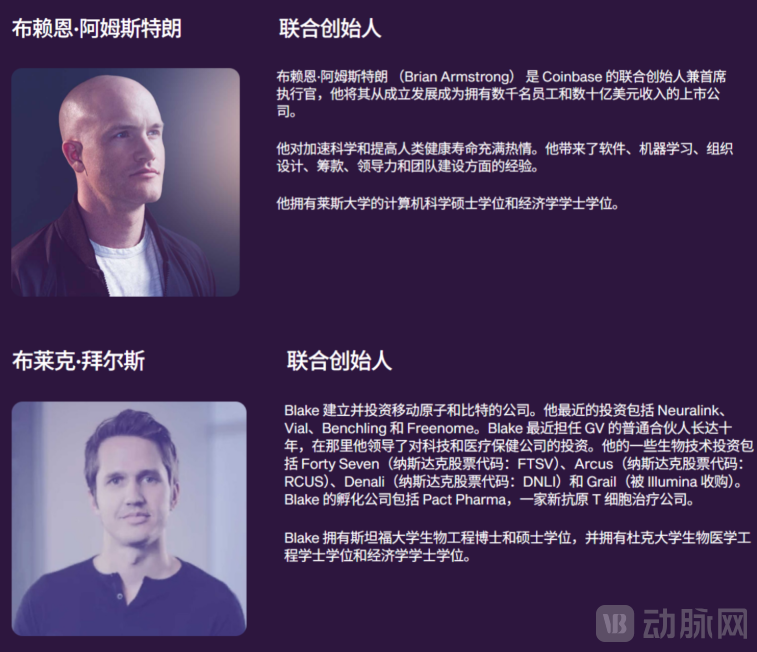
Figure 1: Profiles and Introductions of NewLimit’s Co-founders (Source: NewLimit Official Website)
2AI-Driven Epigenetic Reprogramming Platform
Over the past decade, our understanding of the mechanisms of aging has continued to deepen. Japanese scientist Shinya Yamanaka discovered that transient activation of four key transcription factors (OCT4, SOX2, KLF4, and c-MYC, collectively known as OSKM) can partially restore aged human skin cells to a more youthful state. This finding validated that cellular age can be reset under specific conditions, providing a biological foundation for anti-aging interventions. Research by prominent aging scientist David Sinclair indicates that epigenetic changes are the primary drivers of mammalian aging, and that restoring epigenomic integrity can reverse signs of aging. NewLimit is built upon this scientific foundation; by screening for small-molecule compounds that can precisely modulate cellular epigenetic states, it aims to “reset” cellular status in a pharmaceutical format, thereby conferring a more youthful functional phenotype.
Traditional research on epigenetic reprogramming has long been constrained by the immense complexity of transcription factor combinations—there are over 10^15 possible combinations for just six transcription factors—and experimental evaluations often rely on limited metrics (such as the expression levels of a few genes), making it difficult to comprehensively reflect changes in cellular states. In contrast, NewLimit’s “Discovery Engine” integrates a high-throughput experimental platform with AI predictive models, enabling the parallel testing of thousands of combinations and the identification of the most promising drug targets, thereby improving screening efficiency by hundreds of times.Leveraging the synergistic innovation of AI and epigenetic tools, NewLimit is accelerating the transformation of “scientific hypotheses” into “engineering-solvable problems.”, epigenetic anti-aging is poised to reach an early inflection point in technological translation.
3Reprogramming Accelerates: NewLimit Moves from Lab to Clinic
Over the past two years, NewLimit has made significant R&D progress in the field of epigenetic reprogramming, graduallyComplete the Transition from Basic Exploration to Preclinical Translationkey leap. Specific clinical applications and pipeline layout are shown in Table 1.
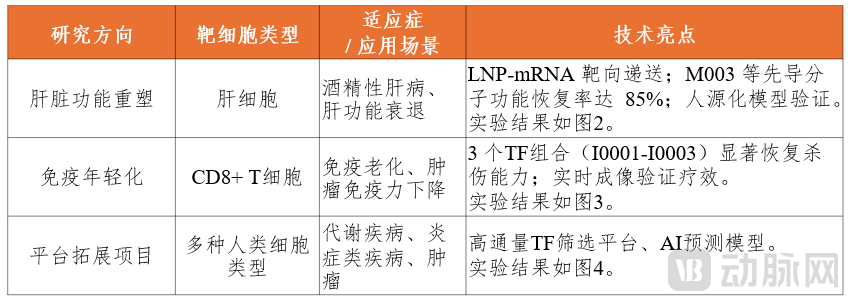
Table 1: Clinical Applications and Pipeline Portfolio (Source: NewLimit Official Website)
In 2023, the research team identified key factors with partial reprogramming capabilities in human cells for the first time, providing the first experimental evidence for pharmacological reversal of cellular aging and demonstrating the practical feasibility of modulating the aging process through pharmacological interventions.
In 2024, the technology achieved a critical breakthrough. The research team successfully realized cellular "rejuvenation" without altering the inherent characteristics of the cell types. To support further development and translation of the technology, the company completed a platform upgrade of its "Core Discovery Engine" in the same year: first, the screening efficiency of the Core Discovery Engine increased tenfold; second, the monthly volume of validation data reached 15 times that of 2023; third, the cumulative number of transcription factor combinations tested by the team exceeded 500 times the total reported in the literature. Among these, several "star combinations" demonstrated significant potential for restoring cellular function, and animal studies further validated their potential for functional restoration in vivo.
Most critically, in late 2024, NewLimit established a lipid nanoparticle (LNP) delivery system targeting hepatocytes. By integrating this with messenger RNA (mRNA) delivery mechanisms, the company has secured the technological foundation for the co-development of small molecules and biologics.
Success in basic research has also enabledNewLimit Exits the Lab, Officially Embarking on Its Journey as a Pharmaceutical Company. Currently, NewLimit is accelerating the advancement of its two most promising R&D directions:
(1) In the field of liver regeneration,Lead Molecule M003 Demonstrates 85% Functional Recovery Rate in Alcoholic Liver Injury Model, the mortality rate of senescent hepatocytes was significantly reduced, with multiple physiological indicators approaching levels observed in young individuals. These data provide robust evidence that epigenetic reprogramming can yield substantial functional improvements. (Experimental results are shown in Figure 2.)
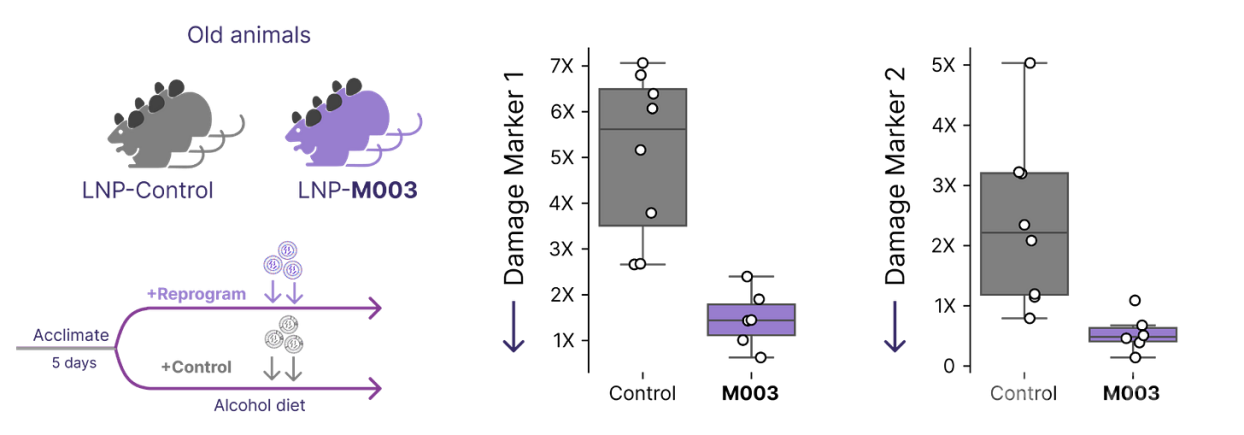
Figure 2: (Left) Animals fed an alcohol-containing diet were treated with control LNP-mRNA encoding an inert protein or with LNP-mRNA encoding one of the prime reprogramming payloads, M003. (Right) In the context of NewLimit’s reprogramming payload, markers of liver injury in the blood are reduced. (Image source: NewLimit official website)
(2) Breakthrough progress has also been achieved in immunology research.Three Transcription Factor Combinations Identified by the Team (I0001-I0003)Reversible Restoration of Aging T Cell Function. Using advanced real-time microscopy imaging techniques, researchers visually demonstrated that the treated T cells performed comparably to young cells in inhibiting target cell proliferation. These findings lay a solid foundation for developing precision therapies targeting immunosenescence. (Experimental results are shown in Figure 3.)
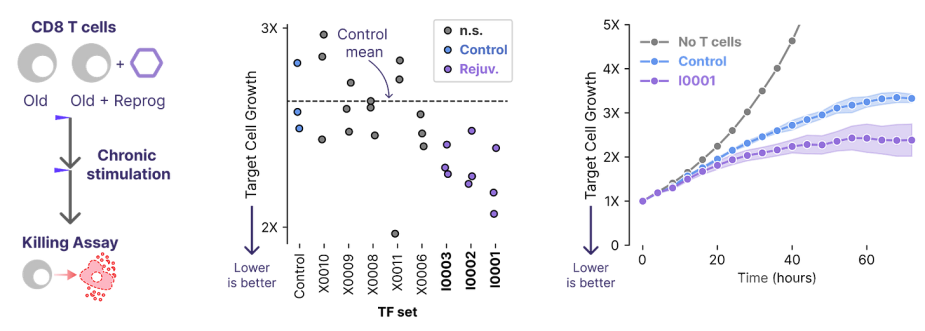
Figure 3: (Left) Aged cells were treated with reprogramming payload mRNA and then tested in a cytotoxicity assay as described above. (Center) NewLimit’s three reprogramming payloads (I0001–I0003) restore the youthful cytotoxic activity of aged CD8+ T cells. (Right) Magnified view of individual growth curves shows that I0001-treated cells are more effective at killing target cells, resembling young CD8+ T cells. (Image source: NewLimit official website)
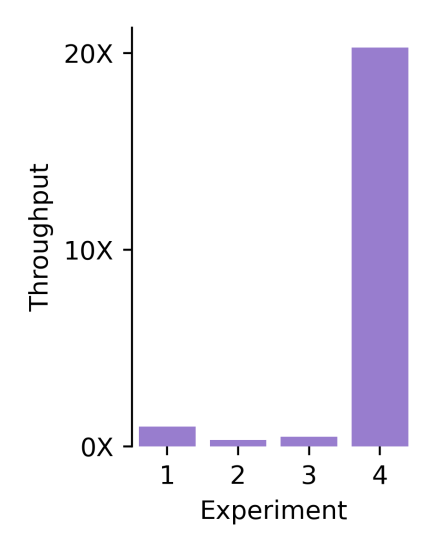
Figure 4: Throughput of NewLimit’s humanized liver screening system across four iterative experiments. (Image source: NewLimit official website)
4The "Cambrian Explosion" of the Longevity Economy
From PayPal co-founder Peter Thiel’s continued investment in anti-aging initiatives, and former world’s richest man Jeff Bezos’ support of Altos Labs, to Google’s active expansion into regenerative medicine and life-extension technologies through its subsidiary Calico,“The Longevity Economy” Is Becoming the Next Strategic High Ground That Global Tech Giants Are Vying to Enter. Against the backdrop of this increasingly heated industry trend, NewLimit’s financing trajectory has become a representative case study. Since its inception, NewLimit has raised over $170 million in cumulative funding. In 2023, it completed a $40 million Series A round with participation from top-tier firms such as Dimension, Kleiner Perkins, and Founders Fund. In May 2025, the company secured another $130 million in Series B financing, led by Kleiner Perkins.
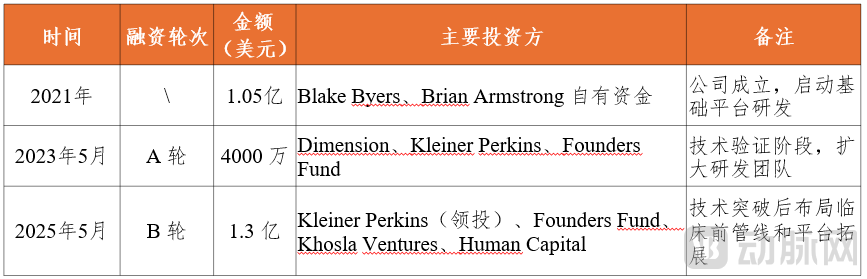
Table 2: Overview of NewLimit’s Financing (Source: NewLimit Official Website)
According to forecasts by Nomura Global Information Services, the global anti-aging market is projected to reach $348.3 billion by 2032, with a compound annual growth rate (CAGR) of nearly 5%. The global population aged 60 and above has already surpassed one billion. Against the backdrop of aging entering an “acceleration phase,” extending healthspan is no longer a futuristic fantasy but a realistic and urgent global consensus. NewLimit’s financing story not only reflects capital markets’ confidence in its technological pathway but also signals that the “Cambrian explosion” moment—marking the longevity economy’s transition from the laboratory to clinical practice, and from concept to reality—is quietly arriving.
5Learning from NewLimit: Three Key Insights for China’s Anti-Aging Industry
China’s anti-aging field is at a critical stage characterized by concurrent breakthroughs in basic research and accelerated industrialization. In recent years, Liu Guanghui’s team at the Chinese Academy of Sciences has leveraged gene editing to delay stem cell aging; Academician Lin Shengcai’s team at Xiamen University has elucidated the role of lithocholic acid phenotypes in mediating the anti-aging effects of caloric restriction; and Han Jingdong’s team at Peking University has developed an artificial intelligence-based aging assessment system. These advancements provide a robust scientific foundation for clinical translation.
On the industry front, Ruichu Pharma’s anti-aging drugs have entered clinical trials, while TimePie has built a service platform covering millions of users, demonstrating an accelerating trend from “following” to “running alongside” and even “leading.” At the national level, positive signals continue to emerge: the “Healthy China 2030” initiative and the “14th Five-Year Plan” have successively proposed strategies for longevity health management, and the “Opinions on Developing the Silver Economy to Enhance the Well-being of the Elderly,” issued in early 2024, explicitly supports the anti-aging industry. These developments will propel the “longevity economy” from a public discussion topic to a national strategic priority. At the market level, KPMG predicts that the size of China’s anti-aging market will grow from RMB 0.6 trillion in 2024 to RMB 4.6 trillion by 2035, with its share of the silver economy rising from 9% to 15%, as shown in the figure below.
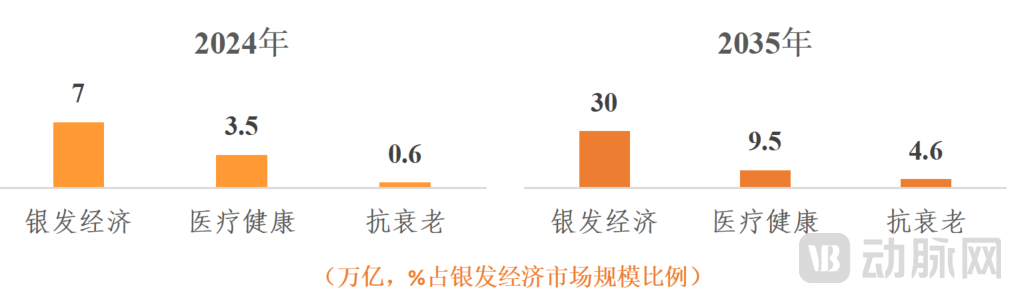
Figure 5: The share of the anti-aging industry in the silver economy is expected to increase over the next decade
Against this backdrop, NewLimit’s development trajectory offers three key insights for Chinese medical technology enterprises: first,Platform ThinkingSuperior to the single-point breakthrough path of “one target, one product,” it facilitates technology replication and pipeline expansion; secondly, co-founder Brian Armstrong has crossed over from crypto finance into longevity tech, bringing modular, engineering-driven product logic and global resource integration capabilities. This“Composite Team” Organizational Model, providing a valuable reference model for Chinese entrepreneurs; thirdly, compared to “anti-aging” approaches that directly challenge ethical red lines, NewLimit adopts a more controllable, assessable, and practically viable strategy by focusing on quantifiable functional restoration scenarios, such as immune system and liver health.
Looking ahead, as China continues to make breakthroughs in foundational technologies such as AI, big data, and biomanufacturing, driven by policy support and market growth, the country is poised to forge a differentiated and sustainable path in anti-aging technology development, becoming a new engine for the high-quality development of the biopharmaceutical industry.