

Path Forward Becomes Clearer! Zhu Jielun, Partner at Button Capital: Seizing Deal Logic as Chinese Innovative Drugs Go Global – [2025 VBEF]
“As the Biopharma Capital Tide Recedesat that time, Chinese innovative pharmaceutical companies are standing at a crossroads full of variables: technology has reached the clinical frontier, but capital has become cautious; while the industry scale is world-leading, global recognition still needs to break through.”Zhu Jielun, a partner at Button Capital, pointed out that innovative pharmaceutical companies should leverage China’s local advantages—such as lower R&D costs, faster clinical trials, and abundant talent—to flexibly engage with global capital, while also monitoring policy and market changes to promptly adjust their financing and IPO strategies.
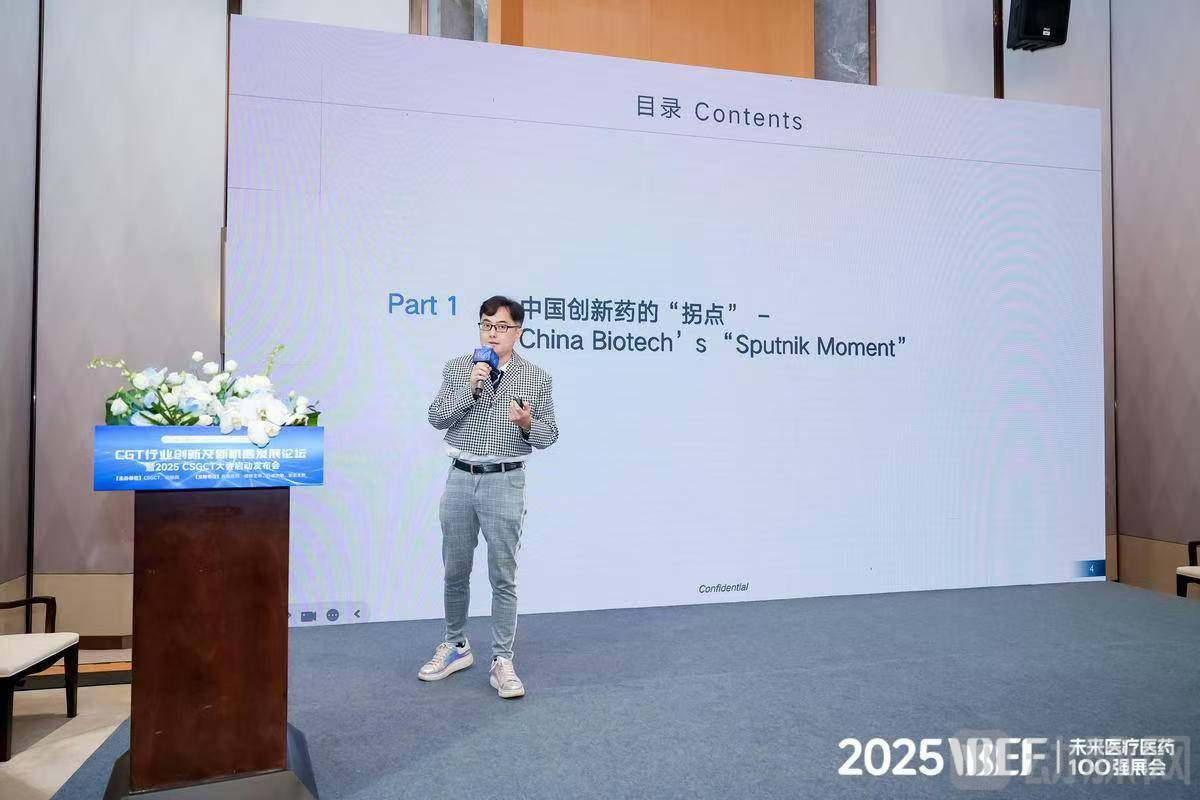
As one of the investors most focused on the development of the Gene and Cell Therapy (GCT) industry, Button Capital has been actively promoting industry growth while contemplating its future. Recently, the 2025 VBEF Future Healthcare & Pharma Top 100 Exhibition was successfully held at the Suzhou International Expo Center. As one of the core forums of the event, the “GCT Venture Capital and BD New Opportunities Forum” focused on R&D breakthroughs, industrial synergy, and commercialization challenges in the field of gene and cell therapy (GCT). At the forum, Zhu Jielun presented a systematic analysis of how Chinese innovative drugs can expand globally, starting from the perspective of transaction logic.
From “Follower” to “Leading Supplier”: Three Overseas Expansion Models Take Shape
In Zhu Jielun’s view, China’s innovative drugs have undergone a transformation from followers to leaders over the past decade.
According to statistics from the drug R&D data platform, the scale of innovative drugs in China surged between 2015 and 2024: as of December 31, 2024, the cumulative number of innovative drugs under active development by Chinese enterprises reached 3,575, surpassing the United States to rank first globally. Meanwhile, from 2015 to 2024, the cumulative financing volume in China’s innovative drug sector across primary and secondary markets exceeded RMB 1.23 trillion, with approximately 4,650 financing deals completed, providing strong capital support for the industry’s explosive growth.
Furthermore, from 2015 to 2024, the number and value of license-out transactions by Chinese pharmaceutical companies continued to rise, reaching a new peak in 2024 with a total transaction value of $51.9 billion, including $4.1 billion in upfront payments.
“Following this trend, the proportion of Chinese innovative drugs in global license-out pipelines could surpass 50% within the next one to two years, establishing an overwhelming advantage,” stated Zhu Jielun.
As global capital shows unprecedented interest in China’s innovative drugs, how should Chinese companies seize the opportunity and determine the best approach to “go global”? Zhu Jielun categorizes this strategic choice into three models and analyzes their differences from a practical perspective.
Analysis indicates that in traditional license-out transactions, Chinese companies grant overseas (or global) rights to their drug pipelines to large foreign pharmaceutical firms or licensors. While this model is straightforward, it entails relinquishing control over overseas markets and yielding only limited returns, making it suitable for companies with constrained resources and limited international experience.
If license-out was once the “survival strategy” for Chinese innovative pharmaceutical companies, the emerging “NewCo model” is more akin to a proactive offensive strategy. Under this model, companies not only out-license product rights but also participate in overseas new companies (NewCos) incubated from their assets through equity holdings, thereby capturing value-added returns from subsequent capital operations. Zhu Jielun points out that these NewCos are typically backed by US dollar-denominated capital and operate independently under professional management teams. Compared with traditional business development (BD), the NewCo model offers a clearer path: companies do not need to wait for an IPO window to open; by securing a single large-scale BD deal, they may recoup part or even all of their capital within one to two years.
To further enhance operational efficiency, Button Capital has innovatively proposed the “Hybrid NewCo” model. Under this approach, a Chinese-led team spearheads preclinical and Phase I clinical studies domestically during the early stages of the NewCo. Once the project advances to Phase II clinical trials and demonstrates value for international validation, an international management team with expertise in overseas markets and alignment with local business practices is brought on board. Such NewCos may later be acquired by multinational corporations (MNCs) or gradually evolve into “purely overseas NewCos.”
In Zhu Jielun’s view, “Hybrid NewCo” represents effective cost control and a significant boost in efficiency.
“Establishing a hybrid NewCo in China requires an initial investment of only $20–30 million, whereas launching a NewCo in the United States is estimated to require at least $100 million. The total cost per subject for Phase I clinical trials in China is approximately RMB 300,000–400,000, compared with $200,000–300,000 in the United States—a five- to seven-fold difference—while the pace of development also differs by a factor of five.”
Capital Window Cools, “Half-Step Innovation” Becomes Key to Breakthrough
However, regardless of which international expansion path enterprises choose, their ultimate destination remains closely tied to the international capital markets, a channel that is currently facing unprecedented resistance.
Zhu Jielun pointed out that the Federal Reserve has not yet officially entered a rate-cutting cycle, and U.S. Treasury yields remain at elevated levels, significantly diminishing the appeal of risk assets. Against this backdrop, investors have become more cautious in allocating capital to high-risk assets such as biomedicine, across both primary and secondary markets. The most direct manifestation of this trend is the near absence of new initial public offerings (IPOs) by biopharmaceutical companies in the U.S. market over the past few months.
Meanwhile, although the Hong Kong stock market shows slight signs of recovery, the Chapter 18A listing channel has become congested—with over 50 to 60 companies in the queue. There remains significant uncertainty regarding when these companies will face listing hearings and whether they will successfully raise capital.
Amid an increasingly complex international financing environment, returning to the fundamentals of transactions and mastering the underlying logic of “marketability” is particularly critical.
Zhu Jielun emphasized that the key to a project’s successful global expansion lies in the precise positioning of “half-step innovation” and the timing of its market entry.
The so-called “half-step innovation” refers to projects that are neither too radical—first-in-class drugs often struggle to gain trust and close deals—nor too mediocre—if there are already 20 similar pipelines in the market, pricing fails to reflect their value.
Zhu Jielun candidly stated, “From a purely transactional perspective, R&D targets should rank second, third, or fourth globally in terms of development progress, with one or two pharmaceutical companies already developing similar products that have entered Phase I or Phase II clinical trials. Projects with such a ‘slight lead’ are easier to sell.”
More importantly, once an asset demonstrates positive signals in Phase I clinical trials, companies should decisively pursue business development (BD) collaborations or divest the asset, rather than holding onto it for an extended period of watchful waiting.
Notably, against the backdrop of an uncertain IPO window for U.S. stocks, Zhu Jielun recommends pursuing alternative routes such as a Reverse Takeover (RTO). The RTO process is straightforward: it involves merging with a Nasdaq-listed company, particularly one lacking cash flow and having inactive pipeline assets, thereby allowing the domestic company to become the actual controlling shareholder and gain access to the U.S. capital markets through this back-door listing method.
“This approach circumvents the limitations of traditional IPOs, such as protracted processes and unpredictable timing, while preserving greater flexibility for future financing,” said Zhu Jielun.
As the industry faces challenges, government agencies, industrial companies, investment institutions, and other stakeholders are making concerted efforts to promote sector development. To thoroughly implement the objectives outlined in the “Three-Year Action Plan for Accelerating Innovative Development of Beijing’s Cell and Gene Therapy Industry”—namely, “seizing the critical window of explosive growth in cell and gene therapy technological innovation and industrial development, and establishing a globally influential source of CGT innovation and an industrial hub”—and to accelerate the implementation of policies such as “achieving breakthroughs in original innovation, tackling key core technologies, enhancing the level and efficiency of clinical research, accelerating the R&D and market launch of innovative products, and building a cell and gene therapy industrial cluster,” thereby fostering a favorable environment for industrial development, the “2025 CSGCT China International Conference on Gene and Cell Therapy” will be held in Beijing from September 12–13, 2025. The conference is strongly supported by relevant Beijing municipal commissions and bureaus, the People’s Government of Haidian District, and the Administrative Committee of Zhongguancun Science City; organized by the Chinese Society for Gene and Cell Therapy (CSGCT); and co-organized by HIEA and VCBeat.
This conference integrates top-tier international resources, bringing together domestic and foreign research institutions and scientists, clinical institutions and physicians, investors, leading enterprises and entrepreneurs, regulatory agencies, patient organizations, and premier supply chain companies. With a global perspective, it empowers the CGT industry ecosystem. Through strategic synergy across industry, academia, research, application, regulation, and investment, it breaks down barriers throughout the entire lifecycle—from basic research, technology development, and clinical trials to industrial translation, market access, capital operations, and global expansion. The conference aims to build a platform for in-depth exchange and cooperation between China’s gene and cell therapy sector and the global industry chain, enabling Chinese innovations to deeply participate in shaping global GCT technical standards and jointly establishing an internationally aligned collaborative mechanism for the industry chain.
End
May 29-30, Shenzhen Guangming·Bay Youyinli, we will hold the [Third Session of 2025 China Biotech Enterprises Overseas Financing Training]!
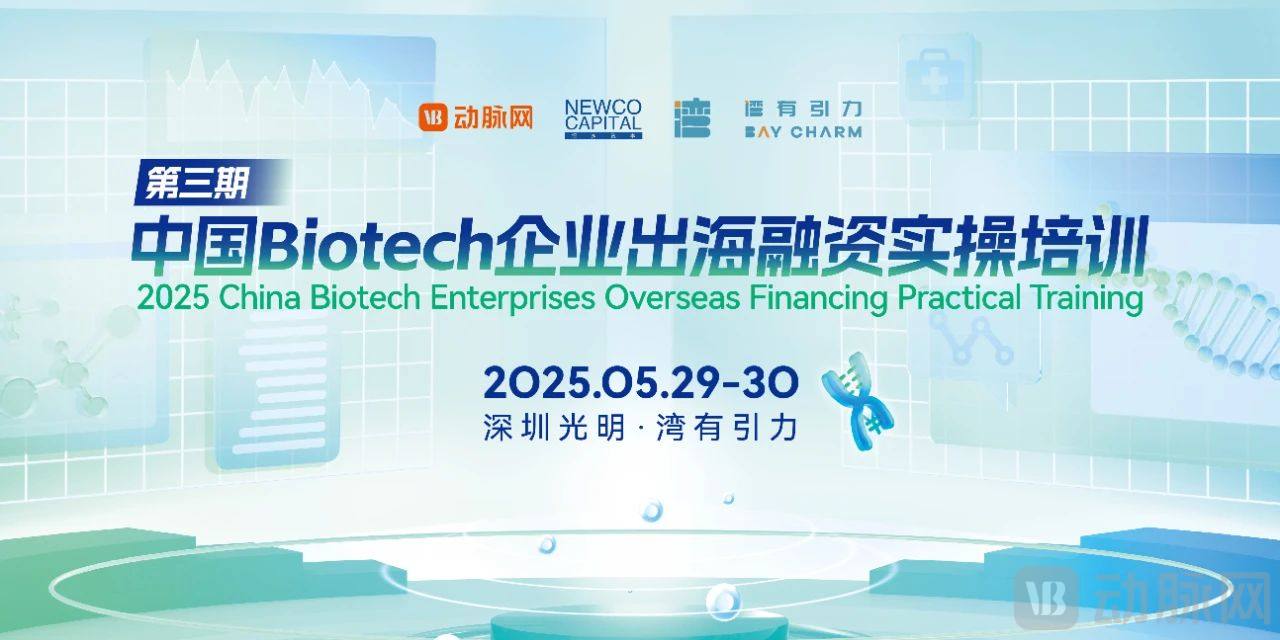
From practical cross-border fundraising, NewCo model explanations, legal regulations and intellectual property, pipeline BD fundraising experience, to optimizing pipeline design, we aim to effectively address enterprise-specific challenges and accelerate the fundraising process. We sincerely invite founders, CEOs, CFOs, heads of fundraising, and strategic executives from Chinese biotech companies planning or currently pursuing overseas financing, as well as investors and legal advisors interested in biotech overseas fundraising, to attend!

Scan the QR code to register