

Daotong Investment Unlocks Growth Opportunities in Cardiovascular Medical Devices Through Diagnosis, Treatment, and Management Innovation
For decades, cardiovascular disease has been regarded as the “leading killer” threatening global health and longevity, with a mortality rate of up to 5% among patients aged 65 and older. As population aging intensifies and lifestyles change, the prevalence of chronic heart disease is rising significantly, spurring multifaceted innovations across various segments of the cardiovascular device industry. These innovations aim to address the pain points of traditional therapies and overcome challenges in improving the efficiency and safety of diagnosis and treatment.
In the realm of healthcare investment, the high prevalence of cardiovascular diseases coupled with technological breakthroughs in innovative medical devices is generating substantial investment opportunities. Innovation has become the core driver of development in the cardiovascular medical device sector. Bolstered by the dual advantages of policy support and market demand, innovative cardiovascular medical devices are emerging as a key focus area attracting significant attention from the investment community. Against this backdrop, how can investors accurately identify and seize these investment opportunities?
On May 9, at the Cardiovascular Disease R&D Innovation Forum of the 2025 Top 100 Future Healthcare and Pharmaceutical Exhibition hosted by VCBeat,Lin Zhencheng, Partner at DaoTong Investment, Delivers Keynote Address on “Investment Opportunities in Innovative Medical Devices for Cardiovascular Care”, and in-depth analysis of investment opportunities in the cardiovascular device sector, incorporating DaoTong Investment’s key focus areas, evolution of investment strategies, and investment rationale within the cardiovascular track.
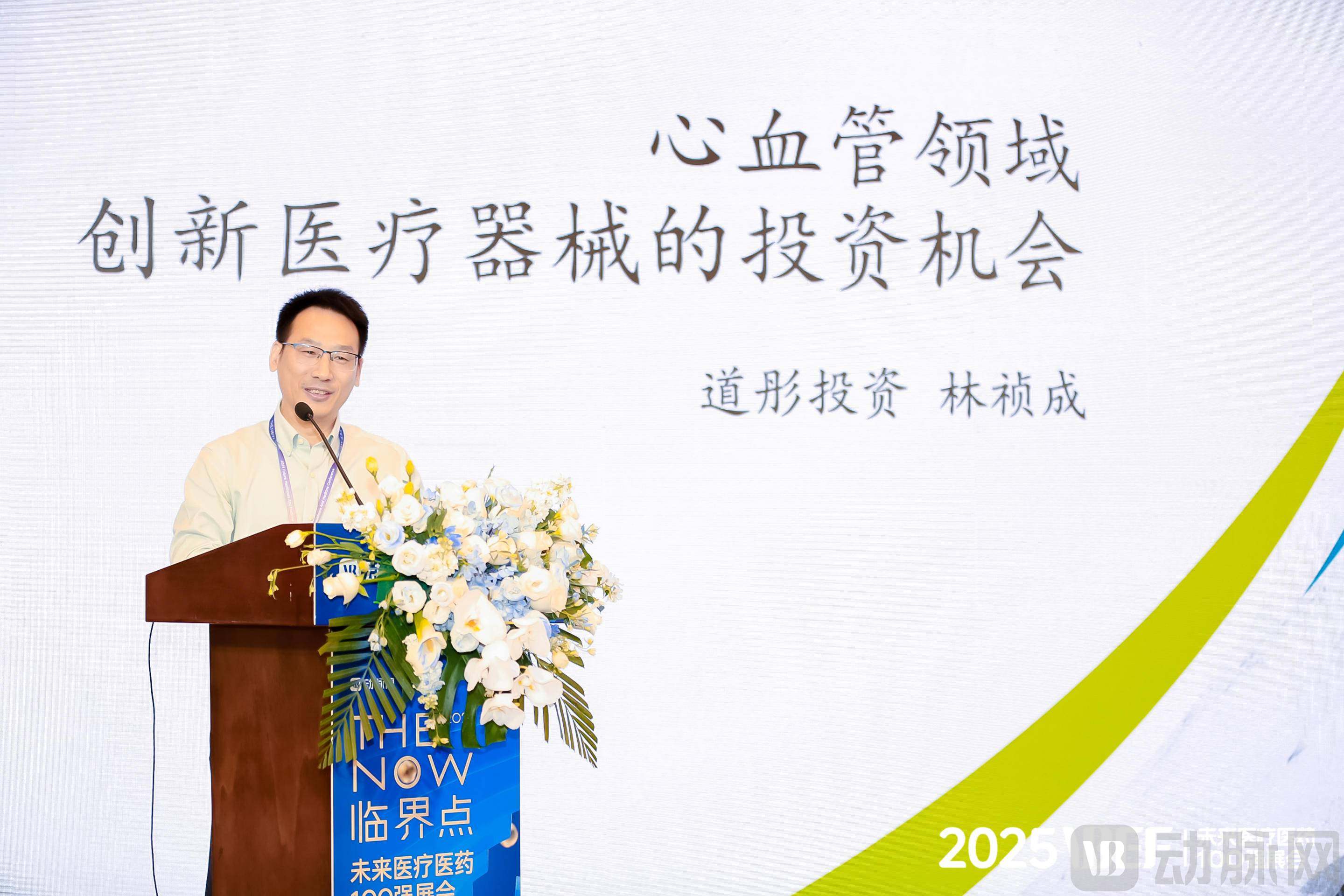
Partner at Daotong Investment, Lin Zhencheng
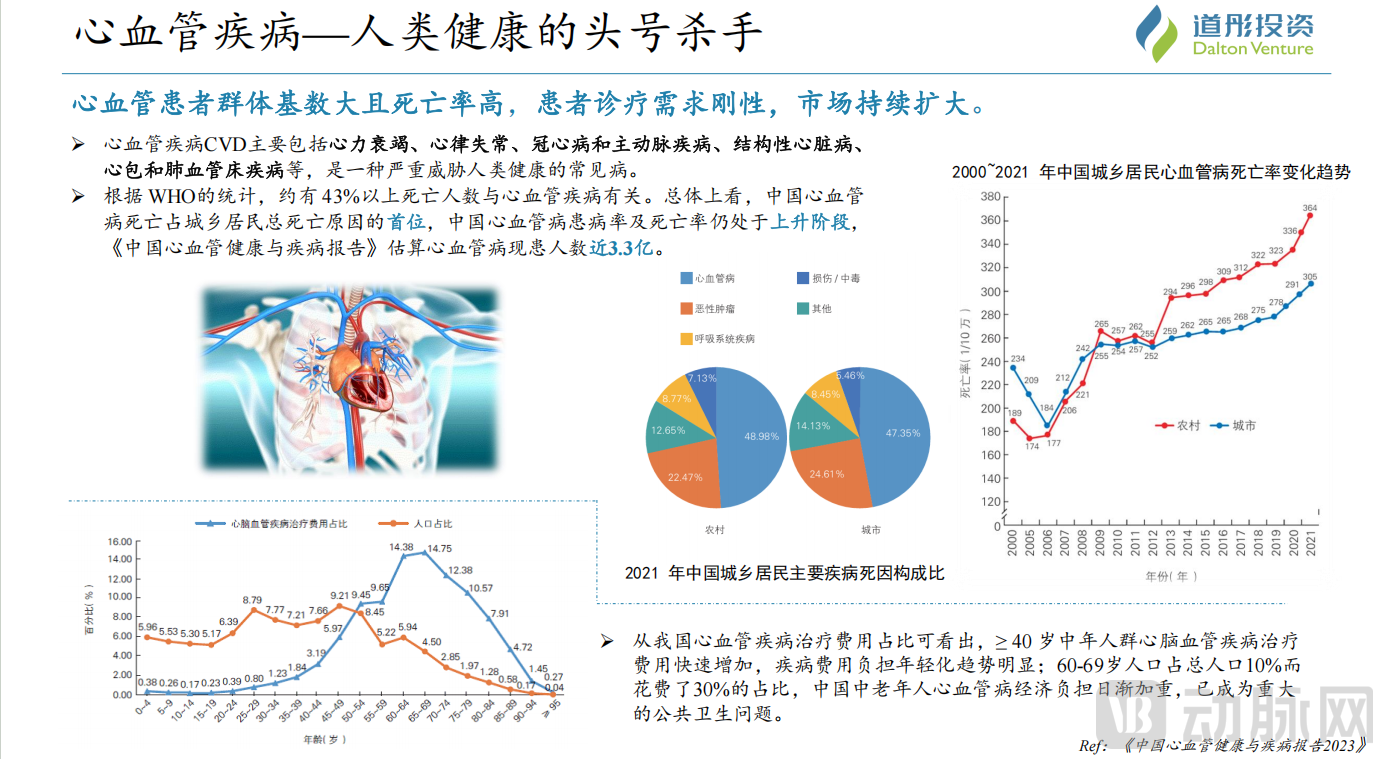
Lin Zhencheng pointed out that the cardiovascular sector is one of the most critical tracks within the broader health and wellness industry. Daotong Investment focuses on early-stage investments in the medical and health sector, with cardiovascular disease being a key area of interest. Currently, cardiovascular diseases have become the leading threat to human health, with high mortality rates both globally and in China. In China, nearly half of all disease-related deaths are attributed to cardiovascular conditions.
In recent years, the incidence of cardiovascular disease has risen rapidly, with a more pronounced trend in rural areas. Currently, over 300 million people in China are affected by the condition, imposing an increasingly heavy burden on healthcare expenditures. Notably, the proportion of cardiovascular-related treatment costs increases significantly after age 40. Individuals aged 60–69 account for 10% of the total population but consume approximately 30% of medical resources. Thus, as policies to control healthcare costs continue to be implemented, cardiovascular disease among middle-aged and elderly populations has become a critical public health and economic issue requiring urgent attention.
Currently, the market size of cardiovascular devices has exceeded RMB 100 billion and is expanding at a compound annual growth rate (CAGR) of 17.3%, demonstrating strong growth potential. Daotong Investment focuses primarily on the following areas:
First,Daotong Investment has long focused on the overarching theme of “domestic substitution.”, given that many sources of innovation remain concentrated abroad, a large number of innovative technologies are undergoing a process of localization driven by overseas technologies. Taking the coronary artery sector as an example, its global market size has reached nearly $50 billion, and the localization rate in the Chinese market has exceeded 50%, breaking the monopoly previously held by foreign companies.
In contrast, the domestic penetration rate in the field of structural heart disease (such as valves, occluders, etc.) remains relatively low. However, domestic substitution is accelerating in certain niche segments, with significant breakthroughs achieved in technologies such as PFA and ECMO, and the market share of some companies approaching 50%."Despite the remaining barriers, this also signifies vast room for innovation."
Amid the wave of domestic substitution, shifts in the disease spectrum have driven phased changes in investment patterns and focal points. From the development of percutaneous coronary intervention (PCI) between 2000 and 2010, to the rapid rise of electrophysiology from 2010 to 2020, and further to the sustained increase in heart failure incidence in recent years, heart failure is emerging as a new investment hotspot.
In medical device investment, the volume-based procurement (VBP) policy is an indispensable key variable. Although it poses challenges to the industry, from a medium- to long-term perspective, the policy favors the development of leading and innovative enterprises with strong cost-control capabilities and potential for platformization and internationalization. The industry is poised to cultivate head companies akin to Medtronic and Johnson & Johnson. Therefore,DaoTong Investment pays particular attention to whether a company possesses the platform-level potential for multi-product synergy, as well as the strategic perspective and capabilities for international expansion.。
Lin Zhencheng summarizes the investment logic for cardiovascular health into three key stages: diagnosis, treatment, and management, and explores opportunities for “innovation” at each stage within this framework.
1. Innovative Diagnostics: Reducing the Learning Curve for Physicians with Commercialization Potential
In the realm of precision diagnostics, imaging technologies continue to evolve, with modalities such as IVUS, OCT, ICE, and CT-FFR already widely adopted in clinical practice. However, their broader dissemination faces bottlenecks, including operational complexity and steep learning curves for physicians, which hinder their penetration into primary care markets.
Daotong Investment places particular emphasis on “technology accessibility,” assessing whether products possess commercialization potential and can be effectively implemented to serve a broad base of primary healthcare institutions. In addition to evaluating how relevant technologies support top-tier specialists, Daotong Investment actively seeks technological directions that empower grassroots physicians. The firm aims to promote the equitable distribution of medical resources by facilitating the adoption of surgical procedures, technologies, and supporting devices in primary care settings. For instance, one of Daotong’s portfolio companies has developed proprietary core components to ensure supply chain security and cost control. By integrating AI technology, its product significantly reduces reliance on physicians’ specialized expertise, simplifies operational workflows, and is suitable for secondary, primary, and even county-level hospitals, thereby holding promise for widespread adoption.
2. Innovative Therapies: Breakthroughs in Materials and Downstream Application Scenarios
Material innovation is crucial in the treatment phase. Taking heart valves as an example, polymer materials can not only reduce manufacturing costs but also significantly extend service life, thereby meeting the urgent needs of current clinical practice.
The same holds true in the field of mechanical circulatory support (MCS), where membrane materials for artificial hearts also face supply chain security and innovation challenges.
Daotong Investment has invested in China’s first ECMO manufacturer, which has achieved miniaturized equipment design based on Medtronic’s existing products, significantly enhancing adaptability for primary healthcare settings. As a latecomer to the industry, it possesses advantages in optimizing equipment form factors that are difficult for early movers to replicate. Such technological strengths have effectively expanded the boundaries of application scenarios, demonstrating significant value particularly in emergency medicine and medical transport contexts in China. Given the uneven distribution of medical resources in China, transport scenarios play a crucial role in clinical practice. Through miniaturization and integration technologies, complex medical devices can substantially lower the professional technical threshold for operators, thereby facilitating the penetration of advanced treatment modalities into broader primary healthcare systems.DaoTong Investment holds a positive and optimistic view on such innovative directions, looking forward to improving the accessibility of high-quality medical technologies through technological advancements, so that more patients can access and afford advanced treatment options.
Moreover, even in relatively mature fields such as PCI stents and balloons, numerous innovation opportunities remain, including biodegradable materials, drug carriers, and drug delivery mechanisms. Innovation is endless; only through continuous innovation can companies find new ways to survive in an increasingly hyper-competitive market.
3. Innovative Management: Chronic Disease Monitoring and Enhanced Patient Awareness
The chronic nature of cardiovascular disease makes "post-operative management" equally critical. In August 2024, Ipsos conducted a survey among individuals under the age of 65 across six countries, with a total of 6,000 participants. The survey data revealed that public understanding of heart failure remains unclear: while shortness of breath, chest pain, and fatigue are the most representative symptoms of heart failure, only 40% of respondents were aware of this; 40% mistakenly believed that heart failure means the heart has stopped beating, and 33% incorrectly conflated heart attack, cardiac arrest, and heart failure as the same condition.
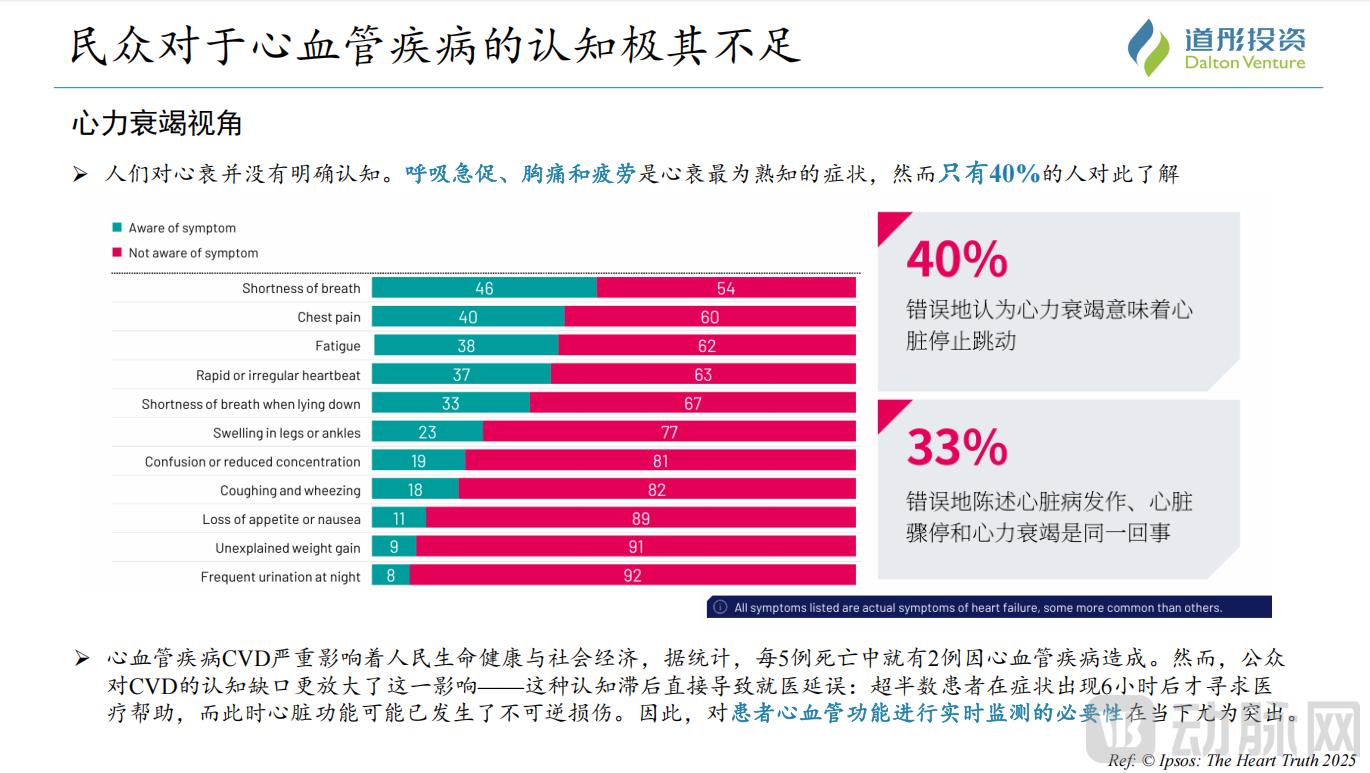
This lag in awareness directly leads to delays in seeking medical care. More than half of patients do not seek medical attention until six hours after symptom onset, by which time irreversible damage to cardiac function has already occurred, causing them to miss the optimal window for intervention. Consequently, remote real-time monitoring and chronic disease management have become key investment focuses for Daotong Investment. For instance, Daotong has invested in an innovative device that integrates therapeutic and monitoring functions. This device enables real-time intraoperative monitoring of left atrial pressure and assists physicians in remotely intervening to prevent heart failure deterioration postoperatively, significantly reducing hospitalization and mortality rates.
Lin Zhencheng stated that Daotong Investment has made in-depth investments in the cardiovascular field, covering PFA, RDN, ECMO, and a series of innovative medical devices for diagnosis, treatment, and management. In the future, Daotong Investment will continue to deepen its engagement in this sector and looks forward to collaborating with more enterprises that possess technological breakthroughs and clinical application value.