

Chipiron Secures $17M Series A to Democratize MRI with Ultra-Low-Field Portable System
Chipiron
Portable MRI Developer
In late April 2025, Chipiron completed a $17 million (approximately RMB 122 million) Series A financing round. Led by Blast, this round brought the company’s total funding to $25.8 million (approximately RMB 186 million).
Chipiron’s funding will primarily be used to drive the R&D and commercialization of its core product, the “Ultra-Low-Field Portable MRI System,” with a focus on serving primary healthcare institutions and mobile medical scenarios.
MRI has long been a critical tool for cancer screening, but conventional MRI systems face numerous practical limitations. First, the high cost—often exceeding one million dollars per unit—makes them unaffordable for primary healthcare institutions. Second, their large footprint requires dedicated shielded rooms for proper operation. Furthermore, conventional MRI suffers from low examination efficiency, with patients typically waiting an average of two hours before undergoing scanning. This inefficiency further hinders its adoption in emergency settings and remote areas.
Chipiron is a French biomedical technology company. Its core product, an ultra-low-field portable MRI, breaks through the dual limitations of high cost and bulky size associated with traditional MRI systems by innovating ultra-low-field hardware and optimizing AI algorithms. This advancement enables rapid tumor screening in ordinary clinics and even on ambulances, making MRI accessible to primary healthcare institutions.
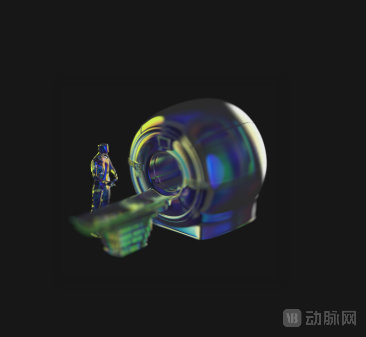
(Image source: company website)
1Quantum Sensing + AI Enhancement Cracks the Low-Field MRI Challenge
Magnetic fields are classified by their field strength. High-field magnets generally have a field strength of approximately 1.5 T to 3 T. Low-field magnets have lower strengths, typically below 0.5 T, while ultra-low-field magnets are in the range of approximately 1 to 10 mT.
Traditional MRI relies on high magnetic fields to generate clear images, resulting in bulky, expensive equipment that requires specialized facilities for operation. While low-field devices offer greater convenience, they suffer from weak signals, leading to image quality that fails to meet the standards required for clinical diagnosis.
Chipiron has taken a novel approach by leveraging SQUID detection systems and AI enhancement to achieve imaging quality comparable to high-field MRI in low-field environments, while maintaining device portability.
First is the SQUID detection system. SQUID, or Superconducting Quantum Interference Device, is used for high-sensitivity magnetic field detection. Chipiron’s ultra-low-field MRI achieves direct magnetic field detection through SQUID technology.
The sensitivity of SQUID quantum detectors can reach 0.1 fT/√Hz. This technical system can directly capture ultra-low-frequency magnetic field signals, with a sensitivity comparable to detecting a needle on a football field, making it more suitable for low-magnetic-field environments. This technological advantage enables MRI sensitivity to far exceed that of traditional induction coils, allowing normal operation even in rooms without magnetic shielding, thereby significantly overcoming site limitations.
Next is the dynamic AI enhancement system. On one hand, the device achieves active noise cancellation by sampling environmental noise via external coils and digitally eliminating it. On the other hand, it leverages deep learning to super-resolve low-field MRI images into high-field-like images. Based on diffusion models and super-resolution algorithms, the device can enhance 10 mT images in real time to meet clinical diagnostic standards comparable to 3 T MRI, thereby addressing the image quality issues associated with low-field MRI.
Leveraging these two core technologies, the Chipiron MRI is priced at just one-tenth that of traditional MRI systems and weighs less than 600 kg, effectively addressing the cost and space constraints that have hindered MRI adoption at primary care levels. Meanwhile, its clinical-grade diagnostic quality enhances the diagnostic confidence of primary care physicians, facilitating early cancer screening.
Dimitri Labat, the company’s founder and CEO, stated, “Our goal is not to replace high-field MRI, but to make MRI examinations as ubiquitous as blood pressure measurements. In emergency rooms, ambulances, and even remote clinics, physicians can use it to make rapid decisions.”
It can be said that Chipiron’s ultra-low-field MRI overcomes the multiple limitations inherent in traditional MRI systems that rely on high magnetic fields. If ultra-low-field MRI can truly achieve clinical outcomes comparable to those of conventional high-field MRI, it will usher in a major transformation in the medical imaging industry.
2Four High-Demand Scenarios as the Preferred Applications
Conventional MRI is typically confined to the scanning rooms of tertiary hospitals, where the process from appointment scheduling to formal examination is time-consuming and inefficient. This has led to the common limitation of restricted application scenarios for MRI. Chipiron, with its advantages of rapid imaging and high accuracy, has expanded its applications into four core scenarios.
InAcute DiagnosisIn critical care, a difference of mere milliseconds can alter the outcome of a life. Chipiron’s ultra-low-field MRI has achieved a breakthrough in “point-of-care imaging,” effectively capturing the golden window for emergency treatment. With this device, the time from patient admission to scan completion is reduced to just 8–12 minutes, representing a reduction of over 60% compared to traditional MRI workflows.
The diagnostic accuracy of MRI is also crucial. For patients with metallic implants, artifacts generated during scanning can easily interfere with the results. Chipiron’s ultra-low-field MRI elegantly resolves this issue. Through its unique electromagnetic compatibility design, it reduces artifacts from common orthopedic implants by 82%, providing more reliable imaging evidence for emergency decision-making.
InCancer ScreeningIn this regard, the device achieves a perfect balance between non-invasive examination and cost control. In early cancer screening, minute lesions are often difficult to detect, which is a major reason why many patients miss the optimal window for diagnosis and treatment. Chipiron has made significant breakthroughs in the detection of tiny tumors.
Chipiron, in collaboration with Paris’s Pitié-Salpêtrière Hospital, evaluated the performance of ultra-low-field MRI. The results demonstrated that at field strengths of 1–10 mT, the differentiation of T1/T2 relaxation times for specific tissues improved by up to 20%.
Simply put, low-field MRI is more effective than high-field MRI at detecting minute lesions. This is akin to taking photographs under different lighting conditions: under soft lighting, the contrast between light and dark shades is more pronounced, allowing physicians to distinguish more clearly between healthy and abnormal tissues. This finding offers a new pathway for the early screening of microtumors smaller than 5 mm.
Then, for conditions requiring long-term monitoring, such as Alzheimer's disease,Neurodegenerative Disease ManagementChipiron’s ultra-low-field MRI offers a more cost-effective solution. The system enables quantitative assessment of treatment response through multi-modal AI reconstruction algorithms. Multi-center study data indicate that the system’s reproducibility in measuring white matter hyperintensity volume (ICC > 0.92) is comparable to that of 3T MRI, while reducing the comprehensive cost per examination by 85%. This effectively lowers the cost of efficacy monitoring for chronic neurological diseases.
Finally, it isIntensive Care. For ICU patients with various medicalTo address the limitation in range of motion caused by auxiliary monitoring with medical devices, ultra-low-field MRI employs an open magnet design and intelligent monitoring protocols. This MRI system can acquire brain images even while life-support equipment, such as ventilators, is operating continuously, and its innovative dynamic scanning mode enables every 2 hoursContinuous monitoring at regular intervals achieves automated, sustained monitoring.
3Clinical validation initiated in 2025
Currently, Chipiron has completed testing of two generations of prototypes and is expected to deploy clinical research devices in three French hospitals in 2025. Furthermore, Chipiron has established collaborations with multiple medical institutions (such as the Pitié-Salpêtrière Hospital in Paris) and research organizations, and paired clinical trials for this device are currently underway.
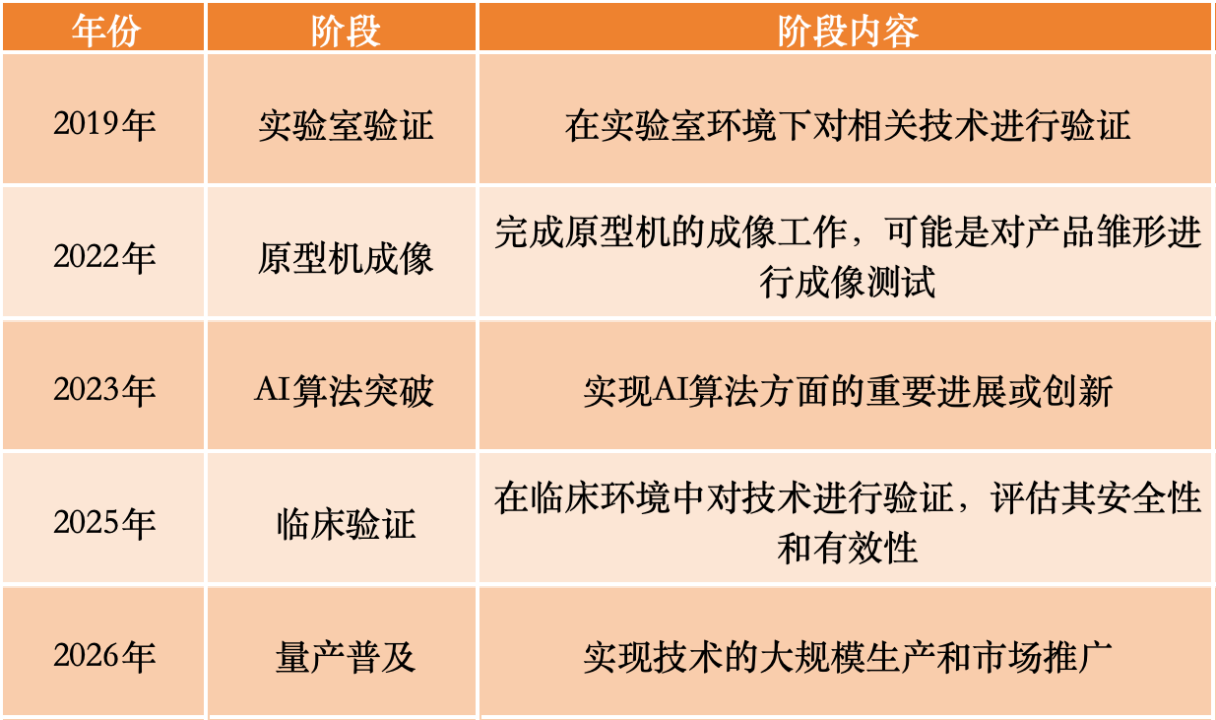
(Source: Company Official Website)
However, the challenges facing Chipiron remain impossible to ignore.
First is the mass production of Chipironcapability, with its core component, the SQUID detector, relying on customized production from a Japanese supplier, resulting in an order delivery lead time of up to six months. If it is not possible by 2026Prior to establishing at least twodomestic backup suppliers, capacity bottlenecks may directly hinder the speed of clinical implementation.
Meanwhile, Chipiron is also facingpressure from industry giants. Siemens recently acquired a quantum sensing startup, while GE Healthcare announced the development of a “hybrid-field-strength” portable MRI, aiming to balanceImage Quality and Cost. Hyperfine, an innovative company like Chipiron, has accelerated the iteration of its products through the FDA’s expedited review pathway with assistance from its parent company, driving the weight of its next-generation device down to under 500 kg. As a result, it will be difficult for Chipiron’s equipment to maintain a decisive advantage in terms of weight.
Meanwhile, the device still needs to improve its clinical acceptance. Currently, some physicians remain conservative about the diagnostic capabilities of low-field MRI, and large-scale clinical trials are required to enhance its credibility.
4Team and Capital: The Strategic Value Behind EU Investment
Chipiron boasts a multidisciplinary professional team, whose high-caliber expertise in quantum physics, medical imaging, and AI has laid a solid technological foundation for the company.
As CEO and Co-Founder, Dimitri Labat holds a Ph.D. in Quantum Physics from École Polytechnique. He previously led research on superconducting devices at the CEA (French Alternative Energies and Atomic Energy Commission) and was awarded the Young Scientist Prize under the EU’s “Quantum Technologies Flagship” program in 2019. He holds five patents for MRI detectors.
The rigor of academic research has led him to maintain strict control over technical details within the team. He insists on deep involvement in SQUID chip design, dedicating 30% of his time each week to researching core technologies in the laboratory.
Dr. Yacine Belkhodja, CTO and Co-Founder, previously served as the Lead Engineer for Siemens Healthineers’ low-field MRI project. He developed the first FDA-approved 64mT MRI reconstruction algorithm and pioneered the “clinical needs-driven R&D” mechanism. As a cross-disciplinary expert, he possesses both clinical knowledge in medical imaging and hardware engineering experience.
Technical collaborations have yielded significant gains for the company in the race toward device miniaturization. According to Crunchbase data, as of April 30, 2025, the company’s total funding had reached $25.8 million.
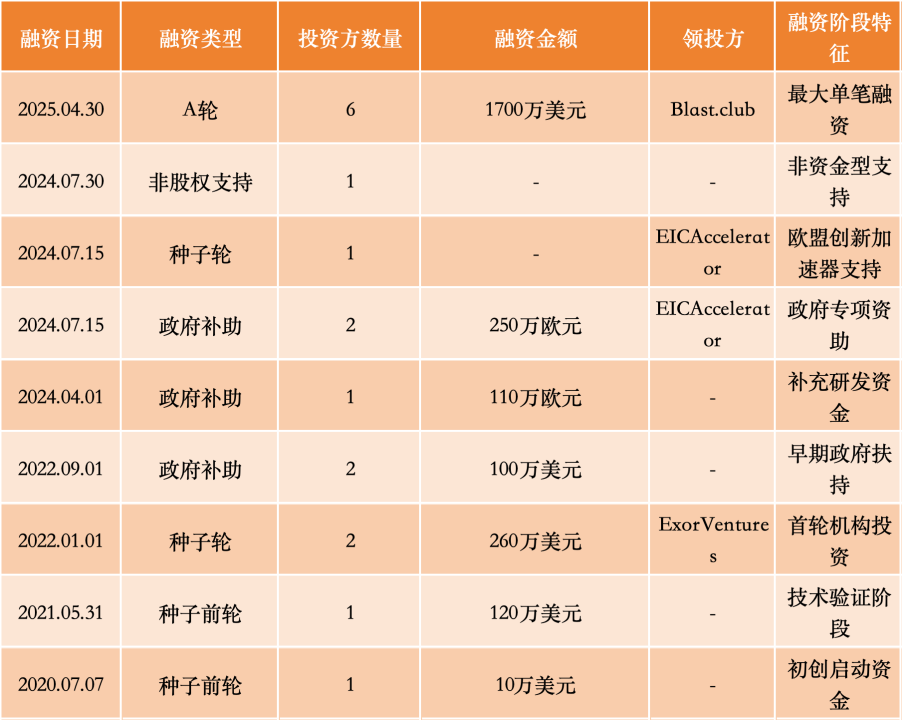 Chipiron’s Historical Financing and Investment Activity (Source: Crunchbase)
Within the investment and financing matrix, the EIC Accelerator has participated in three rounds of investment. The EIC Accelerator is an innovation acceleration program funded by the European Union, with a particular focus on projects that have the potential to create new markets or disrupt existing ones. This repeated capital commitment further underscores the innovative value of this MRI system.
Overall, Chipiron has a clear commercialization path, but it must overcome the dual challenges of technical validation and market education. If clinical data meets targets, its future valuation is expected to rise rapidly with mass production of the device and penetration into emerging markets.
Chipiron can effectively promote the development of primary healthcare by expanding MRI coverage in grassroots medical institutions, reducing patients’ examination costs, and establishing mechanisms for early screening, diagnosis, and treatment.
Chipiron’s logic of inclusive technology essentially leverages a triple strategy of “cost reduction, efficiency improvement, and scenario expansion” to bring high-end medical resources down to the general public. When an ambulance can perform intracerebral hemorrhage screening, when clinics in impoverished areas can track the progression of Alzheimer’s disease, and when more people can access quality healthcare services, medical equity may well be redefined.