

The Next Wave of Innovation in Ophthalmic Pharmaceuticals and Devices Unveiled at 2025 VBEF

He Eye
Ophthalmology Medical Service Provider
In today’s economic downturn, does ophthalmology remain a “golden” sector within the healthcare industry? How has the new wave of artificial intelligence created opportunities and challenges for the development of ophthalmology? Over the past few years, what innovations and breakthroughs have been achieved by high-end ophthalmic medical devices, which have championed domestic substitution and even indigenous innovation? In the battlefield of cell and gene therapy (CGT), one of the key trends in ophthalmic treatment, how is China’s domestic force being tempered and refined?
With the above questions in mind,He Eye, a renowned listed ophthalmic enterprise in China, joined forces with VCBeat, the recorder of the medical and health industry, to co-host the Forum on the Integrated Innovation of IT (Artificial Intelligence) and BT (Biotechnology) in Ophthalmology during the 9th Future Healthcare Top 100 Exhibition. The event invited numerous industry representatives to share their insights on key issues driving the development of the ophthalmic sector, sparking vibrant exchanges of perspectives.
At the forum, He Eye Group announced significant progress on its RMB 800 million Eye Health Fund, established in partnership with China Merchants Capital, a renowned domestic investment firm. The group also expressed its willingness and plans to actively engage with industry practitioners and pursue collaboration, investment, and integration with ecosystem enterprises in the future, leveraging the support of this industrial fund.
Keynote Speech: The Development of the Ophthalmology Industry from the Perspectives of Service Providers, Investors, Researchers, and Medical Device Manufacturers
Forum Opening,Dr. He Xingru, Chief Scientist of He Digital Healthcare and Director of the Visual Intelligence Center at Liaoning He UniversityThis article provides a detailed overview of He Eye’s development history and the He Guangming City Initiative, while sharing the company’s current strategic priorities. Since its establishment in 1995, the He Guangming City Initiative has taken shape, forming three core pillars: He Eye, He Medical College, and the He Eye Industry.
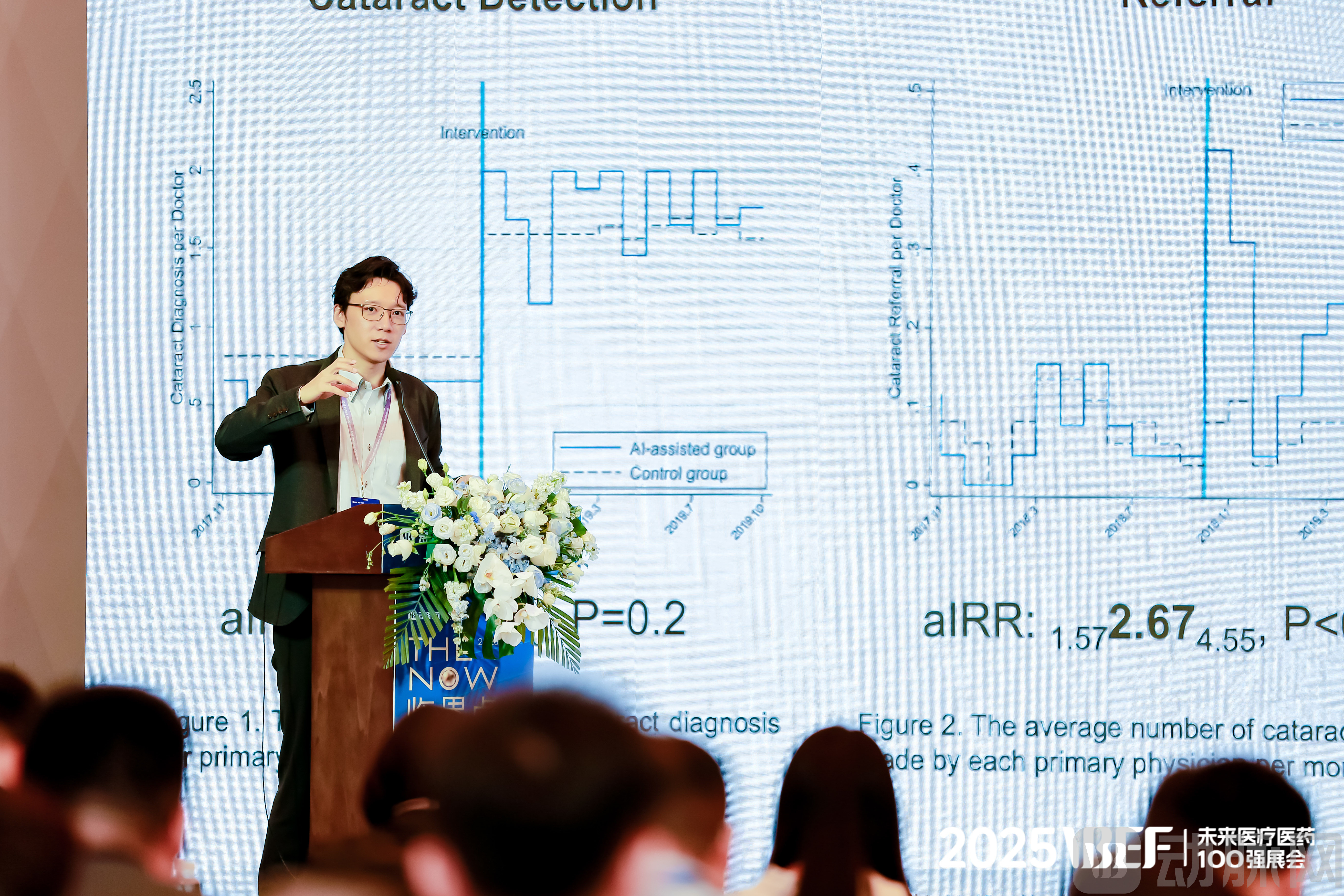
Dr. He Xingru, Chief Scientist of He Digital Health and Director of the Visual Intelligence Center at Liaoning He University of Medicine
He Eye is a group-type service institution integrating medical care, education, and research. Focusing on eye health management across the entire life cycle, it operates as a digital eye health ecosystem industrial group driven by innovative technology. The company adopts a “1+N” model, deploying its nationwide presence through eye hospitals that drive chains of optometry clinics, and continuously expanding its regional footprint and brand influence via a franchised optometry chain model. To date, He Eye has cumulatively served over 30 million people, with annual outpatient visits exceeding 1.1 million. It has also provided training to more than 50,000 grassroots physicians through the National Health Commission’s blindness prevention and treatment training bases (excluding figures from its medical and university segments).
As a higher education institution approved by the Ministry of Education, Liaoning He University leverages its strengths in eye health and specializes in vision science, striving to build itself into a new type of university that integrates research, application, and entrepreneurship. Currently, the university offers 27 undergraduate programs and 4 vocational college programs, spanning seven major disciplines: medicine, engineering, arts, science, management, education, and agriculture. Notably, its Optometry program has been recognized as a National First-Class Undergraduate Major. The university is dedicated to cultivating future interdisciplinary, integrated, and collaborative composite innovative professionals capable of providing practical, full-lifecycle services in the broader health sector.
He Eye Industry Group leverages cutting-edge technology platforms, including gene editing, stem cell therapy, advanced biomaterials, and synthetic biology, to build three major industrial clusters in biopharmaceuticals, intelligent devices, and digital therapeutics. The group has undertaken 27 national-level projects, such as those under the National Key R&D Program. More than 30 independently developed innovative products, including an intelligent screening system for myopia prevention and control and ophthalmic robots, have obtained medical device registration certificates, with products exported to over 100 countries worldwide.
In recent years, He Eye has placed significant emphasis on the application and exploration of artificial intelligence. Leveraging the advantages of its full-industry-chain ecosystem platform for eye health, the company is committed to building an AI- and big data-based eye health management ecosystem, thereby establishing He Eye’s new strategic goal of creating a “Smart City of Light.”
Within the technological innovation framework of “Smart Guangming City,” key areas of focus include gene therapy, stem cell regenerative medicine, nanobiomaterials, molecular drugs, eye-brain cognitive science, artificial intelligence and big data, robotics, and wearable devices. For instance, in February this year, He Eye launched the “Guangming Hut” project. Leveraging intelligent ophthalmic equipment as an entry point, the project utilizes smart health devices and an integrated online-offline ophthalmic diagnosis and treatment system to enable early intelligent diagnosis and digital follow-up management for chronic conditions and ophthalmic diseases.
According to Dr. He Xingru, as of now, He Eye’s “Light Cabin” project has been implemented in 232 communities, with an additional 365 communities expressing interest in collaboration. Furthermore, based on survey data from He Eye, the application of artificial intelligence and big data can improve the detection rate and management efficiency of ophthalmic diseases, while also enhancing residents’ awareness of eye health.
In the future, He Eye will continue to advance the clinical implementation of cutting-edge technologies and therapies in ophthalmology, including artificial intelligence, big data, gene therapy, and stem cell regenerative medicine as previously mentioned. Meanwhile, Dr. He Xingru emphasized that, in addition to closely monitoring the development of these frontier technologies and therapies themselves, He Eye is deeply committed to integrating social resources to facilitate their practical application. This effort aims to deliver more efficient and higher-quality ophthalmic medical services to the Chinese public, thereby enhancing the accessibility of premium ophthalmic healthcare resources.
Following Dr. He Xingru’s presentation on practical applications and industry insights in ophthalmic care services,Hou Yu, Executive Director of China Merchants CapitalIt also provides an analysis of investment trends in the ophthalmology industry from a capital perspective. Hou Yu stated that with the intensifying aging population and the trend of diseases affecting younger demographics, the prevalence of ophthalmic conditions and the number of patient visits in China continue to rise. Therefore, from an investment standpoint, there remains substantial incremental market potential in China’s ophthalmology sector.
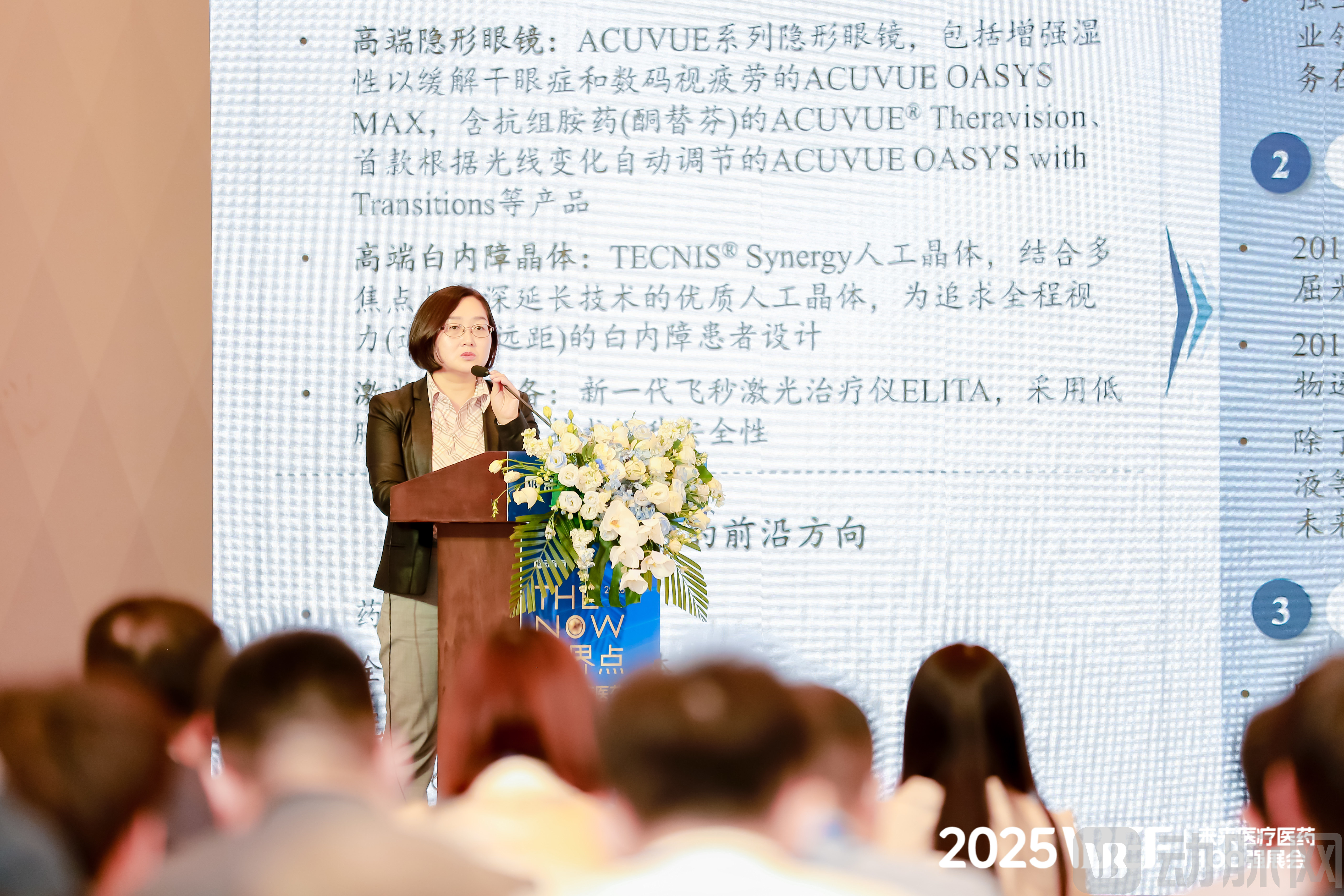 Hou Yu, Executive Director of China Merchants Capital
From an investment logic perspective, China Merchants Capital primarily evaluates investment opportunities along two dimensions: horizontal and vertical. The vertical axis represents market attractiveness, which mainly includes market size, market growth rate, and product profit margins; the horizontal axis reflects the competitive landscape of the market. China Merchants Capital will pay close attention to sectors characterized by a high degree of import monopoly, high technical barriers, and significant potential for domestic substitution.
Building on this, and incorporating observations of the development trajectories and recent strategic moves of international giants such as Zeiss, Alcon, and Johnson & Johnson, China Merchants Capital is highly optimistic about the prospects of the following niche sectors: First, in ophthalmic devices, high-growth potential lies in products such as combined phacoemulsification and vitrectomy systems, ophthalmic surgical robots, ultra-widefield fundus cameras, 3D digital navigation ophthalmic microscopes, and cutting-edge solutions for glaucoma diagnosis and treatment. Second, in ophthalmic pharmaceuticals. Currently, domestic companies primarily adopt a follower strategy in laying out their ophthalmic drug portfolios, which has, to some extent, resulted in a low localization rate for ophthalmic drugs. Meanwhile, Hou Yu noted that the ophthalmic pharmaceutical market is actually a blue ocean even vaster than the ophthalmic device market. China Merchants Capital will focus closely on the development of innovative ophthalmic drugs, specifically those for treating blinding conditions such as glaucoma and fundus lesions. Third, the ophthalmic VR/AR sector, which possesses certain consumer attributes. In this field, companies with pure technological backgrounds are poised to become disruptors, and upstream supply chain enterprises, such as those specializing in optical modules, also present significant development opportunities.
China Merchants Capital will closely monitor the development of new technologies and is committed to accelerating the pace of domestic substitution by local enterprises, and even leading innovative development in ophthalmology.
After gaining a detailed understanding of capital markets’ insights into the development trends of China’s ophthalmology market, industry observers and chroniclersJiao Yanli, Senior Researcher at VBInsight, and also shared insights on the current status and development trends of domestic substitution for high-end ophthalmic equipment from the perspective of research institutions.
 Jiao Yanli, Senior Researcher at VBInsight
Based on market size, product importance, current development status, and future prospects, VBInsight’s “2025 Report on High-End Ophthalmic Equipment: Domestic Products Poised for Comprehensive Rise Amid Market Restructuring” selected eight product categories for in-depth study: ophthalmic OCT, optical biometers, ultra-widefield fundus cameras, corneal biomechanical analyzers, continuous intraocular pressure monitoring systems, ophthalmic surgical microscopes, SMILE lasers, combined phacoemulsification and vitrectomy systems, and ophthalmic surgical robots.
In terms of investment, financing, and product approvals, the domestic ophthalmic equipment sector in China witnessed 26 financing events in 2024, with a total amount exceeding RMB 2.08 billion. From January 1, 2024, to the end of March 2025, there were 14 financing deals valued at over RMB 100 million each, accounting for 54% of the total number of transactions. As of May 2025, the National Medical Products Administration (NMPA) had approved a total of 122 high-end ophthalmic devices.
In terms of key product categories, domestically produced ophthalmic OCT systems outperform imported ones in scanning speed, imaging range, and resolution. They have gained recognition from numerous hospitals in China and now possess the strength to compete head-to-head with imported products. The domestic market share for biometers remains below 20%, suggesting that the process of domestic substitution will be relatively gradual. In the field of ultra-widefield fundus cameras, domestic products have already made breakthroughs. As more companies prioritize this segment, many domestically produced devices are expected to receive approval and launch within the next three years, with the potential for domestic market share to surpass that of imports. Corneal biomechanical analyzers currently represent a blue-ocean market, offering promising opportunities for innovation by domestic enterprises. Although ophthalmic surgical microscopes may not experience the rapid domestic disruption seen with OCT, the monopoly held by imported brands is expected to ease. As for phacoemulsification-vitrectomy combination machines and femtosecond laser systems, domestically produced equipment may gain regulatory approval and enter the market within the next three to five years.
From the perspective of future development trends, comprehensive coverage across all product categories and modalities will become the prevailing trend. Meanwhile, products with high technical barriers, large market sizes, and urgent clinical needs—such as ophthalmic surgical robots and nystagmus electrical stimulators—will continue to attract sustained attention.
Zhang Dalei, Co-founder of Airdocshared Airdoc’s corporate practices. Perception, cognition, and reasoning are the three dimensions along which Airdoc conducts its initiatives. At the perception level, Airdoc is developing new diagnostic products by simulating the diagnostic pathways of human physicians, while also striving to automate device operation. At the cognitive level, Airdoc is undertaking related efforts to empower physicians with added value. As for reasoning, from the PBM LED vision rehabilitation device and AI eye-tracking visual training system to the Wanyu large language model, Airdoc is exploring a technological revolution in ophthalmology.
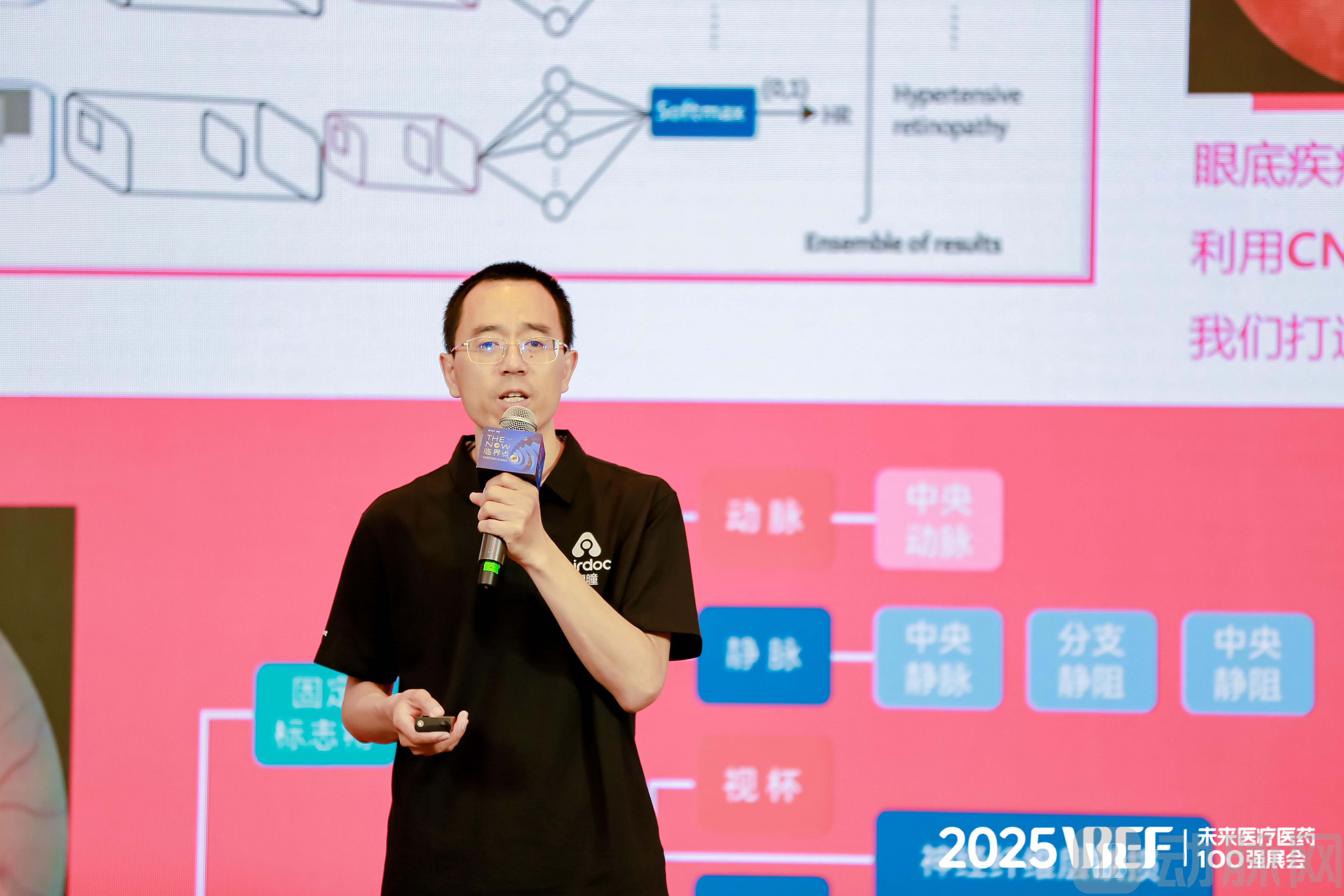 Zhang Dalei, Co-founder of Airdoc
Liu Liang, Founder of Medeco Technology Co., Ltd.He stated that the ophthalmic device market still exhibits a pronounced import monopoly at this stage. Against this backdrop, Chinese enterprises need to explore new market and technological opportunities. Meanwhile, Liu Liang also noted that Chinese companies currently possess significant cost advantages and are adept at addressing clinical pain points, such as myopia prevention and control. After analyzing factors including clinical needs, the competitive landscape, and willingness and ability to pay, Liu Liang believes that refractive correction presents substantial market opportunities. Medico Technology is striving to become the next globally influential ophthalmic manufacturing enterprise.
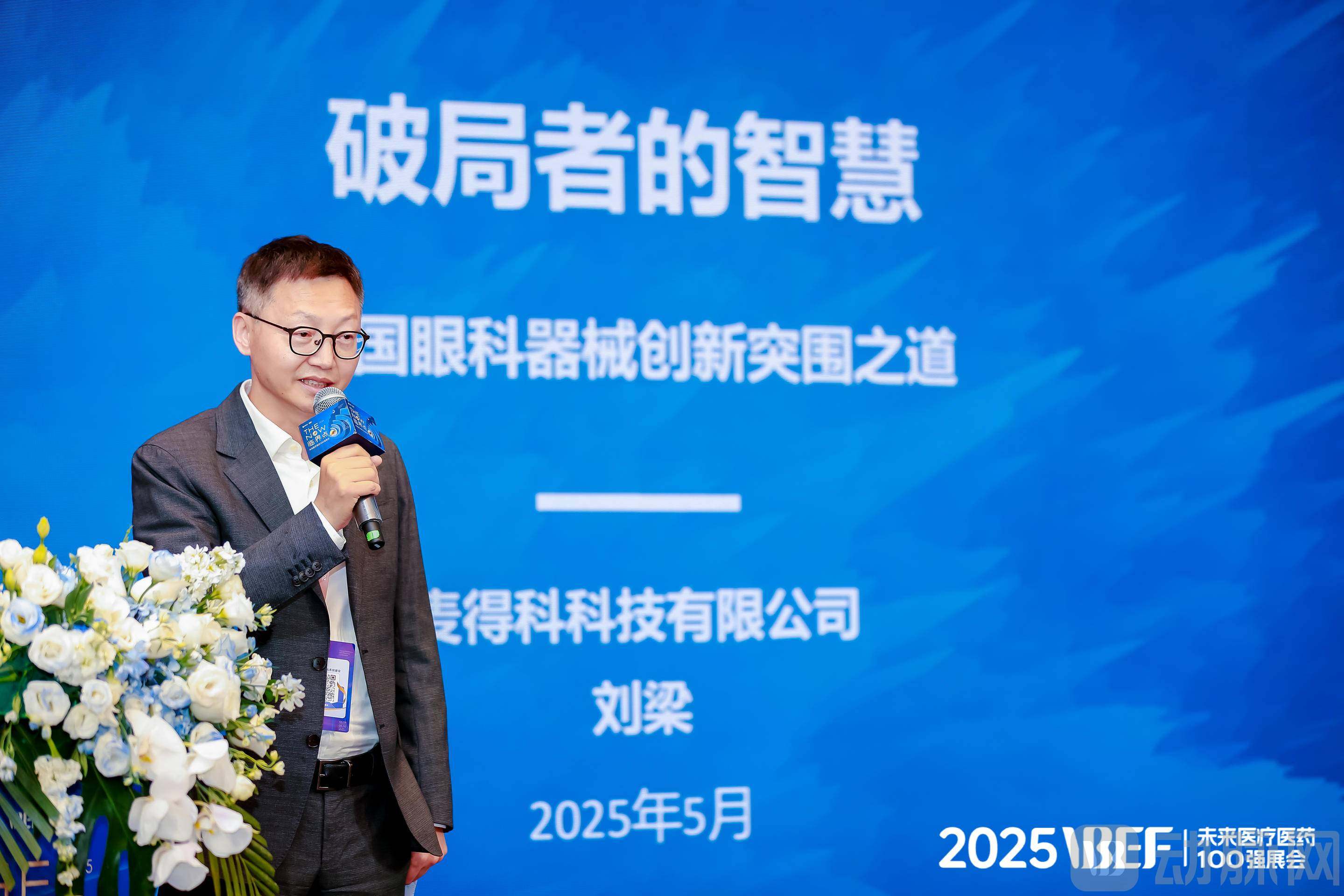 Liu Liang, Founder of Medeco Technology Co., Ltd.
Roundtable Dialogues: Three Sessions Addressing Key Issues in Ophthalmic Drugs, High-End Devices, and Ophthalmic AI
The first roundtable focused on ophthalmic cell and gene therapy (CGT), moderated by Lan Shaojie, Senior Investment Manager at Moutai Fund. Xu Guotong, Founder and CEO of Jishi Tongguang; Zhang Xin, Chief Medical Officer and Chief Operating Officer of Huida Gene; Fang Riguo, CEO of Mengmou Biotech; Wang Chong, Vice President of Investor Relations at Ocumension Therapeutics; Zheng Maofa, Senior Vice President of Xingsai Ruizhen; and Gao Jun, Director of Clinical Medicine at Aiwei Pharmaceuticals, engaged in a dynamic exchange of insights on topics including the evolving and enduring aspects of ophthalmic CGT amid shifting international relations, differences in the development of ophthalmic CGT between China and the United States, and the opportunities for ophthalmic CGT in China.
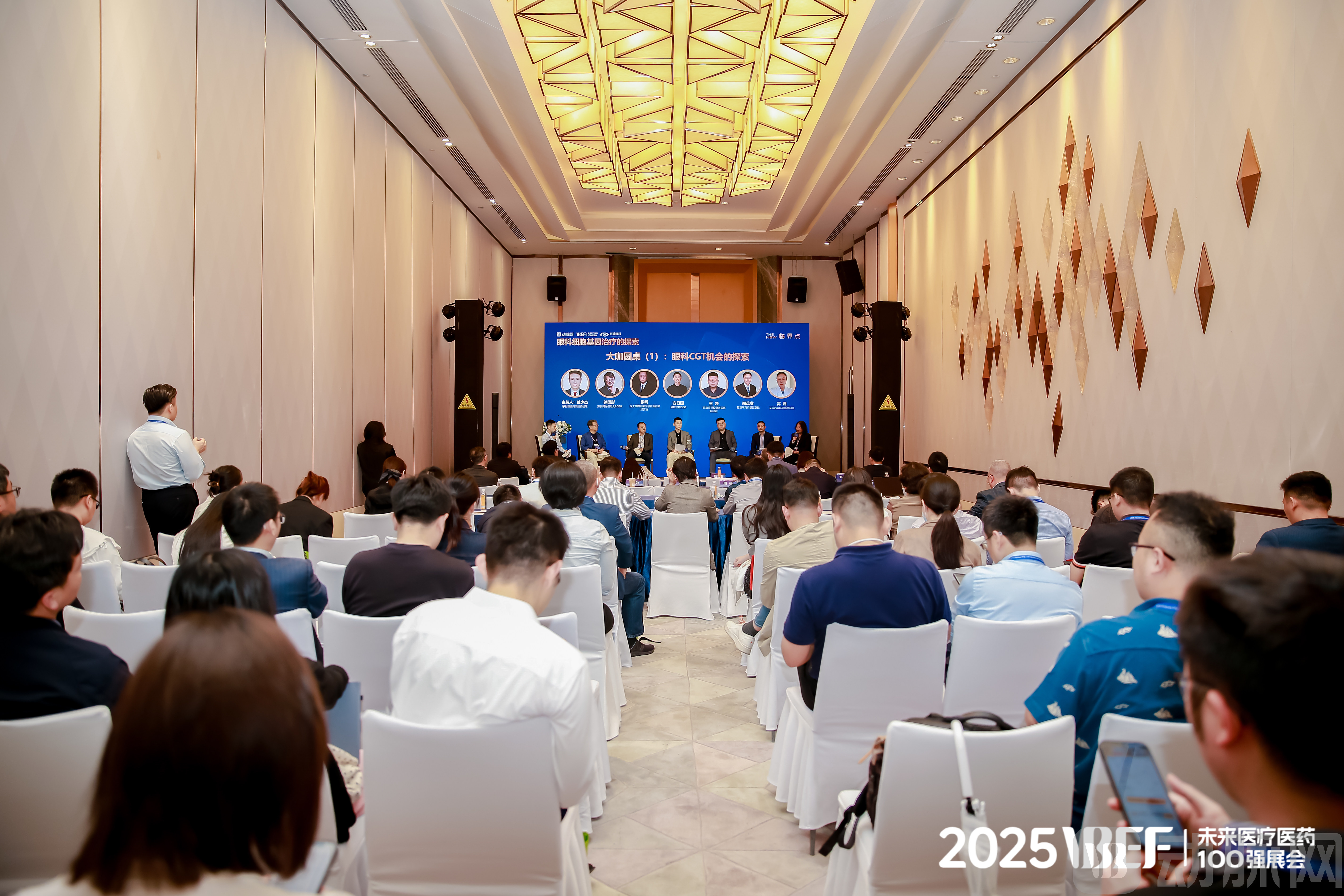
Amid Shifts in International Relations: The Changes and Constants in Ophthalmic CGTThe six panelists reached a consensus that shifts in international relations will not significantly impact the development of ophthalmic cell and gene therapy (CGT). Any resulting changes are likely to focus on the selection of overseas markets and patent protection.
For example, Wang Chong, Vice President of Investor Relations at Ocumension Therapeutics, stated that shifts in international relations would lead the industry to place greater emphasis on protecting patented technologies, and that companies may shift their overseas market strategy from relying solely on the U.S. market to adopting a diversified global layout. Meanwhile, multiple panelists unanimously agreed that innovation in foundational technologies and genuine clinical needs remain the driving forces behind the development of ophthalmic cell and gene therapy (CGT).
Regarding the differences in the development of ophthalmic cell and gene therapy (CGT) between China and the United States, the six panelists unanimously agreed that there is no significant gap; rather, each country has its own distinct advantages.
Gao Jun, Clinical Medical Director at Aiwei Pharmaceuticals, stated that while the United States has an earlier start and thus more extensive experience in research and development areas such as mechanisms of action, China boasts a vast patient population and richer clinical research experience. A collaborative effort between China and the United States could achieve a win-win outcome.
Zheng Maofa, Senior Vice President of Xingsairui Zhen, stated that China and other countries are at the same starting line in ophthalmic CGT, with China even having the potential to overtake on a bend. In addition to the large patient population, domestic ophthalmic CGT enjoys certain advantages prior to R&D filing.
Fang Riguo, CEO of Mengmou Biotech, believes that ophthalmic CGT is highly likely to become a sector where China holds a strategic advantage over the U.S. China has significant advantages over the U.S. in terms of patient population size, enrollment efficiency, physician expertise, and cost control.
Regarding the future development of the ophthalmic CGT industry, Xu Guotong, Founder and CEO of Jishi Tongguang, stated that the intensifying aging of China’s population will inevitably lead to a rise in the number of patients with age-related eye diseases. Among these, retinal degeneration—currently lacking effective treatments—will be a top priority, and cell and gene therapy (CGT) is viewed as a highly promising solution.
Zhang Xin, Chief Medical Officer and Chief Operating Officer of Huida Gene, believes that the future development of ophthalmic cell and gene therapy (CGT) needs to address two major issues: first, effectively meeting clinical needs; and second, payment challenges.
Wang Chong, Vice President of Investor Relations at Ocunthera, believes that with rising economic standards, the expansion of the ophthalmic drug market, and the discovery of new targets in cell and gene therapy (CGT), an increasing number of new indications will be developed in the future.
Fang Riguo, CEO of Mengmou Bio, stated bluntly that a drug comparable to abiciparpegol will inevitably emerge in the ophthalmic CGT sector. Zheng Maofa, Senior Vice President of Xingsai Ruizhen, also expressed that the next decade will undoubtedly witness an explosion in ophthalmic CGT. Gao Jun, Clinical Medical Director at Aiwei Pharma, believes that ophthalmology will remain the “golden specialty” in the coming decade.
The second roundtable was moderated by Zhang Dalei, Partner at Matrix Capital. Zhang Dalei, Co-founder of Airdoc; Sun Yuhui, Founder and CEO of Beijing Zhiyuan Huitu Technology Co., Ltd.; Yuan Qiting, Co-founder of Zhimou Medical (Shenzhen) Co., Ltd.; and Deng Tian, CEO of Beijing Jisi Mingzhi Technology Co., Ltd., engaged in an in-depth discussion on “Opportunities and Challenges in Ophthalmology Amid the New Wave of Artificial Intelligence.”
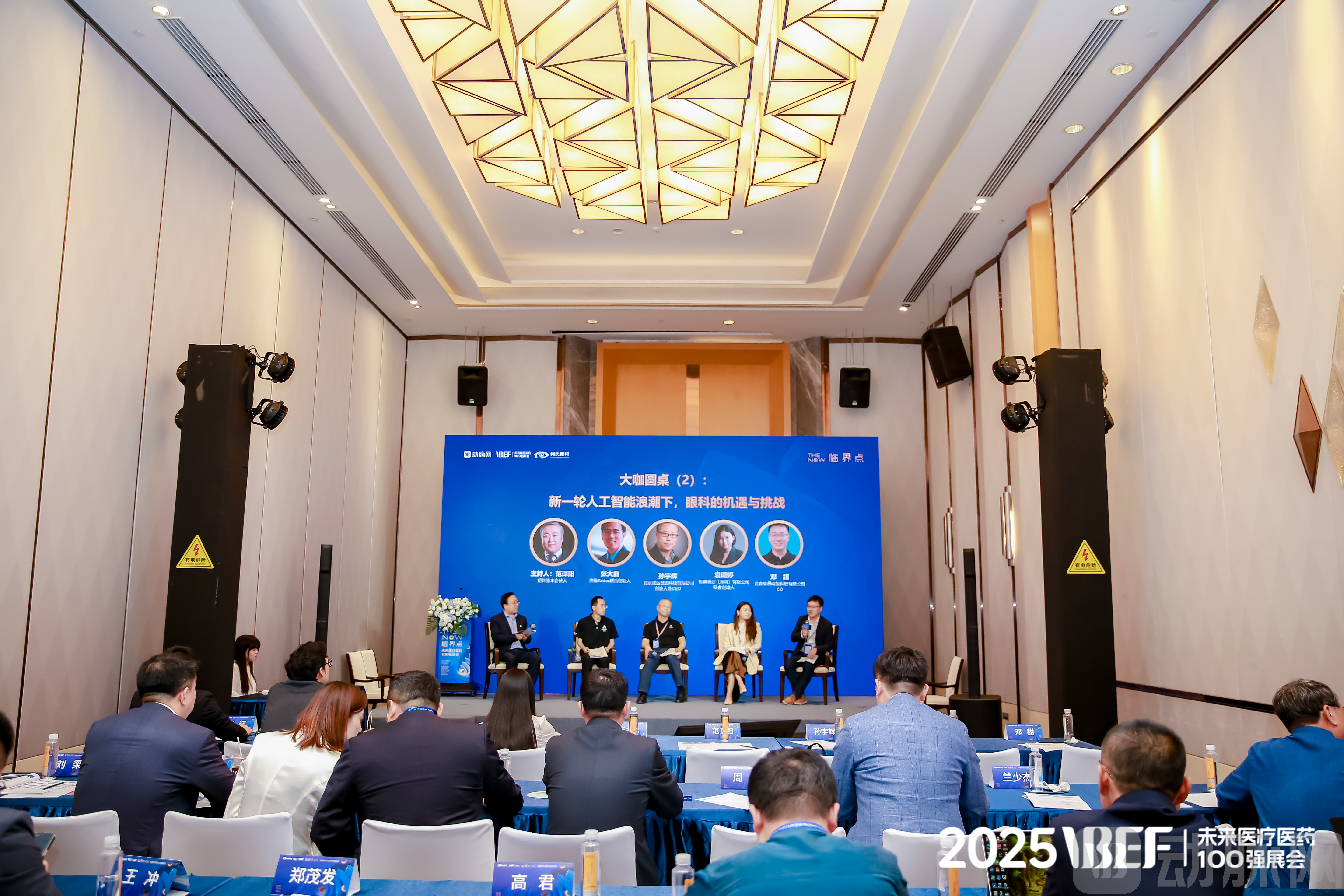
Regarding the opportunities and challenges of AI in the specialized field of ophthalmology, Deng Tian, CEO of Jisi Mingzhi, stated that AI has improved the infrastructure construction in ophthalmology and reduced the cost of ophthalmic equipment. Taking the Jisi Mingzhi eye tracker as an example, its previous price was 400,000 to 500,000 yuan, but in
Empowered by AI, Jisi Mingzhi is confident in reducing the cost of eye-tracking data collection to under RMB 1 per session.
Zhang Dalei, co-founder of Airdoc, revealed that the number of tests conducted using Airdoc’s products has exceeded 30 million. At present and in the future, the application of AI in ophthalmology still faces three major challenges: first, enhancing cognitive capabilities; second, clarifying reimbursement mechanisms; and third, further improving technological maturity.
Sun Yuhui, Founder and CEO of Zhiyuan Huitu, stated that the greatest value AI brings to the medical field, including ophthalmology, is equity. By integrating multimodal information, artificial intelligence can provide patients with the optimal, most appropriate, and up-to-date treatment plans, thereby achieving healthcare equity.
Addressing the implementation of AI in the ophthalmology sector, Yuan Qiting, co-founder of Zhimou Medical, stated that bridging the communication gap between end-users and decision-makers is one of the challenges in the commercialization of ophthalmic AI, although this issue is gradually improving in China. Another key area currently under exploration is how AI applications can transition from fragmented, per-use fees to a systematic business model. “When AI becomes as accessible and indispensable as Wi-Fi, its business model will have reached maturity.”
Zhang Dalei, co-founder of Airdoc, reiterated the three key factors of cognitive awareness, payment capacity, and technological maturity, stating that sufficient patience and time are required to achieve true success.
The final roundtable was moderated by Li Zhe, Managing Partner of Proxima Ventures. Liu Liang, Founder and CEO of Medico Technology Co., Ltd.; Xu Mengchen, Co-founder of Nanjing Boshi Medical Technology Co., Ltd.; Zhang Chi, Founder of Hangzhou Xiran Medical Device Technology Co., Ltd.; Cao Feng, Founder and General Manager of Xianwei Vision Technology (Nanjing) Co., Ltd.; Xia Chaoran, Chairman and General Manager of Beijing Huashi Nuowei Medical Technology Co., Ltd.; and Zhou Feng, Founder of Shanghai Zhenfu Medical Technology Co., Ltd., engaged in a dynamic exchange of views on the theme of domestic substitution and innovation in high-end medical devices.
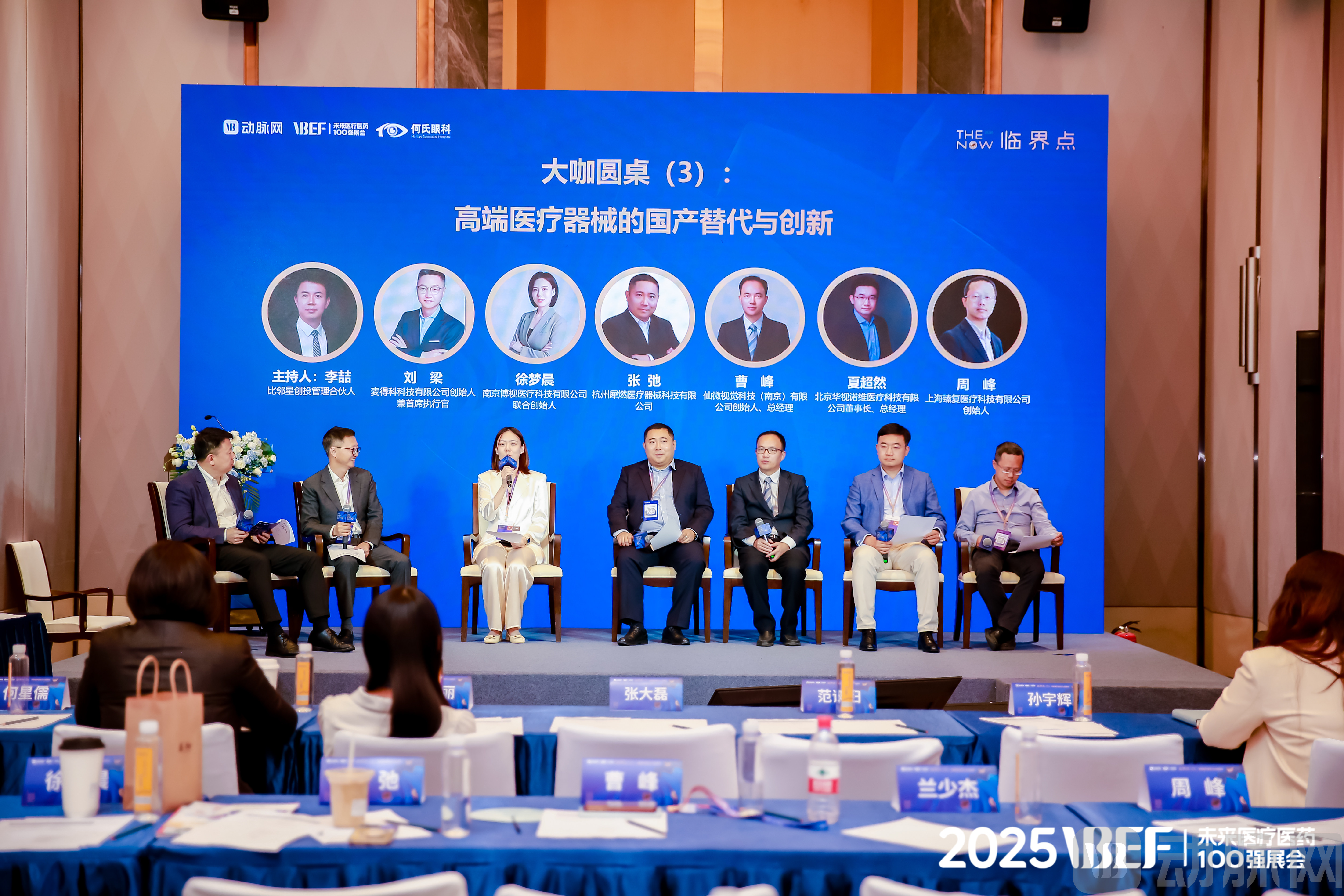
The roundtable discussion commenced with six panelists introducing their respective companies’ innovative practices in recent years. For instance, Zhenfu Medical’s dry eye treatment device has achieved cost reduction while delivering therapeutic efficacy comparable to imported products; Boshi Medical’s intelligent navigation laser robot integrates AI imaging, eye-tracking, and smart navigation technologies to effectively address clinical needs; and Xiran Medical’s laser vitrectomy technology has enabled faster speeds, enhanced safety, and greater stability.
Regarding the future development of ophthalmic devices, Liu Liangliu, Founder and CEO of Medico Technology Co., Ltd., stated that customizable intraocular lenses (IOLs), IOLs capable of delivering superior optical performance, and adjustable IOLs will represent the future direction.
Xu Mengchen, co-founder of Nanjing Boshijie Medical Technology Co., Ltd., believes that “precision diagnosis + precision treatment” still holds significant exploratory value.
Zhang Chi, founder of Hangzhou Xiran Medical Device Technology Co., Ltd., stated that precision, speed, and convenience will be the future trends. In his vision, patients would lie in a medical pod for treatment, and by the time the door opens, they would already be cured.
Cao Feng, Founder and General Manager of Xianwei Vision Technology (Nanjing) Co., Ltd., believes that the expansion of laser technology applications and the advancement of surgical robots will be two major future trends.
Xia Chaoran, Chairman and General Manager of Beijing Huashi Nuowei Medical Technology Co., Ltd., analyzed the future development direction of ophthalmic devices from both market and product perspectives. In terms of the market, greater attention is being paid to the development of lower-tier markets. Regarding products, innovations in interventional therapy and drug delivery methods will continue to receive significant and sustained attention.
Zhou Feng, founder of Shanghai Zhenfu Medical Technology Co., Ltd., also concurs with the trend toward market penetration into lower-tier cities, and believes that home-based settings will become a key focus area in the dry eye treatment sector in the future.
At the conclusion of the forum, Li Zhe, Managing Partner of Proxima Ventures, also shared insights on opportunities in the ophthalmology sector from the perspective of an investment firm. With the intensifying aging of the population and changes in lifestyle habits, the ophthalmology market is poised for exponential growth in the future. Key areas of focus will include the integration of innovative technologies, the application of AI, and business model innovation!
From pharmaceuticals to medical devices, from investors to enterprises, from services to products, and from patients to physicians, the entire ophthalmology industry chain is anticipating a surge in ophthalmic products and the emergence of competitive innovative solutions!