

Growing Pains: Challenges and Strategies for Local CGT Commercialization in China
As an innovative therapeutic modality, cell and gene therapy (CGT), after nearly two decades of arduous development, has finally reached a true milestone in commercialization. To date, more than 50 CGT therapies have been approved for marketing worldwide. Last year alone, three CGT products were approved in China, bringing the total number of approved CGT products in the country to seven. Globally, four CGT products have achieved annual sales exceeding USD 1 billion.
Looking back on the industry’s development, cell and gene therapy (CGT) has weathered troughs in the sector while also being held in high expectation. At different stages of its evolution, it has exhibited distinct growing pains and achievements. For the development of China’s domestic CGT industry, the most pressing challenge at present is to substantively address issues of commercial accessibility; in the long term, we must continue to pursue disruptive innovations that can keep pace with, or even surpass, international counterparts.
CGT is an investment sector that the Panlin Innovative Drug Investment Team has firmly favored and continuously deployed in recent years.Although cell and gene therapy (CGT) is still in a relatively early stage compared with other therapeutics, many observers note that CGT resembles antibody drugs and antibody–drug conjugates (ADCs) from two decades ago. However, the industry has continued to achieve milestones in recent years: six CAR-T products have been approved for marketing in China; more encouragingly, the country’s first adeno-associated virus (AAV) gene therapy product has also received marketing approval, while multiple AAV candidates are in Phase III clinical trials. This year is also a landmark year for induced pluripotent stem cell (iPSC)-based regenerative therapies. Around the Spring Festival, numerous domestic pipelines entered clinical development, and globally, three indications for iPSC-based therapies have reached Phase III clinical trials.
Therefore, Panlin has shifted its focus in light of the development trends of the CGT industry both domestically and internationally.Commercialization of CGT Products. On May 10, under the theme ofPanlin Capital’s Special Post-Investment Empowerment Forum on Biomedicine: “Achieving High-Quality Vitality! The Path to Diversified Development for China’s Innovative Pharmaceutical Enterprises”above,Dr. Jin Miao, Vice President of Investment and Director of Biopharmaceutical Investments at Panlin CapitalRegarding the top-tier players in Panlin Capital's CGT sectorCompany FounderA ring surrounding“Growing Pains: Challenges and Responses in the Commercialization Journey of Domestic CGT”Topic, delve into in-depth discussion.
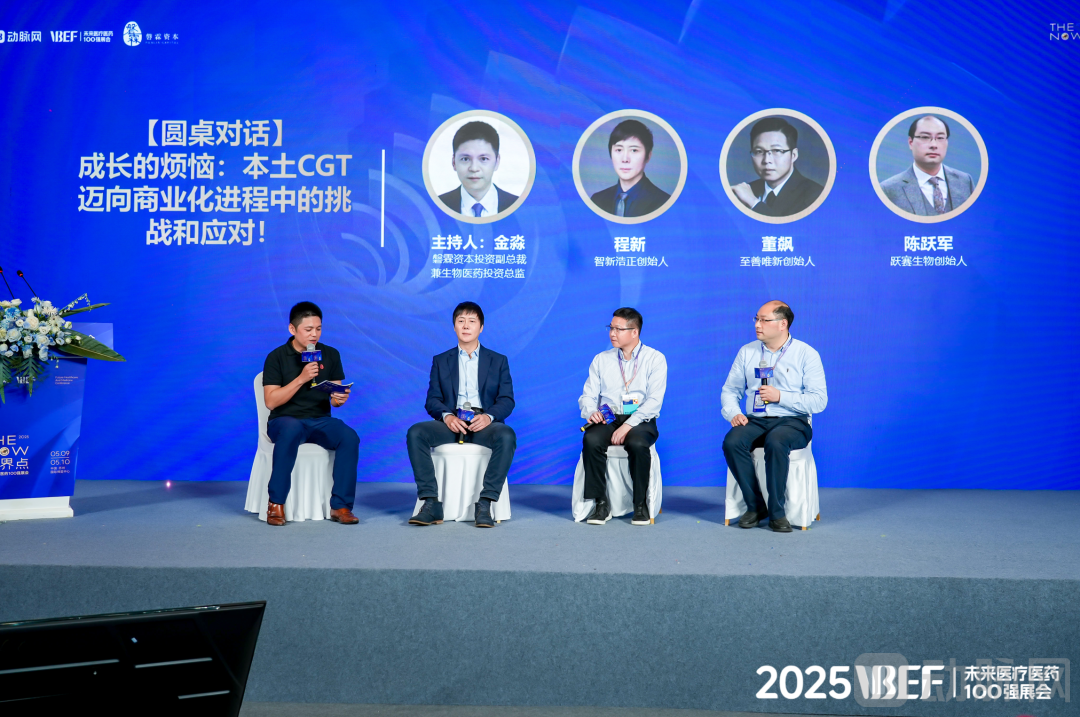
Introduction to Panelists and Key Insights:
Dr. Jin Miao
Panlin Capital, Vice President of Investment and Director of Biopharmaceutical Investment
“CGT is indeed continually encountering growing pains. The first step is to develop the drug and validate its safety and efficacy; subsequently, it is even more critical to strategically plan one’s product portfolio based on unmet clinical needs and commercial feasibility. In many CGT subfields or for certain indications, progress in China and the United States has become very close, with data from Chinese companies even showing superior results. In the future, Chinese companies in the CGT sector will have the opportunity to leverage their differentiated advantages between China and the U.S. to actively expand into overseas markets.”
Professor Xin Cheng
Founder of Zhixin Haozheng
“Regarding the intense market competition within the CGT sub-sectors, on one hand, weIt is imperative to target the most critical unmet needs and expedite the demonstration of safety and efficacy through the fastest available clinical pathways.; On the other hand, technologies must undergo continuous iteration and updates to remain at the forefront, thereby sustaining competitiveness, as being the earliest in technology development does not necessarily determine ultimate success.
Prof. Dong Biao
Founder, Zhi Shan Wei Xin
“A Favorable Development Window Is Opening for Chinese AAV Gene Therapy Companies: First, several delisted products were relatively early-stage, with imperfect drug design or insufficient efficacy; second, the older manufacturing processes incurred very high costs; third, the overall reimbursement system still requires time to mature. These factors have providedDomestic CGT companies have more time and space to refine their offerings and develop products that truly meet clinical needs.. Further reduce production costs and identify an appropriate payment system.”
Prof. Chen Yuejun
Founder of Yuesai Bio
“The field of cell therapy for Parkinson’s disease has seen a rush of entrants and intense competition, which also demonstrates our”The Correctness of Direction Selection. Competition is a positive force, as it drives teams to enhance their products and strengthen their competitive edge. In the face of competition, what we can do isImprove product quality and iterability to accelerate clinical deployment.。”
The following is an edited transcript of the panel discussion.
Jin Miao (Moderator): We are delighted to have invited three founders, all of whom are professors. You have amassed substantial expertise in both scientific research and entrepreneurship, yet each of you focuses on a different niche within the cell and gene therapy (CGT) sector, bringing diverse backgrounds. Given the recent developments and emerging trends in the CGT industry, you must have your own unique perspectives. Could you please share your insights on the current state of your respective subfields, taking into account the dynamics specific to your areas of expertise?
Chen Yuejun (Yuesai Biotech): My main focus isFor the Nervous System, especiallyCellular Therapy for Parkinson's Disease. Although research into cell therapy for Parkinson’s disease began more than 30 years ago, primarily using human fetal brain tissue for treatment, clinical observations did indeed demonstrate improvements in motor function in some patients.
NowThe Emergence of Stem Cell Technologyenabling such cell therapies to be realizedStandardization, and made intoNovel Drug Modalities, i.e., aCellular therapies. This has introduced entirely new therapeutic strategies for the treatment of neurological diseases.. Because the greatest challenge facing the nervous system is that neurons cannot regenerate; neither small molecules nor large molecules are capable of regenerating these nerve cells,Therefore, the emergence of stem cell neural differentiation technology enables us to produce neural cells to replace the functions of lost neurons in the brain., this represents a breakthrough. Worldwide, there have been numerous clinical advances in the treatment of neurological disorders such as Parkinson’s disease, epilepsy, and cerebral palsy; this isThe Huge Opportunities Brought by Stem Cell Regenerative Technology to the Entire Field of Neurological Therapy。
Dong Biao (Zhishan Weixin): In 2008, I was at the University of Pennsylvania’s laboratory in Philadelphia, which was the first to restore vision to blind patients through gene therapy. I witnessedGene therapy is a highly promising technology., which is also one of the main reasons I returned to China to start a business. From 2008 to 2025, over these 17 years, worldwide there have been9 Products Launched, among which two are blockbuster products with annual sales of approximately USD 1 billion. Of course, some products have underperformed in sales, and some have been withdrawn from the market. In short,The commercialization pathway for products in the gene therapy sector has been validated.。
Recently, several multinational corporations (MNCs) have announced their intention to exit the AAV gene therapy race. Personally, I believe this is insteadA Favorable Time for Chinese AAV Gene Therapy CompaniesFirst, from a product perspective, the delisted products were relatively early-stage, with imperfect drug design or insufficient efficacy. Second, the legacy manufacturing processes incurred prohibitively high costs. Third, the overall reimbursement system requires more time to mature.All of these have givenDomestic CGT companies have more time and space to refine their offerings and develop products that truly meet clinical needs., meanwhile,Further reduce production costs and identify an appropriate payment system.. TrustIn 3–5 Years, AAV Gene Therapy Will Be the Best Approach for Treating Genetic Disorders. There are two to three thousand such diseases; as long as we can focus our efforts, with each company developing relevant products for one or two disease indications, there should be significant room for growth in the future.
Cheng Xin (Zhixin Haozheng): I joined a U.S. laboratory in 2002, where an early breakthrough had already been achieved: the generation of beating cardiomyocytes in vitro using mouse pluripotent stem cells. We were therefore very excited and engaged in discussionsWhat products can be used with similar methods to treat which diseases?. From a functional perspective, we believe that it is likelyIslets of Langerhans. First, in developmental biology, islet development has been studied most thoroughly. Another important point isIts benchmarked clinical applications are already well-defined.. This was already recognized by my mentor 20 years ago.
As of today, after nearly 25 years,Signs of a Breakthrough in Regenerating Islets of Langerhans. Recently, we initiated several investigator-initiated trials (IITs) into Phase I,Empirical evidence demonstrates that this can truly cure diabetes., which is a remarkable and inspiring achievement. Moreover, this drug is fundamentally different from conventional ones; it is a living therapeutic agent, representing a disruptive approach to quality control that has been developed through long-term accumulation of expertise.
We are currently evaluating whether such a system represents the optimal framework. In the process of developing new drugs, we are further exploring whether it is possible to bypass the current stages of in vivo development to achieve leapfrog progress, and whether we can integrate artificial intelligence and other technologies to conduct a series of novel explorations, thereby making new technologies more direct. This is precisely what we are undertaking.
Jin Miao (Host): Today, we will discuss the commercialization challenges of CGT and corresponding strategies. Just now, Professor Dong mentioned AAV. As you noted, among the approved gene therapies, some have achieved commercial success while others have not been as successful. What is your perspective on the commercialization of this specific segment? In light of your company’s situation, what specific strategies and measures do you plan to implement for pipeline development?
Dong Biao (Zhishan Weixin): The market has changed, and so has the logic behind our R&D strategy. When the company was founded in 2018, the market conditions were favorable. At that time, the prevailing logic was that a larger pipeline and faster entry into clinical trials would garner greater recognition from investors, leading to the simultaneous development of numerous drug candidates. Now,We need to focus on the most evident clinical outcomes to accelerate the commercialization of several pipeline candidates, enabling them to become self-sustaining.。
From the perspective of products already on the market,The real money-makers are SMA and DMD., a common characteristic is that there is a need in the pediatric population, and no other effective therapies are available. In fact, there are two to three thousand types of genetic diseases, many of which lack effective treatment options, creating an unmet clinical need. Therefore, it isThere are successful cases of AAV commercialization., and there are still many opportunities.AAV-based therapy is the focus of our clinical strategy. We are confident in combining unmet clinical needs with our technological reserves to develop a pipeline with strong therapeutic efficacy.。
Jin Miao (Moderator): Indeed, it belongs to the growing pains,The first step is to develop the drug, and after verifying its safety and efficacy, to strategically align your product pipeline with unmet clinical needs.。
Jin Miao (Host): Recently, the iPSC-derived neural cell therapy sector has become highly active, with frequent updates on Parkinson’s disease pipelines both domestically and internationally. The gap between China and other countries in this field appears to be narrowing significantly, yet companies are adopting diverse pipeline strategies. Therefore, I would like to ask Mr./Ms. Chen from Yuesai: In light of your company’s pipeline portfolio, could you share your considerations for future commercialization? Specifically, how do you plan to achieve differentiated advantages compared to international competitors?
Chen Yuejun (Yuesai Bio): Recently, especially in the field of cell therapy for Parkinson's disease, several companies in the United States have already entered this area, and now several domestic companies in China have also announced their entry.Parkinson's Disease Cell Therapyfield. Everyone is rushing in, vying to secure a foothold in this sector,Demonstrating that this direction is promising。
Of course, this also brings significant competition to innovative enterprises like ours. I believe this is a positive development, as it prevents us from assuming that success is our due.Competition drives us to improve our products, excel ourselves, and enhance our competitive strength.。
From the competitive landscape of Yue Sai,First, we have two pipelines for Parkinson’s disease cell therapy: autologous and allogeneic., that is to say, we areThe high-end, bespoke market and the fiercely competitive red-ocean market targeting the general public,"We are likely the only company globally engaged in both autologous and allogeneic cell therapies for Parkinson's disease."。
Relatively speaking,Autologous Cell Therapy Demands Exceptionally High Technical Standards, which is also based on the accumulation of many years of research in my laboratory. Judging from the IND data published earlier this year by Harvard Medical School in top journals in our field, there is still a significant gap compared with the data we have currently generated through CMC. We can now basically benchmark against international technical standards; at least in our specific field, we can completely dispel any mystique surrounding foreign technologies. We are still organizing this data and comparing it with overseas companies. For cell-based drugs produced under the same GMP conditions, in fact,Our therapeutic efficacy and stability are both significantly superior.. Therefore, inThe Field of Autologous Cell Therapy, we hope to establish an overseas presence as soon as possible, which is alsoThe Company's Established Strategy。
TargetingAllogeneic Cell Therapy, the domestic market is highly competitive, and several companies in the United States are also engaged in this field. Therefore, on one hand,We will enhance product quality, and on the other hand, we will conduct further research and development on our products.,For example, reducing its immunogenicity, which is also made possible by the Yuesai platform. Therefore, in the face of competition,What we can do is improve product quality and iterability.,Expand Global Influence。Third, accelerate clinical translation as soon as possible., which is also the primary concern for many investors. In short, we are now facing comprehensive competition.
Jin Miao (Moderator): ZhiXin HaoZheng’s current core pipeline focuses on regenerative islets. As we all know, diabetes affects a vast patient population; however, there are many subtypes of diabetes and a wide variety of treatment options. We believe that the commercialization of the company’s regenerative islet product will be a gradual process, starting with the most suitable indications. Could Professor Cheng share the clinical development and commercialization strategy and roadmap for this product?
Cheng Xin (Zhixin Haozheng): First, the area where we are currently making breakthroughs,Targeting the most critical unmet need—“brittle type 1 diabetes”. How many patients have this critical unmet need? There are 80,000 such patients in the United States and 600,000 in China, representing a substantially large population. Diabetes encompasses multiple types, and the efficacy of existing pharmacological treatments varies significantly. Patients with brittle type 1 diabetes exhibit the poorest treatment outcomes; even with strict management and combination therapy using all available medications, their blood glucose levels remain poorly controlled. The primary concern for these patients is hypoglycemia, which poses substantial risks: it can be fatal and may lead to irreversible neurological damage due to chronic exposure.
There is another category that has not yet received significant attention internationally, namelyPatients with Diabetic NephropathyThere are approximately 30 million patients, with 30% progressing to Stage 3 or Stage 4 chronic kidney disease, meaning that over 10 million patients are awaiting kidney transplantation. Consequently, this population imposes a substantial economic burden. If disease progression could be halted at an early stage, patients in Stage 3 would not require kidney transplantation. Furthermore, there is a significant shortfall in the current supply of donor kidneys.
Additionally, we haveDuring Phase III clinical trials, expansions can be made to extend the indications to other types of diabetes, such as pediatric diabetes.(including diabetes caused by well-controlled genetic mutations), as well as some mitochondrial diabetes, etc., these are allOur Potential Future Pipeline Expansions。
The market is substantial, and competition is intense. Therefore, the top priority is to seize the opportunity to demonstrate its safety and efficacy through the fastest clinical pathways, thereby securing a stronger market position.
Jin Miao (Moderator): When it comes to commercialization, pricing is an unavoidable issue. Some argue that in China, particularly within the domestic market, the logic for Cell and Gene Therapy (CGT) seems flawed due to challenges in the payment system. First, how do you view future pricing strategies, especially in the domestic market? Second, as leading enterprises in this niche sector, what preparations are you making for future pricing?
Cheng Xin (Zhixin Haozheng): First, the hallmark of innovative drugs is a lengthy early-stage R&D cycle and high costs, which also means they may struggle to meet the threshold for inclusion in the national medical insurance scheme. From the perspective of the payment system, it is entirely feasible in the early stages toMedical insurance covers part of the costs, and can also be combined withIntegrating commercial insurance to make it affordable for patients。
On the other hand, new channels are now available for conducting preliminary market expansion explorations on a fee-for-service basis. These include paid stem cell projects (post-Phase II clinical trials) launched in Boao, which serve as excellent entry points. There is no need to be pessimistic about pricing levels.We believe that a highly effective system will emerge in the future to continuously reduce costs, ensuring affordability for patients.。
Dong Biao (Zhishan Weixin): Currently, approved AAV therapies are generally priced at $1–3 million per dose. The high cost is primarily attributed to the inherent characteristics of AAV drugs and the patient population. Since patients typically suffer from rare diseases and constitute a limited pool, while the manufacturing costs of AAV therapies are relatively high, pricing must cover upfront clinical development costs, among other expenses. This reflects the Western pricing framework.
In China, however, there are distinct characteristics. I believe that,The most important thing is to develop high-quality drugs.; the second priority is to reduce costs. Drawing on our company’s own experience, one approach is to lower drug development costs through domestic substitution (of raw materials/processes); the other isAccelerating Clinical Validation Through IIT. Given China’s large population base and the relative abundance of clinical resources for rare diseases, we are able to identify high-quality principal investigators (PIs).
What is clear is that the initial pricing will not be low, as the upfront investment in drug development is indeed high, butOnce costs are recouped, prices can be reduced in phases under reasonable conditions.。
Chen Yuejun (Yuesai Biotech): For cell therapy targeting the nervous system, we have two strategies: 1,Autologous Treatment Strategies Benchmarking the International High-End Market, with a price tag exceeding RMB 1 million, there is limited room for further price reduction. Of course, we also hope to license out this product, as the reimbursement systems in Europe and the United States are more robust. 2,Allogeneic Therapies Targeting the Mass Market,Through the replacement with domestically produced reagents and the substitution of automated production instruments for manufacturing and preparation,Achieve cell preparation for 200 doses per batch, reducing the cost per cell therapy product to the RMB 200,000–300,000 range covered by medical insurance.yuan. This is also being promoted within our company, with the aim of reducing overall costs through such measures.
Jin Miao (Host): Therefore, subsequent production, including domestically produced reagents and equipment, can significantly reduce costs.
Chen Yuejun (Yuesai Bio): This is entirely feasible.
Jin Miao (Moderator): In fact, over the past year, we have witnessed numerous real-world applications across various sectors, with varying degrees of success. I believe these cases offer valuable insights for everyone. Could you please discuss how these successful and unsuccessful examples have informed your own R&D strategy and pipeline planning, including your overseas expansion efforts?
Dong Biao (Zhishan Weixin): The key to pharmaceutical manufacturing is excellence.Three Things: First, make a genuineGoodof the drug,Addressing Essential Needs; second, to take the relevantMinimize Costs to the Utmost; Third, okayPayment SystemIntegration completed.
Cheng Xin (Zhixin Haozheng): We have a good example. In 2004, we undertook this work using two very ingenious approaches. One approach involved encapsulation to isolate the graft from the immune system, which yielded promising results in animal studies. The other approach was necessitated by the inability to generate mature islets; instead, precursor cells were encapsulated and implanted, allowing them to mature in vivo. Although these two strategies appeared highly promising, they were later proven ineffective in humans due to poor controllability in the in vivo environment. Furthermore, the encapsulation technology prevented vascular ingrowth, leading to poor tissue survival. This is a goodInsight: Being the first to develop a technology does not guarantee long-term success. This underscores the necessity of continuous technological iteration and updates to remain at the forefront and sustain competitive advantage.!
Chen Yuejun: For pharmaceutical companies, the first step in avoiding failure isCorrect Strategy, from the selected direction and indications to the underlying technical issues, as well as its potential market commercialization prospects. When our company was established in 2021, we choseThe first pipeline is for Parkinson's disease.,The second pipeline is for epilepsy.. Parkinson’s disease is supported by extensive data, while epilepsy was chosen because the underlying neuroscience principles are very clear; this also formed part of our rationale when establishing the company.Established Strategy。
By this year,In stem cell therapy for neurological diseases, these two are the only conditions that have entered Phase III clinical trials., and it sequentially entered Phase III clinical trials. ItsThe underlying logic is a thorough understanding of diseases, robust product development, and solid R&D data.. In fact, we have identified many issues in this process that should be avoided as much as possible during the research and development phase; only by doing so can we minimize the risk of unpredictable outcomes when these products are eventually used in humans.
Jin Miao (Moderator): The current R&D progress in CGT in China is relatively close to that abroad, so everyone can provide an outlook on the approximate development stages and levels in their respective fields over the next five years, or share their expectations for this field.
Dong Biao (Zhishan Weixin): I am more inclined to believe that within the next 3–5 years, China’s CGT products are likely to draw the attention of multinational corporations (MNCs) and demonstrate robust clinical outcomes. This is because it takes considerable time for a drug to progress from R&D to generating credible results,For CGT, it should take about 3 years; obtaining Phase III clinical trial data may take slightly longer, around 5 years.。
Cheng Xin (Zhixin Haozheng): within 3–5 years,Tissue replacement therapies should have products available, with truly approved products reaching the market., itsEfficacy and safety should be very well confirmed., this is a very optimistic matter.
Chen Yuejun (Yuesai Bio): For the indications of Parkinson’s disease and refractory epilepsy that we are targeting, Phase I clinical trials in the United States are followed directly by Phase III trials. Based on this timeline, I estimateCell-based therapies for these two indications are expected to gain regulatory approval and reach the market within 3–4 years.. If China can adopt the more aggressive clinical strategies employed in the United States, YueSai may be able to truly launch its own cell-based therapies within 5–6 years. This is because China has a relatively larger population of patients with Parkinson’s disease and refractory epilepsy, which would facilitate faster clinical trial enrollment compared to Europe and the United States.Within a 4-6 year clinical timeline, cell-based therapies will be launched in both the United States and China.。
Jin Miao (Host): Thank you to all the guests for their insights! In the CGT industry, both clinical efficacy and therapeutic effects have already seen some validation. We believe that in the coming years, innovative pharmaceutical companies in China will gradually achieve commercialization of their own products. Let us work together towards this goal. Thank you!