

From PLLA Fillers to Microneedles: Polylactic Acid Reshapes the Aesthetic Medicine Market
Polylactic Acid Materials Are Deeply Penetrating the Medical Aesthetics Market.
Since the beginning of 2025, novel medical aesthetic materials represented by hydroxyapatite and agarose have successively received regulatory approval. In addition to the introduction of new materials, the expansion of application scenarios for established materials constitutes another major development trend in the medical aesthetics industry.
Taking polylactic acid (PLA) as an example, it has been extensively applied in fields such as orthopedic fixation materials and ophthalmic implants due to its advantages of being environmentally friendly, non-toxic, and exhibiting excellent biocompatibility. With advancing research, PLA materials have begun to enter the medical aesthetics industry, making an immediate impact with blockbuster products like “baby face injections” (poly-L-lactic acid fillers). However, this is merely the beginning, as the penetration of PLA materials in the medical aesthetics sector continues to expand.
As these materials demonstrate their value in the vast medical aesthetics market, their potential will become immeasurable, and the launch of numerous new products will present an opportunity for the industry to reshape its service value.
Poly-L-lactic acid fillers are becoming the new blockbuster phenomenon in the medical aesthetics market.
Following the announcement by Four Rings Medicine, its subsidiary Meiyankongjian Biotechnology’s independently developed poly-L-lactic acid facial filler (commonly known as “baby face needle”) was approved on April 23, bringing the total number of approved “baby face needle” products in China to six.
Jiangsu Wuzhong’s 2024 annual report revealed that AestheFill, its imported poly-L-lactic acid (PLLA) biostimulator, sold 20,000 units within just two months of launch, driving a more than 40-fold year-on-year increase in medical aesthetics revenue and achieving a gross margin exceeding 80% for the single product. Imeik’s Regenera Activa has accumulated sales of over one million units since its 2021 market debut, while Changchun Shengboma’s Ellansé has secured a strong position in the high-end market through its core technologies.

Previously Approved Poly-L-lactic Acid (PLLA) Products: Compiled from Publicly Available Information
Behind the Commercial Frenzy: Technological Breakthroughs in Polylactic Acid, the Core Material of “Baby Face” Injections, Emerge as a Key VariableAs a synthetic medical-grade biodegradable macromolecular material, the core component of “baby face” injections is poly-L-lactic acid (PLLA). It exhibits excellent biocompatibility and can be absorbed by the human body, thereby stimulating collagen regeneration and activating the dermal layer of the skin. This results in significant skin-tightening effects and helps slow down the aging process of the skin.
From a materials perspective, as polylactic acid (PLA) is a polymeric material, its molecular design allows for numerous possible configurations. Different configurations exhibit varying material properties; therefore, there is significant room for research and development by modifying properties such as crystalline hardness and viscoelasticity.
Specifically regarding the application of "baby-face injections," polylactic acid materials have undergone multiple iterations, evolving from early flaky crystalline forms to later rough-surfaced porous or solid microspheres, and finally to solid microspheres with uniform particle size and smooth surfaces. It is this continuous iteration of materials and manufacturing processes that has laid the foundation for the widespread popularity of baby-face injection products.
Furthermore, the clinical validation of polylactic acid’s safety profile is also a key factor driving its use in the development of medical aesthetic products.
Taking cardiovascular stents as an example, the currently mainstream biodegradable polymer materials are predominantly represented by polylactic acid (PLA). By modulating the chemical and physical properties of the polymer—including composition, molecular weight, crystallinity, hydrophilicity, hydrophobicity, and surface modification—precise control over the degradation rate can be achieved. Cardiovascular stent products from multiple brands, such as Abbott, Lepu Medical, and Weigao, have adopted PLA materials, and their safety has been validated through long-term clinical use.
It is precisely these prerequisites that have enabled polylactic acid (PLA), a novel high-molecular-weight biodegradable polymer, to perfectly meet the demands of the medical aesthetics industry. Meanwhile, research into PLA’s applications in drug delivery has been found to facilitate the iteration of microneedle technologies in aesthetic medicine. The development of PLA in this field may well be just beginning.
The immense potential of polylactic acid in drug delivery is beginning to extend into the field of medical aesthetics.
Currently, some research institutions and enterprises in China are investigating the use of biodegradable polymers, such as polylactic acid (PLA), for the fabrication of microneedles intended for dermatological applications. Although microneedles are an established dermatological product, existing offerings fail to fully meet clinical needs, indicating substantial potential for product iteration and improvement.
From a material perspective, microneedle products indeed require iterative renewal.
First-generation metal microneedles cause pain during use, result in significant tissue trauma, carry a certain risk of infection, and require a prolonged recovery period. Second-generation single-crystal silicon microneedles involve relatively high manufacturing costs; furthermore, silicon-based materials are prone to fracture, and their biocompatibility has not yet been fully established. Consequently, the exploration of novel materials for microneedles continues.
Currently, microneedles fabricated from biocompatible and biodegradable materials, represented by polylactic acid (PLA), can be classified as third-generation microneedles. In terms of biocompatibility, PLA has long received FDA approval, with water and carbon dioxide as its degradation products. Regarding physical properties, it exhibits a hardness of 0.5–3 GPa, enabling penetration through the stratum corneum while maintaining structural integrity, thereby avoiding the risk of needle breakage. Furthermore, these advantages eliminate the risk of sensitization associated with residual material from traditional microneedles remaining in the body.
For instance, in the clinical treatment of psoriasis, the condition is characterized by significantly thickened keratinized skin lesions, which substantially reduce the absorption efficiency of topical medications and make it difficult to achieve effective therapeutic concentrations. While microneedle therapy is an effective treatment option, approximately 10% of the population has a metal allergy, posing a potential risk with both metal microneedles and monocrystalline silicon microneedles (which contain trace amounts of nickel). Furthermore, metal microneedles tend to cause larger wounds with bleeding and require longer recovery periods, while monocrystalline silicon microneedles are prone to breakage as their length increases. These factors have hindered the widespread adoption of microneedles in dermatological applications.
Polylactic acid (PLA) microneedles leverage the inherent properties of their raw materials to address the limitations of previous-generation microneedles. They penetrate the epidermis without reaching the neural networks in the dermis, creating microchannels that facilitate transdermal drug absorption. The entire procedure is virtually painless and causes minimal bleeding, with the microchannels closing within approximately 40 minutes after use, resulting in no damage to the skin.
Although clinical studies on microneedle therapy for various dermatological conditions are proceeding in an orderly manner, polylactic acid (PLA) microneedles have garnered significant attention in the medical aesthetics market due to the inherent advantages of their material composition, with their potential set to be first realized in the field of medical aesthetics.
Microneedle Technology, Which Has Been Around for Over 20 Years, Finally Finds Its Place After Material Upgrades.
Microneedle technology has been introduced to China for 20 years, but its clinical application has remained cautious. As mentioned earlier, the material properties of metal or monocrystalline silicon pose safety risks for microneedle products. Therefore, the clinical community has maintained a conservative stance, with monocrystalline silicon microneedles being used primarily in the field of hair growth.
Taking minoxidil, a common topical hair growth agent, as an example, its absorption rate is typically less than 5% due to the stratum corneum barrier, and long-term use may induce skin allergies. Meanwhile, multiple clinical studies have demonstrated that microneedle delivery can significantly enhance the absorption of minoxidil. Therefore, despite drawbacks such as needle breakage leading to pigmentation or inflammation, the presence of hair coverage makes the combined use of single-crystal silicon electric microneedles with minoxidil the preferred approach after comprehensive consideration.
However, due to the inherent limitations of the materials, these microneedles typically require administration by healthcare professionals in clinical settings. Deviations in angle or excessive pressure during application can easily cause needle breakage, leading to inflammation and follicular damage. Furthermore, the scalp must build tolerance before proceeding to subsequent treatment sessions. The treatment regimen is also relatively cumbersome, generally requiring sessions every 1–2 weeks, with minoxidil application deferred until the day after microneedling.
The 2025 updated edition of the “Expert Consensus on the Clinical Application of Microneedles in Hair Regeneration” also addresses the limitations of previous microneedle technologies: microneedle materials have certain inherent drawbacks, with both metal and silicon carrying risks of fracture, residue retention, and even allergic reactions. Under the premise of achieving adequate mechanical strength, ideal microneedle materials should possess excellent biocompatibility, low toxicity, and cost-effectiveness.
Due to the high safety profile of their material, polylactic acid (PLA) microneedles are currently considered superior to previously used metal and monocrystalline silicon microneedles. PLA microneedles create minimal micro-wounds that close rapidly, allowing for immediate drug administration after application. This eliminates waiting time, simplifies the complex procedures associated with microneedle therapy, and enhances patient compliance.
“Treating hair loss is just the first step. We will continue to collaborate with major tertiary hospitals in China to conduct clinical observations across multiple indications, aiming to establish a more solid foundation in serious medical care. This will facilitate a smoother entry of polylactic acid microneedles into the medical aesthetics sector,” said a researcher from Beijing University of Chemical Technology in an interview with VCBeat.
Skin Care: An Everlasting Topic in Medical Aesthetics
The skin serves as the body’s first line of defense against external physical, chemical, and biological stimuli. Due to these barrier functions, combined with the high molecular weight characteristics of skincare products (molecular weight greater than 500 Daltons), product absorption rates are typically low—generally below 5%—resulting in limited efficacy. A major focus in medical aesthetics is researching how to enhance skin absorption without compromising skin integrity.
Various methods, ranging from liposomes, microemulsions, and skin penetration enhancers to ultrasound-assisted delivery, electroporation, and iontophoresis, have been attempted; however, microneedle technology, with its controllable costs, remains the preferred approach in medical aesthetics clinics.
Similar to in-hospital settings, microneedles currently used in aesthetic medicine are also in urgent need of iteration.
From a user experience perspective, although each individual micro-wound is small, the overall treatment area for microneedling procedures is relatively large, resulting in significant pain for some consumers and a suboptimal experience. Furthermore, a recovery period of 1–3 days is required, during which special care must be taken at the treatment site. The use of cosmetics or topical medications should be avoided to prevent skin allergies or inflammation. Sun protection is also essential to avoid accelerated moisture loss and further compromise of the skin barrier function.
Furthermore, single-crystal silicon microneedles typically require the use of active devices, making the operation relatively cumbersome. These energy-source devices may create thermal damage zones within the skin, leading to sequelae such as inflammation and swelling; meanwhile, chronic inflammation from long-term use carries a risk of causing local skin induration. Therefore, for medical aesthetic institutions, there remains a certain risk of allergic reactions when using single-crystal silicon microneedles for procedures such as serum infusion. This risk stems both from the brittleness of single-crystal silicon, which can lead to fracture and retention of fragments in the body, and from metal allergies triggered by nickel contained in some products.
“Microneedling cosmetic treatments can cost several thousand yuan per session. As a medical aesthetics provider, we hope to minimize the burden on consumers during this process, whether it be physical pain or psychological fear. For institutions, the lower the risk of product-induced allergies, the better; the same applies to the technical threshold for performing the procedure. We aim to mitigate conflicts arising from improper operation across multiple dimensions,” said the head of marketing at a chain medical aesthetics institution to VCBeat.
Therefore, medical aesthetic institutions are eagerly anticipating the iterative development of microneedle materials.
From a morphological perspective, polymer-based microneedles, represented by polylactic acid (PLA) microneedles, can not only serve as direct substitutes for current product forms by being fabricated into roller microneedles of various sizes to meet practical needs, but also be designed in powder-puff styles to enable imperceptible application for consumers.
Taking facial care as an example, after cleansing, use a powder puff equipped with microneedles to gently press onto areas such as the face, forehead, and under-eye bags. This process opens micro-channels in the stratum corneum. Subsequently, apply various serums for anti-wrinkle, skin brightening, and spot-lightening effects. Follow with massage and cold compresses; the treatment is complete after a 30-minute waiting period. Makeup can be resumed the next day, with minimal impact on daily life.
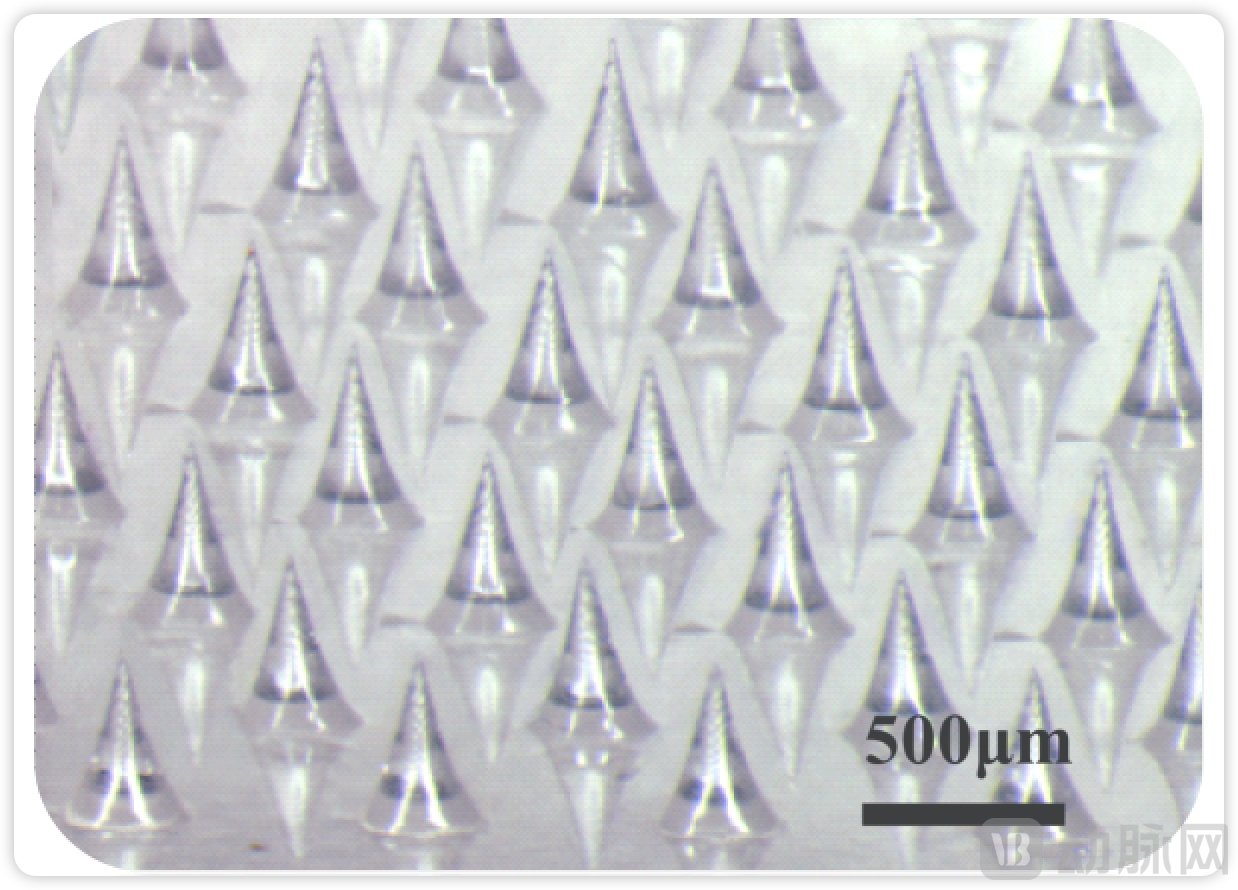
SEM Image of Puff-Type Polylactic Acid Microneedles, Source: Company
From the service provider’s perspective, medical aesthetic clinics also require novel microneedles to complement their current service offerings. For instance, microneedle-based therapies that stimulate epidermal cell proliferation and collagen synthesis are commonly used in medical aesthetics to achieve effects such as pigmentation reduction, wrinkle removal, and acne treatment. In the past, due to limitations associated with traditional microneedles, practitioners often opted for safer alternatives like dissolvable microneedle patches, including various adhesive formulations. However, the efficacy of these dissolvable systems was somewhat limited in practical applications. The emergence of polymer microneedles offers an effective supplement, significantly enhancing the outcomes of these treatments.
From a market perspective, consumer experience during treatment remains suboptimal across the spectrum of microneedling procedures, ranging from relatively affordable dissolvable microneedle treatments to more expensive varieties. There is a clear need for iterative upgrades in microneedling therapies to enhance user experience, particularly for popular indications such as fine lines, acne scars, skin laxity, enlarged pores, uneven skin tone, and dark circles. For medical aesthetic institutions, this shortfall does not reflect deficiencies in their clinical capabilities; rather, they also seek product iterations that can enable them to deliver superior services.
For rapid product commercialization, the ability of the manufacturing process to keep pace is a critical factor.
The barriers to entry for raw medical-grade polylactic acid (PLA) are not particularly high. Especially with the surging popularity of “youth-restoring injections” (poly-L-lactic acid dermal fillers), multiple companies—including Changchun Shengboma, Jinkun Biology, and Lixin Science—have entered this market. The true technical threshold lies in high-end applications, which require modification of PLA materials tailored to specific application scenarios and their scalable manufacturing.
Currently, several research and development institutions have established relatively mature capabilities in the manufacturing processes of polylactic acid (PLA) microneedles. For instance, the research team at Beijing University of Chemical Technology has successfully achieved controlled, large-scale production of PLA microneedles. These PLA microneedle products have undergone multiple clinical trials in the Department of Dermatology at China-Japan Friendship Hospital, demonstrating significantly improved therapeutic efficacy for conditions such as alopecia, scarring, psoriasis, and melasma. This advancement has introduced innovative treatment concepts and approaches to the diagnosis and management of dermatological diseases.
These fundamental studies have laid a solid foundation for the application of polylactic acid (PLA) materials in the medical aesthetics field. Currently, in addition to its use in “baby face” injections and microneedling, PLA is competing with materials such as PDO, PPDO, and PCL in the thread-lifting segment of medical aesthetics. As research into PLA materials deepens, more application scenarios are likely to be uncovered in the future.
Polymer microneedles represent a key developmental direction in the field of biomedical materials. Various types of polymer microneedles can be designed and developed to achieve painless, minimally invasive delivery, enhanced safety, and improved drug absorption efficiency.
In serious medical settings, beyond dermatology, microneedle-based transdermal drug delivery can also play a significant role in fields such as diabetes management. In the consumer healthcare sector, multiple medical aesthetic procedures can likewise benefit from this technology. A clear consensus is that the industry is leveraging the incorporation of various new materials to optimize and combine the functionalities of existing products, thereby aligning with market demands, addressing shortcomings, and establishing core service barriers.
After all, who can resist the allure of high-efficiency skincare, provided it is safe and effective?