

Miaocheng Medical's Embodied Intelligence Redefines the Frontier of Natural Orifice Interventional Surgery
Recently, a team led by Tsinghua University PhDs and overseas-returnee PhDs has taken a key step in the field of minimally invasive surgery: their “Embodied AI Natural Orifice Interventional Comprehensive Solution,” developed by Miaocheng Medical, not only pushes the boundaries of clinical applications for Natural Orifice Transluminal Endoscopic Surgery (NOTES), but also highlights the potential for broader adoption of high-end medical robots in grassroots hospitals.
The Invisible Revolution of Minimally Invasive Surgery
Natural Orifice Transluminal Endoscopic Surgery (NOTES) represents one of the most elegant minimally invasive approaches in medicine. By utilizing the body’s natural orifices—such as the mouth, trachea, urethra, or anus—surgeons can access internal structures using specialized flexible instruments, without the need for incisions through the skin and muscle.
“This method significantly reduces postoperative pain, the risk of infection, and the likelihood of scarring,” explained Dr. Yang, founder of Miaocheng Medical. However, the technical challenges have remained substantial—“imagine the difficulty of performing precise maneuvers with an instrument at the tip of a flexible catheter that must navigate through the body’s complex internal passages.”
According to the latest industry data, the global market for endoscopic surgery is projected to reach tens of billions of U.S. dollars in 2024, with the robot-assisted surgery segment expanding rapidly at an annual growth rate exceeding 25%. Despite its significant market potential and rapid growth, the application of this technology remains primarily concentrated in high-end medical centers, constrained by high equipment costs and steep technical learning curves.
Triple Challenge: Cost, Complexity, and Control
Despite the significant clinical benefits demonstrated by NOTES procedures, such as markedly shorter hospital stays and significantly reduced postoperative pain as shown in multiple studies, three major obstacles continue to hinder their widespread adoption.
First, the economic barrier to entry is quite high. Taking the existing robotic bronchoscopy systems from industry leaders Intuitive Surgical and Johnson & Johnson as examples, their prices can exceed $2 million. For instance, the winning bid price for Intuitive Surgical’s Ion endoluminal system in the Chinese market reached RMB 14.9725 million (approximately $2.1 million), while disposable components add an additional cost of $1,500–$2,500 per procedure. The high equipment cost remains a significant factor limiting the widespread adoption of these advanced technologies. Furthermore, the lack of unified operational guidelines has confined the current application of this technology primarily to select large medical centers.
Next, the operational complexity is daunting. “Merely preparing for registration—aligning the robot’s understanding of the patient’s anatomy with their actual anatomical structures—can consume 15 to 30 minutes of valuable surgical time,” Dr. Yang pointed out. “This means that the patient is already under anesthesia, yet therapeutic intervention has not even begun.”
Third, the most challenging aspect is the control issue. Traditional systems require physicians to mentally translate and interpret rigid three-dimensional structures as flexible three-dimensional structures while operating control devices that lack haptic feedback. This cognitive load results in an estimated learning curve of 150–200 procedures to achieve proficiency.
The Paradigm Shift Brought by Embodied Intelligence
Miaocheng Medical’s treatment protocols were developed by a team led by Dr. Yang, who holds a Ph.D. from Tsinghua University and possesses extensive experience in the research and development of AI for medical imaging at renowned companies such as Siemens Healthineers and Fosun Pharma. Leveraging their cross-industry technological expertise and profound understanding of clinical scenarios, the team has broken away from traditional robotic surgical pathways by innovatively incorporating embodied intelligence technology.
Unlike conventional systems designed merely as extensions of surgeons’ manual operations, Miaocheng Medical’s solution empowers robotic systems with the ability to autonomously adapt to the anatomical structures of natural body cavities through a closed-loop multimodal perception–decision–execution framework. This technological innovation is embodied in core modules such as force-feedback control for flexible robotic arms, real-time tissue characterization, and dynamic path planning based on surgical scenarios, significantly lowering the technical threshold for natural orifice surgery.
Currently, this solution has achieved breakthrough applications in the diagnosis and treatment of pulmonary diseases. By enabling intelligent synergy between bronchoscopic navigation systems and diagnostic and ablation therapeutic devices, it provides a more minimally invasive and precise solution for the treatment of peripheral lung cancer, holding promise for promoting the adoption of advanced interventional technologies in primary healthcare institutions.
“Traditional robotic systems are essentially digital extensions of a surgeon’s movements,” explained Dr. Yang. “In contrast, our system can comprehend its operational environment—it perceives the geometry of the airway, urethra, or intestines, detects resistance when contacting tissues of varying densities, and constructs a real-time three-dimensional map of its surroundings.”
Specifically, this embodied intelligence approach integrates multiple cutting-edge technologies:
● Shape-sensing flexible endoscope,It can provide real-time feedback on its configuration within tortuous in vivo channels;
● Force feedback perception,Can detect subtle tissue characteristics imperceptible to human touch;
● AI-powered navigation,Continuously update the surgical plan based on real-time findings;
● Self-registration system,Eliminate time-consuming manual alignment processes;
The design by the Miaocheng Medical team automates the entire preoperative registration process, reducing endoscope insertion time to just a few minutes. The integration of real-time deformation and mechanical monitoring eliminates the need for physicians to rely on “experience-based” blind manipulation, thereby minimizing the risk of complications. This full-chain intelligence, covering registration, endoscope insertion, navigation, and intervention, is regarded as the beginning of the true adoption of high-end intelligent surgical robots in primary care settings.
In terms of application scenarios, Miaocheng Medical’s system will initially focus on four high-impact clinical indications:
● Diagnosis and treatment of peripheral pulmonary nodules,Meet the growing demand for early detection and intervention of lung cancer;
● Staging and Treatment of Esophageal Cancer,Enable more precise assessment and intervention for these hard-to-reach malignant tumors;
● Management of Pancreaticobiliary Diseases,; making navigation of complex ductal systems more effective;
● Fragmentation and removal of urinary stones,Can provide a less invasive alternative to traditional methods;
In light of this, some frontline clinicians have expressed cautious optimism: “The most promising aspect of this approach lies in its potential to standardize outcomes across different operators and facilities. In our current practice, the likelihood of successfully performing complex endoscopic procedures depends heavily on which hospital you visit and which physician performs the surgery. Technologies capable of reducing such variability could have a transformative impact on healthcare equity.”
Designed to enhance, not replace, clinicians
Despite its advanced technology, Miaocheng Medical continues to emphasize that this system is designed to augment, rather than replace, clinicians.
“Physicians’ judgment is critical,” said Dr. Yang. “Our technology addresses the technical challenges of navigation and stabilization, enabling physicians to focus on key clinical decisions that require human judgment and experience.” This philosophy reflects a growing consensus in the field of medical robotics that the most successful systems will be those that augment human capabilities rather than attempt to replicate them.
As global healthcare systems face growing demand for complex interventional procedures, particularly among an aging population with rising cancer incidence, technologies that can simultaneously improve outcomes and expand access may prove to be not only clinically valuable but also economically essential.
At Miaocheng Medical’s laboratory, this future is gradually taking shape through algorithms, mechanical innovations, and a series of clinical trials—potentially transforming how we think about the intersection of artificial intelligence, robotics, and the human body.
Bringing Advanced Medical Technologies to the Masses
According to Dr. Yang, the greatest value of Miaocheng Medical’s solution may lie not in its technological merits, but in its economic impact and social value. By significantly simplifying the user interface and integrating autonomous capabilities, this system has the potential to bring advanced interventional capabilities to community hospitals and rural healthcare institutions.
“If only a small number of doctors at top-tier hospitals can operate them, even the most advanced medical robots will become worthless,” said Dr. Yang. “Miaocheng Medical aims to make it feasible for under-resourced healthcare institutions to perform complex surgeries, thereby flattening the curve of healthcare inequality.”
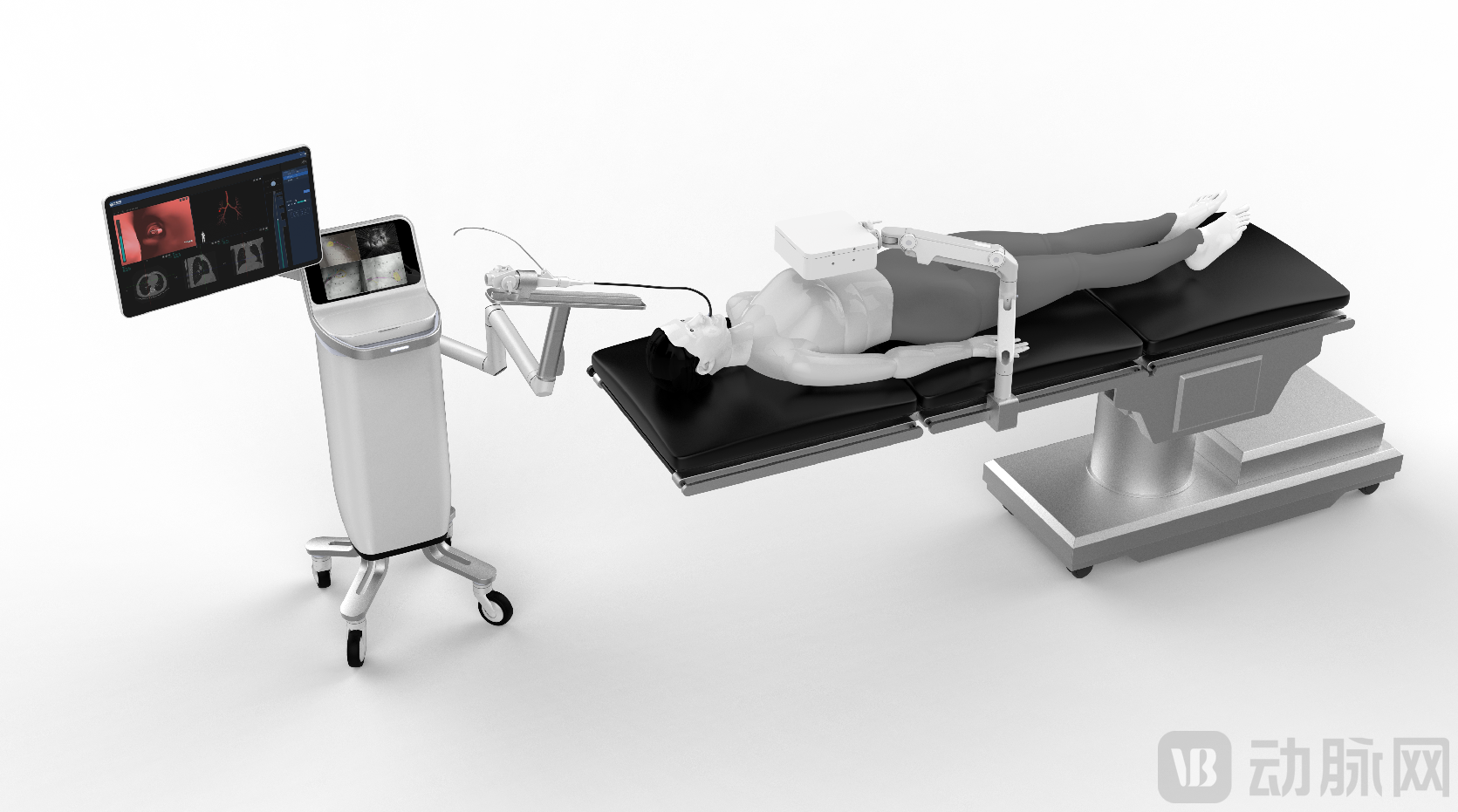
Miaocheng Medical’s commercialization strategy reflects this philosophy. Although specific pricing has not yet been disclosed, the company aims to reduce system costs by 40%–60% compared to current market leaders, and the use of reusable components will significantly lower the cost per procedure.
“What makes Miaocheng Medical particularly valuable is its unique position at the intersection of robotics, artificial intelligence, and medical devices,” noted a healthcare investor who has reviewed Miaocheng’s project. “They are not merely making incremental improvements to existing technologies; rather, they are fundamentally reshaping the relationship between machine intelligence and human anatomy.”
Looking Ahead: The Regulatory Pathway
Miaocheng Medical faces substantial regulatory review before its technology can be widely adopted in clinical practice. The company has begun submitting registration applications to China’s National Medical Products Administration (NMPA). Industry experts estimate that, assuming clinical trials continue to demonstrate safety and efficacy, the timeline for obtaining potential market authorization in key markets is approximately 12–36 months.
“The regulatory process for AI-driven medical devices remains complex and evolving,” noted a senior expert with extensive registration experience. “However, regulatory agencies in both China and the United States have established accelerated pathways for technologies that are truly innovative and address significant unmet needs.”
It was further reported that Miaocheng Medical has completed the prototype of its first bronchoscope robot and expects to obtain NMPA certification in early 2026. The company will continue to rapidly advance the core technology research and development and product commercialization of its “Embodied AI Natural Orifice Interventional Comprehensive Solution.”
Angel Round Financing Stage
Miaocheng Medical is currently in its angel financing round. The funds raised will be used to advance the R&D of core intelligent algorithms, develop an open endoscopic robot system, and build the core capabilities of embodied AI large models. Meanwhile, through industry-academia-research-medical collaboration, the company will jointly promote clinical validation and product registration.