

Zhongsheng Suyuan Advances Global-First iPSC-Derived iDAP Therapy NCR201 for Parkinson’s Disease with Breakthrough Clinical Results

Nuwacell
Cell Therapy Product Developer
As the second most prevalent neurodegenerative disease worldwide, Parkinson’s disease (PD) has an unclear pathogenesis and remains incurable. However, recent advances in multiple therapeutic approaches have brought new hope to the treatment of Parkinson’s disease.
Amid these remarkable advances, Chinese enterprises are taking the lead, emerging as a pioneering force reshaping the treatment landscape for Parkinson’s disease. Chinese enterprisesZhongsheng TraceabilitySelf-developed iPSC-derived Dopaminergic Neural Progenitor Cell (iDAP) Injection「NCR201」, received implicit clinical trial approval in April 2025, and corresponding clinical trials are currently underway.
“NCR201” has yielded encouraging results in early-stage clinical studies, having successfully completed dosing in multiple patients without any observed serious adverse events, and all cases have demonstratedSignificant Therapeutic Efficacy。
Clinical data show that subjects received “NCR201"After six months of treatment, the mean daily duration of Good ON (ON time without troublesome dyskinesia) compared to baseline"89.5% Improvement, multiple patientsDisappearance of the Closed Period; Maximum improvement in MDS-UPDRS III score (Movement Disorder Society-Unified Parkinson's Disease Rating Scale Part III) at the end of the study period52.9%; Highest Hoehn and Yahr stage (the primary staging system for Parkinson's disease, ranging from Stage 0 to Stage 5 based on the severity of motor symptoms) within six monthsDowngraded by 2 levels, achieving disease reversal。
Anhui Zhongsheng Traceability Biotechnology Co., Ltd. Achieves Breakthroughs in the Induced Pluripotent Stem Cell (iPSC) Industry After Years of Accumulation,FounderDr. Junying YuIt is humanOne of the International Pioneers of iPSC Technology, and a leading international scientist in the field of stem cells. She studied under Dr. James Thomson, known as the “father of human embryonic stem cells,” and pioneered the conversion of human skin cells into induced pluripotent stem cells (iPSCs) in 2007. In 2009, she further pioneered the generation of human iPSCs without viral vectors, paving the way for the industrialization of cell products derived from human iPSCs (hiPSCs). Her team has achieved numerous groundbreaking results in the iPSC field, laying a solid foundation for the industrialization of iPSC technology.
Leveraging its exceptional scientific research capabilities and efficient R&D strategies, Zhongsheng Traceability has achieved international leadership in technological innovation and clinical translation. To date, the company has six product pipelines in registered clinical trials.
Parkinson's disease is associated with the pathological changes of progressive degeneration of dopaminergic neurons in the substantia nigra and formation of Lewy bodies, as well as the biochemical changes of reduced dopamine levels in the striatum and an imbalance between dopamine and acetylcholine neurotransmitters.
Parkinson's disease causes motor symptoms such as tremor, rigidity, bradykinesia, and postural instability; as well as non-motor symptoms including sleep disorders, olfactory dysfunction, autonomic dysfunction, and cognitive and psychiatric impairments, which severely affect patients' quality of life.
Pharmacological therapy includes levodopa-based agents and dopamine receptor agonists; however, it has limitations such as adverse effects, limited blood-brain barrier penetration, high demands on medication adherence, waning efficacy, and inability to improve non-motor symptoms. Surgical treatment involves the implantation of deep brain stimulation (DBS) electrodes. While DBS surgery can alleviate motor symptoms, it is associated with issues including limited battery lifespan, high costs, and surgical risks.
Due to the limitations of pharmacological and surgical treatments, Parkinson’s disease remains incurable. However, as a condition with a clearly defined etiology involving the degeneration of specific cell types, it is particularly well-suited for curative therapy via cell transplantation.
Cell transplantation therapy for Parkinson’s disease has been explored by scientists for many years, with the earliest trials dating back to the 1980s. Scientists at Lund University in Sweden proposed the concept of “cell replacement therapy,” in which they stereotactically transplanted dopaminergic neurons derived from the ventral midbrain of aborted fetuses into patients with Parkinson’s disease for the treatment of advanced-stage Parkinson’s disease.
Despite the technological limitations of the time, cell transplantation therapy demonstrated significant efficacy in some patients, confirming the effectiveness of dopaminergic neuron therapy for Parkinson’s disease and achieving proof of concept for cell-based therapies in the clinical management of Parkinson’s disease.
However, the use of embryonic-derived dopaminergic neurons is unsustainable and raises ethical concerns. On this basis, researchers are seeking superior cell sources and more precise surgical targets.
iPSCs are theoretically a superior source for dopaminergic neurons.iPSC therapy involves reprogramming cells into induced pluripotent stem cells (iPSCs), differentiating these iPSCs into dopaminergic neuron progenitor cells, and then transplanting them into specific regions of the patient’s brain. These transplanted cells can replace dopaminergic neurons lost due to disease, thereby restoring normal dopamine secretion in the brain.
In the vast realm of regenerative medicine, induced pluripotent stem cell (iPSC) therapy has opened up new possibilities for Parkinson’s disease. However, translating iPSC therapy from laboratory-based scientific exploration into tangible clinical applications is akin to traversing formidable mountain ranges, requiring the overcoming of a series of severe challenges, including safety, efficacy, and stable mass production.
Anhui Zhongsheng Traceability Biotechnology Co., Ltd. has successfully established a pathway for induced pluripotent stem cells to transition from scientific research to clinical application.
Recently, data have also supported the safety and efficacy of stem cell therapy for Parkinson’s disease. In clinical applications, Anhui Zhongsheng Traceability Biotechnology Co., Ltd. has progressively advanced multiple product pipelines comprising three types of iPSC-derived functional cells (iMSCs, iNKs, and iDAPs) into registrational clinical trials.
By bridging the gap from research to clinical application, Zhongsheng Traceability has overcome multiple technical barriers. With profound and unique insights into the quality attributes of iDAP therapy for Parkinson’s disease, Zhongsheng Traceability has established three major product advantages in iPSC-based treatment for Parkinson’s disease.
The primary advantage is its leading CMC process.CMC processes determine the stability and purity of cell products, ultimately influencing clinical outcomes. The key technical challenge in the industrialization of iDAP therapy for Parkinson’s disease lies in increasing the proportion of target cells, as their positivity rate directly determines the therapeutic efficacy of transplanted cells. Leveraging iterative innovation and years of breakthroughs in CMC R&D, Anhui Zhongsheng Traceability Biotechnology Co., Ltd. has successfully elevated the proportion of target cells to the highest international level.
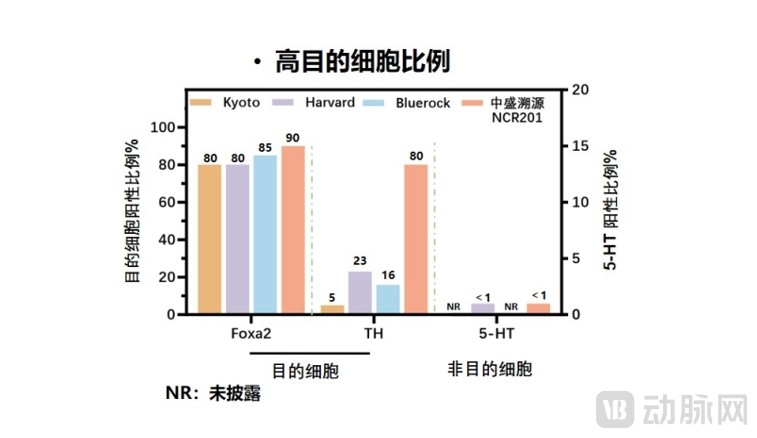
The cell purity of NCR201 reaches an internationally leading level.1-4
The second major advantage is that Zhongsheng Traceability’s products are off-the-shelf., enabling coverage of a broader patient population and overcoming the limitations of traditional cell therapies in terms of applicability.
The third major advantage is Zhongsheng Traceability’s in-depth understanding of Parkinson’s disease.Current cell therapy R&D efforts are based on the understanding of Parkinson's disease and the expression of biomarkers. Anhui Zhongsheng Traceability Biotechnology Co., Ltd. has accumulated extensive experience in this area. The company evaluates cellular efficacy during both non-clinical and clinical stages, identifying and determining key pharmacodynamic indicators for Parkinson's disease through these assessments. This enables feedback-driven optimization and continuous improvement of cell quality.
In addition to the field of Parkinson’s disease treatment, Anhui Zhongsheng Traceability Biotechnology Co., Ltd. has achieved multiple breakthroughs in other disease areas.
In the field of knee osteoarthritis (KOA), the Phase II clinical trial investigator meeting for “NCR100 Injection” by Anhui Zhongsheng Traceability Biotechnology Co., Ltd. was successfully held. Previously, in Phase I clinical trials, “NCR100 Injection” demonstrated favorable safety and significant efficacy, bringing new hope to patients.
In the field of pulmonary diseases, Anhui Zhongsheng Traceability Biotechnology Co., Ltd.'s ""NCR101 Injection"As the world’s first gene-modified iMSCplus product approved for clinical trials, it is currently undergoing Phase I/II clinical trials. Notably, the world’s first “NCR101 Injection"Clinical infusion was recently completed, and the patient is in good condition, marking a significant step forward for Anhui Zhongsheng Traceability Biotechnology Co., Ltd. in this field."
In the field of graft-versus-host disease (GVHD), Anhui Zhongsheng Traceability Biotechnology Co., Ltd.'s “NCR102“As the first iMSC product approved for clinical use in this field, it is currently undergoing Phase I/II clinical trials. Recently, the first case”NCR102"The infusion was also successfully completed, with the patient in stable condition, laying a solid foundation for subsequent research."
"Furthermore, in the field of oncology, Zhongsheng Traceability has also achieved remarkable results."NCR300"As the first iNK product approved for clinical trials, it is currently undergoing Phase I/II clinical trials for myelodysplastic syndromes and acute myeloid leukemia, providing a new therapeutic direction for patients with hematologic malignancies. Anhui Zhongsheng Traceability Biotechnology Co., Ltd. possesses advantages in source-level technological innovation. Its leading pipeline progress and rigorous quality control system not only bring breakthrough treatment hope to patients but also signify that China has joined the forefront of the world in the field of regenerative medicine innovation. In the future, Anhui Zhongsheng Traceability Biotechnology Co., Ltd. is poised to lead industry transformation with more cell therapies featuring 'Intelligent Manufacturing in China,' offering transformative solutions to unmet global clinical needs."
References:
1. Doi D, et al. Isolation of human induced pluripotent stem cell-derived dopaminergic progenitors by cell sorting for successful transplantation. Stem Cell Reports. 2014 Mar 6;2(3):337-50.
2. Kikuchi T, et al. Human iPS cell-derived dopaminergic neurons function in a primate Parkinson's disease model. Nature. 2017 Aug 30;548(7669):592-596.
3. Jeon J, et al. Pre-clinical safety and efficacy of human induced pluripotent stem cell-derived products for autologous cell therapy in Parkinson's disease. Cell Stem Cell. 2025 Mar 6;32(3):343-360.e7.
4. Piao J, et al. Preclinical Efficacy and Safety of a Human Embryonic Stem Cell-Derived Midbrain Dopamine Progenitor Product, MSK-DA01. Cell Stem Cell. 2021 Feb 4;28(2):217-229.e7.