

Will the Healthcare Sector Produce Its Own 'Lei Jun'? Founders Rush Into Live-Streaming E-Commerce

Kelun
Innovative Pharmaceutical R&D Company
Recently,75-Year-Old Kelun Chairman Liu Gexin Goes Shirtless to High-Profilely Endorse His Company’s Ergothioneine Capsules, sparking considerable attention within the industry and briefly topping trending searches across major platforms. Behind this viral phenomenon lie two key hooks: first, the elderly chairman appeared shirtless, creating a certain visual impact for online users; second, it is extremely rare for a chairman to personally engage in live-streamed product promotion in the high-tech medical sector, and this stark contrast shattered public perceptions of executives in healthcare enterprises.
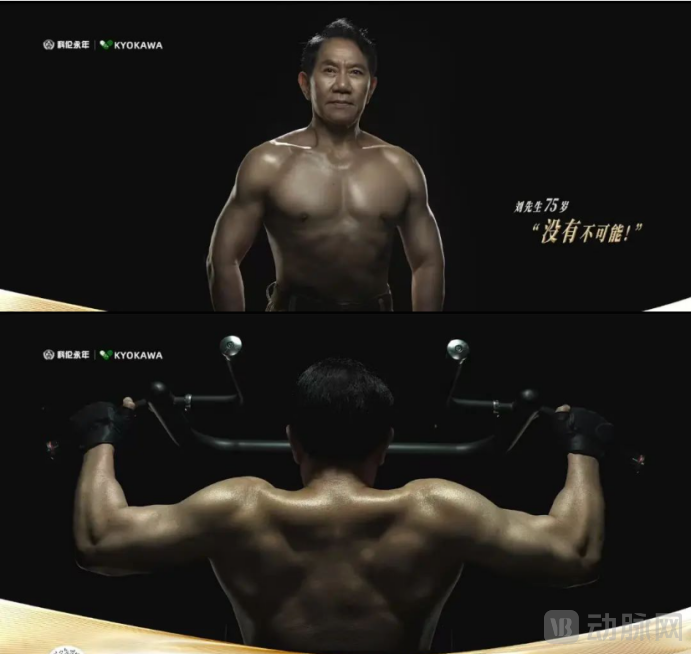
Figure 1. Liu Gexin goes shirtless to endorse ergothioneine capsules (source: video screenshot)
In fact, Liu Gexin is not an isolated case. In recent years, swept up by the “traffic era,” many healthcare founders have personally engaged in live-streaming e-commerce.
The first to emerge were a group of founders in the consumer healthcare sector, such asZheng Hanwen of Baihui Medical Aesthetics, Liu Yu of Rongshujia Traditional Chinese Medicine, Gao Fan of Bolin Ophthalmology, and Shao Zongzong of Malo DentalandZou Qifang, Arrail Dentaland others have successively flocked to live-streaming rooms, passionately promoting their own products. In the past year or two, founders of some pharmaceutical and medical device companies have also begun to lose their patience.Neusoft Medical’s Liu Jiren, BGI’s Yin Ye, Zhongsheng Pharmaceutical’s Chen Yonghong, Lunan Pharmaceutical’s Zhang Guimin, Wanquan Pharma’s Guo Xia, and Huiren Pharmaceutical’s Chen Niandaiand others have also transitioned from their roles as chairpersons to becoming major internet influencers, generating millions in sales through live-streaming sessions.
This is truly a rare sight, given that in the past,The vast majority of medical founders disdain such public displays of prowess, considering live-streamed e-commerce to be highly “degrading.”However, amidst an overwhelming surge in traffic-driven dividends, “becoming an influencer for live-streamed e-commerce” has gradually become a standard marketing strategy for healthcare founders, with a steady stream of entrants joining the fray. So, what factors are driving healthcare founders to step out of their comfort zones and engage directly in product promotion? Is this merely a publicity stunt, or does it signify a genuine industry transformation?
From CEO to Influencer: Why Are Founders Jumping In to Grab Traffic?
In fact, it is not a new phenomenon for founders to personally engage in live-streamed product sales in recent years.Xiaomi’s Lei Jun, Gree’s Dong Mingzhu, JD.com’s Liu Qiangdongetc. are typical cases.
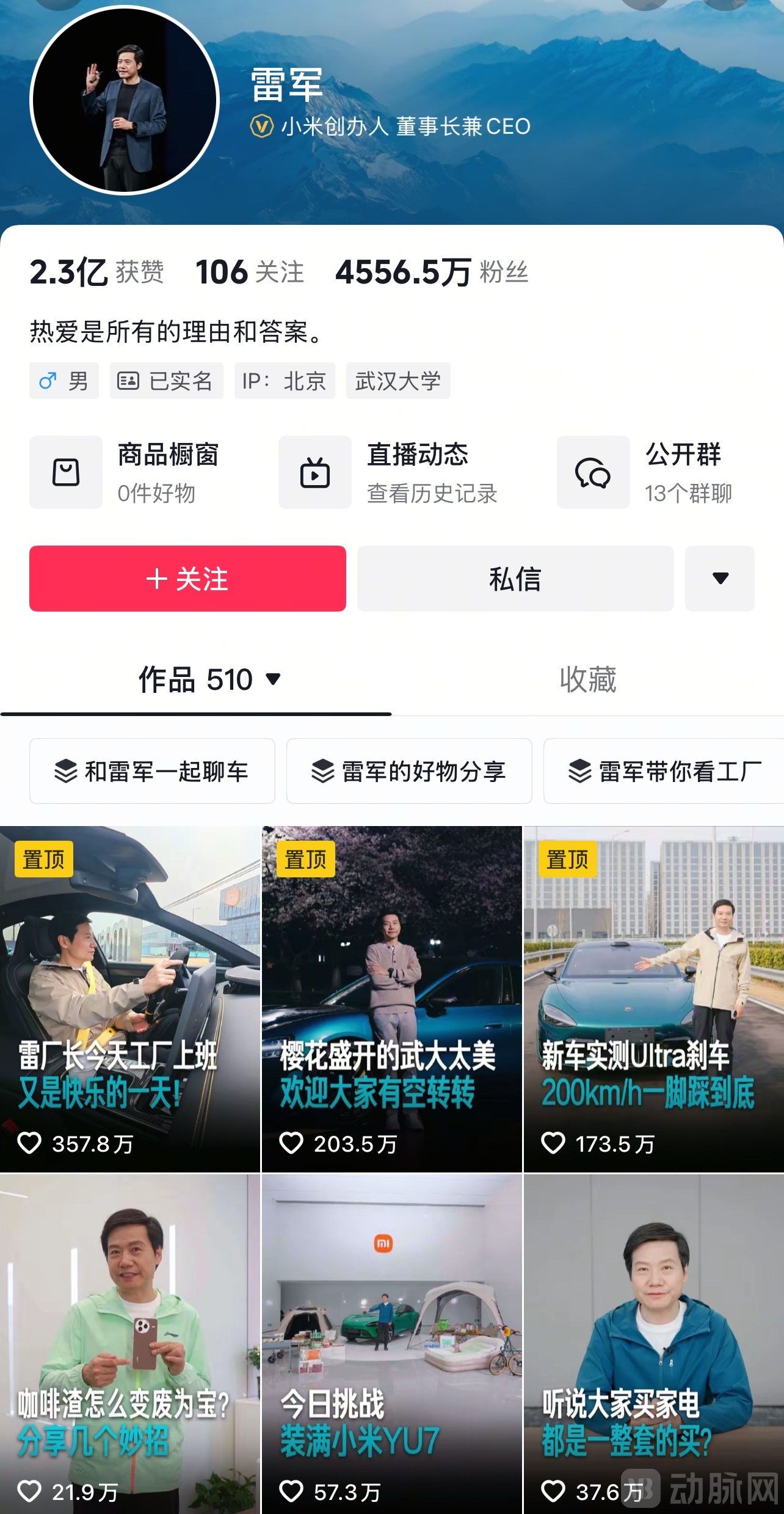
Figure 2. Lei Jun’s personal Douyin account (screenshot from VCBeat)
Especially Lei Jun, who has now firmly secured the top spot as China’s leading founder-IP. He currently boasts 45 million followers on Douyin (TikTok), with his live streams consistently attracting over 100,000 concurrent viewers, effectively turning him into a walking billboard for Xiaomi Mobile. Leveraging this massive traffic pool, Lei Jun has also created numerous sales miracles, such as the Xiaomi SU7.Lei Jun Secures Nearly 90,000 Orders in Two Hours via Douyin Livestream, which has dealt a significant blow to domestic automakers.
Under this stimulus, among the 14 domestic new energy vehicle companies, with the exception of Ding Lei due to force majeure, the other 13 founders have all entered live streaming rooms, participating in various forms. For instance, Li Bin of NIO drove from Shanghai to Xiamen (a total distance of 1,044 kilometers) to challenge a 1,000-kilometer range, while simultaneously answering various questions from netizens during a live stream that lasted over 13 hours. Additionally, Yin Tongyue of Chery accompanied CCTV host Sa Beining on a live tour of Chery’s Qingdao Super Factory, with the broadcast lasting more than five hours. It is evident that,These automotive industry titans, with an average age of over 60, are currently busy becoming internet celebrities.。
This phenomenon has gradually extended to the healthcare sector. Why, then, are healthcare founders—labeled as “highly educated intellectuals”—choosing to enter the crowded “influencer arena” at this juncture?
There must be a reason for this.First, there is pressure on financial performance.. Taking Kelun Pharmaceutical as an example, its revenue dropped to RMB 4.39 billion in the first quarter of 2025, a year-on-year decline of 29.4%; net profit attributable to shareholders was RMB 580 million, down more than 43% year on year. This is merely the beginning of its downturn. As medical insurance cost containment measures and centralized procurement policies advance, its core business is expected to continue shrinking, while cash flow pressures will intensify. Therefore, in the view of many industry insiders,Liu Gexin’s “muscle-flexing” marketing campaign may appear aggressive, but it actually reflects Kelun Pharmaceutical’s deep-seated anxiety over performance growth.。
In fact, Kelun is merely a microcosm of the industry. Amid the prolonged market winter, many healthcare companies are facing increasingly tight cash flows, with “rapid monetization” gradually becoming their primary objective for survival. In this predicament, “"Founders stepping in to promote products" is considered a crucial channel for converting cash flow., prompting many to follow suit in hopes of seizing this last straw.
In addition to performance anxiety,The boundless possibilities of the “traffic era” have also deeply attracted healthcare founders to enter the live-streaming e-commerce arena.According to the 55th Statistical Report on China’s Internet Development recently released by the China Internet Network Information Center (CNNIC), as of December 2024, the number of internet users in China had reached 1.108 billion, a substantial increase of nearly 200 million from 2023. Among them, the number of online shopping users reached 974 million, accounting for 88% of the total internet user base, indicating that China’s online shopping market continues to expand significantly.
Many healthcare companies have reaped significant benefits as a result. For instance, Wei Yimei, a product under Jinbo Bio, saw its sales rapidly surpass one million units after launching on Xiaohongshu (Little Red Book), generating over RMB 1 billion in annual revenue for the company. Additionally, home-use pelvic floor repair devices achieved daily sales exceeding RMB 7 million on Douyin during the 2024 “618” shopping festival. Their surging popularity even prompted Douyin to adjust its collaboration rules for medical device products. Clearly,"The Traffic Era" Is Rapidly Transforming Traditional Marketing Pathways in the Healthcare Industry。
The final critical factor is the unique brand appeal possessed by healthcare founders.. In this regard, a founder with extensive experience in live-streaming e-commerce remarked, “Compared to celebrity and influencer endorsements, founders’ direct participation first conveys a sense of approachability, which can quickly bridge the gap between the enterprise and consumers. Additionally,”The format of founders promoting products has, to a certain extent, enhanced the authenticity and interactivity of consumers’ shopping experiences, allowing them to feel the trust endorsement from senior corporate executives while obtaining product information.。”
Thus, it can be seen that under fierce market competition,Live-streaming e-commerce by healthcare founders is no longer a defensive business tactic, but rather a standard marketing practice.。
Everyone Is a “Top Sales Performer”: What’s the Magic Behind Founders Selling Products?
As mentioned earlier,The ultimate goal of medical founders engaging in live-streamed sales is to boost sales volume and convert it into cash flow for their enterprises.. Therefore, when we focus on medical founders who have entered the live-streaming space, the most direct metric for evaluation is their sales performance, and existing data shows that they have generally delivered impressive results.
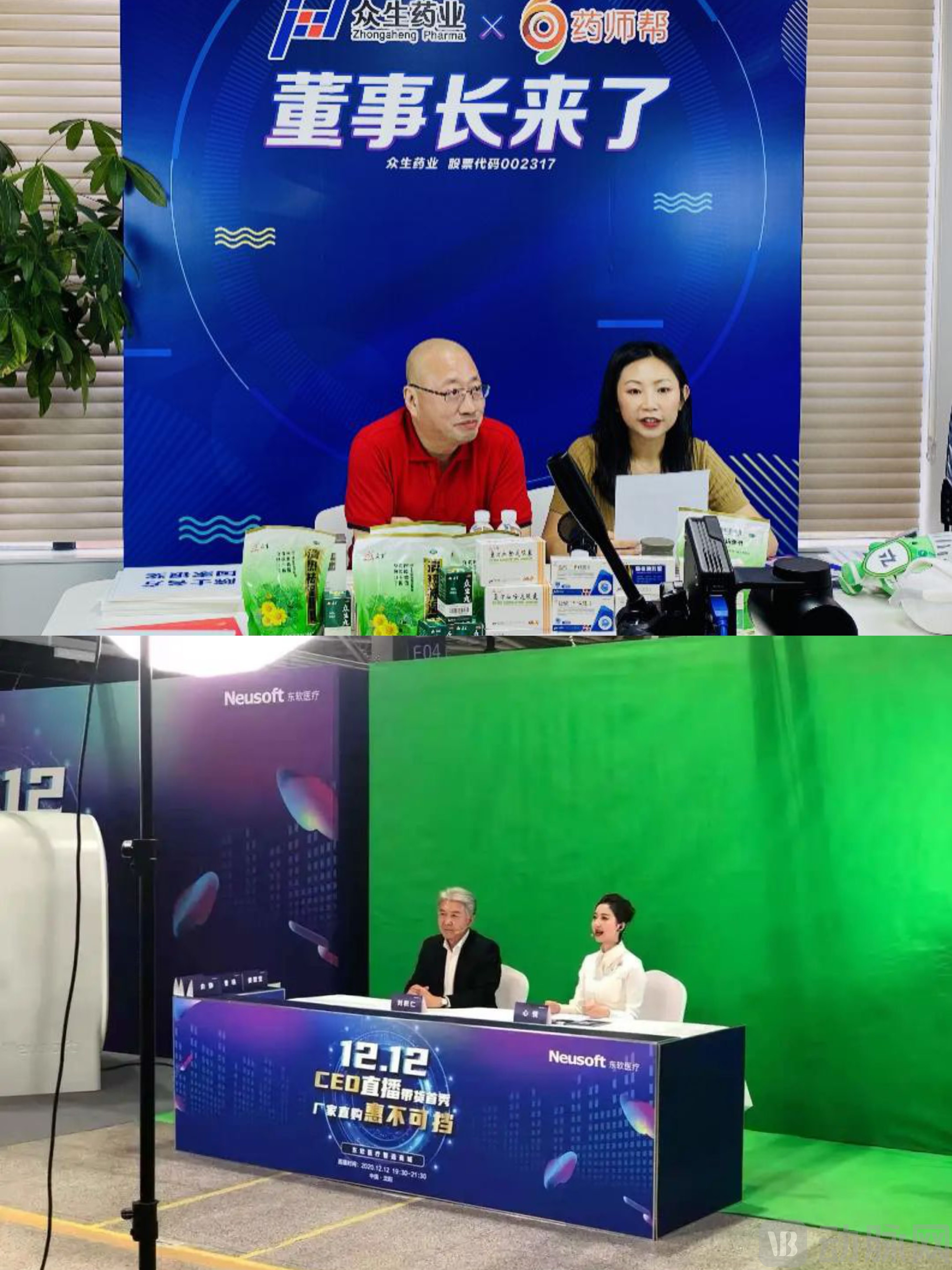
Figure 3. Chen Yonghong and Liu Jiren conduct live-streamed e-commerce for their respective products (Image source: Internet)
For exampleChen Yonghong, Chairman of Zhongsheng Pharmaceutical, during the 618 shopping festival, live streaming generated over one million in sales within just 20 minutes; in addition, there wereZhang Guimin, Chairman of Lunan Pharmaceutical, personally endorsed the brand during the Double 11 shopping festival, generating over RMB 30 million in revenue for its flagship product, Orlistat Capsules; the final representative case isLiu Jiren, Chairman of Neusoft Medical, with over 200,000 viewers in the live stream, where an affordable CT scanner priced at RMB 999,000 was snapped up and sold out.
It is evident that medical founders almost invariably emerge as top sales performers whenever they engage in business development. This is by no means a coincidence, but rather the result of multiple converging factors.
First, the “founder-led live commerce” gimmick can rapidly aggregate traffic. Second, founders typically curate products with great care and offer maximum price discounts, which holds strong appeal for consumers. Finally, the choice of sales channels matters: in the medical aesthetics sector, founders commonly establish a presence on Xiaohongshu (Little Red Book) because it boasts a precisely targeted user base and enables more effective product showcasing. According to Deloitte’s “2024 Annual Insights Report on China’s Medical Aesthetics Industry,” 88% of medical aesthetics users currently obtain information from Xiaohongshu, which has 120 million daily active users.
However, everything has two sides.Medical founders entering the live-streaming e-commerce arena, while enjoying the dividends of traffic, must inevitably accept the backlash that comes with it.。
In July 2022, Rao Yi, then president of Capital Medical University, publicly criticized Yin Ye of BGI on his personal WeChat official account, accusing him of “selling fake drugs” and stating that dozens of research papers had failed to demonstrate any biological effects of the company’s probiotic products. Recently, ergothioneine capsules promoted by Liu Gexin in a shirtless livestream sales event have also been embroiled in controversy. Rao Yi directly labeled them as “fake drugs” on his personal WeChat official account, remarking that “taking ergothioneine only proves one is easily deceived.” Sichuan Kelun Pharmaceutical Co., Ltd. subsequently issued a response.
This also exposes the pitfalls of selling medical products via live streaming: unlike consumer goods such as home appliances and automobiles, medical products are directly linked to life and health. This necessitates that their commercial logic strictly adhere to the dual bottom lines of science and ethics, with all marketing efforts grounded in robust scientific research. This is precisely why major platforms have imposed stringent regulations on live-streaming sales of medical products, introducing numerous detailed compliance rules.In essence, it is about preventing the “traffic frenzy” from overshadowing the intrinsic technical value of medical products.。
Borui Medicine also experienced a backlash due to its founder’s promotional activities. In October 2023, the China Securities Regulatory Commission (CSRC) issued a warning letter to Borui Medicine. The document stated that Yuan Jiandong, Chairman of Borui Medicine, had publicly discussed his personal use of the company’s investigational antidiabetic and weight-loss drug (BGM0504 injection), claiming that he lost weight from 91 kg to 76 kg within two months. As BGM0504 injection was still in clinical trials for weight loss at the time, with its efficacy not yet established, Mr. Yuan’s statements regarding the drug’s effectiveness were deemed misleading and in violation of Article 49, Paragraph 2 of the Administrative Measures on Information Disclosure by Listed Companies. Although Mr. Yuan’s “self-experimentation” initially drove a significant surge in Borui Medicine’s stock price, the subsequent regulatory penalty inflicted considerable negative impact on the company.
In fact,When a founder is deeply intertwined with their product, it becomes a “double-edged sword.” On one hand, it can rapidly attract and consolidate customers, strengthening consumer loyalty to the enterprise, brand, and product. On the other hand, if the founder becomes embroiled in controversy or faces public backlash, the endorsed products will suffer significant devaluation, triggering dual shocks to the company’s reputation and its standing in the capital markets.。
When Will the “Lei Jun” of the Medical Field Arrive?
In the arena of founders livestreaming to sell products, Lei Jun is undoubtedly the benchmark. The entire automotive industry has been thrust into the era of influencer economy due to his entry, compelling founders to step forward and build their personal brands; the healthcare sector, though a latecomer, is following suit, with everyone aspiring to become the next Lei Jun and regarding him as the gold standard.
However, such success is rare and cannot be forced. Lei Jun’s rapid rise to become a top influencer in the live-streaming e-commerce sector relies not only on the favorable macro environment and Xiaomi’s products, but more importantly on the meticulous refinement of his personal IP.
Take the persona tag of “approachability” as an example. It is regarded as Lei Jun’s greatest success factor, but truly delivering on it does not happen overnight; building such a public image is a lengthy process. The earliest origin can be traced back to the phrase “Are you OK,” which propelled Lei Jun to overnight fame. Internet users edited it into various humorous, auto-tuned remix videos, making Lei Jun the first “Bilibili songstress” to have his own solo single. Later, Lei JunBending over to open the car door for the owner, pursing lips nervously during meetings, bowing while reporting to beg for lenient criticism, co-creating internet memes with netizens, and patiently answering every question.Such actions have further democratized the image of the “billion-dollar CEO.” Clearly, Lei Jun has truly set aside the pride and stature associated with being an entrepreneur, and has fully connected with the broader online community.
If “affinity” has granted Lei Jun access to over 100 million in traffic,Thus, the continuous breakthrough in marketing capabilities is a key step in converting traffic into sales.. It is reported that in the month leading up to the official launch of the Xiaomi SU7, Lei Jun’s Douyin account posted a total of 125 short videos, 90 of which were related to the Xiaomi SU7. The content was diverse, featuring production stories, test drives, factory tours, performance comparisons, and more. Additionally, frequent collaborations with major influencers, celebrities, and entrepreneurs helped sustain high engagement, enabling the SU7 to accumulate a large base of prospective customers before entering the market.
This sustained ability to generate output and continuously create viral marketing moments inevitably relies on team support, but most importantly, it is the result of Lei Jun’s relentless learning and reflection. Zhou Hongyi once remarked, “Mr. Lei’s marketing prowess has transcended master-level expertise; he is now a godlike figure.” Liu Qiangdong expressed similar views, stating, “Do not compete with Lei Jun in marketing. Selling hundreds of billions worth of Xiaomi smartphones is no ordinary feat.”
So, how should healthcare founders who are already continuously testing the waters learn from Lei Jun?First, adopt a humble attitude, which is regarded as the first step toward becoming a "top-tier influencer"; second, identify your unique positioning in alignment with your product to build a personalized IP; and finally, continuously learn and strengthen your marketing capabilities to truly become a worthy "sales champion."。
However, this frenzy is not suitable for every healthcare founder. Amid the rush, some dissenting voices have emerged within the industry. A senior investor told VCBeat, “Founders’ live-streaming e-commerce is a fleeting trend, serving merely as a short-lived gimmick to attract attention; it is unsustainable and should not become a future market trend.。”
This is not intended to create anxiety. On one hand, from the perspective of the healthcare industry’s unique characteristics, it remains a niche sector that prioritizes technology over marketing.“The Influencer Economy” can only cover a portion of consumer-oriented medical products; for the vast majority of innovative drugs and high-end medical devices, it is not yet fully suitable.。
From another perspective, that of the founders: Looking at the development trajectories of leading global healthcare enterprises, although they are deeply tied to their founders in the early stages, they begin to “de-founderize” as they enter the maturity phase.This is because, although a personal IP can rapidly boost brand exposure in the short term, from a long-term perspective, the enterprise and its products themselves constitute the core competitiveness that sustains continuous growth.Moreover, if medical founders devote excessive energy to cultivating an “internet celebrity” persona, they will inevitably neglect and become distracted from technological innovation and product refinement, a trade-off that is ultimately not worth the cost.
Undoubtedly, the “traffic era” is sweeping across the entire healthcare sector, with founders’ direct involvement serving as merely one microcosm of this trend. For the healthcare industry, which is currently undergoing a critical transformation,Only by converting massive traffic into “hard assets” of systems, culture, and technology can one truly weather economic cycles.。
1. “At 60, It’s the Perfect Age for Automakers’ CEOs to Venture into the Influencer Sphere” – Guyu Data;
2. “CEOs Livestreaming to Sell Products: A Gimmick or a New Trend?” — China Times Finance;
3. “It’s Not Easy for ‘75-Year-Old Mr. Liu’ to Aspire to Be the Lei Jun of the Pharmaceutical Industry” – The Economic Observer.