

Akido Labs Secures $60M Series B to Expand AI-Powered Primary Care Platform ScopeAI for Underserved Communities

Akido Labs
Developer of Artificial Intelligence Technology for Healthcare
In May 2025, U.S. digital health company Akido Labs announced the completion of a $60 million Series B financing round, co-led by McKesson Ventures and Polaris Partners, with participation from existing investors Andreessen Horowitz (a16z) and SVB Capital. The proceeds will be primarily used to expand the deployment of its core platform, ScopeAI, particularly accelerating its adoption in underserved communities.
In the United States, annual demand for physician visits exceeds 3 billion, while supply stands at only approximately 825 million. The shortage of physicians is intensifying, placing particular strain on primary care and overwhelming the healthcare system. This predicament poses challenges for all patients, with disproportionately severe impacts on vulnerable populations such as the homeless, low-income individuals, and rural residents. These groups commonly face multiple barriers, including limited financial capacity, scarce medical resources, and prolonged wait times for appointments, often resulting in delayed or ineffective intervention for their health issues.
Akido Labs is strategically addressing these structural shortcomings by prioritizing underserved populations and developing ScopeAI, an AI-driven intelligent healthcare platform.
This round of financing is not only a phased breakthrough for Akido in its integration path of “AI + Healthcare,” but it has also reignited industry reflection on “platform-based medical AI.” In the current era, where generative AI is accelerating its deployment and healthcare intelligence is continuously evolving, how to leverage technology to reach those most in need is an unavoidable question for healthcare technology companies in the next stage.
From USC Labs to an Intelligent Primary Care Operator
Akido Labs was founded in 2015, originating from the University of Southern California (USC) Digital Health Lab, and was co-founded by Prashant Samant, Jared Goodner, and Sanjit Mahanti.
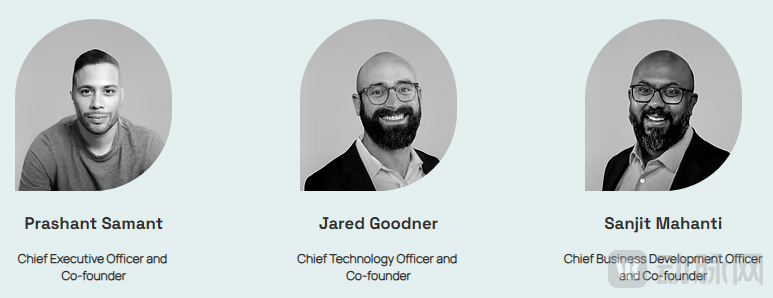
Figure 1: Co-founder Profile
During their time at USC, the three founders focused on the structural pain points of primary care systems, paying particular attention to long-standing issues such as “information fragmentation, resource redundancy, and service delays.” They were determined to build a digital healthcare service system centered on technological connectivity, without relying on establishing proprietary hospitals.
The three founders possess complementary backgrounds, establishing a management structure that equally emphasizes technology, operations, and social impact: CEO Prashant Samant brings extensive experience in collaborations between multinational corporations and non-profit organizations, dedicated to advancing healthcare equity and social welfare through technology; Chief Business Development Officer Sanjit Mahanti has over 15 years of experience in healthtech and operational management, having led innovative business development at Keck Medicine of USC, with expertise in building and operating complex healthcare networks; and Head of Technology Jared Goodner focuses on medical artificial intelligence and neural network development, leveraging his academic background in biomedical engineering and robust R&D capabilities.
Akido Labs began with a task that sounded distinctly “engineer-minded”: building interfaces. At the time, healthcare information systems were riddled with barriers, and data was scattered in silos, making interoperability among hospitals exceedingly difficult. Akido precisely addressed this pain point by starting with the standardization of foundational yet critical healthcare APIs (Application Programming Interfaces), helping developers integrate various applications with major electronic health record (EHR) systems such as Epic and Cerner. This technical “bridging” laid the essential groundwork for interoperability, enabling the future deployment of digital health products and empowering previously isolated data systems to “communicate” with one another.
In 2022, Akido decided to take a further step into frontline clinical care by partnering with the California-based multispecialty Chaparral Medical Group (CMG) to deeply embed its platform into the diagnostic and treatment workflows of offline healthcare institutions.
The leap from API connectors to intelligent diagnostic and treatment systems marks Akido’s transformation from a tool provider to a healthcare “co-operator.” This transition is underpinned by ScopeAI, Akido’s self-developed artificial intelligence platform.
Integrating Real-World Data with Reinforcement Learning, Core Product Reputation Reaches 96 Points
ScopeAI is an intelligent medical assistance platform developed by Akido Labs, built upon years of accumulating real-world patient databases and integrating cutting-edge artificial intelligence technologies. Based on Reinforcement Learning from Human Feedback (RLHF), Akido has developed a structured health knowledge graph called the “Wellbeing Graph.” This graph deeply integrates multi-source heterogeneous information from electronic health records (EHRs), social services data, law enforcement agency data, insurance claims, and patients’ living environments, enabling a comprehensive and dynamic reflection of patients’ health status and social risk factors, thereby achieving precise health profiling.
Based on this rich health knowledge graph, ScopeAI provides intelligent assistance for physicians’ clinical workflows, with its core functions summarized in Table 1.
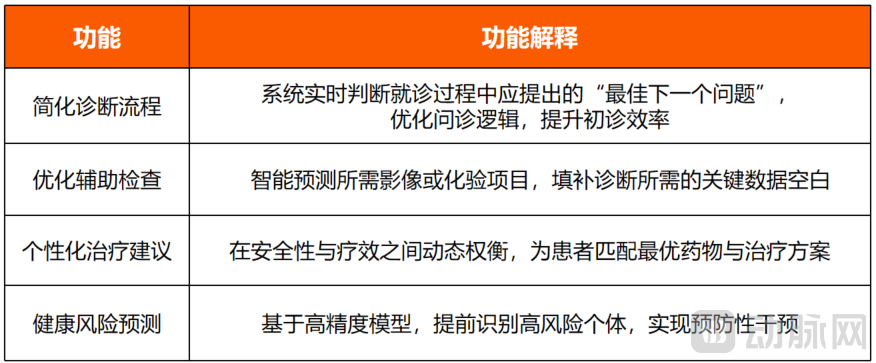
Table 1: Overview of Core Features of ScopeAI
It is worth noting that all AI recommendations on the platform undergo multiple layers of safety review, strictly adhere to U.S. national clinical practice guidelines, and are continuously iterated and optimized based on real-time feedback from clinicians. By upholding the principle of “AI-assisted recommendations with human decision-making,” the platform ensures medical safety and regulatory compliance.
Currently, ScopeAI has been successfully deployed in over 240 diverse healthcare institutions across the United States, covering a wide range of medical settings such as community clinics and multi-specialty medical groups. Patient experience is exceptionally positive, with a Net Promoter Score (NPS) as high as 96.
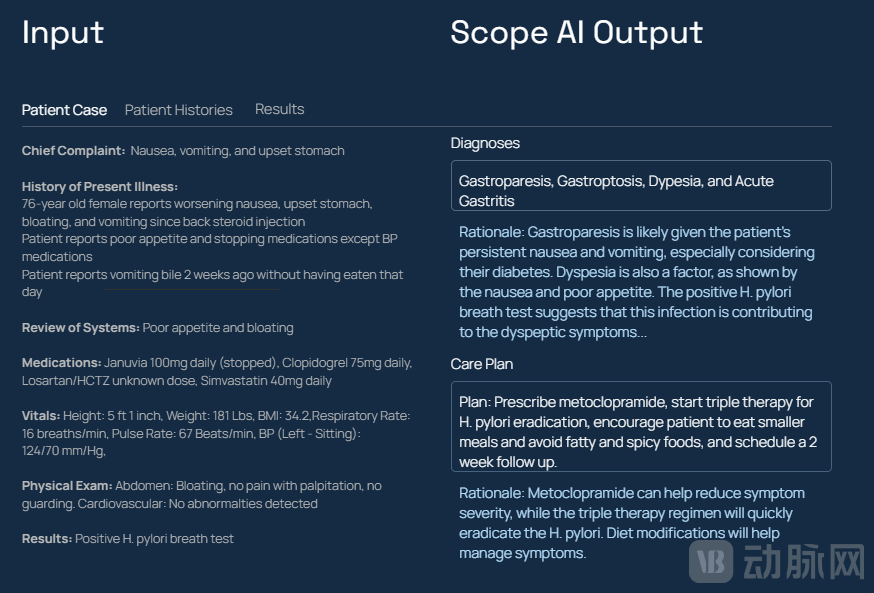
Figure 2: Schematic diagram of ScopeAI input and output
Serving grassroots communities, with a cumulative reach of over 500,000 people
As of early 2025, Akido had deployed a service network covering 96 healthcare sites across California and Rhode Island, serving a cumulative population of over 500,000. ScopeAI has not only enhanced the efficiency and precision of healthcare services but also focused on socially vulnerable groups and patients at high risk for chronic diseases, thereby promoting a more equitable and intelligent allocation and management of medical resources to some extent. Akido is advancing the practical implementation of ScopeAI through multiple pathways, ranging from mobile healthcare and cross-state expansion to healthcare network collaboration, gradually extending its reach to a broader population.
1Collaborating with Government Agencies: Providing Mobile Healthcare Solutions for the Homeless
In Los Angeles, Akido Labs partnered with the Los Angeles County Department of Health Services to deploy mobile medical fleets into areas with high concentrations of homeless individuals, providing services such as vaccination, chronic disease management, women’s health, and mental health care. Each vehicle is staffed by a team comprising physicians, nurses, and mental health specialists, and is supported by shuttle vehicles to transport patients to follow-up care facilities.
2Partnering with Community Clinics: Expanding the East Coast Medical Network and Deepening Healthcare Services in Rural Communities
In December 2023, Akido partnered with Rhode Island Primary Care Physicians Corporation (RIPCPC), the most recognized large healthcare organization in Rhode Island, to establish a joint venture. Through this collaboration, Akido expanded its medical network to the East Coast, nearly doubling its patient population, and created a Cross-Coast Innovation Center aimed at establishing and sharing best practices in medical diagnostics.
In Rhode Island, ScopeAI has been integrated into multiple rural community clinics, leveraging predictive models to identify individuals at high risk for chronic diseases, thereby enabling advance scheduling and lifestyle interventions that effectively reduce hospitalization rates for acute exacerbations.
3Industry-Academia-Research Collaborative Innovation: Co-building an Ethics-Oriented AI Medical Platform with Top Medical Schools
As of 2025, Akido has established partnerships with the California Institute of Technology and the Keck School of Medicine of the University of Southern California to promote ethical AI applications and facilitate the deep integration of AI in healthcare and related fields.
Key Takeaways: Prioritizing Vulnerable Populations, Deepening Technological Penetration
As a digital health company focused on primary care, Akido Labs has not confined itself to the traditional role of an “AI tool provider.” Instead, by deeply integrating technology, services, and operations, it has pioneered a path of “empathy-driven technology decentralization.” Akido Labs’ practices offer valuable insights for the development of medical AI in China.
1Replace "Point-Based Innovation" with "Systemic Collaboration"
Akido does not limit AI empowerment to a single stage; instead, it centers on ScopeAI to create a closed-loop intelligent platform for primary healthcare that spans pre-consultation prediction, consultation assistance, intra-consultation decision-making, and post-consultation intervention. This “system solution” approach significantly enhances the service capacity and response efficiency of primary care institutions.
2Addressing the Needs of Vulnerable Groups to Drive Product Development
Akido focuses its services on underserved urban populations, such as the homeless, residents of low-income communities, and individuals at high risk for chronic diseases. This reflects its empathy-driven “grassroots innovation” approach—tackling the most complex and vulnerable real-world scenarios to iteratively refine its products for greater practicality and adaptability.
3“Industry-Academia-Research-Medicine” Multi-Stakeholder Collaboration Mechanism Drives the Implementation of AI Application Ethics
By establishing in-depth collaborations with partners such as the Los Angeles County Government, Rhode Island Community Health Centers, and the Keck School of Medicine of USC, Akido effectively integrates policy resources, real-world scenarios, and academic expertise to iteratively develop ethical, replicable, and scalable AI application models in real-world settings.
4From Data Connectivity to Healthcare Operations: A Strategic Leap Forward
From initially building medical API interfaces to today’s involvement in mobile healthcare fleets, telemedicine networks, and preventive intervention services, Akido has achieved a strategic evolution from a “tool platform” to an “intelligent operator,” truly entering the core segment of the primary healthcare system.
In China, the medical AI industry is developing rapidly. Many innovative enterprises have made significant progress in data integration, intelligent diagnosis and treatment, and telemedicine, initially demonstrating their effectiveness in improving efficiency, optimizing processes, and enhancing patient experience. However, challenges remain, including the uneven distribution of medical resources, a relatively weak primary healthcare system, and inadequate medical services for vulnerable populations.
In the future, with the integrated development of technologies such as 5G, the Internet of Things (IoT), and big data, China’s medical AI is poised to build an intelligent service network that covers both urban and rural areas and connects healthcare institutions at all levels, thereby enabling precise prevention, dynamic intervention, and continuous management. This will not only enhance the overall efficiency of the healthcare system but also effectively alleviate the societal challenges of “difficult access to medical care” and “high medical costs.”