Fuxi Lab × VB Insights | Exoskeleton Robots 2025: Commercialization Acceleration Driven by Breakthroughs in Medical Rehabilitation and Consumer Markets

VCBeat
Internet Medical Health Media
Exoskeleton Robots Are Entering a Critical Phase of Accelerated Commercialization.
The positive breakthroughs in the exoskeleton robot industry are attributable not only to factors such as the heightened attention on Unitree Robotics and DeepSeek, the popularization of humanoid robot concepts, and the gradual maturation of the industrial chain, but also to the emerging demand in diverse scenarios including elderly care and mobility assistance, which collectively drive the industry’s self-reinvention and optimization.
China's Exoskeleton Robot Market Sees Impressive Growth: Market Size Expected to Reach RMB 4.2 Billion in 2025, with a CAGR of Approximately 50% from 2023 to 2028ExternalBoneMachineHumanAlreadyBecomeIntelligenceRehabilitationEquipmentFieldMiddleMostDeviceOutbreakPotentialofFineScoreSaiDaoone of。
In this “breakthrough” year for the exoskeleton robotics industry,Fuxi Lab and VCBeat Release Insights on Exoskeleton Robotics: Deconstructing Industrial Evolution, Revealing the Resonance Mechanism of Policy, Technology, and Capital, Forecasting Technological Breakthroughs, and Providing Decision Support for Product R&D, Industrial Investment, and Ecosystem Collaboration
Exoskeleton robots are wearable intelligent devices designed based on bionic principles, enhancing or restoring human motor capabilities through the synergistic operation of electromechanical systems. Originating from U.S. military research in the 1960s, this technology has, after half a century of development, expanded from military applications to medical rehabilitation, industrial manufacturing, and the consumer market.
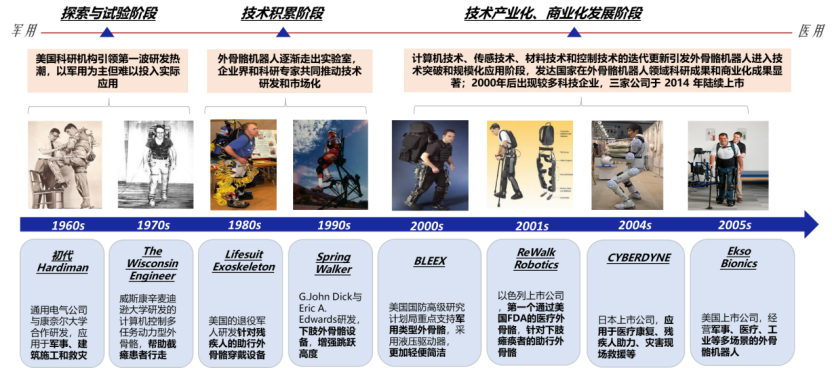
The Evolution of Exoskeleton Robots: From Military to Medical Applications
Source: Fuxi Lab, VCBeat Research & Analysis
The development trajectory of China’s exoskeleton robot industry can be traced back to the entrepreneurial boom from 2015 to 2018, when pioneer companies such as Fourier Intelligence and DaAi Robotics overcame bottlenecks in prototype development and launched the first generation of lower-limb rehabilitation robots.
The major players in the Chinese market consist ofInnovative Enterprises and Traditional Rehabilitation CompaniesComposition. Innovative enterprises are primarily led by universities or research institutes, which generate technical proposals and gradually develop them into scientific achievements. These outcomes are then commercialized through incubated enterprises that handle compliant product design, manufacturing, and a series of regulatory reviews before finally launching them into the market. In contrast, traditional rehabilitation companies conduct independent research and development. For instance, the listed company Vishee Medical has developed products through in-house R&D that are suitable for patients with lower limb motor dysfunction caused by central nervous system injuries. The company has also established a Sports Rehabilitation Division to actively promote the marketing and sales of its products.
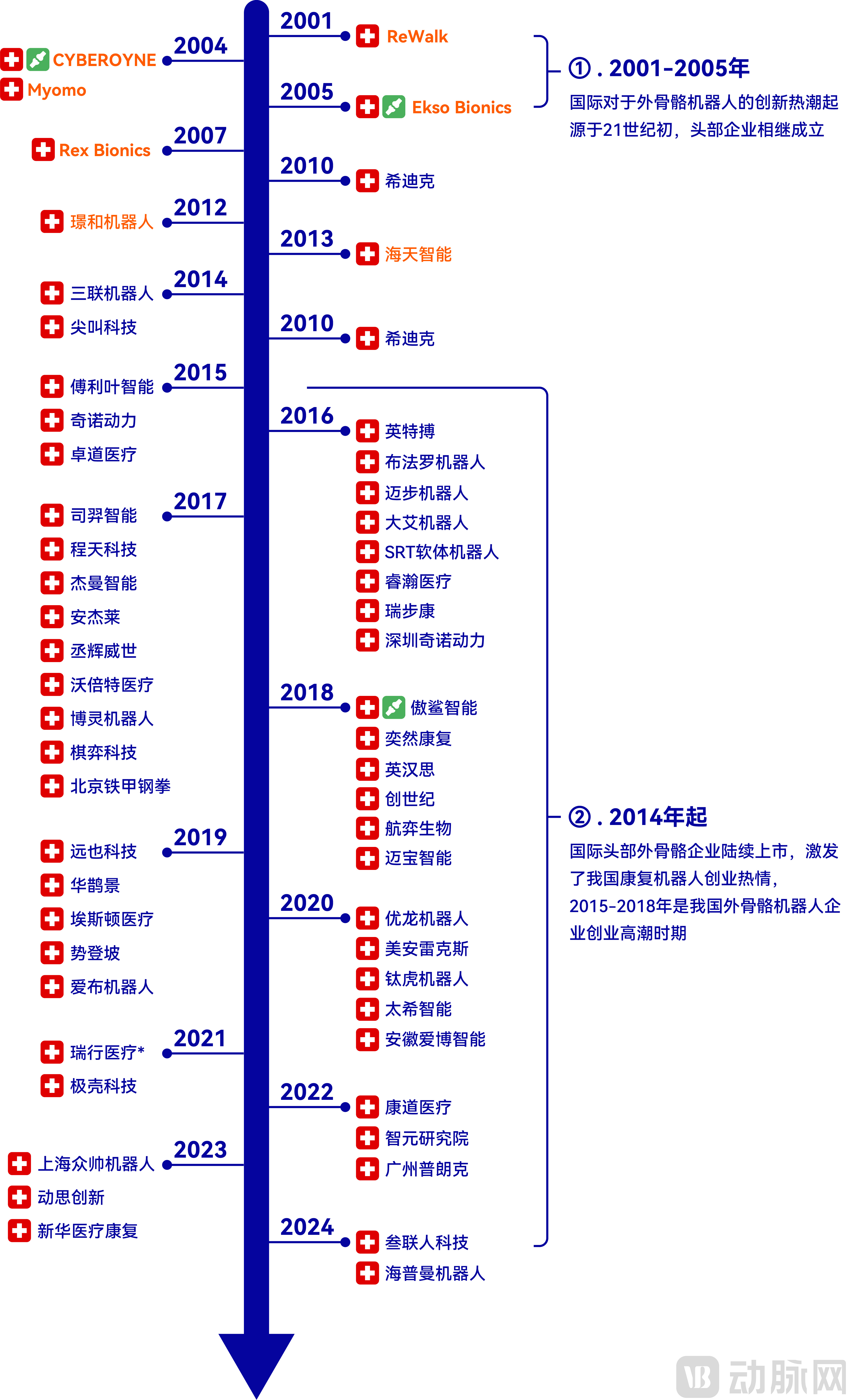
Major Players in the Exoskeleton Robot Industry
Source: Fuxi Laboratory, VCBeat Research and Analysis
After 2018, as domestically produced exoskeleton robots successively obtained NMPA certification, the industry entered a stage of standardized development. Since 2021, relevant approval processes have further accelerated, and companies have officially entered into commercial competition.
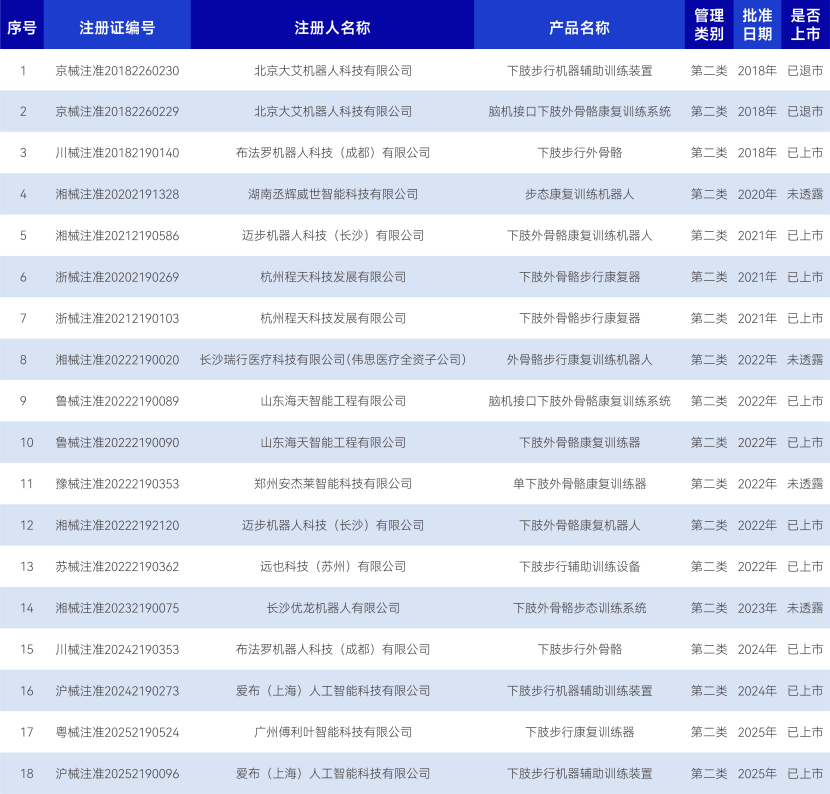
Exoskeleton Robot Products Approved as Class II Medical Devices in China to Date
Source: Fuxi Lab, VCBeat Research & Analysis
However, the early commercialization of exoskeleton robots faces three major challenges:Technical Level, domestic enterprises have immature mass-production technologies, core components are highly dependent on imports, and the supply chain has a low level of maturity, leading to high retail prices for end products;Payment Level, inadequate health insurance coverage with reimbursement limited to only a few regions, and significant barriers imposed by public procurement agencies;Application Level, with limited use cases and low consumer awareness of the products and technology, the consumer market remains niche due to high prices.
This landscape is now beginning to shift. Driven by the synergistic effects of policy support, technological breakthroughs, scenario expansion, and capital infusion, the industry has entered a critical phase of accelerated commercialization.
Policies focus on technological breakthroughs, market cultivation, and standard developmentand other aspectsStrongly Support the Development of the Exoskeleton Robot IndustryIn 2021, the Ministry of Industry and Information Technology (MIIT) issued the “14th Five-Year Plan for the Development of the Robotics Industry,” proposing to “expand the application of service robots in fields such as medical rehabilitation, elderly care, and assistance for persons with disabilities.” In 2023, the MIIT released the “Implementation Plan for the ‘Robotics+’ Application Initiative,” explicitly stating the need to “actively promote the application validation of exoskeleton robots, elderly care and nursing robots, and other technologies in elderly care service scenarios.” In 2024, the General Office of the State Council issued the “Implementation Plan on Developing the Silver Economy and Enhancing the Well-being of the Elderly,” reiterating the prioritization of intelligent rehabilitation equipment as a key area for development. In 2025, the General Offices of the Ministry of Industry and Information Technology and the Ministry of Civil Affairs jointly issued the “Notice on Launching Paired Research and Development and Scenario-Based Application Pilots for Intelligent Elderly Care Service Robots,” proposing the phased implementation of a batch of R&D and application pilot projects for intelligent elderly care service robots to empower smart elderly care services and drive the growth of the silver economy.
Policy guidance for technological innovation is deepening at successive levels.Initially, the focus was on foundational technological systems such as robotics and human-machine-electromechanical integration. In recent years, the emphasis has gradually shifted toward cutting-edge fields like brain-computer interfaces and artificial intelligence. Taking the Guiding Opinions on the Innovative Development of Humanoid Robots as an example, it establishes phased breakthrough objectives—initially establishing an innovation system by 2025 and achieving significant breakthroughs in core technologies by 2027—highlighting policy incentives for continuous technological advancement within the industry.
Local governments have also rolled out supporting policies., such as establishing special funds to support the research and development of exoskeleton robots and deploying exoskeleton robots in scenic areas, so as to provide full-chain support for industrial development from R&D and application to market promotion.Medical Insurance and Subsidy Policies Become the Core Driver of Industry ExpansionTaking the policies of Shanghai and Guangzhou as examples, both cities have adopted a mechanism combining “community leasing pilots for rehabilitation assistive devices” with a “subsidy catalog for high-end products.” This approach reduces the cost for consumers to use rehabilitation products such as exoskeleton robots, enhances product accessibility, thereby stimulating market demand, accelerating product commercialization, and driving industry development.
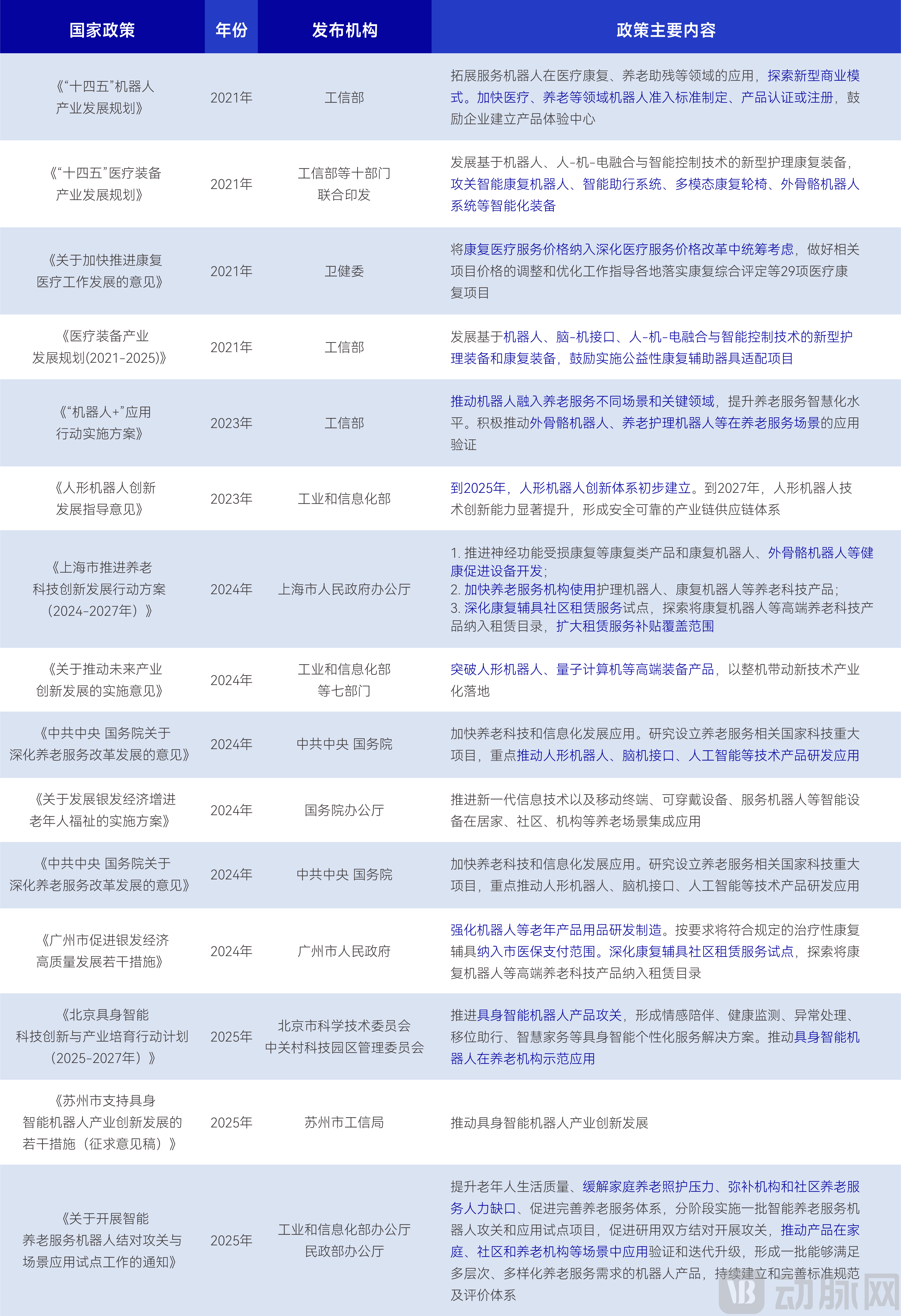
Overview of Policies Related to Exoskeleton Robots
Source: Fuxi Laboratory, VCBeat Research and Analysis
Exoskeleton robots, as intelligent wearable devices that integrate multidisciplinary technologies, primarily consist of the following technical modules: sensing system, control system, actuation system, and mechanical structure.Sensing SystemGait information or movement intentions of the user are collected through sensors distributed at various locations on the exoskeleton, which are categorized into physical quantity sensors, biological quantity sensors, and electroencephalogram (EEG) signal sensors;Control SystemBy analyzing feedback data from the sensing system and planning gait patterns, control is implemented over the drive system to coordinate the smooth operation and timely response of various subsystems, including modules such as the main system unit, signal acquisition board, motor driver board, and power management. Among these, real-time human-machine interaction and control constitute the core technical challenge;Drive SystemTo power exoskeleton robots, various actuation methods have emerged in the market, including motor-driven, hydraulic, pneumatic, series elastic actuator (SEA), and pneumatic artificial muscle systems. Among these, motor-driven actuation has become mainstream due to its improved power-to-weight ratio. Although domestic servo motors lag behind imported counterparts in precision, they basically meet the current R&D requirements for domestically produced exoskeletons. In the future, driven by the industrial upgrading of China’s servo motor sector, there is substantial room for import substitution with domestically manufactured alternatives.Mechanical StructureIt provides a supporting framework that simulates the biomechanics of human joint movement, establishes a mechanical connection with the human body to transmit power, and ensures stability and flexibility during motion. Material selection influences structural design; currently, exoskeletons available on the market are categorized into rigid exoskeletons and soft exoskeletons based on their primary structural materials.
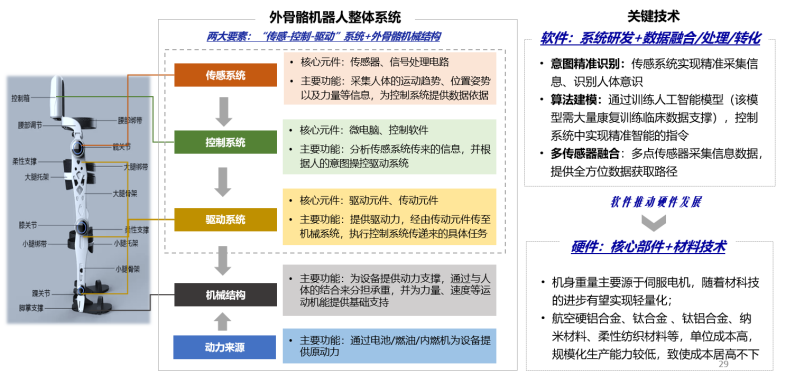
Key Technical Modules of Exoskeleton Robots
Source: Fuxi Laboratory, VCBeat Research and Analysis
Currently, the development of exoskeleton robot technology is exhibiting three major trends.In the Field of Deep Integration of Intelligence and AI, machine learning optimizes gait prediction models, and AI algorithms enable dynamic adaptive control. Japan’s Cyberdyne HAL exoskeleton achieves mind-controlled operation through a brain-computer interface, while the “Taishan AsExo-TK1000” from Zhiyuan Research Institute leverages “growth-type algorithms” to analyze motion data in real time and learn user movement patterns, achieving an action prediction accuracy of 99.2%.In the Process of Lightweighting and FlexibilizationHigh-performance composite materials, such as flexible actuators and carbon nanotubes, are driving exoskeletons toward a “skin-like” form factor. The 2.5 kg flexible rehabilitation exoskeleton by Maibu Robotics and the 1.8 kg mountaineering assist robot by Kenqing Technology have significantly enhanced wearing comfort and portability.In terms of energy technology innovation, solid-state batteries (with an energy density exceeding 400 Wh/kg) and wireless charging technology have entered the testing phase, while hybrid power solutions combining hydrogen fuel cells and supercapacitors have achieved application breakthroughs in the military sector.
Enterprises Need to Build a Composite Technological Moat with Software-Hardware Synergy, while possessing expertise in software system development and hardware integration technologies such as intent recognition, analysis, and judgment, and improving product manufacturing processes to ensure consistent and stable product performance, further reducing production costs to penetrate the mass market.
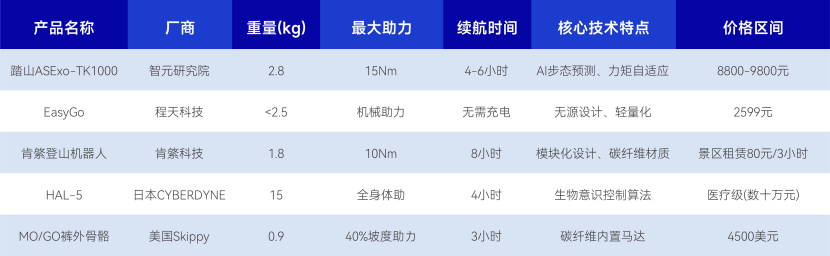
Comparison of Technical Parameters of Representative Exoskeleton Robots in 2025
Source: Guojin Securities, “Research on the Exoskeleton Robot Industry: A Vast Market with Accelerating Commercialization,” compiled by Fuxi Laboratory
With breakthroughs in artificial intelligence algorithms and high-precision sensor technologies, as well as the application of lightweight materials such as carbon fiber and titanium alloys, exoskeleton robots have formedMedical Rehabilitation, Sports Assistance, Industrial Augmentation, Military OperationsFour Core Application Areas.
In the field of medical rehabilitation, exoskeleton robots are emerging as a key solution to address resource misallocation. According to data from China Science Daily, in 2024, China had only 3.57 rehabilitation therapists per 100,000 people, leaving a talent gap of more than twofold relative to the target set by the National Health Commission’s “Opinions on Accelerating the Development of Rehabilitation Medical Services,” which aims for 12 rehabilitation therapists per 100,000 people by 2025.
Meanwhile, China’s rehabilitation medical system is widely grappling with the issue of outdated equipment in rehabilitation departments. According to data from the National Health Commission, 65% of rehabilitation departments currently have low levels of automation and intelligence in their equipment. This not only creates a heavy reliance on therapists’ manual operations but also lacks real-time feedback on rehabilitation outcomes and intuitive data collection methods, resulting in suboptimal rehabilitation efficacy and generally low patient satisfaction.
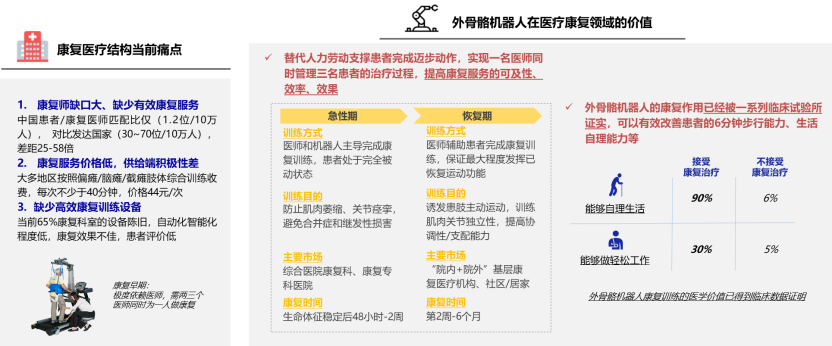
The Application Value of Exoskeleton Robots in the Field of Medical Rehabilitation
Source: Fuxi Laboratory, VCBeat Research and Analysis
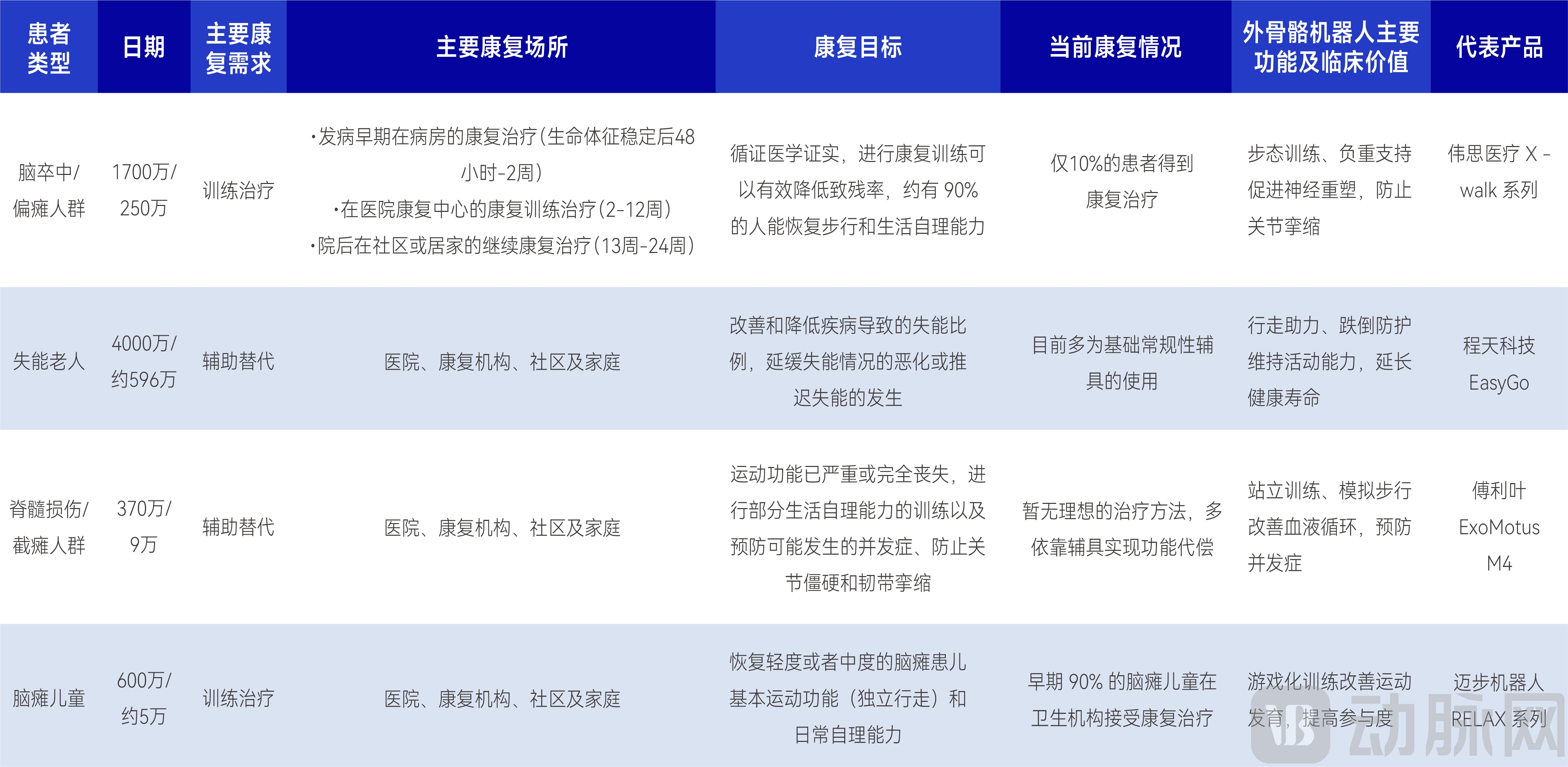
Target Population for Exoskeleton Robots in the Field of Medical Rehabilitation
Sources: Fuxi Lab, VCBeat Research & Analysis; Guojin Securities, “Research on the Exoskeleton Robot Industry: A Vast Market with Accelerating Commercialization”
With rising health awareness, patients are no longer satisfied with basic rehabilitation needs and have begun to demand higher efficiency, comfort, and personalized services. This trend is driving breakthroughs in exoskeleton robotics toward intelligence, lightweight design, and home-based applications, addressing the limitations of traditional rehabilitation training, such as insufficient standardization of intensity, highly subjective progress assessment, and prolonged treatment cycles.
Furthermore, the growing demand for diverse application scenarios, such as mountaineering and hiking, has opened up new market spaces for the exoskeleton robotics sector., thereby driving industry players to accelerate technological innovation and enrich their product portfolios.
Representative 5A-level scenic spots, including Mount Tai (Shandong), Enshi Grand Canyon (Hubei), Baiyun Mountain (Guangdong), and Wugong Mountain (Jiangxi), are systematically deploying intelligent exoskeleton devices. By utilizing lightweight, long-endurance outdoor exoskeleton robots, these sites are upgrading the tourist experience to ensure more comfortable mountain climbing.
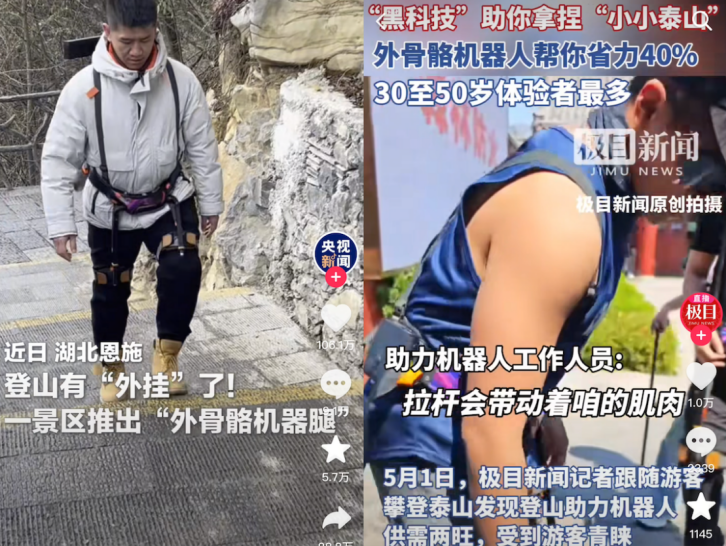
According to incomplete statistics, exoskeleton robots have been deployed in approximately 36 scenic areas across China.
Source: Fuxi Lab, VCBeat
Capital moves at the scent.
VCBeat’s database shows that since 2017, investment firms and corporations have been increasingly betting on exoskeleton robotics companies.Over the past two years, financing enthusiasm in the exoskeleton robotics sector has risen significantly.Since 2024, there have been more than 10 financing cases worldwide, with a total amount exceeding RMB 1 billion,Diversified Investment Landscape, including government-backed institutions such as Zhangjiang Sci-Tech Investment and Pudong Capital, as well as market-oriented investment firms like Binfu Capital and Dunhong Assets. The participation of state-owned capital reflects strategic guidance and support at the policy level for this sector, accelerating technological innovation and industrial upgrading through capital injection. Meanwhile, the involvement of diversified investment institutions is primarily driven by optimism regarding the market size prospects of exoskeleton robots and the growth potential of enterprises. Key drivers include continuous technological iterations (such as intelligent control and material optimization) and the steady growth in demand across application scenarios like rehabilitation, mobility assistance, and industrial use, indicating sustained market expansion and promising continued active financing activities.
In 2025, the financing pace of exoskeleton robot startups has significantly accelerated.Capital infusion empowers enterprises to expand their product lines, upgrade core technologies, and enhance global competitiveness, effectively shortening mass production cycles and driving market scale growth. Representative cases include Augmented Human Intelligence (AHI), which completed a tens-of-millions-yuan Series B financing round on May 8, 2025, with funds primarily directed toward diversifying consumer-grade products, optimizing core algorithms, and expanding its global footprint to strengthen the synergistic development of industrial and consumer markets. Chengtian Technology secured nearly RMB 100 million in Series B financing in March of the same year, with proceeds allocated to iterating exoskeleton technology, researching brain-computer interfaces, expanding production bases, and exploring overseas markets, thereby accelerating the practical application of solutions in rehabilitation, elderly care, and consumer scenarios. These developments not only highlight the catalytic role of capital in industry innovation but also lay a solid foundation for future market expansion.
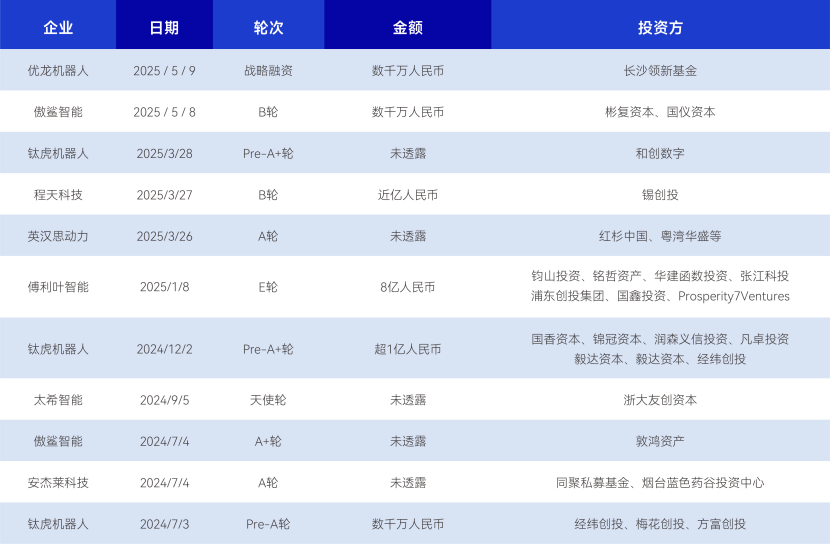
Major Investment and Financing Events in the Exoskeleton Robotics Sector Since 2024
Source: Fuxi Laboratory, VCBeat Research and Analysis
Based on the funded companies and use of funds in 2025, the R&D, mass production, and market promotion of consumer-grade exoskeleton robots, along with the deep integration of exoskeleton robot hardware and AI technology, have become the core focus of capital attention.
Powered by capital infusion, the exoskeleton robot industry is rapidly developing. By building core technological barriers and differentiated competitive advantages, it is accelerating product commercialization while facilitating supply chain integration.
Fuxi Laboratory, as a provincial-level innovation laboratory and a leading research and incubation platform in China’s silver economy health industry, focuses on insight-driven research, project incubation, age-friendly design, industry standard-setting, and ecosystem building for the elderly population and the silver health sector. It is committed to providing health solutions with Chinese characteristics for China’s aging population.
As the exoskeleton robot industry enters a critical phase of development, the systematic research conducted by Fuxi Laboratory will provide valuable insights for the sector. In the future, Fuxi Laboratory will join forces with VCBeat to empower industrial growth from multiple dimensions.