

China's Biopharmaceutical Rise: A Strategic Challenge to U.S. Leadership
In April this year, the U.S. National Security Commission on Emerging Biotechnology (NSCEB) released a highly significant report.Titled “Charting the Future of Biotechnology,” this report provides the first comprehensive assessment of the global competitive landscape facing U.S. biotechnology from the perspective of national security, identifying China’s biopharmaceutical industry as the most strategically challenging competitor.
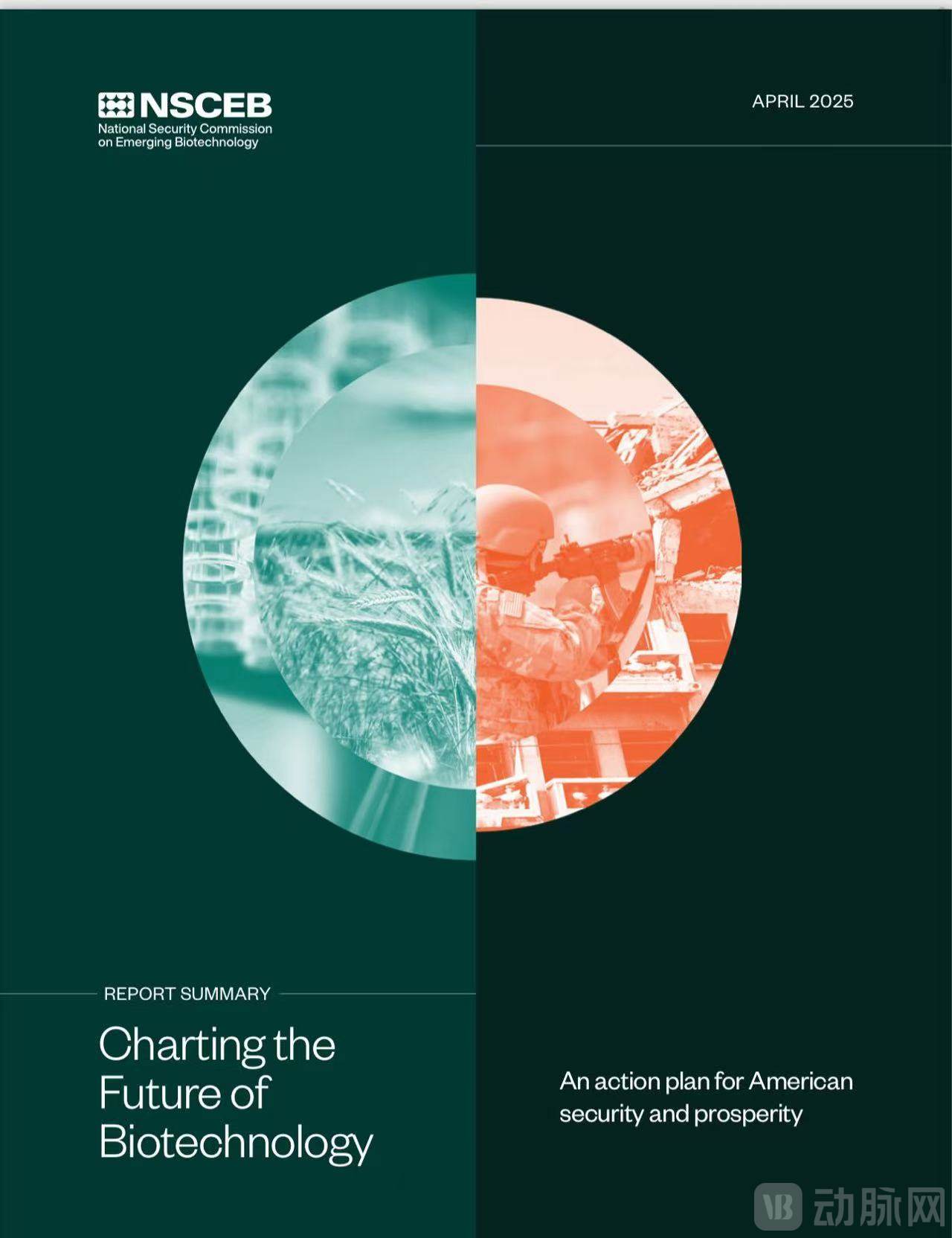
The report uses strong language, explicitly stating: “China has made biotechnology a national strategic priority over the past two decades, investing resources on a large scale to achieve significant catch-up in multiple core areas of biotechnology, thereby posing a direct challenge to U.S. dominance.”
NSCEB cites multiple industry data points, noting that China has built a comprehensive biotechnology ecosystem—from R&D to manufacturing—through 20 years of policy support, industrial cluster development, and capital-driven growth.
Some data include:
- Surge in the Market Capitalization of Chinese Biotech Companies: From 2016 to 2021, the market capitalization of Chinese biotech enterprises grew 100-fold, reaching approximately $300 billion, making China the world’s second-largest biotech market after the United States;
- In 2010, the United States accounted for 45% of the world's highly cited synthetic biology papers, while China accounted for only 13%; by 2023, China had surpassed the United States, accounting for 60%, compared to just 7% for the United States;
- In 2024, a survey by U.S. industry associations revealed that 79% of U.S. biopharmaceutical companies rely on Chinese firms (such as WuXi AppTec) to participate in their production processes;
- From 2014 to 2022, up to 28% of the United States’ active pharmaceutical ingredient (API) imports originated from China; for commonly used medications such as ibuprofen, acetaminophen, and hydrocortisone, more than 90% of imports came from China;
- China has established over 100 biotechnology R&D parks and 17 industrial clusters, forming a large-scale, systematic R&D ecosystem
……
The report even states that “national team” enterprises such as WuXi AppTec and BGI are becoming the “Huawei of biotechnology,” possessing the capability to establish a dominant position in the global supply chain.
Almost simultaneously, TIME published an article titled “The U.S. Can’t Afford to Lose the Biotech Race with China,” portraying China as a “systemic challenger” to America’s hegemonic position in biotechnology. Axios also noted in a report titled “China's biotech boom leaves U.S. playing catch-up” that China is becoming “key to global drug development.”
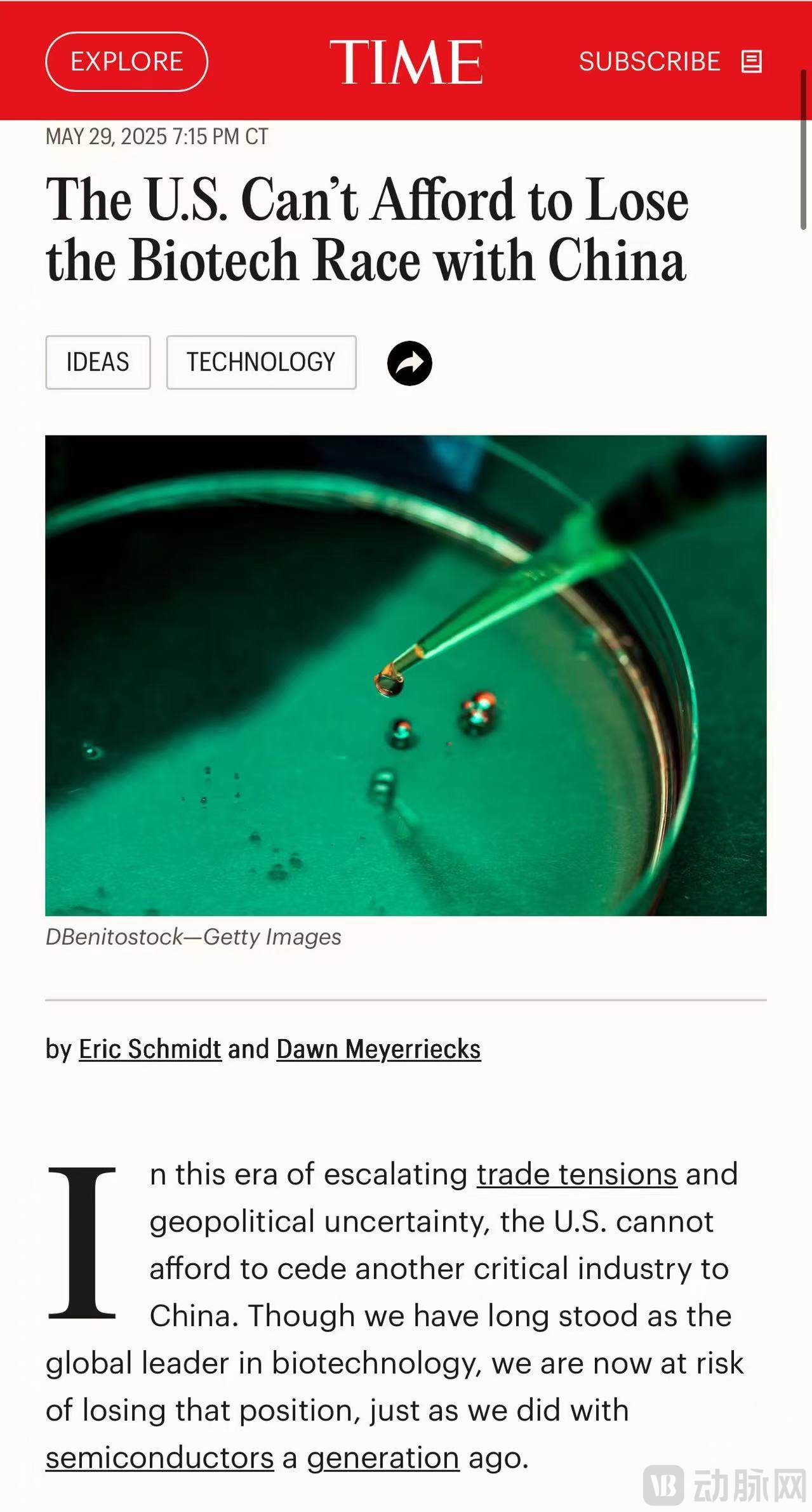
From the U.S. perspective, China is no longer merely a low-cost contract manufacturer or a fast follower; it has emerged as a technological power capable of threatening America’s industrial leadership.
However, despite the U.S. government’s frequent warnings about the risks posed by the rise of China’s biotechnology sector, actual transaction trends from 2024 to 2025 tell a different story: Chinese innovative drugs are being acquired on a large scale by U.S. companies.
According to GlobalData statistics, the total value of licensing deals between multinational corporations (MNCs) and Chinese biotech companies reached $41.5 billion in 2024, a 66% increase from 2023, setting a new historical record. Even when focusing solely on China–U.S. transactions, the total value of business development (BD) deals rose from $15.7 billion to $21.3 billion. These transactions involved a cohort of innovative Chinese pharmaceutical companies, including Akeso, Hengrui Medicine, Biocytogen, Zai Lab, Lepu Medical, and BeiGene, with products spanning hot therapeutic areas such as antibody–drug conjugates (ADCs), bispecific antibodies, metabolic diseases, and cardiovascular RNAi therapies.
Chinese companies are offering candidate drugs with superior cost efficiency, faster development progress, and significant potential, while multinational corporations (MNCs), facing aging pipelines and weak local R&D capabilities, are in urgent need of external innovation.
In other words, it is precisely at a time when the U.S. biotech ecosystem is generally sluggish that China has emerged as the protagonist in a “seller’s market.” Data from DealForma show that among licensing agreements with upfront payments exceeding $50 million to date in 2025, Chinese companies account for 42%, meaning nearly one out of every two such deals originates from China. This represents a structural shift that is difficult to ignore.
In such a complex environment, China’s biopharmaceutical sector has become increasingly nuanced in the eyes of the United States.
What Americans first became alert to was the “inversion” in the number of clinical trials.
Citing data from GlobalData, Axios reported that in 2024, the number of clinical trials conducted in China surpassed that of the United States for the first time, reaching over 7,100 compared to approximately 5,900 in the U.S. This inflection point marks the first role reversal between China and the U.S. on the main battlefield of new drug development.
According to the analysis released by BBLSA (“Exploring the US-China Biotech Boom”), Chinese biopharmaceutical companies accounted for approximately 27% of the global market share of R&D candidate assets in 2024.
This trend reflects not only growth in quantity but also a shift in quality and structure. Axios points out that Chinese biotechnology companies have evolved from being “followers” who primarily replicated U.S. R&D outcomes to innovators capable of independently developing novel therapies, which have the potential to achieve dominance in areas such as cancer treatment and autoimmune diseases.
Chinese biopharmaceutical companies are not only “doing more,” but also “starting to tackle harder challenges.”
Chinese enterprises have gradually accumulated independent intellectual property rights and experience in conducting international multi-center clinical trials. BeiGene’s BTK inhibitor, zanubrutinib, became the first new molecular entity independently developed in China, with global clinical trials led by a Chinese company, to gain FDA approval after completing its pivotal global Phase III registration trials. Akeso’s PD-1/VEGF bispecific antibody demonstrated superior efficacy compared to Merck’s Keytruda in treating patients with advanced lung cancer in a global Phase III trial, making it one of the most closely watched clinical studies worldwide.
There are many similar cases. SGLS-102, a fully human antibody developed by 3SBio, has entered the NDA review process in the United States; Zai Lab’s PARP inhibitor has been granted Priority Review by the FDA; and Innovent Biologics and Junshi Biosciences have accelerated their global registration efforts through collaborations with Eli Lilly and Coherus, respectively. These developments indicate that the pathway of “globally applicable original research products” from Chinese enterprises is being validated by the market.
Over the past decade, the U.S. pharmaceutical industry has become increasingly reliant on China’s biopharmaceutical manufacturing sector. Particularly in key intermediates for biologics, active pharmaceutical ingredients (APIs), and sterile formulation processes, Chinese CDMOs—such as WuXi AppTec, Asymchem, STA Pharmaceutical, and Porton Pharma Solutions—have established globally leading manufacturing capabilities and delivery networks.
According to Evaluate Pharma data, Chinese companies accounted for five of the top 20 global CDMOs in 2024, gradually establishing a technical barrier advantage in integrated services spanning early-stage development, pilot-scale production, and commercial manufacturing of innovative molecules. WuXi AppTec’s revenue approached RMB 40 billion in 2024, with its client base covering nearly all Top 20 pharmaceutical companies, including Pfizer, Johnson & Johnson, Merck & Co., and AstraZeneca.
Meanwhile, China’s industrial infrastructure is undergoing rapid upgrades. According to data released by CBRE in April 2024, Beijing and Shanghai surpassed traditional pharmaceutical hubs such as Boston and London for the first time in terms of newly added area for laboratory and R&D facility construction, becoming key destinations for international pharmaceutical companies’ overseas deployment. This shift reflects not only land availability and policy support, but also systemic capabilities encompassing laboratory infrastructure, supporting facilities, and upstream and downstream supply chains.
Chinese CDMO companies not only serve multinational pharmaceutical firms in commercial manufacturing but also deeply engage in early-stage drug development, CMC processes, and global regulatory support, with their share of international revenue rising year by year.
However, this needed reality has also triggered anxiety on the U.S. side.
In the NSCEB’s assessment, U.S. reliance on China’s critical drug production capacity has been characterized as a “national security vulnerability,” with recommendations to incorporate “biomanufacturing infrastructure” into the National Critical Technology Framework and to advance the reconstruction of a domestic biopharmaceutical manufacturing system.
On the one hand, the NSCEB believes that the United States is overly reliant on China for the supply of critical drugs and active pharmaceutical ingredients (APIs), posing a national security risk. On the other hand, the NSCEB points out that domestic biomanufacturing capacity in the United States is insufficient to support the large-scale development and industrial application of emerging biotechnologies, necessitating accelerated investment and expansion in bioreactors, infrastructure, and specialized talent reserves.
On one hand, policy risks are rising and concerns over industrial security are spreading; on the other, actual transactions remain active and cooperation has reached unprecedented depth.
Blockbuster deals continue to emerge. For instance, Akeso partnered with Summit Therapeutics, and 3SBio struck a deal with Pfizer. Meanwhile, Biocytogen, BeiGene, Zai Lab, and Lepu Medical have also secured multi-hundred-million-dollar agreements with pharmaceutical giants such as Pfizer, Merck & Co., and GSK.
Amid intensifying domestic competition and mounting payment pressures, Chinese companies are increasingly relying on overseas expansion for monetization, while multinational pharmaceutical firms, facing aging R&D pipelines and declining local efficiency, are heavily dependent on Chinese partners to provide high-quality assets.
Deeper integration is reflected in the comprehensive coupling across the entire value chain, including R&D, clinical trials, and manufacturing. China serves not only as a critical component for global pharmaceutical companies to reduce R&D costs but also as a core pillar for enhancing the efficiency of new drug development.
Meanwhile, Chinese-funded enterprises are also advancing toward global collaborative R&D. Since 2024, some Chinese and U.S. companies have begun experimenting with “dual-track regulatory submissions,” wherein registration dossiers for the same candidate drug are submitted simultaneously to the FDA and the NMPA, thereby establishing a new model of “joint R&D and concurrent approval across Eastern and Western markets.”
Even in some early- to mid-stage projects, Chinese companies serve as the global project lead, with U.S. partners acting solely as regional regulatory and commercialization collaborators.
Meanwhile, some Chinese companies also require retaining the rights to global clinical development during licensing, such as Baili Tianheng’s ADC asset transaction and subsequent collaboration with BMS.
This has made the advancement of “decoupling” in the biopharmaceutical sector increasingly difficult. Instead, a “symbiotic system” is taking shape: China provides manufacturing, data, clinical trials, and early-stage pipelines, while the United States offers regulatory oversight, branding, and market access windows. This is a form of game-theoretic cooperation: marked by mutual wariness yet characterized by deep interdependence.
Reliance on early-stage pipelines from Chinese biotechnology companies has also raised concerns within the U.S. industry.
In a Stat News column, former U.S. FDA Commissioner Scott Gottlieb pointed out that the high cost of drug development in the United States, particularly during Phase I clinical trials, along with regulatory barriers, is driving the gradual shift of pharmaceutical operations to China.
Scott Gottlieb stated, “When U.S. pharmaceutical companies import drug compounds from China, they are effectively diverting funds that should have been used to support innovation hubs such as Kendall Square in Boston or the Research Triangle Park in North Carolina.”
It also points out that if the United States hopes to narrow the gap with China in the global biopharmaceutical competition, it must take the lead in breaking through in the early-stage clinical research phase.
He particularly emphasized that AI algorithms and real-world data (RWD) should be fully leveraged to optimize trial design, lower enrollment barriers, and accelerate the entry of candidate drugs into clinical stages, thereby helping the U.S. industry regain its competitive edge.
China’s rapidly advancing biopharmaceutical industry has finally triggered comprehensive alarm bells in the United States.
“The U.S. biotechnology industry was once the envy of the world, but if we are not cautious, any drug could end up being manufactured in China.”
TIME went further, stating: “Decades ago, we failed to maintain our position as the global leader in semiconductor manufacturing. This mistake has required us to take extremely costly, difficult, and uncertain measures to make up for the loss. Today, as we face similar risks in the field of biotechnology, we must not make the same mistake again.”
The NSCEB has proposed a “dual-track strategy,” advocating that the United States should accelerate domestic biotechnological innovation while taking measures to curb China’s rapid development in the biotechnology sector.
NSCEB calls for the establishment of an independent investment fund, managed by an independent operator, to specifically support biotech startups that possess national security value but currently lack mainstream capital backing, thereby preventing them from falling into the hands of competitors due to foreign investment gaps.
Furthermore, the NSCEB explicitly stated that there is a “serious disconnect” between the U.S. intelligence community and the biotechnology industry, with many corporate executives not even informed of the sources of risks and external threats they face. The NSCEB recommended that the U.S. government establish an interagency information coordination mechanism, allow scientifically literate officials to participate in intelligence declassification and corporate dialogues, and promote “on-demand visibility” for intelligence sharing, thereby enabling companies to make strategic adjustments at the board level.
In fact, the true “dual-track” approach may not be entirely within the control of the U.S. government. While the U.S. government emphasizes “risk management” by restricting investments, technology exports, clinical collaborations, and dependence on active pharmaceutical ingredient (API) supplies from China, the American pharmaceutical industry remains compelled to continue relying on China’s manufacturing ecosystem, clinical capabilities, and technological partners.
At the policy level, the U.S. Department of Commerce and the Department of the Treasury have repeatedly discussed whether to include certain Chinese biotechnology companies on the “Sensitive Technology Entity List”; meanwhile, at the industry level, U.S.-based pharmaceutical companies, CRO giants, and even venture capital funds continue to actively seek commercial engagement with Chinese enterprises.
In 2025, the Hang Seng Healthcare Index in Hong Kong surged by 32%, while the NASDAQ Biotechnology Index fell by 15%. Endpoints News reported, “There is no doubt that China’s biotech sector has performed relatively well as the U.S. biotech industry struggles.”
Shifting policies, tightening regulations, capital withdrawal, aging pipelines, and geopolitical uncertainties have made it difficult for many U.S. biotech companies to secure financing, with some even facing delisting risks. This contrast has, in turn, driven industrial capital toward China.
Regardless of whether in China or the United States, innovation in the biotechnology industry has become increasingly challenging, while global biomedical collaboration is entering a new phase characterized by high risk, high reward, and heightened dynamism. Companies need to enhance their ability to assess geopolitical risks, adopt more flexible and diversified cooperation strategies, and may need to strengthen local operations to mitigate these risks.
This, in turn, determines that the next phase of competition between China and the United States will no longer be merely a contest of capital and technology, but rather a clash of development pathways and trust structures.