

Xiaoerfang Health and Beijing Children's Hospital Launch AI Pediatrician Pilot in Primary Care Setting
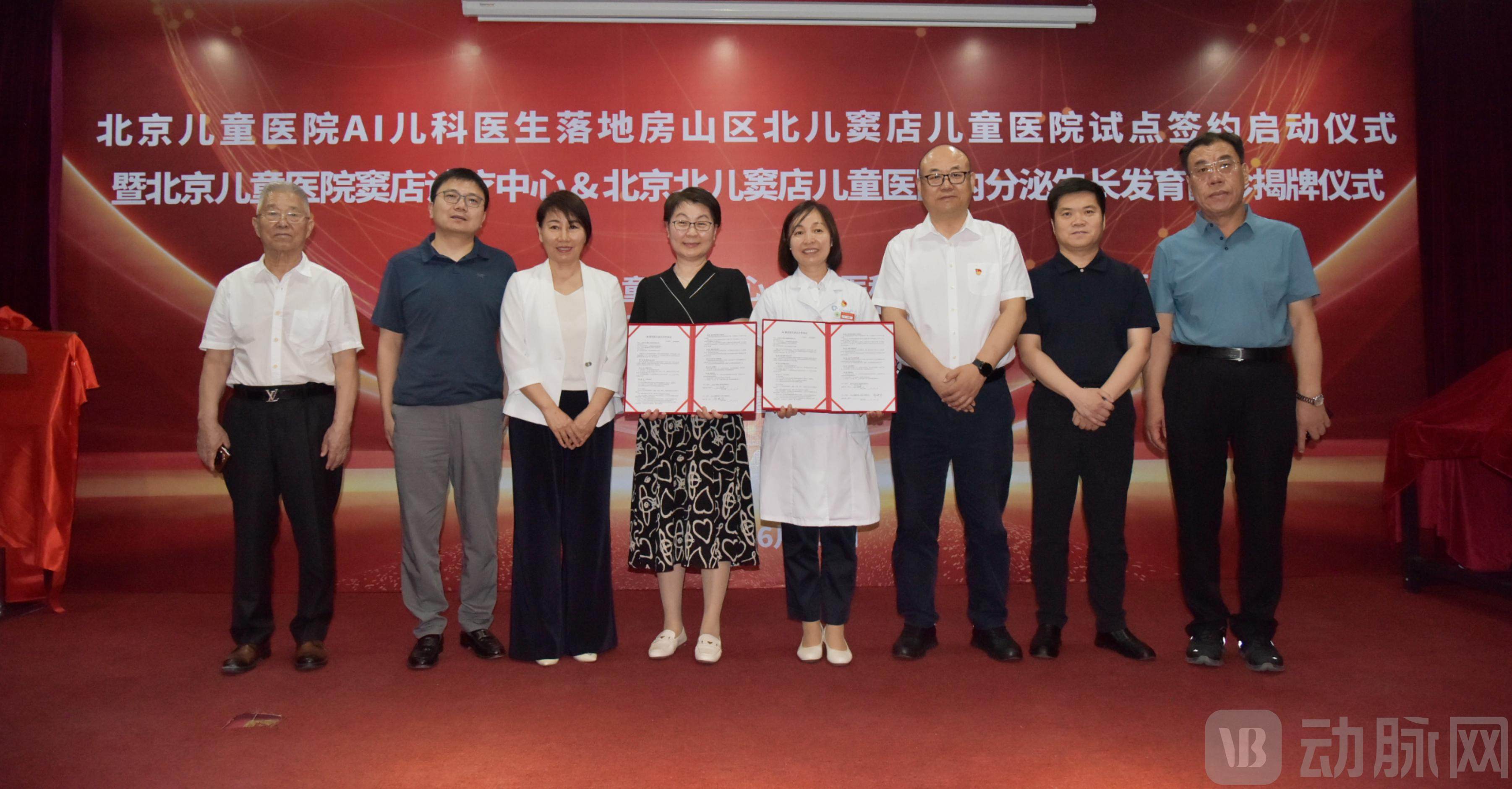
On June 11, Xiaoerfang Health Technology (Beijing) Co., Ltd., in collaboration with the National Center for Children’s Health and Beijing Children’s Hospital, Capital Medical University (hereinafter referred to as “Beijing Children’s Hospital”), officially introduced an AI pediatrician to Beijing Beier Doudian Children’s Hospital (hereinafter referred to as “Doudian Children’s Hospital”), a member of the close-knit pediatric medical consortium led by Beijing Children’s Hospital. This marks a critical step forward for this cutting-edge artificial intelligence healthcare application in grassroots hospitals in Beijing.
The AI Pediatrician (Primary Care Edition) deployed at Doudian Children’s Hospital leverages innovative platforms such as the “Beijing Key Laboratory of Pediatric Medical Large Models and Innovative Applications in Healthcare.” It integrates the clinical expertise of over 300 renowned specialists from Beijing Children’s Hospital and decades of high-quality, de-identified medical records to construct a comprehensive diagnostic and therapeutic knowledge base covering both common and complex pediatric conditions. Powered by natural language processing technology, the AI doctor simulates the evidence-based reasoning of professional pediatricians, conducts multi-turn clinical inquiries, and provides personalized diagnostic and treatment recommendations for pediatric patients. The hardware features include: dual-sided high-definition touchscreens enabling synchronized information visibility for physicians and parents; an integrated document camera for rapid digitization of paper-based medical records and laboratory reports; voice interaction with precise recognition capabilities supporting natural language consultations and automatic medical record generation; and an “out-of-the-box” all-in-one design that simplifies deployment and reduces operational and maintenance costs.
At the ceremony, physicians from Doudian Children’s Hospital demonstrated a dual-physician collaboration model featuring “human physician + AI physician.” After parents described their child’s symptoms, the AI system rapidly generated preliminary diagnoses, recommended laboratory and imaging tests, and proposed treatment plans to assist physicians in clinical decision-making. It is understood that the primary-care version of the AI pediatrician currently includes a consultation module with four core functions: proactive questioning, test recommendation, diagnostic recommendation, and treatment plan recommendation. In addition to the existing consultation module, three further modules are planned: referral management, physician training, and patient education.
Zhao Chengsong, Vice President of Beijing Children’s Hospital, stated that Doudian Children’s Hospital is a key pilot site for the grassroots version of the AI pediatrician. As the supporting institution, Beijing Children’s Hospital will continue to provide comprehensive technical service support to ensure it meets grassroots needs to the greatest extent possible. Subsequently, Beijing Children’s Hospital will launch promotion efforts across 12 member institutions of the Beijing Pediatric Medical Consortium. This initiative represents an important practice in making high-quality pediatric resources universally accessible at the grassroots level. By empowering primary healthcare through the “Dual-Physician Model,” it aims to enhance the quality and efficiency of children’s health services.
It is reported that Xiaoerfang Health Technology will collaborate with Beijing Children's Hospital to pilot initiatives across various settings, including National Regional Medical Centers, pediatric medical consortia, county-level Grade A tertiary hospitals, and community hospitals. By leveraging cloud-based or localized deployment and adopting a "dual-doctor" model featuring "real physicians + AI physicians," the partnership aims to empower and enhance the capacity of pediatric diagnosis and treatment throughout China.