

Recombinant Collagen Protein Industry Rebounds from Huaxi-Juzi Commercial Dispute Crisis: Innovator Submits IPO Filing Highlighting AI-Driven Bioactive Solutions

Giant Biogene
Skin Care Product R&D Developer
A “commercial war” has erupted between two leading skincare companies over recombinant collagen.
On May 24, 2025, the blogger “Dr. Dazui” (Hao Yu) questioned the authenticity of the recombinant collagen content in Giant Biogene’s product, Comfy Collagen Stick. On June 1, 2025, the incident gained support from Bloomage Biotech, sparking significant discussion within the industry. On June 4, 2025, Giant Biogene officially published a statement on its corporate WeChat account, releasing a series of test reports and data.
The controversy is far from over. “Dr. Big Mouth” has primarily challenged Giant Biogene regarding the dosage of its recombinant collagen and argued that “peptides” should not be labeled as recombinant collagen. This commercial dispute has sparked questions about regulatory standards in the skincare market, placing recombinant collagen at the center of public scrutiny.
The trust crisis triggered by this incident has also spread to the overall recombinant collagen market, giving rise to doubts about the efficacy of recombinant collagen.
Recombinant Humanized Collagen is a source of pride for China’s scientific and technological community. It holds a leading position in the global industrial landscape. Currently, its industrialization remains in a blue-ocean stage, with immense potential.
A biomanufacturing investor stated, “The biomanufacturing industry is a key priority under national strategic support. Recombinant collagen represents a core segment within biomanufacturing—a high-growth track that combines consumer and serious medical attributes. With diverse application scenarios, it holds significant strategic importance across multiple fields, including biopharmaceuticals and medical devices.”Skepticism arising from commercial conflicts between companies does not negate the value of recombinant collagen, which should not be “unfairly discredited.” In serious medical applications, recombinant collagen still holds vast potential worth exploring.”
“True gold fears no fire.” Although this controversy has brought short-term negative impacts to the recombinant collagen industry, it will also promote greater transparency and standardized regulation within the sector. In the future, companies that focus on technological innovation and possess core competencies will enjoy a competitive advantage, while the overall business environment will be further purified. Leveraging its regenerative properties, recombinant collagen is poised to create another multi-billion-dollar market in serious medical applications.
In commercial competition, hyaluronic acid and recombinant collagen are often compared. In the medical aesthetics and skincare markets, although there is some overlap in the application scenarios of collagen and hyaluronic acid, they do not compete in the same segment, as they play entirely different roles in the human body.
Hyaluronic acid is a polysaccharide, whereas collagen is a protein; this difference in composition is the fundamental reason for their distinct physicochemical properties and biological activities.Hyaluronic acid primarily functions in tissue hydration and moisture retention, maintaining skin elasticity and water content within the dermis. It is also widely present in the human body’s extracellular matrix, vitreous humor of the eye, and synovial fluid of joints, where it performs critical physiological roles such as water retention, lubrication, and promotion of cellular repair. The total amount of hyaluronic acid in the human body is approximately 15 grams.
In contrast, collagen serves as a structural support within the extracellular matrix and is an indispensable component of the human body. It is the most abundant and widely distributed protein in mammals, accounting for approximately one-third of the total protein content in the human body. Collagen plays a crucial role in maintaining and supporting the normal physiological functions of cells, tissues, and organs, as well as in tissue repair following injury.
This protein, which serves as a “foundational scaffold” and “repair engine” across multiple systemic organs, finds its functional manifestation particularly evident in the skin—an organ closely linked to human appearance and barrier function.
Dr. Liu Caiyue, Associate Chief Physician and Master’s Supervisor in the Department of Plastic and Reconstructive Surgery at Shanghai Ninth People’s Hospital, Shanghai Jiao Tong University School of Medicine, stated: “Collagen accounts for approximately 70%–80% of the dry weight of human skin and is the core component responsible for maintaining skin elasticity and firmness. With aging, collagen gradually depletes, leading to issues such as skin laxity and fine lines. The skin primarily contains Type I collagen (accounting for 80%–90%) and Type III collagen (approximately 10%–15%). The former supports skin structure, while the latter maintains flexibility. Type I collagen provides robust structural support and high tensile strength; its depletion results in skin sagging and deepening nasolabial folds. Type III collagen maintains elasticity and repairs micro-damage; its loss leads to skin thinning and increased susceptibility to sensitivity and redness.”
Recombinant collagen provides a pathway for replenishment following collagen loss.
Recombinant collagen is produced using cutting-edge technologies such as DNA recombination and synthetic biology. Its amino acid sequence can be flexibly designed and precisely modified according to specific requirements. Recombinant humanized collagen features low immunogenicity, favorable biodegradability, and high bioactivity. It has already achieved mature industrial application.
Liu Caiyue, Associate Chief Physician and Graduate Supervisor in the Department of Plastic and Reconstructive Surgery at Shanghai Ninth People’s Hospital, Shanghai Jiao Tong University School of Medicine, pointed out: “In facial rejuvenation therapy, injection of recombinant humanized collagen has become a mature application. Collagen is the primary structural support component of tissues. As a regenerative anti-aging material, recombinant humanized collagen not only provides direct physical filling for facial depressions, increases soft tissue volume, and restores skin elasticity, but is also used for dermal tissue filling to correct dynamic forehead wrinkles, such as glabellar lines, forehead lines, and crow’s feet.”
Furthermore, studies have confirmed that recombinant humanized collagen possesses regenerative potential. It can form a dense fibrous structure around cells, significantly improving the extracellular matrix (ECM) microenvironment and providing robust support for cells, thereby promoting cell adhesion, migration, and proliferation.
These characteristics make wound repair in serious medical settings, tissue engineering, and regenerative medicine the most promising application areas for recombinant humanized collagen in the future. The application of recombinant collagen in these fields is expected to create new opportunities for industry development, offering relevant enterprises a chance to leapfrog their competitors.
Bioactivity is a characteristic of collagen and the ultimate goal pursued by recombinant collagen.
The Recombinant Collagen Market is Booming, with a Surge of Domestic Enterprises in ChinaIn the face of intense competition, the biological activity of recombinant collagen is a key element of corporate competitiveness and a core metric that differentiates companies.
Recombinant collagen with high bioactivity can interact more efficiently with cells, significantly promoting cell adhesion, proliferation, and differentiation, which is of crucial importance for wound healing, tissue repair, and regeneration.
The biological activity of recombinant collagen has also been recognized by regulatory authorities.The “Guiding Principles for the Evaluation of Raw Materials for Recombinant Humanized Collagen” issued by the National Medical Products Administration identifies the evaluation of biological functions as a key dimension in assessing recombinant humanized collagen.
This guideline explicitly states that qualitative and quantitative analyses are required to substantiate biological function claims. The primary biological functions of recombinant humanized collagen include providing a scaffold and a favorable microenvironment for cells, such as promoting cell adhesion, proliferation, growth, and differentiation. Therefore, the biological functions of recombinant humanized collagen can be effectively evaluated by assessing the interactions between cells and collagen. For evaluation methods regarding cell proliferation, differentiation, adhesion, migration, or motility, reference can be made to YY/T 1849 “Recombinant Collagen.” Specific detection methods may include the MTT assay, CCK-8 assay, etc.
Industry insiders stated, “The quality of recombinant collagen products currently on the market is uneven. Regarding bioactivity, a key evaluation metric, some products not only fail to promote cell proliferation but actually inhibit it. How to"Effectively enhancing the bioactivity of recombinant collagen has become a technical bottleneck that the industry urgently needs to overcome. However, domestic companies are focusing more on the triple-helix structure rather than the final bioactivity of recombinant collagen."
Industry focus will ultimately return to core value, with enhancing the biological activity of recombinant collagen becoming the industry’s core competitive advantage. The “2024 White Paper on the Recombinant Collagen Industry,” released by VBInsight, notes that technical approaches to improving the biological activity of recombinant collagen mainly include optimizing the spatial accessibility of active sites, incorporating novel bioactive peptide segments, and designing and integrating entirely new functional domains.
Jiangsu Meishangjie Biotechnology Co., Ltd. (Meishangjie) has achieved a breakthrough in enhancing the activity of recombinant humanized collagen, becoming the first to successfully implement an AI-driven recombinant collagen platform.
Meishangjie’s R&D team chose the path of optimizing the amino acid sequence of recombinant collagen. In the early stages, Meishangjie analyzed and extracted key amino acid fragment sequences that determine collagen activity, and performed specific editing and modifications to obtain recombinant humanized collagen with enhanced regenerative effects and higher bioactivity. Comparative third-party bioactivity testing against leading recombinant collagen brands on the market showed that Meishangjie’s products have reached a leading level in China in terms of bioactivity.
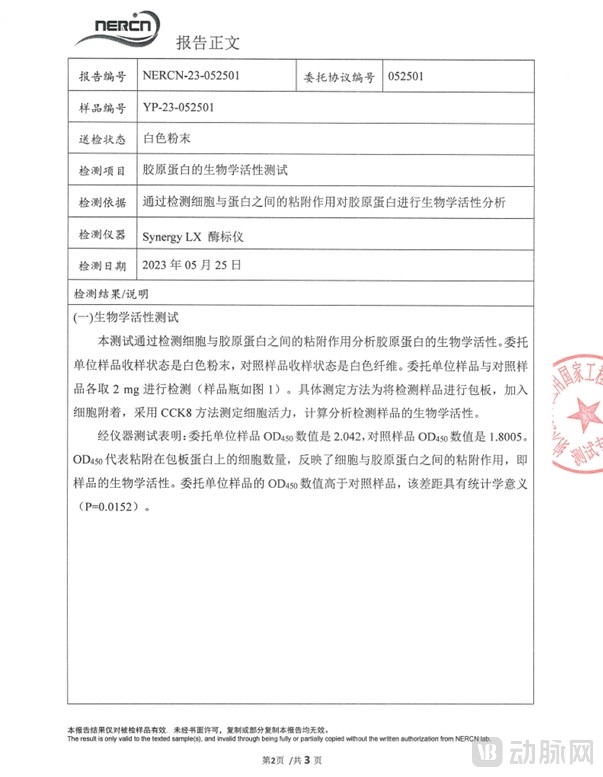
Test Results of the Commissioned Evaluation on the Biological Activity of Recombinant Humanized Type III Collagen by Jiangsu Meishangjie Biotechnology Co., Ltd.
To further optimize its products, Meishangjie has introduced “AI” technology. Developing AI models better suited for collagen requires extensive relevant data, including protein sequences, structures, and other physicochemical properties. Meishangjie’s extensive wet-lab experiments conducted over the years in recombinant collagen R&D have provided a robust data foundation for AI. Leveraging AI’s efficient analytical and design capabilities, Meishangjie enjoys stronger technical support in developing collagen with enhanced structural stability and biological activity, positioning this technology at the forefront of the industry.
Taking wound repair, a primary clinical application scenario of recombinant humanized collagen, as an example, animal studies on the Meishangjie Recombinant Type III Humanized Collagen Repair Dressing have demonstrated its efficacy in promoting wound healing.
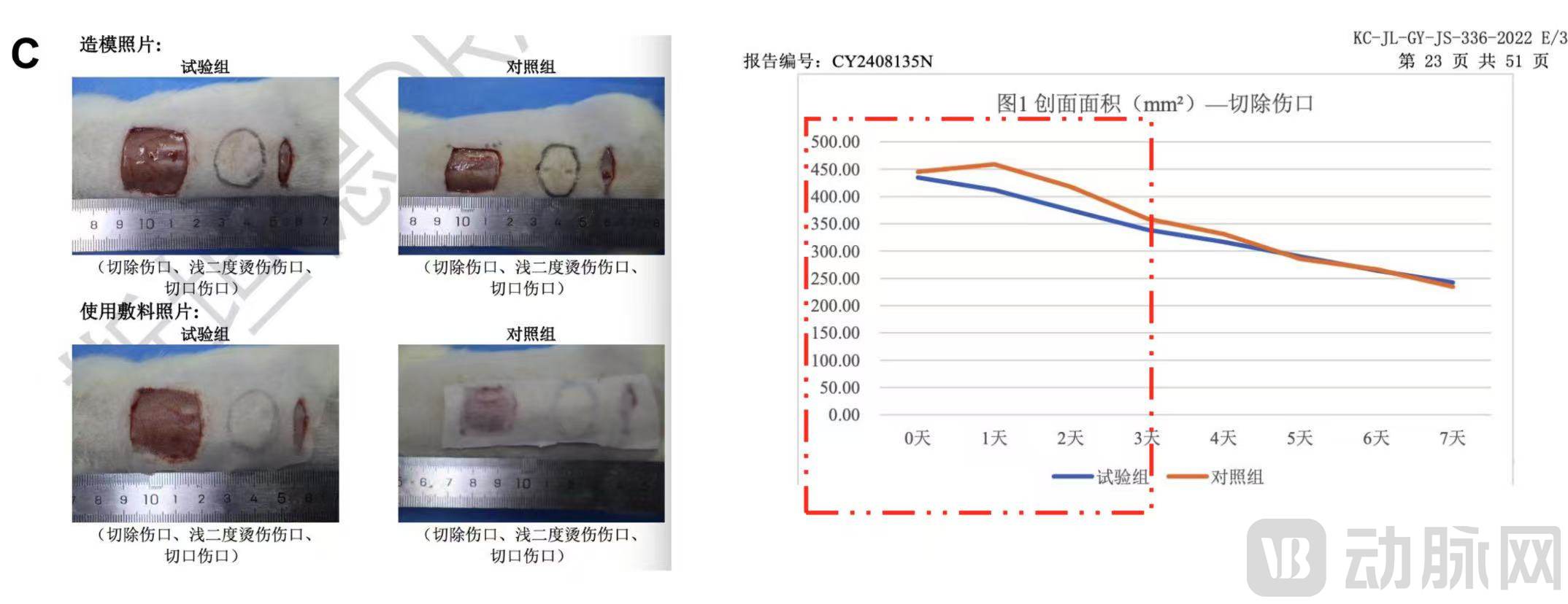
Meishangjie Biotech: Data from the Animal Study Report on Recombinant Humanized Type III Collagen Repair Dressing
The application of AI technology in the recombinant collagen industry can not only accelerate innovation in recombinant collagen formulations but also predict gene sequences. In the future, this may serve as an accelerator for the development of the recombinant collagen industry and become the key to unlocking applications in regenerative medicine.
Leveraging its potential in regenerative medicine, recombinant collagen is emerging as a frontier fiercely contested by numerous enterprises, with many groundbreaking regenerative products currently under development.
In the field of medical devices, recombinant collagen is first expected to better replace animal-derived collagen.
Traditional animal-derived collagen is typically extracted from animal tissues such as porcine skin and bovine Achilles tendon. Due to differences in amino acid sequences compared to human collagen, it has certain limitations in biocompatibility. Nevertheless, animal-derived collagen has established a broad range of clinical applications, with related products spanning numerous fields including hemostatic materials, wound dressings, and collagen membranes for periodontal ligament regeneration.
In contrast, recombinant collagen exhibits numerous significant advantages. Animal-derived collagen poses issues such as immunogenicity and viral contamination in its extracts. Recombinant humanized collagen, produced through genetic engineering and other methods, offers superior processability (e.g., water solubility), mitigates the risk of viral transmission, and reduces immunogenicity through sequence design. Moreover, recombinant collagen demonstrates enhanced bioactivity.
Driven by multiple advantages, recombinant humanized collagen boasts far broader application prospects than animal-derived collagen. It can not only serve as a substitute for animal-derived collagen but also pioneer an entirely new blue-ocean market in the cutting-edge field of regenerative medicine.
Recombinant collagen achieves enhanced hydrophilicity, tissue compatibility, and biological efficacy through the strategic combination of multiple functional amino acid sequence fragments derived from various collagens. It exhibits pro-coagulant properties that accelerate hemostasis in wounds; promotes cellular biological activities to drive tissue regeneration; modulates the immune microenvironment to create conditions favorable for tissue repair; and remodels the extracellular matrix, laying the foundation for the formation of new tissue.
Throughout the critical stages of tissue regeneration—from early hemostasis, through inflammation, to new tissue formation and tissue remodeling—recombinant collagen plays a significant and beneficial role, comprehensively supporting tissue repair and regeneration.
The industrial application of recombinant collagen in regenerative medicine is accelerating.
Significant progress has been made in the application of recombinant human collagen for skin injury repair.Purified recombinant human collagen has been widely used in the treatment of chronic ulcers and burn wounds, improving patient outcomes and quality of life. Recent studies have also demonstrated that novel hydrogel dressings containing highly bioactive recombinant human collagen exhibit excellent performance in treating patients with second-degree burns, effectively promoting wound epithelialization, accelerating wound healing, and reducing scar formation.
In the field of bone and cartilage tissue engineering, type I collagen and type II collagen are the major components of bone and articular cartilage.In conventional therapeutic approaches, materials composed of porous hydroxyapatite and animal-derived type I collagen (such as Collagraft) have been used in the clinical treatment of long bone fractures for over two decades. However, the risk of immune rejection associated with animal-derived collagen has limited its widespread application. In contrast, recombinant collagen can effectively promote cell adhesion, proliferation, and matrix synthesis, offering a safer and more efficient solution for bone tissue regeneration and holding promise as the preferred material for future bone and cartilage repair.
In the field of corneal tissue engineering, China sees over 100,000 new cases of cornea-induced blindness annually, and donor corneas remain in short supply.Current treatment options include human donor corneal transplantation or the use of corneal tissue harvested from genetically modified pigs. Human donor corneas are in severe shortage, while porcine corneas suffer from insufficient optical clarity and durability. Both approaches require additional immunosuppressive drugs to prevent transplant rejection. Corneas manufactured using recombinant type III collagen hold promise as an alternative to existing therapies, eliminating the need for immunosuppressive medication.
Currently, Dianjing Bio has obtained the exclusive license for FibroGen, Inc.’s biosynthetic cornea technology and recombinant human type III collagen platform. The biosynthetic cornea (EB-301), made from recombinant human type III collagen, has entered Phase 3 clinical trials, with its safety and efficacy preliminarily validated. It is poised to become the world’s first corneal replacement product based on recombinant collagen.
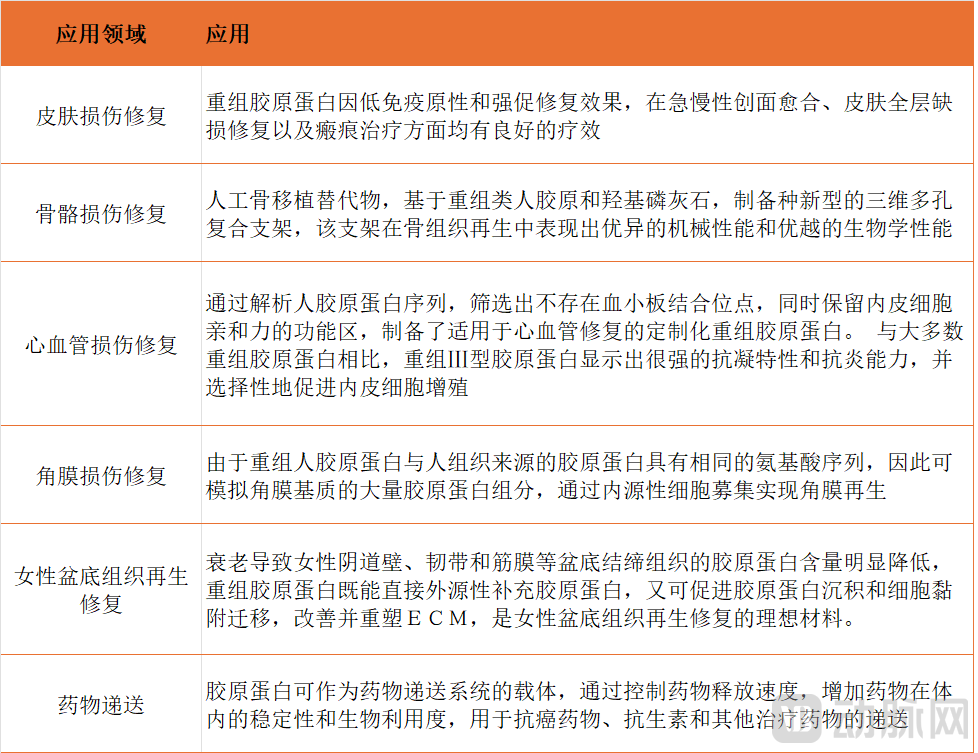
Applications of Recombinant Collagen in Tissue Regeneration Research
Recombinant collagen has completed proof-of-concept studies for safety and efficacy across multiple therapeutic areas. As large-scale, multicenter clinical trials progress, the efficacy of recombinant collagen will be further validated, and its applications will continue to expand.
Recombinant collagen leads in industrial applications in China, but basic research remains relatively lagging. As industry enthusiasm surges, its future development must break through bottlenecks in three key dimensions: technological breakthroughs, practical application scenarios, and regulatory framework construction, while avoiding the erosion of industry trust caused by "over-commercialization." On the technology front, it is necessary to upgrade from "basic expression" to "precision design"; on the application front, to deepen from "consumer-grade" to "serious medical care"; and on the regulatory front, to transition from "unregulated growth" to "standardized development."