

Alpheus Medical Secures $52M Series B Financing to Advance FDA Orphan-Drug-Designated Sonodynamic Therapy for Glioblastoma
Alpheus Medical
Developer of Novel Sonodynamic Therapy Equipment
Recently, Alpheus Medical announced the completion of a $52 million Series B financing round, co-led by HealthQuest Capital and Samsara BioCapital. Existing investors OrbiMed and Action Potential Venture Capital continued to participate, alongside several institutional investors focused on cancer care, including BrightEdge, Brain Tumor Investment Fund, and Sontag Innovation Fund.
The funds will be used to advance clinical trials of sonodynamic therapy in the field of brain tumors: initiating a Phase 2B randomized controlled trial for patients with newly diagnosed glioblastoma (GBM), to validate the sonodynamic therapy (SDT) platform combining non-thermal, low-intensity diffusive ultrasound (LIDU) with oral 5-aminolevulinic acid (5-ALA), in preparation for commercial registration.
1Targeting Glioblastoma: Addressing the Challenges of Tumor Invasiveness and Diffuseness
Glioblastoma (GBM) is one of the most common primary malignant brain tumors in adults, representing a Grade IV malignancy originating from glial cells. The tumor grade reflects the severity of its growth and spread, with Grade IV being the most aggressive and severe. GBM accounts for approximately 57% of all gliomas and is characterized by high invasiveness, high recurrence rates, and limited treatment options. Globally, there are over 300,000 new cases each year. In the United States, approximately 27 Americans die from GBM daily, with an estimated annual death toll exceeding 10,000.
The prognosis for patients with glioblastoma multiforme (GBM) remains poor, with a median overall survival of only 12 to 18 months and a five-year survival rate of merely 6.8%. Although nearly a century has passed since GBM was first described in the scientific literature in the 1920s, therapeutic options remain limited, with only four FDA-approved drugs and one device currently available for its treatment.
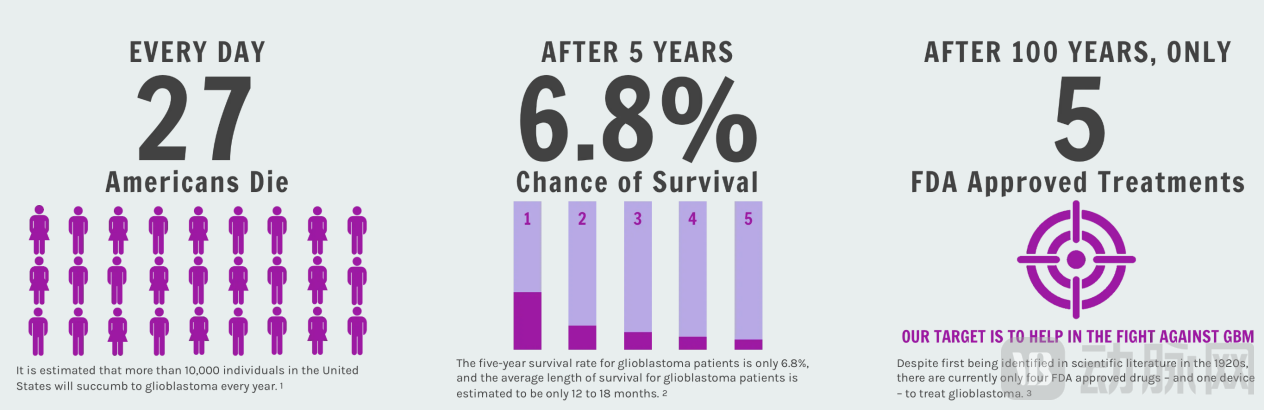
Glioblastoma Data Overview Source: Alpheus Medical Official Website
Currently, the conventional treatment pathway remains dominated by “surgical resection followed by postoperative radiotherapy and chemotherapy (the Stupp protocol).” However, due to the significant infiltrative and diffuse nature of glioblastoma multiforme (GBM), GBM tumors comprise a heterogeneous cell population that creates an extremely complex tumor microenvironment (including immune and metabolic microenvironments). Consequently, complete surgical resection is unattainable, while the toxic side effects of radiotherapy and chemotherapy limit both the durability of therapeutic efficacy and patient tolerability.
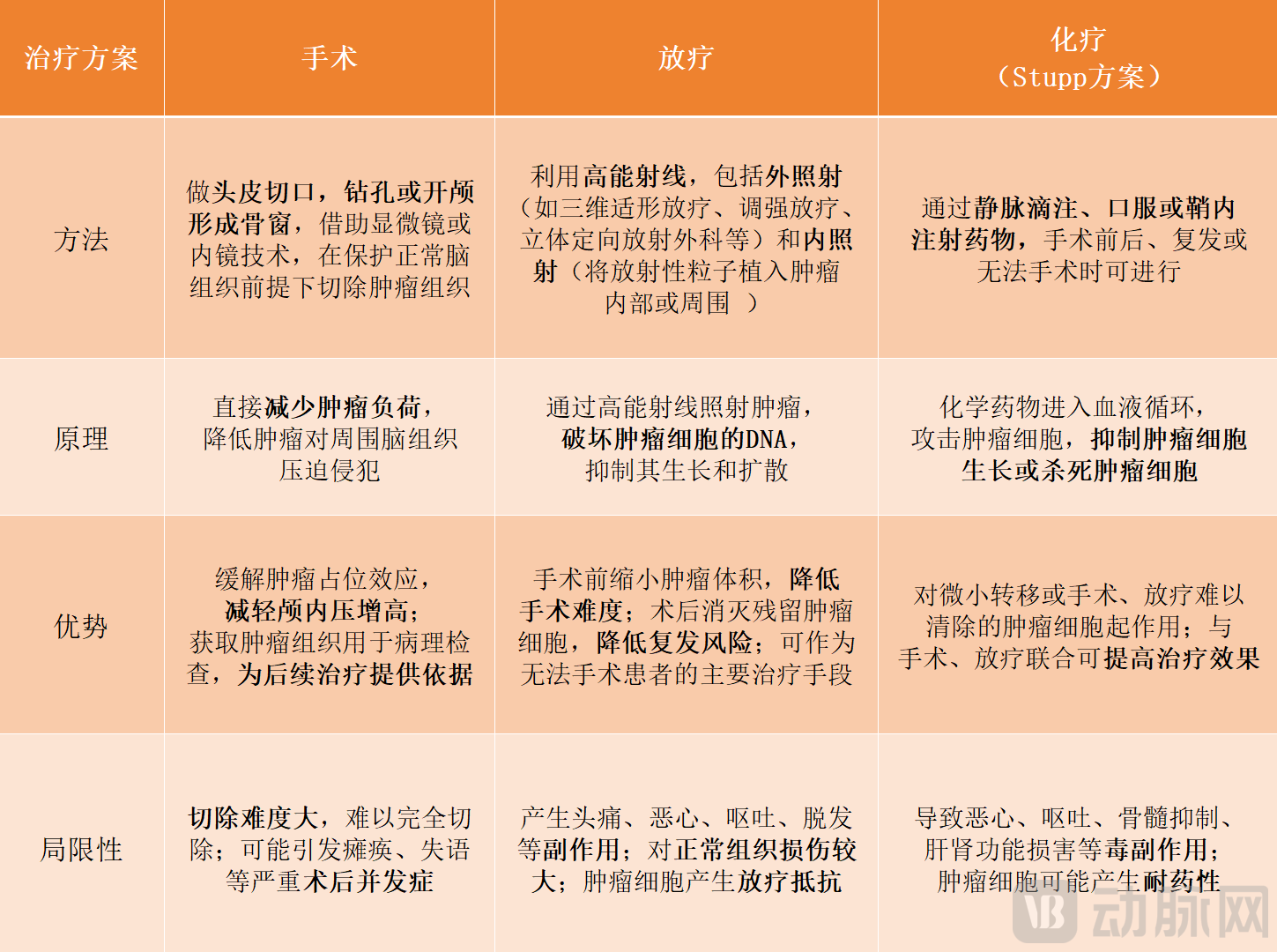
Overview of Traditional Treatment Methods
Furthermore, although adjuvant therapies such as Tumor Treating Fields (TTF) have received FDA approval for inclusion in clinical pathways, their widespread adoption is hindered by heavy reliance on patient compliance and high costs. Meanwhile, emerging approaches like viral therapy, CAR-T, and immune checkpoint inhibitors, despite their theoretical potential, have yet to yield mature clinical outcomes and face challenges such as technical complexity, high costs, or limited treatment applicability. Consequently, there is an urgent market need for more efficient, safer, and more convenient therapeutic solutions.
Sonodynamic Therapy (SDT), a novel tumor treatment technology developed over the past two decades, leverages the non-invasive nature and superior tissue penetration of ultrasound to activate sonosensitizers for the generation of singlet oxygen. This process disrupts mitochondrial structure, inducing both necrosis and apoptosis, thereby achieving the therapeutic goal of precisely eradicating tumor cells while sparing normal tissues.
2SDT Platform: Combining Drug Targeting with Ultrasound Activation to Precisely Target Tumor Cells
Based on this principle, Alpheus’s SDT platform offers a new therapeutic pathway for glioblastoma (GBM) through a non-invasive drug-device combination.Its core principle combines drug targeting with ultrasound activation to achieve precise tumor cell ablation and immune activation.
Specifically, during treatment, patients first orally administer the FDA-approved 5-aminolevulinic acid (5-ALA) drug, which is used for fluorescence-guided resection of brain tumors. This drug is specifically taken up and accumulated by tumor cells in the body, while hardly entering healthy cells. It acts like a recognition label attached to tumor cells, exposing them among numerous normal cells and providing a basis for localization in subsequent treatments.
Next, Alpheus’ proprietary non-invasive ultrasound system (LIDU, CV-01) can emit low-intensity, diffused ultrasound waves toward the brain tumor region. These ultrasound waves can penetrate the scalp and skull to precisely target the marked tumor cells, triggering the drug to release highly reactive oxygen free radicals, thereby creating conditions for drug activation and therapeutic effects.
Oxygen free radicals possess strong oxidative properties, triggering a cascade of reactions within tumor cells that damage critical structures such as the cell membrane and DNA, leading to cellular injury or even death. Meanwhile, dying tumor cells release signaling molecules like heat shock proteins, thereby activating the human immune system.
Finally, the activated immune system (such as dendritic cells, T cells, etc.) recognizes and continuously attacks residual tumor cells, triggering a tumor-specific immune response and creating a dual therapeutic effect of “direct cytotoxicity + immune surveillance” to prevent tumor recurrence.
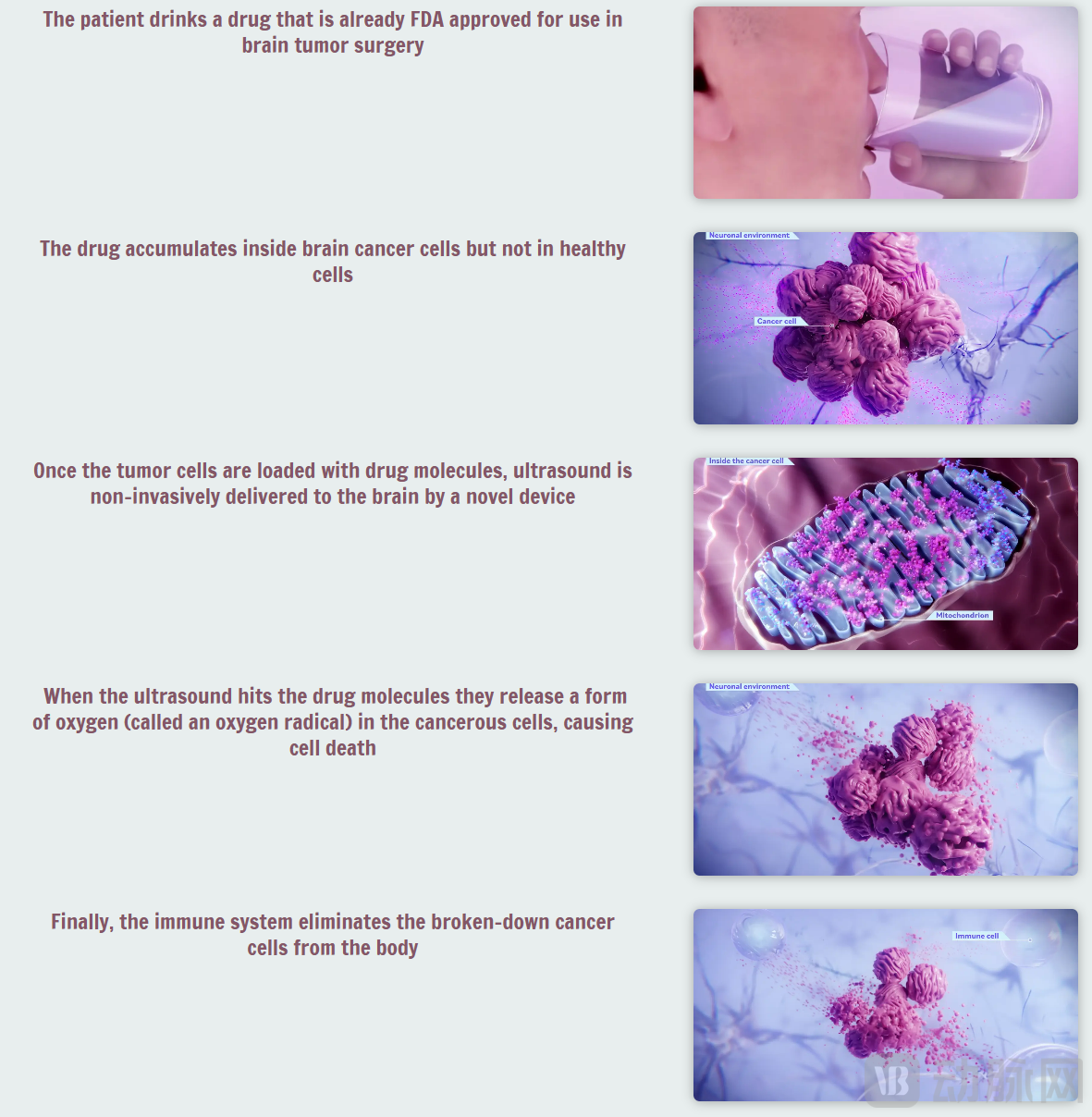
SDT Platform Treatment Pathway Source: Alpheus Medical Official Website
In terms of therapeutic efficacy, Alpheus’s SDT platform offers the following core advantages:
Non-invasive procedures offer enhanced patient safety:The entire treatment process requires no invasive procedures such as craniotomy or the use of sedatives, thereby avoiding surgical risks like infection, hemorrhage, and nerve injury. Patients remain awake during the procedure, which can be performed in an outpatient setting and supports repeated treatments. This approach is more suitable than traditional surgery for patients who are physically frail or intolerant of invasive therapies.
Precision targeting to minimize damage to surrounding tissues:Since 5-ALA accumulates specifically in tumor cells and ultrasound can precisely target the tumor region, confining the release of oxygen free radicals to the lesion site, the SDT platform can deliver a precise strike against tumor cells with minimal damage to surrounding healthy tissues.
Significantly Prolonged Survival:Alpheus Medical’s Phase 1/2 clinical trial data showed that the median overall survival (OS) for patients receiving SDT therapy increased from the typical 6–8 months to approximately 15.7 months, while progression-free survival (PFS) rose from the typical 1.8 months to 5.5 months, demonstrating favorable therapeutic efficacy and potential.
Whole-Brain Coverage, Breaking Through the Limitations of Traditional Localized Therapy:GBM is highly aggressive and often exhibits diffuse growth throughout the brain, making it difficult for conventional local therapies to effectively control tumor recurrence and progression. The diffusive ultrasound of SDT can cover the entire affected hemisphere, simultaneously targeting microscopic lesions and infiltrating tumor cells that are invisible to the naked eye, thereby overcoming the limitations of traditional local treatments.
3FDA Grants Orphan Drug Designation; Clinical Trials Show Significant Efficacy
In July 2022, Alpheus Medical’s SDT platform was granted Orphan Drug Designation and Fast Track designation by the U.S. Food and Drug Administration (FDA) for the treatment of recurrent glioblastoma multiforme (GBM). Orphan drugs are medicinal products intended for the prevention, treatment, or diagnosis of rare diseases. Due to the small patient populations and high research and development (R&D) costs associated with rare diseases, governments worldwide typically provide policy support. Therefore, this designation not only serves as official recognition of its technological innovation but also entitles the product to policy benefits such as tax incentives, R&D funding, and priority review. These advantages significantly shorten the time to market and provide official endorsement for overcoming the therapeutic challenges of GBM.
In November 2024, the Phase 1/2 clinical trial data presented by Alpheus Medical at the 2024 Annual Meeting of the Society for Neuro-Oncology (SNO) drew significant industry attention. This open-label, multicenter, dose-escalation study enrolled 12 patients with recurrent or refractory high-grade glioma, who were assigned to three treatment groups receiving 60-minute, 90-minute, and 120-minute sessions monthly. The results showed:
Survival data showed significant improvement.The median overall survival (OS) reached 15.7 months, nearly doubling the 6–8 months observed with conventional therapy; the median progression-free survival (PFS) was 5.5 months, three times the historical benchmark of 1.8 months, and the 6-month survival rate was 89%.
Outstanding safety advantages.No damage to healthy tissue was observed during the treatment course, and there were no treatment-related deaths, serious adverse events (SAEs), or dose-limiting toxicities (DLTs). The non-invasive nature of the procedure (requiring neither sedation nor craniotomy) significantly reduces treatment risks.
Another GBM study published in the Journal of Neuro-Oncology in February 2025 further validated the precise efficacy of the SDT platform: after receiving a single dose of SDT, three patients with newly diagnosed, unresected GBM exhibited extensive tumor cell necrosis while surrounding neural tissue remained intact; the treatment was performed on an outpatient basis without the need for sedation. Together, these two studies laid a critical foundation for the multicenter, randomized, controlled Phase 2b trial initiated in 2025.
The R&D value of the SDT platform has also spurred continuous capital inflow. From $14 million in Series A financing to $52 million in this Series B round, Alpheus Medical’s valuation has risen significantly, positioning it as a star enterprise in the field of innovative therapies for brain tumors. The sustained injection of capital not only validates the breakthrough nature of SDT technology in the treatment of glioblastoma multiforme (GBM), but also signals its imminent transition from the clinical stage to commercialization.
4Clinical, Technical, and Research Team: Seizing the Initiative in Innovative Brain Tumor Treatment
Based on the backgrounds of its team members, Alpheus’s core team possesses profound expertise and extensive experience in the field of brain tumor treatment. Founder Vijay Agarwal’s long-standing experience in brain tumor surgery, medical devices, and the biotechnology industry has provided strategic leadership and medical professional support for the company’s development.
Chief Technology Officer Jeremy Ling’s expertise in R&D and commercialization helps drive the continuous advancement of the company’s sonodynamic therapy technology and the commercialization of its products. Jennifer Drescher, Vice President of Clinical Operations, leverages her extensive experience in clinical operations to ensure that the company’s clinical trials are conducted efficiently and in compliance with regulatory standards. Nick Ellens, Vice President of R&D, provides specialized technical support for the development of the company’s core technologies, drawing on his research background in therapeutic ultrasound.

First row: Vijay Agarwal (left), Jeremy Ling (right)
Second row: Jennifer Drescher (left), Nick Ellens (right)
From: Alpheus Medical Official Website
As early as 2022, Alpheus announced the establishment of a world-class Scientific Advisory Board (SAB), appointing leading experts in neuro-oncology, neurosurgery, and other fields from top institutions and medical centers such as Northwestern University, Harvard Medical School, and the Dana-Farber Cancer Institute as board members.
The clinical guidance provided by this committee, combined with the $16 million Series A financing completed in November 2022, has not only facilitated the initiation of the first-in-human (FIH) trial but will also support proof-of-concept studies for other solid tumors.
According to data from Bizwit Research & Consulting, the global brain tumor treatment market reached $3.15 billion in 2024 and is projected to grow to $6.22 billion by 2032. Amid rising demand for brain cancer treatments and a scarcity of innovative therapies, Alpheus Medical, backed by a multidisciplinary team of clinical experts, technical elites, and scientific advisors, is leveraging breakthroughs in sonodynamic therapy to seize early-mover advantage in this high-potential market for brain tumor treatment innovation.