GoalWisdom Files IPO Prospectus: Empowering Post-Discharge Care for Over 2 Million Patients Across 700+ Hospitals
Driven by multiple factors, including healthcare insurance payment and medical system reforms, policy dividends, advancements in AI and big data technologies, and the accelerating trend of population aging, transitional care has garnered increasing attention in recent years.
Continuity of care is the extension of hospital nursing services beyond the hospital setting after patient discharge, constituting an integral part of comprehensive hospital nursing. It facilitates patient recovery, alleviates pressure on medical resources, and reduces health insurance expenditures, thereby holding significant importance for the precise allocation of medical resources and the implementation of the “Healthy China” strategy.
In the realm of post-discharge transitional care, third-party operational service platforms play a pivotal role as the critical link connecting hospitals, nurses, and patients. They are instrumental in addressing challenges related to regulatory compliance, supply-demand matching, technological support, and risk prevention and control.As a leader in China’s “Internet + Transitional Care Platform” industry, Hunan Zhuopu Information Technology Co., Ltd. has developed the “Geer Nurse” platform, which centers on its “Three Ends and One Center” model. By connecting with regulatory authorities at the government end (G-end), integrating medical resources at the business end (B-end), and linking patients with nurses at the consumer end (C-end), and leveraging precise health profiling, the platform provides a connectivity solution for out-of-hospital transitional care, establishing itself as an industry benchmark for practical implementation.
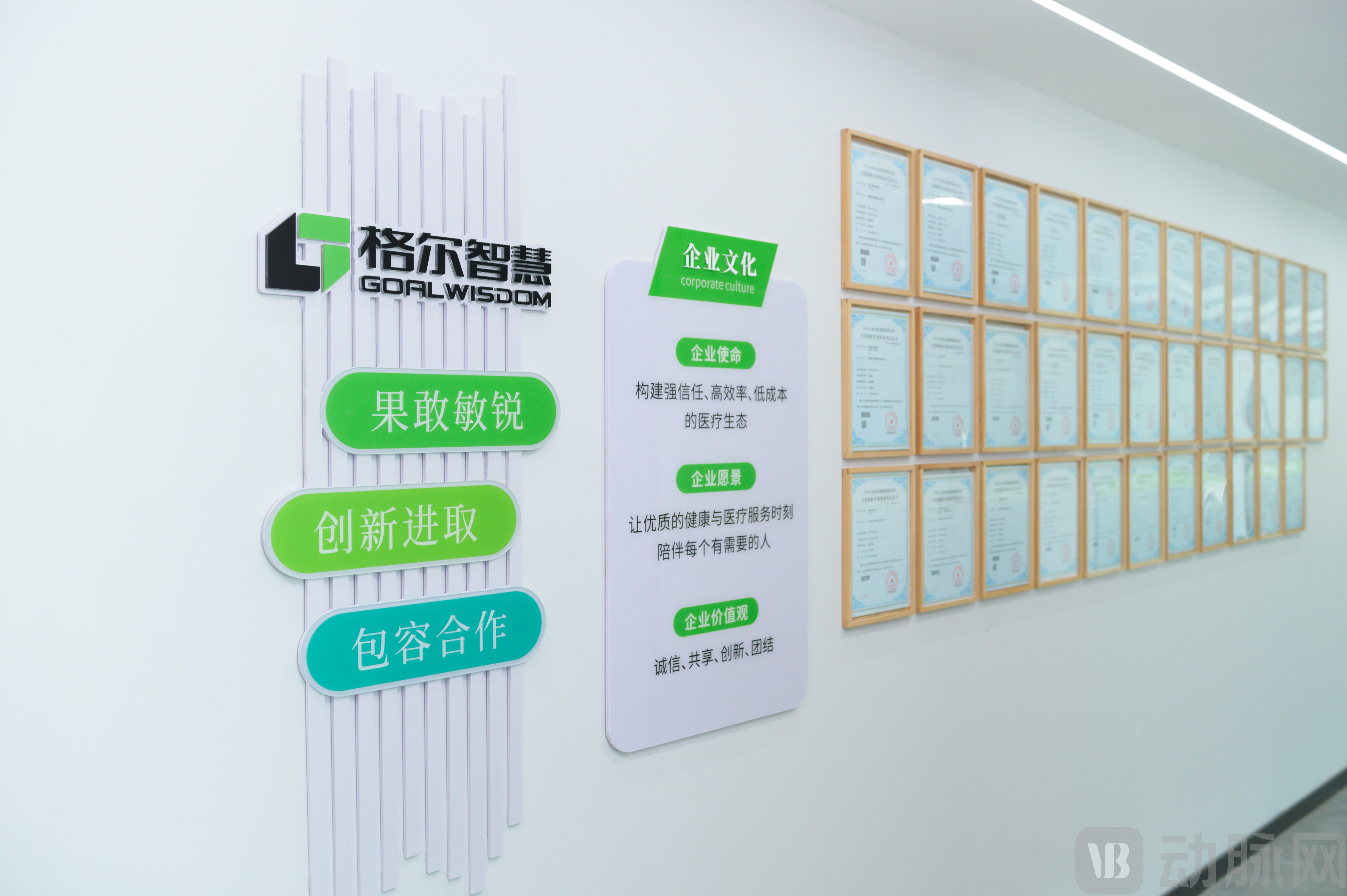
At the end of 2004,Li Qun, Chairman and Founder of Zhuopu SmartHe embarked on an entrepreneurial journey in Changsha, Hunan Province, working in the fields of data storage backup and data security. In 2010, Li Qun transitioned into the cloud computing and big data storage industry. His organization served over one hundred clients across sectors including healthcare, education, government, and defense. During this period, he recognized the immense growth potential of internet-based healthcare and identified that nursing, as an independent discipline, lacked a comprehensive system for providing out-of-hospital care services to patients. Consequently, in 2014, Li Qun invested in Ge’er Zhihui (Hunan Zhuopu Information Technology Co., Ltd.) as an angel investor.
At that time, Zhuopu Information was founded by a team of graduate students who focused primarily on scientific research. Lacking experience in market operations and failing to establish a robust business model, the company faced operational difficulties. In light of Li Qun’s over ten years of entrepreneurial experience in the IT industry and his notable achievements, the shareholders unanimously agreed to appoint him to take full charge of the company’s operations, serving as both Chairman and General Manager of Zhuopu Information.
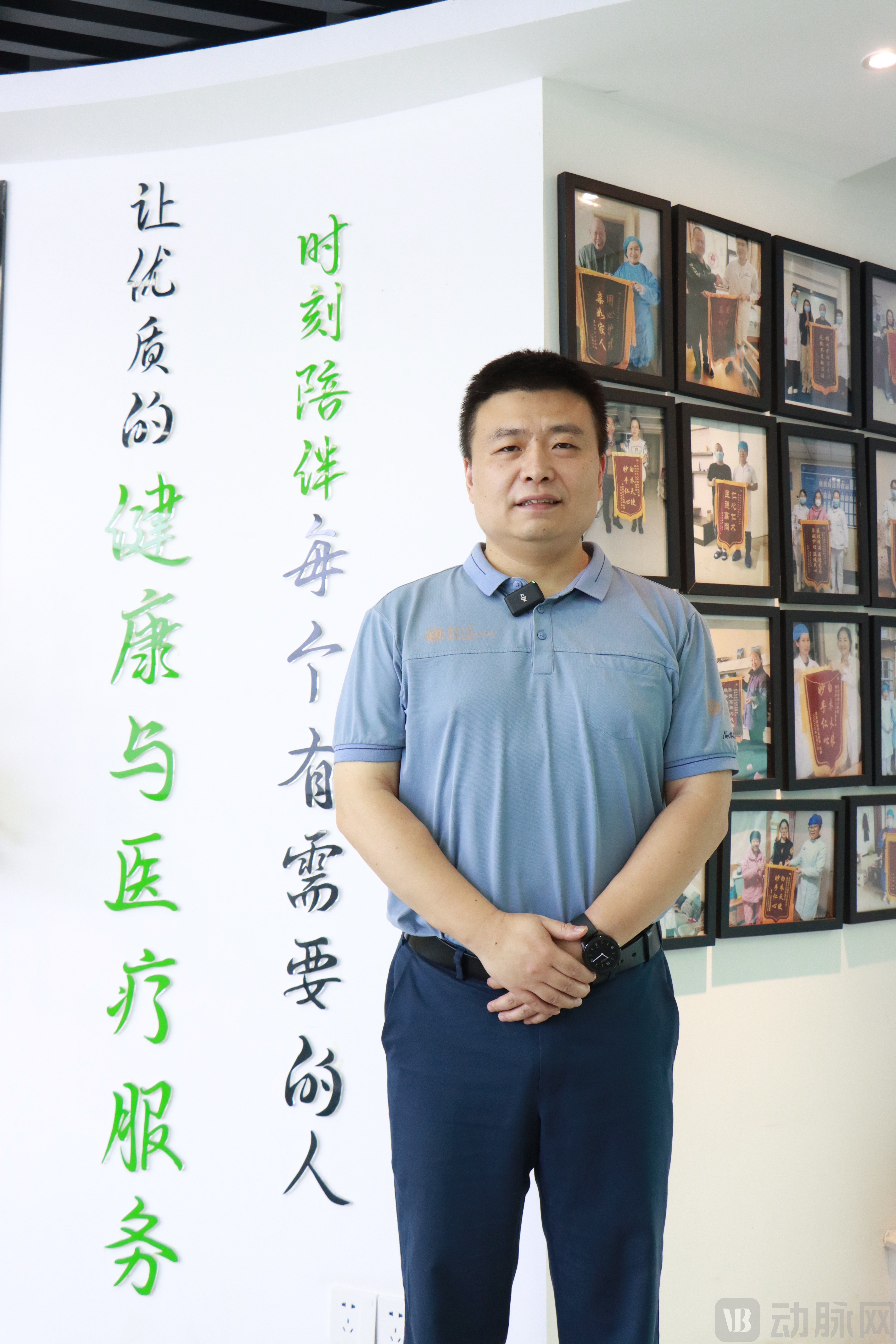
Li Qun, Chairman and Founder of Zhuopu Smart
During the early startup phase of Hunan Zhuopu Information Technology Co., Ltd. (Zhuopu Smart Health), the internet healthcare sector was experiencing a boom. However, most market entrants focused primarily on pre-hospital scenarios, aiming to address the challenges of “difficult and expensive access to medical care.” They targeted the high-frequency demand for “pre-consultation services,” believing this area held greater potential for commercial value, while often overlooking postoperative rehabilitation and nursing care. In reality, there are many unmet essential needs in post-diagnosis and postoperative settings.
Most patients lack access to stable and standardized transitional care services, forcing them to seek out-of-hospital consultations by adding nurses on WeChat. Due to the absence of standardization, the quality and effectiveness of health consultation feedback cannot be guaranteed.
Li Qun has a deep personal understanding of this issue. A native of Xi’an, Shaanxi Province, he moved to Changsha, Hunan Province, to start a business. After his father underwent surgery in Xi’an and achieved a satisfactory postoperative recovery, Li Qun brought him to Changsha. “Whenever my father needs rehabilitation therapy, he still returns to Xi’an because he places greater trust in the surgeon who performed his operation,” Li Qun said. He had previously sought out local medical resources for his father, but his father felt that they did not meet his expectations. Even though local physicians are capable of providing professional and high-quality diagnostic and treatment services, his father remains concerned about issues such as discrepancies in drug specifications, which undermine his trust. Li Qun noted that patients often have an inherent tendency to trust offline medical institutions and healthcare professionals with whom they have direct contact, whereas establishing trust in online medical service scenarios is considerably more challenging.
Therefore, Hunan Zhuopu Information Technology Co.,Ltd. aims to build a platform that transfers the offline mutual trust between doctors and patients to the online realm, enabling patients to receive continuous professional care and rehabilitation guidance at home and in their communities after discharge.
In 2016, the V1.0 version of “Geer Nurse” was launched. It is a patient-centric, user-friendly service platform dedicated to addressing patients’ out-of-hospital care challenges. To date, it has undergone more than 60 major version updates and approximately 200 minor iterations.In 2017, Zhuopu Smart Healthcare was designated as the developer of the transitional care system under the National Key R&D Program (Project No. 2017YFC1309200).
However, the project encountered certain difficulties during implementation. At that time, the hospital lacked billable items for transitional care services, making it impossible to charge for such care and, consequently, to implement standardized management. Although the hospital had a genuine need for transitional care—driven by considerations such as patient treatment adherence, satisfaction, proactive engagement in therapy, and postoperative quality of life—it was difficult to launch these services in the absence of standardized management protocols.
From the nurses’ perspective, there are no standardized guidelines for delivering transitional care services. Nurse–patient communication relies primarily on telephone calls and WeChat, making it difficult for nurses to effectively triage patients and manage large caseloads. Furthermore, as these services are mostly provided on a voluntary basis without established pricing mechanisms, their long-term sustainability is compromised.
In February 2019, the National Health Commission issued the “Notice of the General Office of the National Health Commission on Launching Pilot Programs for ‘Internet + Nursing Services,’” clarifying that medical institutions may enter into cooperation agreements with third-party internet information technology platforms to establish pricing and payment mechanisms for “Internet + Nursing Services.” Pilot regions should align with actual supply and demand, leverage market-based pricing mechanisms, refer to local medical service price standards, and comprehensively consider factors such as transportation costs, information technology costs, the technical value of nursing labor, and remuneration. These regions are to explore the establishment of pricing and related payment assurance mechanisms, adopting market-based pricing for services provided outside hospital settings.
Leveraging policy dividends, the “Geer Nurse” platform has established an S2B2C business model and rapidly expanded into multiple hospitals across various cities. “We do not build our own nursing team to provide care services; instead, we rely on nurses from physical hospitals, creating a smooth and stable platform for them to serve discharged patients,” added Li Qun. Geer Smart Care serves solely as a provider of Internet-plus nursing service SaaS platforms and operational support, helping medical institutions more efficiently address transitional care challenges. It does not compete with hospitals for business and remains steadfastly committed to the S2B2C collaboration model.
The operational services of the “Geer Nurse” platform revolve around a “three-endpoints, one-center” framework. The “center” refers to the “Precise Patient Health Profile.” Geer Nurse is patient-centric (C-end), dedicated to empowering personalized rehabilitation and out-of-hospital management for patients.
The “three ends” refer to the B-end (business), C-end (consumer), and G-end (government). The B-end encompasses healthcare service institutions and partners of “Geer Nurse,” such as insurance companies and medical supply vendors; the C-end includes patients and individual nurses; and the G-end refers to government regulatory authorities.
The “three ends” revolve around “precise patient health profiles” to form a closed loop of “demand initiation – institutional collaboration – regulatory safeguarding – data feedback,” enabling more efficient government regulation, standardized operations for medical institutions, more precise and safe patient services, and clearer demonstration of nurses’ value, thereby building a multi-party win-win ecosystem for out-of-hospital care.
In terms of service scope, the “Geer Nurse” platform focuses on serious medical care scenarios, with its business strictly limited to clinically essential nursing services. The platform explicitly excludes non-therapeutic items such as medical aesthetics and health supplement sales, thereby providing support and safeguards for the safe delivery of serious medical care in out-of-hospital settings.
The “Geer Nurse” platform leverages an internet-based software system to integrate large tertiary hospitals, secondary hospitals, community rehabilitation centers, homes, and patients into a cohesive, data-interconnected entity.By establishing channels for online applications and offline services, we provide professional and convenient nursing care to special populations, including the elderly with advanced age or disabilities, individuals in postoperative recovery, those in end-of-life care, and patients with chronic diseases managed at home.
As a digital support platform for out-of-hospital care services, it builds the underlying operational system for nurses’ home visits through technical support, process optimization, and risk prevention and control.
In OperationOperational Efficiency ImprovementOn the platform, “Geer Nurse” provides an integrated “Internet + Healthcare” solution, enabling medical institutions to access out-of-hospital nursing services with low-cost, standardized tools without building systems from scratch; deployment and launch are highly efficient and rapid, requiring only one week to complete.
AtBusiness Process SimplificationOn the platform, “Geer Nurse” builds an online bridge connecting patients, hospitals, and nurses, thereby eliminating cumbersome offline processes such as manual task assignment and information verification. This allows nurses to focus more on delivering high-quality nursing care to patients, while healthcare institutions can devote greater attention to their core business operations;
InRisk ManagementIn this regard, the entire process of nurses’ home-based care services can be fully documented. Moreover, the platform has established a long-term strategic partnership with Ping An Insurance to provide coverage for healthcare providers, medical professionals, and patients alike, thereby transforming the uncertainties associated with out-of-hospital care into traceable, insured, and standardized services.
InSafety AssuranceIn this regard, the “Geer Nurse” platform incorporates safety features such as one-touch emergency alerts and real-time GPS location tracking to ensure the safety of both patients and nurses. Furthermore, by integrating a hospital-wide visualized medical Internet of Things (IoT) system, it enables continuous, ubiquitous safety monitoring and alerting. Li Qun emphasized that safety is the top priority for the “Geer Nurse” platform. The platform’s safety assurance system is collaboratively built around four key dimensions: home-visit nursing services, management of the internet-based information technology platform, patient evaluations and case management, and safety and risk prevention and control.
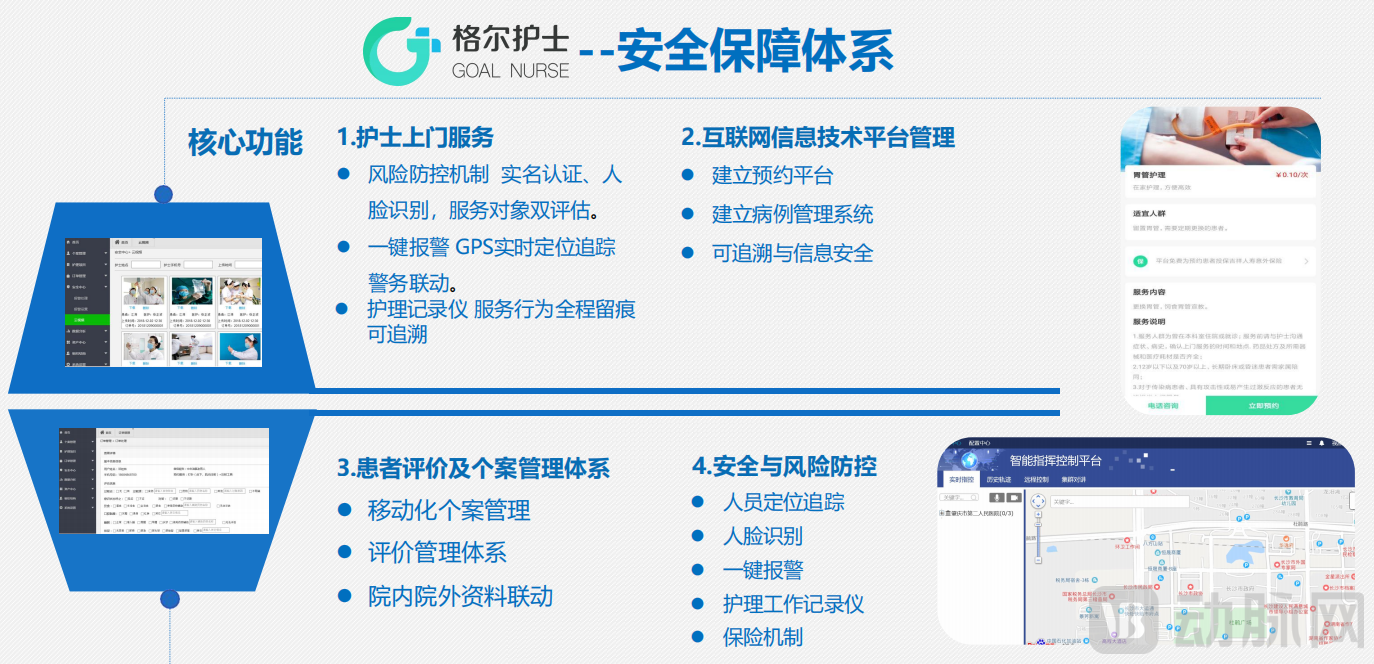
“Geer Nurse” Platform’s Security Assurance System
Furthermore, home-visit nurses can be equipped with nursing recorders. These devices feature real-time video recording, automatic uploading, and storage capabilities, which can quickly and effectively address the issue of backend administrators being unable to immediately ascertain on-site conditions during unexpected incidents in routine home care. This facilitates rapid decision-making by backend management.
Li Qun disclosed that the “Ge’er Nurse” platform has been integrated with the regulatory platforms of health commissions in multiple provinces and cities, and has passed the Level 3 Certification for Information Security Multi-Level Protection. All data generated during home-based nursing services, including videos and audio recordings, will be synchronized in real time to the regulatory platforms, ensuring full traceability of service activities.
From a procedural perspective, patients requiring home-based nursing care after discharge can submit service requests via the internet hospital platform accessed through the hospital’s official WeChat account. The platform first verifies the authenticity of the patient’s basic information, assesses rehabilitation needs, home conditions, and timing, excludes non-applicable scenarios such as emergency cases, and provides guidance on placing orders correctly. Upon approval, the order is pushed to the department from which the patient was originally discharged, while the backend simultaneously validates the qualifications of available nurses. Nurses within the department may independently accept orders based on patient profiles; if no nurse accepts the order, the platform will coordinate with administrators for assignment. If assignment remains unfeasible, the platform will negotiate with the patient to postpone the scheduled time until a suitable nurse is matched. The entire process encompasses several key stages: “application – review – dispatch – matching – adjustment,” ensuring efficient alignment between service demands and medical-nursing resources through a combination of intelligent allocation and manual coordination.
Overall, the “Geer Nurse” platform has achieved a triple win for hospitals, nurses, and patients:
First, “Geer Nurse” addresses the challenge of unmet post-discharge rehabilitation and nursing needs by enabling patients to access standardized, high-quality home nursing services through fixed channels at a lower cost, thereby reducing uncertainty.
In the continuum of care, nurses’ home visits are the key lever for service implementation and the final touchpoint for directly reaching patients and delivering nursing interventions. The “Geer Nurse” platform addresses the challenges of whether nurses “can,” “dare,” and “how to efficiently” provide home-based care: by ensuring regulatory compliance and standardizing processes, it shifts nurse home-visit services from a “gray area” to a legally compliant model; meanwhile, insurance coverage and one-touch emergency alerts alleviate nurses’ safety concerns; finally, streamlined workflows and patient profiling enable nurses to focus on clinical tasks and complete them efficiently.
From the hospital’s perspective, under the backdrop of DRG payment reform, the value of post-discharge transitional care services has become increasingly prominent. By providing home-based nursing services, medical interventions such as postoperative rehabilitation and chronic disease management are extended from inpatient settings to home environments. This approach not only ensures the continuity of patients’ recovery processes but also optimizes resource allocation within the DRG framework, thereby alleviating the conflict between “patients’ individualized rehabilitation needs” and “DRG standardized management” through process design.
Furthermore, when clinical experts and research teams conduct long-term follow-up studies on specific patient populations, they require continuous access to comprehensive data—such as patients’ rehabilitation progress and medication adherence—to support scientific analysis. However, in real-world settings, it is challenging for patients to strictly adhere to the scheduled follow-up visits required for data collection. By leveraging the transitional care service system built on the “Geer Nurse” platform, data collection can be seamlessly integrated into routine clinical care processes. This approach enables the simultaneous accumulation of research-critical data—including rehabilitation behavior trajectories, early warning signals for complication risks, and medication feedback—without imposing additional compliance burdens on patients.
Currently,“Geer Nurse” platform has partnered with over 700 hospitals across China, serving more than 2 million patients.. In the face of the explosive growth in care demand driven by an aging population, Geer Nurse will continue to iterate and optimize its products and services around transitional care. Li Qun stated,To adapt to patients’ increasingly personalized care needs, Geer Smart will develop toward “specialized nursing.”. Currently, Zhuopu Smart Health is exploring out-of-hospital transitional care services for conditions such as Alzheimer’s disease, neurological disorders, and breast cancer.
Among these initiatives, the “Gastrointestinal H. pylori-Free” Single-Disease Management Platform project is guided by the Shaanxi Red Cross Society and Xijing Hospital, and implemented in collaboration with professional institutions such as the Marshall Laboratory of Biomedical Engineering and the National Clinical Research Center for Digestive Diseases. Targeting patients who test positive for Helicobacter pylori (HP) and require long-term treatment and management due to the associated risk of subsequent gastric cancer, the project explores out-of-hospital service models, including home-based nursing care. It assists gastroenterologists and health examination physicians in providing standardized diagnosis and treatment management throughout the entire patient journey, from HP diagnosis to treatment. According to Li Qun, the project has currently been integrated into more than 100 hospitals.
“The Breast Cancer Rehabilitation Program” tailors individualized rehabilitation intervention plans for patients based on their surgical history, risk level of lymphedema, and Traditional Chinese Medicine (TCM) syndrome differentiation. It assigns different daily rehabilitation tasks, uses plain language to help patients understand risk factors for breast cancer, chemotherapy knowledge, common complications, the significance of affected limb rehabilitation, and dietary adjustments. The program guides patients in scientific rehabilitation, collects patient feedback, makes phased adjustments, and formulates subsequent plans.
Moving forward, Hunan Zhuopu Information Technology Co., Ltd. will continue to build a healthcare ecosystem characterized by strong trust, high efficiency, and low cost, ensuring that high-quality health and medical services are always accessible to those in need.
Standing at the forefront of “Internet + Nursing” innovation, Zhuopu Smart Care is committed to deepening collaboration with more industry partners to jointly build a mutually beneficial and win-win industrial ecosystem. By leveraging integrated strengths, we create exceptional value through full-cycle, one-stop nursing services for patients. If you are interested in Zhuopu Smart Care and its service solutions, please feel free to contact us: