

Reverse 'Blood Transfusion': Chinese Capital Rushes to Acquire Overseas Innovative Drug Assets
Pharmaron UK Limited
--

BLC Healthcare USD Fund I L.P
--
Recently, Pharmaron UK Limited, a wholly-owned subsidiary of Pharmaron, intends to commit USD 30 million from its own funds as a limited partner to invest in BLC Healthcare USD Fund I L.P. The fund, registered in the Cayman Islands, has a target raise of approximately USD 100 million and will focus on investing in the global life sciences, pharmaceuticals, and healthcare sectors.
In fact, this is not an isolated case; over the past year,WuXi AppTec, Hengrui, Junshi, and Innovent, among other Chinese pharmaceutical companies, have all increased their investments in overseas healthcare funds., particularly WuXi AppTec, which subscribed to five overseas private equity funds in 2024 alone, extending its business reach to the United States, Singapore, Germany, France, and other regions.
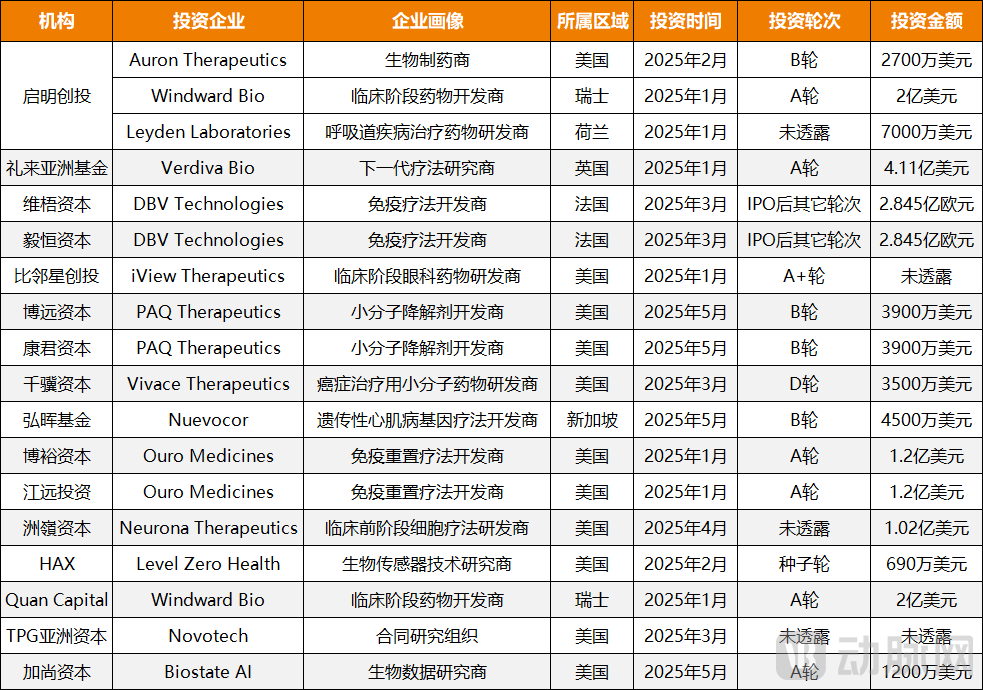 Figure 1.20 Direct overseas investments in innovative drugs by Chinese capital (Chart by VCBeat)
Behind the frequent additions to shopping carts, it is evident that China is currently placing significant bets on overseas innovative drugs, a trend further corroborated by a series of recent overseas investments. According to incomplete statistics from the VCBeat Orange Database,As of May 31, 2025, Chinese capital has completed 20 direct investments in overseas innovative drugs this year, with a total investment amount of nearly $1.5 billion.. At first glance, there appears to be nothing particularly remarkable about it,But this amount already represents the total financing in China's healthcare sector for the first quarter of this year., thus indicating a rather strong momentum for its outward expansion.
This is, in fact, a rare occurrence. On one hand, amid the market downturn in recent years, domestic funds have been stretched thin, making them more cautious and rational than ever when investing in any project. On the other hand, Chinese capital faces greater challenges and higher risks when investing in overseas innovative drugs, due to a lack of appropriate channels and sufficient understanding.
So, what exactly is driving domestic capital to take the risk of expanding overseas at this moment? Which overseas innovative drug projects have they primarily targeted? To find the answers, VCBeat conducted a systematic review and analysis of nearly 100 overseas investments in innovative drugs.
Why Is Chinese Capital “Buying Up the World”?
In fact, Chinese capital has invested in numerous overseas pharmaceutical companies in recent years. For instance, Moderna, a pioneer in mRNA vaccine technology, is backed by Sequoia Capital China Fund. Additionally, Hillhouse Capital has invested in several globally renowned pharmaceutical firms, including Arrivent Biopharma and Cytek Biosciences. The most representative case is 5Y Capital, one of the earliest domestic early-stage venture capital firms to engage in overseas investments, which has directly invested in more than 30 overseas pharmaceutical companies to date.
Nevertheless, even so, compared with the overall investment volume in domestic innovative drugs,Overseas investment remains a low-probability event., taking Qiming Venture Partners as an example, as one of the most active investment firms in China’s healthcare sector in recent years, its overseas investment ratio is less than 1%.
However, this trend underwent a significant change in 2025,Qiming Ventures Invested in Three Overseas Innovative Drug Companies at the Start of This Year, and it is still actively expanding. Qiming Venture Partners is not an isolated case; currently, many domestic investors are intensifying their investments in overseas innovative drugs, with unprecedented enthusiasm. So, what are the driving forces behind this trend?
First and foremost, there is the relentless pursuit of globally leading technologies.. It is reported that among the 20 direct investments in overseas innovative drugs completed this year, the focus has largely been on cutting-edge fields such as cell and gene therapy, large and small molecules, nucleic acid drugs, and peptides. This trend is driven by two main factors: on one hand, these projects possess inherent competitiveness and have the potential to deliver substantial investment returns for institutions in the future; on the other hand, they offer a strong “learning effect,” enabling institutions to accumulate valuable experience even if an investment fails, which can then be applied to subsequent domestic investment targets.
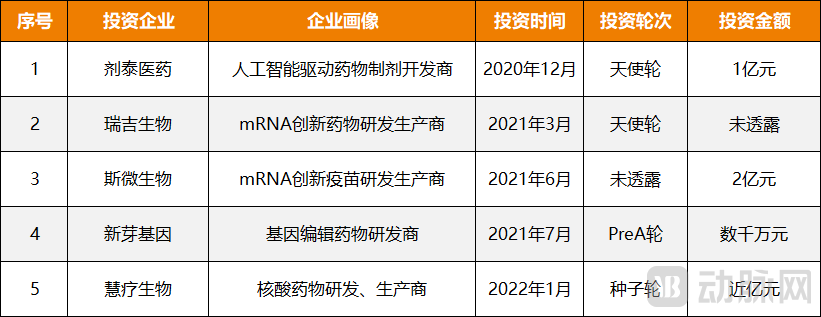 Figure 2. Representative mRNA vaccine companies invested in by Sequoia Capital (Graphic by VCBeat)
Taking Sequoia Capital China Fund as an example, after participating in the investment of Moderna in 2019, it quickly increased its stakes in a batch of highly promising mRNA vaccine companies in China, such as Stemirna Therapeutics and Rigin Biotech. Under Sequoia’s leadership, domestic capital also exerted its strength successively, leading to the rise of China’s homegrown mRNA vaccine industry and forming a highly competitive landscape in a short period.
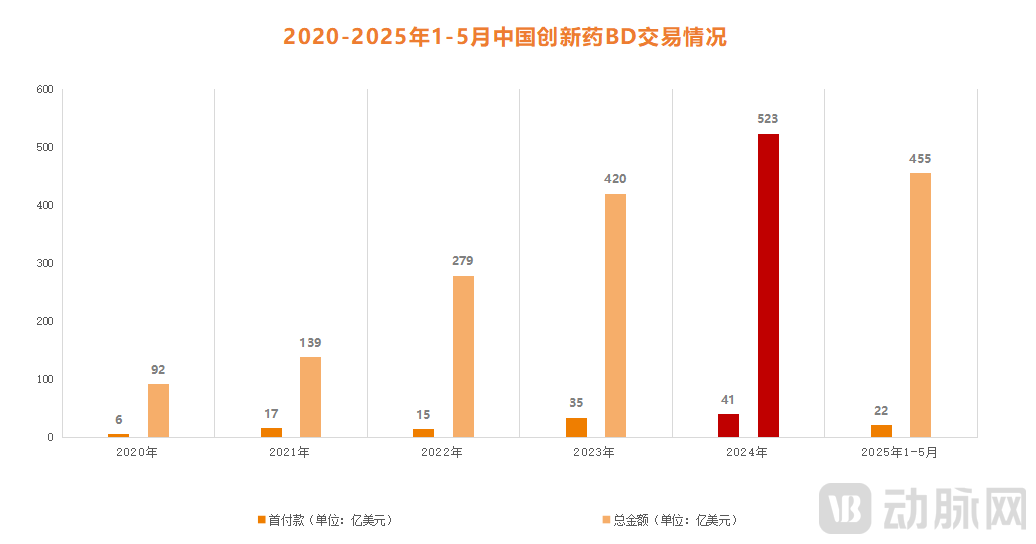 Figure 3. BD Transaction Data for Innovative Drugs in China, January–May 2020–2025 (Data source: PharmCube; Chart by VCBeat)
Next, the explosive growth in BD transactions is also driving domestic capital to continuously expand its overseas pharmaceutical network.According to research reports, Chinese pharmaceutical companies completed 94 license-out transactions in 2024, with a total transaction value reaching $52.3 billion, a year-on-year increase of 24.5%; among these, upfront payments amounted to $4.1 billion, representing a 17.1% year-on-year growth. This indicates that business development (BD) transactions are currently particularly active, providing domestic pharmaceutical companies with more opportunities to convert assets into cash flow.
In recent years, domestic capital firms focused on exits have naturally seized this opportunity, continuously expanding their overseas resources in the field of innovative drugs through investment to prepare for future business development (BD) transactions. Taking Arrivent Biopharma as an example, Hillhouse Capital participated in its Series A financing in 2021. As the wave of domestic BD deals gained momentum, Arrivent first collaborated with Alphamab Oncology to develop a new antibody-drug conjugate (ADC) drug in a deal worth up to $615.5 million. In January 2025, it reached a licensing agreement with Lepu Biopharma for another novel ADC, MRG007, for $1.207 billion. Reportedly, Arrivent continues to target more Chinese innovative drugs.
The final critical factor is the “crowding out” effect of state-owned capital, forcing some market-oriented institutions to seek development opportunities abroad.According to the "2024 Annual Observation Report on China's Private Equity Investment Industry" released by ZERONE, the proportion of capital contributions from government agencies and state-controlled entities as limited partners (LPs) reached 81.58% in 2024, a significant increase of nearly 10 percentage points from 73% in 2023. The direct impact has been a further narrowing of the survival space for market-oriented institutions, prompting them to focus more attention on overseas markets.
Of course, beyond the direct influence of state-owned capital, the increasingly fierce and hyper-competitive landscape in China’s innovative drug sector may also drive some domestic investors to look overseas for new innovative drug targets.
Nearly 100 Overseas Direct Investments: What Ambitions Do They Reveal?
According to incomplete statistics from the Artery Orange database,From 2020 to 2024, the top 20 institutions in China completed a total of 82 direct investments in overseas innovative drugs, with total investment amounting to nearly $10 billion.. So, what investment trends can we actually discern through this lens?
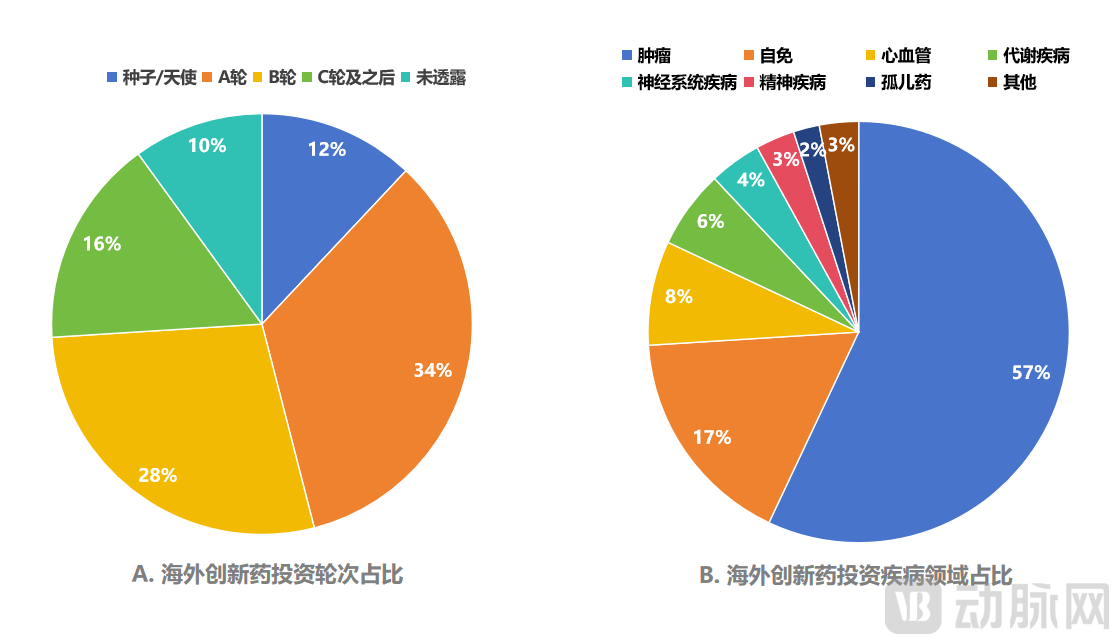 Figure 4.82 Distribution of Overseas Investment Rounds and Disease Areas Since [Year] (Chart by VCBeat)
First, in terms of investment stage, domestic capital still favors early-stage innovative drug projects; among 82 overseas direct investments,The financing proportion for Series A and prior rounds is 46%.This aligns closely with the investment logic prevalent in China, primarily because early-stage innovative drug projects are more accessible and, if successful, can yield substantially higher returns. For instance, Hillhouse Capital participated in ArriVent’s Series A financing in 2021, and the company successfully completed its IPO in 2024, generating considerable investment gains for Hillhouse in less than three years.
Another major trend is reflected in the areas of focus,Innovative drug projects in oncology, autoimmune diseases, and other areas have attracted significant attention from domestic capital, accounting for as high as 74% of their investments.There are natural reasons for this. On one hand, these fields have significant clinical demand, and related technological innovations and therapies are continuously evolving. For instance, small molecules, which account for the largest share of investment, have seen a series of breakthroughs in recent years, driven by advancements in technologies such as protein degradation therapy and artificial intelligence. Among the 30 small-molecule drugs approved by the FDA in 2024, more than 40% were either “first-in-class” therapies with unique mechanisms of action or had received FDA Breakthrough Therapy designation.
On the other hand, it is based on giving back to the domestic market. By investing in overseas innovative drug projects, one can not only participate deeply but also promote the rapid development of this field in China. In this regard, a senior investor remarked, “When evaluating overseas projects, our primary consideration may not be the investment returns of the project itself; rather, we aim to use it as a benchmark to identify similar projects in the Chinese market and support their rapid growth.“Therefore, overseas investment has actually provided us with a direction, validating the market value and future potential of this sector.”
The final major trend is reflected in investment destinations,The United States is undoubtedly the top choice, with 76 out of 82 overseas direct investments targeting innovative drug projects in the U.S., accounting for 92.68%.This is not difficult to understand. The United States is undoubtedly the largest global market for innovative drugs and possesses strong R&D capabilities, with annual R&D investment accounting for more than half of the global total. Consequently, it hosts a large number of innovative drug projects, offering Chinese capital ample investment opportunities. Furthermore, the relatively frequent business interactions and personnel exchanges between Chinese and U.S. pharmaceutical companies have laid a solid foundation for Chinese capital to seek opportunities in the U.S. innovative drug sector.
So, as we enter 2025, with the momentum of domestic capital expanding overseas growing stronger, what new changes have emerged in overseas innovative drug investment?
The first point still focuses on the targeted areas.No longer confined to oncology and autoimmune diseases, investment interest is gradually extending into areas such as neuroscience, rare diseases, and pain management.This shift is driven, on one hand, by the increasingly fierce global competition in the oncology and autoimmune disease sectors, making it significantly more challenging to stand out; on the other hand, new market opportunities are continually emerging. For instance, Centrexion, which recently received investment, focuses on the pain management sector—a field that has witnessed rapid growth in recent years. With over 300 related novel drugs currently under development worldwide, this sector holds substantial potential to become the next blockbuster market.
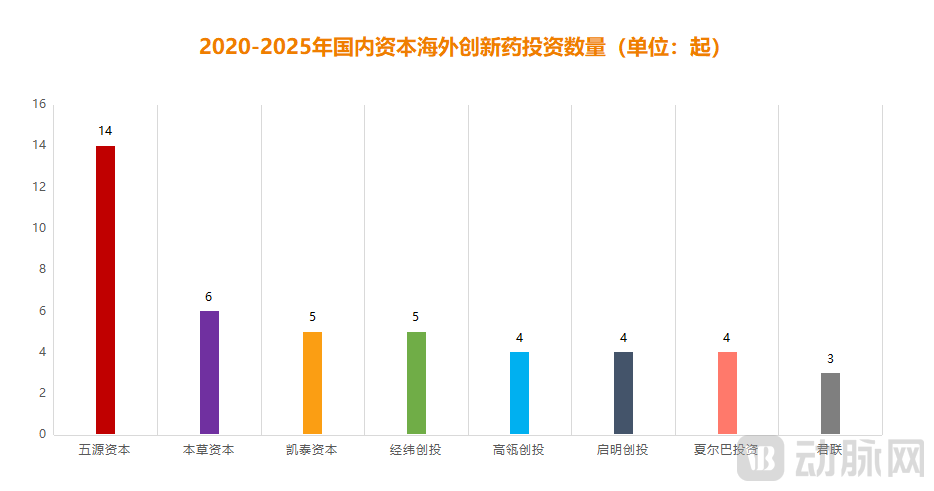 Figure 5. Number of Overseas Innovative Drug Investments by Chinese Capital, 2020–2025 (Chart by VCBeat)
The second most significant change lies in the anchoring of project sources.Domestic Capital No Longer Bets Solely on the U.S. Market, Singapore, Japan, Indonesia, the United Kingdom, and Switzerland are also witnessing widespread growth. The final major change has occurred at the institutional level: while overseas investment in innovative drugs was previously dominated by leading market-oriented firms, small and medium-sized domestic institutions have now begun to participate, resulting in a diversification of institutional types.
It is evident that current domestic capital is investing in overseas innovative drugs,With more choices, it has also become more openRelease。
How Can Chinese Capital Truly Go Global Amid the Wave of Globalization?
According to a recent research report released by Huafu Securities,From January to May 2025, the total value of overseas business development (BD) transactions for innovative drugs from China reached $45.5 billion, nearly approaching the full-year transaction volume of 2024.. And this is just the beginning. According to multiple authoritative institutions, this year marks the inaugural year of business development (BD) deals for China’s innovative drugs, with transaction volumes poised to reach new highs. This signals that global pharmaceutical giants will continue to “snap up” Chinese innovative drugs.
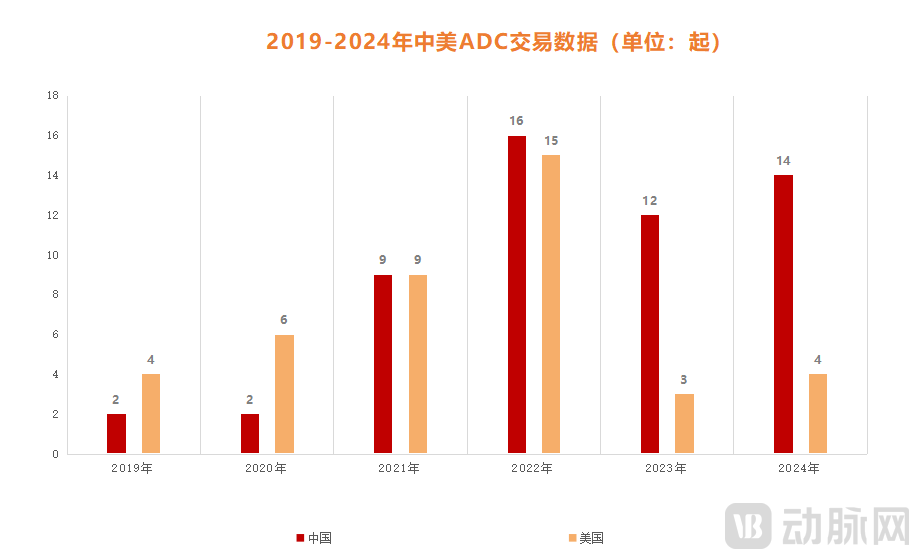 Figure 6. Global ADC Transaction Data between China and the United States, 2019–2024 (Data source: CITIC Securities; Chart by VCBeat)
The reasons behind this are not difficult to understand, primarily because the overall quality of innovative drugs in China has significantly improved. It is reported that in 2024, China ranked first globally in the proportion of emerging pipelines such as ADCs, cell therapies, bispecific antibodies, and oncolytic viruses. In particular, regarding ADCs, China has become the largest country for out-licensing transactions of ADC pipelines worldwide, with domestically produced ADC new drugs accounting for more than 40% of the global pipeline.
It is precisely for this reason that Chinese innovative drugs are in unprecedented demand in the global market. In fact,In frequent overseas business development deals, many global pharmaceutical giants have achieved remarkable turnarounds thanks to innovative drugs from China.Taking Instil Bio as an example, the company was once a star biotech in the TIL field. However, following the failure of its core pipeline, its stock price plummeted to below $1. Later, with the licensing-in of a PD-L1/VEGF bispecific antibody and a CTLA-4 antibody from Yiming Kangke, which achieved breakthrough progress, its stock price surged to $92, significantly alleviating the operational pressures on this near-bankrupt company. In fact, there have been many such “turnaround” cases in the past two years.
It is evident that Chinese innovative drugs are increasingly integrating into the global industrial ecosystem, undoubtedly providing domestic capital with a genuine opportunity to expand overseas. Just as a wave of US dollar funds once bet on Chinese innovative drugs, domestic investors have now extended their reach into broader market segments. However, much like the global expansion of Chinese innovative drugs, overseas investment currently faces significant challenges.
The foremost challenges are the differences in market, regulation, and culture.. Taking regulation as an example, drug approval standards and processes vary across different countries and regions, with distinct characteristics in clinical trial regulations, drug registration procedures, and medical insurance reimbursement systems. A single market strategy is clearly insufficient to address these complexities comprehensively. This necessitates that Chinese capital, when expanding overseas, become as familiar as possible with local laws, regulations, and market norms to avoid compliance risks.
Secondly, post-investment management is highly challenging.. Because the overwhelming majority of domestic capital remains focused on the Chinese market, overseas operations typically involve either assembling a small team or conducting periodic visits, resulting in limited overall engagement. Furthermore, there is a relative scarcity in China of professionals with an international perspective and familiarity with overseas regulations and market environments—expertise essential for investing in innovative drugs abroad. Consequently, domestic investors are far less adept at managing their overseas portfolio companies than their domestic ones.
The final point is the impact of geopolitics., these are certainly uncontrollable factors. For instance, enhanced cross-border investment reviews by European and American countries on key innovative drug technologies may bar some Chinese capital from entry or impose stringent conditions on collaborations, which would, to a certain extent, undermine the overseas investment interests of Chinese capital.
Therefore, amid the current fervor for overseas investment, domestic capital should remain cautious and rational.It is important to recognize that not all domestic capital is suitable for “going global” to seek profits.. Furthermore,Investment in the field of innovative drugs is never a one-off transaction; it is, in fact, a prolonged process of ecosystem building. To truly expand overseas, domestic capital should proactively identify innovative sectors with high potential value and leverage its competitive advantages to the fullest extent.。
Only in this way can we transform our current tentative steps into a true long-term voyage for the future.
1. “WuXi AppTec Becomes an LP Again, Investing in a U.S. Private Equity Fund” — Yiqi Rongzi;
2. “BD Deals Surge: Total Value Exceeds $45.5 Billion This Year! Can China’s Innovative Drugs Open Up New Growth Space?” — The Paper;
3. “China’s Innovative Drugs Enter the Deep Waters of the Global Market” – Shanghai Securities News.