

Launch of the First Digestive Specialty AI Doctor Standard: 'Inflammatory Bowel Disease (IBD) AI Doctor'
On June 13, 2025, the inaugural workshop for the development of China’s first AI physician standard dedicated to a specific digestive system disease—the “Artificial Intelligence Physician for Inflammatory Bowel Disease (IBD)” standard—was successfully held at the China Academy of Information and Communications Technology.
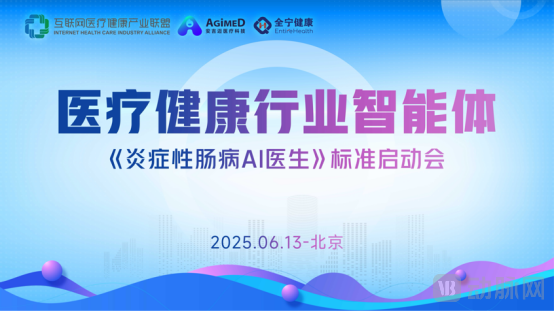
This symposium was co-hosted by the China Academy of Information and Communications Technology (CAICT), Quanning Health, and Anjimai Medical Technology, with participation from top experts at medical institutions such as Shenzhen Qianhai Taikang Hospital and Peking Union Medical College Hospital, as well as leading enterprises in medical education and research, and professional medical media outlets.
The attending experts engaged in an in-depth discussion on the first industry-specific standard for digestive diseases under the “Intelligent Agents in the Healthcare Industry” standard framework: Inflammatory Bowel Disease (IBD). Aligning with the clinical characteristics of IBD and the urgent needs of both patients and healthcare providers, the discussion prioritized the practical implementation of “AI-powered digital physicians.” This initiative aims to empower patient-provider connectivity, facilitate scientific research and data accumulation, integrate intra- and extra-hospital scenarios and data, and deliver cost-effective, high-quality services throughout the entire disease course for IBD patients, thereby contributing to the realization of the “Healthy China 2030” goals.
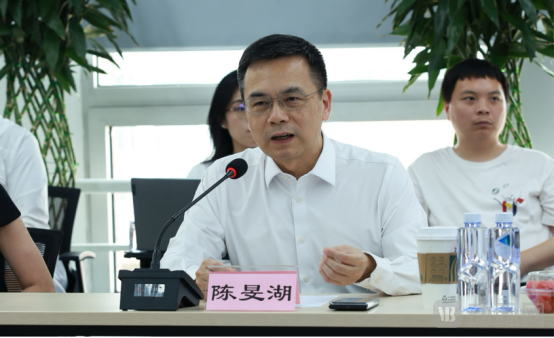
Professor Chen Minhu, Chair of the Inflammatory Bowel Disease (IBD) Group under the Chinese Society of Gastroenterology, President of Shenzhen Qianhai Taikang Hospital, and affiliated with The First Affiliated Hospital of Sun Yat-sen University, delivered the opening remarks. Professor Chen pointed out that IBD, a disease highly correlated with urbanization and the degree of food industrialization, is currently the most complex condition to treat in gastroenterology clinical practice, causing extreme patient suffering and characterized by the longest disease course. Given the low average age of onset (15–35 years), the need for lifelong treatment, and the shortage of highly skilled physicians, there is an urgent need to leverage advanced AI technologies to enhance patient education and post-diagnosis management. This aims to better improve treatment outcomes and quality of life for patients, further creating a “Chinese model” for AI-assisted IBD treatment.

Han Shengri, Chairman of Quanning Health, pointed out that as artificial intelligence technology continues to accelerate at an increasing pace, a growing number of unevenly qualified healthcare AI projects are being rapidly launched. A qualified "Healthcare + AI" application should, at a minimum, simultaneously fulfill three core values: expert consensus, patient experience, and social benefit. At this critical juncture, the establishment of standards for inflammatory bowel disease (IBD)—the first such initiative for digestive system diseases—not only stands to benefit more than 1.5 million IBD patients and their families but also holds significant demonstrative value and reference significance for the future development of medical AI applications.

Feng Tianyi, Director of the Digital Health Department at the Cloud and Big Data Institute of the China Academy of Information and Communications Technology (CAICT), provided attending experts with a detailed overview of the progress in standardization work for large models in the healthcare industry. The standard system for healthcare large models will be structured around dimensions such as tools and platforms, operations and management, typical products and services, and security governance. Through three major series—Technical Requirements for Healthcare Large Models, Maturity Assessment Model for Healthcare Large Models, and Agents in the Healthcare Industry—the initiative aims to provide unified, standardized, and progressive guidelines for AI applications in healthcare, thereby promoting the healthy and orderly development of the industry.

During the expert sharing session, Professor Chen Minhu, former Chairman of the Chinese Society of Gastroenterology under the Chinese Medical Association, and Professor Yang Hong, a gastroenterology specialist at Peking Union Medical College Hospital, provided detailed insights into clinical research on inflammatory bowel disease (IBD) and the communication and management needs between physicians and patients. They further emphasized the application potential of intelligent medical tools, particularly physicians’ digital intelligence avatars, in patient education, scientific research, and patient lifestyle management.
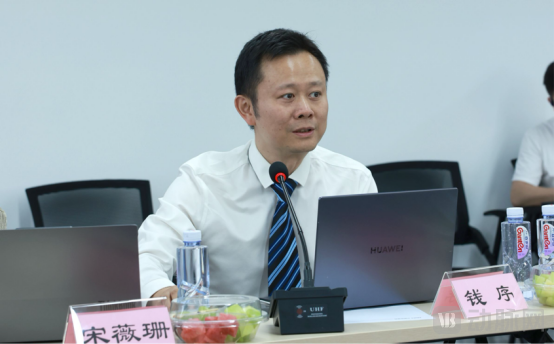
Qian Xu, Chief Operating Officer of Angimai Medical Technology, delivered a keynote presentation titled “Inflammatory Bowel Disease: An Intelligent Interaction Model for Doctor-Patient Engagement.” Drawing on Angimai’s two years of R&D and operational experience and data in specialized diseases such as multiple myeloma, he introduced how artificial intelligence technologies can be leveraged to provide intelligent, personalized doctor-patient connectivity services for patients with inflammatory bowel disease and medical experts. Qian pointed out that the role of AI-powered digital physicians is to empower rather than replace human clinicians. While providing whole-course post-diagnosis management services for patients, AI-powered digital physicians also offer dynamic, personalized, high-quality, multimodal data management and insightful support for experts’ clinical diagnosis and research.

During the discussion and exchange session, participating experts, guests, media representatives, and others engaged in dialogue on the application potential and boundaries of artificial intelligence in healthcare, innovation in medical education systems, and the standard framework for “Intelligent Agents in the Healthcare Industry.”
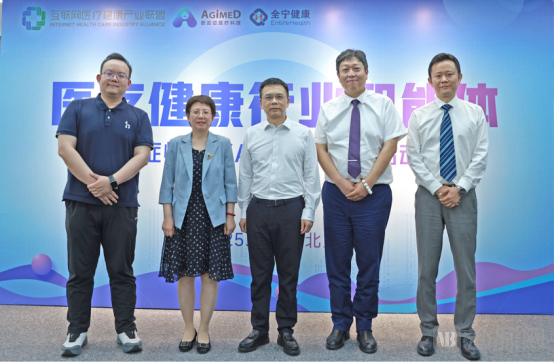
The successful convening of this seminar marks another solid step forward in the development of the “AI Agents for the Healthcare Industry” standard series. Taking inflammatory bowel disease as a starting point and centering on the needs of both patients and healthcare providers, participants explored the formulation of standards for disease-specific AI agents. All parties will jointly promote the standardized development and application of more disease-specific AI agents.
As technology continues to be applied and standard systems are gradually improved, medical artificial intelligence will undoubtedly greatly liberate the advanced productivity of medical experts, bring more high-quality medical resources to patients, provide a new connection model for both doctors and patients, reshape and strengthen the trust relationship between them, and rapidly improve patient compliance and satisfaction. Achieving better prognostic outcomes and alleviating the physical, mental, and financial burdens on patients and their families is not only the professional pursuit of healthcare workers but also a shared mission that practitioners in digital smart healthcare must fulfill!