

ECM Recognized as a Hallmark of Aging in Top Journal Cell, Accelerating Upstream Investment and Commercialization

BAIYIYUAN BIOTECH
Developer of Biomedical Materials
Bloomage Biotech
Developer of bioactive substance products, producer of hyaluronic acid raw materials
Extracellular Matrix (ECM), hailed as the third-generation bio-regenerative material, is reaching a turning point in its development.
On April 17, 2025, Guido Kroemer’s team at Sorbonne University in France published a review article titled “From geroscience to precision geromedicine: Understanding and managing aging” in Cell, listing the extracellular matrix (hereinafter referred to as “ECM”) as the thirteenth hallmark of aging.
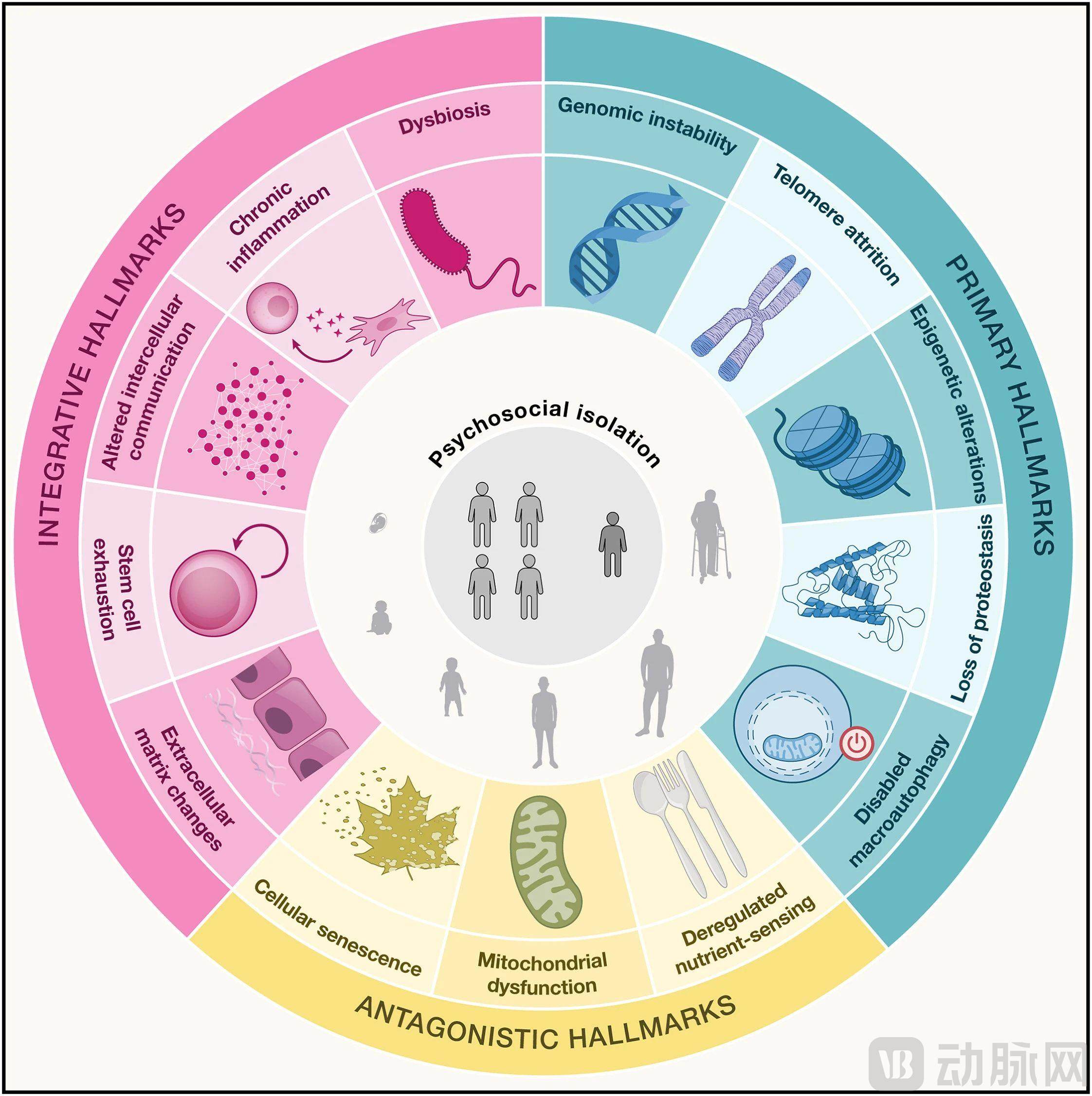
Biomarkers of Human Aging. Image source: Cell
Meanwhile, upstream companies focusing on the emerging material ECM, Meibo Biotech and BAIYIYUAN BIOTECH, have recently secured strategic investments amounting to tens of millions of RMB, aiming to accelerate the commercialization of ECM-related products. Market analysts believe that with the rise of ECM materials, the field of regenerative medicine is entering a new era, transitioning from “artificial filling” to “biomimetic regeneration.”
Although ECM currently faces a series of challenges related to cost, technology, and market awareness, it is entering a golden age of development, driven by its publication in top-tier journals and increased capital investment.
Faced with such a highly promising material, leading enterprises naturally would not miss the opportunity.
In late April, shortly after the publication on ECM in *Cell*, Bloomage Biotech’s self-developed sodium hyaluronate complex solution for injection—Type M “Runzhi·Titou”—received approval for a Class III medical device registration certificate. This marks the first compliant skin booster product in China with “facial skin quality improvement” as its indicated use, representing a clinical application of a combined intervention strategy targeting ECM aging.
At the 5th Recombinant Collagen Science Forum and Marubi New Product Launch, Marubi Biotech announced that its research on skincare-active ingredients has expanded to encompass all major extracellular matrix proteins (ECM proteins). Shiseido Group also launched its innovative microneedle product, MicroClick Concentrate, in May. Containing niacinamide and barrier-repairing ingredients, the product claims to modulate ECM-related gene expression, impacting areas such as immunity, angiogenesis, and collagen synthesis.
L’Oréal Group has announced its research findings on Phyllanthus emblica extract in the field of the extracellular matrix (ECM), while Shandong Freda Biotech Co., Ltd. has also embarked on the development of MatrixColla-1, a collagen-healing agent aimed at achieving precise regulation of the ECM. In March this year, Estée Lauder Companies published its research results on self-assembling short peptides in the International Journal of Cosmetic Science (IJCS). This research directly targets the ECM and provides new scientific evidence for the optimization of future skincare products and Class III medical device dermal fillers used in medical aesthetics.
In late 2024, JD Health also partnered with Hengan Fulin to launch the new product Lidian ECM Collagen Dressing, designed for skincare following minimally invasive plastic surgery and photoelectric skin treatments.
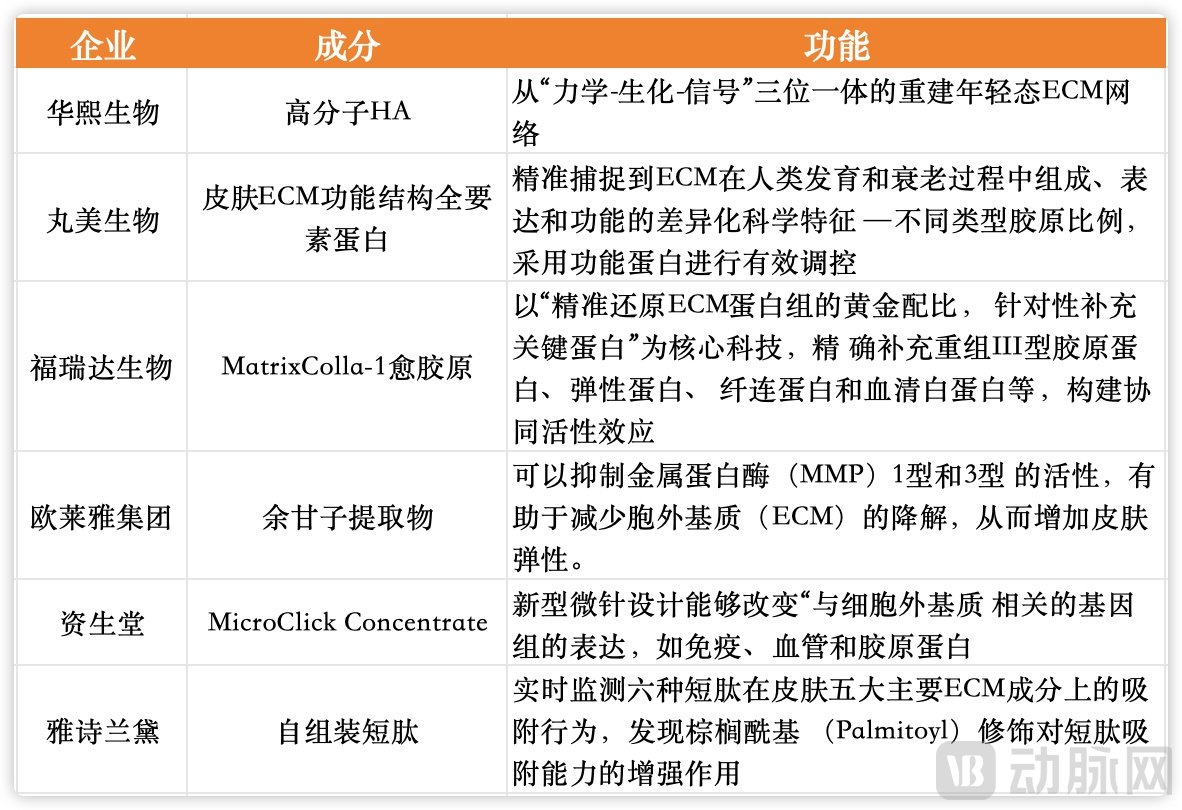
Overview of Corporate Layouts, Compiled from Public Information
The key to attracting major brands to continuously enter the market lies in the uniqueness of ECM.
The extracellular matrix (ECM) is a complex three-dimensional network structure composed of various proteins, glycosaminoglycans, proteoglycans, and diverse growth factors. It not only provides physical support for cells but also transmits critical survival signals. When the growth signals received by cells from the ECM decrease, cells tend toward senescence; if these signals are completely lost, cells face death. Furthermore, through interactions with various cell types, the ECM establishes specific cellular microenvironments, promotes the secretion of extracellular proteases, and modulates the bioactivity of growth factors, thereby indirectly regulating cellular behavior.
In simple terms, the three major characteristics of the ECM—its structural support, signaling hub, and growth microenvironment—are the primary pillars supporting anti-aging research and product development.
Bloomage Biotech also stated that after its product approval, traditional anti-aging strategies mostly focused on supplementing a single ingredient (such as collagen), but research on the ECM has shown that the essence of aging is “systemic imbalance” rather than the deficiency of a single component. Restoring ECM function and activating regenerative signals represent an evolution in anti-aging interventions from targeting single ingredients to adopting a systemic approach.
Overall, the R&D directions of numerous brands mainly fall into two categories: one is to supplement the ECM or regulate its key components; the other is to prevent ECM degradation. Achieving these two objectives requires guaranteed raw material supply, which may also explain why capital has been actively entering this sector.
In recent months, ECM has come into the spotlight of capital.
In April, Meibai Biotech, a company focused on the research and development of human-derived extracellular matrix (ECM) regenerative material series products, completed tens of millions of yuan in its A++ round of financing.
Meibo Biotech was co-founded in July 2020 by Dr. Xiao E, a postdoctoral fellow at the University of Pennsylvania and founder of the Oral and Maxillofacial Surgery Laboratory at Peking University School of Stomatology, and Professor Wei Qiang from the State Key Laboratory of Polymer Materials Engineering at Sichuan University. The company is the first enterprise in China to efficiently produce ECM regenerative materials using human cell-based in vitro tissue engineering technology, and also the first in China to complete the classification and definition of recombinant human collagen raw materials.
Currently, Meibo Biotech has established a 4,000-square-meter production base in Hunan Province for its aseptic processing line of medical devices, with an annual capacity of 800,000 units of sterile gel and an output value nearing RMB 1 billion.
Cofoe Medical led this round of investment, expressing strong recognition of Meibo Biotech’s technological expertise in regenerative medical materials based on human extracellular matrix and its commercialization prospects. The two parties are expected to engage in deep collaboration in the areas of high-end dressings and wound repair through technological innovation, product development, and market promotion.
Subsequently, in May, BAIYIYUAN BIOTECH, which focuses on the research and development and production of novel biomedical materials represented by extracellular matrix (ECM) for tissue repair, wound healing, and regenerative medical aesthetics, secured a financing round amounting to tens of millions of RMB.
Unlike Hemeibai Biotech, which opted for a humanized ECM pathway, BAIYIYUAN BIOTECH chose an animal-derived technological approach.
BAIYIYUAN BIOTECH focuses on porcine small intestinal submucosa extracellular matrix (SIS-ECM), an animal-derived tissue regeneration material, and continuously expands its ECM material portfolio across multiple systems, including AAM. The company has established two proprietary technology platforms: SIS-ECM (porcine small intestinal submucosa extracellular matrix) and AAM-ECM (acellular adipose matrix). Based on these platforms, it has developed two core products: absorbable biological membranes and biological patches for dura mater (and spinal dura mater).
In addition to its applications in traditional medical fields, Baiyiyuan Biotech is also conducting product R&D on ECM materials for the aesthetic medicine filler and skin booster sectors. Currently, its SIS-ECM filler product is nearing completion of clinical development and is expected to submit a product registration application this year.
Notably, this round of financing was exclusively invested in by the listed company CMS Pharmaceutical. Similar to Cofoe Medical, the purpose of this investment is to create synergy with its existing business.
As early as June 2024, CMS Pharmaceuticals announced that its subsidiary, CMS Aesthetics, had entered into an exclusive licensing agreement with BAIYIYUAN BIOTECH for a minimally invasive aesthetic injectable product, “Acellular Dermal Matrix Implant.” Under the licensing agreement, CMS Aesthetics will obtain the rights to promote, sell, and commercialize the product in China for a term of 10 years.
The partnership between CMS Aesthetics and BAIYIYUAN BIOTECH signifies a further enhancement in the competitiveness of CMS Aesthetics’ portfolio of regenerative, minimally invasive aesthetic products, while also strengthening its overall capabilities in the minimally invasive aesthetics sector. The acellular dermal matrix implant will complement its currently marketed hyaluronic acid products as well as its pipeline of regenerative minimally invasive aesthetic products, creating a more diverse product matrix to meet consumers’ increasingly personalized and refined aesthetic needs.
This move, coming after a one-year hiatus, can be viewed as a continuation of previous collaboration and also indirectly demonstrates CMS’s confidence in the development prospects of ECM products.
Currently, there are relatively few upstream ECM-related companies in China. In addition to the two aforementioned firms, others include Huaqing Zhimei (Meibiyuan) and Hengan Fulin. Each company possesses distinct technological characteristics; for instance, Huaqing Zhimei employs biomimetic manufacturing, utilizing biological 3D printing to construct “cellular super factories” that simulate the in vivo microenvironment to induce human-derived stem cells to secrete ECM.
Two listed companies have successively made their moves, driven not only by the synergies with their existing businesses but also by the fact that the entry of industrial capital marks the transition of the ECM sector from a phase of technological exploration to one of accelerated commercialization. Companies possessing independent intellectual property rights and robust clinical data are naturally more favored.
Furthermore, upstream companies’ experience in securing regulatory approvals for products in serious medical scenarios is also a key factor in attracting investors. After all, the expansion of ECM into aesthetic indications hinges on obtaining Class III medical device certification; familiarity with regulatory requirements significantly facilitates product approval.
Obtaining certification is the primary concern.
For medical aesthetic dermal fillers, obtaining a Class III medical device certification is undoubtedly of paramount importance. However, based on the regulatory requirements for medical device registration, current medical aesthetic filler products almost universally emphasize the absence of live cellular components and biologically active ingredients. In other words, the primary mechanism of action of the product must be achieved through physical means, rather than through pharmacological, immunological, or metabolic pathways; or, if these pathways are involved, they play only an ancillary role.
According to the definition of ECM, it fails to meet the requirement of containing no bioactive components; therefore, many companies have opted for the ADM pathway.
Simply put, acellular dermal matrix (ADM) is an engineered product of the extracellular matrix (ECM), representing the form of ECM after undergoing a decellularization process. By removing immunogenic cells and epidermis, ADM guides host cell ingrowth and tissue regeneration to promote bodily repair.
In terms of structure and composition, ADM features a regular three-dimensional mesh-like scaffold structure. It is acellular but retains nearly all non-cellular components, structures, and functions. These include type I and type III collagen fibers, which constitute the basic framework of ADM and provide the tissue with certain strength and flexibility (accounting for approximately 50% of the original tissue volume), as well as glycoproteins in the ECM that play roles in connection and repair.
Furthermore, the ADM scaffold retains certain components found in native tissues, such as hyaluronidase, chondroitin sulfate, fibronectin, VEGF, bFGF, TGF-β, neuregulin, EGF, and BMP-4. ADM not only guides fibroblasts to secrete collagen but also effectively induces dermal fibroblasts to synthesize hyaluronic acid, while exerting no effect on keratinocytes and melanocytes. This makes it a key formulation for improving skin quality.
According to data from ZhiXie Cloud, there are currently 17 approved ADM (Acellular Dermal Matrix) products in China, primarily used for oral and corneal applications, as well as for the repair of various wounds and the abdominal wall. The raw materials are almost exclusively of animal or human origin, representing a relatively mature category of Class III medical devices. In the second round of medical device classification determinations in 2025, a classification code was assigned to medical-grade micronized acellular dermal matrix for subcutaneous injection, intended for nasolabial fold augmentation or facial contour improvement.
In other words, given that ADM has long held Class III medical device approval for serious medical applications, its approval for use in aesthetic injectables is merely a matter of time.
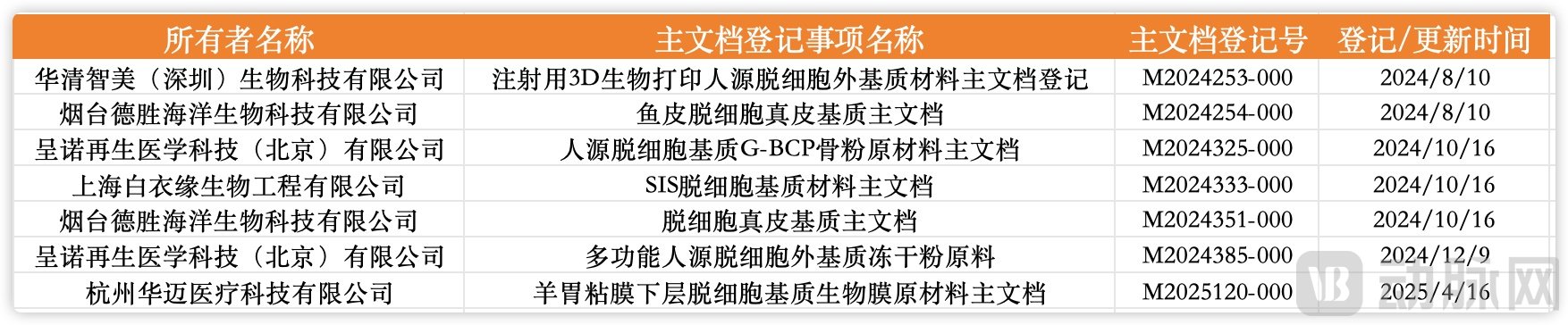
Decellularized Matrix Materials with Completed Master File Registration, Data Sourced from the Center for Medical Device Evaluation of the National Medical Products Administration
According to data from the Center for Medical Device Evaluation of the National Medical Products Administration, multiple domestic enterprises have currently completed the master file registration for acellular matrix materials. From a technical perspective, the preparation of Acellular Dermal Matrix (ADM) presents certain technical barriers. Enterprises that have secured a first-mover position are expected to gain a competitive advantage in subsequent commercial implementation, which may also be one of the reasons why two upstream companies have secured substantial financing.
The rise of ECM may not be merely a matter of material updates.
For medical aesthetic institutions, the introduction of novel materials has not only brought new anti-aging mechanisms but also endowed the industry with new narrative approaches. First, in terms of customer acquisition, the natural contouring and anti-aging effects of ECM can attract potential clients who have previously been hesitant about medical aesthetics. This customer segment has historically harbored doubts regarding foreign-body fillers; the emergence of ECM effectively addresses these concerns, enabling medical aesthetic institutions to more easily expand into new customer bases.
Secondly, for clients with a certain level of experience, the medical aesthetics market previously prioritized "immediate results." However, as social trends shift, the allure of natural-looking enhancement has become more attractive to this demographic. Compared to traditional filler techniques, ECM better aligns with their pursuit of naturally enhanced beauty. Therefore, by attracting this segment of seasoned clients, medical aesthetic institutions can not only effectively boost performance but also leverage their influence to build a strong reputation.
Certainly, for medical aesthetics institutions, the enhancement of tools implies that their own capabilities must also be improved.
The rise of ECM not only drives revenue for medical aesthetic institutions but also presents new challenges, such as elevated aesthetic expectations. Unlike traditional “what you see is what you get” filler approaches that provide immediate volume replacement, ECM requires a process of natural tissue regeneration, resulting in a longer time to visible effects. Therefore, managing customer expectations during the sales process becomes critical. In this context, possessing excellent aesthetic literacy and judgment—enabling practitioners to educate or meet clients’ aesthetic needs and preferences, while providing professional guidance, tailored solutions, and personalized services—will undoubtedly facilitate successful transactions.
Meanwhile, the natural growth characteristics of ECM impose higher demands on building trust between medical aesthetic institutions and clients; however, once this trust is established, it can drive long-term client retention and repeat purchases. Overall, the rise of ECM has not only brought profound impact and transformation to anti-aging interventions but also created opportunities for rapid development among upstream and downstream enterprises in the industry chain. Although many challenges remain, overcoming them will pave the way for a smooth and promising future.
References:
1. Qi Yanhong, Liu Yi. Current Status of Research on Micronized Acellular Dermal Matrix. Chinese Journal of Aesthetic and Plastic Surgery, 2019, 30(4): 221-223+258
2. Wang Ying, Leng Ling. The Role of Extracellular Matrix (ECM) and Organoids in Skin Tissue Repair. Chinese Journal of Cell Biology 2025, 47(5): 981–990