

Bayzed Health Lists on HKEX with Academician-Backed Model, Marking a Milestone for Private Oncology Care
Bayzed Health Group
Oncology Specialty Medical Services Group
Another Listed Company Joins the Oncology Specialty Medical Services Sector! Today, Baize Healthcare Lists on the Hong Kong Stock Exchange.
Since its establishment in 2017, Baize Medical has primarily expanded through acquisitions. Currently, Baize Medical operates and manages eight healthcare institutions in Beijing, Tianjin, Anhui Province, Shanxi Province, and Henan Province. Among these, two are under trusteeship, and of the six self-owned hospitals, five were acquired assets.
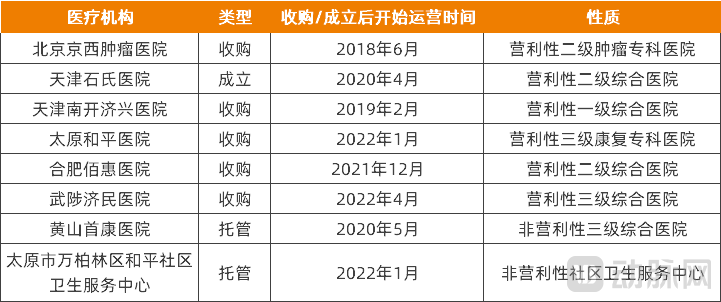 Eight Medical Institutions Operated and Managed by Baize Medical, Source: Prospectus
Following the acquisition, Baize Medical has successively completed the transformation of its major hospitals, aligning with its overall strategy for full-cycle oncology care and taking into account the actual distribution of regional medical resources. Initiatives have included strengthening disciplines related to oncology and rehabilitation, establishing early cancer screening, prevention, and treatment centers, adding day wards, and launching radiation therapy departments. Meanwhile,Baize Medical has also established long-term, in-depth collaborations with Peking University Cancer Hospital, Academician Shi Xuemin, and his medical team, securing multifaceted support from high-quality resources.
Driven by multiple strategic initiatives, the hospitals under Baize Medical have seen a significant improvement in performance, thereby boosting overall revenue. In 2022, 2023, and 2024, the Group’s revenue amounted to RMB 803 million, RMB 1.072 billion, and RMB 1.188 billion, respectively. The Group’s net loss narrowed from RMB 75.51 million in 2022 to approximately RMB 3.56 million in 2024. On an adjusted net profit basis, Baize Medical achieved a profit of approximately RMB 12.5 million in 2024.
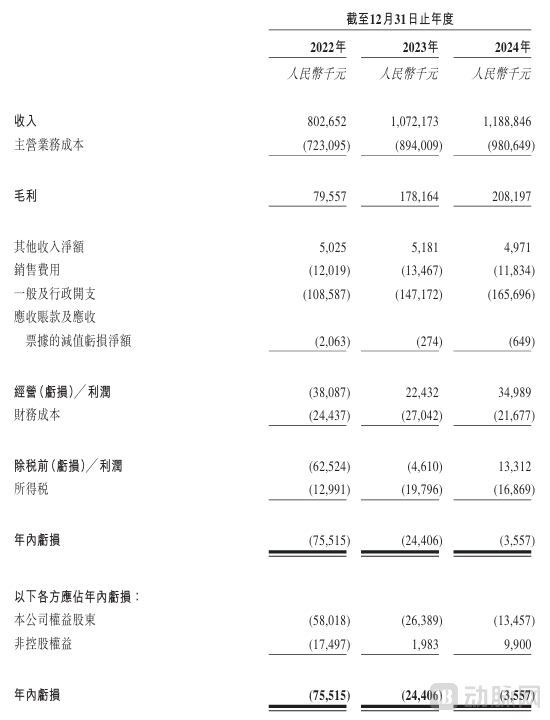
Baize Medical’s Performance Data, Image Source: Prospectus
With the listing of Baize Medical, joining previously listed Yinkang Life, Hygeia Healthcare, and Meizhong Jiahe, there are now four publicly traded companies in the oncology medical services sector, making it one of the most densely listed specialized fields in serious healthcare. Oncology care is once again in the spotlight in the capital markets.
Amid the trend of population aging, the demand for cancer prevention and control ensures deterministic growth in the oncology healthcare market. As the cancer prevention and control system is improved, there is substantial room for enhancement across all stages, including risk factor management, cancer screening, early diagnosis and treatment, standardized diagnosis and therapy, and rehabilitation and management.
For private medical institutions, the key lies in identifying a suitable breakthrough point among the many areas urgently in need of improvement. Baize Medical has established a service model with early cancer screening as its entry point.
“Cancer is often detected only at an advanced stage.” This perception and phenomenon have long been prevalent, largely due to low awareness of core cancer prevention and control knowledge, as well as low rates of early screening, early diagnosis, and early treatment. Implementing measures such as proactive prevention, early screening, and standardized treatment has demonstrated significant effectiveness in reducing cancer incidence, mortality, and disease burden.
The “Implementation Plan for the Healthy China Action—Cancer Prevention and Control Action (2023–2030)” proposes that the overall five-year survival rate for cancer should reach 46.6% by 2030. Notably, the document devotes significant attention to “promoting early diagnosis and treatment of cancer and strengthening long-term screening mechanisms,” calling for the improvement and dissemination of guidelines for early diagnosis and treatment of key cancers, deepening efforts in early cancer screening and early diagnosis and treatment, establishing a stratified cancer screening system, and continuously conducting organized screening in regions with high cancer incidence and among high-risk populations.
To date, the Chinese Medical Association has developed multiple cancer screening guidelines, including the Guidelines for Screening, Early Diagnosis, and Early Treatment of Esophageal Cancer in China, the Guidelines for Screening, Early Diagnosis, and Early Treatment of Gastric Cancer in China, the Expert Consensus on Screening Processes for Early Colorectal Cancer in China, and the Guidelines for Screening, Early Diagnosis, and Early Treatment of Female Breast Cancer in China. Advanced age is a significant factor contributing to an increased risk of cancer. The Chinese Medical Association recommends regular cancer screening for individuals aged 40 years and older. As of December 31, 2022, the population aged 40 years and older in China exceeded 720 million.
The field of early cancer screening services in China is still in a developmental stage, with relatively few standardized norms for the precise identification of target populations and the delivery of such services. In response, Baize Medical, in collaboration with the Beijing Anti-Cancer Association, jointly formulated the "Guidelines for Early Screening of High-Incidence Cancers in China," which clearly define the scope of high-risk populations suitable for early cancer screening services, thereby enabling precise targeting of the intended customer base.
In January 2019, Baize Medical established its first Early Cancer Screening, Prevention, and Treatment Center at the Beijing Jingxi Tumor Hospital. However, other hospitals acquired, self-built, or managed by the group are primarily general hospitals and specialized rehabilitation hospitals, for which early cancer screening and diagnosis were not originally core competencies. In response, Baize Medical leveraged the "Guidelines for Early Screening of High-Incidence Cancers in China" to develop digital systems such as those for assisted early cancer screening, implementing standardized early cancer screening across its affiliated institutions and replicating the screening center model.
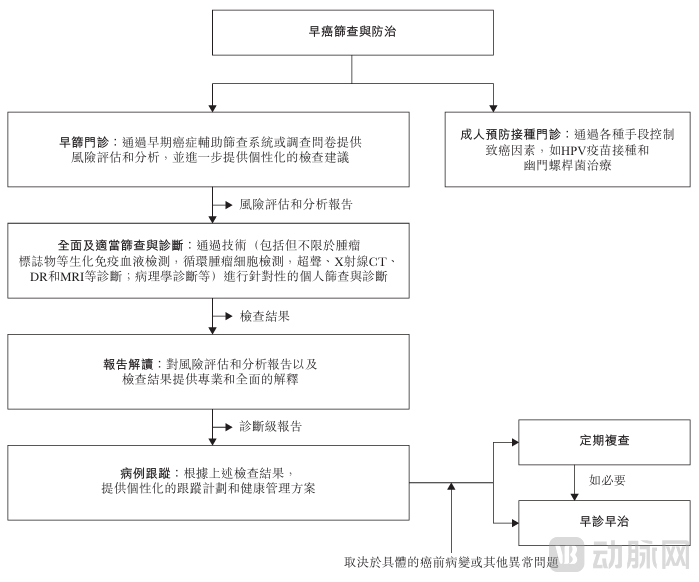 Baize Medical’s Early Cancer Screening Service Process, Image Source: Prospectus
Currently, among the eight medical institutions operated and managed by Baize Medical, all except for the sole community health service center have established early cancer screening centers.Meanwhile, a three-tiered cancer prevention and control system characterized by inter-institutional collaboration has been established among medical institutions, enabling smoother patient referral and return flows across different levels of care.
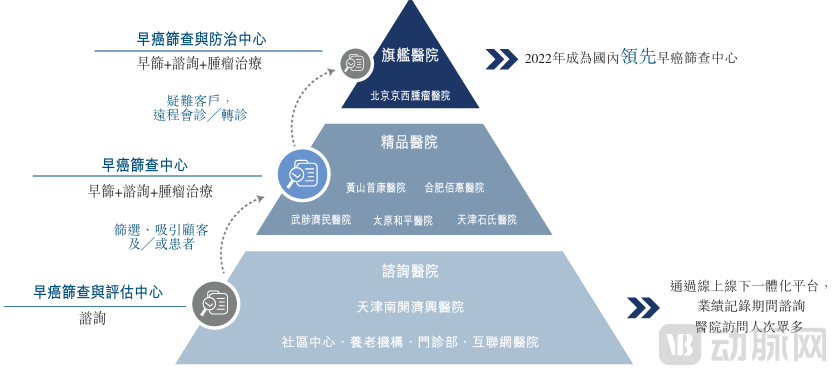 Baize Medical's Three-Tier Cancer Prevention and Control System
In recent years, various health checkup institutions have launched a variety of cancer screening programs, incorporating them into group or individual checkup packages. Unlike the cancer screening services offered by most health checkup providers, Baize Medical’s early cancer screening primarily targets specific populations and provides health management, expedited referral channels, and other services to those in need.
Specifically, Baize Medical focuses on early cancer screening for high-risk populations, such as individuals with a family history of cancer. Through expert-led early cancer assessments, screenings, and post-screening interpretations, the company provides diagnostic-level reports. Unlike conventional health checkup reports, these documents not only present precise data but also offer diagnostic evaluations of customers’ health status based on test results, along with personalized health guidance. Upon identifying potential cancer risks, Baize Medical facilitates patient services such as registration and appointment scheduling, and coordinates with oncology departments to carry out cancer diagnosis and treatment.
If the Early Cancer Screening Center serves as the “traffic entry point” for Baize Medical’s oncology diagnosis and treatment, then the center itself must establish sufficiently precise “traffic channels.”Currently, Baize Medical has established an online-to-offline “patient acquisition” model.
Online, Baize Medical promotes early cancer screening knowledge through mini-programs for early screening and internet hospitals; offline, it collaborates with communities, enterprises, public institutions, and insurance companies to hold promotional activities such as science popularization lectures and service recommendation sessions.
With rising public health awareness and advancements in cancer screening technologies, the penetration rate of early screening services among high-risk and general healthy populations is poised for further growth. By leveraging diverse methods to conduct market education and promote standardized early cancer screening, Baize Medical is also expected to secure a steady and sustained influx of customer traffic.
Oncology specialties exhibit a high degree of reliance on diagnostic and therapeutic technologies as well as treatment equipment. There is a scarcity of oncology healthcare professionals, as cultivating high-caliber medical teams requires prolonged education and clinical practice, with such high-quality talent predominantly concentrated in public medical institutions. Furthermore, cancer treatment often necessitates multidisciplinary collaboration; therefore, medical institutions must strengthen the development of other related disciplines to provide comprehensive therapeutic support for cancer patients. The cultivation of outstanding talent and the enhancement of diagnostic and treatment capabilities constitute significant hurdles for the development of private oncology hospitals.
Baize Medical is positioned to provide full-cycle medical services for oncology. Whether it can deliver high-quality diagnosis, treatment, and rehabilitation services following screening is key to its long-term development. In this regard,Baize Medical has partnered with medical institutions and organizations such as Peking University Cancer Hospital and the Tianjin Shi Xuemin Traditional Chinese Medicine Development Foundation, securing resource support from the Peking University network and academicians through long-term, close collaboration.
In terms of diagnostic and treatment resources, Baize Medical has engaged in long-term collaboration with Peking University Cancer Hospital, focusing on the Beijing Jingxi Cancer Hospital, a tiered diagnosis and treatment system for cancer prevention and control, and early-stage cancer screening assistance systems.
As of the end of 2024, hospitals within the Baize Medical System employed 2,829 medical professionals specializing in early cancer screening, tumor diagnosis, tumor treatment, and tumor rehabilitation. Their areas of expertise include digestive system tumors, urinary system tumors, lung cancer, and breast cancer. Among them, there were 1,119 physicians, including 190 chief physicians and 287 associate chief physicians.
Previously, Beijing Jingxi Cancer Hospital also signed a 20-year agreement with Peking University Cancer Hospital (signed in 2011). Under the agreement, Peking University Cancer Hospital provides Beijing Jingxi Cancer Hospital with related support, including personnel training, technical guidance, discipline development, telemedicine, cancer screening, and two-way referral.
Meanwhile, most medical institutions under Baize Medical have joined the Remote Collaborative Platform for Cancer Prevention and Control of Peking University Cancer Hospital. These hospitals conduct remote consultations with renowned medical institutions such as Peking University Cancer Hospital, establishing an internal and external remote consultation network that helps standardize and homogenize “cancer screening, tumor diagnosis, tumor treatment, and tumor rehabilitation.” The early cancer auxiliary screening system mentioned earlier, which is used to standardize early cancer screening centers, was also jointly developed by Baize Medical and Peking University Cancer Hospital.
Furthermore, after the formal establishment of the Peking University Medical Science and Innovation Center in 2019, Baize Medical assumed responsibility for its daily operations and management, turning the center into a platform for exchange and collaboration between Baize Medical and high-level medical professionals.
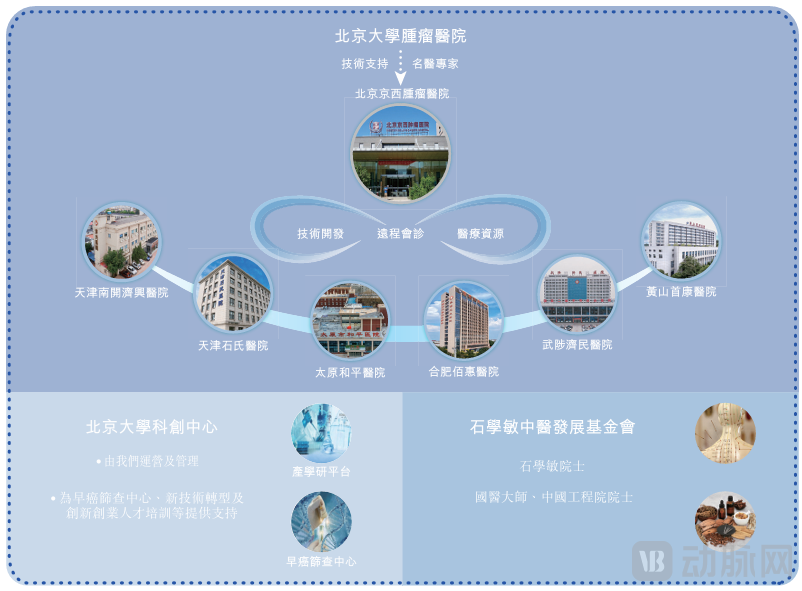 Medical Resource Support Received by Baize Medical, Image Source: Prospectus
In terms of oncology rehabilitation resources, Baize Medical has established in-depth collaboration with Shi Xuemin, a renowned acupuncture expert in China and an academician of the Chinese Academy of Engineering, receiving substantial support from Academician Shi and his medical team.
In 2020, Tianjin Shishi Hospital, under Baize Medical, was established, marking it as the only non-acquired hospital within Baize Medical’s self-owned portfolio. According to the prospectus, Tianjin Shishi Hospital was founded by members of Shi Xuemin’s team, who established key departments including Traditional Chinese Medicine (TCM), thereby enhancing the hospital’s diagnostic and therapeutic capabilities as well as its influence. With the assistance and leadership of Shi Xuemin, Tianjin Shishi Hospital, together with the Second Affiliated Hospital of Tianjin University of Traditional Chinese Medicine and Peking University Binhai Hospital, jointly established a medical consortium partnership. Furthermore, they developed two-way referral channels with tertiary hospitals such as Tianjin Nankai Hospital.
It is understood that Tianjin Shi’s Hospital focuses on the development of disciplines related to Traditional Chinese Medicine (TCM) and plays a significant role in advancing Baize Medical’s oncology rehabilitation services. Together with its affiliated specialized rehabilitation hospital, Taiyuan Heping Hospital (the first tertiary-level specialized rehabilitation hospital in Shanxi Province), it jointly empowers the oncology rehabilitation segment within full-cycle cancer care services.
With the support of Academician Shi Xuemin and his medical team, multiple healthcare institutions under Baize Medical have achieved rapid development. For instance, Taiyuan Heping Hospital was awarded the “Shi Xuemin National Master of Traditional Chinese Medicine Inheritance Studio,” and Tianjin Nankai Jixing Hospital was awarded the “Shi Xuemin Traditional Chinese Medicine Inheritance Studio.” The prospectus also disclosed that members of Academician Shi Xuemin’s TCM acupuncture team are employed full-time at Tianjin Shi’s Hospital, where Academician Shi Xuemin provided on-site clinical guidance, conducted academic courses, and held training workshops on an irregular basis. (Note: Academician Shi Xuemin passed away in May 2025.)
With robust support from high-quality resources for tumor diagnosis, treatment, and rehabilitation, and in conjunction with its Early Cancer Screening Center, Baize Medical has established a more comprehensive full-cycle oncology healthcare service system, creating a verifiable business model.
However, no matter how robust external collaborative resources may be, long-term uncertainties remain. Clearly, Baize Medical is directly confronting this challenge.The prospectus mentions that, to mitigate the potential risks associated with the expiration of its cooperation agreement with Peking University Cancer Hospital, corresponding measures have been formulated, including strengthening internal capabilities, optimizing the talent development system, and seeking collaborations with other renowned medical institutions.
“It will take time for the ‘alternative’ approach to yield significant results; Baize Medical’s upcoming initiatives to strengthen its endogenous growth drivers are worth watching.”
Over the past two years, factors such as consumption downgrading and intense industry competition have led to a slump in the consumer healthcare market. In contrast, serious medical care, being a rigid demand, has demonstrated greater resilience amid market volatility. The recent emergence of another publicly listed oncology specialist further validates this point from a different perspective.
However,Serious healthcare, including oncology specialties, is facing changes in the landscape of medical insurance and healthcare resources, and must build stronger barriers to navigate through cycles.
As healthcare payment reforms and other medical insurance policies are fully implemented, healthcare institutions face greater challenges in standardizing clinical workflows, controlling costs, and improving operational efficiency. Over the past two years, there has been a frequent occurrence of private healthcare institutions withdrawing from the national medical insurance program.As private medical institutions that remain designated providers under the national health insurance scheme, they must recognize that health insurance is merely one of several patient payment channels and can no longer be treated as a tool for driving revenue and profit growth.
Meanwhile,For specialized oncology services, even non-reimbursable items cannot “stimulate” patient demand in the manner of consumer-driven healthcare., and since cancer is inherently a high-burden disease, all medical service offerings must be structured around the core needs of diagnosis, treatment, and rehabilitation. In the future, healthcare institutions will compete not merely on the range of services they can provide, but more critically on the outcomes those services deliver.
In terms of medical resources, the state is vigorously promoting resource expansion and balanced allocation, advancing the construction of National Medical Centers and National Regional Medical Centers, reducing cross-regional healthcare-seeking by patients, and achieving the goal of “major diseases treated within the province and minor diseases treated within the county.” In the field of oncology, the National Cancer Center and multiple regional cancer medical centers have already been established.
Historically, a major opportunity for private healthcare providers lay in the uneven distribution of medical resources, with companies establishing their presence in regions where such resources were scarce. AndAs the state vigorously optimizes the allocation of medical resources, private medical institutions need to further clarify their positioning in various regions to form a complementary relationship with public hospitals.
Currently, medical groups represented by several publicly listed oncology healthcare companies are striving to resolve the aforementioned challenges.
On the one hand, promote the application of innovative drugs, therapies, and technologies, while striving to increase the penetration rate of commercial health insurance, thereby building diversified payment capabilities for patients.
Taking Baize Medical as an example, the company leverages the Peking University Medical Science and Innovation Center to strengthen collaborations with enterprises and research institutions in fields such as early cancer screening, new technologies for tumor diagnosis and treatment, R&D of novel oncology drugs, and development of innovative devices for tumor rehabilitation. These efforts aim to accelerate the industrialization of cutting-edge achievements and provide an application platform for scientific and technological advancements in full-cycle oncology healthcare services.
As the first private healthcare institution in South China to operate a proton therapy system, Guangzhou Taihe Cancer Hospital, under USCC Healthcare, launched its Proton Center in December 2024. To address patients’ payment barriers, USCC Healthcare has partnered with insurance companies to introduce “Special Insurance for Proton Therapy,” exploring outcome-based payment models to establish a community of shared interests between patients and providers. Furthermore, USCC Healthcare has collaborated with domestic enterprises to advance the localization of proton therapy auxiliary equipment, thereby reducing operational costs.
On the other hand, actively explore the integration of AI technology with oncology diagnosis and treatment to facilitate breakthroughs in efficiency and quality.
For example, Yingkang Life has basically established a three-tier “AI + Healthcare” layout, encompassing underlying technologies, capability components, and intelligent interaction engine applications. Among these, AI-enabled clinical applications already cover specialized areas such as AI-based imaging diagnosis, AI-driven imaging quality control, and AI-assisted target volume delineation, with continued efforts to advance AI-driven transformation by addressing pain points in clinical practice.
Hygeia Healthcare has integrated AI technologies into key processes such as imaging-assisted diagnosis and tumor radiotherapy. This includes the use of AI to accurately identify small pulmonary nodules, improving detection rates by 10%–15% compared to traditional methods. Additionally, AI-driven target volume delineation significantly reduces manual errors, enabling precise tumor localization and preventing both underdosing and inadvertent irradiation of healthy tissues.
In any case,Compared with consumer healthcare, serious medical care bears heavier expectations for life. After all, the prerequisite for living a healthier, more comfortable, and more beautiful life is to stay alive and live longer. For private healthcare providers, only by actively exploring technological and business model innovations, and continuing to fulfill this public expectation amidst market transformations, can they achieve sustainable long-term development.