

60s-born PhD's Fourth HKEX Bid: Small-Molecule Biotech Surges 70% on Debut

TransThera
Small Molecule Innovative Drug Research, Development, and Manufacturing
After a Six-Year Hiatus, Hong Kong Stocks Rebound: 2025 HKEX IPO Proceeds Rank First Globally! According to UBS data, the total size of IPOs on the Hong Kong stock exchange reached $9.8 billion by the end of May 2025, approaching the full-year IPO fundraising amount of 2024 ($11.3 billion) and ranking first globally. The total amount raised through new share placements reached $14.9 billion, a scale nearly equivalent to the combined total for the three years from 2022 to 2024, indicating highly active financing in the Hong Kong stock market.
In the Hong Kong stock market, biopharmaceutical stocks have demonstrated particularly outstanding performance. According to statistics from Times Business Research Institute, the number of new biopharmaceutical listings in the first five months of this year doubled compared to the same period last year. Additionally, approximately 20 biopharmaceutical companies are currently queued for initial public offerings (IPOs) on the Hong Kong Stock Exchange. Notably, Hengrui Medicine raised HK$9.89 billion, making it the largest biopharmaceutical IPO in the Hong Kong market over the past five years.
On June 23, riding the tailwinds of the capital market and after four previous filing attempts, TransThera officially listed on the Hong Kong Stock Exchange, marking a pivotal moment in its initial public offering (IPO).At today’s market open, TransThera’s stock performed strongly. It opened at HK$21.65 per share and reached a high of HK$22.70 per share, representing a maximum increase of 72.62% over its issue price of HK$13.15 per share, with a total market capitalization of approximately HK$8.9 billion. This fully reflects the capital market’s recognition of this Chinese “high-potential stock.”
Pre-IPO Company Valuation at RMB 4.59 Billion; Overseas-Educated PhD Founder Holds Net Worth of Nearly RMB 1.6 Billion
The Story of TransThera Began in 2014. In April 2014, Yang Minmin, founder and chairman of the board of Pharmablock Sciences, and Wu Xihan, then a director at Pharmablock Sciences, jointly established Nanjing TransThera Biotechnology Co., Ltd., the predecessor of TransThera. The company’s initial registered capital was RMB 10 million, with the two individuals holding 95% and 5% equity stakes, respectively.
The central figure in the story of TransThera is not either of the two initial founders mentioned above, but rather another overseas-returned Ph.D., Wu Yongqian. According to the prospectus, Mr. Wu, aged 61, obtained his Bachelor of Science degree in Chemistry from Nanjing University in July 1985. He further earned his Ph.D. from Wayne State University in the United States in May 1993, and served as a postdoctoral researcher in the Department of Biochemistry at Brandeis University in the United States from January 1994 to December 1995.
Prior to returning to China, Wu Yongqian worked at Boehringer Ingelheim and Gilead Sciences, accumulating approximately 10 years of overseas experience in pharmaceutical R&D and leadership. From 2008 to 2010, he served as a member of the Long-Range Planning Committee of the Division of Medicinal Chemistry of the American Chemical Society. In 2011, Mr. Wu returned to China and joined Sihuan Pharmaceutical. He served as Senior Vice President of Project Management at Shandong Xuanzhu Pharma, a wholly-owned subsidiary of Sihuan Pharmaceutical, from January 2011 to December 2012, and as General Manager of Shandong Xuanzhu Pharma from January 2013 to May 2016. Additionally, between 2014 and 2015, Mr. Wu also held the position of Chief Scientist at Sihuan Pharmaceutical.
During his tenure at Sihuan Pharmaceutical, Wu Yongqian was introduced to Wu Xihan through their mutual friend Yang Minmin. He resigned from his position as General Manager of Shandong Xuanzhu Pharmaceutical in May 2016 and joined TransThera in June 2016. In November 2016, Wu Yongqian acquired a 40% equity interest in TransThera and served as its Chairman. Prior to the initial public offering (IPO), Wu Yongqian held approximately 34.29% of TransThera’s total issued share capital, both directly and indirectly, through Nanjing Yipu and Nanming Jiminrui. Following the completion of the IPO (assuming the over-allotment option is not exercised), Wu Yongqian will directly or indirectly hold approximately 32.98% of the total issued share capital, making him the controlling shareholder of TransThera.
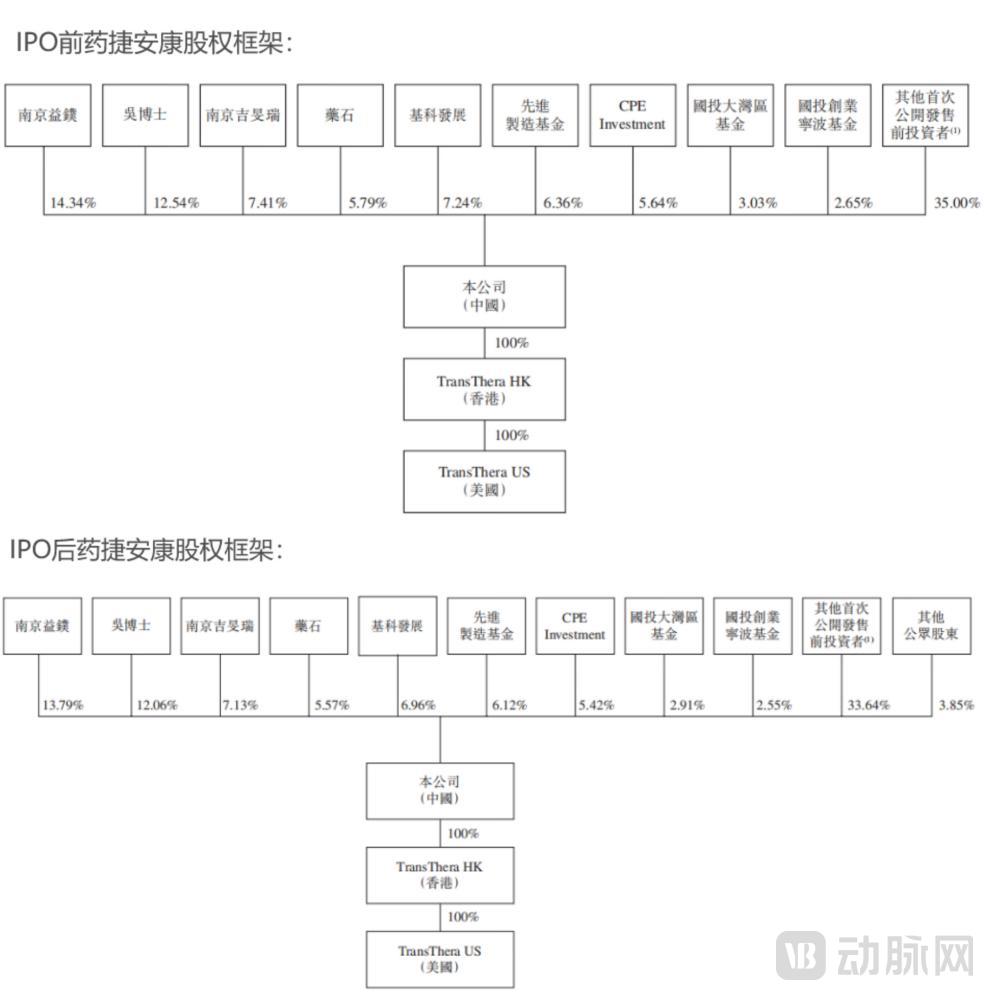
TransThera’s Equity Structure Before and After the IPO, Source: Prospectus
Following Wu Yongqian’s onboarding and subsequent “ascension to power,” TransThera embarked on a rapid expansion in the capital markets, completing its first round of financing in December 2016.Prior to its IPO, TransThera completed a total of nine funding rounds, raising a cumulative amount of RMB 1.723 billion.It has gained recognition from more than 20 institutions, including the Advanced Manufacturing Fund, SDIC Greater Bay Area Fund, SDIC Venture Capital Ningbo Fund, Jinpu Health Fund Phase II, Jinpu Health Fund Phase III, the Structural Adjustment Fund, Shenzhen Linghui, Wuhu Xingrui, and Nanjing Lingyi.In 2023, TransThera completed its most recent funding round prior to the IPO, achieving a post-money valuation of RMB 4.59 billion (based on a 34.29% equity stake, Wu Yongqian’s net worth was approximately RMB 1.5739 billion).
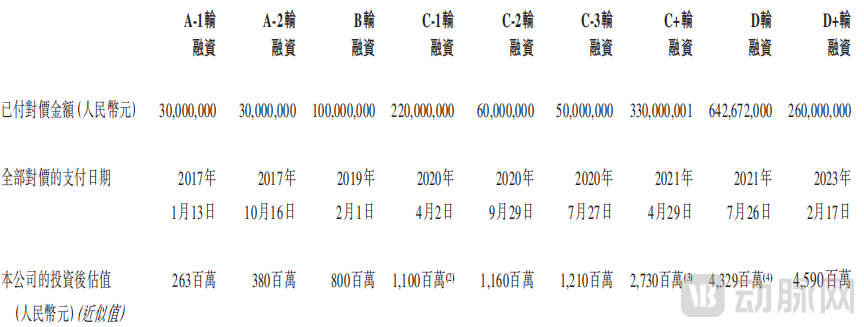 TransThera’s Pre-IPO Financing History, Source: Prospectus
While completing its private equity financing, TransThera is also actively pursuing broader opportunities in the IPO market. As early as August 2021, TransThera filed an application with the Hong Kong Stock Exchange (HKEX), but the company did not proceed with its 2021 HKEX listing application after the initial filing lapsed. In June 2022 and June 2024, TransThera submitted its second and third filings to the HKEX, respectively, both of which ultimately lapsed. In January 2025, TransThera filed its fourth application with the HKEX and successfully achieved its IPO, thereby deepening its integration with international capital, markets, and technology, and accelerating the global expansion of its innovative drugs.
Core product is a global first-in-class innovation, with indications covering multiple cancer types
For over a decade, TransThera has been dedicated to the discovery and development of innovative small-molecule therapies for oncology, inflammation, and cardiometabolic diseases. The company currently boasts six clinical-stage candidates and one preclinical-stage candidate.
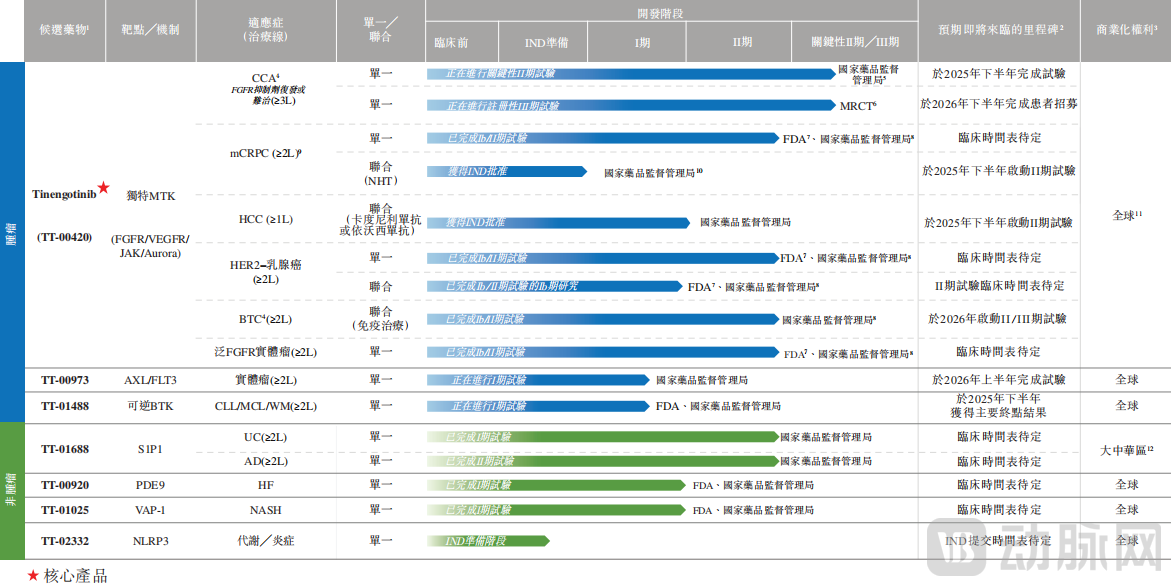 TransThera’s Pipeline Under Development, Source: Prospectus
Its core product, tinengotinib (TT-00420), is a unique multi-target kinase (MTK) inhibitor independently discovered and developed, currently in the registration-enabling clinical stage. It is designed for the targeted treatment of several recurrent, refractory, or drug-resistant solid tumors. Tinengotinib targets three key pathways: FGFR/VEGFR, JAK, and Aurora kinases. By targeting one or a combination of these pathways, tinengotinib can address a broad spectrum of cancer types. Its unique binding mode with FGFR enables it to overcome polyclonal mutations, making it effective against FGFR-driven cancers, such as FGFR-altered cholangiocarcinoma and pan-FGFR solid tumors. Furthermore, the unique combination of key pathway inhibitions allows it to demonstrate efficacy across multiple cancer types, including prostate cancer, hepatocellular carcinoma, breast cancer, and biliary tract cancer.
The prospectus shows that Tinengotinib is the world’s first and only investigational drug in registration-stage clinical trials for treating patients with recurrent or refractory cholangiocarcinoma (CCA) who have progressed on FGFR inhibitors.In the field of cholangiocarcinoma (CCA), there are currently no recommended third-line treatment options, leaving patients with only chemotherapy, whose clinical benefits remain uncertain. Addressing this unmet need, tinengotinib features a unique chemical scaffold and a distinct FGFR binding mechanism that allows it to bypass acquired resistance mechanisms. It has the potential to become a blockbuster drug for the treatment of advanced or metastatic cholangiocarcinoma, thereby filling a market gap. The candidate is currently undergoing Phase III multi-regional clinical trials both domestically and internationally. Relevant clinical data demonstrate that, compared with chemotherapy, tinengotinib significantly prolongs survival in patients with third-line advanced or metastatic cholangiocarcinoma, showing substantial clinical benefit.
The prospectus shows that tinengotinib is also the world’s first and only investigational drug with clinical evidence of efficacy in metastatic castration-resistant prostate cancer (mCRPC) that can simultaneously inhibit the FGFR/JAK pathways.. In the field of metastatic castration-resistant prostate cancer (mCRPC), the five-year survival rate for patients worldwide is less than 30%. Currently, first- and second-line treatments still primarily involve novel endocrine therapies and chemotherapy, and there is a lack of new effective therapeutic agents for patients who develop resistance or experience disease progression. By inhibiting the FGFR/JAK signaling pathway, tinengotinib can disrupt and reverse the lineage plasticity process in prostate cancer, restore androgen receptor expression and sensitivity to novel hormonal therapies in mCRPC, and is expected to provide new options for patients with mCRPC.
Overall, TransThera has initiated a total of nine clinical trials for tinengotinib globally, either completed or ongoing. Among these, two trials were conducted in healthy subjects and seven in patients with solid tumors, including but not limited to cholangiocarcinoma, prostate cancer, hepatocellular carcinoma (HCC), breast cancer, and biliary tract cancer. As of the cutoff date of September 26, 2023, 350 patients with solid tumors had received tinengotinib monotherapy, comprising 295 patients from the United States and 55 patients from China. Pooled safety and tolerability data demonstrated that tinengotinib was well tolerated in patients with solid tumors.
Based on its robust historical data, tinengotinib has been granted Breakthrough Therapy Designation by the National Medical Products Administration (NMPA) for the treatment of cholangiocarcinoma; Fast Track Designations by the U.S. Food and Drug Administration (FDA) for the treatment of cholangiocarcinoma and metastatic castration-resistant prostate cancer (mCRPC); Orphan Drug Designation by the FDA for the treatment of cholangiocarcinoma; and Orphan Drug Designation by the European Medicines Agency (EMA) for the treatment of biliary tract cancer. Clinical data on tinengotinib have been presented or delivered as oral reports at major international medical conferences, including the American Society of Clinical Oncology (ASCO), the European Society for Medical Oncology (ESMO), the San Antonio Breast Cancer Symposium (SABCS), and the American Association for Cancer Research (AACR).
In addition to its core products, TransThera is advancing multiple clinical programs in oncology, inflammation, and cardiovascular and metabolic diseases.
In the field of oncology,TransThera is currently advancing two candidate products with best-in-class potential in their respective subfields. TT-00973 is a novel AXL/FLT3 inhibitor with best-in-class potential, exhibiting high activity in inhibiting the phosphorylation and activation of AXL in tumor cells, thereby enabling effective treatment of AXL-overexpressing solid tumors. TT-01488 is a non-covalent, reversible BTK inhibitor with best-in-class potential, capable of overcoming acquired resistance to prior-line covalent BTK inhibitor therapies in various relapsed or refractory hematologic malignancies.
In the field of inflammatory diseases,TransThera is developing TT-01688, a highly selective oral S1P1 modulator primarily indicated for the treatment of ulcerative colitis (UC) and atopic dermatitis (AD), as well as TT-01025, a potential best-in-class irreversible VAP-1 inhibitor for the treatment of non-alcoholic steatohepatitis (NASH). In the field of cardiometabolic diseases, TransThera is developing TT-00920, a highly selective oral PDE9 inhibitor. Furthermore, TransThera is advancing other novel preclinical candidates, including TT-02332, an NLRP3 inhibitor for the treatment of metabolic and inflammatory diseases.
Losses Exceed 600 Million Over Two Years; Cash on Hand Can Cover the Next 12 Months
Currently, TransThera has no commercialized products; however, this is not uncommon for most Hong Kong-listed biotech companies that are still in the R&D stage.
Due to the continuous capital injection required for pipeline development and corporate management, TransThera incurred losses of RMB 343.4 million and RMB 274.6 million for the years ended December 31, 2023 and 2024, respectively, with a combined loss of RMB 618 million over the two years. Research and development (R&D) expenses amounted to RMB 344.5 million and RMB 244 million, respectively. Of these, R&D expenses for core products were RMB 236.4 million and RMB 171.8 million, accounting for 68.6% and 70.4% of total R&D expenses, and 61.6% and 58.9% of total operating expenses (i.e., R&D expenses and administrative expenses) for the respective periods.
To address the company’s sustained high R&D investment, TransThera is also actively pursuing business development (BD) collaborations. In 2020, TransThera out-licensed TT-01025 to LG Chem for global use, excluding China and Japan.According to Yonhap News Agency at the time, LG Chem secured exclusive rights for the development and distribution of TT-01025 in the Americas, Europe, and other regions. Including upfront payments and milestone fees, LG Chem will pay TransThera up to $350 million. However, an analysis of the prospectus reveals that the revenue generated by TransThera from the licensing of TT-01025 was not substantial.In 2022 and 2023, TransThera’s revenues were RMB 124,000 and RMB 1.181 million, respectively, primarily derived from the out-licensing of TT-01025. In 2023, the collaboration was terminated by mutual agreement; however, the prospectus did not disclose the reasons for the termination.
In addition to its BD transaction with LG Chem, TransThera has established collaborations with Roche, Teijin, EA Pharmaceuticals (Japan), and F. Hoffmann-La Roche Ltd (Switzerland) in areas such as clinical cooperation, joint R&D, and licensed-in partnerships, thereby securing a range of innovative technologies and international clinical development resources to accelerate its pipeline development.
According to the prospectus, as of December 31, 2024, TransThera held cash and cash equivalents of RMB 569.5 million, with working capital sufficient to cover at least 125% of its costs for the next 12 months, including R&D expenses and administrative costs.In this IPO, TransThera is estimated to raise approximately HK$161.3 million after deducting underwriting fees, commissions, and estimated expenses, assuming an offer price of HK$13.15 per share and no exercise of the over-allotment option. This capital infusion will provide much-needed financial relief for the company, which is still in the R&D stage.
Following this IPO, TransThera intends to allocate approximately 90.0%, or HK$145.2 million, of the proceeds to its ongoing multi-regional Phase III registrational clinical trial evaluating tinengotinib as a monotherapy for cholangiocarcinoma (CCA); and approximately 10.0%, or HK$16.1 million, for general working capital and general corporate purposes.
Overall, small-molecule drugs remain a cornerstone of cancer therapy. Globally, five of the top ten oncology drugs by sales revenue in 2022 were small-molecule agents. Similarly, in China, five of the top ten oncology drugs by sales revenue in 2022 were also small-molecule drugs. To date, the U.S. Food and Drug Administration (FDA) has approved more than 100 novel small-molecule targeted oncology drugs, while China’s National Medical Products Administration (NMPA) has approved 95 such agents. From 2018 to 2023, one-third of the oncology drugs approved by both the FDA and the NMPA were small-molecule targeted therapies. Tinengotinib, TransThera’s core small-molecule product and a first-in-class multi-target kinase (MTK) inhibitor, holds promise for breaking new ground in the later-line treatment of cholangiocarcinoma.