Could Bear Bile Farming Become History? Can Biosynthesis Save Thousands of Black Bears?
In the 500-square-meter facility for bear bile extraction, three rows of iron cages are arranged side by side. Each cage confines a single Asiatic black bear weighing approximately 150 kilograms. An iron bar is mounted horizontally at the top of each cage; when a bear becomes agitated, the bar is lowered to force it into a prone position. There are over 100 such bears in the facility.
At 11 a.m. each day, the “bile extraction” procedure begins. As black bears lie prostrate to feed, pre-implanted abdominal catheters are opened, allowing bear bile—hailed as “golden medicine”—to slowly drain out.
This is the scene of “live bear bile extraction” previously reported by Caixin Weekly.
Bear bile, bezoar (calculus bovis), musk, and tiger bone are the four most precious animal-derived medicinal substances in ancient China. Currently, synthetic alternatives have been developed for bezoar, musk, and tiger bone; however, there is still no complete substitute for bear bile.
It is understood that the extraction of ursodeoxycholic acid (UDCA) is one of the primary objectives of bile milking from live bears. According to data from Bizwit Research, synthetic ursodeoxycholic acid accounts for 73.4% of the global market, while 26.6% still needs to be obtained through extraction.
Ursodeoxycholic acid is a unique component found in the bile of bears. Although it can currently be synthesized chemically, this process involves cumbersome reaction steps, harsh reaction conditions, and the use of toxic and hazardous reagents.
In contrast, biosynthesis is more efficient, environmentally friendly, and cost-effective. Currently, biosynthetic ursodeoxycholic acid (UDCA) active pharmaceutical ingredients (APIs) have been officially approved in China. With the rapid advancement of biosynthesis technology, UDCA is expected to achieve fully artificial synthesis in the future, thereby accelerating the complete phase-out of bile extraction from live bears.
However, it is worth noting that if a company opts for biosynthesis, it must confront the challenges of product registration and market access.
Ursodeoxycholic acid was initially discovered in the bile of polar bears. Currently, “live-bear bile farming” primarily involves extracting bile from captive black bears or brown bears.
According to data previously released by Animals Asia, more than 10,000 Asiatic black bears in Asia are confined in narrow iron cages at bear farms, where their bile is cruelly extracted for use in the pharmaceutical industry.
According to relevant studies, ursodeoxycholic acid (UDCA), a component found in bear bile, can dissolve gallstones and treat various liver diseases such as cholestasis, biliary pancreatitis, and primary sclerosing cholangitis. Moreover, it is the only drug approved by the U.S. FDA for the treatment of primary biliary cholangitis (formerly known as primary biliary cirrhosis). Recent studies have also indicated that UDCA demonstrates significant efficacy in anti-tumor therapy and neurological disorders.
However, obtaining ursodeoxycholic acid is not so easy.
According to relevant studies published in Shanghai Medicine and China Biotechnology Journal, ursodeoxycholic acid is currently sourced from three main origins: live bear bile extraction, chemical synthesis, and biosynthesis.
Bear Bile Farming:
The extraction and purification of bile from captive bears has evolved from “live drainage” to “tubeless drainage,” a procedure in which a permanent fistula is surgically created between the bear’s gallbladder and the abdominal wall; during bile collection, a catheter is inserted into the stoma to drain the bile into a container.
Although this method reduces the risk of infection, it requires bears to live with a permanent biliary fistula, leading to high incidences of cholecystitis and liver cancer. Moreover, bile extraction is limited in volume and involves prolonged cycles. Furthermore, this practice violates natural ethics, is unsustainable, and undermines national conservation efforts for endangered species, as black bears are classified as Class II state-protected animals in China.
Chemical Synthesis:
There are two main approaches for the chemical synthesis of ursodeoxycholic acid (UDCA) raw materials: one utilizes bile acid compounds derived from animals, including chenodeoxycholic acid, cholic acid, lithocholic acid, hyocholic acid, and hyodeoxycholic acid; the other employs non-bile acid compounds derived from plants, primarily progesterone and androstenedione.
However, chemical synthesis typically requires multiple protection and deprotection steps, involves relatively harsh reaction conditions, employs toxic and hazardous reagents (such as CrO3 and pyridine), and entails dangerous procedures involving high temperature and high pressure.
With the rapid development of biotechnology, research on the biosynthesis of ursodeoxycholic acid is increasing.
Biosynthesis:
Biosynthesis is categorized into whole-cell biotransformation and enzymatic methods. The whole-cell biotransformation method primarily involves adding substrates such as chenodeoxycholic acid or lithocholic acid during microbial cultivation, leveraging microorganisms to convert them into ursodeoxycholic acid. The enzymatic method generally uses chenodeoxycholic acid (CDCA) or cholic acid as substrates, employing the specificity of biological enzymes to induce stereoisomeric effects at specific positions on the substrate, thereby completing two-step oxidation and reduction reactions to produce ursodeoxycholic acid.
Compared with other preparation methods, biosynthesis offers significant advantages, including shorter synthetic routes, higher conversion rates, lower production costs, and enhanced environmental safety. It is the most promising technology for advancing the green and sustainable development of the chemical industry, with enzymes serving as the core components of biocatalytic technologies.
In recent years, scholars both domestically and internationally have conducted extensive research on the gene mining, molecular engineering, and synthetic applications of key enzymes required for the enzymatic synthesis of ursodeoxycholic acid, achieving encouraging progress.
Notably, pharmaceutical-grade raw materials for biosynthetic ursodeoxycholic acid have already been approved in China.
In July 2024, Yili Chuannig Biotechnology Co., Ltd. received the "Notice of Approval for Marketing Application of Chemical Active Pharmaceutical Ingredients" regarding its active pharmaceutical ingredient ursodeoxycholic acid, approved and issued by the National Medical Products Administration.
This active pharmaceutical ingredient (API) is produced via biosynthesis. According to relevant executives at Yili Chuannig Biotechnology Co., Ltd., ursodeoxycholic acid is the company’s first drug product registered and filed following the chemical API regulatory pathway. Over a period of nearly five years, the company independently developed a globally pioneering process combining dual-enzyme fermentation conversion with extraction and purification. This biosynthesis-based technology offers significant advantages in terms of cost, efficiency, quality, and environmental friendliness compared to currently marketed ursodeoxycholic acid products.
On February 21, 2025, Yili Chuannig Biotechnology Co., Ltd. completed its first production run of ursodeoxycholic acid, with an initial batch size of 350 kilograms. Its production line has an annual capacity of 120 metric tons of ursodeoxycholic acid active pharmaceutical ingredient (API).
It is understood that Yili Chuannig Biotechnology Co., Ltd. (Chuannig Bio) is primarily engaged in the research, development, and industrialization of products based on bio-fermentation technology. Previously, the crude ursodeoxycholic acid it produced was exported solely as a chemical product. The ursodeoxycholic acid product recently approved for marketing is Chuannig Bio’s first pharmaceutical agent developed in accordance with active pharmaceutical ingredient (API) standards and registered through the drug approval pathway. It is indicated as a litholytic agent for the primary treatment of gallstones.
As Chuannig Biotechnology achieves significant optimization in efficiency, cost, and environmental sustainability through biosynthesis, it is likely to gain a stronger competitive edge in the domestic market.
It is reported that ursodeoxycholic acid has a market size exceeding RMB 1 billion in China.
According to Yaozhi.com and Menet, domestic sales of ursodeoxycholic acid in China exceeded RMB 1.9 billion in 2021 and RMB 1.8 billion in 2023.
According to a review by Beize Consulting, the major players in the international ursodeoxycholic acid market include ICE Group, Mitsubishi Tanabe Pharma, Daewoong Chemical, PharmaZell GmbH, and Dipharma Francis. These companies collectively hold approximately 65% of the market share, indicating a high degree of market concentration.
The Chinese market is also highly competitive, with Kelun Pharmaceutical, Shanghai Pharmaceuticals, Xinhua Pharmaceutical, Shanghai Kaibao, and Humanwell Healthcare all making strategic moves in this space.
Although this product from Yili Chuannig Biotechnology Co., Ltd. has received approval, the overall regulatory pathway for biosynthetic products is far from smooth and may be more complex than that for chemically synthesized products—a challenge that most biomanufacturing companies are now forced to confront.
According to analyses by researchers from the Shanghai Institute of Nutrition and Health, Chinese Academy of Sciences, and the Shanghai Center for Life Science Information, Chinese Academy of Sciences, among others, the new technologies, methods, and products brought by synthetic biology for disease prevention and control often exhibit “disruptive” characteristics, yet their regulatory principles remain grounded in safeguarding human health.
From a product perspective, medical products developed using synthetic biology can be broadly categorized into two types in terms of regulatory approval:
One category comprises natural compounds or biological macromolecules such as proteins and antibodies. Since the production methods for these products are not fundamentally different from those used in genetic engineering, and they are primarily supplied to the market in the form of pure compounds, existing regulatory standards can generally be applied. If approved for marketing as Western medicines, they can align with current good manufacturing practice (GMP) standards for active pharmaceutical ingredients (APIs). However, if classified as traditional Chinese medicines (TCMs) or as single-molecule active ingredients derived from TCMs, further exploration is needed to determine how to align with the existing regulatory requirements for herbal raw materials.
Another category comprises products generated through technologies such as gene augmentation, gene suppression, and gene editing, including cell and gene therapies. Unlike small-molecule compounds and monoclonal antibody drugs, these products possess a certain capacity for replication in vivo. Furthermore, due to their unique and diverse mechanisms of action, complex modes of efficacy, and the generally irreversible nature of genetic modifications, it is essential to explore and innovate scientific evaluation and regulatory approaches addressing their effectiveness (high expectations), safety (uncertainty or high risk), and stability (consistency).
In fact, apart from cell and gene therapy products, other biomanufacturing products involving gene editing will face relatively stringent registration and market access approval processes; for some products, the absence of precedents will further increase the difficulty of obtaining approval.
VCBeat, synthesizing relevant studies published in the Journal of Bioengineering and the Bulletin of the Chinese Academy of Sciences, has identified that the primary challenges in the registration and market access of bio-manufactured products lie in two main areas.
On the one hand, the difficulty lies in the analysis and evaluation of safety.
Analysis suggests that following the commercialization of synthetic biology products in application areas such as food, healthcare, and agriculture, synthetic biology components may enter the human body. These components are substances generated through synthetic biology engineering techniques, including potentially present synthetic cells, recombinant genetic materials, and expression products.
Given the inherent uncertainty and complexity of synthetic biology, the introduction of any synthetic biological component with adverse effects into the human body could compromise consumer health. Therefore, conducting rigorous safety analysis and evaluation for the commercialization and market entry of synthetic biology products is critically important. In the event of a product-related safety incident, not only would consumer health be jeopardized, but the entire industry could also suffer severe repercussions.
On the other hand, the challenge lies in the current state of domestic approval pathways.
Analysis indicates that the commercialization of synthetic biology products is currently regulated primarily under legal frameworks governing biotechnology or genetically modified organisms (GMOs). However, due to the complexity and inherent uncertainties of synthetic biology, these regulatory frameworks are insufficient to comprehensively address the safety risks associated with the commercialization of synthetic biology products.
In contrast to the United States and the European Union, which apply the principles of “substantial equivalence” and “precaution” to synthetic biology products, China’s existing laws and regulations prioritize prudent regulation, resulting in a lengthier approval process and cycle, as well as higher approval costs, for market entry of synthetic biology products.
For example, in the field of food applications, synthetic biology products involving production processes with genetically modified microorganisms must undergo extensive safety testing and regulatory review by multiple ministries, including the Ministry of Agriculture and Rural Affairs and the National Health Commission. The approval process typically takes 1–2 years.
Therefore, as the biomanufacturing industry experiences rapid development, addressing the challenges of regulatory registration and market access has become a critical issue for the entire sector.

—END—
Training on Registration and Market Access for Biomanufacturing Products
Grand Launch
June 28–29, 2025 | Beijing Yizhuang International Biopharmaceutical Park: “Training on Registration and Market Access for Biomanufacturing Products” Grand Launch
Co-hosted by VCBeat and Dr. Fang, this event marks the first focus on six high-potential sectors (pharmaceuticals, cosmetics, food, animal health, agriculture, and materials), providing you with a practical guide to breaking through from the laboratory to the market.
Highlight 1: A Lineup of Top-Tier Experts
Bringing together over ten industry-leading experts from the fields of pharmaceuticals, veterinary drugs, and food, including Yu Li (former expert at the Beijing Institute for Drug Control), Dong Yichun (Secretary-General of the China Veterinary Drug Association), and Si Rong (international leader in food regulations). They will provide in-depth analysis of global regulatory standards (such as those of the FDA and NMPA), helping you precisely select registration pathways and build compliant submission dossiers.
Highlight 2: Practicality-Oriented
Addressing corporate pain points to bridge the “Valley of Death” in pilot-scale development and overcome regulatory access barriers. Through case studies, master strategies for pharmaceutical IND/NDA submissions, cosmetic new ingredient filings, and veterinary drug approvals, while formulating winning pricing and volume-based procurement response plans. Achieve efficient cross-domain collaboration to enhance market competitiveness.
The detailed schedule is as follows:
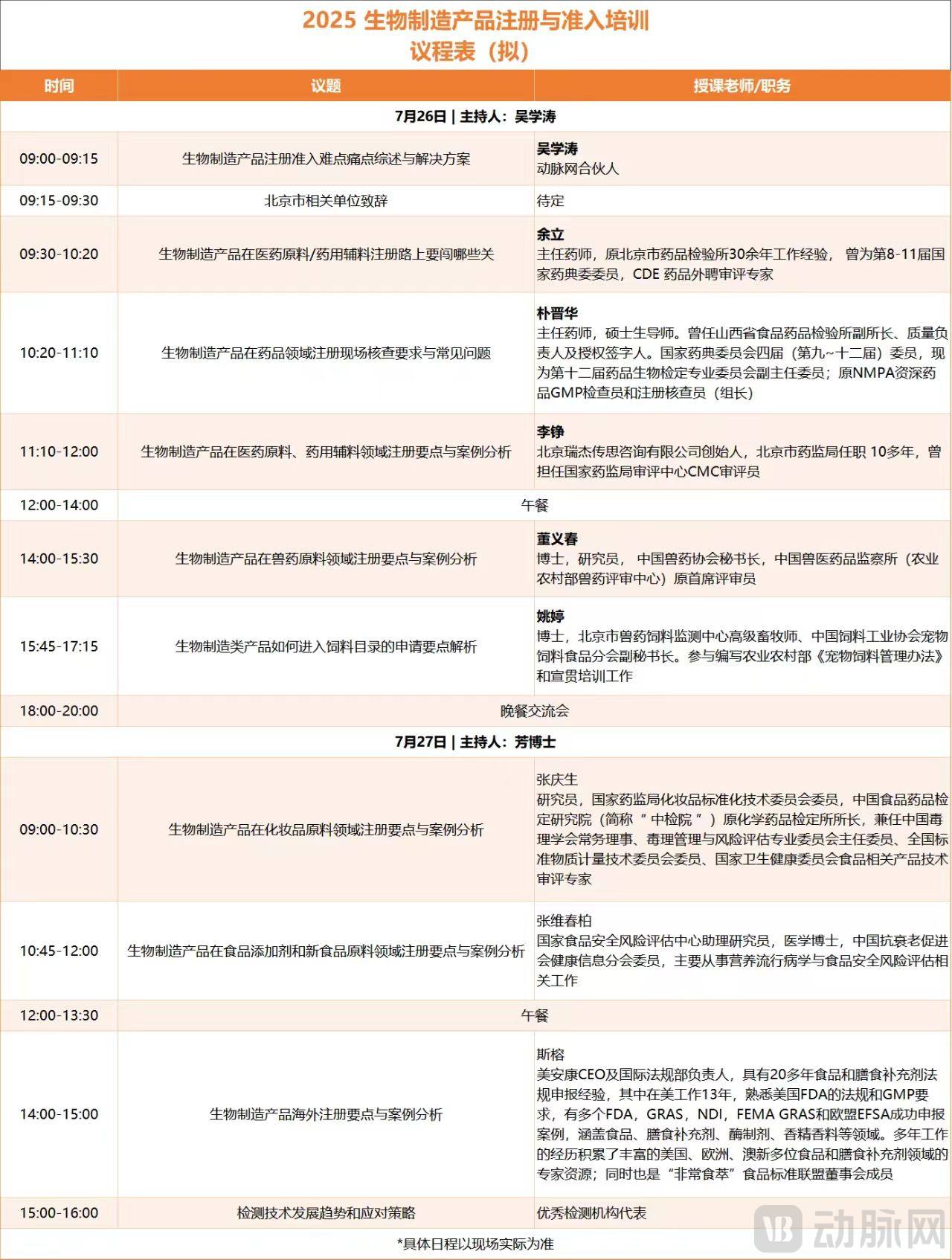
Limited to 80 seats, first come first served. Meet experts face-to-face to help your products move from “biomanufacturing” to “market success”!
Scan the QR code below to register and secure your spot, embarking on a journey toward compliance breakthrough!