

Public Hospitals Ramp Up Longevity and Anti-Aging Clinics as the Sector Emerges as a New Investment Hotspot
The establishment of longevity and anti-aging clinics has become a highly watched new trend worldwide.
In the past, longevity and anti-aging clinics were mostly concentrated in affluent enclaves such as Beverly Hills, Dubai, Abu Dhabi, and other parts of the United Arab Emirates, often leveraging cutting-edge “black tech.” Today, however, guided by evidence-based medicine, longevity and anti-aging clinics are emerging as a new specialty department within China’s public Grade A tertiary hospitals.
Globally, the top-ranked Mayo Clinic launched its clinical longevity medicine services in 2023. In China, numerous public Grade-A tertiary hospitals, including Union Hospital affiliated with Tongji Medical College of Huazhong University of Science and Technology, the Chinese PLA General Hospital, Zhongshan Hospital affiliated with Fudan University, Xiangya Hospital, and the Affiliated Hospital of Guangdong Medical University, have also established outpatient clinics focused on longevity and anti-aging.
Among private institutions, Huihai International Medical Center and Zhuoerhui, a high-end comprehensive outpatient clinic under Fosun Health Group, have also launched longevity and anti-aging clinics.
Recognition by top global hospitals and domestic public hospitals, coupled with investments from private institutions, validates the clinical scientific basis and market potential of longevity and anti-aging interventions.
Longevity and anti-aging diagnosis and treatment are neither a vague discussion of general wellness nor limited to facial rejuvenation. According to the "Chinese Expert Consensus on Aging and Anti-Aging (2019)," the evidence-based medical definition of anti-aging is: a proactive health strategy that comprehensively utilizes various biotechnologies, health products, and pharmaceuticals to delay the aging process, based on the mechanisms of aging. The goal of anti-aging is to reduce the incidence of disease, delay its onset, and extend healthspan.
The market demand for longevity and anti-aging is substantial. Data from anti-aging and longevity clinics in public hospitals across China indicate that individuals aged 30 and above can begin their anti-aging journey. For instance, the Multidisciplinary Team (MDT) Anti-Aging Clinic at Xiangya Hospital of Central South University caters to individuals aged 30 and older without major underlying diseases, providing them with personalized anti-aging regimens.
Currently, the emerging discipline of longevity and anti-aging is on the verge of an explosion.
When it comes to longevity and anti-aging, the endeavors of several global billionaires come to mind. The story of Silicon Valley tycoon Bryan Johnson’s “three-generation blood exchange” has undoubtedly become the most prominent stereotype surrounding longevity and anti-aging in recent years. However, the U.S. Food and Drug Administration (FDA) has issued warnings against “blood exchange” therapy, stating that this treatment not only lacks proven clinical efficacy but also carries potential serious risks. In China, Hong Kong billionaire Li Ka-shing single-handedly propelled the health supplement NMN (β-nicotinamide mononucleotide) into the spotlight.
Silicon Valley’s Wealthy Have Surging Demand for Longevity and Anti-Aging Treatments. Devin Haman, co-founder of a Beverly Hills anti-aging center, stated in an interview with Forbes that clients are no longer satisfied with mere hyaluronic acid injections; instead, they are seeking ways to enable a 60-year-old body to achieve the metabolic profile of a 40-year-old.
However, industry insiders have bluntly pointed out that anti-aging is neither about serving as guinea pigs to experience unproven “black-tech” innovations nor merely about taking health supplements.
Professional Scientific Longevity and Anti-Aging Clinic: Primarily conducts health assessments and personalized interventions, tailoring individualized intervention plans based on comprehensive personal health evaluation results., including lifestyle adjustments, nutritional supplementation, and medical interventions, to meet the health needs of different individuals.
Among these, the first step is precise diagnosis, which serves as the cornerstone for launching longevity and anti-aging services.Unlike general health management, the services provided by anti-aging and longevity clinics must be based on quantitative assessments to identify biomarkers of aging in advance, with the ultimate effectiveness of interventions verified through testing.
Among these tests, the core component is biological age assessment. By leveraging multi-omics data, this analysis comprehensively evaluates which age group in the general population the client most closely resembles, thereby estimating their true biological age.
Determining physiological age requires a comprehensive conclusion based on multiple testing parameters. VCBeat once interviewed an overseas anti-aging testing clinic, whose founder stated that the most common anti-aging testing service is epigenetic age testing, which assesses physiological age through DNA methylation analysis. There are also functional anti-aging biomarker tests, including assessments for micronutrient deficiencies (NAD), cellular senescence, oxidative stress, inflammation, metabolic biomarkers, and tissue damage. Advanced functional anti-aging biomarker panels may even include intracellular NAD levels, senescence-associated β-galactosidase (β-gal), and four senescence-associated secretory phenotype (SASP) proteins.
Bryan Johnson is a staunch advocate of biomarker testing. In the latest biological age test results he presented during an interview with 36Kr, it is evident that his age calculation incorporates multiple indicators, including NAD+ levels, heart age, methylation age, and inflammation levels.
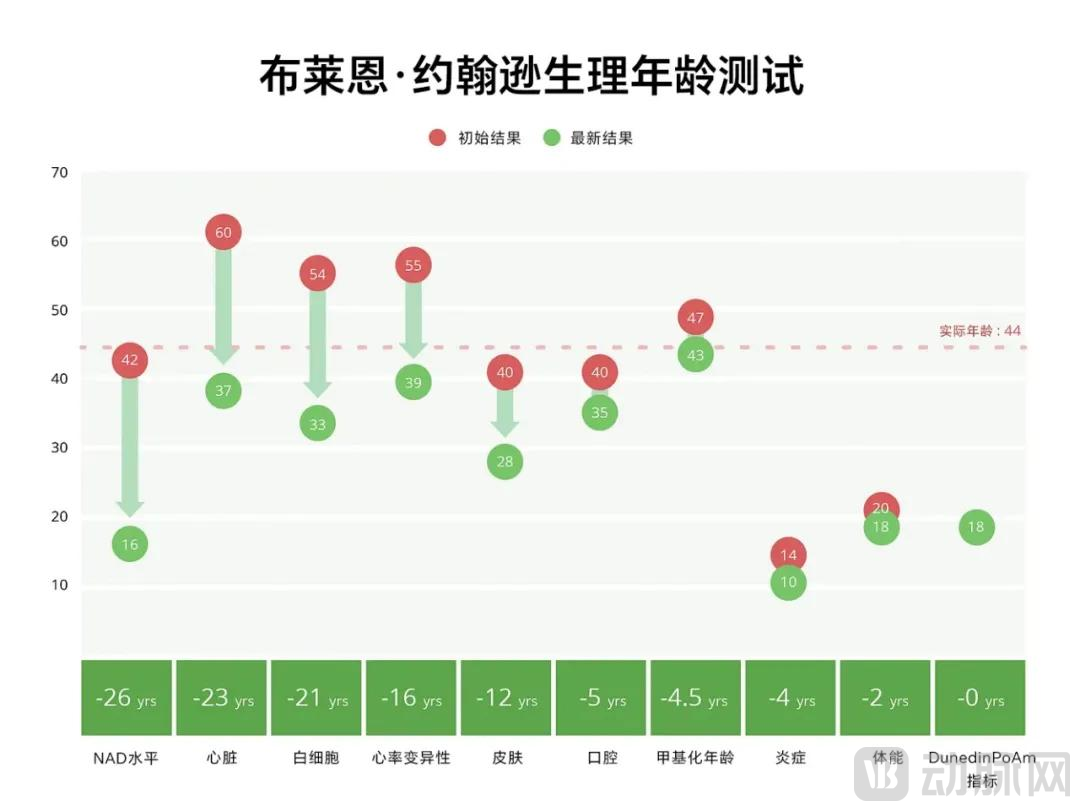
Image source: 36Kr
Longevity and anti-aging clinics help clients identify aging-related issues through diagnostic data and evaluate the efficacy of interventions based on quantitative metrics. Unlike disease diagnosis and routine health checkups, testing at longevity and anti-aging clinics aims to detect biomarkers of disease and aging at an earlier stage.
A leading longevity and anti-aging clinic stated, “We need data-driven evidence to demonstrate tangible progress in our personalized interventions. These tests are often highly specialized; they cannot be performed even in Grade 3A hospitals, as they demand advanced laboratory techniques and a sophisticated understanding of aging biomarkers.”
Following the completion of aging assessments, the second step is to formulate personalized intervention plans, which constitutes the core competency of anti-aging and longevity clinics.
Longevity and anti-aging clinics need to customize personalized anti-aging plans by integrating the most advanced medical advancements from a wide range of products. Globally, interventions targeting aging can be summarized into three major categories: behavioral interventions, dietary supplements, and medical interventions. Medical interventions are the core services of longevity and anti-aging clinics. These services vary widely around the world, such as mesenchymal stem cell injections in Japan, nutrient solution injections, microbiota transplantation, and hyperbaric oxygen chambers in the United States, among others.
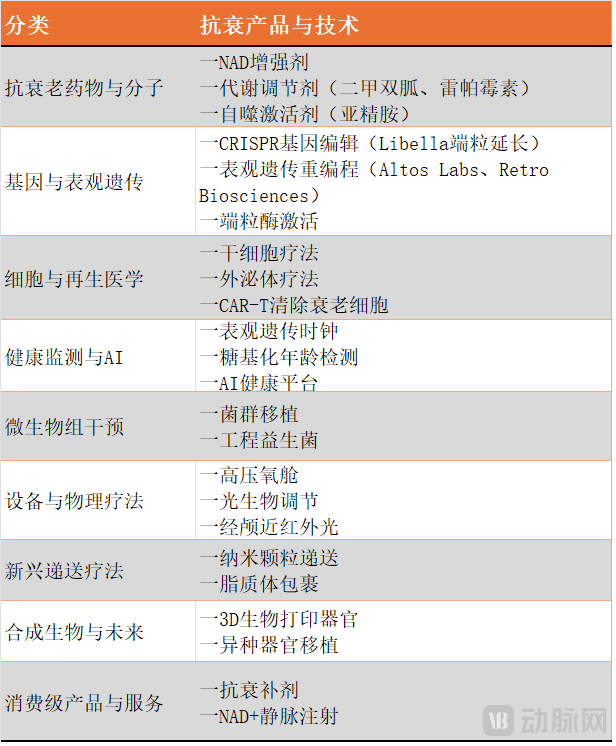
Anti-Aging Products and Technologies
The key lies in sifting through the myriad of products and technologies to identify the most valuable ones.
Huihai International Medical Center stated, “Clinical services in longevity medicine require keen insight into the latest research findings and advances in clinical studies to formulate longevity protocols. This places high demands on the product selection capabilities of longevity medicine institutions, necessitating the identification of solutions that combine both safety and efficacy amidst rapidly evolving products and technologies. Meanwhile, all interventions are grounded in evidence-based medicine, validated through rigorous clinical research and data analysis. The goal is to help clients quantitatively assess whether risk factors affecting aging and longevity have been completely eliminated or significantly reduced. The relationship between longevity medicine providers and clients is one of long-term, continuous companionship, rather than a one-time service.””
Different stakeholders offer varying solutions for longevity and anti-aging product portfolios.
According to VCBeat, private anti-aging and longevity institutions in China all adopt a high-threshold membership model in their business operations, providing full-lifecycle services to members at different tiers and connecting them with cutting-edge global medical resources and products.For example, in addition to having customized longevity and anti-aging intervention plans, clients can also choose to receive mesenchymal stem cell injections in Japan, while also opting to preserve their healthy cells in advance, leaving behind “health seeds” in anticipation of breakthroughs in cell regeneration technology.
The advantage of private longevity and anti-aging clinics lies in their immediate access to the most cutting-edge global longevity and anti-aging products, as well as personalized, deeply monitored anti-aging intervention plans.
As key national healthcare providers, and against the backdrop of national strategic support for the aging industry, many top-tier public hospitals have established longevity and anti-aging clinics. Given the high demands placed on translational research capabilities and clinical insights in the field of longevity and anti-aging medicine, the hospitals offering these clinics are all well-known comprehensive medical centers in China.
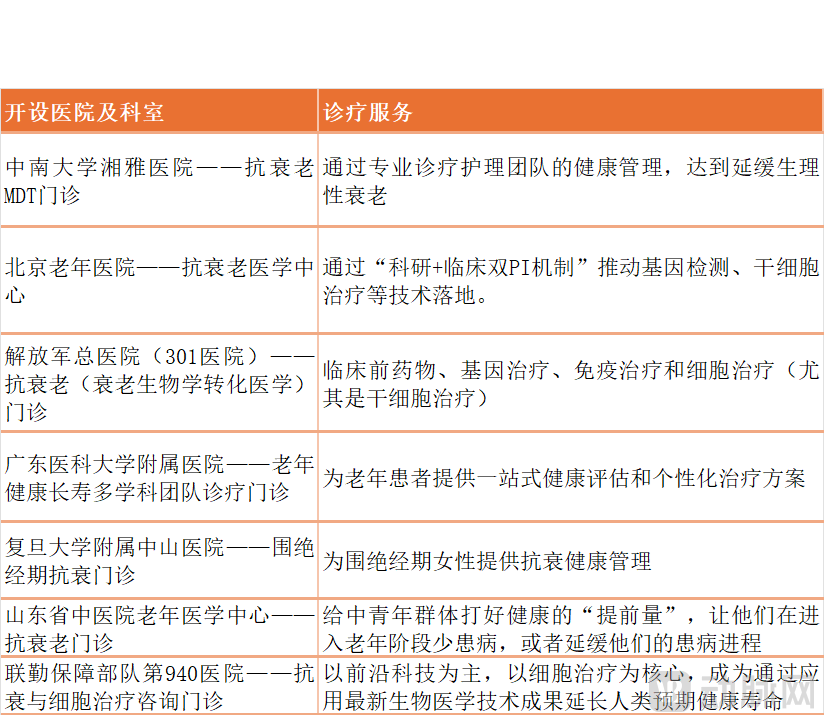
Hospitals in China Offering Longevity and Anti-Aging Clinics
Public hospital longevity and anti-aging clinics place greater emphasis on disease intervention and lifestyle interventions. Tier-3 Grade-A hospitals’ longevity and anti-aging treatments are guided by evidence-based medicine, exercising extreme caution in product selection and prioritizing established approaches supported by large-scale clinical evidence.
Public hospitals’ longevity and anti-aging clinical services can be summarized into three major directions:
① Treatment of age-related diseases. Public hospitals’ anti-aging initiatives primarily target the treatment of aging-related conditions with strict guidelines and consensus.
For example, hormone replacement therapy for menopause. Zhongshan Hospital Affiliated to Fudan University has newly opened a specialized outpatient clinic for female perimenopausal management and anti-aging, providing health management services for perimenopausal women. With the improvement of quality of life, premature ovarian insufficiency and early menopause can directly affect women's lifespan. Hormones in the body after menopause can support organ function for approximately 40 years. The anti-aging clinic can help perimenopausal women improve their quality of life and extend their lifespan.
② Consensus-based lifestyle interventions. Lifestyle is a critical component of longevity and anti-aging therapies, although it demands higher adherence and involves a longer timeframe for effects to manifest.
For example, Xiangya Hospital has established an Anti-Aging Multidisciplinary Team (MDT) Clinic. This clinic is staffed by a team of experts from multiple disciplines, including Cardiology, Endocrinology, Dermatology, Gynecology, Geriatrics, Traditional Chinese Medicine, the Health Management Center, and Nursing. By integrating Xiangya Hospital’s 15 years of health data with Central South University’s comprehensive medical big data resources, the clinic has compiled a dataset of approximately 1.2 million records. Based on this, it has developed a big data model for assessing physiological age related to aging, thereby providing professional, accurate, and scientific support for detection, diagnosis, and treatment. The expert team adopts a personalized approach, devising tailored anti-aging plans that address multiple dimensions, including diet and exercise.
③ Translation of Cutting-Edge Anti-Aging Technologies.Public hospitals in China possess abundant scientific research resources and demonstrate genuine capabilities in multidisciplinary collaboration and the translation of cutting-edge research into practice. Top-tier Grade 3A hospitals typically serve as sites for national or provincial clinical medical research centers, enabling them to directly participate in or lead clinical studies in the field of anti-aging, such as stem cell therapy and novel drug trials, thereby facilitating the rapid and standardized conversion of research findings into clinical practice.
For example, the PLA Clinical Medical Research Center for Geriatric Diseases is conducting clinical studies on the efficacy and safety of Amitose Injection, a stem cell drug, in treating vascular aging.
Top-tier Grade 3A hospitals have launched anti-aging and longevity clinics, leveraging stronger brand endorsement and scientific research capabilities. However, their current clinical practices lack continuous follow-up and monitoring mechanisms, whereas private institutions offer greater flexibility in delivering personalized longevity and anti-aging interventions.
Public hospitals and private institutions are not in an adversarial relationship but are largely complementary: public hospitals provide foundational, standardized, universal, disease-management-based anti-aging services, thereby raising industry standards; private institutions offer high-end, customized, and deeply optimized longevity and anti-aging intervention services. The domestic longevity and anti-aging industry is still in its early stages of development, requiring joint efforts from both public hospitals and private institutions to promote the standardized and scientific advancement of the sector.
Looking at the longevity and anti-aging industry chain, downstream longevity and anti-aging clinics have begun to gain popularity. However, current intervention protocols offered by these clinics are customized and personalized, which limits their ability to achieve broad population coverage. Upstream, biotechnology companies are exploring potential interventions that can be scaled to reach millions or even billions of people.
Over the past few decades, with deepening insights into the mechanisms of aging, approaches to extending lifespan and mitigating age-related diseases through pharmacological, lifestyle, and genetic interventions have been validated in various biological models. This has laid a solid theoretical and practical foundation for the development of anti-aging therapeutics, and the industry has gradually entered a phase of commercial translation.
Many longevity and anti-aging companies have also secured substantial financing, emerging as star enterprises. ALTOS, founded in 2021, has raised $3 billion. Retro Biosciences, backed by OpenAI co-founder Sam Altman, has raised $180 million and is currently undertaking a new round of financing worth $1 billion. In May 2025, NewLimit, a startup focused on epigenetic reprogramming, announced the completion of its $130 million Series B financing round.
The R&D focus of global anti-aging companies is highly concentrated on several cutting-edge directions: cellular reprogramming, autophagy therapy, plasma therapy, tissue reprogramming, and small-molecule anti-aging therapies. Cellular reprogramming research focuses on developing technologies that can convert ordinary cells into stem cells to reverse the cellular aging process; autophagy therapy involves studying the clearance of damaged intracellular components through autophagy to delay aging; plasma-related therapies explore plasma-based anti-aging mechanisms to develop corresponding treatment modalities; and tissue reprogramming aims to develop safe gene therapies to slow down and reverse in vivo aging, with the goal of preventing, halting, or reversing age-related diseases.
Among these, cellular reprogramming undoubtedly occupies the most prominent “center stage.” This technology is based on Professor Shinya Yamanaka’s revolutionary discovery in 2006 that introducing several key transcription factors (Yamanaka factors) can rejuvenate mature cells, reversing them into pluripotent induced pluripotent stem cells (iPSCs). This Nobel Prize-winning research has not only spurred breakthrough therapies such as those for Parkinson’s disease but also revealed a novel pathway toward anti-aging. Research findings from Shinya Yamanaka and other scholars demonstrate that cells possess self-repair capabilities, enabling them to reset the epigenetic clock and eliminate damage caused by various stressors.
If these Yamanaka factors are robustly expressed over a few days, a somatic cell will dedifferentiate into an induced pluripotent stem cell (iPSC), recapitulating the process undergone by germ cells during early embryonic development. However, with partial reprogramming to iPSCs, the cells maintain their original identity while adopting a younger gene expression profile.
Currently, research in the field of cellular reprogramming remains in its early stages, with numerous obstacles to overcome, such as the risk of tumorigenicity. Nevertheless, it is reasonable to believe that AI empowerment will significantly accelerate the process of deciphering the code of anti-aging.
Anti-aging is humanity’s eternal pursuit. This quest for longevity and anti-aging is evolving into a clinical science, and with technological breakthroughs, longevity and anti-aging technologies may reshape the paradigm of life.
As one interviewee noted, “Over the past decades, global average life expectancy has increased by 2.5 years per decade, representing a steady rate of growth. Currently, many people believe that reaching age 70 means being constrained by disease and experiencing a significant decline in quality of life, with life gradually drawing to a close by age 90. However, with technological breakthroughs and interventions targeting aging, human lifespan can be extended more rapidly. Recognizing that we can enjoy an additional twenty years of healthy life will fundamentally reshape life planning.”
References:
Forbes Exclusive Interview with the Founder of Beverly Anti-Aging Center: The Time Is Right to Capture Market Share in the Anti-Aging Sector — Cell Kingdom
Blood Transfusions, Drug Regimens, and Deep Pockets: Silicon Valley’s Billionaires Embrace the “Life-Extension Craze” – 36Kr
The Prototype: OpenAI and Retro Biosciences Built an AI Model for Bioengineering——Forbes