

EBR Systems Submits IPO Prospectus Following FDA Approval of WiSE CRT, the First Leadless Left Ventricular Endocardial Pacing System for Cardiac Resynchronization Therapy

EBR Systems
Developer of Wireless Cardiac Pacing Systems for Heart Failure
In June 2025, the Cleveland Clinic in the United States performed the first wireless left ventricular pacing procedure. The WiSE CRT system used in this surgery was developed by EBR Systems, a Silicon Valley-based company, and is the first FDA-approved system capable of providing leadless left ventricular endocardial pacing (LVEP).1。
This breakthrough directly addresses the clinical dilemmas associated with traditional cardiac resynchronization therapy (CRT). According to the American College of Cardiology (ACC), approximately 20%–30% of heart failure patients worldwide are ineligible for CRT due to factors such as abnormal venous access, anatomical variations of the coronary sinus, or complications from prior leads.
1High Difficulty, High Risk, Poor Efficacy: The Unresolved Challenges of Cardiac Resynchronization Therapy
CRT is a critical therapy for heart failure patients, but it faces challenges such as high treatment thresholds, significant infection risks, and suboptimal therapeutic outcomes.
First, the threshold for treatment is high. Traditional therapies rely on implanting leads via specific pathways through the coronary sinus, imposing strict requirements on patients’ anatomical conditions. Consequently, some patients are unsuitable for surgery due to factors such as venous tortuosity or stenosis.
Secondly, the therapeutic approach involving implantation of leads into the patient’s body is prone to lead displacement or physical fracture, thereby increasing the risk of infection. Approximately 15% of patients experience lead displacement or infection postoperatively [], which further leads to multiple complications.
Furthermore,Approximately 30% of patients show no significant improvement after undergoing conventional CRT (source: ESC Heart Failure Guidelines), with continued deterioration of cardiac function and suboptimal therapeutic efficacy.
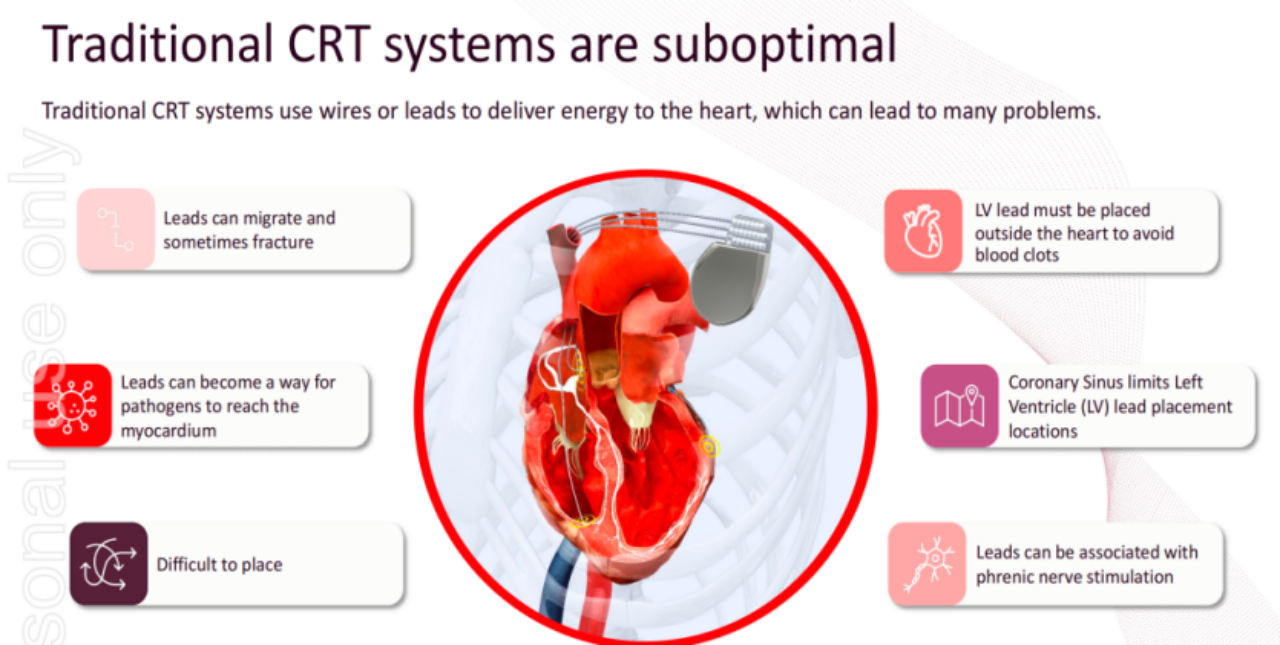
Although leadless pacemakers avoid lead-related complications, they still fail to address issues such as biventricular synchronous therapy for heart failure patients. EBR’s solution was developed specifically to address this pain point.
2Ultrasonic Transmitter + Microelectrode: Achieving Three Major Technological Breakthroughs
EBR has achieved three key breakthroughs: anatomical adaptability, complication control, and cross-platform compatibility.
The WiSE CRT device has a volume of only 1.8 cubic millimeters, weighing approximately as much as a grain of rice, thereby better conforming to the human physiological environment. In the WiSE CRT system, physicians deliver the electrode directly into the left ventricle via femoral artery puncture, allowing for free selection of the optimal pacing site under real-time ultrasound guidance.
This technology has enabled patients who were previously ineligible for conventional treatment to successfully undergo surgery, with significant improvement in left ventricular systolic function postoperatively. This breakthrough underscores substantial progress in its anatomical universality.
In terms of safety, the fully wireless biventricular pacing design (without additional leads) significantly reduces the risk of complications associated with traditional therapies. The zero-lead design of WiSE CRT eliminates the risk of physical lead fracture, and when combined with a silicon nitride bio-coating on the titanium alloy electrode surface, reduces the thrombosis rate to below 1% (based on EBR clinical trial data). In terms of clinical performance, the average procedure time for patients has been reduced to 40 minutes, and the need for postoperative intensive care has been decreased by two-thirds.
The system’s third major breakthrough is the establishment of an open and compatible therapeutic ecosystem. As the world’s first leadless solution to achieve full-scenario interoperability, its acoustic communication protocol has received compatibility certification for Medtronic’s Micra device and is currently undergoing adaptation testing for Abbott’s Aveir system.
This cross-platform capability can effectively benefit patients with existing right ventricular pacemakers—they no longer need to endure the trauma of open-chest surgery, as a single minimally invasive procedure is sufficient to upgrade their system to biventricular therapy.
The system’s ability to achieve three major breakthroughs hinges on two innovative components: one is an ultrasonic transmitter implanted subcutaneously in the chest wall, and the other is a microelectrode delivered via catheter into the left ventricle.
These two components operate on the principle that the transmitter converts electrical energy into ultrasound, which penetrates cardiac tissue and is then received by electrodes and converted into electrical pulses to directly stimulate myocardial contraction.
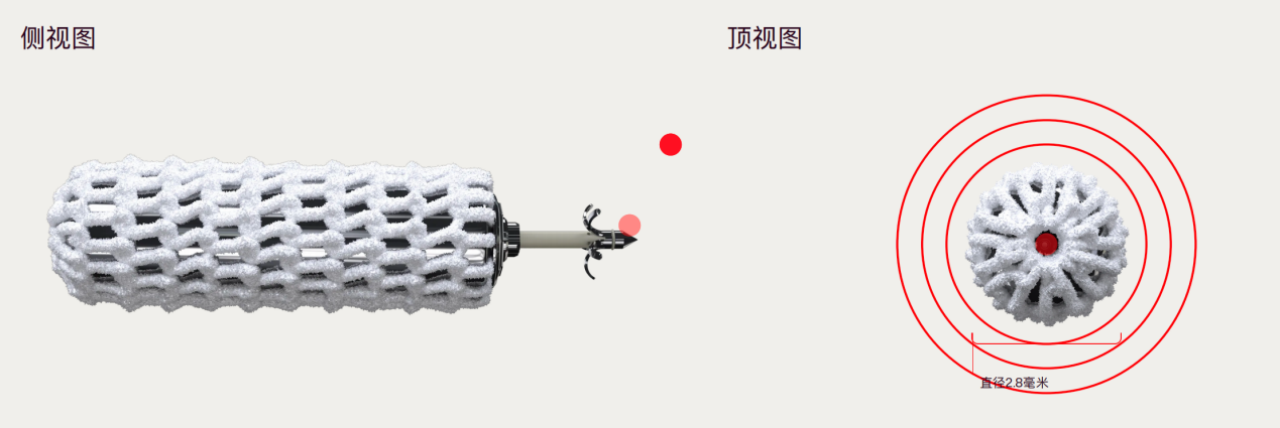
WISE CRT Schematic Diagram
The treatment process of the WISE CRT system is divided into three stages:
Treatment begins with the pre-assessment phase. During this stage, imaging modalities (such as echocardiography) are employed to precisely calculate the ultrasound conduction pathway and optimize its transmission to the optimal location in the left ventricle. Simultaneously, the impact of thoracic structures on acoustic waves under different body positions is simulated, thereby establishing a three-dimensional navigation foundation for subsequent procedures.
Following the completion of the pre-assessment, the procedure proceeds to the surgical implantation phase. The surgeon makes an approximately 2-centimeter incision in the patient’s intercostal space and implants the ultrasonic transmitter and battery pack subcutaneously into the chest wall. During implantation, the accuracy of the pre-assessment localization must be verified concurrently, with real-time adjustment of the transmitter angle to ensure that the acoustic beam penetrates to the target cardiac chamber with minimal energy loss.
The final stage involves electrode mapping and anchoring. The operator introduces a single-catheter delivery system via the femoral artery, constructs an anatomical model of the left ventricular endocardial surface under electrophysiological mapping guidance, and deploys the anchoring mechanism in the region with the most delayed electrical signal conduction to permanently secure the wireless electrodes.The electrode testing function is activated entirely by externally emitted ultrasonic energy, effectively avoiding the physical contact risks associated with traditional lead systems.
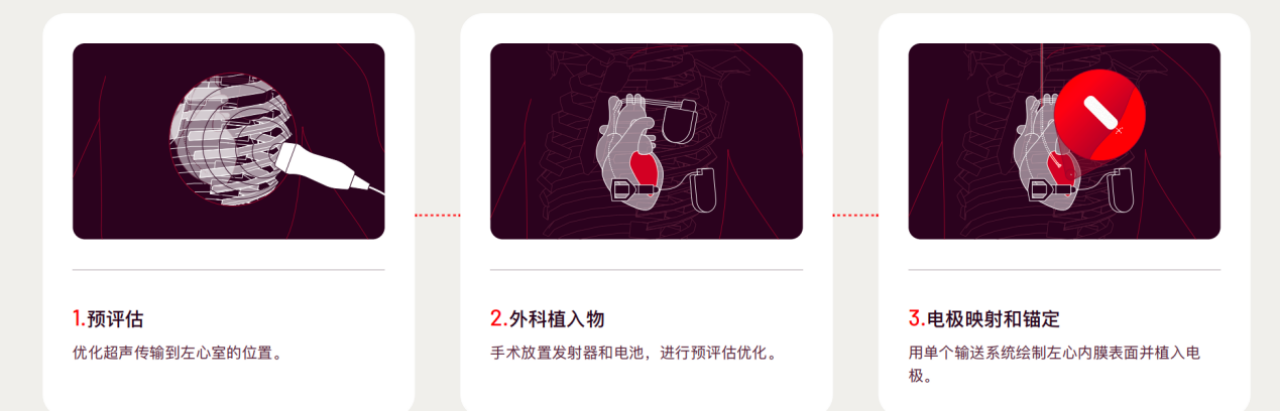
This closed-loop design overcomes treatment limitations caused by venous anomalies or the inability to perform open-chest surgery through a trans-tissue energy relay between a subcutaneous transmitter (converting electrical energy to ultrasound) and an intracardiac electrode (converting acoustic energy to pacing electrical energy), fundamentally addressing issues such as lead dislodgement, infection, and vascular injury associated with traditional cardiac resynchronization therapy (CRT).
3Backed by experience in founding 11 medical technology companies, FDA approval obtained in 2025
Established 14 years ago, EBR has undergone 11 rounds of financing, accumulating a total of $316 million. Based on data from Crunchbase and ASX announcements, its financing milestones are shown in the figure below:
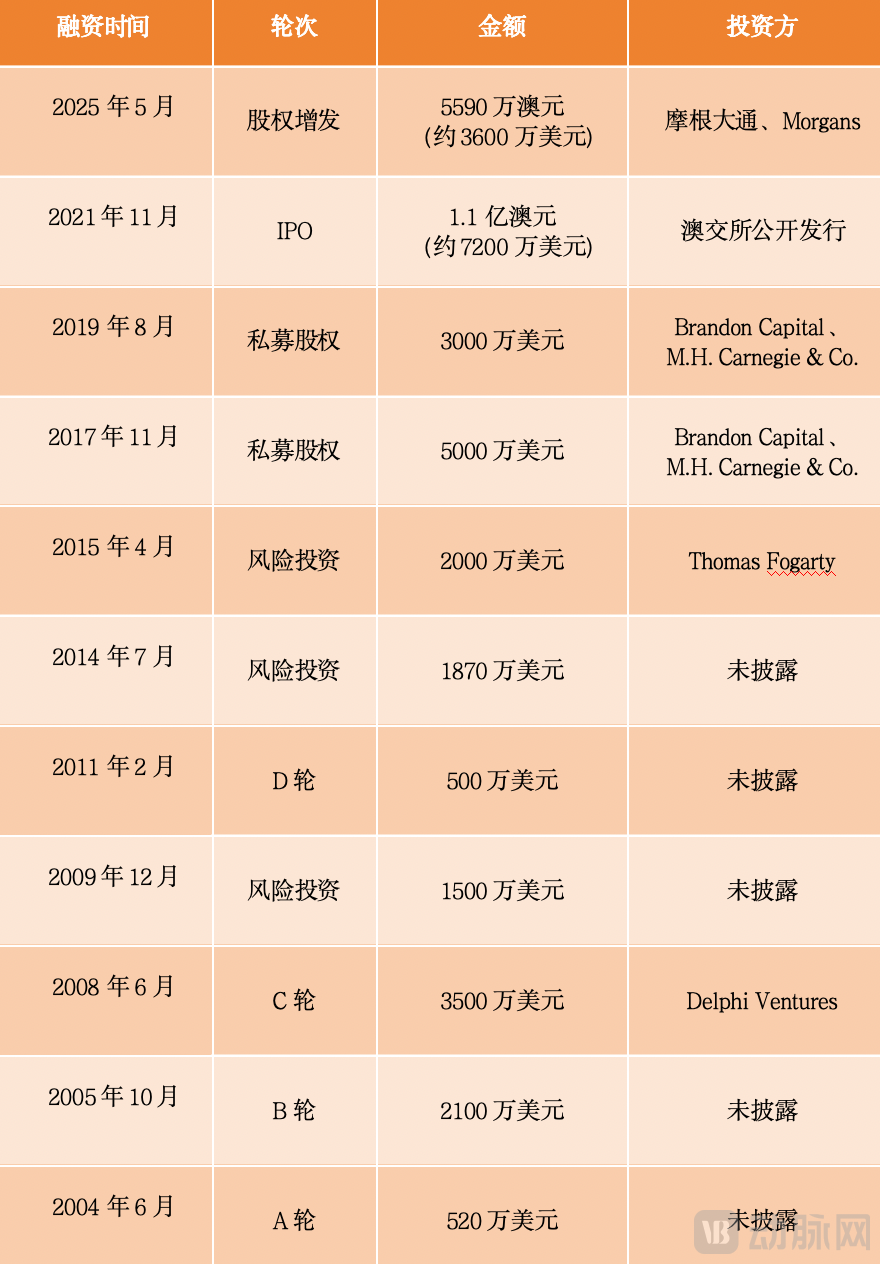
The development of EBR is inseparable from the scientific research and commercialization capabilities of its founding team. Founder Dr. Rick Riley holds the core patent US11235192B2, which covers the core technology of ultrasound-electrode energy conversion mechanism, serving as the innovation key to EBR.
Current CEO John McCutcheon previously led the $130 million sale of medical device company Ardian to Medtronic and possesses extensive experience in healthcare commercialization. Executive Chairman of the Board Alan Will, a serial entrepreneur, has successfully founded 11 medtech companies.
It is precisely this wealth of experience that enables the company to formulate a clear commercialization strategy.
EBR viaAdvancing its commercialization process by improving the payment system, optimizing manufacturing capability reserves, and enhancing mass production capacity.
First, achieve efficient penetration of the core hospital network. EBR prioritizes locking in 50 leading U.S. medical centers that perform more than 100 CRT procedures annually, 90% of which participated in the pivotal SOLVE-CRT trial (e.g., Cleveland Clinic, Massachusetts General Hospital).
These institutions have extensive experience in managing over 5,000 cases of traditional CRT failure annually. The “intraoperative support plus data feedback” model also facilitates the clinical validation of WiSECRT.
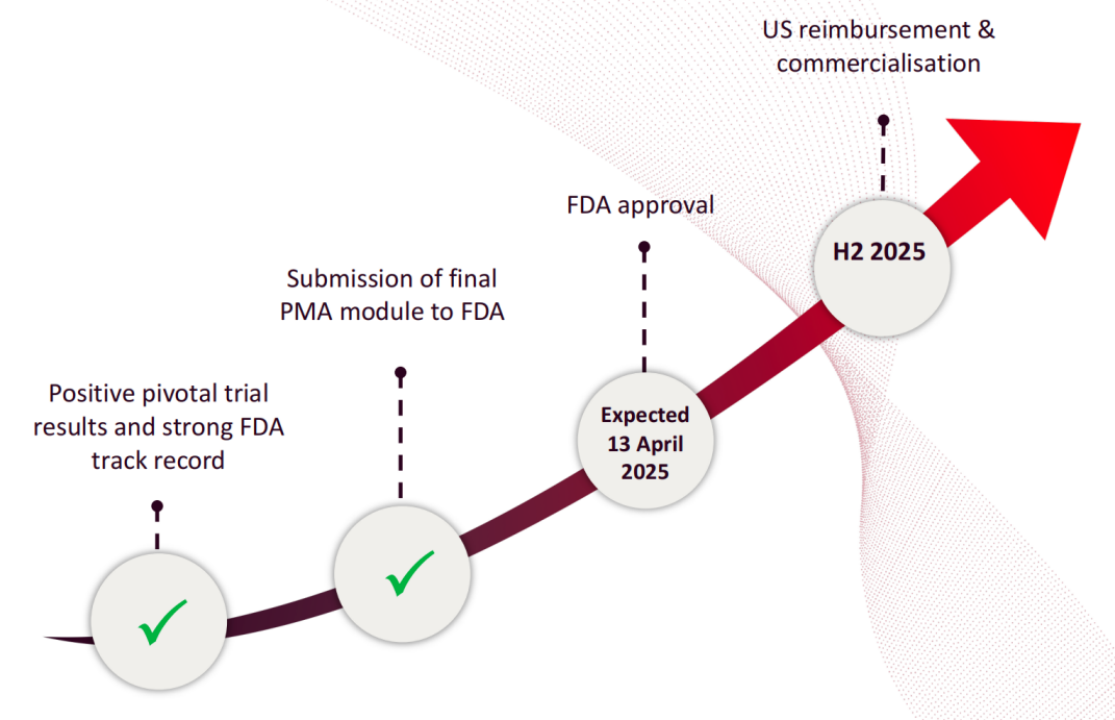
Next is the multi-tiered construction of the payment system.EBR also secured two key reimbursement qualifications from the Centers for Medicare & Medicaid Services (CMS) when it received FDA clearance in April 2025.: NTAP (New Technology Add-on Payment) for inpatient surgeries, and TPT (Transitional Payment, which covers fees for new technological procedures not yet included in the routine outpatient payment system) for outpatient follow-up visits.
The former directly subsidizes the hospital’s equipment procurement costs, while the latter incorporates three postoperative programming check-ups into medical insurance reimbursement. This payment scheme significantly reduces the proportion of out-of-pocket expenses for patients, thereby alleviating their financial burden.
Finally, we are enhancing our manufacturing capabilities for sustained mass production. The new 5,100-square-meter facility in Santa Clara, California, is rapidly being established. Designed around the principle of “vertical integration,” the factory achieves 75% in-house production across its entire process flow. Scheduled to commence full-scale operations in 2026, the plant will boost annual capacity to 3,000 units, thereby ensuring a reliable and continuous supply of the WISE CRT system.
4Insights from China’s Medical Innovation: Pain-Point Thinking + Front-Loading the Payment System
The development model of EBR Systems also provides a strong practical reference for the innovation of medical devices in China.
First, driven by clinical needs, WISE CRT drew its innovative inspiration directly from addressing the clinical pain point of the 30% failure rate in CRT therapy. Second, a medical-engineering collaborative mechanism ensures product quality while guaranteeing that solutions align with real-world clinical scenarios. Finally, it is essential to establish payment systems in advance. During the FDA approval process, EBR simultaneously advanced its health insurance reimbursement pathway planning; its Breakthrough Device designation facilitates the accelerated implementation of TCET reimbursement.
From this perspective, adhering to the aforementioned principles may offer a pathway for Chinese medical innovation to break through existing bottlenecks, potentially alleviating the scarcity of real-world clinical evidence and addressing payment-related pain points.
Source:
1.https://www.accessdata.fda.gov/scripts/cdrh/cfdocs/cfpma/pma.cfm?ID=P240028