Shanghai Funds 18 Synthetic Biology Projects with RMB 42 Million, Featuring Leading Enterprises and Research Institutes
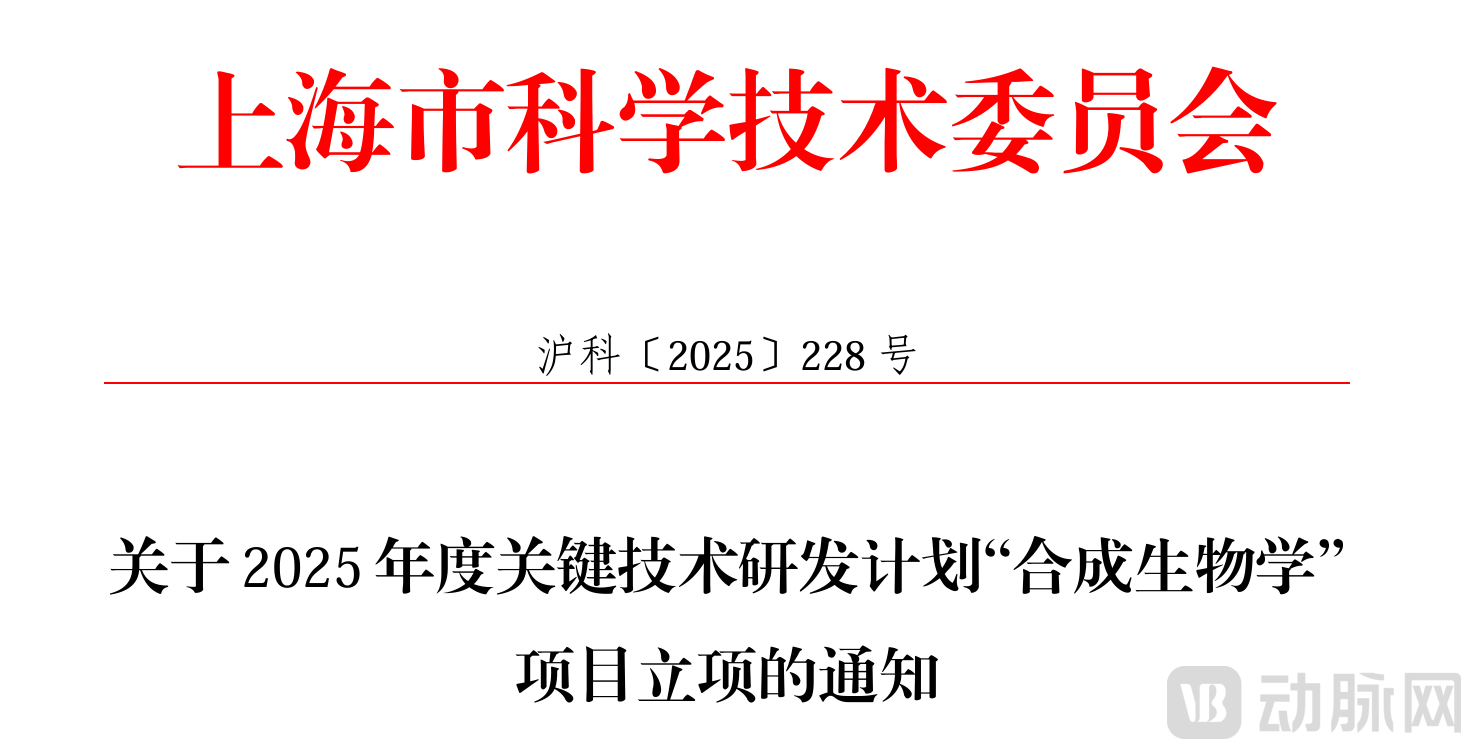
On June 24, the Shanghai Municipal Science and Technology Commission issued the “Notice on the Approval of Projects under the 2025 Key Technology Research and Development Plan for ‘Synthetic Biology’.” Following procedures including application recommendation, formal review, expert evaluation, and public notification of project approval, 18 projects were approved. The Commission will provide a total funding of RMB 42 million, with RMB 32.1 million allocated in 2025.
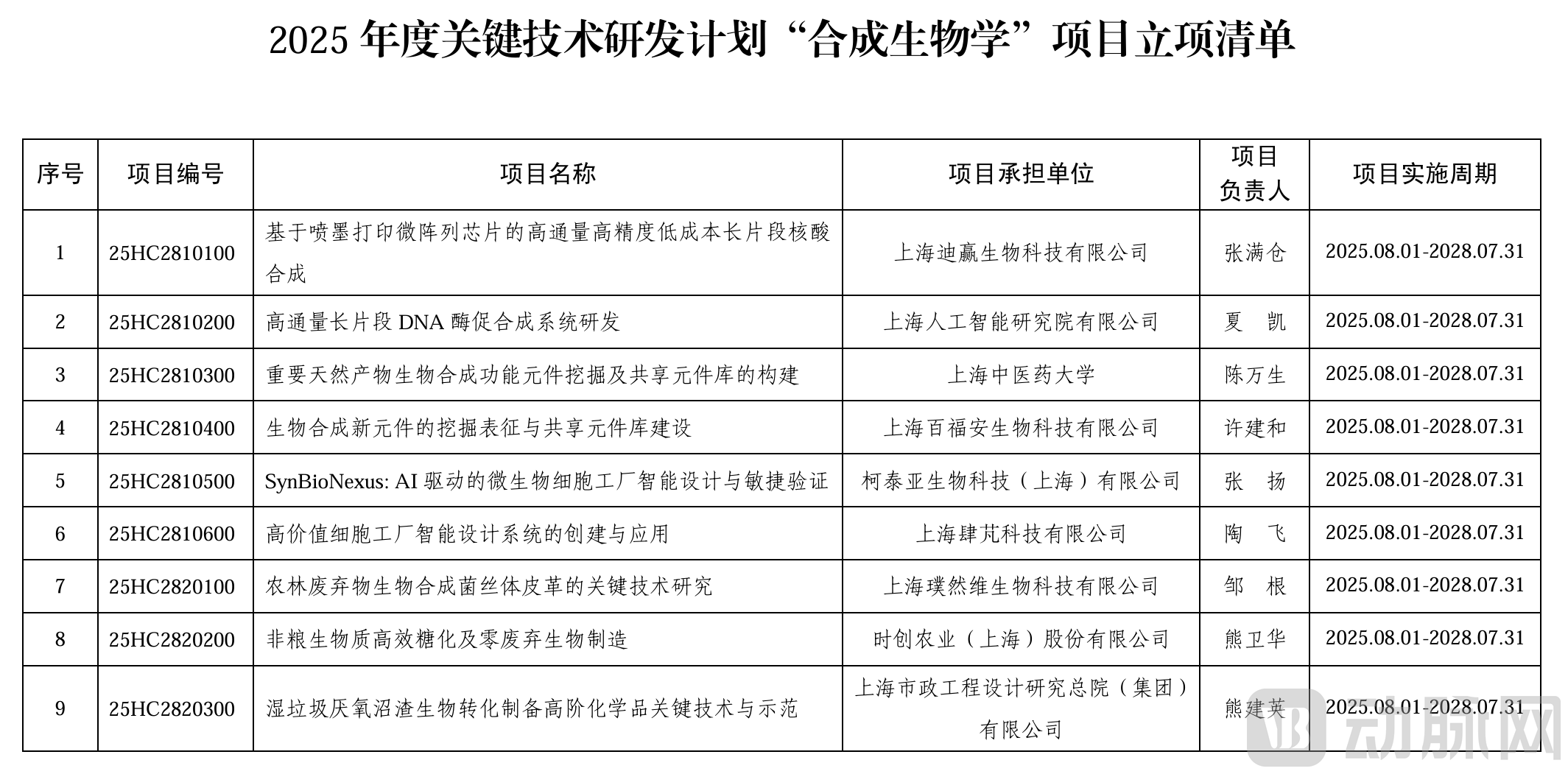
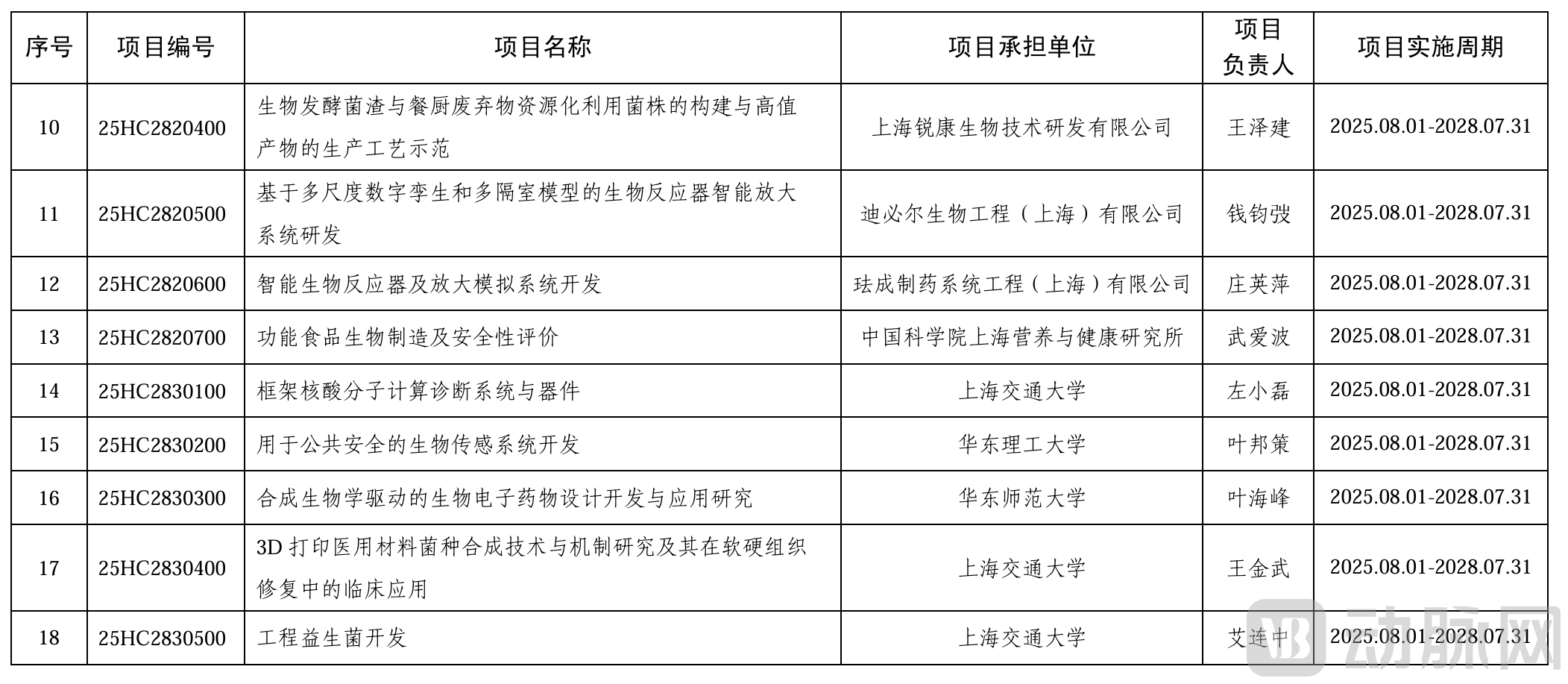
VCBeat’s review of the list revealed that the entities undertaking the projects are predominantly well-known enterprises or research institutions in the field of synthetic biology, such as Ruikang Biology (a wholly-owned subsidiary of Chuanning Biology), T&J Bioengineering (a prominent bioreactor company), Fochine Pharmaceutical (a stainless-steel bioreactor manufacturer), as well as East China University of Science and Technology and Shanghai Jiao Tong University.
An industry insider in the field of synthetic biology told VCBeat that the initiation of this project will inevitably have a positive promotional effect on the industry. Participating enterprises can leverage this project to collaborate with more entities in advancing technological research and development. From the perspective of specific projects, this also signifies that the government has begun to focus on the upstream segment of the synthetic biology industrial chain, recognizing the importance of equipment and software. Furthermore, the subsequent phased achievements of these projects will provide guidance and reference for breakthroughs in industrial development.
01
Maximum Funding per Project: CNY 5 Million
In March 2025, the Shanghai Municipal Science and Technology Commission released the “Guidelines for Project Applications under the 2025 Key Technology Research and Development Program on ‘Synthetic Biology’” (hereinafter referred to as the “Guidelines”), soliciting applications for three major thematic areas encompassing 12 specific directions. Funding support will be provided for each direction, with grant amounts ranging from RMB 2 million to RMB 5 million.
Based on the aforementioned project approval list, VCBeat has compiled the proposed funding amounts for each enterprise or institution, along with their corresponding research directions, as detailed below.
Topic 1: Enabling Technologies
Direction 1: High-Throughput Long-Read Nucleic Acid Synthesis
Non-quota funding; no more than two projects will be supported, with a maximum funding amount of RMB 2.5 million per project. The corresponding entities are Shanghai Diying Biotechnology Co., Ltd. and Shanghai Artificial Intelligence Research Institute Co., Ltd.
Direction 2: Discovery of New Components and Establishment of a Shared Component Library
Up to two projects will be supported, with a funding cap of RMB 2.5 million per project. The corresponding entities are Shanghai University of Traditional Chinese Medicine and Shanghai Baifuan Biotechnology Co., Ltd.
Direction 3: Development of an Intelligent Design System for Cell Factories
Up to two projects will be supported, with a funding cap of RMB 2.5 million per project. The supported entities are Kotaiya Biotechnology (Shanghai) Co., Ltd. and Shanghai Sipeng Technology Co., Ltd.
Topic 2: Applied Research
Direction 1: Efficient Utilization of Biomass
Up to two projects will be supported, with a funding cap of RMB 2 million per project. The corresponding recipients are Shanghai Puranwei Biotechnology Co., Ltd. and Shichuang Agriculture (Shanghai) Co., Ltd.
Direction 2: Waste Degradation and Utilization
Up to two projects will be supported, with a funding cap of RMB 2 million per project. The corresponding entities are Shanghai Municipal Engineering Design Institute (Group) Co., Ltd. and Shanghai Ruikang Biotechnology R&D Co., Ltd.
Direction 3: Development of Intelligent Bioreactors and Scale-up Simulation Systems
Up to two projects will be supported, with a funding cap of RMB 2 million per project. The supported entities are Dibio Biotechnology (Shanghai) Co., Ltd. and Fochon Pharmaceutical System Engineering (Shanghai) Co., Ltd.
Direction 4: Biomanufacturing and Safety Evaluation of Functional Foods
Non-fixed funding: No more than one project will be supported, with a maximum funding amount of 5 million yuan per project. Upon project approval, 50% of the special funding will be disbursed; upon completion of Milestone 1, 20% will be disbursed; upon completion of Milestone 2, 10% will be disbursed; and upon successful acceptance, the remaining 20% will be disbursed. This corresponds to the Shanghai Institute of Nutrition and Health, Chinese Academy of Sciences.
Topic 3: Forward-Looking Technologies
Direction 1: Disease Diagnosis and Treatment Based on DNA Computing
One project is proposed for support, with a funding cap of no more than RMB 2 million per project, corresponding to Shanghai Jiao Tong University.
Direction 2: Development of Biosensing Systems for Public Safety
One project is proposed for support, with a funding cap of no more than RMB 2 million per project, awarded to East China University of Science and Technology.
Direction 3: Development of Bioelectronic Drugs Based on Synthetic Biology
One project is proposed for support, with a funding cap of no more than 2 million yuan per project, allocated to East China Normal University.
Direction 4: 3D-Printed Biomaterials for Medical Applications
One project is proposed for support, with a funding cap of no more than RMB 2 million per project, allocated to Shanghai Jiao Tong University.
Direction 5: Development of Engineered Probiotics
One project is proposed for support, with a funding cap of no more than RMB 2 million per project, allocated to Shanghai Jiao Tong University.
02
Involving Multiple Well-Known Enterprises and Research Institutes
Among the 18 project-bearing entities involved, nearly all are well-known enterprises or research institutes in the field of biomanufacturing, and their project directions align with the development trends of the biomanufacturing industry.
For example, regarding the development of intelligent bioreactors and scale-up simulation systems, the Guidelines require the development of AI-assisted online sensing technologies to automate the control of various process parameters in bioreactors, thereby ensuring that cells remain in an optimal growth state for extended periods.
Automation is a key development direction for current bioreactors. VCBeat has learned through research and interviews that the capabilities of domestic intelligent parallel bioreactors and ultra-large-scale high-end bioreactors still need further improvement. While full-process automation enables automatic data storage and end-to-end data traceability, domestic parallel bioreactors currently exhibit weaknesses in automation.
Automation is also a key focus of the recent “Notice of the General Office of the Ministry of Industry and Information Technology and the General Office of the Chinese Academy of Sciences on Launching the ‘Open Competition’ Initiative for Innovative Tasks in High-Performance Bioreactors.”
In the field of intelligent bioreactor and scale-up simulation system development, both Dibier and Facheng, which are included in this project approval list, are well-known enterprises in the industry.
Established in 2012, Dibio has developed a comprehensive solution centered on micro-scale parallel bioreactors, integrating automated instruments for medium preparation, inoculation, and sampling, along with an intelligent cloud-based data management platform. It has provided global customers with over 10,000 high-throughput, automated micro-bioreactor R&D platforms. Its core business also includes the development of foundational industrial software, building digital intelligent manufacturing platforms through cloud-based data monitoring and leveraging artificial intelligence and big data technologies.
Facheng Haoxin is a wholly-owned subsidiary of the listed company PNC Process Systems. It provides professional fluid process equipment, including bioreactors, formulation and mixing systems, bio-fermentation systems, water generation units, and distribution systems. The company operates a high-standard production base covering over 40,000 square meters and has served more than 100 renowned pharmaceutical enterprises, with eight of the global Top 10 pharmaceutical companies as its long-term partners. Currently, it holds competitive advantages in large-molecule biologics and highly potent products, particularly in the fields of monoclonal antibodies, human and animal vaccines, blood products, insulin, cell therapy, and gene therapy.
In addition to the bioreactor sector, other sectors also involve numerous renowned enterprises and research institutes.
For example, Ruikang Biology is responsible for the project titled “Construction of Strains for Resource Utilization of Bio-fermentation Residues and Kitchen Waste, and Demonstration of Production Processes for High-value Products.”
Ruikang Biotech, established in 2020, is a wholly-owned subsidiary of Chuanning Biology under Kelun Pharmaceutical, undertaking the function of high-end R&D and innovation for Chuanning Biology. Ruikang Biotech employs cutting-edge synthetic biology and enzymatic catalysis technologies, supplemented by automated and intelligent high-throughput biofoundry equipment, to drive product development and innovation empowerment. Its R&D portfolio currently focuses primarily on high-value natural products, cosmetic and personal care ingredients, bio-based materials, and pharmaceutical intermediates.
Additionally, East China University of Science and Technology, a renowned institution in the field of biomanufacturing, is responsible for the “Development of Biosensing Systems for Public Safety.”
It is reported that the School of Biotechnology at East China University of Science and Technology hosts two national-level research platforms: the State Key Laboratory of Bioreactor Engineering and the National Research Center for Bioengineering Technology (Shanghai). Over the past five years, the school has undertaken numerous key projects under the National Key R&D Program, the “973” Program, the “863” Program, Major Special Projects, the National Science and Technology Support Program, and key projects or topics funded by the National Natural Science Foundation. The total funding received for various government-sponsored projects has approached RMB 400 million.
Shanghai Jiao Tong University is responsible for “Research on the Synthesis Technology and Mechanisms of Microbial Strains for 3D-Printed Medical Materials, Their Clinical Applications in Soft and Hard Tissue Repair,” as well as “Development of Engineered Probiotics.”
School of Life Sciences and Biotechnology, Shanghai Jiao Tong UniversityHome to the State Key Laboratory of Microbial Metabolism and the Ministry of Education Key Laboratory of Genetic Development and Neuropsychiatric Disorders (Bio-X), the Ministry of Education’s International Joint Laboratory for Metabolism and Developmental Sciences, the Ministry of Agriculture’s National Testing Center for Molecular Characterization Verification of Genetically Modified Organisms, and the Shanghai Professional Technical Service Platform for Genetically Modified Organisms and Food Safety, among other platform bases.
—END—
Training on Registration and Market Access for Biomanufacturing Products
Grand Opening
June 28–29, 2025, Beijing·Yizhuang International Biopharmaceutical Park, “Training on Registration and Market Access for Biomanufacturing Products” Grandly Launches.
Co-hosted by VCBeat and Dr. Fang, this event focuses for the first time on six high-potential sectors (pharmaceuticals, cosmetics, food, animal health, agriculture, and materials), providing you with a practical guide to breaking through from the laboratory to the market.
Highlight 1: Top-Tier Expert Lineup
Featuring over a dozen industry-leading experts and practical instructors from the fields of pharmaceuticals, veterinary drugs, and food, including Yu Li (former expert at the Beijing Institute for Drug Control), Dong Yichun (Secretary-General of the China Veterinary Drug Association), and Si Rong (International Food Regulatory Leader). They will provide in-depth analysis of global regulatory standards (such as those of the FDA and NMPA) to help you precisely select registration pathways and build compliant data packages.
Highlight 2: Practice-Oriented
Addressing corporate pain points and overcoming the “valley of death” in pilot-scale trials and regulatory access challenges. Through case studies, learn strategies for pharmaceutical IND/NDA submissions, new cosmetic ingredient filings, and veterinary drug approvals, while formulating winning pricing and volume-based procurement response plans. Enhance market competitiveness through efficient cross-domain collaboration.
The specific schedule is as follows:
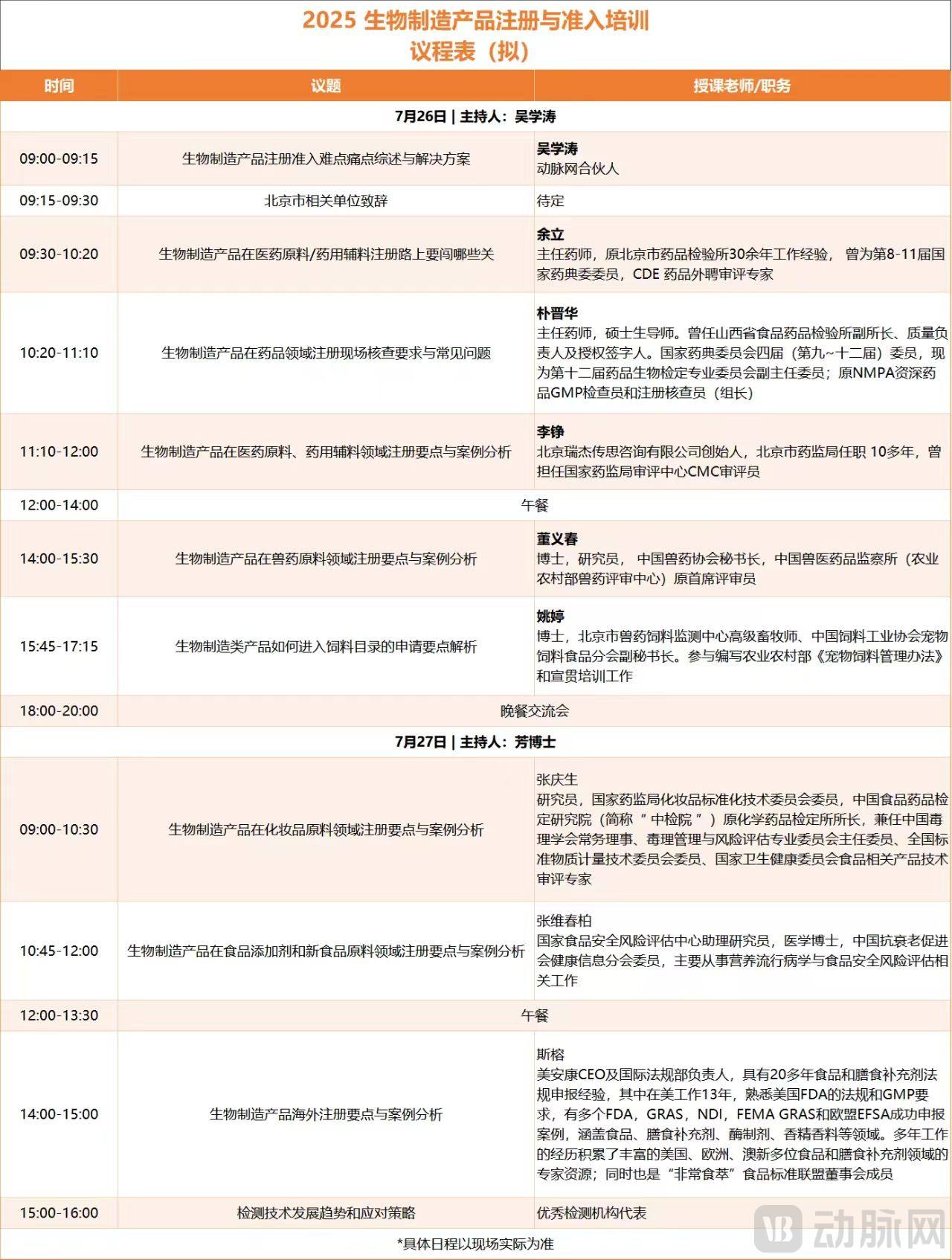
Limited to 80 seats, first come, first served. Engage face-to-face with experts to help your product advance from “bio-manufacturing” to “market success”!
Scan the QR code below to register and secure your spot, embarking on a journey toward compliance-driven breakthroughs!