Academician Ma Dawei on Synthetic Biology: No Process Is Irreplaceable—Cost and Environmental Impact Are Decisive Factors
““Cost, cost, cost.” Recently, at the “2025 Global Bio-Manufacturing Conference (GBC 2025),” hosted by VCBeat and co-hosted by Dr. Fang, “cost” became the key emphasis of Ma Dawei, an academician of the Chinese Academy of Sciences.
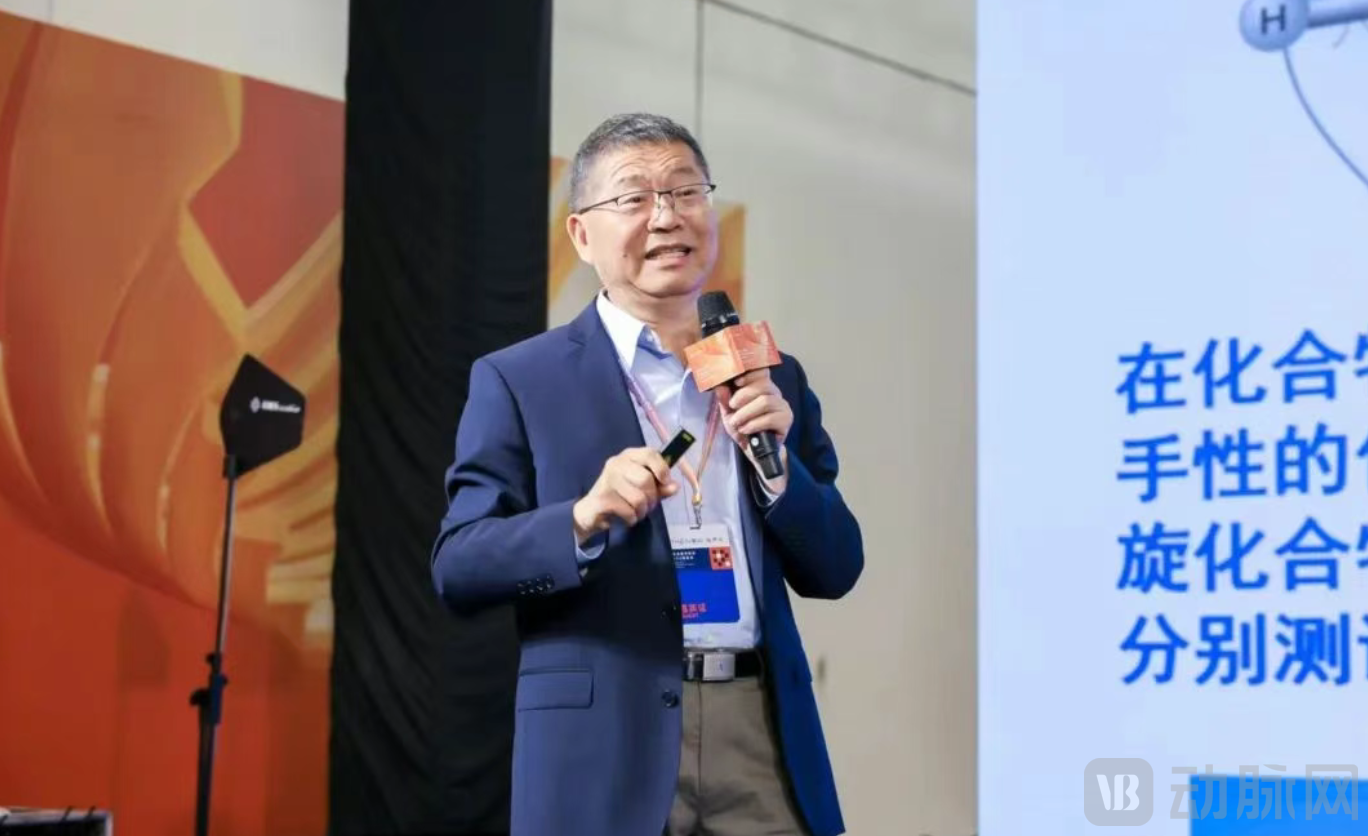
“After years of work on transformation and process optimization, our greatest takeaway is that no chemical transformation in the manufacturing process is irreplaceable; ultimately, only those methods that are inexpensive, readily available, environmentally friendly, safe, and easy to operate can compete in the market,” said Ma Dawei.
Chemical synthesis boasts a rich historical foundation, while synthetic biology is emerging as a rising star; each possesses its own distinct advantages.
For instance, pharmaceuticals can be regarded as the category of chemicals with the highest product value. In the early stages of drug discovery, chemical synthesis dominates due to its ability to rapidly construct compound libraries, offering significant efficiency advantages. However, when transitioning to large-scale production, enzymatic catalysis technologies in synthetic biology demonstrate more pronounced advantages, as cost and environmental impact become the decisive factors in process selection.
However, even during the mass production phase, the advantages of synthetic biology are not absolute; it offers cost and environmental benefits only in specific fields and segments of the industrial chain. Therefore, the integration and collaborative innovation of chemical synthesis and synthetic biology may well be the current “answer.”
01
"Turning a Series of Reactions into a 'One-Pot' Process"
It is understood that synthetic biology refers to a processing approach for target products, centered on industrial biotechnology, which utilizes enzymes and microbial cells in combination with chemical engineering techniques. This encompasses bio-based materials, chemicals, and bioenergy. As a platform technology, synthetic biology plays a crucial role in biomanufacturing.
According to data from Huaan Securities, the global synthetic biology market is expected to maintain a relatively rapid growth rate, approaching $50 billion by 2028. Meanwhile, the downstream applications of synthetic biology are diverse, with widespread use across numerous sectors including healthcare, food and agriculture, chemical industry, and consumer goods.
Synthetic biology indeed holds distinct advantages in certain areas of pharmaceutical manufacturing.
Ma Dawei pointed out that, despite the tremendous efforts devoted to chemical synthesis to date, the chemical production of drugs remains costly: the psychiatric medication paroxetine costs 3,000 yuan per kilogram, and the antiviral drug sofosbuvir costs 3,880 yuan per kilogram. Although tetracycline and erythromycin have more complex structures than these two drugs, their production via synthetic biology costs only 250 yuan and 400 yuan per kilogram, respectively. This is because synthetic biology enables many reactions to be combined into a “one-pot” tandem process—an approach long pursued in chemical synthesis.
Ma Dawei also cited a series of typical cases where enzymatic catalysis has been successfully applied to industrial-scale drug production, with P450 monooxygenases being the most notable—“arguably enough to astonish experts in chemical synthesis.”
According to reports, P450 oxidase can be applied to synthesize a key reagent for inducing animal models of Parkinson’s disease. The annual demand for this reagent reaches hundreds of kilograms. However, its molecular structure is complex, containing three chiral centers. Conventional chemical synthesis requires at least a dozen reaction steps, whereas the adoption of P450 oxidase technology significantly simplifies the synthetic route, overcoming challenges that are difficult to address through traditional chemical methods. “Nevertheless, the speed of obtaining novel chiral compounds via synthetic biology still requires breakthroughs.”
“Styrene monooxygenase can be utilized in the production of the antifungal drug efinaconazole. The original chemical synthesis route was highly complex, whereas the new enzymatic catalysis process enables the direct conversion of raw materials into a high-purity target product.” Notably, the enzyme used in this process underwent 13 rounds of directed evolution, resulting in an approximately 1,680-fold increase in conversion efficiency, stated Ma Dawei.
Furthermore, according to Ma Dawei’s analysis, the antidiabetic drug sitagliptin is now being produced using aminotransferases. The key amino structure of suvorexant, a medication for insomnia, is also synthesized through aminotransferase catalysis. Rimegepant, a drug for migraine treatment, represents another typical case of aminotransferase application; initially, the enzymatic conversion rate identified by the R&D team was 0%, indicating virtually no conversion, but after directed evolution, a 99% conversion rate was achieved.
Furthermore, synthetic biology approaches can address challenges related to compound sourcing, such as obtaining sufficient quantities of complex molecules for derivatization and constructing libraries of complex natural products through combinatorial biosynthesis. Leveraging the full potential of synthetic biology at the early stages of drug discovery also lays the foundation for its future application in the large-scale manufacturing of pharmaceuticals.
02
Cost and Environmental Protection Are Fundamental Factors
However, the application of synthetic biology in pharmaceuticals has certain limitations and is not utilized across all fields.
Ma Dawei emphasized that when a drug truly reaches the stage of commercial-scale manufacturing, only one or two processes are likely to be decisive, with the final choice depending on which process facilitates easier production and yields a lower-cost product. “Whether in biomanufacturing or chemical manufacturing, the ultimate criteria come down to two factors: cost and environmental sustainability.”
The case of artemisinin vividly demonstrates how cost factors ultimately determine the fate of a production process. Ma Dawei stated that while artemisinin can be regarded as a milestone achievement in the field of chemical synthesis, it has yet to achieve commercial viability. This is primarily because the cost of cultivation by farmers in Yunnan Province, China, is approximately RMB 200 per kilogram lower than that of production via synthetic biology. Amyris, the pioneer of synthetic biology, filed for bankruptcy in 2023 without ever witnessing the anticipated decline in artemisinin cultivation by Yunnan farmers.
“Moreover, among the more than 20 synthetic biology companies that went public in the United States between 2006 and 2008, all have failed. Other bankruptcies include Metabolix (PHA), BioAmber (succinic acid), and Kior (biomass-based liquid fuels), all due to uncompetitive costs; cultured meat companies are currently facing similarly low market acceptance.”
Ma Dawei analyzed that, in fact, there are few synthetic biology cases similar to the synthesis of tetracycline and erythromycin in the pharmaceutical field, primarily because most drugs have not yet reached a stage where they can be produced via biomanufacturing. Examples include morphine, artemisinin, and paclitaxel. Synthetic biology approaches mainly rely on mimicking natural processes; however, the majority of current drugs possess non-natural structures. For instance, many kinase inhibitor-based targeted therapies feature linked benzene rings, making it difficult to identify enzymatic catalytic pathways for their production. Consequently, the non-natural nature of drug molecules renders chemical synthesis more advantageous.
“Therefore, synthetic biology can address some drug manufacturing issues, but not most of them.”
From this perspective, chemical synthesis and synthetic biology each have their own distinct advantages and limitations across different scenarios. Ma Dawei emphasizes that chemical synthesis and synthetic biology are not mutually exclusive competitors, but rather complementary partners in a win-win collaboration. In fact, the two fields can converge and integrate with each other in pharmaceutical manufacturing.
“The development trends of small-molecule drugs have led to the dominance of chemical synthesis in their discovery and large-scale production. Developing more efficient reactions and synthetic strategies remains a significant challenge, representing a key direction for the future advancement of both small-molecule synthetic chemistry and synthetic biology. Strengthening the integration of chemical synthesis and synthetic biology approaches can enhance synthetic efficiency.”
“Moreover, developing other types of enzyme-catalyzed reactions can expand the application space of synthetic biology in small-molecule synthesis. The integration of enzymatic catalysis and chemical synthesis is an important trend for future development,” stated Ma Dawei.

—END—
Training on Registration and Market Access for Biomanufacturing Products
Grand Opening
June 28–29, 2025, Beijing·Yizhuang International Biomedical Park, “Training on Registration and Market Access for Biomanufacturing Products” Grandly Launched.
Co-hosted by VCBeat and Dr. Fang, this event focuses for the first time on six golden sectors (pharmaceuticals, cosmetics, food, animal health, agriculture, and materials), providing you with a practical guide to breaking through from the laboratory to the market.
Highlight 1: A Roster of Top-Tier Experts
Bringing together over ten industry-leading experts and practitioners from the pharmaceuticals, veterinary medicines, and food sectors—including Yu Li (former expert at the Beijing Institute for Drug Control), Dong Yichun (Secretary-General of the China Veterinary Drug Association), and Si Rong (International Food Regulatory Leader)—this program offers in-depth analysis of global regulatory standards (such as those of the FDA and NMPA) to help you precisely select registration pathways and build compliant submission dossiers.
Highlight 2: Practice-Oriented
Addressing corporate pain points by bridging the “Valley of Death” in pilot-scale development and overcoming regulatory approval hurdles. Through case studies, master strategies for pharmaceutical IND/NDA submissions, new cosmetic ingredient filings, and veterinary drug approvals, while formulating winning approaches for pricing and centralized procurement response. Enhance market competitiveness through efficient cross-domain collaboration.
The detailed schedule is as follows:
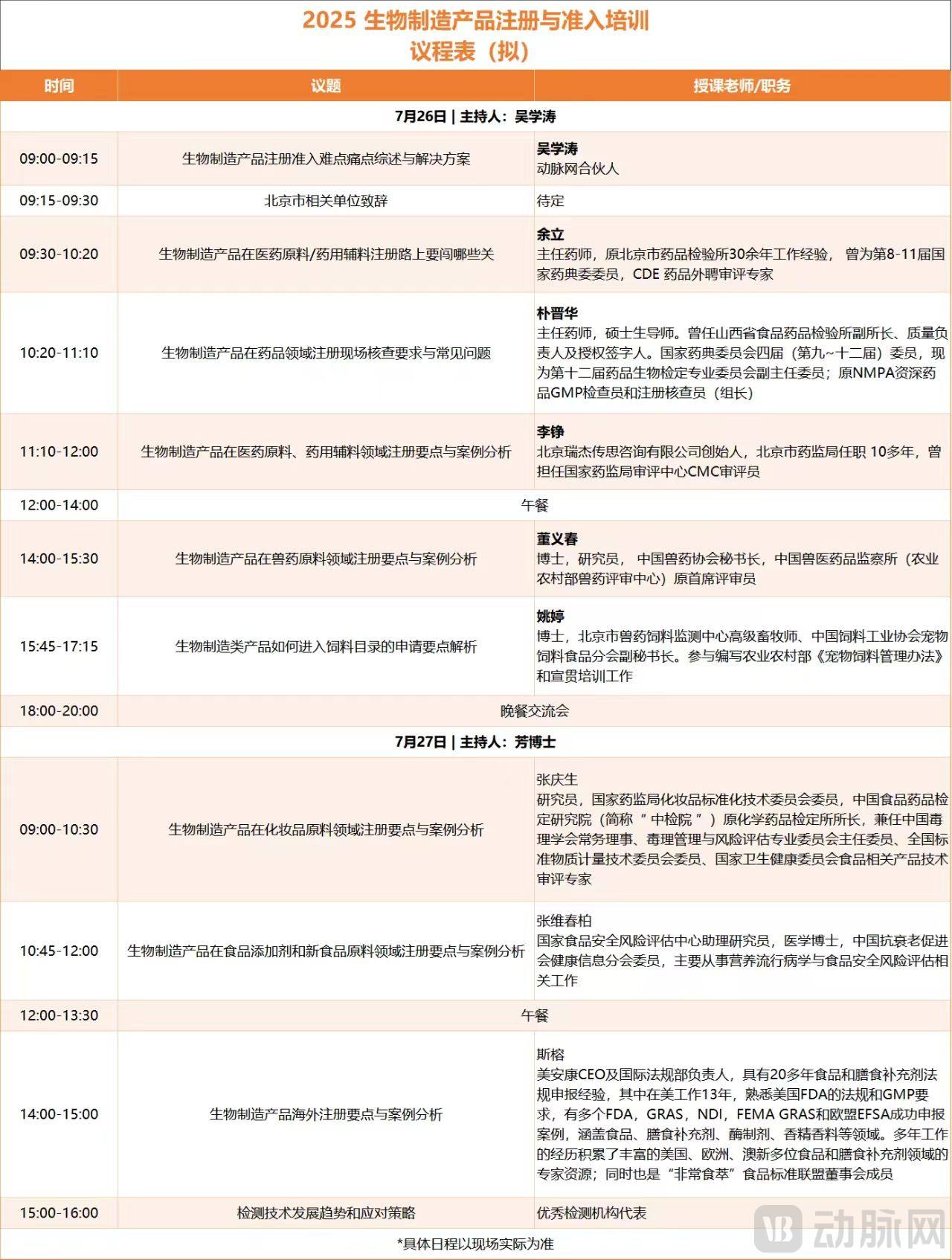
Limited to 80 seats, first come first served. Engage face-to-face with experts to help your products transition from “biomanufacturing” to “market success”!
Scan the QR code below to register and secure your seat, embarking on a journey to break through compliance challenges!