

Saint Bella, the 'Hermès of Maternity Centers,' Lists on HKEX Amid Industry Consolidation

Saint Bella
Maternal and Infant Care Center
Today, the premium maternal and infant care brand Saint Bella and its parent company Beikang International (hereinafter referred to as “Saint Bella”) successfully listed on the Hong Kong Stock Exchange, aiming to raise HK$733 million.
Shengbeila Expands Against the Trend Amid a Fertility SlumpWith postpartum care centers as its core business, Shengbeila nearly tripled its store count from 36 to 96 between 2022 and 2024, despite the broader decline in birth rates. Its overall revenue growth significantly outpaced the industry average, rising from RMB 472 million in 2022 to RMB 799 million in 2024, representing a compound annual growth rate (CAGR) of 30.15%.
Saint Bella has become the luxury brand in the postpartum care center industry, with top customer spending reaching millions of yuan. By tapping into the high-end market with strong counter-cyclical resilience, it has emerged as a leading stock in the new consumption sector. “Born at United Family Healthcare, recovering at Saint Bella” has become the standard choice for high-net-worth families during childbirth and postpartum recovery.
As Saint Bella makes its market debut, the other side of the confinement center industry is witnessing a wave of closures. Over the past decade, the number of confinement centers that have collapsed can only be described as staggering. In early 2025, Aijia Confinement Center, which operated 67 branches nationwide, declared bankruptcy.
Against the macro backdrop of a fading demographic dividend, what is the secret to Saint Bella’s successful counter-trend IPO?
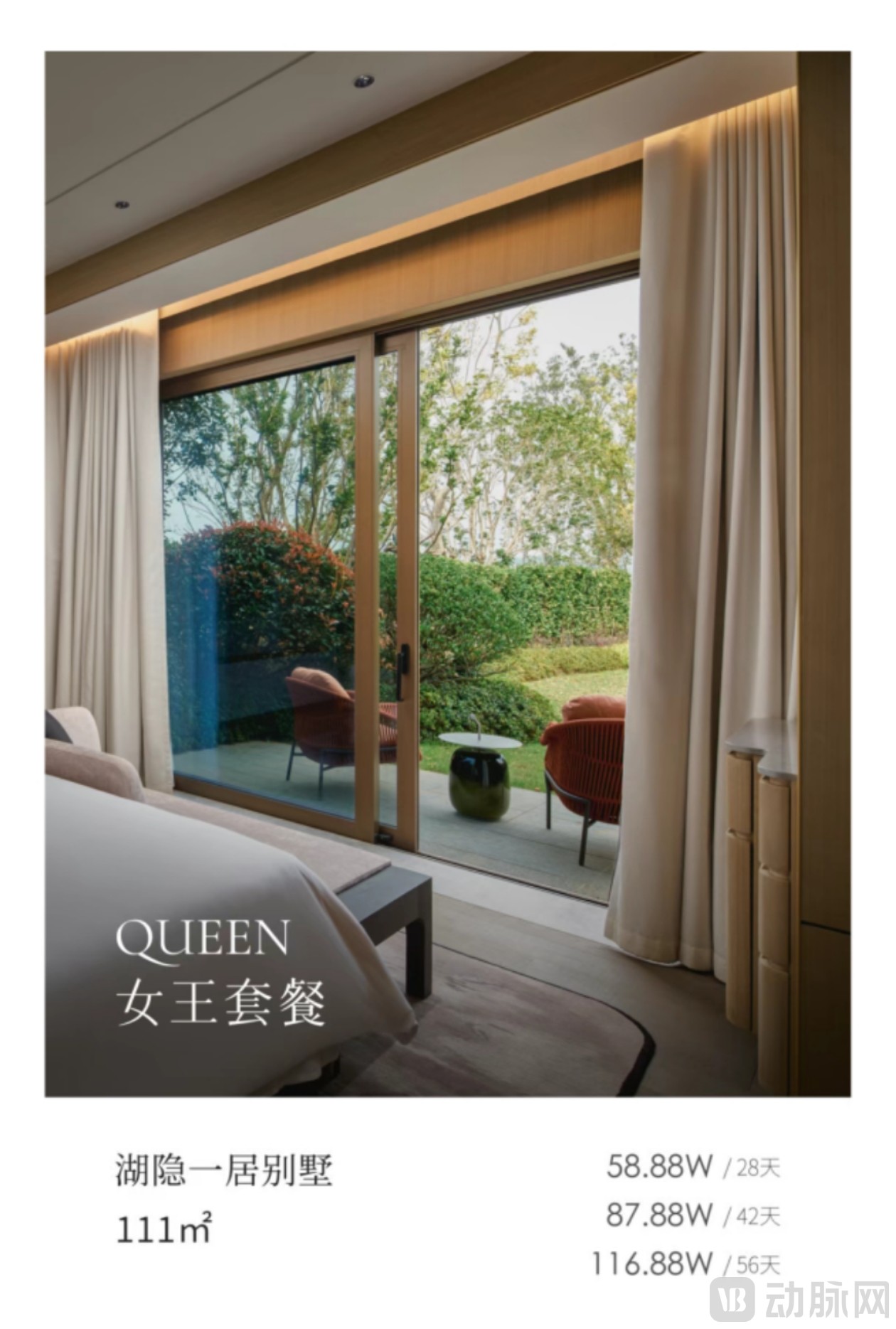
Saint Bella Queen Package Price
Sheng Bella was founded in 2017, when the industry was on an upswing. Following the relaxation of the universal two-child policy, China experienced a baby boom, with 17.64 million births nationwide in 2017—nearly twice the number of births in 2024.
The high average transaction value and substantial profit margins of postpartum care centers have attracted a large number of new entrants, leading to explosive growth in the industry.
Shengbeila entered the postpartum care center industry by adopting an asset-light model based on hotel leasing. This asset-light approach requires relatively low capital investment, features a short construction cycle, and enables faster launch. Most of Shengbeila’s postpartum care centers are located in upscale hotels, while some are situated in standalone villas.
Amid the industry’s robust growth momentum, Saint Bella has completed multiple rounds of financing. Prior to its IPO, the company secured investments from several prominent institutions, including Tencent, Mirae Asset, C Capital, Swire Properties, Sun Hung Kai & Co., and Gaorong Capital.
Shengbeila aimed to build a national brand for postpartum care centers, but this vision was initially viewed skeptically by investors due to the highly regionalized nature of the industry.
Regional characteristics have resulted in extremely low industry concentration for postpartum care centers.According to data from the Frost & Sullivan report in Saint Bella’s prospectus, the combined market share of China’s top five postpartum care centers remains below 5%, reflecting a highly fragmented industry. The annual revenue of most postpartum care centers ranges from tens of millions to RMB 100 million. The low industry concentration stems primarily from supply-side constraints, as neither relationships with maternal and child health hospitals nor resources for confinement nannies (yuesao) are easily transferable or replicable.
How Did Saint Bella Break the Industry Curse of Regional Limitations? The key lies in the convergence of the pandemic and declining birth rates, which rapidly ushered the industry into a consolidation phase. This presented Saint Bella with an opportunity for rapid expansion.
Leveraging the capital reserves from previous financing rounds, Saint Bella acquired nearly 10 brands across China, rapidly establishing a nationwide brand presence and increasing its market penetration in key cities such as Shanghai and Hangzhou. Meanwhile, Saint Bella standardized its service delivery and talent supply through initiatives like nurse training schools, paving the way for national expansion.
Daring to pursue aggressive mergers and acquisitions during the industry’s downturn is closely linked to the professional background of founder Xiang Hua. Early entrepreneurs in China’s postpartum care center sector mostly came from backgrounds in healthcare and pharmaceuticals, hotel management, similar service industries such as domestic help and catering, or real estate. In contrast, Saint Bella’s founder, Xiang Hua, has a background in investment and M&A. He previously served as a Director in the Investment Banking Division of UBS, where he was responsible for cross-border mergers and acquisitions and healthcare projects in the Asia-Pacific region, bringing extensive experience in investment and M&A to the table.

Xiang Hua, Founder of Beikang International. Image source: Forbes
During the industry consolidation phase, Shengbeila pursued mergers and acquisitions and weathered the pandemic, ultimately achieving profitability. Calculated on an adjusted non-International Financial Reporting Standards (Non-IFRS) basis, Shengbeila reported an adjusted net profit of RMB 20.77 million in 2023 and RMB 42.26 million in 2024, representing a year-on-year increase of 103.43%. The company has now achieved profitability for two consecutive years.
National acquisitions are part of St. Bella’s national strategy, with the other component focused on building nationwide brand recognition among customers.
The postpartum care center industry does not exhibit a pronounced leader effect; the reliance on word-of-mouth marketing makes it difficult for these centers to build broad brand awareness through traditional marketing and advertising.
In terms of brand building, domestic postpartum care center enterprises have almost universally adopted a "dimensionality-reduction attack" strategy in recent years. They first target high-net-worth clients to establish brand awareness, then gradually expand to serve the mid-to-high-end customer segment.
Saint Bella is a standout in this model. It first defined the high-end segment with an average transaction value of RMB 230,000 for postpartum care, then introduced “Little Bella” at RMB 100,000 to convey to consumers that they can enjoy a nearly identical experience for half the price.
Saint Bella currently operates three postpartum care center brands: Saint Bella, Little Bella, and Aiyu. Saint Bella is positioned as an ultra-premium postpartum care brand targeting high-net-worth individuals with household assets exceeding RMB 10 million, offering 24/7 two-on-one maternal and infant care services. Aiyu is positioned as a premium postpartum care brand specializing in women’s mental health, targeting new-era white-collar women from upper-middle-class households who prioritize self-care, and provides 24/7 one-on-one maternal and infant care services. Little Bella is positioned as an affordable luxury postpartum care brand, offering 12 hours of daily one-on-one maternal and infant care services, with young middle-class families as its target clientele.
The three major brands, with average transaction values ranked from high to low, comprehensively target households above the middle class. According to prospectus data, in 2024, Saint Bella’s average transaction value was RMB 230,000; Aiyu’s was RMB 160,000; and Little Bella’s was RMB 100,000.
The premium brand Saint Bella has adopted luxury-brand strategies in its business model, positioning postpartum care center services as a luxury offering. Many of Saint Bella’s operational tactics mirror those of luxury brands, such as the Very Important Client (VIC) model. In addition to high-end postpartum care, Saint Bella co-hosts monthly salon events with luxury brands like Bulgari and Graff, helping clients secure front-row seats at major high-fashion shows. After establishing this ultra-luxury image, the company leverages it to drive growth in its mid-tier brands.
Although Saint Bella is positioned as a high-end luxury brand, its fastest-growing business in recent years has been Little Bella, which targets the affordable luxury segment. The flagship high-end luxury brand, Saint Bella, was the primary revenue contributor in the early stages, generating RMB 203 million in 2022 and RMB 270 million in 2024. In contrast, the Little Bella brand has emerged as a strong performer over the past two years, with its revenue increasing from RMB 142 million in 2022 to RMB 222 million in 2024.
It is not difficult to see that Saint Bella achieves sustained growth through a multi-brand tiered strategy and service extension. The company establishes its brand image and awareness via its premium brand, then leverages sub-brands in a top-down approach to capture middle-class customers, thereby expanding its customer base coverage.
In 2024, Saint Bella also rebranded the six postpartum care centers under its Xiao Bella brand as Aiyu. With unit prices positioned between those of Saint Bella and Xiao Bella, this tiered branding strategy aims to capture a broader customer base.
Saint Bella’s premium line has successfully established a luxury brand perception among high-net-worth individuals, thanks in large part to the professional background of co-founder Lin Wanyi. Lin earned her bachelor’s degree from the Wuhan Conservatory of Music and later obtained dual master’s degrees in Mass Communication and Public Relations from the University of Leicester in the UK. She previously served as the Public Relations Director for Fashion Media Group’s publications, including Harper’s Bazaar China and Modern Bride China. Leveraging her deep understanding of luxury marketing strategies, she enabled the postpartum care centers to command pricing comparable to that of luxury goods.

Lin Wanyi, Co-founder of Beikang International | Image source: 36Kr
Shengbeila’s IPO marks a landmark event in China’s postpartum care center industry. Looking back at the industry’s development trajectory, 2010–2019 witnessed a period of rapid growth for postpartum care centers. A large influx of institutions and professionals fueled wild, unregulated expansion, giving rise to diverse service models. Industry consolidation and penetration into lower-tier cities became the dominant themes, yet the sector long lacked standardized guidelines. During this period, companies with professional medical backgrounds that offered specialized nursing services emerged victorious amid the disorderly competition.
Subsequently, professionals with specialized backgrounds and affiliated institutions of medical organizations joined the sector, introducing professional, high-standard operational protocols that drove the industry toward standardization. Mid-to-high-end postpartum care centers are now equipped with professional physicians and have introduced refined services, which have become the new industry standard.
Amidst the pandemic and declining birth rates, the postpartum care center industry is undergoing another wave of consolidation. The sector is shifting its focus to high-net-worth individuals, leveraging premium services to withstand economic cycle fluctuations and achieve strategic transformation. During this period, market education has been completed, and industry standardization has been established. Companies like Saint Bella, which have taken the lead in building high-end brand recognition and offering outstanding customer experiences, have successfully captured mid-to-high-end clients.
As the industry undergoes continuous transformation and consumer needs evolve rapidly, Saint Bella’s ability to capitalize on emerging trends and survive among thousands of postpartum care centers across China hinges on its identification of non-consensus market opportunities. Whether through mergers and acquisitions for expansion during the pandemic or adopting an aggressive strategy to build a premium brand, these moves were not about following the crowd. Instead, they represented strategic decisions made by leveraging the company’s own resources and endowments in response to the changing times.
In the next phase, postpartum care centers must seize opportunities for supply chain expansion to sustain growth. Positioned at the upstream end of the maternal and infant industry value chain, these centers possess strong capabilities for vertical integration, scalability, and consolidation. In the future, extending into dietary supplements, postpartum rehabilitation, and home-based care will be key to transforming their traditionally low-frequency service model.