Fengbo Medical Unveils World’s First Laser Skin Grafting Robot, Boosting Grafting Efficiency by 10x

FoboMed
Developer of Medical Devices and Equipment for Dermatology and Burn Care
As a high-frequency clinical procedure in departments such as dermatology, burn and plastic surgery, and general surgery, skin grafting has substantial demand in China’s healthcare landscape, with hundreds of thousands of procedures performed annually across hospitals at all levels nationwide.
However, in actual clinical practice, skin grafting procedures suffer from significant pain points, including complex workflows and excessive time consumption. The primary reason is that skin graft harvesting and expansion rely on traditional manual or semi-automated methods, which are inefficient and time-consuming. This not only slows down the overall surgical pace but also leads to prolonged anesthesia duration, imposing a dual burden on patient safety and healthcare resource utilization.
Therefore, innovating the skin graft processing workflow to achieve precise, efficient, and automated cutting and expansion has become the core breakthrough for addressing the aforementioned pain points. Targeting this urgent clinical need, Hunan FoboMed Medical Device Technology Co., Ltd. (hereinafter referred to as “FoboMed”) was established.Founded in 2021, the company is dedicated to the research and development of advanced equipment and high-value consumables for dermatology and burn care, addressing clinical needs in these specialties. Its independently developed laser skin grafting robot has revolutionized the methods of skin sheet cutting and expansion, and has already received regulatory approval and entered the market.
1Empowering Clinical-Medical Engineering Convergence: Deepening R&D of Advanced Products in Dermatology and Burn Care
Deng Xinmeng, General Manager of FoboMedDeng Xinmeng has overseen mergers and acquisitions, project investment and financing management, and related operations at publicly listed companies and fund management firms. He possesses exceptional capabilities in integrating industry resources and has extensive experience in the operational management of healthcare enterprises. Deng has led technology transfer initiatives for multiple key Grade 3A hospitals across China, including Xiangya Hospital, West China Hospital, and Chongqing Medical University. He has incubated more than ten early-stage projects and holds a profound understanding of the commercialization of early-stage medical research achievements.
From 2019 to 2021, he was involved in and responsible for the incubation of multiple projects, including the Chongqing Medical University Innovation Ecosystem Circle, with the aim of identifying high-quality early-stage projects based on genuine clinical needs. In late November 2020, Central South University, in collaboration with several well-known investment funds and technology transfer institutions, held a series of roadshow events titled “Know Central South, Create the Future” for the commercialization of scientific and technological achievements at Central South University.
At this competition,Clinician He ZhiyouThe "Laser Skin Grafting Robot" project has received recognition from multiple parties.
He Zhiyou is an Associate Chief Physician in the Department of Burn and Plastic Surgery at Xiangya Hospital, holds a Ph.D. and completed postdoctoral research, and serves as a Young Committee Member of the Burn Surgery Branch of the Chinese Medical Association. He has published nine papers in international academic journals such as Burns and Journal of Cellular Physiology, holds multiple national invention patents, and possesses extensive experience in multidisciplinary medical-engineering collaboration.
As a frontline clinician in the Department of Burn Surgery at Xiangya Hospital, He Zhiyou is deeply familiar with the clinical pain points associated with burn surgery. “In common skin grafting procedures performed in burn care, skin must be harvested from the donor site, cut into small pieces, and then expanded for transplantation. Traditional manual meshing is simple to perform but extremely time-consuming, which not only reduces surgical efficiency but also poses risks to patients’ life and health due to prolonged anesthesia,” said He Zhiyou. Leveraging his interdisciplinary background in medicine and engineering, he developed a prototype that demonstrated significant efficacy in preliminary animal experiments and was granted an invention patent in 2018.
In 2021, with key support from the Furong Laboratory of Xiangya Hospital, Central South University, the project established its core team and commenced operations in early 2021. The team members possess extensive experience across the full lifecycle of medical devices, including research and development, regulatory registration, manufacturing, and marketing.
After years of in-depth development, FoboMed's laser skin grafting robot obtained the Class II medical device registration certificate this year and is currently initiating CE certification.Successfully achieved end-to-end integration spanning patent layout, product R&D, regulatory approval, contract manufacturing, and commercialization, thereby establishing a mature innovation workflow for the translation, R&D, registration, and production of medical device products.
2One-touch operation and intelligent cutting reduce skin trimming time from several minutes to 40 seconds
Skin grafting is a surgical procedure in which skin grafts are harvested from healthy donor sites on the patient’s body, processed through steps such as cutting and expansion, and then transplanted onto recipient beds with skin defects or requiring reconstruction. Among these steps, skin graft cutting and expansion are the most time-consuming during the operation.
Currently, in the "skin harvesting + expansion" procedure, the primary clinical approaches employed are manual split-thickness skin grafting and mechanical dermatome-assisted skin grafting.
Manual skin graft harvesting has significant limitations in clinical practice. This method is unsuitable for large-area skin grafting procedures, as manually cutting a large number of autologous skin grafts with scissors can easily take 1–2 hours and requires the coordinated effort of multiple medical staff members, thereby reducing surgical efficiency. Furthermore, because autologous skin grafts are thin and soft, they are difficult to cut manually, often resulting in irregular shapes and sizes and disordered arrangement, which subsequently compromises the aesthetic outcome of wound healing.
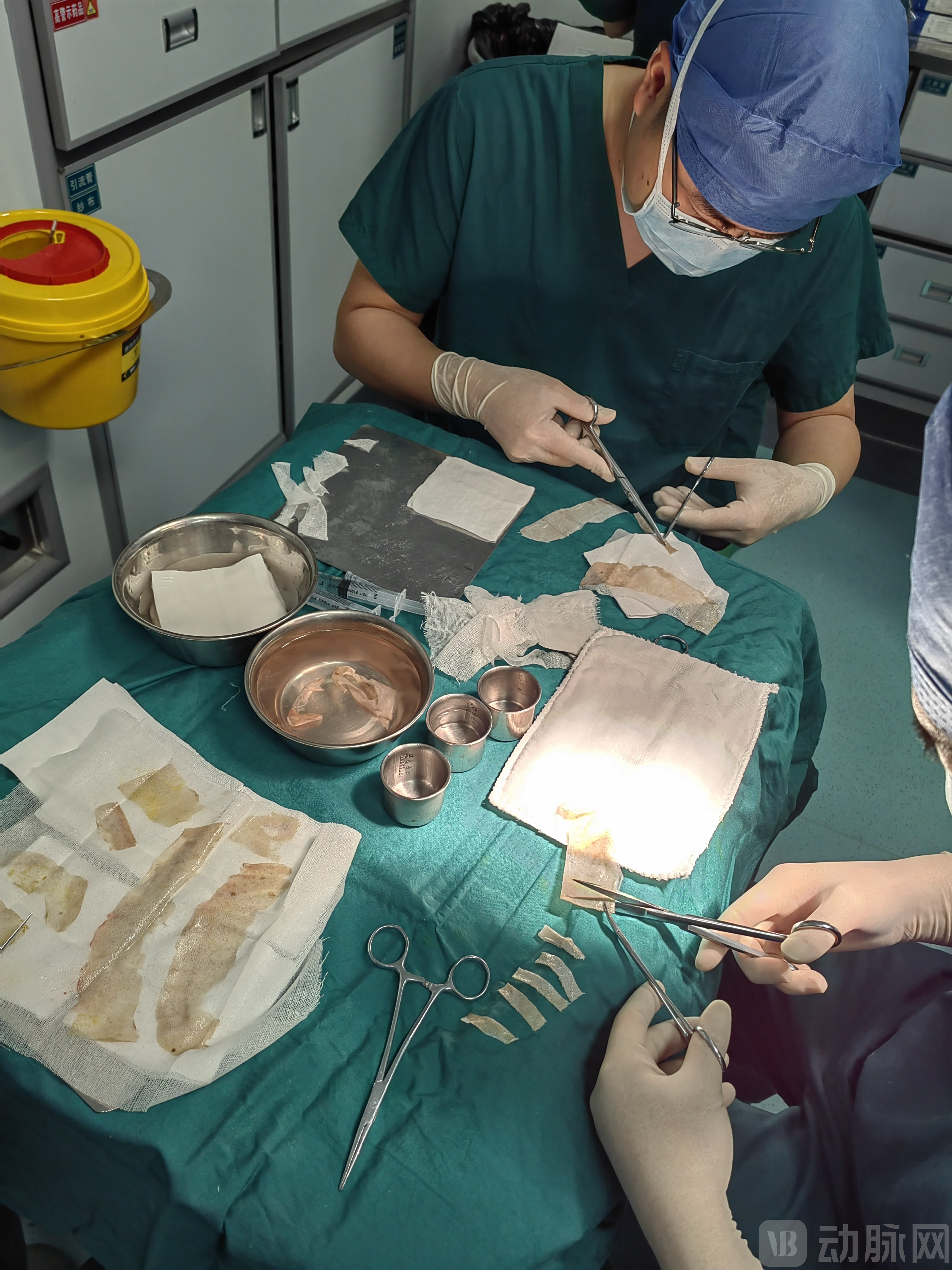
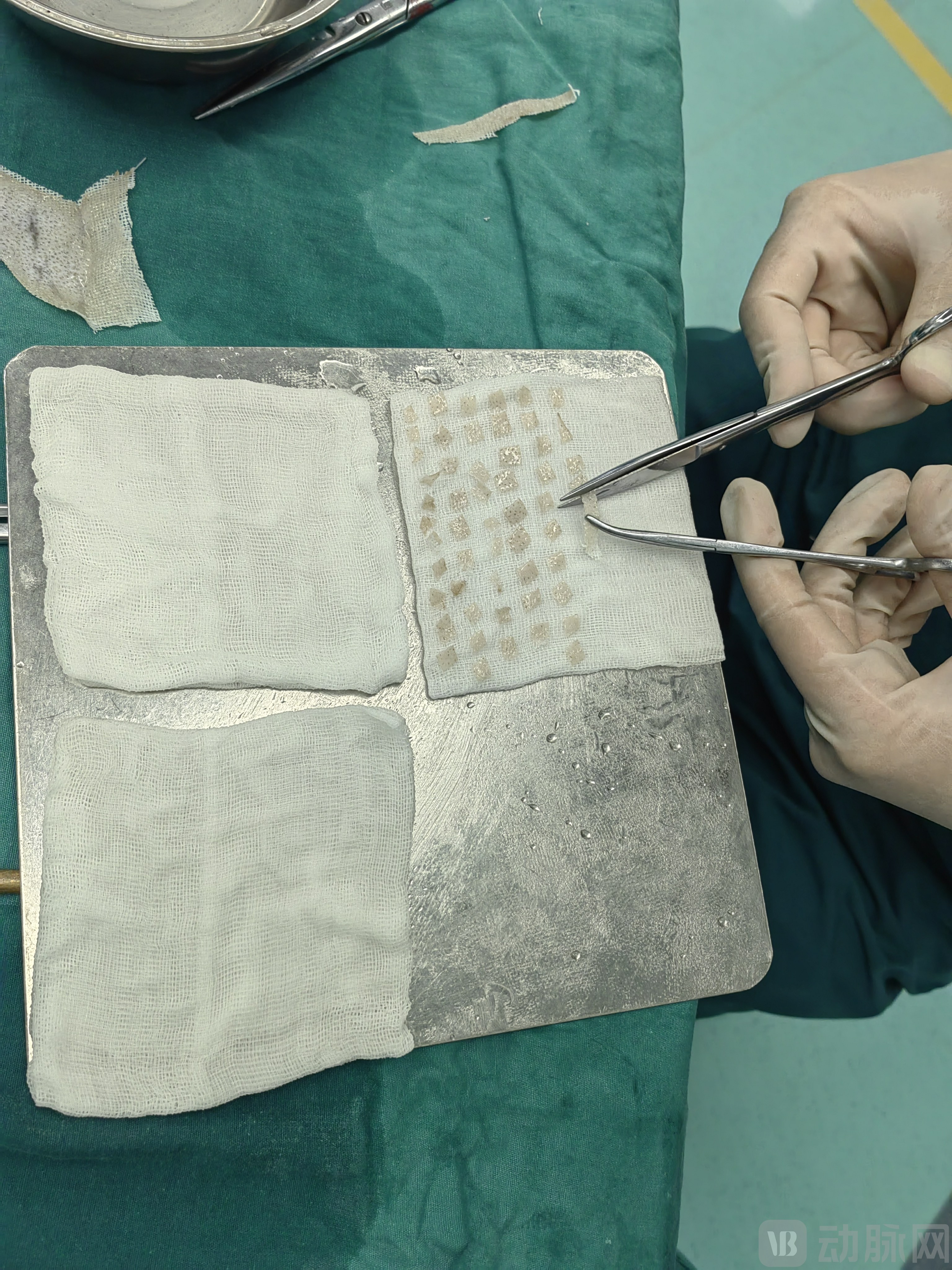 Manual skin incision in clinical surgery is cumbersome and time-consuming.
Mechanical skin grafting devices, commonly used as auxiliary equipment in split-thickness skin grafting, primarily include meshers and dermatomes; however, both types exhibit significant limitations in clinical applications.
First, the expansion ratio of skin grafts is limited during processing; in cases requiring coverage of large wound areas, such as extensive burns or trauma, this limited expansion ratio restricts the applicability of the surgical procedure. Second, mechanical skin grafting machines are all manually operated, involving cumbersome procedures that offer limited improvement in efficiency for individual or multiple surgeries. Third, the mechanical structure is complex, requiring disassembly, sterilization, and reassembly before and after each surgery, which hinders the turnover efficiency of surgical instruments across departments.
To address these pain points, FoboMed has developed the world’s first laser skin grafting robot. Clinical trials have demonstrated that laser skin grafting is ten times more efficient than traditional scalpel-based skin grafting. Multiple physicians have reported that the device is more user-friendly and can significantly shorten the learning curve for clinicians.
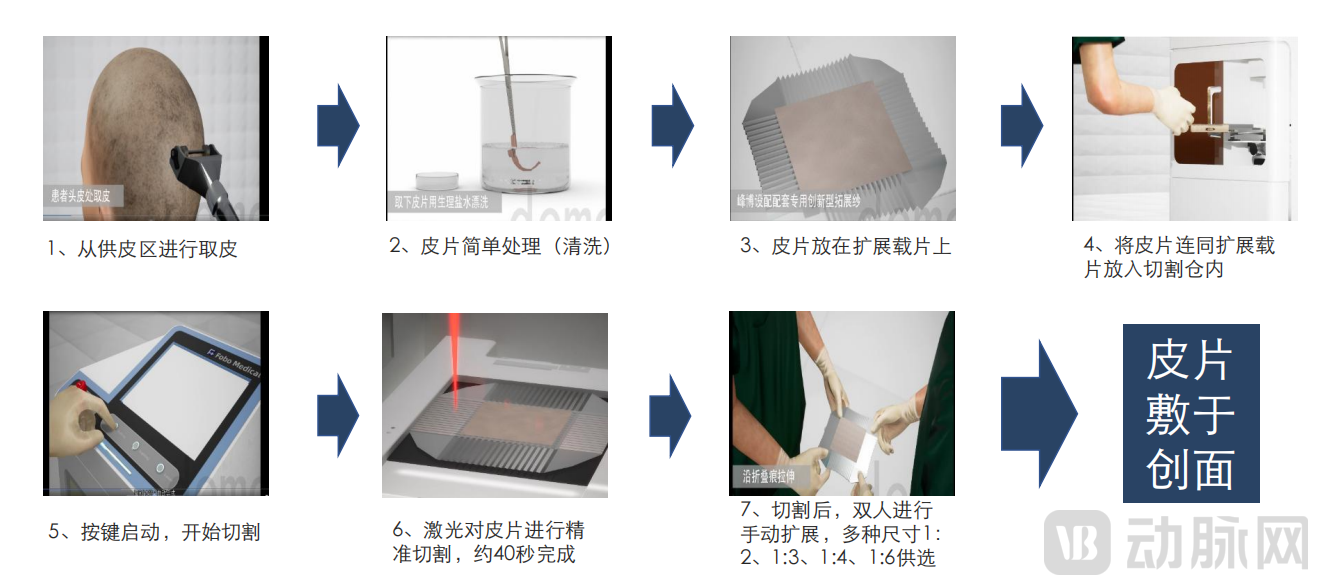 Laser Skin Grafting Robot Operation Procedure
Specifically, the laser skin grafting robot features the following product highlights:
One-Touch Fully Automatic OperationCompared with traditional manual scissors or semi-automatic mechanical assistance, the laser skin grafting robot only requires operators to place consumables and skin grafts into the cutting chamber. By clicking a single button on the screen, the cutting process is automatically executed, eliminating the need for additional manual labor.
Fast Cutting Speed, High Efficiency Improvement. The laser skin grafting robot can reduce the 10 minutes required for manually cutting a single skin graft to just 40 seconds, significantly improving surgical efficiency and shortening the patient's operative time;
Precision, Intelligent Cutting. High-precision cutting of stamp grafts and microskin grafts via preset modes yields more uniform skin grafts and improved postoperative recovery;
No disassembly required, easy to disinfect. Throughout the entire surgical procedure, the laser skin grafting robot ensures that consumables and skin grafts do not come into direct contact with the device, thereby reducing the risk of cross-infection. Unlike other products, it eliminates the need for time-consuming disassembly and reassembly before and after surgery, enabling continuous use across multiple procedures;
Adopting High-Standard Medical-Grade Design Specifications, the device is easy to move and can be applied in more surgical scenarios;
Furthermore, FoboMed has independently developed a proprietary consumable for its laser skin grafting robot—the innovative expansion carrier slide. This innovation addresses the drawbacks of traditional carrier slides, such as cumbersome preparation, poor adhesion, asymmetric and misaligned skin grafts, and the need for multiple transfers and manual operations. The combined use of the carrier slide and the device significantly enhances the efficiency of skin graft transfer.
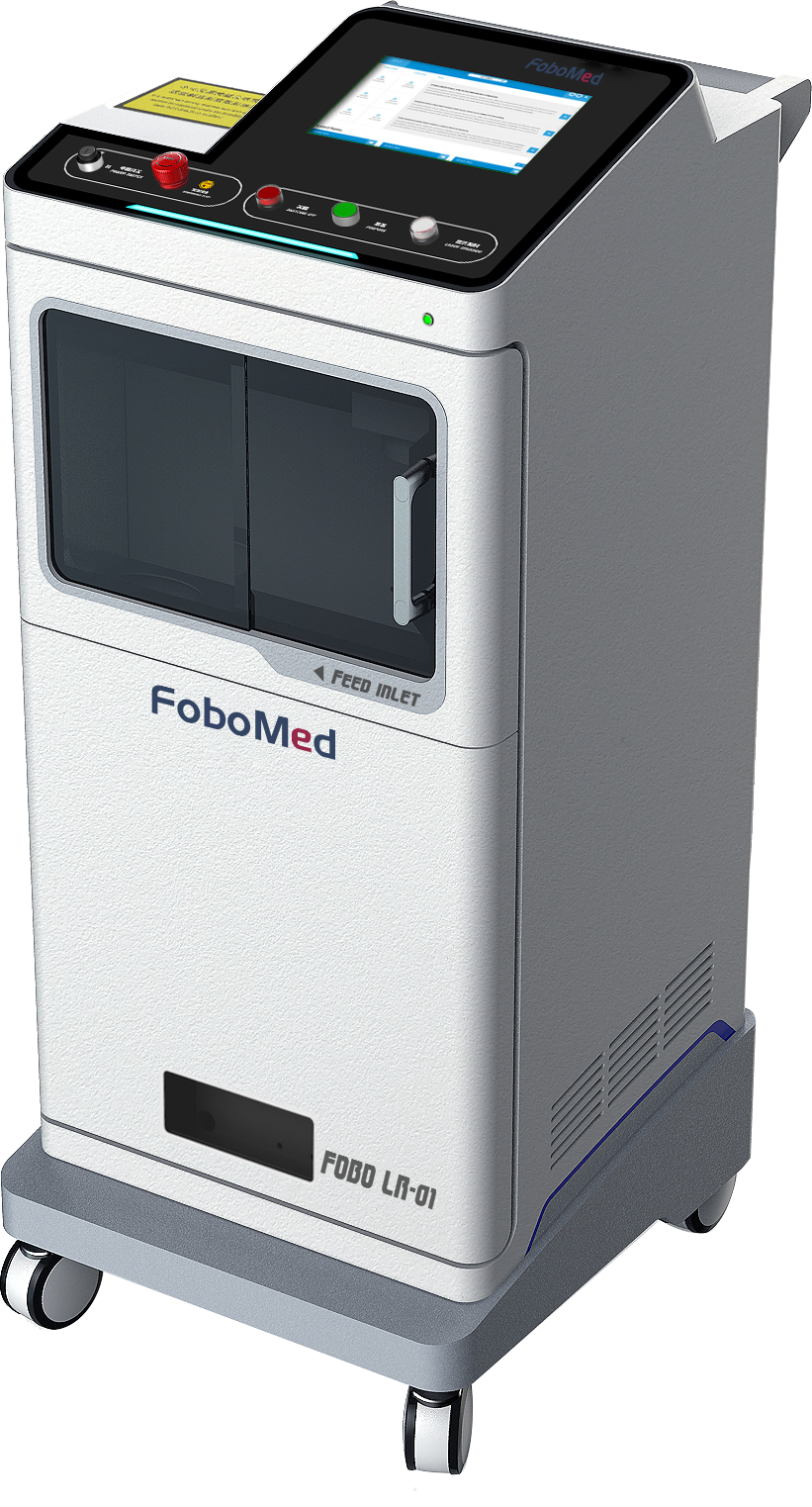
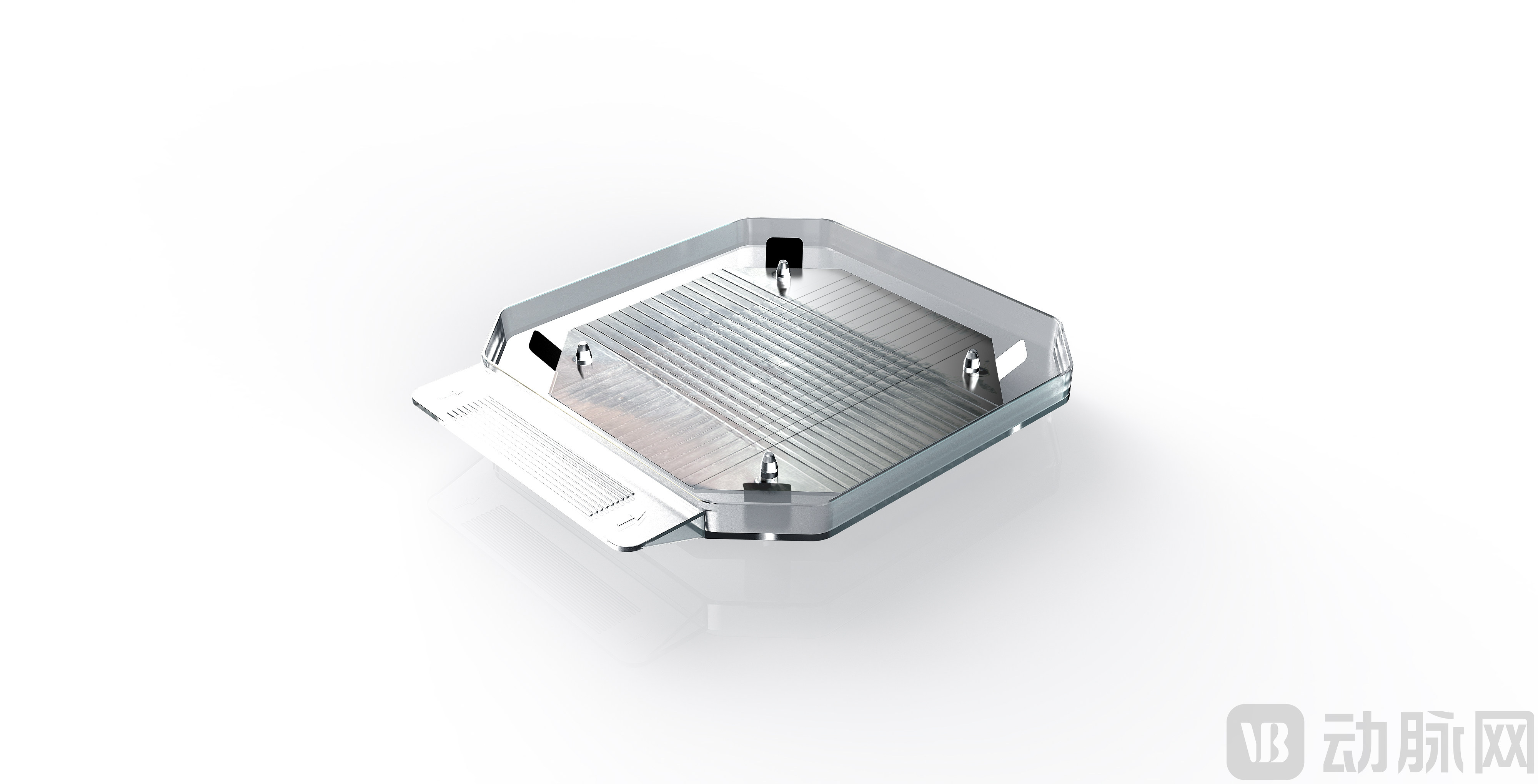
Laser Skin Grafting Robot and Associated Consumables
The laser-assisted skin grafting robot has successfully completed clinical trials at multiple key Grade A tertiary hospitals across China. Clinical feedback from numerous physicians indicates that the device is user-friendly and easy to master, significantly reducing the time required for “skin harvesting and transfer.” It also alleviates the complexity and burden associated with surgical procedures, leading to favorable postoperative recovery outcomes.
According to Deng Xinmeng, the product has also been endorsed by multiple chairpersons and experts of the Burn Society of the Chinese Medical Association. Market education initiatives across China were launched ahead of schedule, helping to build brand reputation and positive word-of-mouth.
3Multiple core product pipelines boast broad application prospects, continuing to drive the innovation and upgrading of domestically produced equipment and consumables.
FoboMed has proactively established a patent layout for its product portfolio, with core intellectual property rights for multiple products already patented, while patents for several subsequent iterative products are currently under application.
In addition to the world’s first laser skin grafting robot, FoboMed has also independently developedChina's First Wireless Electric Dermatome. This product integrates the advantages of existing wired and wireless dermatomes, overcoming issues such as excessive weight and bulk, poor portability, inconvenient operation, and insufficient skin harvesting precision, while effectively incorporating ergonomic optimization in its design. According to Deng Xinmeng,This product is the first of its kind in China and is expected to obtain regulatory approval in the second half of this year.。
Meanwhile, FoboMed has developed compatible consumables (disposable blades) for its wireless dermatome, with improvements made to blade material and sharpness, thereby enhancing the operational experience for clinicians.
“Future medical devices in dermatology and burn reconstructive surgery will primarily achieve breakthroughs along three dimensions: advancements in precision therapeutic technologies, integration of medical intelligence with digitalization, and innovative iteration of materials and equipment,” said Zhou Jie, Deputy Director of the Department of Burn and Plastic Surgery at Xiangya Hospital of Central South University and a committee member of the Burn Surgery Branch of the Chinese Medical Promotion Association. “First, intelligent dermatomes and surgical systems will undergo a technological revolution. The market size for surgical skin grafting and dermatomes is projected to grow at a compound annual growth rate (CAGR) of 7.2%, exceeding USD 3 billion by 2030. Dermatomes equipped with intelligent control systems can maintain thickness errors at less than 0.05 mm, integrate sensors for real-time monitoring of tissue viability, and leverage AI algorithms to optimize harvesting pathways, thereby improving skin graft survival rates.”
Second, as AI-assisted diagnosis and treatment permeates the entire clinical workflow, artificial intelligence will cover the full chain from diagnosis to rehabilitation. On the diagnostic side, AI models trained on millions of clinical cases can predict burn healing cycles and assist in formulating fluid resuscitation plans. On the therapeutic side, smart dressings equipped with sensors can monitor wound parameters such as pH and temperature, while machine learning algorithms adjust drug release dosages in real time to accelerate the healing of infected wounds. Meanwhile, the deepening clinical application of laser technology enables functions such as scar repair and skin regeneration, shortening the recovery period to 1/36th of that required by traditional therapies, achieving precise targeting of the treatment area, and reducing thermal injury through dynamic cooling technology.
Third, breakthroughs will be achieved in more novel biomaterials. Antibacterial materials with enhanced performance, such as advanced nano-silver coatings, and artificial dermis will be applied on a large scale in burn dressings, significantly reducing infection rates. Meanwhile, the expansion of wearable devices into home care settings will facilitate the penetration of lightweight smart dressings from hospitals to households, which is particularly important for the management of chronic wounds such as diabetic foot ulcers. In addition, skin regeneration matrix devices will integrate technologies such as 3D printing and stem cell culture. For instance, a composite collagen scaffold device developed by a certain company has shortened the wound healing cycle by 30% and is priced 40% lower than imported products, driving the market share of domestically produced devices up from 18% to 32%. In the future, such devices will be combined with gene-editing technology to realize personalized skin regeneration solutions.
In its subsequent product pipeline, FoboMed will continue to expand its offerings in dermatology and burn reconstructive surgery. Products currently under development include transgenic xenogeneic dermal repair materials, disposable negative pressure drainage devices and wound dressings, and injectable collagen for minimally invasive cosmetic procedures. These projects are all derived from technology transfers from the Furong Laboratory of Xiangya Hospital and the Yunnan Provincial Key Laboratory of Animal Gene Editing and Somatic Cell Cloning Technology, holding extremely broad prospects for clinical application.
According to Deng Xinmeng, FoboMed will focus on accelerating the commercialization and global expansion of its two core product lines in the short term: the laser skin grafting robot and its consumables, and the wireless electric dermatome and its consumables. The company aims to achieve the following objectives: First, targeting the existing market, it seeks to replace traditional skin harvesting and grafting methods with innovative solutions, thereby facilitating technological upgrades and increasing market share. Second, through academic education, it aims to cultivate physicians’ adoption habits, further promoting the clinical application of more advanced and efficient novel skin grafting technologies. Third, it intends to bring the laser skin grafting robot, a product featuring original innovation, to international markets, thereby enhancing healthcare accessibility during its global expansion.
In the long term, FoboMed will accelerate the progress of its ongoing R&D projects, speed up the development of high-end regenerative medicine materials, and continuously drive the innovation and upgrading of domestically produced advanced equipment and high-value consumables for dermatology and burn plastic surgery.
FoboMed is seeking connections in financing and distributor channels. If you are interested in FoboMed and its product solutions, please contact us: