

Zhiying Medical Files for IPO: Delivering Full-Scenario Digital Pathology Solutions to Empower Grassroots Healthcare
Amid the current wave of medical technology innovation, the field of digital pathology is undergoing profound transformation and development. Its applications are diversifying, extensively covering disease diagnosis and assessment, personalized pathological research, academic publication, and remote diagnosis. Meanwhile, driven by the widespread adoption of digitization, the journey toward intelligent digital diagnosis has gradually commenced.
Although this is destined to be a long journey requiring the unremitting exploration of an entire generation, every technological breakthrough resolutely drives this process forward.
Large language models launched by enterprises such as SenseTime and Transwarp for commercial purposes, as well as pathology large models released by research institutions like Ruijin Hospital and Zhejiang University for academic research, are all accelerating the digital and intelligent transformation of digital pathology.
In this process, a rigid demand has emerged—primary healthcare institutions have a strong desire for this cutting-edge technology. However, the high prices of imported products remain an insurmountable barrier for these grassroots hospitals, leaving growing medical needs unmet. In this field, who will lead the way in digital pathology?
Shandong Zhiying Medical Technology Co., Ltd. (hereinafter referred to as “Zhiying Medical”), leveraging Tangier Company’s 15 years of accumulated experience in its “import-oriented” digital pathology business, as well as the team’s multifaceted advantages in market resource integration and industry insight, has deeply engaged in frontline business practices.In China, the team identified substantial demand among primary-care hospitals and subsequently anchored its strategy toProduct R&D directions featuring low cost, high efficiency, high-throughput coverage, and adaptability across all scenarios, aiming to fill market gaps, enabling digital pathology technology to take root and flourish across the entire healthcare sector.
Established in 2019, WINMEDIC has been positioned since its inception to meet multi-tiered market demands, targeting both domestic and international markets. Guided by national industrial policies, WINMEDIC is committed to independent research and development, launchingSmall-to-medium throughput, high cost-effectivenessdigital pathology scanner products.
In the early days of its establishment in 2021, WINMEDIC precisely targeted the tertiary healthcare market with iterative advancements in medical technology, launchingWIN 40/60/180/300 PRO Series Digital Scanners with Multiple Throughputs, build a differentiated product matrix to address diverse needs across multiple scenarios.
Launched to meet the needs of fully digital construction in pathology departments of tertiary hospitalsHigh-Throughput WIN 300 PRO and HS 480 Series,Meets large-scale sample processing requirements with high-efficiency scanning and stable performance;The medium-throughput WIN180PRO and WIN120PRO, the low-throughput WIN60 and WIN20, and the SCIENCE series, thenFocus on County-Level Primary Hospitals, promoting the decentralization of digital pathology technology through high cost-effectiveness and ease of use;WIN ED PRO and other fluorescence series products are dedicated to independent third-party laboratories, meeting high-precision fluorescence scanning needs in scientific research, new drug development, and education.。Among them, the WIN PRO series features an innovative design that integrates brightfield and fluorescence scanning into a single system., demonstrating technical prowess.
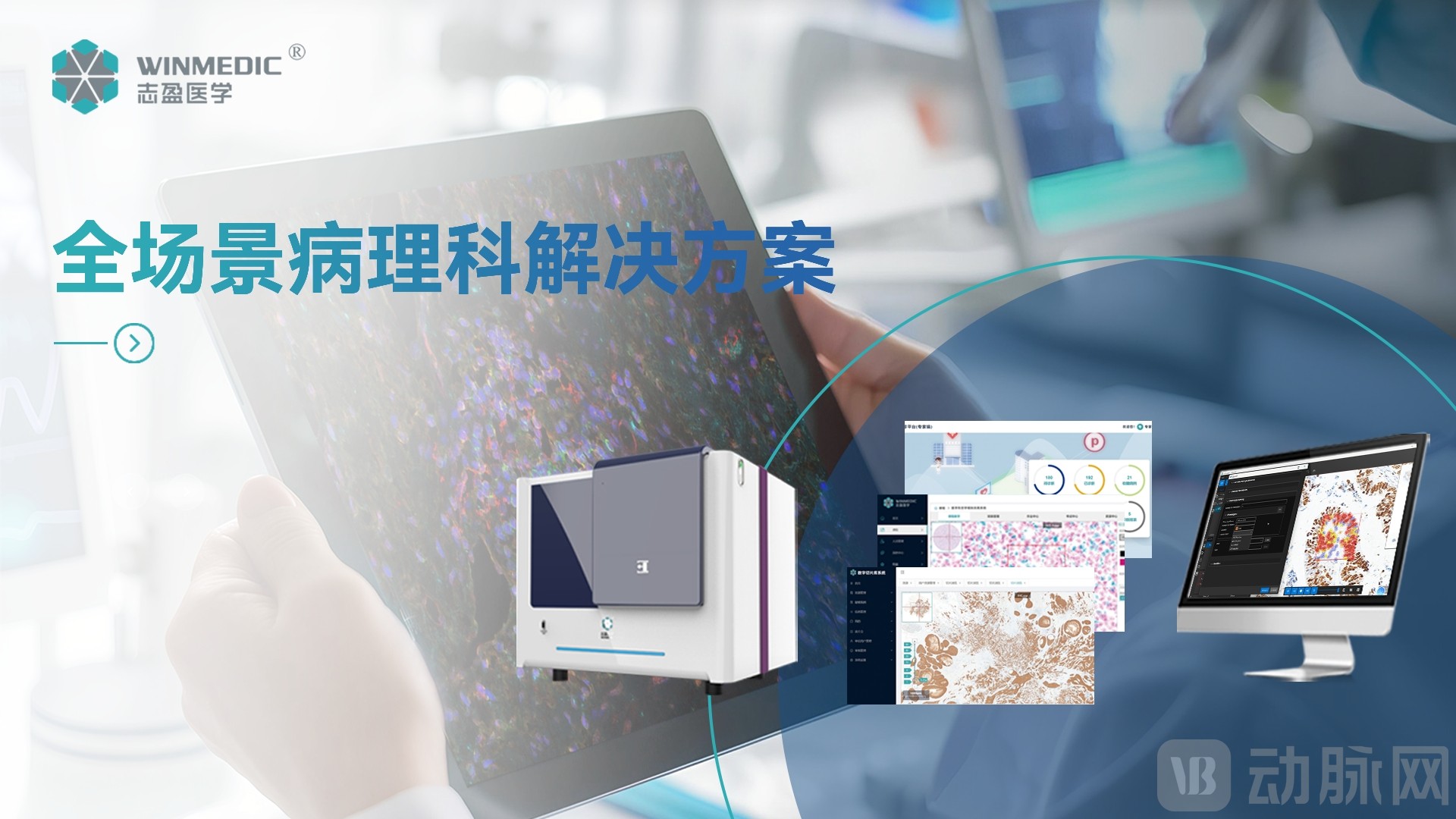
In terms of software ecosystem development, WINMEDIC has successively developed solutions around the demands for digital applicationsMedical Image Transmission and Consultation System, Virtual Simulation Teaching for Medical Morphology, Pathology Full-Process Management and Quality Control System, Tissue Quantitative Analysis WINQUANT, and Intelligent Quantitative Analysis System for Cervical Cytology, DPMASTER Quantitative AI achieves deep synergy between hardware and software.
its“Brightfield + Fluorescence + PIS + AI Quantification + Cytology Screening + Remote Access + Storage” Full-Stack Solution, propelling WINMEDIC into the forefront of the global digital pathology landscape.
It is worth noting that, amid the booming development of AI in pathology, WINMEDIC continues to strengthen its core businesses in digital transformation and storage.Actively engage in technical collaboration with leading domestic and international enterprises in the fields of AI, health informatics, and telemedicine platforms., enabling the interconnectivity of information, data, and images,Successfully overcame the barriers of domestic and international image formats such as SVS, DCM, and CSP, achieving an image compression ratio of 50% and reducing storage costs.Providing Efficient Digital Solutions for Clinical Diagnosis, Treatment, and Scientific Research Innovation.
As a core component of the digital smart pathology field, digital slide scanners must achieve an optimal state of high performance, stability, durability, and cost-effectiveness. Every step in the complete workflow, from automatic slide loading, focusing, and scanning to image stitching, conceals technical difficulties and challenges. The reason WINMEDIC can achieve original product development, continuously iterate and upgrade its products, and create a distinctive product portfolio lies in the team's expertise inOptical Imaging, Mechanical Structure Design, Software Algorithms, and Circuit Control Systemstechnical accumulation in core technology areas.
At the hardware level,The optical system must overcome the dual bottlenecks of high resolution and imaging consistency. Constrained by the micrometer-scale depth of field of microscope objectives, mechanical movement precision tolerances are extremely tight; any slight deviation can result in image blur. Meanwhile, Z-axis autofocus technology requires precise localization of the optimal focal plane within an extremely short time frame, imposing stringent demands on sensor sensitivity and algorithm response speed.
Software SectorThey also face severe challenges. The hundreds of gigabytes of data generated from scanning a single pathology slide not only demand highly efficient image stitching algorithms but also require sub-pixel registration accuracy, as even minor misalignments can interfere with image recognition. Meanwhile, the need to store, compress, and transmit massive volumes of hospital data in real time imposes higher standards on the system’s data management capabilities.
Furthermore, multidisciplinary collaboration and cost control have emerged as two critical issues. During the research and development process, cognitive gaps exist among optical, mechanical, and software engineers and pathology experts, necessitating efficient communication mechanisms to ensure precise alignment between technological development and clinical needs. Meanwhile, the challenge of balancing system reliability with cost requires strategic trade-offs between research-grade and clinical-grade product standards, guided by market positioning.
To address the aforementioned challenges, WINMEDIC has formulated a phased technical strategy. In the realm of optical imaging, leveraging ultra-high-precision motion platforms and high-quality optical components, the company achieves dual improvements in imaging efficiency and quality through optimization of "serpentine" scanning paths, hybrid focusing strategies, and optical correction models.
To handle massive data processing, a hardware acceleration solution leveraging FPGA-GPU collaboration is adopted, integrating fast stitching algorithms based on feature points or phase correlation with a pipelined parallel processing architecture. Meanwhile, intelligent compression techniques are applied, utilizing lossless compression for diagnostically critical regions and efficient lossy compression for background areas. In terms of team building, interdisciplinary collaborative groups are established, ensuring quality control across all stages of product development through regular technical seminars and rapid prototyping tests.
It is precisely WINMEDIC’s accumulation in core technological domains—such as optical imaging, mechanical structure design, software algorithms, and circuit control systems—that forms the foundation for its original product development. Its comprehensive underlying technology platform supports the company in building a unique product portfolio while driving continuous product iteration and upgrades.
In terms of hardware composition, WINMEDIC adopts a modular hardware architecture, achieving a component reuse rate of over 80% through a “Lego-style” design. This approach not only significantly enhances R&D efficiency but also reduces production costs. Regarding software architecture, the scalable software middleware features “develop once, deploy across multiple products,” effectively shortening the new product development cycle and enhancing product adaptability. Furthermore, the interdisciplinary knowledge base serves as a “translator” between clinical needs and engineering technologies, breaking down disciplinary barriers and promoting the deep integration of technology and applications.
After solidifying its underlying technological barriers and establishing a comprehensive product portfolio, WINMEDIC adopts a dual-drive strategy to facilitate product commercialization.
On the one hand, it forms a differentiated and complementary relationship with high-end imported products, leveraging its mature channel network and market influence,Accelerate the market penetration of domestically produced products, achieving full-scenario coverage that meets the diverse needs of high-, mid-, and primary-level institutions.; On the other hand,Expanding into Both Domestic and International Markets, transitioning from a pure import agency model to one focused on technological assimilation and independent innovation in manufacturing, while integrating resources with a global perspective, upholding its tradition of high-quality technical services, leveraging its advantages in international market recognition, and striving to build a benchmark brand in the digital pathology industry with global influence.
In its domestic market strategy, WINMEDIC’s SCIENCE digital slide scanning system achieved its inaugural installation at the First Hospital of China Medical University. With hundreds of units installed across China, the system has gained widespread market recognition.
In 2025, WINMEDIC is embarking on a strategic upgrade,Integrate the Tangier R&D Team, expand the product line of pre-analytical pathology processing equipment. SynchronizeIntegrate Tangerine Company’s sales channels and technical service systems, sharing resources from 1,000 high-quality clients and its CRM technical service system., facilitate the seamless integration of channel partners with WINMEDIC’s marketing system, and optimize market coverage capabilities.
Meanwhile, WINMEDICActively expand overseas.
As early as 2022, WINMEDIC began exploring overseas markets and transforming its business model. Over the years, it has cultivated a range of international resources and partnerships, laying a solid foundation for global expansion. Since 2023, WINMEDIC has officially launched its overseas strategy, showcasing its latest digital pathology solutions through frequent appearances at renowned international medical and industry exhibitions—such as Arab Health in Dubai and MEDLAB in Brazil—as well as at top-tier professional academic conferences in Europe, the Americas, and Asia, including ECP, USCAP, DPA, IAP, and MEDLAB. Through in-depth technical exchanges and application discussions with internationally recognized experts and suppliers, WINMEDIC has continuously optimized its products, solutions, and team, achieving multidimensional breakthroughs in brand building, channel development, service system enhancement, and talent acquisition.
After two years of effort, WINMEDIC has already inEstablished a stable sales network and technical support system in European countries such as Germany, France, Italy, and Russia; Asian countries such as Indonesia, Malaysia, and Thailand; as well as in the Middle East, South America, and other regions and countries. Systematically advanced market access procedures, including product registration and filing, in more than ten countries.. By leveraging full-stack product solutions and innovative collaboration models, it has rapidly emerged on the international stage and gradually built its industry influence.
In April 2025, WINMEDIC, as the sole Chinese enterprise representative, participated in the EMPAIA initiative under the framework of the International Organization for Standardization (ISO 24051-2 Medical laboratories – Part 2: Image analysis based on digital pathology and artificial intelligence), engaging in discussions on key standard-setting projects for digital pathology and artificial intelligence. This standard focuses on the validation and deployment of information technology solutions and AI models in clinical settings, covering the entire workflow of image acquisition, viewing, decision-making, and archiving, and will serve as a crucial guide for the future development of digital pathology.
Looking ahead, WINMEDIC will transcend its traditional development model centered on hardware for digital slide scanning. By closely aligning with trends in intelligence, digitalization, and cloud-based solutions, the company will accelerate the core application of AI and large language models in pathological diagnosis. Simultaneously, WINMEDIC will deeply explore the value of remote diagnosis for hospitals, promoting the intensive deployment of diagnostic technologies to grassroots medical institutions. Actively expanding overseas, WINMEDIC will strategically pace its international growth based on product characteristics, continuously enhancing mass production capabilities and quality control. The company is committed to addressing challenges such as international certifications, intellectual property protection, and regional legal and policy differences. Through these efforts, WINMEDIC aims to transition from a local player to an international enterprise, serving the global pathology community and scientific research applications, and establishing itself as an influential Chinese company in the field of digital pathology.