

Cardiawave Submits IPO Prospectus Highlighting Valvosoft, a Non-Invasive Ultrasound System for Aortic Stenosis Treatment

Cardiawave
Non-Invasive Ultrasound Therapy (NIUT) Medical Device Developer
Ultrasound Field Welcomes Major Breakthroughs.
In May 2025, the European Association of Percutaneous Cardiovascular Interventions (EuroPCR) conference was successfully held in Paris, serving as a highly authoritative academic event in the global field of interventional cardiology.
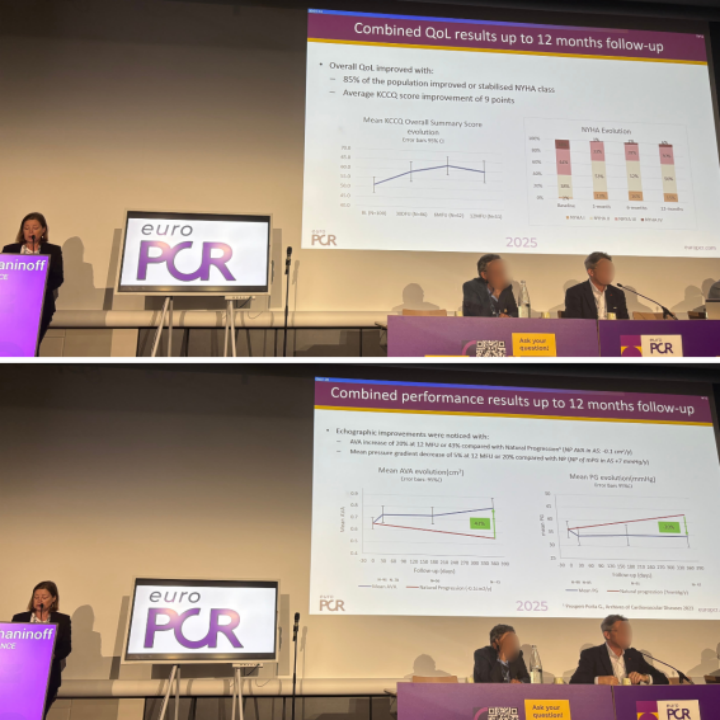
(Cardiawave’s presentation at EuroPCR, image source: Cardiawave official website)
At the conference, Cardiawave, a French medical technology company, shared key clinical study data on its flagship product, the Valvosoft ultrasound system. The results demonstrated the safety and efficacy of this ultrasound therapy, marking a significant step closer to regulatory approval for Valvosoft.
Cardiawave, established in 2014 and headquartered in France, was founded through a partnership between the Langevin Institute and the European Georges Pompidou Hospital, both of which specialize in research on valvular heart disease and cardiac ultrasound imaging. To date, Cardiawave has received funding from the European Union’s Horizon 2020 Research and Innovation Programme, the Île-de-France Regional Innovation Plan, and the French National Research Agency.
Aortic stenosis is one of the most common and severe valvular diseases, a life-threatening condition caused by narrowing of the aortic valve orifice.
The Valvosoft ultrasound system is primarily used to treat calcific aortic stenosis, a condition with significant patient demand. According to the European Heart Journal, 2.6 million patients aged 75 and older in Europe and North America suffer from severe aortic stenosis. This number is projected to rise to 3 million by 2031.
Currently, the treatment of aortic valve stenosis primarily involves surgical intervention, supplemented by pharmacological therapy.
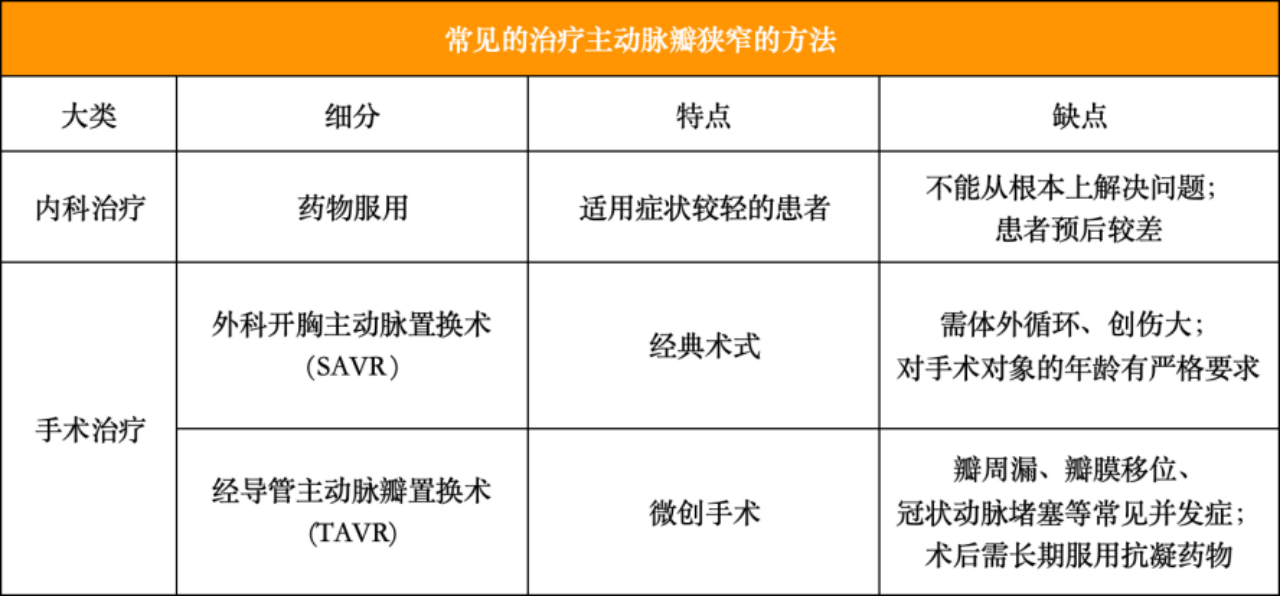
(Public information, chart by VCBeat)
TAVR currently has a higher surgical volume due to its advantages of being minimally invasive and enabling rapid recovery. However, not all patients are candidates for TAVR. In patients with severe aortic regurgitation or mitral regurgitation, TAVR may exacerbate heart failure.
The Valvosoft non-invasive ultrasound therapy system leverages high-intensity focused ultrasound (HIFU) technology to effectively circumvent the clinical limitations associated with traditional products. By softening rather than replacing the aortic valve, it offers an alternative treatment option for patients who are not candidates for surgery. With population aging and the growing demand for minimally invasive therapies, ultrasound technology is poised to complement transcatheter aortic valve replacement (TAVR) procedures, particularly gaining widespread application in early intervention and among patients with mild calcification.
The core advantages of Valvosoft in using ultrasound to treat aortic valve stenosis lie inNon-invasive, precise, and low-risk.
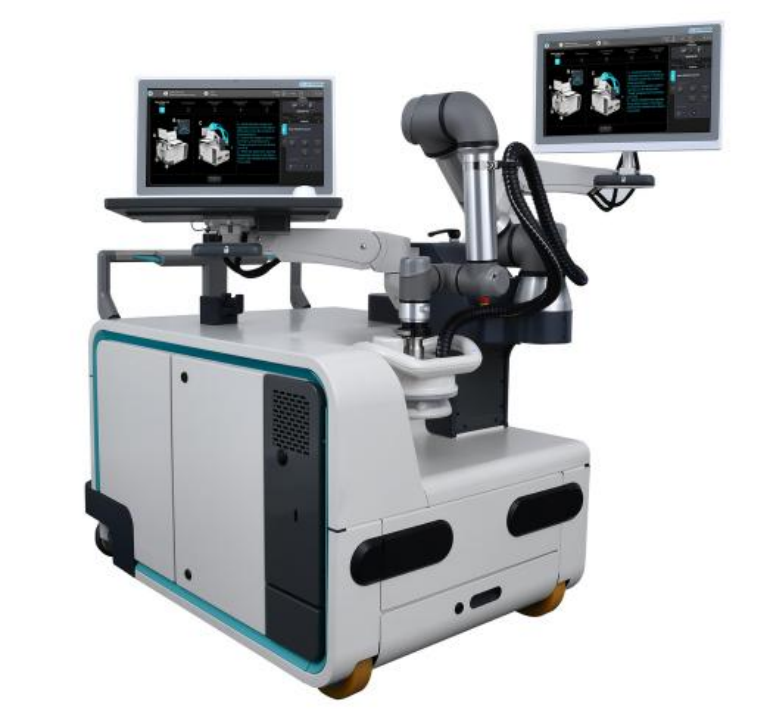
(Valvosoft, image source: Cardiawave official website)
No implantation of any device is required, reducing the risk of complications.Notably, unlike traditional surgical procedures, Valvosoft does not require thoracotomy or catheter-based intervention; instead, it focuses energy via an extracorporeal ultrasound transducer, thereby avoiding surgical trauma. As Valvosoft does not involve the long-term implantation of any device, the risk of related complications is lower, and the need for postoperative anticoagulation therapy is reduced.
Ultrasound precisely treats calcified tissue, avoiding damage to surrounding tissues.HIFU technology leverages the mechanical effects of ultrasound to precisely perform micro-fracturing of calcified tissues on the aortic valve leaflets, thereby restoring valve flexibility, enlarging the valve orifice, and effectively alleviating heart failure symptoms caused by valvular stenosis. Additionally, Valvosoft features real-time monitoring capabilities that integrate with ultrasound imaging to dynamically adjust energy output, preventing damage to surrounding tissues.
Existing clinical data demonstrate that Valvosoft treatment is safe and feasible.According to clinical trial data disclosed on the official website, “in a 12-month clinical study involving 100 patients: 91% of patients remained free from major adverse cardiovascular events (MACE), such as myocardial infarction, stroke, and cardiac death, within 30 days; the aortic valve area (AVA) increased by 43% over 12 months, indicating a significant improvement in patients’ hemodynamic status (a gradual decrease in AVA is considered indicative of hemodynamic deterioration); the Kansas City Cardiomyopathy Questionnaire (KCCQ) score, reflecting quality of life, increased by 9 points; and 85% of patients showed improvement in their New York Heart Association (NYHA) functional class.”
From a product perspective, no non-invasive ultrasound-based devices for the treatment of aortic stenosis have been approved for market launch in China to date. Valvosoft remains in the clinical trial phase, with its long-term efficacy yet to be validated. Cardiawave is actively advancing its pivotal European study, expects to obtain CE marking in 2026–2027, and plans to enter the U.S. market. In the future, if ultrasound technology demonstrates sustained long-term effectiveness, it may become a major alternative for high-risk patients with aortic stenosis.
Ultrasound therapy, as an adjunct to TAVR, can expand the indications, enhance procedural safety, and improve long-term postoperative outcomes.
In addition to ultrasound therapy, shockwave therapy is also suitable for severely calcified aortic valves. Shockwave therapy offers the advantages of being non-invasive, radiation-free, drug-free, and requiring short treatment duration. Its technical principle involves using low-pressure pulsed shockwaves (typically delivered via a balloon catheter) to generate cavitation effects within calcified tissues, thereby fragmenting calcified plaques while preserving the integrity of vascular or valvular structures.
In the innovative field of “Shockwave + TAVR,” domestic manufacturers have already achieved technological breakthroughs. For instance, Peijia Medical’s TaurusWave Shockwave Valve Therapy System utilizes shockwave technology to remodel calcified structures on heart valves. This system can be used as a standalone transcatheter aortic valve therapy or prior to TAVR procedures to alleviate valvular stenosis. Having completed early-stage research and clinical trials, Peijia Medical is now planning to expand its clinical studies to explore broader application scenarios.
Shockwave technology is also widely applied in the field of endovascular intervention. Intravascular lithotripsy (IVL), as an emerging technology, can address both superficial and deep calcifications, offering safer and more effective treatment options. In light of this, domestic manufacturers are accelerating their expansion into the IVL sector. Recently, IVL products from Saihe Medical, Zhenyi Medical, and Huihe Medical have received successive regulatory approvals, and related clinical studies are being actively conducted.
In April 2025, Saihe Medical’s independently developed peripheral intravascular shockwave therapy system successfully conducted its first batch of post-market clinical applications at multiple centers, including the First Affiliated Hospital of Sun Yat-sen University. Its proprietary pulse delivery mode and superior procedural efficiency have received high acclaim from clinicians.
In June, Professor Yang Miao’s team at Xiyuan Hospital of the China Academy of Chinese Medical Sciences applied the C-Wave shockwave system to treat a patient with arteriosclerosis obliterans of the lower extremities, achieving successful surgical outcomes.
It is worth noting that these manufacturers may extend shockwave technology to the treatment of aortic valve calcification in the future, so as to meet the market demand for TAVR procedures. With the continuous increase of participants, this sector will witness fierce market competition in the future.
Article reference:
Peijia Medical: “Peijia Medical Releases 2024 Annual Results: Significant Achievements from Dual-Engine Drive, Neurointerventional Business Posts First Full-Year Profit of RMB 52.09 Million”