

Guangzhou-based XinGuang Bio Unveils World's First Black-Light Optoelectronic Tweezers, Filing IPO Prospectus

CHIPLIGHT
Life Science and Biomedical Equipment Developer
Optoelectronic Tweezers (OET) is a micro- and nano-manipulation technology based on the principle of light-induced dielectrophoresis. It generates non-uniform electric fields on the surface of optoelectronic materials through light-controlled patterns, thereby enabling precise, non-contact manipulation of micro- and nanoscale objects such as cells and microparticles. Its applications encompass specific particle screening, arrayed arrangement of micro-objects, separation, and transport, holding significant value in fields including biomedical healthcare, micro- and nano-fabrication, biochemical sensing, and micro- and nanorobotics.In the medical field, optoelectronic tweezer technology can efficiently support key processes such as single-cell analysis, drug screening, and bioassays.
In 2005, this technology was invented by Professor Wu Ming’s team at the University of California, Berkeley, and later commercialized by Brookhaven Instruments. Since then, optoelectronic tweezers equipment has long been monopolized by foreign manufacturers, with the price of a single instrument exceeding ten million yuan.
Recently, a domestic manufacturer of black-light optoelectronic tweezers has caught the attention of VCBeat. Its official WeChat account prominently features the following statement—
“Developed the World’s First Black-Light Optoelectronic Tweezers System”
“Generates an effective trapping force more than five times that of conventional optical tweezers”
……
For over two decades, foreign companies have held a monopoly on optoelectronic tweezer technology. Yet CHIPLIGHT, founded in 2024, made a bold entry by pioneering an entirely new technological pathway. Driven by curiosity, VCBeat conducted an exclusive interview with Wang Zeyong, founder of CHIPLIGHT, to decode the world’s first black-light optoelectronic tweezer system.

Wang Zeyong, Founder of CHIPLIGHT
Wang Zeyong has a professional background in polymer materials and has deeply cultivated fields such as semiconductor manufacturing, precision PCB production, and mechanical manufacturing. The integration of his multidisciplinary background has given him a profound understanding of the underlying logic of optoelectronic tweezers equipment. “In the semiconductor industry, we often need to precisely manipulate matter at the nanoscale, and this experience has laid the foundation for the research and development of optoelectronic tweezers technology,” he mentioned.
“At the time, only top-tier universities and research institutions in China could afford optoelectronic tweezers imported from the United States, with a market penetration rate of less than 10%, yet demand was extremely strong.” Guided by the corporate vision of “Empowering Global Research Through Inclusive Technology—CHIPLIGHT: Providing Cost-Effective Equipment Accessible to Every Research Institution,” Wang Zeyong assembled an interdisciplinary team of more than ten members, covering fields such as semiconductors, cancer cell bioinformatics, nanomaterial photocatalysis, and software engineering.The team successfully developed the first prototype of the black-light optoelectronic tweezer system in just six months.
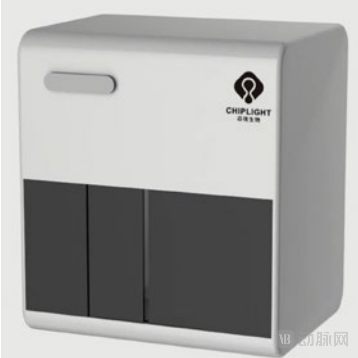
CHIPLIGHT's Black-Light Optoelectronic Tweezers System Prototype
Wang Zeyong told VCBeat that optoelectronic tweezer devices currently available on the market can be categorized into research-grade and commercial-grade versions. The key difference lies in their user base and application focus: research-grade systems are primarily used by university laboratories and research institutes for principle validation or fundamental research, often integrating techniques such as digital microfluidics, droplet microfluidics, and inverted optical imaging; in contrast, commercial-grade systems target biopharmaceutical companies and clinical institutions, requiring high-throughput, standardized operations. These commercial systems are frequently equipped with various peripheral devices, demanding significantly higher levels of integration and automation than their research-grade counterparts. Overall, optoelectronic tweezer technology remains an emerging field in China, currently limited to top-tier universities and laboratories, with the market yet to be fully developed.
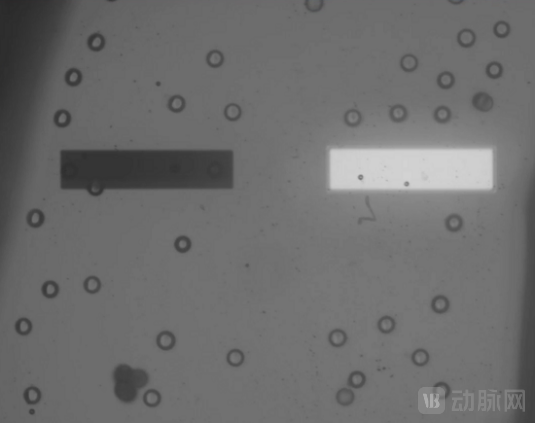
Black-and-White Optoelectronic Tweezers: Sample Images
Black-light photoelectric tweezer technology differs from traditional white-light technology; as the name suggests,“Black Light” derives its name from its breakthrough invisible-light modulation technology. By combining specific wavelengths, polarization control, and a unique chip design, the system generates high-intensity trapping forces without damaging biological samples, enabling a novel manipulation mode characterized by “attraction under black light and repulsion under white light.” Furthermore, its “dark-field manipulation” feature ensures that operations do not interfere with bright-field imaging throughout the process, truly achieving “real-time observation during manipulation.”
“Black light can perform all the functions of white light, and due to its attractive properties, it offers greater advantages in scenarios such as cell fusion, making it particularly suitable for applications like agricultural breeding.”Wang Zeyong explained,CHIPLIGHT’s optoelectronic tweezers can generate a magnetic field around cells, encapsulating them like “vehicles” to control their movement. This non-contact operation reduces cell damage rates to below 1% and enables manipulation of particles across the full scale of 1 μm to 100 μm.Whereas traditional optical tweezers can only manipulate particles smaller than 1 μm, the effective trapping force of the CHIPLIGHT Black Light System is more than five times that of conventional optical tweezers.
In the future,CHIPLIGHT optoelectronic tweezers can be applied to ultra-precise operations such as single-cell-level mitochondrial transplantation and precise delivery of nanomedicines.Particularly in the field of stem cell reprogramming, it canAsymmetric manipulation of the nucleus and cytoplasm,This opens up new avenues for research into the regulation of cell fate. Moreover, this technology can be integrated with existing detection platforms,Significantly enhance antibody screening efficiency and increase the success rate of downstream drug development.
In the field of optoelectronic technology, techniques such as digital microfluidics, optical tweezers, optoelectronic tweezers, and optofluidics are typically developed independently by different companies. CHIPLIGHT has pioneered the integrated innovation of these technologies, becoming one of the few enterprises in China with comprehensive, end-to-end technological capabilities.
“During the pandemic, digital microfluidic technology demonstrated significant value in COVID-19 testing, highlighting the importance of technological integration,” pointed out Wang Zeyong. CHIPLIGHT’s equipment not only possesses the molecular-level manipulation capabilities of traditional optical tweezers but also achieves complex functions such as cell fusion and agricultural breeding through black light technology. The advantages of this multi-technology integration have been evident in practice: for instance, in antibody drug development, the device can manipulate hundreds of cells in parallel with high throughput, while combining AI large models to analyze fluorescence signals, significantly improving R&D efficiency.
Currently,CHIPLIGHT’s research-grade equipment has completed technical validation. The commercial version is expected to complete R&D within 1–2 years, with market adoption achieved in 3–5 years.All core components of its black-light optoelectronic tweezer system, including the optical module and chips, have been domestically sourced, achieving a 100% localization rate for the entire device. The product price is 20%-30% lower than that of similar equipment.
In terms of commercialization, CHIPLIGHT has established a three-tier profit engine: “equipment sales to open market entry → consumables to enhance user stickiness → software services to unlock data value.” First, at the equipment level, both research-grade and commercial-grade versions are offered in parallel. Second, at the consumables level, continuous cash flow is generated through high-frequency replacement chips (requiring replacement every 2–3 uses). Third, at the software level, revenue is derived from iterative updates and customized collaboration services.
After two decades of being blocked by overseas technological monopolies, Chinese optoelectronic tweezer companies, exemplified by CHIPLIGHT, have emerged from their chrysalis to declare to the world that the “holy grail” of micro- and nano-manipulation, once confined to top-tier laboratories, is now becoming the foundational engine driving the upgrade of China’s biomedical industry.
References:
1. "World's First: Black-Light Optoelectronic Tweezers Disruptive Micromanipulation Technology", CHIPLIGHT
2. “One Article Tells You Why to Choose CHIPLIGHT’s Domestically Produced Optoelectronic Tweezers,” CHIPLIGHT