

Xinhua Hospital and SenseTime Launch AI Pediatric General Practitioner: A Groundbreaking Clinical Application of Medical Large Models

Xinhua Hospital
Grade A Tertiary Hospital
On June 28, 2025, the Fengxian Campus of Xinhua Hospital Affiliated to Shanghai Jiao Tong University School of Medicine officially commenced operations. At the opening ceremony, Xinhua Hospital, in partnership with Sensetime Medical, unveiled an AI-powered general pediatrician based on Sensetime’s “Deep Thinking” Dayi Large Medical Model. This initiative aims to empower primary care pediatricians and support home-based child care by transforming the clinical expertise of top-tier hospitals into an interactive “AI guide.”
As a-based“Clinical Experience Digitization+ArtificialApplication Scenarios of Intelligence”PhilosophyThe all-scenario solution built, with the AI general practitioner for children being a joint effort by both parties toBreakthrough Practices in the Deep Empowerment of Clinical Care by Large Medical Models, creating a new paradigm of smart healthcare for the high-quality development of national children's health services.
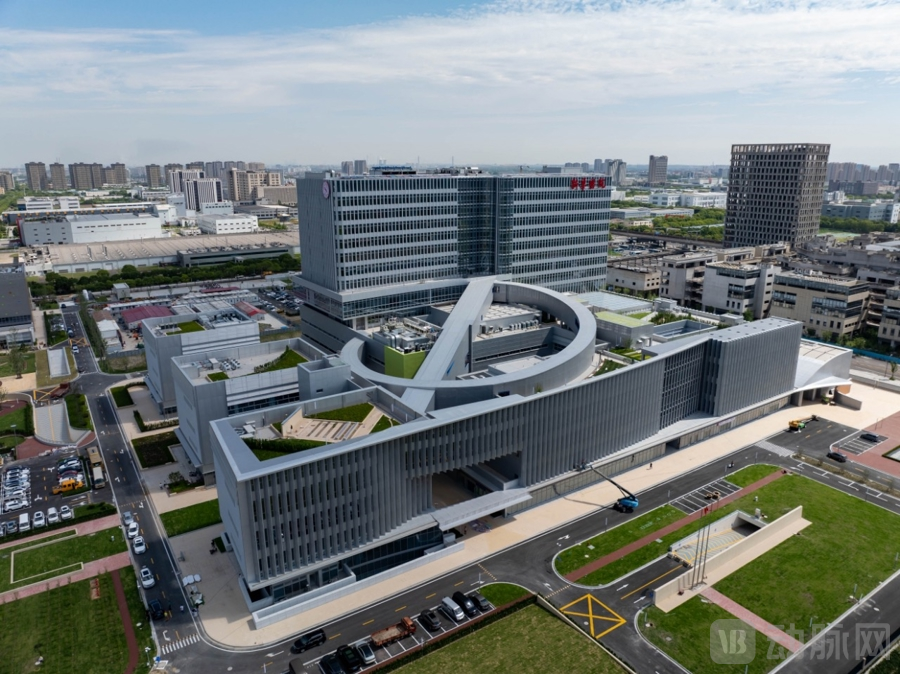
Xinhua Hospital Affiliated to Shanghai Jiao Tong University School of Medicine, Fengxian Campus
Pediatric AI Innovation Practices Driven by National Strategy
In recent years, guided by the “Healthy China 2030” strategy, China has issued the Outline for the Development of Chinese Children (2021–2030), the Action Plan for Enhancing Child Health (2021–2025), the Opinions on Promoting High-Quality Development of Pediatric Medical and Health Services, and the Action Plan for the “Year of Pediatric and Mental Health Services” (2025–2027), which explicitly require strengthening full-cycle management and safeguards for children’s physical and mental health.
In 2024, the Two Sessions further listed “promoting the healthy growth of children” as a key task for ensuring people’s livelihoods, clearly proposing two major policy directions:
First, strengthen the supply of pediatric medical services, expand the layout of pediatric medical resources, and address the pain points of "difficulty in accessing medical care and high medication costs."
Second, establish a system of proactive health interventions for children to shift the focus of healthcare upstream. Under the framework of the 14th Five-Year Plan, China has continuously strengthened proactive health interventions for children through innovative measures such as chronic disease prevention and control, and the integration of sports and education.
Shanghai has taken the lead in advancing the digital transformation of healthcare services, aligning with the national “Internet + Healthcare” strategy to jointly drive the upgrading of medical services toward greater precision and patient-centeredness. This initiative reshapes the model of child health services, embodying a new paradigm of health governance that prioritizes prevention and is empowered by technology. However, current child health services still face challenges such as uneven distribution of resources, the need to enhance primary care diagnostic and treatment capabilities, and insufficient scientific parenting literacy. Against this backdrop, developing an AI-powered general pediatrician system that provides digital and intelligent empowerment to primary care physicians is not only an innovative practice responding to national policy calls but also a key lever for resolving the “last mile” challenge in child health service delivery.
Xinhua Hospital and SenseTime Medical have jointly launched a groundbreaking AI-powered general practitioner for children. Built upon SenseTime’s industry-leading “Da Yi” medical vertical large model system, it integrates the foundational capabilities of top-tier large models such as DeepSeek, Qwen, and SenseChat. Through training on ultra-large-scale medical datasets and the injection of domain-specific knowledge, this system constructs a medical AI brain with clinical-grade “deep reasoning” capabilities, thereby addressing key pain points associated with the deployment of general-purpose models in healthcare settings, including data sparsity, semantic ambiguity, and compliance risks.
Building on this foundation, Xinhua Hospital has integrated over 70 years of accumulated experience from tens of millions of pediatric clinical cases to develop an industry-leading “Three-Tier Progressive Pediatric Knowledge System” that supports precise and efficient utilization of large language models. This system encompasses general pediatric health and popular science knowledge, clinical guidelines and expert consensus statements, as well as pediatric textbooks and professional monographs, achieving comprehensive coverage and in-depth exploration of medical knowledge and health care across different developmental stages, including the fetal period, neonatal period, infancy, preschool age, school age, and adolescence.
The system enables precise responses to inquiries based on descriptions provided by primary care physicians during clinical consultations, offering comprehensive services ranging from daily childcare guidance to disease diagnosis and treatment recommendations. Its core functionalities encompass assessments of children’s physical growth and psychological development, pediatric health care, prevention and management of common diseases, and guidance on rational medication use. Furthermore, an innovatively designed age-adaptive interaction module delivers personalized services tailored to the characteristics of different developmental stages, comprehensively empowering holistic health management for children aged 0–18 years throughout their entire growth cycle.
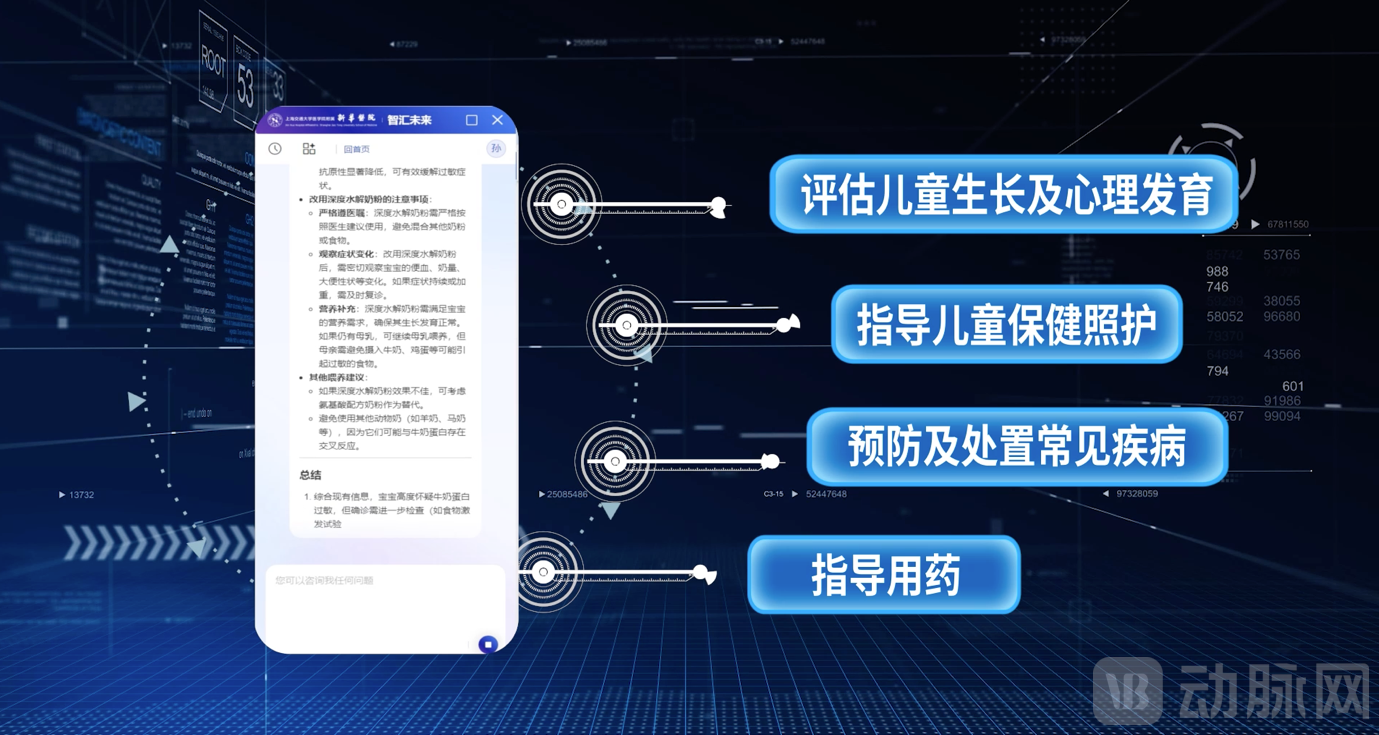
Technological Breakthrough: The Professional Leap from General Intelligence to Medical Intelligence
As a discipline leader in China’s pediatric healthcare sector and a pioneer in smart hospital innovation, Xinhua Hospital did not immediately consider adopting the currently most popular general-purpose large models when it first began exploring their integration. Instead, President Sun Kun prioritized a prudent yet essential question: Are general-purpose large models sufficiently specialized for the medical field? How can they be effectively integrated with the hospital’s unique characteristics? Following multiple rounds of internal expert deliberations and horizontal comparisons with leading industry large models, Xinhua Hospital entered into a deep strategic partnership with SenseTime Medical, a decision driven by profound insights into medical AI.
Addressing the insufficient professionalism and severe hallucination issues exhibited by general-purpose large models in the healthcare sector, the SenseTime Medical “Dayi” model team has constructed a high-quality medical corpus comprising over 250 billion tokens and nearly 400 billion Chinese characters. Leveraging deep industry data insights and professional medical data engineering methodologies, this corpus was used to conduct full-parameter vertical-domain training and quantization tuning on leading general-purpose large model backbones such as DeepSeek, Qwen, and SenseChat. This approach enables targeted optimization for essential industry-specific capabilities, including medical task comprehension, medical knowledge injection, complex clinical reasoning, adherence to industry standards, and deployment performance optimization.
In terms of training data composition, this medical corpus systematically integrates authoritative resources from over one hundred clinical disciplines. It encompasses multi-source knowledge, including medical textbooks, diagnostic and treatment guidelines, clinical pathways, rare disease knowledge bases, public health data, drug information databases, real-world electronic medical records, and tens of millions of Chinese and foreign medical literature. Through technical processes such as compliant cleaning, multi-source alignment, automated quality stratification, and long-tail data augmentation, a medical knowledge graph covering the entire diagnosis and treatment workflow has been constructed. By integrating this with Xinhua Hospital’s three-tier progressive pediatric knowledge system, the deep fusion of medical knowledge and model reasoning capabilities has been achieved.
In addition to training on massive datasets, SenseTime Medical has achieved deep simulation of clinical reasoning in its large models through specialized training for medical tasks. By constructing comprehensive data understanding tasks, the Dayi model has significantly enhanced its ability to reason and extract information from complex medical data structures, such as medical records, laboratory and imaging reports, and physical examination reports. By progressively improving the model’s capacity for long-text comprehension, Dayi can accurately analyze ultra-long longitudinal clinical courses spanning 5–10 years. Furthermore, beyond chain-of-thought calibration learning across intermediate steps of various tasks, Dayi has constructed high-quality “long-thinking” datasets by integrating expert clinical experience with evidence-based knowledge frameworks, including clinical guidelines and clinical pathways. This approach effectively improves the accuracy of complex clinical reasoning through in-depth analytical processing.
On a specialized medical benchmark comprising over 13,191 questions across seven key dimensions—including medical knowledge Q&A, numerical calculations, reasoning, instruction following, information retrieval, and ethical safety—Dayi has secured the top position, outperforming general-purpose models such as DeepSeek Full Version, GPT-4o, and OpenAI o1. This technical approach, which combines the capabilities of top-tier foundation models with deep medical training, precisely aligns with Xinhua Hospital’s core requirements for AI clinical applications: “professionalism, safety, and trustworthiness.” It has thus become a pivotal choice for overcoming technical implementation bottlenecks in the hospital’s smart healthcare initiatives.
Platform Empowerment: Accelerating Medical-Engineering Convergence to Enable Rapid Incubation of Specialty-Specific AI Agents
The AI-powered general practitioner for children, jointly developed by Xinhua Hospital and SenseTime Medical, has achieved innovative breakthroughs not only through the integrated application of cutting-edge technologies but also via in-depth exploration of a cross-disciplinary innovation model bridging medicine and engineering. Addressing common pain points in the development of specialty-specific AI agents—such as high technical barriers and difficulties in translating clinical needs into practical solutions—Xinhua Hospital leveraged the SenseTime Dayi Agent Platform to establish a collaborative innovation ecosystem between medical professionals and AI engineers. This approach has pioneered a new pathway for the efficient deployment and implementation of AI-driven healthcare products.
This platform achieves a breakthrough by transforming AI development capabilities into clinically perceptible interactive interfaces, reshaping the paradigm of agent development through a “zero-code” visual workspace. Hospital IT teams can complete multi-model collaborative management, integration of private medical knowledge bases, and orchestration of diagnostic and treatment logic through drag-and-drop operations, without requiring professional algorithmic expertise. This makes the construction of complex AI systems as flexible and controllable as building with LEGO bricks.
Leveraging Xinhua Hospital’s pediatric specialty database with tens of millions of records, clinical experts and AI engineers have established a closed-loop collaborative mechanism encompassing “needs–technology–validation.” By strictly simulating the clinical pathway of tertiary hospitals—“symptom analysis → differential diagnosis → examination recommendations → treatment plans”—they rapidly built an AI-powered general practitioner intelligent decision-making engine for pediatrics on the platform. Through workflow orchestration technology, evidence-based medical logic is transformed into executable AI reasoning paths, ensuring that diagnostic and treatment recommendations consistently adhere to clinical guideline standards, thereby delivering more controllable and precise large-model-based diagnostic and therapeutic suggestions.
This platform-mediated model of deep integration between medicine and engineering has not only significantly shortened the R&D cycle for AI healthcare products, but also pioneered an innovation paradigm driven by clinical needs with rapid technological responsiveness. By empowering medical institutions to independently manage the entire AI R&D process, Xinhua Hospital and Sensetime Medical are exploring a replicable innovative pathway for the large-scale implementation of specialty-specific AI agents.
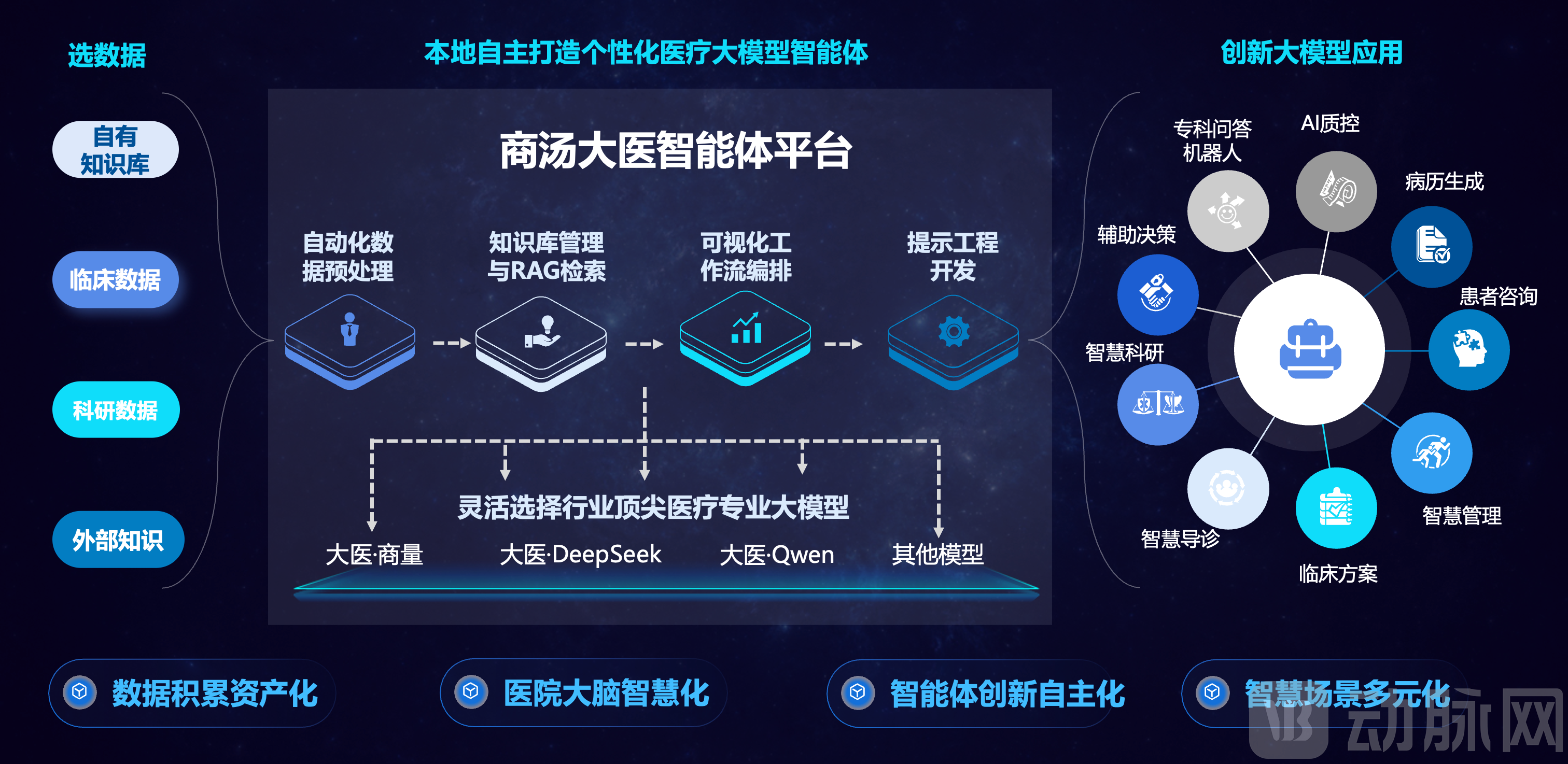
SenseTime Medical AI Agent Platform
Dean Sun Kun of Xinhua Hospital stated, “The strategic partnership between Xinhua Hospital and Sensetime Healthcare has always centered on the core theme of ‘empowering clinical practice with technology and reshaping healthcare through intelligence.’ Over the past three years, both parties have jointly built a comprehensive innovation system covering smart services, smart diagnosis and treatment, and smart management. By leveraging multimodal large models to create a digital twin hub for the hospital, we have achieved a 30% increase in clinical diagnostic efficiency, a fivefold improvement in surgical planning efficiency, a significant reduction in response time for cross-campus remote consultations, and a digital upgrade in scientific research and teaching methodologies. Furthermore, we have reengineered the entire patient journey with a patient-centric approach, enabling touchpoint services such as intelligent triage, companionship during medical visits, and follow-up care to make a leapfrog transition from ‘patients seeking services’ to ‘services seeking patients.’ The launch of this AI-powered general practitioner for children is not only an original breakthrough by Xinhua Hospital in the field of large model-based agents but also a key milestone in our efforts to promote the equitable access to high-quality medical resources through digital means and to establish a new paradigm for children’s health management. In the future, we will continue to deepen the synergistic integration of AI and medical scenarios, ensuring that the benefits of smart healthcare reach every family and safeguard their healthy future.”
“The ultimate value of medical technology lies in ensuring that the dividends of technological advancement truly reach the ‘capillaries’ of frontline clinical practice.” Zhang Shaoting, CEO of SenseTime Medical, emphasized that the collaboration between Xinhua Hospital and SenseTime Medical exemplifies a “two-way engagement” between technological innovation and clinical wisdom. The former contributes decades of accumulated pediatric diagnostic and treatment knowledge bases along with real-world experience, while the latter leverages large language model (LLM) technology and an agent platform as bridges to transform specialized medical knowledge into actionable intelligent solutions. This approach enables LLMs to move from laboratories to consultation rooms, evolving from “aloof technical concepts” into “practical tools” that both physicians and patients can confidently and effectively use, thereby establishing a replicable benchmark paradigm for the practical implementation of medical AI.
The innovative practices of Xinhua Hospital and Sensetime Medical have not only set a benchmark for intelligent transformation in pediatric care but also demonstrated the boundless potential of “technology-empowered healthcare” to the entire medical industry. By advancing the smart hospital ecosystem from concept to reality, these efforts ensure that the benefits of medical technology truly reach everyone, laying a solid foundation for building a more equitable, efficient, and compassionate healthcare service system.