

Merida Biosciences Secures $121 Million Series A Financing to Advance Precision Therapies for Autoimmune and Allergic Diseases

Merida Biosciences
Novel Biologic Therapeutics Developer

BVF Partners
Public Biotechnology Investment Institutions

Third Rock Ventures
Venture Capital Firms
Recently, U.S. biotechnology company Merida Biosciences announced that it had secured $121 million in Series A financing. The round was co-led by three prominent firms—Bain Capital Life Sciences, BVF Partners, and Third Rock Ventures—setting a new record for Series A funding in the autoimmune disease sector in recent years.
The proceeds from this financing round will advance Merida’s first clinical candidate—a drug for Graves’ disease (toxic diffuse goiter)—into the Investigational New Drug (IND) stage, and accelerate the preclinical development of therapies for allergies and primary membranous nephropathy, further strengthening its clinical translation capabilities.
Amid intensifying competition and high R&D risks in the biopharmaceutical industry, why is capital betting on Merida Biosciences? What strategic layout and technological advantages lie behind this decision?
Dr. Dario Gutierrez, Founder and Chief Scientific Officer of Merida Biosciences, holds a Ph.D. in Molecular Physiology and Biophysics from Vanderbilt University. With over 15 years of extensive experience in immunology and oncology drug development, he has spearheaded the advancement of multiple therapeutic candidates from early discovery to clinical stages.

Dr. Dario Gutierrez, Founder and Chief Scientific Officer Source: Merida Official Website
The “In-Depth Industry Report on Autoimmune Diseases” released by Orient Securities Research Institute shows that the global population affected by autoimmune diseases is estimated to exceed 500 million, with nearly 40 million patients suffering from major autoimmune diseases in China. According to statistics on common autoimmune diseases, the global prevalence rate is approximately 5%–8%, making it the third largest category of chronic diseases after cancer and cardiovascular diseases.
Taking the United States as an example, data from the American Autoimmune Related Diseases Association (AARDA) shows that approximately 50 million people in the U.S. (20% of the total population) suffer from autoimmune diseases, with 75% being women (approximately 30 million), and 5% to 10% of patients experiencing comorbidities.
At the clinical treatment level, although traditional immunosuppressants and biologics have alleviated symptoms in some patients, existing therapies can only control disease progression in approximately 30%–40% of patients and carry risks of serious side effects, such as increased susceptibility to infection and hepatic and renal impairment.
Meanwhile, approximately 60% of patients experience disease relapse, which may even progress to end-stage organ damage. The misdiagnosis rate for autoimmune diseases is as high as 40%, with an average diagnostic delay of 5–7 years, causing a large number of patients to miss the optimal window for treatment. Furthermore, research on various autoimmune diseases remains limited, and their pathogenesis and pathways are not fully understood, leaving significant unmet clinical needs.
Based on this, Gutierrez conceived the idea of founding Merida Biosciences and assembled a technical team with extensive research experience: Chief Medical Officer Matt Leoni brings 17 years of clinical development experience; CEO Adam Townsend has over 20 years of global biopharmaceutical industry experience; and COO Dodzie Sogah possesses more than 15 years of experience in biopharmaceutical business development and strategy. The team is committed to developing precision targeted therapies and realizing personalized treatment to provide more suitable relief options for patients suffering from autoimmune and allergic diseases.
As Adam Townsend stated, Merida has the opportunity to fundamentally transform the treatment of a range of severe autoimmune and allergic diseases, potentially for the first time precisely targeting the defined pathogenic factors of a group of refractory diseases with high specificity and durability. This is an achievement that no approach has been able to accomplish to date.
As of now, Merida has achieved breakthrough progress.
Merida focuses on pathogenic antibodies and develops a protein engineering platform to design precision therapies. Traditional immunosuppressants often cause side effects such as nephrotoxicity, hepatotoxicity, suppressed immune function, and increased risk of infection, leading to collateral damage in other parts of the body.
Merida has focused on circumventing this limitation by leveraging a deep understanding of antibody-driven disease molecular mechanisms to generate uniquely designed Fc biologics through its proprietary platform—namely, “antibody-like therapeutics.”
This antibody-like molecule can precisely recognize and neutralize pathogenic antibodies (such as TSHR antibodies in Graves' disease), while simultaneously activating the body's innate clearance mechanisms to eliminate both the antibodies and their producing B cells at the source. Compared with traditional immunosuppressants, this therapy avoids the risks of infection and tumorigenesis associated with systemic immune suppression, truly delivering a differentiated “precision strike” approach that addresses the root cause of the disease.
This innovative antibody-like molecule offers three key advantages:
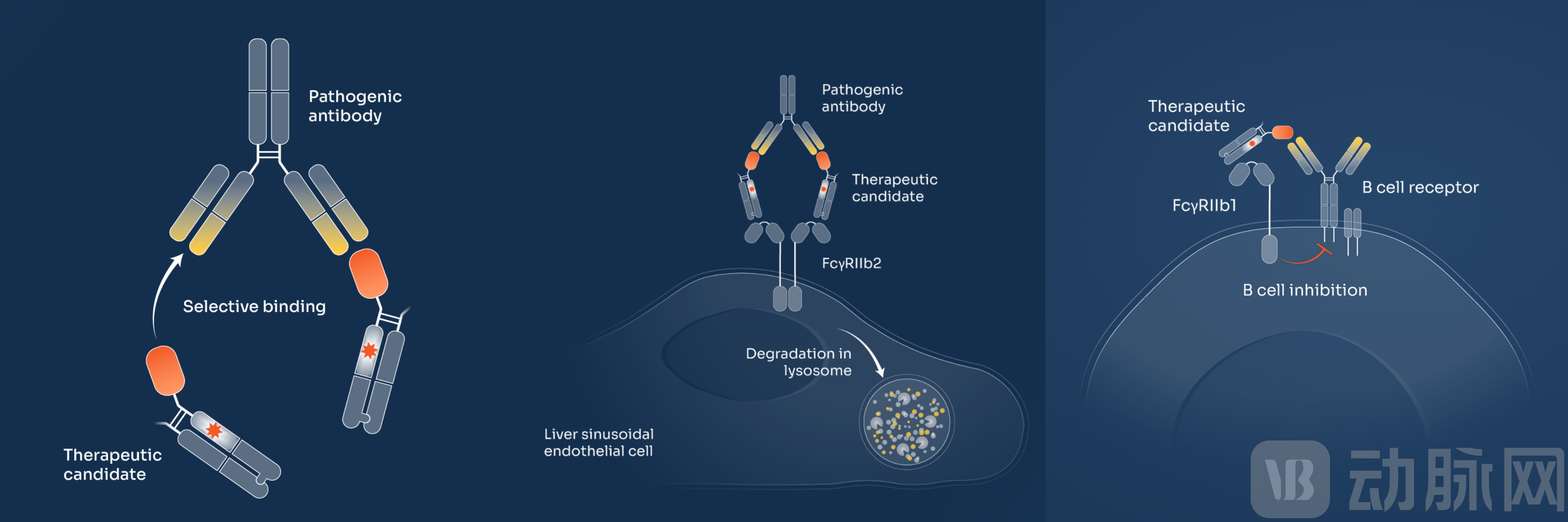
Advantages of Fc Biologics Therapy Source: Merida Official Website
l Highly targeted.As a precisely engineered protein domain, Fc can accurately target and specifically bind to pathogenic antibodies.
- High clearance rate.Engineering of the Fc region directs therapeutic antibodies to highly specialized hepatocytes for internalization and degradation via endogenous pathways. To avoid toxicity associated with IgG immune complex activation, Fc-based biologics selectively bind to the inhibitory receptor FcγRIIB rather than the activating receptor FcγRIIA.
l High persistence (long half-life).The long-acting pharmacological effects conferred by antibody-like properties enable simpler administration and offer advantages over conventional therapies. Furthermore, this therapy targets B cells that produce pathogenic antibodies, acting specifically against these harmful antibodies while preserving normal immune function.
Currently, leveraging its protein engineering platform, Merida Biosciences’ R&D pipeline covers two major therapeutic areas: autoimmune and allergic diseases, including Graves’ disease, allergies, and primary membranous nephropathy (MN).
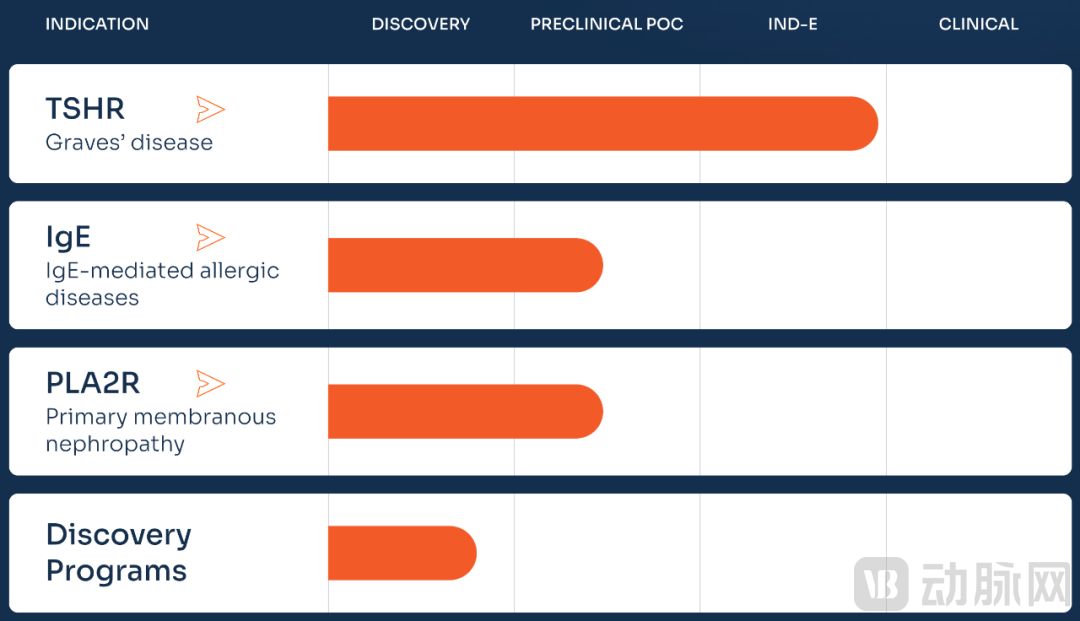
Merida’s R&D Pipeline Source: Merida Official Website
Taking Graves' disease as an example, this is a typical autoimmune disorder whose pathogenesis stems from pathological autoantibodies binding to the thyroid-stimulating hormone receptor (TSHR) in the thyroid gland, leading to excessive production of thyroid hormones and accelerated metabolic activity. These autoantibodies also cause Graves' ophthalmopathy (thyroid eye disease) in approximately half of patients with Graves' disease, resulting in ocular inflammation, pain, exophthalmos, and diplopia.
Currently, treatment options for Graves' disease are limited to surgery, radioactive iodine, or non-selective immunomodulators. While these approaches can alleviate symptoms, they do not precisely target the pathogenic antibodies and may lead to other complications.
Merida Biosciences’ proprietary “antibody-like molecule” product, as a first-in-class therapy, selectively binds to the pathogenic thyroid-stimulating hormone receptor (TSHR) antibodies that cause Graves’ disease while maintaining a prolonged pharmacokinetic half-life. By rapidly clearing pathogenic antibodies and completely blocking autoantibody-induced TSHR signaling without affecting native TSHR activity, this product optimizes therapeutic efficacy and patient experience.
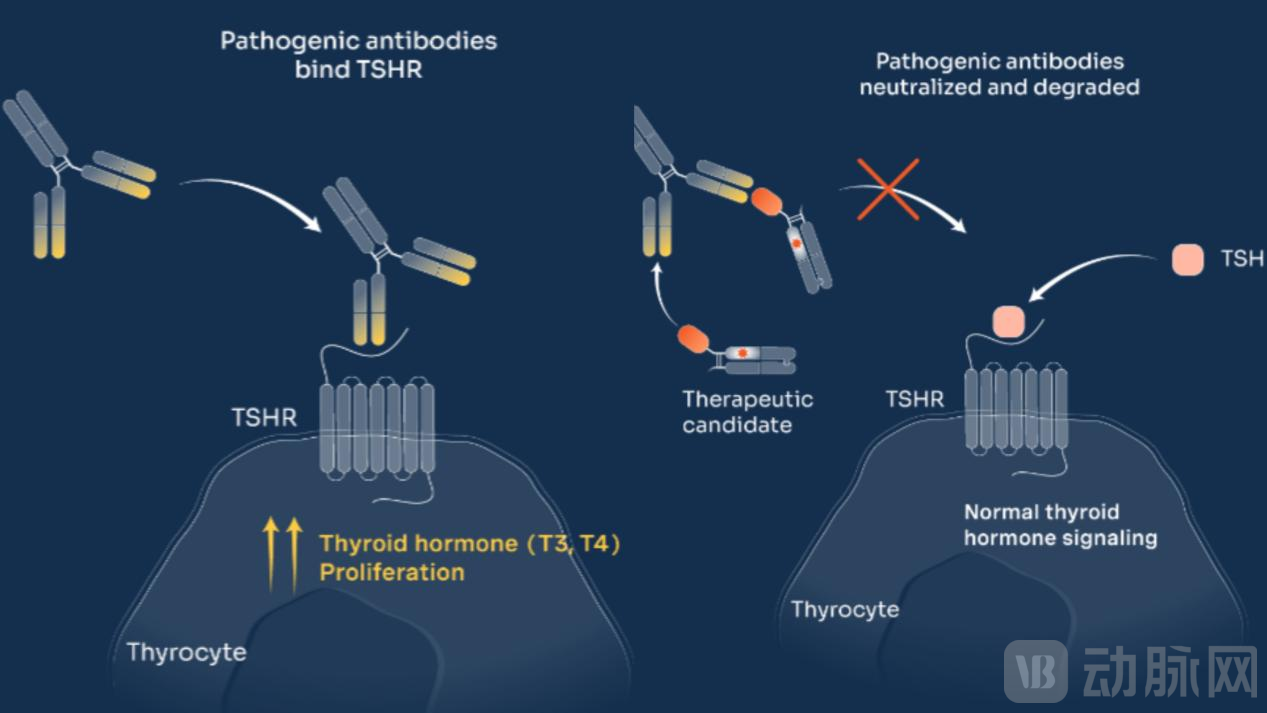
Pathogenesis and Solutions for Graves' Disease Source: Merida Official Website
Currently, Merida Biosciences’ TSHR-targeted drug candidate for Graves’ disease has advanced to the IND-enabling stage, positioning it at the forefront of the company’s R&D pipeline and bringing it one step closer to clinical application. This development not only offers new hope for patients with Graves’ disease but also underscores Merida’s first-mover advantage in its strategic layout for autoimmune disease research and development.
In the field of allergy, Merida Biosciences is conducting research on immunoglobulin E (IgE)-mediated food allergies. By developing antibody-based therapeutics that neutralize and clear IgE antibodies, the company aims to alleviate allergic symptoms at their root cause, enabling less frequent dosing, lower toxicity, and greater clinical benefit.
Primary membranous nephropathy is a chronic kidney disease characterized by thickening of the glomerular basement membrane and deposition of immune complexes, classified as an autoimmune disorder. Merida Biosciences is also actively exploring relevant therapeutic strategies, striving to develop targeted drugs for this condition to alleviate renal inflammation and slow disease progression.
Beyond hot sectors such as PD-(L)1 inhibitors and antibody-drug conjugates (ADCs), Merida Biosciences’ strategy for the precise clearance of pathogenic antibodies has brought meaningful innovation to the treatment of autoimmune and allergic diseases, emerging as a new focal point for investment.
Merida’s successful completion of a $121 million financing round, led by top global biopharmaceutical venture capital firms such as Third Rock Ventures and Bain Capital, sends a significant signal.
From a therapeutic perspective, unlike traditional therapies that focus on downstream inflammatory responses with a “symptomatic” approach, Merida has made a breakthrough by shifting the therapeutic target upstream to directly address pathogenic antibodies, the root cause of the disease. This shift from “symptom control” to “curative treatment targeting the underlying cause” holds promise for overcoming current therapeutic bottlenecks and achieving functional cures.
Meanwhile, at the level of technological R&D, Merida Biosciences’ platform-based system has broken through the limitations inherent in single-target drug development. Through modular design, this platform can rapidly pivot to different antibody targets, significantly enhancing R&D efficiency, reducing development costs, and demonstrating strong technical scalability. This “platform-style” R&D model aligns closely with investor preferences, making it a key factor driving substantial capital investment.
Furthermore, an analysis of market potential reveals that while there are over 500 million patients with autoimmune diseases globally, only a limited number of therapeutic targets, such as JAK inhibitors and TNF-α inhibitors, have achieved a market scale worth tens of billions of dollars.
As Dr. Andrew Hack, Partner at Bain Capital Life Sciences, stated, Merida Biosciences’ innovative “pathogenic antibody clearance” strategy is pioneering an exciting breakthrough by leveraging recent major advances in protein engineering and immunology, holding immense potential to benefit numerous patients in urgent need of better treatment options.