

Shanghai Xinyuan Electronics Files IPO Prospectus: Pioneering Sub-Millimeter 'Hair-Thin' Implantable Medical Sensors
Sensors are arguably the most inconspicuous yet remarkable components in medical devices.
It is widely applied in vital signs monitoring, disease diagnosis, and medication use monitoring. From medical imaging equipment such as ultrasound and CT scanners, to diagnostic and therapeutic devices like ventilators and blood analyzers, and further to emerging fields including mobile internet healthcare, AI-driven medicine, and surgical robots, all rely on the support of this technology. It serves both as a key variable constraining the development of high-end medical equipment and as a significant driver advancing medical progress.
Nowadays, with advancements in engineering technology and medical science, the importance of and attention to medical sensor technology are continuously increasing. Just a few days ago, autonomous biochemical sensing technology was named one of the Top 10 Emerging Technologies of 2025.
In this field full of opportunities and challenges,Shanghai Xinyuan Electronic Technology Co., Ltd. (hereinafter referred to as “Xinyuan Electronics”)After years of dedicated development, we have overcome sub-millimeter challenges to create “hair-thin” implantable and interventional micro-sensors for the human body.
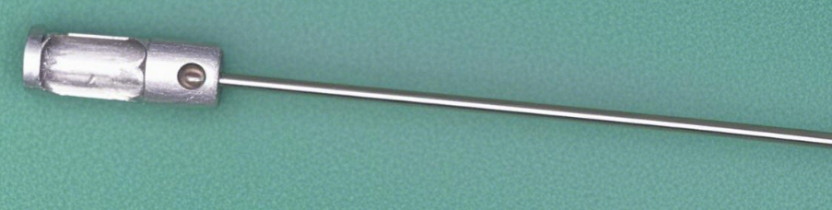
Xinyuan Electronics was established in 2015.
At its inception, Xinyuan Electronics recognized that the overall development trend in the healthcare industry is inevitably transitioning from traditional serious medical care to current precision medicine, and will further evolve toward preventive and control-oriented healthcare in the future. Underlying this trend is a more comprehensive understanding of patients’ conditions, which is inseparable from the support of sensor technology.
The integration of sensor technology with other medical technologies enables in-depth analysis of lesions and precise control throughout the surgical procedure. Furthermore, the drive toward precision medicine has made digitization an imperative, requiring sensors to assume critical roles in front-end data acquisition and intraoperative control feedback. Consequently, the application scenarios for medical sensors will become more extensive and their development trajectories more diversified within the realms of precision medicine and future predictive healthcare, representing an irreversible trend in the industry.
Guided by this insight, Xinyuan Electronics has assembled a team with over a decade of deep expertise in the semiconductor industry and entered the medical sector early on to meet industry demands.
Xinyuan Electronics’ core competitiveness can be summarized as “compact, fast, and agile.”
First is “small.” Xinyuan Electronics has always strived to become a “small yet beautiful” company, maintaining a team size of around 30 people over the long term. This allows for continuous capability upgrades and ongoing enhancement of overall professionalism through personnel iteration.
Second is “speed.” Benefiting from its lean team structure, Xinyuan Electronics has adopted a flat management model, avoiding lengthy decision-making processes. As a result, the team responds more rapidly to customer needs and executes services with greater efficiency, enabling swift alignment with various client demands.
Third is “agility.” Built on standardized products, Xinyuan Electronics offers customized services, with highly flexible cooperation models and product definition methods. At the core of this flexibility is the team’s consistent pursuit of win-win or even multi-win outcomes, enabling adjustments tailored to specific real-world scenarios.
It is precisely this “small but specialized” team size, rapid-response execution efficiency, and highly flexible collaboration model that enable Xinyuan Electronics to meet the needs of innovative medical companies.
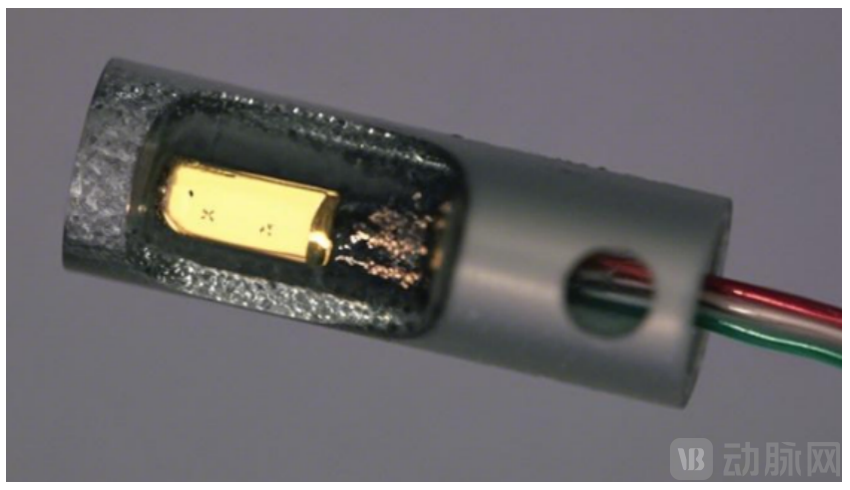
Building on a clear understanding of industry trends and its core competencies, Xinyuan Electronics has focused its technological breakthroughs on overcoming the challenges of miniaturizing implantable and interventional sensors for the human body. This represents both a critical threshold for the penetration of medical sensors into precision medicine scenarios and one of the key battlegrounds for achieving differentiated competition.
Through visits to multiple hospitals across China and in-depth discussions with clinicians, the team found that implantable and interventional micro-sensors play a significant role in intraoperative blood pressure monitoring and measurement of residual body pressure. In response to clinical needs in China, Xinyuan Electronics has been gradually optimizing product features and advancing the localization of its core technologies and entire production chain.
Although the underlying principle of this product is not complex, its technical implementation poses significant challenges.
As the product needs to enter human blood vessels or natural cavities, the miniaturization of sensors imposes stringent standards on the biocompatibility of materials, ensuring no rejection reaction during long-term implantation. Based on the accumulation of experimental data from over a hundred trials and feedback from doctors, Xinyuan ElectronicsBreakthrough in Pia Mater Protection Technology, by optimizing material formulations and fine-tuning lamination processes, physical protection is achieved while ensuring sensor sensitivity.
Meanwhile, as electronic components, the insulation and isolation of sensors from bodily fluids are central to safety. Traditional glue-coating processes are prone to leakage risks due to water absorption; Xinyuan Electronics, throughTechnological Innovation in Precious Metal Coating Processes, replacing organic coatings with a metal passivation layer to structurally eliminate the risk of water absorption and significantly enhance the safety of in vivo implantation.
In the face of challenges posed by the increasing precision required in packaging processes that directly impact sensor lifespan and performance, Xinyuan Electronics has achievedComponent Miniaturization, with operational precision reaching the level of a thousand-fold microscope.
In this process, Xinyuan Electronics has continuously refined the balance between product performance and functionality, aiming to identify a precise equilibrium point between parameter settings and clinical practice, thereby iteratively optimizing its products.
Currently, Xinyuan Electronics has established a full-scenario supply chain spanning from supply chain management and manufacturing to hospital applications. Its products have been successfully deployed in various medical scenarios, including ventilators, infusion pumps, urinary catheters, artificial hearts, fractional flow reserve (FFR) measurement, endoscopy, intracranial pressure monitoring, ablation surgeries, and surgical robots.
After overcoming the technical barriers to miniaturization and achieving clinical deployment of its products, Xinyuan Electronics has further extended its differentiated competitive advantages to the service sector. Addressing the “last mile” pain points in the transition of medical sensors from technology to application, the team has established a comprehensive service support system to bridge the cross-disciplinary gap between sensor technology and medical device applications.
“Unlike other sectors, the healthcare industry has relatively weak perception of sensor technology. The so-called ‘last mile’ service is more reflected at the application level, meaning that clients often encounter various problems during actual use. When faced with these issues, the vast majority of the healthcare industry’sEngineers need to acquire cross-disciplinary knowledge of sensor characteristics and usage specifications., which is precisely what many healthcare professionals are unaware of. Therefore, one of Xinyuan’s core missions is toHelp users solve the 'point-to-point' connectivity issues between sensors and medical devices..” Xinyuan Electronics told VCBeat.
In this way, Xinyuan Electronics provides operational guidance to customers and partners, clarifies specific methodologies, promotes the effective integration of sensors with medical devices, and ultimately achieves superior application outcomes.
The core advantage underpinning this service system lies in the construction of its talent framework.
On the one hand,The Marketing and Sales Teams Possess Consultative Capabilities, capable of deeply understanding customer needs and accurately conveying them internally, which demands a high level of professional competence from personnel. On the other hand,The engineering team possesses strong capabilities in requirements translation and problem-solving., capable of translating market demands into specific engineering challenges and efficiently overcoming them.
Consultative marketing professionals who manage external liaisons and engineering teams that tackle internal technical challenges serve as the core support for business development. Given that the business involves cross-disciplinary integration across medicine, mechanics, electronics, and MEMS processes, the knowledge system is extensive and complex. Consequently, multidisciplinary talent is difficult to acquire directly from the external market and must be cultivated through long-term internal training programs. Xinyuan Electronics, with over a decade of deep engagement in the industry, has precisely accumulated such advantages in talent development, thereby meeting the application demands for sensor technology in the medical industry.
Looking ahead, the sensor market is poised for explosive growth driven by the expansion of the broader health industry and the upgrading of wellness and elderly care models. Under the momentum of preventive healthcare, the continuous expansion of the consumer-grade medical market will create significant opportunities for the sensor industry. Xinyuan Electronics has already established its presence and technological reserves in this field, offering features such as respiration monitoring, heart rate monitoring, fall detection, and home heatmap configuration.