

Innovent Biologics' Dr. Yu Dechao and Westlake University's Professor Pei Duanqing Outline the Innovative Path of Precision Medicine in Joint Prospectus

Innovent
High-end Biologics Developer
Amidst the profound transformation sweeping through the life sciences, precision medicine is increasingly recognized for its strategic value as a critical bridge linking basic scientific research with clinical applications. China’s first stem cell drug was approved for market launch in January this year, and multiple stem cell therapeutic technologies have advanced into Phase III clinical trials. Meanwhile, innovative modalities in the novel drug sector, such as bispecific antibodies and antibody-drug conjugates (ADCs), are rapidly maturing, accelerating the global expansion of Chinese innovative pharmaceuticals.
2025 is also widely regarded by the industry as a critical milestone in the development of precision medicine. Biologics and advanced therapies have previously sparked two waves of technological innovation in drug development, while the rapid advancement of artificial intelligence-related technologies holds promise for reshaping the landscape of human health and life.
At the “Cape of Good Hope Science Salon” Precision Medicine Special Event held in Shanghai on July 4, Dr. Yu Dechao, Founder of Innovent Bio, and Professor Pei Duanqing, Chair Professor at Westlake University, respectively shared their cutting-edge explorations and profound insights in the fields of stem cell reprogramming and biopharmaceuticals. Together with numerous experts and scholars in the life sciences who attended the event, they discussed the innovative pathways and future drivers of precision medicine.
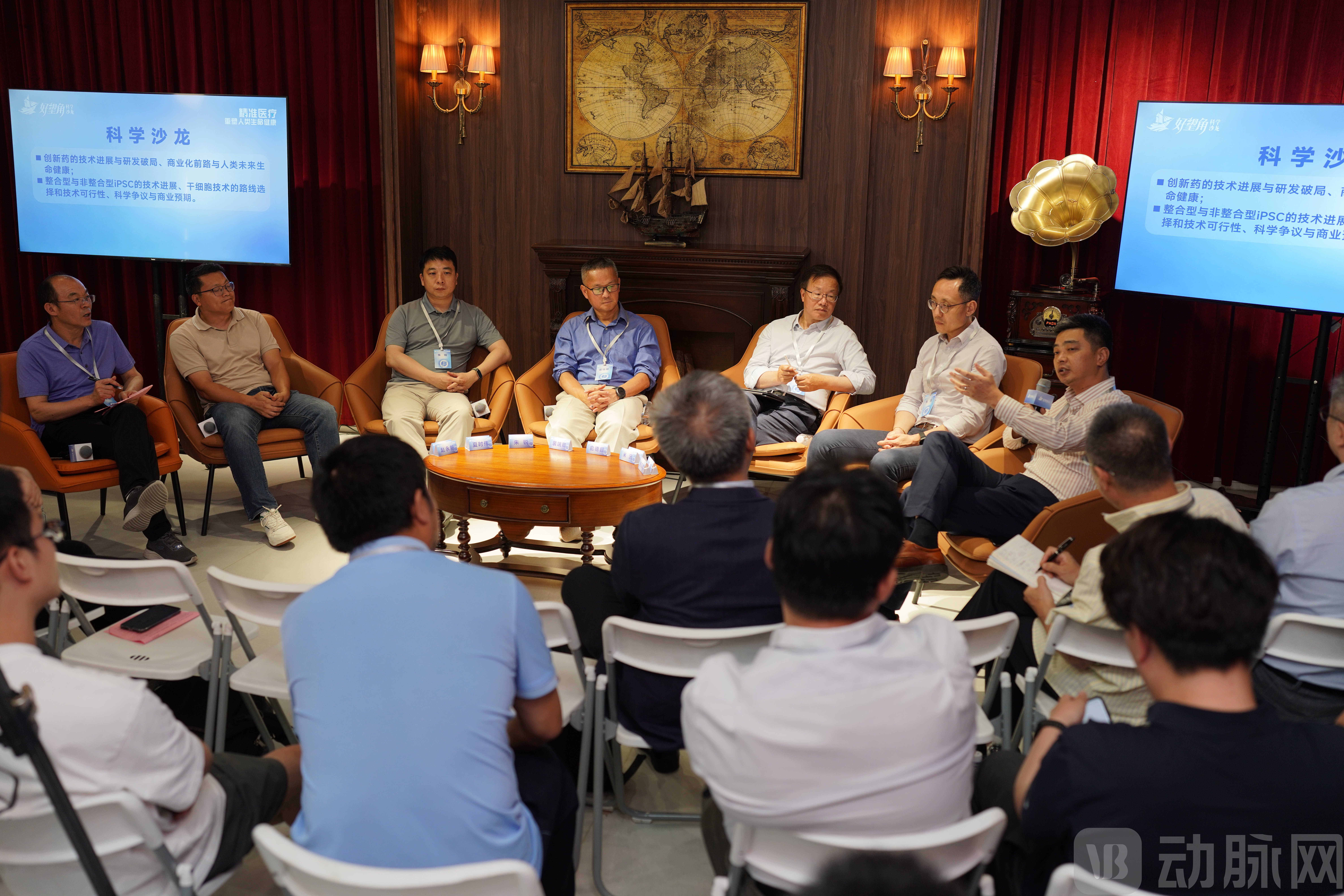
"Cape of Good Hope Science Salon" Precision Medicine Special Session
This June, Pei Duanqing was just elected as a member of the Academia Europaea. He has long been engaged in basic theoretical research on the regulation of cell fate. Previously, he discovered the mechanism by which vitamin C enhances the induction efficiency of induced pluripotent stem cells (iPSCs), as well as a novel controller technology that achieves cell fate transition by manipulating chromatin accessibility.
At this event, Professor Pei Duanqing delivered a presentation titled “iPSC Reprogramming: From Discarded Body Fluids to Stem Cell Therapeutics,” in which he explored in depth the latest breakthroughs in induced pluripotent stem cell (iPSC) technology and its prospects for application in regenerative medicine.
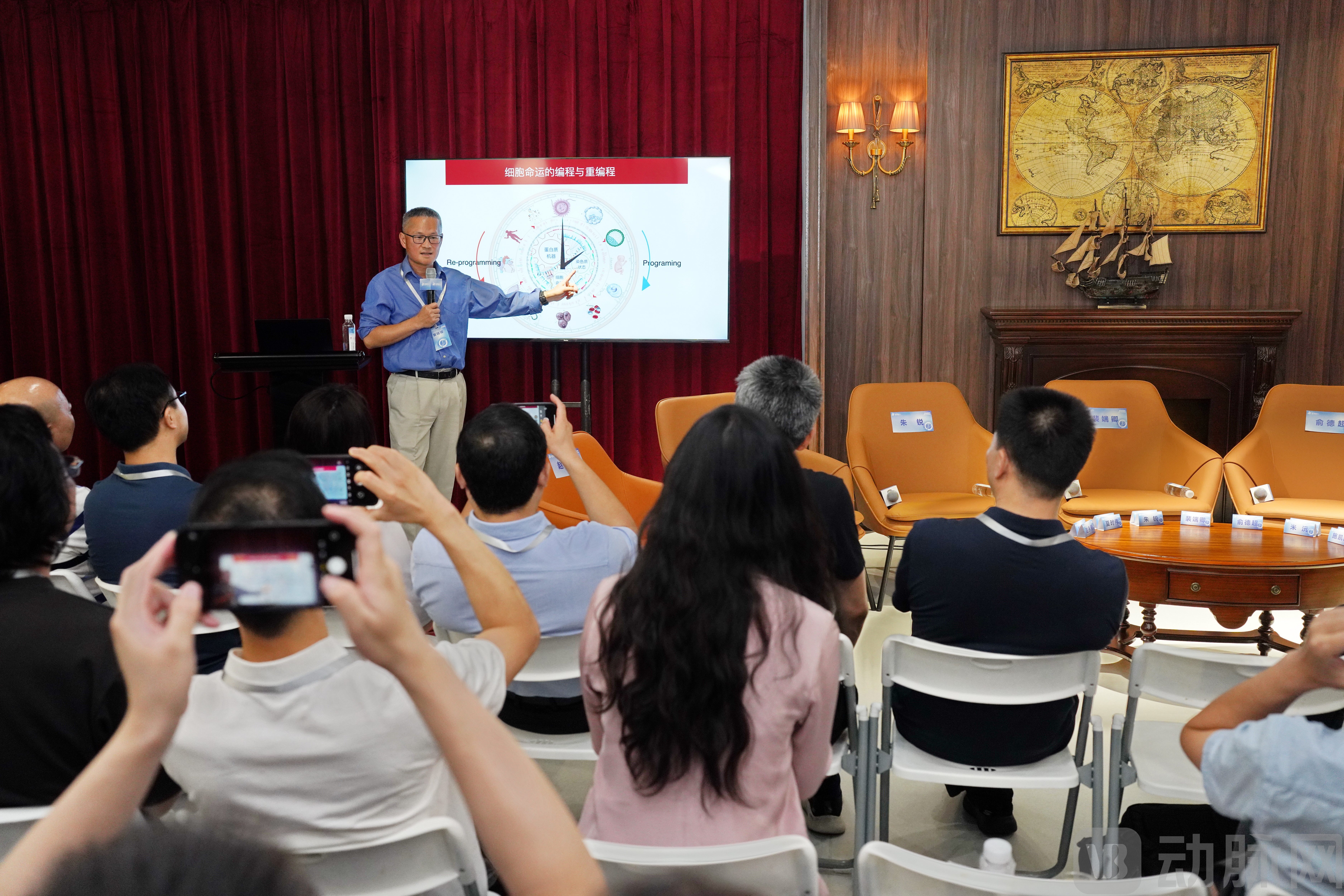
Pei Duanqing, Chair Professor at Westlake University
Professor Pei Duanqing’s team discovered in experiments that the addition of vitamin C significantly enhances the induction efficiency of induced pluripotent stem cells (iPSCs). The underlying mechanism involves vitamin C promoting chromatin opening, thereby enhancing the ability of transcription factors to regulate gene expression. Furthermore, by manipulating chromatin accessibility, they achieved controlled transitions in cell fate. This technological breakthrough has laid a solid foundation for the development of regenerative medicine.
“A series of technologies developed in our laboratory have demonstrated that pluripotent cells, resembling those at the four- to five-day post-fertilization stage, can be reprogrammed from epithelial cells found in urine. These cells hold vast application potential; they can be differentiated into pluripotent stem cells or neural stem cells. Neural stem cells, in particular, show great promise for treating neurodegenerative diseases such as Parkinson’s disease and Alzheimer’s disease, and our laboratory is making considerable efforts in this regard,” said Pei Duanqing. “We estimate that the human body contains approximately 200 trillion cells. If we can properly ‘care for’ these 200 trillion cells, we can significantly extend human healthspan.”
Furthermore, he shared insights on how to transform stem cells into stem cell-based pharmaceuticals, such as stem cell preparations, extracts derived from functionally differentiated stem cells, and organoids. He stated, “From single-cell types to the reprogramming of complex parenchymal organs, we are witnessing revolutionary breakthroughs in the field of cellular engineering.”
Professor Pei Duanqing also revealed at the event that controllable regulation of cell fate is the cornerstone of regenerative medicine. However, ensuring the efficiency, stability, and safety of cell products in large-scale production remains a global challenge. Establishing standardized clinical-grade stem cell banks is the core support for the sustainable development of the industry, requiring simultaneous advancement in technological innovation and ethical and regulatory frameworks.
In response to VCBeat’s inquiry regarding the impact of artificial intelligence technologies, Professor Pei Duanqing pointed out that experiments in the field of life sciences can no longer be conducted without computers and AI tools. With breakthroughs in induced pluripotent stem cell (iPSC) technology and AI-related advancements, humanity is ushering in a new chapter of cellular “rejuvenation.”
As a leading figure in China’s innovative drug sector, Yu Dechao shared his insights and outlook on the Chinese biopharmaceutical industry under the theme “Upholding Global Innovation in the Golden Age of Biopharmaceutical Industry Development.”
In his speech, Yu Dechao reviewed the development history of the biopharmaceutical industry, specifically pointing out that the launch of recombinant human insulin in 1982 ushered in a new era for the biopharmaceutical sector. Over the past decade, China’s biologic drug industry has experienced vigorous growth, gradually shifting from a focus on generic drugs to source innovation, and has achieved remarkable success. Taking Innovent Bio as an example, the company has made multiple breakthroughs in the research and development of monoclonal antibody drugs. Its developed therapeutics, such as Daboshu, have not only performed exceptionally well in the domestic market but also demonstrated strong competitiveness in the international arena.
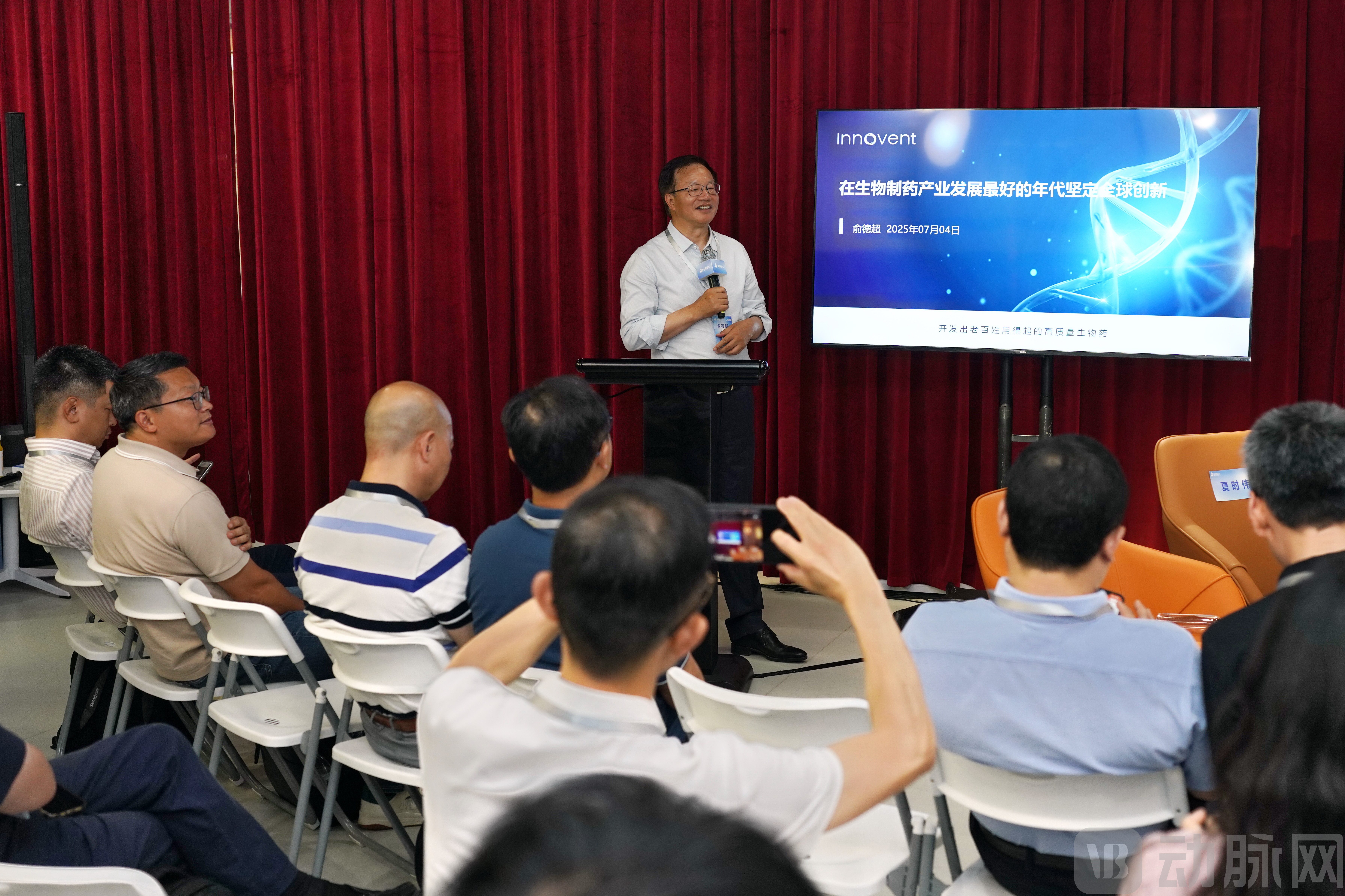
Yu Dechao, Founder of Innovent Bio
“From licensed-in introductions to source innovation, Chinese innovative drugs are achieving genuine overtaking on a bend.” He stated, “Biologics and advanced therapies have sparked two waves of technological innovation in drug development. Over the past decade, China’s biologics industry has experienced a period of vigorous growth; today, ten years on, innovative biologics have become increasingly accessible in China.”
Dr. Yu Dechao also shared Innovent Bio’s latest progress in innovative drug R&D on-site, highlighting multiple breakthroughs in cutting-edge technological areas such as dual-target agonists, bispecific antibodies, and dual-payload antibody-drug conjugates (ADCs). He further noted that Innovent Bio has achieved breakthrough progress in non-oncology fields, including the lipid-lowering drug Xinxinle, the thyroid eye disease treatment Xinbimin, and the weight-loss medication Xinermei. Using the weight-loss drug mazdutide as an example, he explained how the drug achieves comprehensive metabolic benefits through the dual activation of GCG and GLP-1 receptors. GCG refers to glucagon, while GLP-1 stands for glucagon-like peptide-1, a gastrointestinal hormone secreted by the human body.
In June this year, mazdutide received approval from the National Medical Products Administration (NMPA), becoming the world’s first approved dual GCG/GLP-1 receptor agonist for weight loss. These medications have not only achieved strong sales performance in the domestic market but also provided new treatment options for patients worldwide.
“Among tens of thousands of therapeutic targets, only a small fraction are successfully developed into approved drugs, and even fewer become ‘blockbuster drugs.’ Achieving success with five or six out of one hundred targeted candidates is already a win; the key lies in identifying these promising candidates earlier than competitors,” said Yu Dechao. “Innovative pipelines represented by next-generation immuno-oncology (IO) therapies and antibody-drug conjugates (ADCs) are sequentially ushering in new opportunities for global development. In the future, more innovative ADCs, bispecific/multispecific antibodies, and pipeline assets in autoimmune, cardiovascular, and metabolic diseases will gradually enter global development.”
When discussing the impact of artificial intelligence (AI) development on biopharmaceutical innovation, Yu Dechao pointed out that the application of AI in drug discovery is expected to enhance the efficiency of new drug development and may yield significant breakthroughs within the next 10 to 20 years. He also mentioned that Innovent Bio is actively exploring the application of AI technologies in drug research and development to accelerate the progress of innovative drug development.
“New therapies such as cell and gene therapy, bispecific antibodies, and antibody-drug conjugates (ADCs) hold enormous market growth potential, while the rapid advancement of artificial intelligence is opening up more possibilities for curing diseases,” he stated.
During the roundtable discussion, Duanqing Pei and Dechao Yu joined other experts in exploring technological advances, R&D breakthroughs, and future opportunities in precision medicine.
Mi Lei, Founding Partner of CAS Star, stated that emerging biotechnologies, driven by breakthroughs in foundational technologies, are gradually transforming human perspectives on life and health. This shift is moving from “fighting disease” to “mastering quality of life,” and from “population-based experience” to “individualized precision.” While redefining the boundaries of disease understanding, these advancements are also fostering a trillion-dollar life economy ecosystem. At a time when aging populations and chronic diseases have become the primary challenges to human health, it is essential to rely on policy support, patient capital, and public understanding to jointly promote precision medicine as a new pillar of the global health endeavor.
Breakthroughs in stem cell reprogramming technology have brought new hope to regenerative medicine, while innovations in the biopharmaceutical sector have provided robust support for the advancement of precision medicine. Driven by technological convergence and innovative breakthroughs, precision medicine is poised to become a new pillar of human health endeavors in the future, offering greater possibilities for safeguarding human life and well-being.