DeepAI Health Files IPO Prospectus: AI-Powered Engine Boosts Health Management Efficiency by 5x
When a company that has spent nearly six years navigating the diabetes management landscape and partnered with JD Health to establish a Diabetes Nutrition and Rehabilitation Center launches an AI subsidiary, what characteristics will this new venture possess?
We obtained the answer from the founder: First, leveraging the parent company’s years of industry accumulation, it has developed profound insights into industry demands and delivers precise responses. Second, when this new company was still in its nascent stage, its mission was already defined—to either provide technological empowerment to the parent company, health management organizations, medical institutions, and even Centers for Disease Control and Prevention (CDCs), or to join forces with the parent company to deliver dual empowerment in both services and technology to the aforementioned target customer segments.
Shanqiu Liankang, a health management service provider, is an institution dedicated to delivering multidisciplinary, out-of-hospital professional health management services to individuals with metabolic disorders such as type 2 diabetes, obesity, and fatty liver disease. By employing the MPD Balance Method and a five-specialist collaborative care model, it helps patients with diabetes achieve scientific blood glucose control and return to good health.
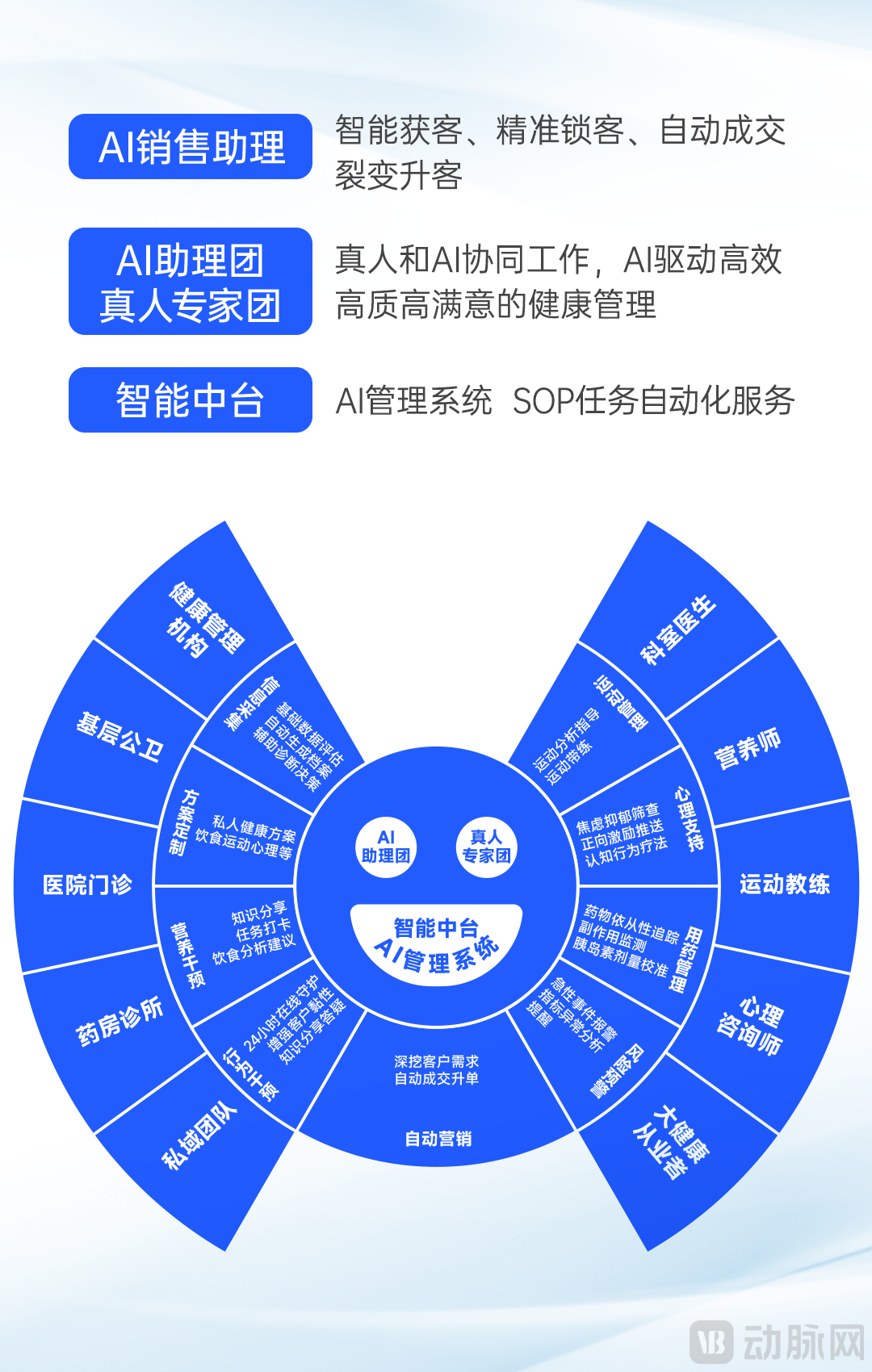
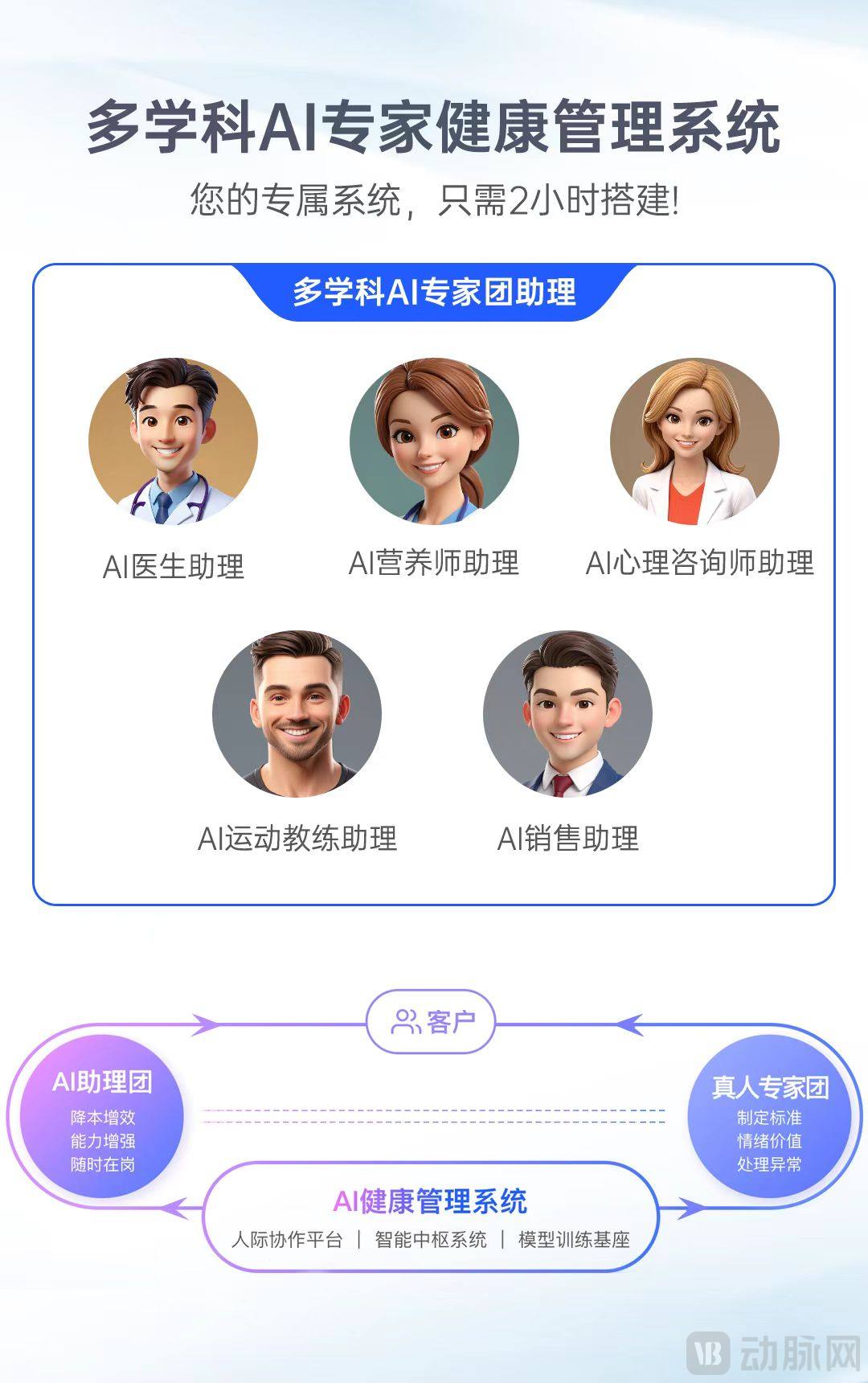
Shanqiu Liankang’s newly established subsidiary, Shenhu Zhikang, has built an AI-powered intelligent engine for health management. Leveraging Mixture of Experts (MoE) and multimodal large language model technologies, along with service data from 220,000 real users and over a decade of accumulated expertise in AI and IT, this engine empowers stakeholders across the health management industry to flexibly develop AI systems tailored to diverse scenario-based needs.
To date, Shenhu Zhikang’s AI-powered health management intelligent engine has established partnerships with 35 health management-related institutions. In 2025, Shenhu Zhikang was listed among the winners of the “Future Healthcare Top 100 Innovation Awards—Most Watched by Venture Capital” award. VCBeat took this opportunity to engage in a dialogue with Ye Haifeng, founder of Shenhu Zhikang, gaining insights into the company’s business strategy and industry perspectives.
Market Size to Surpass 3 Trillion, Yet Industry Development Remains Constrained by Multiple Factors
Driven by multiple factors, including heightened health awareness among residents, the introduction of favorable policies, and capital support, China’s health management market has maintained steady growth. According to iResearch, the domestic health management market is projected to reach RMB 1.8107 trillion in 2023, with the overall market size expected to exceed RMB 3 trillion by 2028. The compound annual growth rate (CAGR) from 2023 to 2028 is anticipated to be 12.5%.
As the industry surges forward, numerous challenges have emerged. Taking chronic disease management as an example, Ye Haifeng revealed in an interview that while the mechanisms and models for in-hospital chronic disease management are relatively mature, the out-of-hospital chronic disease management market remains severely underdeveloped. This gap is largely attributable to the high requirements and substantial investments needed to implement chronic disease management programs.
Specifically, chronic disease management involves numerous disciplines. It not only encompasses basic medical sciences but also requires support from multidisciplinary knowledge in nutrition, kinesiology, psychology, and other fields. Meanwhile, chronic disease management is characterized by long service chains and extended cycles, with high demands for personalized and dynamic management. These factors collectively impose a common requirement on health management enterprises: they must invest greater costs in terms of time, effort, and talent to achieve personalized health management across the entire life cycle.
Massive investments and high costs have hindered the effective implementation of full-lifecycle, personalized health management services, while also constraining the development of the entire health management industry. The emergence and practical application of the new wave of artificial intelligence, represented by large language models, has provided new tools to address these longstanding challenges. Seizing this momentum, Shenhu Zhikang has promptly initiated strategic deployments in this area.
Launch of the AI-Powered Smart Health Management Engine, Precisely Adapted to Diverse Health Management Scenarios
“We are not just building a system, but an engine—an intelligent engine capable of adapting to the diverse needs of various health management scenarios,” emphasized Ye Haifeng during the interview.
To this end, Shenhu Zhikang leverages cutting-edge Mixture of Experts (MoE) and multimodal large model technologies, integrating advanced algorithms with massive data processing capabilities to create an AI-powered health management intelligent engine. This engine enables the rapid development of customized AI systems tailored to the diverse needs of health management institutions, precisely adapting to various personalized application scenarios.
From a deeper perspective, there are two main reasons why Shenhui Zhikang can rapidly adapt to various health management scenarios: First, leveraging its parent company Shanghai Shanqiu Liankang Health Management Co., Ltd.’s years of practical experience in chronic disease management, Shenhui Zhikang can quickly gain insights into and understand customers’ true needs, thereby reducing communication costs between both parties. Second, as its deliverable is a PaaS (Platform-as-a-Service) solution, it can respond promptly to customer requirements and make timely adjustments.
Adopting a PaaS delivery-oriented approach can also reduce corporate investment costs and improve deployment efficiency. “Health management companies may understand the key aspects of delivering health management services, but they are not necessarily proficient in building AI systems and platforms. If they attempt to build these platforms themselves, it will not only be time-consuming and labor-intensive, but the results may also be significantly compromised. With the involvement of Shenhu Zhikang, however, they can save time and effort while receiving a product (platform) that meets their expectations,” said Ye Haifeng.
5x Increase in Personnel Efficiency: Seeking Partnerships with a Focus on Health Management for Diabetes, Obesity, and Fatty Liver Disease
By adopting the Shenhu Zhikang AI + Health Management Intelligent Engine, enterprises and related institutions can not only reduce deployment costs and improve application efficiency, but also benefit from enhanced service efficiency, strengthened service capabilities, and an improved service experience.
Specifically, in terms of improving service efficiency, taking the implementation results of the Shenhu Zhikang AI + Health Management Intelligent Engine in the Endocrinology Department of Hangzhou Greentown Hospital as an example, Ye Haifeng revealed that with the assistance of the Shenhu Zhikang AI + Health Management Intelligent Engine, through methods such as intelligent information collection, automatic reminders, and intelligent plan formulation, the personnel efficiency of health management at Greentown Hospital has increased by five times.
In terms of service enhancement, as previously mentioned, high-quality health management requires multidisciplinary support from basic medicine, nutrition, kinesiology, and psychology. However, the industry faces a shortage of such multidisciplinary composite talents, who are also relatively expensive. Shenhu Zhikang’s AI-powered health management intelligent engine can transfer the capabilities of senior employees to the engine through multi-round reinforcement pre-training. By leveraging this engine, new employees are empowered with the expertise of seasoned professionals, thereby addressing the talent shortage and reducing labor costs.
The service experience is primarily reflected in 24/7 uninterrupted health management services. Health management emphasizes continuous, non-stop coverage across the entire lifecycle. It requires not only timely feedback on users’ abnormal conditions but also prompt responses to their emerging needs. However, human employees require rest and struggle to meet these demands for immediate responsiveness. In contrast, AI employees can remain online in real time and respond rapidly, escalating cases to human staff when encountering critical situations beyond their handling capabilities.
However, in the interview, Ye Haifeng also emphasized that the emergence of AI is not intended to replace human employees, but rather to enhance their efficiency in certain repetitive tasks and, to some extent, augment their capabilities. Even within the Shenhu Zhikang system, human oversight and intervention remain essential.
“At this stage, Shenhu Zhikang is still in the early exploratory phase of its business operations, focusing primarily on health management for chronic metabolic diseases such as diabetes, obesity, and fatty liver disease. The company is actively seeking collaborations with health management enterprises, medical institutions, chain pharmacies, government agencies, and Centers for Disease Control and Prevention (CDCs). ‘In the longer term, Shenhu Zhikang aims to make a significant mark on the development of China’s health management industry,’ summarized Ye Haifeng.”