

Buyback Clauses Are Pushing Medical Enterprises to the Brink of Collapse
GENE
Comprehensive Provider of Genetic Research Services

Geneseeq
Genetic Testing Product Developer

DualityBio
Innovative Molecular Type Drug Developer
A year ago, Kuang Ziping, Founding Managing Partner of Qiming Venture Partners, posted an article titled “Some Views on Current Investment Terms in the Venture Capital Industry” on social media, thrusting the topic of “repurchase clauses” into the spotlight and sparking endless related discussions.
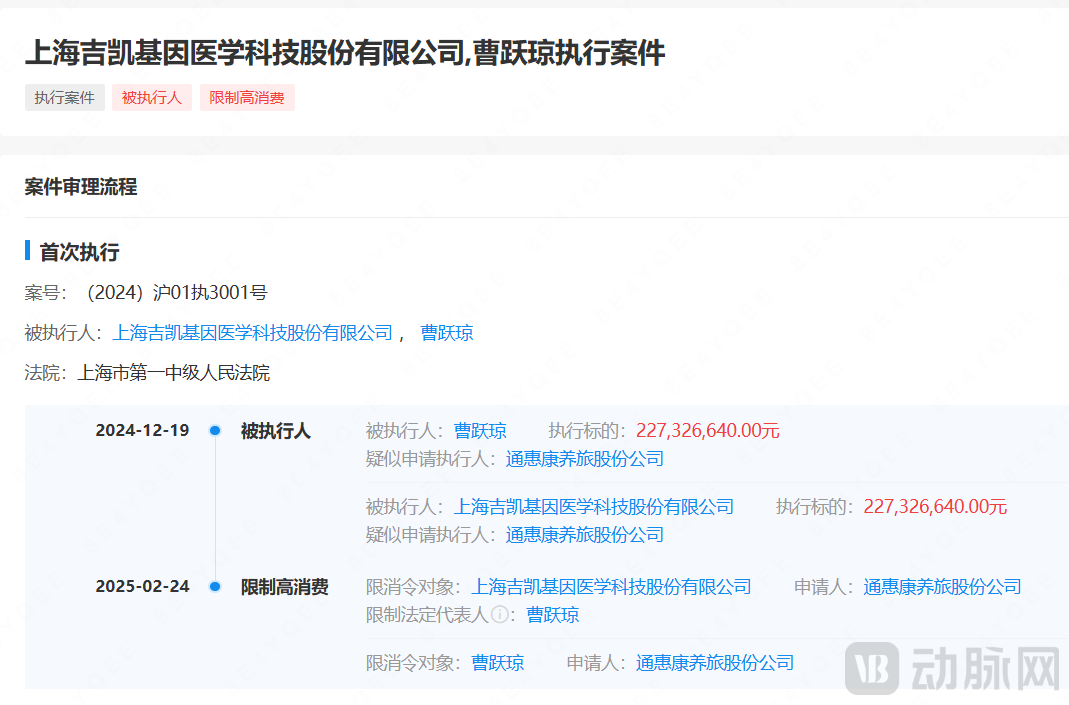
And just as the industry debated who was right and who was wrong,Some healthcare companies have already become the first casualties of “buybacks.”. Recently, Gene, a well-established life sciences company helmed by Fudan University scientist Cao Yueqiong, was sued by its shareholders and listed as a dishonest judgment debtor due to its inability to repay RMB 227 million in repurchase debt. This is not an isolated case,Stemirna Therapeutics, the bankrupt mRNA star enterprise, and OrigiMed, a leader in precision oncology diagnosis and treatment that has suspended operations, are both currently caught in the vortex of “share repurchases.”。
In fact, this is merely the tip of the iceberg, with much more hidden beneath the surface. According to the “Analysis Report on Repurchase and Exit of VC/PE Funds” released by Lifeng Law Firm in August 2024, as of now,Approximately 130,000 projects will face mounting pressure to exit in succession, involving around 14,000 companies., many of which are healthcare companies.
Clearly,The Damocles’ sword of “buybacks” now hangs over the heads of most healthcare companies, plunging them into an unprecedented survival crisis.。
Share Buybacks: How They Shifted from “Aid in Times of Need” to “Burning Bridges”
At the end of 2024, a founder of OrigiMed INC suddenly found his bank card declined while attending a breast cancer conference in the United States. After several hours of inquiry, he learned that a shareholder had applied for property preservation, resulting in the freezing of his account. At this largest global breast cancer conference, OrigiMed INC had originally planned to showcase multiple latest research and clinical application achievements to secure more market opportunities, but ultimately, these plans came to nothing.
However, OrigiMed had no intention of giving up. The founder returned to China ahead of schedule and urgently convened a senior management meeting, deciding to implement large-scale cost control measures. The company quickly reduced its workforce from nearly 500 to 200 employees and rapidly adjusted its operational model and business structure, thereby cutting its losses by 70%. This transformation was originally intended to support a full-scale push for an IPO on the Hong Kong Stock Exchange in 2025.However, after the accounts were frozen, tens of millions in previously approved bank loans failed to be disbursed, and customer receivables remained uncollected. Facing a broken capital chain, OrigiMed ultimately announced a suspension of operations on January 20, 2025. The timeline for resuming normal business operations remains contingent upon internal decisions by its shareholders.。
In fact, even before this, the pressure of "share repurchases" had already caused OrigiMed to lose the initiative for its survival. In 2023, OrigiMed failed to list on the STAR Market as scheduled, leading to a sudden surge in financial pressure, as investors worried about being unable to recoup their investments.Thus, pressure was exerted on OrigiMed by “disagreeing to the extension of the repurchase,” forcing it to lay off its data AI team.. While this was intended to cut costs, for an innovative company focused on applying AI technology to cancer diagnosis and treatment, it undoubtedly amounted to a premature declaration of “death.”
Compared to OrigiMed, the trajectory of GENE—from a darling of capital markets to ultimately becoming a “deadbeat debtor”—is even more regrettable. As a leading provider of clinical research services in China, GENE once enjoyed immense prestige. In 2019 alone, it secured four rounds of financing, expanding its roster of institutional investors to as many as 20. Some of these investors were focused on life sciences, while others jumped on the bandwagon of the innovative drug boom. These two camps held different expectations for GENE, each hoping the company would concentrate on the specific niche they favored. To balance the interests of both sides, Cao Yueqiong, caught in the middle, had no choice but to continually make concessions by signing binding agreements such as valuation adjustment mechanisms (VAMs), while simultaneously striving for an initial public offering (IPO).
In 2021, GENE filed for an initial public offering (IPO) on the Shanghai Stock Exchange’s STAR Market for the first time but failed to secure approval due to concerns over its business model, data compliance risks, and commercial sustainability. After three years of dormancy, at the end of 2024,Gene Biotech Pivots to Hong Kong Stock Exchange but Faces Shareholder Valuation Adjustment Mechanism (VAM) Liability, Demanding Immediate Fulfillment of Repurchase Obligations. However, due to years of losses, Gene Biotech lacked sufficient cash flow to repay the substantial repurchase debt, leading to another failed attempt at listing in Hong Kong and ultimately resulting in a “mutually destructive” outcome with its shareholders.。
In fact, GENE did make efforts. During its first attempt at an initial public offering (IPO) in 2021, the prospectus showed that GENE’s revenue grew year by year from 2018 to the first half of 2021. After the IPO failure, GENE immediately increased its R&D investment, which accounted for as high as 40% of its annual revenue, with the aim of developing new cash flow streams, turning losses into profits as soon as possible, and adding more leverage for subsequent listings.
However, under the long-term condition of expenditures exceeding income,Some investors have long lost patience, and with the aim of recovering whatever they can, they have continuously pressured GENE by leveraging “share buybacks” as a bargaining chip, thereby interfering with its normal operational decisions.In response, a senior industry insider remarked, “Under the pressure of share buybacks, founders’ actions are easily distorted, as they must devote substantial energy to addressing valuation adjustment mechanisms (VAMs) with investors, leaving them no time to focus on product innovation. The ultimate outcome can only be a ‘lose-lose situation.’”
Thus, it is evident that “repurchase agreements” have often become the final straw that breaks healthcare companies, gradually pushing them to the brink of survival.
The Abuse of Buyback Clauses: Why “Gentlemen’s Agreements” Have Become Hostage-Taking Provisions
“Repurchase” originated in Silicon Valley, USA, and gained widespread industry acclaim after the 2008 financial crisis, primarily to address the market drawback of investors bearing excessive risk at that time. However, Americans soon discovered that with the inclusion of valuation adjustment mechanisms (VAMs), investors became the overwhelmingly dominant party, shifting all risks to entrepreneurs. This contradicted the original intent of venture capital, resulting in consistently low adoption rates.In Silicon Valley’s private equity investment deals in the fourth quarter of 2023, the usage rate of redemption rights dropped to 2%, giving rise to the industry saying that “there are no valuation adjustment mechanisms (VAMs) in Silicon Valley.”。
However, as it entered the Chinese market alongside U.S. dollar funds, it unexpectedly became a standard provision in investment agreements. According to the "Analysis Report on Repurchase and Exit of VC/PE Funds,"Repurchase clauses are included in over 80% of private equity investment projects in China, reaching as high as 90% in the past two years. The entire venture capital industry has formed a coercive situation where “no repurchase agreement, no financing.”。
In addition to the abuse of share repurchases, domestic capital has also “improved” the definition of scenarios for such repurchases. In his article “Some Views on Current Investment Terms in the Venture Capital Industry,” Kuang Ziping clearly states that repurchase clauses are mainly applicable to two scenarios: first, when a company has been in operation for many years but shows no ambition, neither going public nor distributing dividends; and second, when the market opportunity initially envisioned by a startup no longer exists, thus eliminating the need for substantial funding for further development.Both scenarios triggering share repurchases share a common prerequisite: they must not harm the company’s operations—in short, they should not drive the company or its founders into a corner.。
However, the reality is quite different. Data from the "Analysis Report on VC/PE Fund Repurchase and Exit" shows that courts support repurchase requests in approximately 82.39% of cases. Yet, in 90.33% of repurchase lawsuits, founders are listed as defendants, and ultimately, about 10% of them are designated as dishonest judgment debtors subject to enforcement restrictions. Clearly, once repurchase clauses are triggered, institutions mostly adopt direct collection measures to recover their funds, resorting to legal channels after negotiations fail. This approach diverges significantly from the original intent of repurchase provisions, which is to incentivize founders to perform their duties diligently.
Amid a series of failed cases, the debate over “why buy back” has grown increasingly intense. Yet, to the surprise of many,All parties appear to have joined passively.。
For instance, as limited partners (LPs) exited a batch of USD-denominated funds, state-owned capital gradually assumed this role, accounting for up to 80% of capital contributions in recent years. However, the short fund cycles and stringent exit requirements associated with state-owned capital have undoubtedly placed significant pressure on investment institutions. Under such pressure, these institutions have been compelled to require entrepreneurs to sign repurchase clauses, serving as a “shield” for risk mitigation. In the event of project failure, investors can cite a series of excuses to shift blame, such as “entrepreneurs ignoring advice” or “poor team cohesion.” As the weakest link in the capital chain, entrepreneurs have no choice but to tacitly accept repurchase agreements if they wish to secure financing.
In fact, from their respective perspectives, everyone was doing the right thing in their own position, yet the tragedy unfolded nonetheless. The root cause lies in the fact that all parties lowered their guard regarding due diligence on the project and market vigilance, owing to the presence of repurchase clauses.。
In response, a frontline investor remarked, “After securing repurchase clauses as a placebo, some investors tend to lower their vigilance in pre-investment due diligence and are more prone to overlooking potential commercial risks of the invested projects. Meanwhile, many entrepreneurs also understand that before signing a valuation adjustment mechanism (VAM) agreement, they must seek additional measures to structure the segregation of personal assets. This results in founders and investors being at odds with each other from the very moment they embark on the same journey.”
Blocked Exits: How to Break the “Triple-Lose” Situation?
According to data from the "Analysis Report on Repurchase and Exit of VC/PE Funds," the average execution recovery rate for repurchase cases that enter judicial proceedings is only 6%, while cases that enter enforcement proceedings achieve full recovery and complete execution in merely 4.62% of instances. Furthermore, repurchase cases take an average of one and a half years from initial trial through final judgment to enforcement; in more complex scenarios, the enforcement cycle can extend to three to five years.
This means that,Even with the “repurchase” clause as a lifeline, investment firms may not be able to exit unscathed.In this regard, Wang Chao of Lanchiao Capital stated in a media interview, “The repurchase clause held by investors is but an illusory branch. It is as if one has been swept into the water and spots a stick, only to find it vanish just as one reaches out to grasp it.”
In fact, many investors are well aware of this: beyond driving companies into bankruptcy and subjecting entrepreneurs to enforcement actions for breach of trust, repurchase clauses have limited practical effect. Nevertheless, they insist on including them for two reasons. First, they are gambling on luck, with each believing they will be the one “slipping through the net.” Second, they seek to use repurchase rights as a “lever” to gain greater say in the portfolio companies.
Yet countless cases have demonstrated to the industry that there are no winners in repurchase litigation, only a “triple-lose” outcome:Entrepreneurs may incur massive debts due to the failure of valuation adjustment mechanisms (VAMs). Investment institutions also face a “dilemma” under the constraints of this rule: failing to execute share repurchases invites accountability from limited partners (LPs), while executing them may exacerbate the operational difficulties of portfolio companies. The ultimate outcome could be that entrepreneurial elites become “deadbeat debtors,” companies go bankrupt, and investment institutions fail to recover their capital while suffering reputational damage.。
So, in the current environment where exits are becoming increasingly difficult, how can this unfavorable situation be resolved?
First, from the perspective of medical enterprises, if they can achieve self-sufficiency in profits and losses, it is best not to introduce external capital at present to avoid adding unnecessary troubles. Of course, it is also acceptable to raise funds, but it must be recognized that risk control should always come first.When entering into a repurchase agreement, ensure realistic expectations and a clear understanding of your capabilities; do not rely on luck, lest you drive yourself into a desperate situation.。
Next, from the perspective of investment institutions. In fact, it is understandable for them to sign valuation adjustment mechanism (VAM) agreements with companies to safeguard their own interests, but such agreements should be reasonable and fair, such as “Investors Require the Company to Fulfill IPO Valuation Adjustment Mechanism (VAM) Terms Within Three Years”、“Establish an annual interest rate of up to 30% for share redemptions”(The repurchase price is generally the principal investment plus a certain proportion of interest, typically around 8%-10%.), etc., are entirely unfair contractual clauses and should be discarded. Furthermore, if the implementation of valuation adjustment mechanisms (VAMs) is deemed necessary, a one-size-fits-all approach that drives companies into a corner must be avoided. Instead, priority should be given to addressing immediate difficulties, such as providing a grace period or negotiating adjustments to VAM targets, with the primary goal of ensuring the company’s survival.
Of course, there is another point that is also crucial.Investors cannot treat "repurchase clauses" as a guaranteed safety net; they must still conduct thorough due diligence and place greater emphasis on the intrinsic value of the project itself, rather than relying on so-called "gentlemen's agreements."In response, a representative from a state-owned investment institution stated, “Rather than engaging in performance-based valuation adjustment mechanisms (VAMs), it would be more prudent to propose more feasible requirements. For instance, is there room for further negotiation on the company’s valuation? Can the internal data and information required by the institution be provided in greater detail? And can more specific demands be made regarding management practices?”
Finally, it is worth mentioning the industry environment, where more exit pathways should be provided. In fact, the surge in “share repurchase” disputes is primarily due to IPO bottlenecks in recent years, which have prevented many institutions from exiting their investments. Although alternative exit mechanisms such as mergers and acquisitions (M&A), S-funds transactions, and secondary sales of existing shares are available, they all require finding a subsequent buyer. In the current market winter, very few institutions are willing to step in, leading over time to a vicious cycle. In this regard, Professor Zhang Wei from the Singapore Management University School of Law once noted that while Silicon Valley does not rely on share repurchases, it has produced one unicorn company after another. This observation may prompt the industry to reflect on how to foster a more favorable environment for entrepreneurship and investment.
Overall, it is essential to avoid falling into the buyback vortex.EitherWeigh the pros and cons carefully before the buyback, or strive to avoid a “mutually destructive showdown” afterward.。
Final Thoughts
As industry observers, we should not simply position ourselves in opposition to investors and indiscriminately criticize “repurchase agreements.” After all, capital is not easily come by, and it is only reasonable for investment institutions to safeguard their own interests. At the same time, we must clearly recognize that “repurchase,” as a market mechanism, serves to eliminate projects lacking core competitiveness or suffering from stagnant development, representing a normal aspect of industry consolidation and clearance.
In fact,What we should truly criticize is the abuse of share buybacks.. On the one hand, in terms of investment targets,Under the protective umbrella of valuation adjustment mechanisms (VAMs), investment institutions tend to favor companies that can meet VAM conditions in the short term when selecting investment targets, while neglecting the companies’ long-term development strategies and core competitiveness.; on the other hand,“Stampede-style buybacks”: When enforcing valuation adjustment mechanisms (VAMs), institutions prioritize rapid capital recovery, showing little concern for whether the company can sustain its operations thereafter.。
In recent years, policymakers have repeatedly emphasized the concept of “patient capital,” advocating for greater time and patience to be extended to healthcare enterprises, with a focus on long-term returns and the maintenance of rationality and composure amidst short-term market fluctuations. This principle is highly applicable to current share repurchase arrangements. If a project is fundamentally sound but merely facing temporary difficulties, stakeholders should allow time for adjustment and work together to overcome challenges, rather than using “repurchase” as a latent threat or even as a lethal blow that could cripple the enterprise.
1. “Some Thoughts on Current Investment Terms in the Venture Capital Industry” – Kuang Ziping, Founding Managing Partner of Qiming Venture Partners;
2. “Analysis Report on Repurchase and Exit of VC/PE Funds” – Lifeng Law Firm;
3. “Shattered IPO Dreams: Fudan Female Scientist’s Scandal Erupts” – Touzijia;
4. “OrigiMed’s Dilemma: A Medical AI Company Crushed by Dominoes” — Deep Blue View.