

Qinglan Jichuang Files IPO Prospectus: Pioneering Multi-Endoscope Synchronization Platform and Native 4K Technology Reshape the Intelligent Endoscopy Landscape
On the roadmap for breakthroughs in domestically produced high-end medical equipment, the endoscopy sector exhibits a distinct "dual-track divergence" pattern: the localization rate for rigid endoscopes has surpassed 51%.[1], while the domestic production rate of flexible endoscopes remains below 29%[2]—This “deep-water zone,” characterized by high technological barriers, reflects the fourfold challenges facing the domestication of flexible endoscopes:
First is the generational gap in industrialization,Domestic flexible endoscopes started 40 years later than those in Japan, requiring them to bridge the gap caused by long-term technological accumulation;Second, the miniaturization limits on the product side.Integrating complex optical systems within narrow cavities imposes extraordinary demands on precision manufacturing and micro-assembly technologies, akin to performing elaborate rituals inside a snail’s shell.Third is the clinical coupling on the demand side, flexible endoscopes combine diagnostic and therapeutic capabilities; their functional development and performance enhancement require close collaboration with operators to achieve iterative improvements; Fourth, flexible endoscopes are more complex than rigid endoscopes in terms of application scenarios, functions, and structure., and imposes stringent requirements on reliability and operability.
As the technological dividends of CMOS replacing CCD gradually fade, and faced with the patent barriers erected by international giants through their century-old ecosystems, how can domestic brands achieve original breakthroughs at the system architecture level?……Qinglan Jichuang, established just two years ago, with the world’s first simultaneous rigid and flexible endoscopy imaging platform, Cindigo Ori®and provides breakthrough solutions for core endoscope types—its innovative value lies not only in the breakthrough of synchronized 4K imaging with both rigid and flexible endoscopes, but also in directly addressing clinical collaboration pain points, thereby reconstructing the spatial and efficiency logic of multi-endoscope combined surgeries.
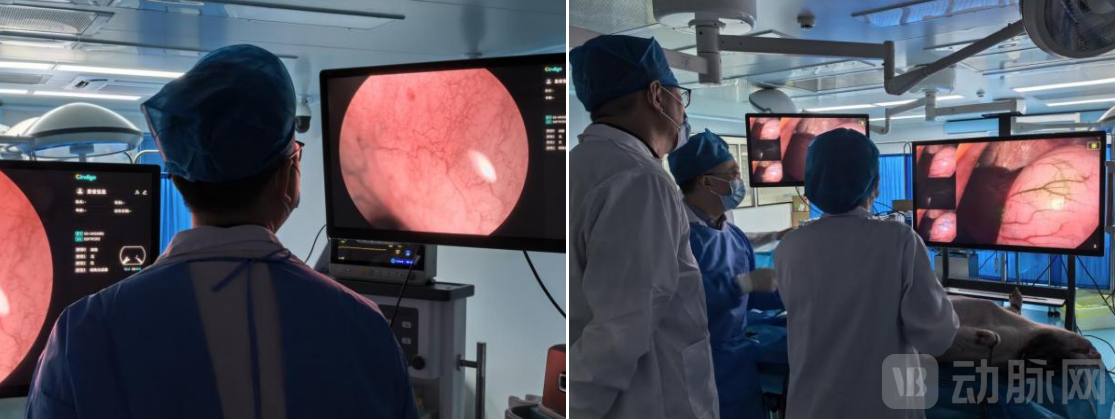
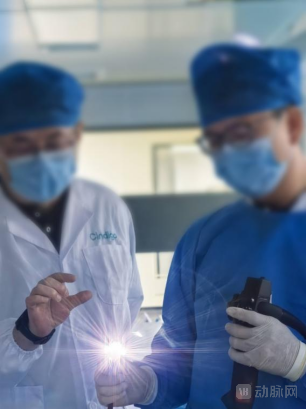
The doctor is using Cindigo Ori.®Observation of Live Animals
Regarding the original intention behind the development of the multi-endoscope synchronization platform, Chen Yunliang, founder of Qinglan Jichuang, stated that with the widespread clinical adoption of dual-endoscope combined procedures, the traditional model requires two sets of independent equipment, leading to issues such as substantial space occupancy and high costs. In particular, endoscopy centers often face scenarios involving rotation among multiple departments—including gastroenterology, surgery, respiratory medicine, and urology—resulting in inefficient equipment allocation and significant operational and maintenance pressures.
In response, Qinglan Jichuang has innovatively developed a multi-endoscope synchronization platform. By leveraging a host-sharing mechanism, the platform allows each department to flexibly access the system by simply configuring compatible endoscopes, significantly improving equipment utilization rates and reducing hospital procurement and operational maintenance costs. This ultimately achieves synergistic optimization of clinical technological innovation and operational efficiency.
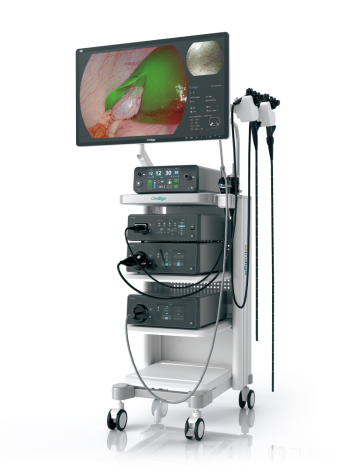
Cindigo Ori Multi-Endoscopy Synchronization Platform®
In April 2025, Qinglan Jichuang independently developed the Cindigo Ori, a full-chain 4K universal endoscopy system®Officially approved for market launch (Sichuan Medical Device Registration No. 20252060047). As the industry’s first multi-endoscopy synchronization platform, this product supports compatibility with a full range of endoscopes, including gastrointestinal endoscopes, endoscopic ultrasound scopes, duodenoscopes, bronchoscopes, nasopharyngolaryngoscopes, and electronic laparoscopes. It not only meets the demand for combined multi-endoscopic surgeries in large public hospitals across China but also aligns with the need for efficient, multifunctional equipment in primary healthcare institutions. Its core advantages are reflected in three major technological innovations:
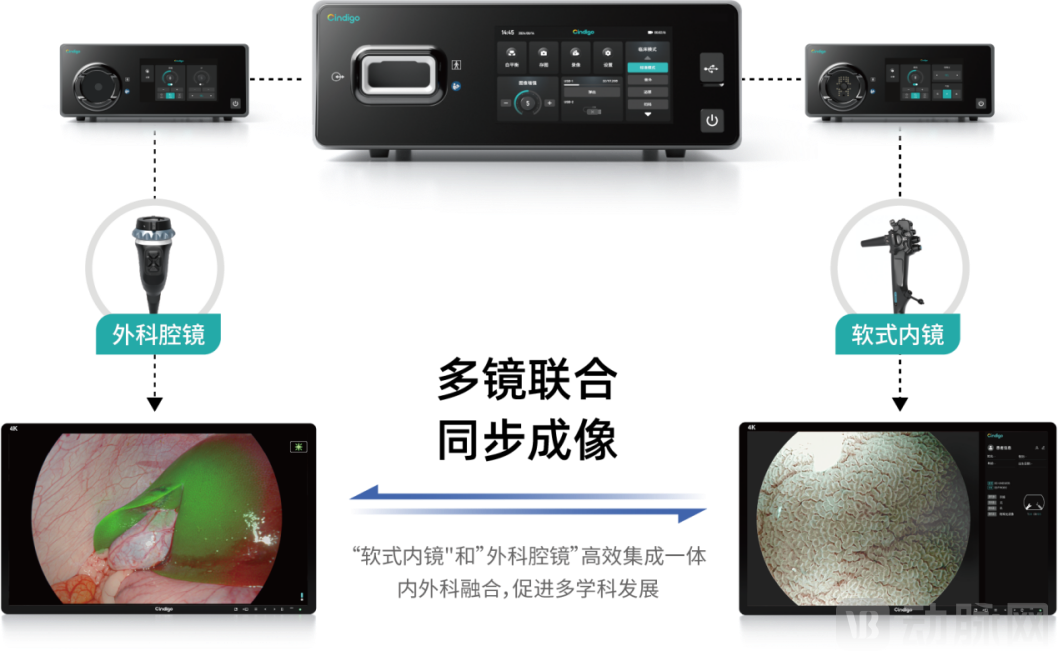
Multi-Endoscope Synchronous Imaging Platform:The Ori host platform supports simultaneous imaging of 4K flexible and rigid endoscopes, with maximum support for 4-chip 3D 4K fluorescence laparoscopes, meeting the clinical needs of combined dual-endoscopy procedures. Through a host-sharing mechanism, each department only needs to configure compatible endoscope bodies to enable flexible access, achieving multi-purpose use of a single unit, saving space, improving equipment utilization, and supporting refined hospital management.
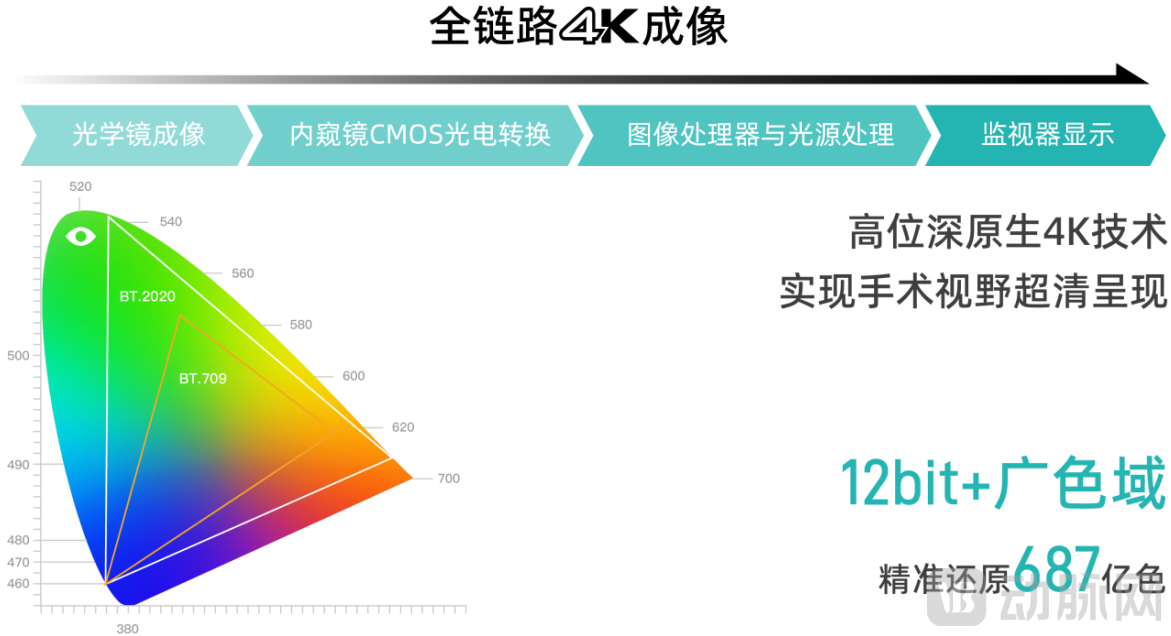
High-End Deep Native 4K Technology:Qinglan Jichuang delivers native 4K resolution throughout the entire imaging chain, from sensor acquisition and internal processing to output, with a pixel depth of 12-bit 4K. Compared to other 2K 8-bit or 4K 8-bit solutions, its data volume is 1.5 to 6 times greater, and image quality meets the Perceptual Quantizer (PQ) HDR standard. Its clinical significance lies in the fact that while traditional endoscopes are typically viewed on 32-inch monitors at a distance of approximately two meters, the Cindigo Ori system recommends using a 55-inch monitor for clear observation at a distance of 1.5 meters. This configuration not only improves resolution by more than 20% over traditional endoscopes but also provides a magnification of the field of view by more than two-fold, thereby significantly enhancing the specificity and sensitivity of lesion detection and providing reliable support for precise diagnosis and treatment.
Intelligent System:The endoscopy system launched by Qinglan Jichuang is already equipped with state-sensing technology and online learning capabilities (OTA updates), and will further support endoscope bodies featuring active control technology in the next phase. Among them,Active Manipulation TechnologyBreakthrough in the traditional pure manual handwheel operation mode of flexible endoscopes: on the basis of retaining the original structure, it integrates motor assistance and force feedback systems, autonomously completes bending actions based on image and status perception, and reduces the burden on physicians during prolonged, precise operations.State and Scene Awareness Technologyenabling real-time feedback on endoscope status and environmental information, thereby enhancing surgical safety; Online Learning (OTA Upgrade)Continuously optimize functions through remote upgrades to create an ever-evolving endoscopy system. By integrating condition awareness with OTA (Over-The-Air) capabilities, it is more likely to transform passive responsive services into proactive support services, significantly enhancing customer experience.
Furthermore, Cindigo Ori®...also feature many ingenious designs. For instance, traditional endoscope interfaces suffer from issues such as improper fit and susceptibility to signal interruption.Qinglan Jichuang, drawing on the concept of automotive soft-close doors and undergoing three iterations, has achieved a stable connection featuring automatic latching upon light touch and button-activated release.Meanwhile, traditional signal transmission solutions have drawbacks in terms of durability, such as the susceptibility of electrical interfaces to corrosion and the fragility of optical interfaces.Qinglan Jichuang introduces millimeter-wave near-field wireless communication technology to achieve contactless, high-tolerance transmission, addressing the challenge of sterilization tolerance.
In addition to its equipment, Qinglan Jichuang places significant emphasis on the consistent delivery of high-quality services. Chen Yunliang stated, “The endoscopy market is similar to the automotive industry; its core value lies not only in equipment sales but also in providing high-quality, ongoing services.”
He pointed out that current hospital equipment maintenance generally operates in a passive response mode, with repair services contacted only after failures occur. To address this, Qinglan Jichuang leverages the state perception, active compensation, and networked learning capabilities embedded in its equipment to enable the construction of a proactive support service system. By utilizing built-in sensors to detect potential issues in advance and reporting maintenance alerts upon user authorization, the system allows service teams to intervene proactively for preventive maintenance. This shifts the paradigm from passive response to proactive support, effectively reducing equipment failure rates and extending service life.
In terms of product line layout, Qinglan Jichuang has already establishedSurgery, Gastroenterology, Respiratory MedicineThree Core Pipelines, with Concurrent Planning forUrology, Orthopedics, Otolaryngologyexpansion into these fields, dedicated to building a comprehensive system of high-performance intelligent endoscopy solutions covering multiple departments. In terms of vertical technological extension,The company is advancing animal clinical validation of its 4-chip, three-in-one product capable of simultaneous 3D, 4K, and fluorescence imaging, and is conducting research on the application of digital ultrasound technology in cutting-edge fields such as intracorporeal ultrasound imaging.
When asked whether the company faces pressure from international giants to develop multi-endoscope synchronization platforms, Chen Yunliang noted that the differing technological approaches of Olympus and Karl Storz precisely underscore the challenges of cross-system integration. As the global leader in flexible endoscopy, Olympus has relied on cross-border mergers and acquisitions to build its rigid endoscopy capabilities; however, significant barriers to cross-system integration have constrained its development efficiency. Karl Storz, with half a century of deep expertise in rigid endoscopy, has also expanded into flexible endoscope product lines, but its market penetration remains lower than that of Olympus.
In contrast, the Chinese market, despite the late start of domestically produced endoscopes and weak accumulation in basic materials and assembly processes, has seen clinical demand iterate at a pace far exceeding that of Europe and the United States, compelling companies to establish a rapid response mechanism for “R&D–clinical application–iteration.”Qinglan Jichuang, through innovations in a series of technologies—including high-bit-depth native 4K technology, native 4K optical magnification imaging, digital ultrasound technology, fiber optic attenuation and active compensation, bending fatigue sensing and active compensation, and electronic assistance with force feedback—ensures compatibility with existing mainstream flexible and rigid endoscopes while supporting future technological upgrades.
Although international giants possess deep technological expertise and robust development capabilities, their institutional inertia means that modifications to device interfaces may trigger compatibility issues, potentially rendering new and old endoscope models incompatible. In this context, the technological agility of Chinese enterprises is becoming the key to breaking through this impasse. Qinglan Jichuang has demonstrated that the vast potential of high-end domestically produced endoscopes begins with independently defining technical standards.
References:
[1] "Report on China's Rigid Endoscope Market Analysis and Global Patent Technology Development Landscape (2024)," Yizhiqiao, Yizhuang Shusheng
[2] "Panoramic Market Monitoring and Investment Strategy Consulting Report on China's Flexible Endoscope Industry (2025-2031)," Huajing Industry Research Institute