

"Evaluation through Competition": A Full-Cycle Ecosystem from Scientific Transformation to Industrial Implementation! The 2025 Jing-Jin-Ji Innovation Medical Translation and Industry Promotion Competition Enters the Semi-Final Stage
In an era of surging innovation, China’s path to medical advancement has never lacked determined pioneers. In 2024, China filed 70,160 international patent applications under the Patent Cooperation Treaty (PCT), a year-on-year increase of 0.9%, maintaining its position as the largest source country for such applications. Meanwhile, the commercialization of scientific research achievements has shown a consistent upward trend. According to the 2022 China Patent Survey Report, the industrialization rate of valid invention patents in China reached 36.7% in 2022, an increase of 1.3 percentage points from the previous year. Among these, the industrialization rate of invention patents held by enterprises stood at 48.1%, also rising by 1.3 percentage points compared to the prior year.
However, challenges persist in the broader realm of innovation, particularly regarding difficulties in industrial implementation and limited application scenarios. In 2022, the implementation rate of invention patents from universities rose to 16.9%, an increase of 3.1 percentage points from the previous year; meanwhile, the commercialization rate stood at only 3.9%, up by 0.9 percentage points year-on-year.
In practical terms, there are inherent barriers between scientific innovation and the industrial system, making it difficult to complete the critical leap from the laboratory to the clinic, and from the research side to industrial development.To break down this high wall, it is not enough to merely help the industry side screen for scientific research projects that are truly “useful” and possess market value; it is also necessary to integrate multi-party resources and build a science and technology innovation platform oriented toward “application.”
1The number of participating projects has doubled compared to last year, with a new track added for “Inheritance and Innovation of Traditional Chinese Medicine.”
“The Last Mile” Conversion Bottleneck: Deep Divide Between Scientists and Industry Due to Different Ecological NichesScientists often focus deeply on technological breakthroughs and original innovation, with their professional strengths concentrated in mechanism verification and performance optimization at the laboratory stage. However, they lack systematic understanding of key industrialization pathways such as regulatory submission standards, quality management systems, and clinical trial design involved in the process of technology maturation. In contrast, industry players and investors, driven by market logic, place greater emphasis on commercialization metrics such as technology readiness levels, health insurance reimbursement strategies, and return-on-investment cycles. Their decision-making models tend to quantify the value of innovation through financial indicators, creating a cognitive misalignment with scientists’ value judgments based on scientific discovery.
To facilitate the effective alignment of scientific research outcomes with market demands, the “Beijing Sub-Center Innovative Medical Translation Competition” was held for the first time in 2024, with a focus on medical translation. The competition attracted more than 200 innovative projects, among which 45 advanced to the semifinals and 22 competed in the finals.
In 2025, based on in-depth research into technology transfer and industry linkages, the Organizing Committee has undergone a comprehensive upgrade“2025 Beijing-Tianjin-Hebei Innovation in Medical Translation and Industry Promotion Competition” expands the scope of the competition, optimizes category settings, extends the competition cycle, strengthens empowerment initiatives, facilitates project implementation, builds a resource platform, and provides translation and implementation support for more “practical” scientific research innovations.
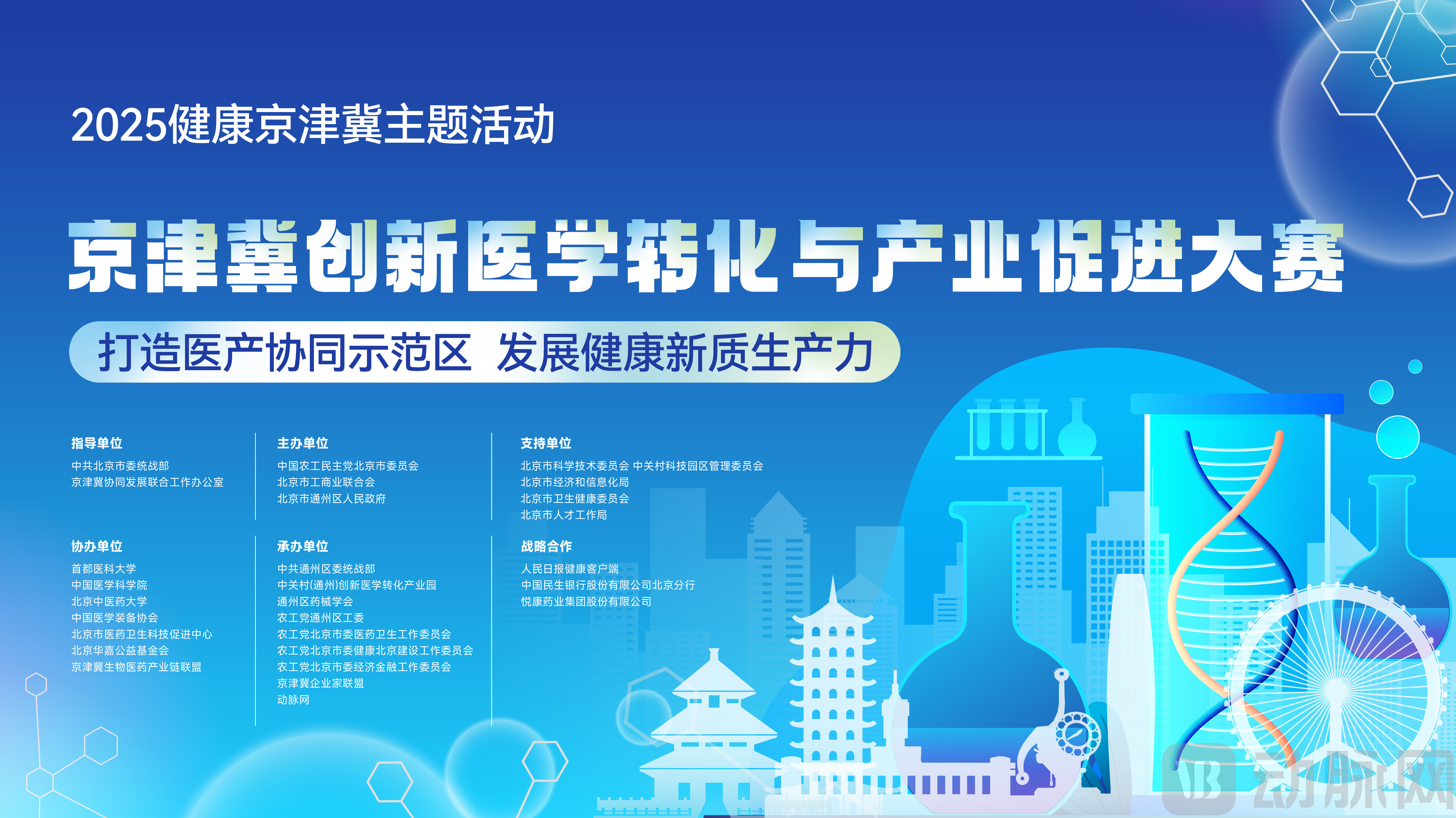
For the first time, the competition has extended its industrial resource support to the core Beijing-Tianjin-Hebei region, building an ecosystem for the translation of scientific and technological achievements characterized by coordinated development and mutual recognition and interoperability of resources, while striving to create a demonstration zone for medical-industrial collaboration. For innovators, the integration of ecosystem resources means broader and more precise windows into industry.As of now, the Beijing-Tianjin-Hebei Innovation in Medical Translation and Industry Promotion Competition has received registrations from 405 project teams, far exceeding the number recorded during the same period last year.
In terms of field distribution, among the 405 projects, there were 189 groups in “Medical Devices and Intelligent Manufacturing,” accounting for approximately 46.6%; “Innovative Pharmaceuticals and Biological Products” and “AI Healthcare and Health Management” had 60 and 62 groups respectively, each accounting for about 15%.
From the perspective of participants, research institutes, hospitals, and enterprises are all represented. Notable entries include cutting-edge discoveries from prestigious institutions such as the Chinese Academy of Medical Sciences, Renmin University of China, University of Science and Technology Beijing, and Beijing University of Technology, as well as clinical achievements from Peking Union Medical College Hospital, Peking University People’s Hospital, Beijing Anzhen Hospital, and Luhe Hospital.
Notably, the newly added “Inheritance and Innovation of Traditional Chinese Medicine” track for the 2025 competition received 94 registrations, with active co-organization by Beijing University of Chinese Medicine.It not only encompasses classic directions such as novel formulations and the processing of medicinal materials, but also gives rise to interdisciplinary fields including “digital intelligence,” “TCM devices,” and “intelligent diagnostic and therapeutic equipment,” demonstrating a trend toward clinical extension and the convergence of medicine and engineering.
2“Competition-Based Evaluation” Facilitates Talent Onboarding; “Policy Guidance + Industry Matchmaking + Regional Collaboration” Jointly Builds a Translation Ecosystem
Furthermore, as scientific and technological innovation enters a more complex and challenging phase, the needs of innovators are deepening, expanding from basic requirements such as financing, space leasing, and patent applications to specialized areas including technology transfer, policy application, and clinical implementation.This means that the early, capital-centric, single-mode approach to commercialization is no longer sufficient to meet innovators’ in-depth needs across the full lifecycle, including R&D, clinical development, and market expansion.
As one of the sectors with the highest technological content, most intensive innovation, and most active investment in the new round of transformation, healthcare is a key direction for developing new quality productive forces. In 2025, the Beijing Tongzhou District Science and Technology Commission issued the “Implementation Rules on Encouraging the Development of the Pharmaceutical and Health Industries in the Beijing Sub-Center,” formulating 25 key support measures across eight major areas, including innovative product R&D, professional qualification certification, medical-industry collaborative empowerment, and cross-sector integrated development. Recently, the Beijing Sub-Center released “Version 2.0 of the Canal Talent Plan.” The Tongzhou District Talent Bureau has established a new pattern of talent development characterized by “robust policies and warm services,” marked by three major breakthroughs: a full-cycle support system encompassing “housing, career satisfaction, and growth,” precision-targeted policies for five categories of talent, and special preferential treatments for young talents.
Jointly hosted by the Beijing Municipal Committee of the Chinese Peasants and Workers Democratic Party, the Beijing Federation of Industry and Commerce, and the People’s Government of Tongzhou District, Beijing, the event has attracted key players across the industry chain, including clinical experts from Grade 3A hospitals, representatives from the medical industry, and leading investment institutions. It establishes a diversified support system featuring “policy guidance, industrial matchmaking, and regional collaboration,” providing participating projects with full-cycle empowerment ranging from technical validation to commercialization.
Leveraging its professional strengths in the fields of medicine and health, the Beijing Municipal Committee of the Chinese Peasants and Workers Democratic Party precisely connects clinical needs with innovators; the Beijing Federation of Industry and Commerce plays its role as a bridge to the business community, mobilizing deep participation from industry stakeholders such as biopharmaceutical companies and medical device manufacturers; and the Tongzhou District Government, through policy frameworks that encourage the development of the pharmaceutical and health industries, collaborates with the Zhongguancun (Tongzhou) Innovative Medical Translation Industrial Park to provide application scenarios and supporting services for the implementation of innovative achievements.
Not only that, the Beijing Municipal Administrative CenterEstablish dedicated research funding to further improve the talent evaluation mechanism based on “competition-based assessment.”Customized financial support will be provided based on the degree of innovation, R&D progress, and prospects for translational application of the award-winning projects; core team members mayDirectly participate in the evaluation for the “Canal Talents” program under the Sub-Center High-Level Talent Plan and receive bonus points in the selection process. Selected candidates will enjoy comprehensive support, including financial awards, housing subsidies, healthcare services, and children’s education.High-quality medical resources from eight tertiary hospitals, including Peking University People’s Hospital, Beijing Friendship Hospital (Capital Medical University), and Beijing Anzhen Hospital (Capital Medical University), have been established in Tongzhou District, providing abundant foundational support and application scenarios for medical-industry collaboration.
Meanwhile, multiple strategic industry partners provided in-depth support during the competition.China Minsheng Bank, Beijing BranchClosely aligning with national regional development strategies, we continuously refine the coordinated service system across the three regions, focusing on key sectors such as innovative pharmaceuticals, AI-driven healthcare, and innovative medical devices, to provide financial service solutions covering the full lifecycle for science and technology innovation enterprises within the industry.Yuekang PharmaceuticalAdhering to the quality philosophy that “pharmaceutical quality admits only a perfect score; 99 out of 100 is equivalent to zero,” we have established a scientific research collaboration system featuring “academicians’ leadership, platform support, and ecosystem synergy.” By building an integrated R&D technology platform covering the entire process and value chain, we accelerate industrial empowerment for projects commercialized through the competition.The semi-finals will also be held at Beijing University of Chinese Medicine and Capital Medical University,To facilitate "face-to-face" connections between projects and resource providers, enabling innovators to directly access financial, R&D, clinical, and laboratory resources from banks, pharmaceutical companies, industrial parks, and other entities.
For the first time, this competition has established a Tianjin regional round, organized and hosted by the Tianjin Federation of Industry and Commerce. In early August, nearly 20 high-quality projects will be presented at the Tianjin OTC (Tianjin Binhai Over-the-Counter Market), fostering resource synergy and integration in the collaborative development of scientific and technological innovation achievements across the Beijing-Tianjin-Hebei region.
3Doubled Bonuses and Research Support: Building a Use-Oriented Platform for Sci-Tech Innovation Achievements
From the innovator’s perspective, the core value of a scientific research and innovation competition should not stop at awards, honors, or industry recognition. Compared with ranking support and spiritual incentives, what innovators need more is the ability toA Physical Support System to Shorten Technology Maturity Cycles, Reduce Industrialization Risks, and Facilitate Market Validation PathwaysOnly when the competition can effectively implement ecosystem empowerment will it truly unleash the momentum of innovation.
First, precise matching of resources.During the critical transition from laboratory research to industrialization, medical innovation projects are often hindered by shortages of clinical resources, a lack of testing scenarios, and challenges in patent strategy. Innovators seek access to professional laboratories, hospital-based research support, spaces for medical translation, and incubation platforms.
Second, the path guidance for technology implementation.Many innovators excel at technical breakthroughs but lack industrialization perspectives and business acumen. They require guidance from industry mentor teams to adapt their technical solutions to real-world scenarios, such as crafting business plans that capture investors’ interest, restructuring product portfolios to meet market demands, and strengthening the intellectual property framework for existing products.
Furthermore, support for the construction of ecological networks.Innovators expect to integrate into a tangible network comprising investment firms, industrial parks, enterprises, and medical institutions through the competition, thereby becoming concrete participants in the ecosystem. This may include direct admission into innovation incubation programs, exclusive closed-door roadshow opportunities with leading venture capital firms, and access to favorable policies or talent acquisition incentives.
Overall, the competition’s emphasis on building a sci-tech innovation achievement platform oriented toward “application” directly addresses the concerns of innovators.In addition to the special research fund established in the Beijing Municipal Administrative Center and the talent evaluation mechanism of “competition-based assessment,” the Organizing Committee has fully leveraged the respective strengths of Beijing, Tianjin, and Hebei in scientific research, clinical practice, and industry. This initiative provides a broader dissemination platform and more resources for the translation of regional medical achievements, while also offering winnersSubstantial cash prizes, doubled from last year’s competition.and"Incentive packages" including investment and financing matchmaking, intellectual property and policy guidance, empowerment through medical-engineering interdisciplinary collaboration and application scenarios, incubation services for medical translation spaces, media publicity, etc.Accelerating the conversion and industrialization of deep empowerment.
Additionally, the competition also provides professional support to those seeking to translate achievements into practical applications:Build a collaborative innovation model integrating “medicine, research, industry, academia, government, and finance” to promote the deep integration of the innovation chain, industrial chain, capital chain, and talent chain. This will accelerate the translation and implementation of medical scientific and technological achievements, helping the Beijing-Tianjin-Hebei region rapidly establish key links in the translation ecosystem that connect technology with demand, clinical practice with solutions, and enterprises with capital.
Currently, registration for the “2025 Beijing-Tianjin-Hebei Innovative Medical Translation and Industry Promotion Competition” has been completed. The organizing committee will hold offline semi-finals from July to September, inviting a panel of expert judges to evaluate entries and select the most outstanding projects to advance to the grand finals.
As breakthrough scientific achievements reach the “last mile” of industrialization, the Innovation in Medical Translation and Industry Promotion Competition exemplifies the diverse support provided by the healthcare system to innovators. We hope that, through the collaborative network of “medicine, research, industry, academia, government, and finance,” we can break down the translational barriers from the laboratory to the bedside, ultimately seeing a batch of truly “useful” scientific achievements successfully translated into practical applications.
Welcome to follow the 2025 Beijing-Tianjin-Hebei Innovation in Medical Translation and Industry Promotion Competition. Visit the site to experience firsthand over 400 cutting-edge medical innovation achievements from the Beijing-Tianjin-Hebei region, and witness the upgrading of the future ecosystem for medical-industrial collaboration!