

Why Are Imports Still Dominant in China's 86% Localized Medical Nutrition Blue Ocean Market?
A multi-billion-dollar blue ocean market is racing forward at breakneck speed.
Since 2023, the domestic market for Foods for Special Medical Purposes (FSMP) has entered a phase of explosive product growth: as of the end of June 2025, 269 FSMP products had been approved, with 65% of them approved in 2023 or later. Based on the number of products registered in the first half of 2025, the full-year total is expected to match or even surpass previous records.
It is worth noting that,The rapid growth in the number of domestically produced foods for special medical purposes (FSMP) is the direct driver behind this surge. As of the end of June 2025, there were 232 domestically produced FSMP products, accounting for a significant 86% of the total.(Data on product approvals are compiled from publicly available information released by the State Administration for Market Regulation. The category “domestically produced” includes some products manufactured in China by foreign-invested or joint-venture enterprises; however, such products are few in number, and domestically produced products still account for 82% even after excluding this factor.)
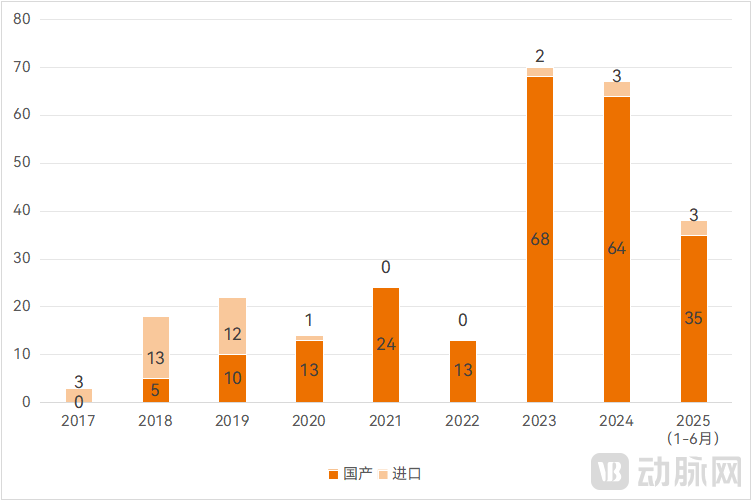
Approval Status of Foods for Special Medical Purposes, Data Source: State Administration for Market Regulation
In stark contrast to their numerical advantage is their weak market position at the retail end—domestically produced foods for special medical purposes (FSMP) account for less than 30% of the market share.According to data from the Frost & Sullivan report, in 2024, the top five companies in China's FSMP market collectively held a 78.0% market share, with four of them being foreign brands that accounted for 71.6% of the market share.
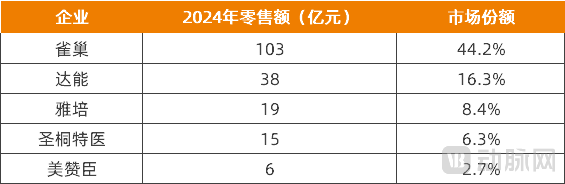
2024 Market Share of FSMP in China’s Retail Sector, Data Source: CIC Consulting and Public Information
With rising public health awareness and improved clinical practices, China’s market for foods for special medical purposes (FSMP) remains a blue ocean. The market size reached RMB 23.2 billion in 2024 and is projected to grow to RMB 53.1 billion by 2029, representing a compound annual growth rate (CAGR) of 18.0%. Admittedly,In recent years, a large number of new domestically produced products have required gradual market promotion after obtaining regulatory approval. Changes in market share and competitive landscape take time to materialize. Nevertheless, it is essential to consider how domestic brands can break through amidst the well-established presence of foreign brands and imported products that have been cultivated for many years.
Foods for Special Medical Purposes (FSMP) are formula foods specially processed and prepared to meet the specific nutritional or dietary needs of individuals with limited food intake, impaired digestion and absorption, metabolic disorders, or specific disease states.
The standardized use of foods for special medical purposes (FSMPs) can achieve effects such as correcting metabolic imbalances, reducing infectious complications, enhancing therapeutic efficacy, promoting recovery, shortening hospital stays, and improving patients' quality of life. In recent years,Public awareness and demand for foods for special medical purposes (FSMP) continue to rise, particularly as the population with specialized nutritional needs—primarily the elderly and children—steadily expands.
Meanwhile, policies governing foods for special medical purposes (FSMPs) continue to be refined. The issuance of the Administrative Measures for the Registration of Foods for Special Medical Purposes in 2016 marked the establishment of China’s FSMP registration system. The newly implemented version of these measures in 2024 introduced a priority review and approval process to encourage R&D innovation for FSMPs required for rare diseases and novel types of FSMPs. Additionally, the timeline for clinical trial verification of specific complete nutritional formula foods has been shortened, thereby improving review efficiency.
Driven by multiple factors, including market demand, policy incentives, and streamlined approval processes, more companies in the broader health sector are expanding into the specialized medical food (FSMP) market. According to statistics from VCBeat, over 20 domestic enterprises had products approved in 2021; however, the latest registration data indicate that this number has now risen to more than 60.
In the past, the domestic market for foods for special medical purposes (FSMP) was primarily dominated by pharmaceutical and dairy companies. In recent years, innovative enterprises focusing exclusively on FSMP have also experienced rapid growth. For instance, to date, MaiFu Nutrition, Dongze Medical, AiYouNuo, and KunYu Health have each obtained approval for ten or more products. In 2025, after completing a Series B+ financing round of over RMB 400 million, ShengTong Medical submitted its listing application to the Hong Kong Stock Exchange. Other innovative companies, such as Kelubao and Methuselah, have also frequently secured capital investment and are strategically positioning themselves across multiple categories of FSMP.
Foods for Special Medical Purposes (FSMP) include two major categories: formula foods for special medical purposes intended for infants aged 0 to 12 months, and formula foods for special medical purposes intended for individuals aged 1 year and older.In terms of the current types of domestically produced FSMP (Foods for Special Medical Purposes) in China, non-infant products dominate, accounting for as high as 83%.
“Among domestic enterprises, most have entered the adult FSMP market by transforming from pharmaceutical companies or extending their business lines, prioritizing adult clinical needs such as chronic disease management and postoperative recovery, given the large patient population in these categories,” said Gao Yuyou, Vice President of R&D at Kelubao. Another reason is that infant FSMPs must strictly mimic the composition of breast milk, imposing extremely high requirements on nutrient ratios and safety. Furthermore, regulations mandate that manufacturers of infant FSMPs must possess in-house laboratory testing capabilities to conduct comprehensive, batch-by-batch testing of all items throughout the entire production process; outsourcing such testing is prohibited. The technical accumulation of domestic enterprises is currently insufficient to meet this mandatory requirement. In contrast, the R&D threshold for adult FSMPs, such as protein modules and electrolyte formulas, is relatively lower, allowing Chinese-made products to rapidly enter the market.
Furthermore, certain regions have incorporated FSMPs into in-hospital nutritional support for chronic diseases and introduced corresponding medical insurance reimbursement policies, thereby stimulating greater corporate enthusiasm for the R&D of adult FSMP products. However, in the infant FSMP sector, particularly regarding products for infant allergies, regulations and standards related to certain raw materials are being progressively refined, leaving substantial room for further product diversification.
Calculated as the ratio of the actual served population to the target population in need, the penetration rate of Foods for Special Medical Purpose (FSMP) in China was only about 3% in 2024, far below the level of over 40% seen in mature markets such as the United States. As healthcare institutions and the general public become increasingly aware of nutritional health, market penetration of FSMP is deepening, creating opportunities for domestically produced brands to make a comeback.
So, what are the key barriers facing domestically produced products in the process of accelerating market penetration and increasing market share?
First, foreign capital dominates the high value-added sectors, while domestic products still have gaps in certain categories.
Gao Yuyou noted that in the sector of infant foods for special medical purposes, foreign enterprises established an early presence, offering a diverse range of products such as formulas for preterm infants, extensively hydrolyzed formulas, and amino acid-based formulas; domestic manufacturers, by contrast, are constrained by high barriers including technical capabilities and laboratory testing requirements. In the non-infant FSMP segment, foreign companies have rapidly made substantial investments in high-value-added areas, such as disease-specific complete nutritional formulas.
It is understood that extensively hydrolyzed formula (eHF) and amino acid-based formula (AAF) are primarily targeted at infants with cow’s milk protein allergy. These products command a premium price, and all five currently approved products in China are imported. On major e-commerce platforms, the retail price for these products ranges from approximately RMB 338 to RMB 488 per can, with each can containing 400g or 450g of product. According to data from Frost & Sullivan, eHF and AAF products accounted for over 50% of the market share of infant foods for special medical purposes (FSMP) in China in 2024, based on retail sales value.
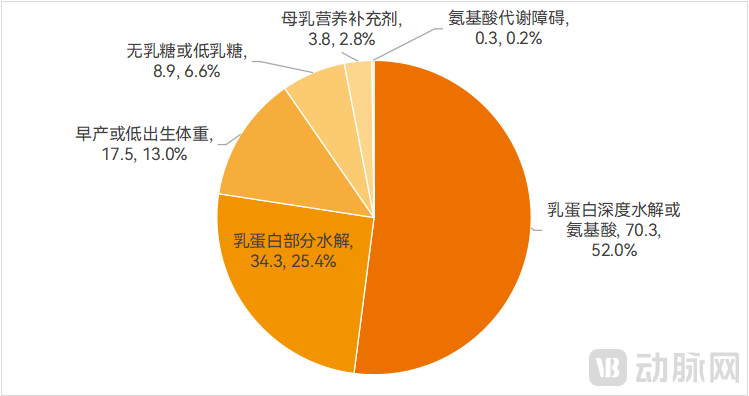
Market Size of Infant Formula Foods for Special Medical Purposes in China in 2024, by Formula Type, Based on Retail Sales (RMB Billion), Source: CIC
Disease-specific complete nutritional formula foods refer to foods for special medical purposes (FSMP) that can serve as the sole source of nutrition and meet the nutritional needs of target populations with specific diseases or medical conditions, such as products suitable for patients with cancer or kidney disease. To date, only one disease-specific complete nutritional formula product has been approved in China, namely Nestlé’s “Oral Impact,” which is indicated for cancer patients aged 10 years and older who are at risk of malnutrition or are malnourished.
Unfortunately,In the two high-value-added sectors of extensively hydrolyzed or amino acid-based infant milk protein formulas and adult-specific complete nutritional formulas, no domestically produced products have been approved.
Secondly, as domestically produced products rapidly obtain regulatory approvals, a trend toward homogenization is emerging.
Among domestically produced products, in terms of formula types, as many as 80 are complete nutritional formula foods, with a significant number also being protein (amino acid) module formulas, electrolyte formulas, and carbohydrate module formulas. In terms of target population, more than half of the products are intended for individuals aged 10 years and older. Therefore, significant homogenization and insufficient precision represent major weaknesses of domestic products.
Finally, domestically produced products still lag in brand recognition and channel penetration.
Medical institutions, offline retail (pharmacies/mother-and-baby stores/supermarkets), and e-commerce platforms are the three primary channels for the sale of foods for special medical purposes.
Gao Yuyou introduced that in terms of hospital channels, foreign companies have secured a foothold in large hospitals by leveraging their long-established sales channels for pharmaceuticals and medical devices, resulting in strong physician prescription dependency. Domestic products, however, once faced significant difficulties in gaining hospital access due to issues such as the lack of billing barcodes and lagging development of hospital nutrition departments. In out-of-hospital retail channels, staff at maternal and infant stores and pharmacies are highly motivated to recommend imported products to consumers due to various incentive schemes, while the promotional efforts for domestic products remain relatively weak.
Furthermore, foreign brands have already established strong brand recognition. The high level of trust that parents place in these brands is clearly demonstrated by the large number of parents who enthusiastically purchase imported infant foods for special medical purposes (FSMP) through cross-border e-commerce platforms. In contrast, domestic enterprises still lag significantly in brand influence. The crisis of confidence stemming from previous negative incidents in the dairy industry will require a considerable amount of time to repair.
In 2025, twelve departments, including the Ministry of Commerce and the National Health Commission, jointly issued the “Action Plan for Promoting Health Consumption.” As a component of efforts to boost consumer spending, promoting health consumption has become one of the government’s key priorities. The document specifically addresses foods for special medical purposes (FSMP), encouraging enterprises to strengthen process research and development, product innovation, and quality control, with a focus on advancing the development of formula foods for special medical purposes.
It is evident that,R&D and product strength breakthroughs have become an urgent priority for domestically produced foods for special medical purposes (FSMP), particularly in filling gaps in product categories and strengthening differentiated competition.On the industry front, multiple companies have already invested in R&D for untapped areas.
Kelubao’s product portfolio covers two core groups: adults and infants. To address the domestic gap in the infant sector, it has jointly established a special medical food R&D laboratory with Academician Chen Jian’s team at Jiangnan University to conduct research on enzymatic hydrolysis technology, accelerate the development of raw materials and processes, and strive to achieve a breakthrough from zero for domestically produced extensively hydrolyzed formula products.
Furthermore, according to Shengtong Special Medical’s prospectus, the company has also laid out three major product lines: amino acid-based formulas, lactose-free extensively hydrolyzed formulas, and low-lactose extensively hydrolyzed formulas, all of which are in the preclinical stage.
In 2025, the new national standards for infant formula for special medical purposes were introduced, adding six new formula types to the existing standards. The category “extensively hydrolyzed protein formula or amino acid formula” was split into two distinct categories: extensively hydrolyzed milk protein formula and amino acid formula, with an expanded target population to include infants with gastrointestinal dysfunction. The new national standards clarify criteria for further product segmentation, allowing greater room for product differentiation in the future.
Regarding disease-specific complete nutritional formula foods for adults, the State Administration for Market Regulation (SAMR) recently issued two new technical guidance documents for clinical trials. These documents specify in detail the trial objectives, study design, and observation endpoints for foods for special medical purposes (FSMPs) indicated for liver disease and gastrointestinal absorption disorders. With this addition, a total of 13 types of technical guidance documents for clinical trials of disease-specific complete nutritional formula foods have been released, providing support for enterprises to standardize their clinical trial processes and improve the efficiency of registration review and approval.
Among companies dedicated to the research and development of specific complete nutritional formula foods, Shengtong Medical Nutrition’s complete nutritional formula for oncology has entered the clinical trial phase, while its complete nutritional formulas for renal disease (pre-dialysis), renal disease (post-dialysis), hepatic disease, and diabetes are in the preclinical stage.
Furthermore, Hisun Sulikang has deployed disease-specific complete nutritional formulas for cancer and has collaborated with the National Market Supervision Technology Innovation Center (Special Foods) and clinical experts. Licheng Nutrition’s disease-specific complete nutritional formulas include formulations for cancer and diabetes. Methuselah has also completed its product portfolio of disease-specific complete nutritional formulas for multiple conditions.
At the channel level, online platforms have provided domestic products with an opportunity to overtake competitors on the bend.
In recent years, sales channels for foods for special medical purposes (FSMP) have been rapidly expanding from within hospitals to out-of-hospital settings. As the most fundamental sales channel, hospitals offer both professionalism and authority and must remain a core focus, while the diversification of out-of-hospital channels has improved product accessibility for target consumer groups.
Among out-of-hospital channels, e-commerce platforms have experienced rapid growth, particularly for infant foods for special medical purposes (FSMP). According to data from Frost & Sullivan, the compound annual growth rate (CAGR) of infant FSMP via e-commerce channels was 32% from 2019 to 2024, the highest among the three major channels; it is projected to maintain a CAGR of 18.7% from 2024 to 2029, remaining the fastest-growing channel.
Based on the aforementioned trends, Gao Yuyou believes that the channel layout strategy for domestically produced foods for special medical purposes (FSMP) can be optimized in several aspects. In healthcare institutions, efforts should focus on bridging the “last mile,” such as co-establishing nutrition departments with regional hospitals and promoting the inclusion of FSMP into clinical pathways; many cities have already implemented demonstration models to address issues related to charging barcodes. In offline retail, strategies should leverage spillover traffic from medical channels through educational initiatives, such as stationing dietitians at maternal and infant stores and pharmacies near hospitals to enhance product promotion and strengthen public confidence in domestic products. For adult FSMP, the industry can draw lessons from the “Abbott–Pharmacy” collaboration model by providing chronic disease screening combined with nutritional intervention services. For the fastest-growing e-commerce channel, online platforms should focus on consumer education and precise targeting.
Specifically, e-commerce platforms offer enterprises preferential brand trial operations and rapid onboarding, allowing domestically produced products to avoid high offline entry fees. Online nutritionist services can provide complementary consultations for users or serve as a purchase gateway. By analyzing consumer behavior data, platforms can deliver targeted, scenario-based product recommendations and precisely identify user preferences regarding flavor, dosage form, and other attributes, thereby facilitating rapid product iteration for enterprises. Furthermore, as competition intensifies over delivery speed on e-commerce platforms, domestically produced products are increasingly leveraging their localization advantages to reach consumers more quickly.
Overall,E-commerce channel growth and digital transformation have provided a significant opportunity for domestically produced foods for special medical purposes (FSMP) to overtake competitors. In this context, various social media platforms, pharmaceutical e-commerce channels, and digital marketing service providers can all help domestic FSMP brands expand their brand influence and market share.
China’s market for foods for special medical purposes (FSMP) is still in its early stages. As penetration rates gradually expand, it remains to be seen whether domestically produced FSMP can achieve a “comeback” by leveraging policy dividends, technological breakthroughs, and channel transformations—a prospect worth watching.